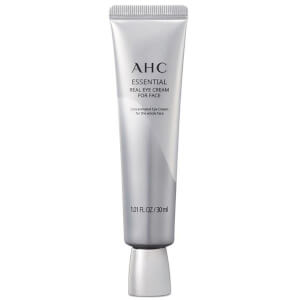
AHC Hydrating Essential Real Eye Cream for Face
Works for
2 of 2 advertised claims delivered
Moisturizing70 ingredients credited for this claimStrong support
“Hydrating Essential Real Eye Cream for Face”
This product can help improve hydration of the skin with the two types of ingredients.
The first type is called “humectants”:
these ingredients help attract water.
When humectants are on the surface of the skin, they “pull in” the moisture from the outside environment, or from
within deeper layers of the skin. The following ingredients in this product do the job:
alanine, arginine.
This product also contains ingredients called “occlusives”. They help reduce the speed with which our skin loses moisture to the outside environment. These ingredients also help soften the upper layer of the skin, so it feels less tight and nicer to the touch. The following ingredients in this product do the job: arginine, dimethicone.
The following ingredients in this product are especially good for supporting the skin barrier and helping with the hydration level: acetyl dipeptide-1 cetyl ester, acetyl hexapeptide-8, ascorbic acid polypeptide, ceramide ap, ceramide eop, ceramide np, copper tripeptide-1, niacinamide, palmitoyl hexapeptide-12, palmitoyl pentapeptide-4, palmitoyl tetrapeptide-7, palmitoyl tripeptide-1, palmitoyl tripeptide-5, panthenol, phytosphingosine, urea
Anti-aging23 ingredients credited for this claimStrong support
“This cult favourite Korean formulation is designed to minimise the appearance of fine lines and wrinkles while supporting collagen production to naturally firm and plump the under eyes for a youthful-looking visage.”
This product can help reduce and prevent fine lines and wrinkles, improve skin elasticity and firmness because it contains retinol, adenosine, niacinamide, palmitoyl hexapeptide-12.
These ingredients in the product can also be helpful, even though there is less evidence for their effectiveness: acetyl dipeptide-1 cetyl ester, acetyl hexapeptide-8, ascorbic acid polypeptide, aspartic acid, copper tripeptide-1, folic acid, hydroxydecyl ubiquinone, lysine, palmitoyl pentapeptide-4, palmitoyl tetrapeptide-7, palmitoyl tripeptide-1, palmitoyl tripeptide-5, serine, threonine.
Keep in mind that it typically takes at least 6 weeks to notice any results because the changes that are needed to improve fine lines and elasticity happen in the deeper layers of the skin. No topical anti-aging product can “erase” wrinkles or fully reverse signs of aging.
Evens skin toneNot advertised by the brand · 9 ingredients credited for this claimStrong support
This product can help reduce hypepigmentation and even out the skin tone because it contains the following effective ingredients: retinol.
In addition, this product contains niacinamide. This ingredient (ingredients) might help reduce hyperpigmentation, but the effect, if any, is likely to be small.
The following ingredient (ingredients) in this product might be helpful, but there is no evidence to confirm that it actually can help even out the skin tone: alanine, cysteine, glucosamine hcl.
Keep in mind that you would need to apply any topical skincare targetted at hypigmentation consistently for a couple of months to get a result. No topical skincare product can help get rid of hyperpigmentation (including post-acne marks and age spots) instantly.
Anti-oxidationNot advertised by the brand · 23 ingredients credited for this claimStrong support
This product contains antioxidants (hydroxydecyl ubiquinone, retinol) that can help neutralize free radicals in skin. By doing so, they can lessen the damage the skin gets from the UV light (sun).
The following ingredients - ascorbic acid polypeptide, cysteine, epilobium angustifolium flower/leaf/stem extract, ficus carica fruit extract also can have an antioxidant effect, but there is less evidence to confirm their effectiveness in skin.
ExfoliationNot advertised by the brand · 5 ingredients credited for this claimStrong support
This product can help exfoliate the skin. In other words, it helps break down the bonds between dead cells on the surface of the skin and speed up the skin turnover. Skin often appears softer and brighter after exfoliation, but overdoing it can result in disrupted skin barrier. The following ingredient is doing the exfoliating job in this product: retinol.
Can it cause trouble?
Irritancy8 strong irritants: Parfum, Calendula officinalis flower oil + 6 more — patch-test recommendedHigh risk
Comedogenic2 ingredients rated 2 or more on the 0–5 pore-clogging scale2 flagged


User reviews
Be the first — your take helps the next person decide.
Ingredients
Filter by role to see what each ingredient is doing.
Water~40–60%
Cyclopentasiloxane~5.7–8.6%
- Irritation risk
- Low
A silicone that helps improve the product texture and spreadability. Can absorb oil creating a short-term mattifying effect on the skin
More about CyclopentasiloxaneMethylpropanediol~3.9–5.9%
Betaine~2.8–4.1%
- Irritation risk
- Low
Helps attract water to the upper layer of the skin and improves the product texture
More about BetaineHydrogenated poly(c6-14 olefin)~2.1–3.2%
- Irritation risk
- Low
Helps soften the upper layer of the skin and create a nice product texture
More about Hydrogenated poly(c6-14 olefin)Glycerin~1.8–2.7%
- Irritation risk
- Low
One of the best moisturizing ingredients. Naturally present in skin. It attracts water to the upper layer of the skin working as a humectant
More about GlycerinCyclohexasiloxane~1.5–2.3%
- Irritation risk
- Low
A silicone that serves as an emollient. Helps create a nice non-greasy feels
More about CyclohexasiloxaneHexanediol~1.3–1.9%
Niacinamide~1–1.5%
- Irritation risk
- Low
Is proven to be effective in reducing blemishes, evening out skin tone and helping to improve lines and wrinkles. It helps the skin to repair sun damage, calm down inflammation and keep maintain good levels of moisture. The concentration of about 2% is effective for supporting the skin barrier and evening out the skin tone. Concentration of 4-6% is better for helping with acne and balancing the sebum production
More about NiacinamideDimethicone~0.9–1.35%
- Irritation risk
- Low
A silicone that helps to reduce water loss from the surface of the skin. Can temporarily "fill in" lines and wrinkles, absorb oil, and create a nice product finish
More about DimethiconeCetearyl alcohol~0.55–1.35%
- Irritation risk
- Low
- Comedogenicity
- 2/5
A non-drying alcohol. Works as an emollient. Helps water and oil mix together and creates a nice product texture
More about Cetearyl alcoholPolysorbate 60~0.45–1%
Hydroxyethyl acrylate/sodium acryloyldimethyl taurate copolymer~0.35–0.85%
- Irritation risk
- Medium
A gelling agent that thickens the product consistency and leaves the skin with a velvety finish
More about Hydroxyethyl acrylate/sodium acryloyldimethyl taurate copolymerDimethicone/vinyl dimethicone crosspolymer~0.35–0.8%
- Irritation risk
- Low
Used to stabilize product formulations and create a nice product texture
More about Dimethicone/vinyl dimethicone crosspolymerPanthenol~0.3–0.7%
- Irritation risk
- Low
Helps attract water to the upper layer of the skin and can help improve skin barrier function
More about PanthenolSqualane~0.35–0.8%
- Irritation risk
- Low
An oil naturally present in skin. Works as an emollient to soften the skin and form a protective layer on its surface without a greasy feeling.
More about SqualaneDioscorea japonica root extract~0.2–0.75%
- Irritation risk
- Low
Parfum~0.15–0.65%
- Irritation risk
- High
An aromatic blend of unspecified and possibly irritating ingredients
More about ParfumCalendula officinalis flower oil~0.15–0.6%
- Irritation risk
- High
A plant oil that might have an antibacterial and some antioxidant effect. Is a common allergen and irritant
More about Calendula officinalis flower oilEthylhexylglycerin~0.15–0.6%
Glycosyl trehalose~0.15–0.65%
Sorbitan isostearate~0.15–0.6%
- Irritation risk
- Low
Helps oil and water mix together
More about Sorbitan isostearateHydrogenated starch hydrolysate~0.15–0.5%
- Irritation risk
- Low
Helps to attract water to the upper layer of the skin. Can add sweet taste to lip products
More about Hydrogenated starch hydrolysateButylene glycol~0.15–0.5%
- Irritation risk
- Low
Used to create a nice product texture and help delivery of other ingredients. Might be somewhat helpful in attracting water to the upper layer of the skin
More about Butylene glycolRaffinose~0.1–0.5%
- Irritation risk
- Low
Adenosine~0.15–0.5%
- Irritation risk
- Low
Might help improve cell turnover and reduce inflammation in skin. One study shows that the ingredients might be able to help reduce dynamic wrinkles (for example, in the corners of the eyes or on the forehead)
More about AdenosineLecithin~0.15–0.6%
- Irritation risk
- Low
Used mostly for creating emulsions - helping oil and water mix together. Helps soften the upper layer of the skin
More about LecithinDisodium edta~0.15–0.5%
Hydrogenated lecithin~0.15–0.55%
- Irritation risk
- Low
Helps to retain moisture by creating a protective barrier on the skin. Rich in fatty acids. Improves product texture and helps with the penetration of other ingredients.
More about Hydrogenated lecithinXanthan gum~0.15–0.55%
- Irritation risk
- Low
Used to create a thicker product consistency
More about Xanthan gumSodium stearoyl glutamate~0.15–0.65%
- Irritation risk
- Medium
Helps oil and water mix together
More about Sodium stearoyl glutamateBorago officinalis seed oil~0.15–0.6%
- Irritation risk
- Low
A plant oil that is effective in reducing irritation in skin, restore the barrier function and support its hydration
More about Borago officinalis seed oilOenothera biennis oil~0.15–0.6%
- Irritation risk
- Medium
Helps soften the upper layer of the skin and can support skin barrier function
More about Oenothera biennis oilSodium hyaluronate~0.15–0.5%
- Irritation risk
- Low
One of the best moisturizing ingredients. Attracts water into the upper layer of the skin
More about Sodium hyaluronatePolyquaternium-51~0.15–0.55%
- Irritation risk
- Low
An emollient that helps create a nice silky finish on the skin
More about Polyquaternium-51Dipropylene glycol~0.1–0.45%
- Irritation risk
- Low
Helps to dissolve other ingredients in a formulation. Slows down the rate of product drying
More about Dipropylene glycolSodium palmitoyl proline~0.1–0.5%
- Irritation risk
- Low
Ficus carica fruit extract~0.15–0.5%
- Irritation risk
- Medium
A plant extract that can help neutralize free radicals. The concentrations typically used in cosmetics are too small to have an effect
More about Ficus carica fruit extractCentella asiatica extract~0.15–0.6%
- Irritation risk
- Medium
A plant extract that has been shown to be able to reduce inflammation in skin, support restoration of skin barrier function, as well as support collagen production. Contains active compounds called centelloids: asiaticoside, madecasosside, asiatic acid and madecassic acid. Might be helpful in preventing stretch marks. It can be itself be irritating though.
More about Centella asiatica extractPseudoalteromonas ferment extract~0.15–0.5%
- Irritation risk
- Low
Ceramide np~0.15–0.6%
- Irritation risk
- Low
A type of lipid similar to ceramides naturally present in skin. Helps to soften the upper layer of the skin and supports the skin barrier function to keep it hydrated. Can help to prevent inflammation in skin
More about Ceramide npFolic acid~0.15–0.5%
- Irritation risk
- Low
Can help stimulate collagen production in skin. While available studies are promising, more research is needed to confirm the efficacy in skin
More about Folic acidCaprylic/capric triglyceride~0.15–0.65%
- Irritation risk
- Medium
A good mix of fatty acids that forms a protective layer on the skin. Improves the shelf life of products. Derived from coconut and glycerin
More about Caprylic/capric triglycerideHydrolyzed lupine protein~0.15–0.5%
- Irritation risk
- Low
Alchemilla vulgaris extract~0.15–0.5%
- Irritation risk
- High
A plant extract that has astringent properties. In other words, it might be able to interact with keratin in the uppermost layer of the skin to reduce swelling and create a temporal tightening effect. It can be irritating
More about Alchemilla vulgaris extractBifida ferment lysate~0.15–0.5%
- Irritation risk
- Low
Consists of remains of dead yeast bacteria cells. Helps to hydrate the skin and reduce irritation. Might has some anti-oxidant effect
More about Bifida ferment lysateCentaurea cyanus flower water~0.15–0.5%
- Irritation risk
- High
Cornflower water. Might have an anti-oxidant effect and can help reduce inflammation in skin. However, it can be irritating on its own
More about Centaurea cyanus flower waterHelichrysum italicum flower water~0.15–0.5%
- Irritation risk
- Low
Cholesterol~0.15–0.65%
- Irritation risk
- Low
An emollient that is naturally found in skin
More about CholesterolMacadamia integrifolia seed oil~0.15–0.6%
- Irritation risk
- Low
A plant oil that helps soften the upper layer of the skin
More about Macadamia integrifolia seed oilElaeis guineensis oil~0.15–0.6%
- Irritation risk
- Low
Helps soften the upper layer of the skin
More about Elaeis guineensis oilBiosaccharide gum-1~0.15–0.5%
- Irritation risk
- Low
Helps attract water to the upper layer of the skin and is claimed to provide a longer-lasting hydration because of its ability to create a water-binding film on the surface of the skin
More about Biosaccharide gum-1Helianthus annuus seed oil~0.15–0.6%
- Irritation risk
- Low
A great emollient due to its high linoleic acid content. One of the most effective plant oils in helping skin hydration and repairing skin barrier function
More about Helianthus annuus seed oilSchizosaccharomyces ferment filtrate~0.1–0.5%
- Irritation risk
- Low
Collagen extract~0.15–0.5%
- Irritation risk
- Low
Propanediol~0.15–0.55%
- Irritation risk
- Low
Acts as a solvent for other ingredients. Speeds up the absorption of other ingredients into the skin
More about PropanediolAlcohol~0.15–0.55%
- Irritation risk
- High
Can be drying and contribute to skin irritation. Used in formulars to dissolve other ingredients, create a thinner product consistency or for its antibacterial properties
More about AlcoholAnastatica hierochuntica extract~0.15–0.5%
- Irritation risk
- Low
Tocopheryl acetate~0.15–0.55%
- Irritation risk
- Medium
A more stable but less bio-available form of vitamin E compared to Tocopherol. Might help moisturize and protect the skin from free radicals, but mostly used in low concentrations to stabilize other ingredients.
More about Tocopheryl acetateArgania spinosa kernel extract~0.15–0.5%
- Irritation risk
- Low
Phytosphingosine~0.15–0.65%
- Irritation risk
- Low
A type of lipid that is naturally present in skin. It might help in repairing skin barrier function and has anti-bacterial effect
More about PhytosphingosineTromethamine~0.15–0.5%
Maltodextrin~0.15–0.55%
- Irritation risk
- Low
Used to stabilize the product formulation and can help absorb oil
More about MaltodextrinAcrylates copolymer~0.15–0.55%
- Irritation risk
- Medium
Used to stabilize product formulation, help create an even product layer over skin (for example, in sunscreen) and create a thicker product consistency
More about Acrylates copolymerPhenoxyethanol~0.15–0.55%
- Irritation risk
- Low
A preservative. It helps prevent bacterial growth in cosmetic products
More about PhenoxyethanolSodium lauroyl lactylate~0.15–0.55%
- Irritation risk
- Medium
Helps water and oil mix together
More about Sodium lauroyl lactylateHydroxydecyl ubiquinone~0.15–0.5%
- Irritation risk
- Medium
An analogue of coenzyme Q10 that has a lower molecular weight, which can improve its ability to penetrate the skin. It helps neutralize free radicals in skin, improves skin hydration and might be helpful agains fine lines and wrinkles. It can be an allergen
More about Hydroxydecyl ubiquinoneTocopherol~0.15–0.55%
- Irritation risk
- Low
Pure form of vitamin E. Can help moisturise and protect the skin from free radicals. Often used to help stabilise other ingredients or the formula itself
More about TocopherolCaprylyl glycol~0.15–0.6%
- Irritation risk
- Medium
Helps preserve products and creates a nice product texture
More about Caprylyl glycolLactic acid~0.1–0.5%
- Irritation risk
- Medium
An exfoliating and moisturizing alpha-hydroxy acid (AHA). Typically causes less irritation than other AHAs, for example, glycolic acid. At high concentrations (about 15%), lactic acid can help reduce lines and wrinkles. Recent studies show that lactic acid can support the "good" bacteria living on skin's surface (healthy skin microbiome)
More about Lactic acidEpilobium angustifolium flower/leaf/stem extract~0.15–0.5%
- Irritation risk
- High
A plant extract that might contain antioxidants
More about Epilobium angustifolium flower/leaf/stem extractSorbitan laurate~0.15–0.55%
Lepidium meyenii root extract~0.15–0.5%
- Irritation risk
- Low
Saccharide hydrolysate~0.15–0.5%
Hydrolyzed vegetable protein~0.15–0.5%
Salicornia herbacea extract~0.1–0.5%
- Irritation risk
- Low
Asparagus officinalis stem extract~0.15–0.5%
- Irritation risk
- Low
Cetyl hydroxyethylcellulose~0.15–0.55%
- Irritation risk
- Low
Used to create a thicker product consistency and stabilize formulations
More about Cetyl hydroxyethylcelluloseOryza sativa extract~0.15–0.6%
- Irritation risk
- Low
A grain extract that helps to create a thicker product consistency. It might have some anti-oxidant properties and help attract water to the upper layer of the skin
More about Oryza sativa extractMelissa officinalis leaf extract~0.15–0.5%
- Irritation risk
- High
A plant extract that is added for its fragrance. Can be irritating
More about Melissa officinalis leaf extractMentha piperita leaf extract~0.15–0.5%
- Irritation risk
- High
Used as a fragrance and can be irritating
More about Mentha piperita leaf extractPrimula veris extract~0.15–0.55%
- Irritation risk
- High
Malva sylvestris extract~0.15–0.5%
- Irritation risk
- High
Achillea millefolium extract~0.15–0.6%
- Irritation risk
- High
Plant extract that can help neutralize free radicals in skin. Can be used as a fragrance. Can be irritating
More about Achillea millefolium extractVeronica officinalis extract~0.1–0.5%
- Irritation risk
- Low
Sodium cocoyl glutamate~0.2–0.7%
- Irritation risk
- Medium
Helps oil and water mix together
More about Sodium cocoyl glutamateRutin~0.15–0.5%
- Irritation risk
- Low
An antioxidant that might help neutralize free radicals in skin
More about RutinRhododendron ferrugineum extract~0.15–0.5%
- Irritation risk
- High
Leuconostoc/radish root ferment filtrate~0.15–0.55%
- Irritation risk
- Medium
A preservative that comes from radishes fermented by a bacteria. New research suggests that the preservation properties in the ingredient come from an ammonium salt that is not present naturally in radish root but used in its cultivation. Is problematic because the exact amount of the preservative agents is difficult to determine
More about Leuconostoc/radish root ferment filtrateNymphaea alba flower extract~0.1–0.45%
- Irritation risk
- Low
Palmitoyl tripeptide-5~0.15–0.5%
- Irritation risk
- Low
A type of peptide. Peptides are excellent moisturizers and might be able support collagen production reducing fine lines and wrinkles
More about Palmitoyl tripeptide-5Benzyl alcohol~0.1–0.45%
- Irritation risk
- High
A preservative. Can be used to mask unpleasant smell. Can be irritating
More about Benzyl alcoholAscorbic acid polypeptide~0.1–0.5%
- Irritation risk
- Low
A type of peptide. Might help neutralize free radicals in skin. Peptides are excellent moisturizers and might be able support collagen production reducing fine lines and wrinkles
More about Ascorbic acid polypeptideDipotassium phosphate~0.15–0.55%
Hydroxyethylcellulose~0.15–0.55%
- Irritation risk
- Low
Used to thicken product formulations and create gel-like textures
More about HydroxyethylcellulosePlankton extract~0.15–0.5%
- Irritation risk
- Medium
- Comedogenicity
- 3/5
Can help attract water to the upper layer of the skin
More about Plankton extractCarbomer~0.15–0.55%
- Irritation risk
- Low
Helps create a thicker or gel-like product texture. It is not a surfactant but can be used in gentle cleansing formulations
More about CarbomerAcetyl dipeptide-1 cetyl ester~0.15–0.55%
- Irritation risk
- Low
A type of peptide. Peptides are excellent moisturizers and might be able support collagen production reducing fine lines and wrinkles
More about Acetyl dipeptide-1 cetyl esterCeramide ap~0.15–0.5%
- Irritation risk
- Low
A type of lipid similar to ceramides naturally present in skin. Helps to soften the upper layer of the skin and supports the skin barrier function to keep it hydrated. Can help to prevent inflammation in skin
More about Ceramide apPalmitoyl pentapeptide-4~0.15–0.5%
- Irritation risk
- Low
A type of peptide. Peptides are excellent moisturizers and might be able support collagen production reducing fine lines and wrinkles
More about Palmitoyl pentapeptide-4Copper tripeptide-1~0.15–0.5%
- Irritation risk
- Low
A naturally occurring peptide. One of the most studied peptides in dermatology. It is sometimes abbreviated GHK-Cu. Belongs to the class of carrier peptides. It stimulates both synthesis and breakdown of collagen in skin. It is released in skin wounds and inflammation to support healing. It accelerates wound-healing of the skin and can stimulate hair growth. There are preliminary studies that confirm that copper tripeptide can help support collagen production reducing fine lines and wrinkles and decrease inflammation in skin.
More about Copper tripeptide-1Vp/polycarbamyl polyglycol ester~0.15–0.55%
- Irritation risk
- Low
Acetyl hexapeptide-8~0.1–0.5%
- Irritation risk
- Low
A type of peptide. Peptides are excellent moisturizers and might be able support collagen production reducing fine lines and wrinkles
More about Acetyl hexapeptide-8Hydrolyzed sesame protein pg-propyl methylsilanediol~0.15–0.5%
- Irritation risk
- Low
Gluconolactone~0.1–0.5%
- Irritation risk
- Medium
A polyhydroxy acid (PHA) that helps shed the dead cells from the skin surface revealing smoother skin. Is believed to be genter than AHAs. It helps attract water to the upper layer of the skin and can stimulate production of skin's own hyaluronic acid resulting in improved hydration levels. It has been shown to be helpful against acne and clogged pores if used consistently (e.g over a period of 12 weeks) in high enough concentration. It can help reduce fine lines and wrinkles and improve skin tone with long-term application. Can help neutralize free radicals
More about GluconolactoneCalcium gluconate~0.15–0.55%
- Irritation risk
- Low
Helps attract water to the upper layer of the skin and helps to improve appearance of the product
More about Calcium gluconatePotassium sorbate~0.15–0.55%
Saussurea involucrata extract~0.15–0.5%
- Irritation risk
- Low
Palmitoyl tripeptide-1~0.15–0.7%
- Irritation risk
- Low
A type of peptide. Peptides are excellent moisturizers and might be able support collagen production reducing fine lines and wrinkles
More about Palmitoyl tripeptide-1Palmitoyl tetrapeptide-7~0.15–0.7%
- Irritation risk
- Low
A type of peptide. Peptides are excellent moisturizers and might be able support collagen production reducing fine lines and wrinkles
More about Palmitoyl tetrapeptide-7Sodium benzoate~0.25–0.5%
Dehydroacetic acid~0.15–0.6%
Arginine ferulate~0.15–0.6%
- Irritation risk
- Low
Palmitoyl hexapeptide-12~0.15–0.6%
- Irritation risk
- Low
A type of peptide. Peptides are excellent moisturizers and might be able support collagen production reducing fine lines and wrinkles
More about Palmitoyl hexapeptide-12Acetyl tripeptide-1~0.15–0.6%
- Irritation risk
- Low
Disodium phosphate~0.15–0.65%
- Irritation risk
- Low
Helps adjust the product pH and stabilize the formulation
More about Disodium phosphateAcetic acid~0.15–0.65%
- Irritation risk
- Low
Sodium hydroxide~0.15–0.65%
Phaseolus lunatus seed extract~0.2–0.75%
- Irritation risk
- Low
Bean seed extract. It might have some anti-oxidant properties
More about Phaseolus lunatus seed extractRetinol~0.15–0.6%
- Irritation risk
- High
Two steps removed from the active form of vitamin A - retinoic acid. Once converted to the retinoic acid in the skin, retinol is proven to be effective against all signs of aging. It improves skin cell turnover, helps fight blemishes and clogged pores, can regulate excess oil production and even skin tone. It can, however, be quite irritating
More about RetinolSodium lactate~0.15–0.6%
- Irritation risk
- Medium
Helps attract water to the upper layer of the skin. Is often used to adjust the pH level of the product
More about Sodium lactateMagnesium pca~0.15–0.6%
- Irritation risk
- Low
Helps attract water to the upper layer of the skin
More about Magnesium pcaLysine~0.15–0.6%
- Irritation risk
- Low
An amino-acid that helps to attract water to the upper layer of the skin. In combination with other amino-acids, might help to reduce fine lines and wrinkles
More about LysineLeucine~0.15–0.6%
- Irritation risk
- Low
Methionine~0.15–0.6%
- Irritation risk
- Low
Valine~0.15–0.6%
- Irritation risk
- Low
Serine~0.15–0.6%
- Irritation risk
- Low
An amino-acid that helps to attract water to the upper layer of the skin. In combination with other amino-acids, might help to reduce fine lines and wrinkles
More about SerineSucrose~0.15–0.55%
- Irritation risk
- Low
Can help attract water to the upper layer of the skin. In crystal form, it can work as a gentle exfoliant, gentler than the salt scrub. Helps stabilize the emulsion
More about SucroseCysteine~0.15–0.6%
- Irritation risk
- Low
Might help neutralize free radicals in skin and might be helpful against hyperpigmentation
More about CysteineProline~0.15–0.65%
Histidine~0.15–0.6%
Calcium chloride~0.15–0.65%
- Irritation risk
- Medium
Helps create a thicker product consistency. Might be irritating
More about Calcium chlorideTaurine~0.15–0.65%
- Irritation risk
- Medium
Could be helpful in reducing inflammation in skin, evening out the skin tone and neutralizing free radicals, but more research is needed to confirm its effectiveness
More about TaurineTryptophan~0.15–0.65%
- Irritation risk
- Low
Asparagine~0.15–0.6%
- Irritation risk
- Low
Formic acid~0.25–0.5%
- Irritation risk
- Low
1-methylhydantoin-2-imide~0.15–0.6%
- Irritation risk
- Low
Magnesium citrate~0.15–0.6%
- Irritation risk
- Low
Magnesium chloride~0.15–0.65%
Citrulline~0.15–0.6%
- Irritation risk
- Low
An amino-acid that helps attract water to the upper layer of the skin
More about CitrullineAmmonia~0.15–0.65%
- Irritation risk
- Low
Ornithine~0.15–0.6%
- Irritation risk
- Low
An amino-acid. Helps attract water to the upper layer of the skin
More about OrnithineUric acid~0.15–0.6%
- Irritation risk
- Low
Tyrosine~0.15–0.6%
Threonine~0.15–0.6%
- Irritation risk
- Low
An amino-acid that helps to attract water to the upper layer of the skin. In combination with other amino-acids, might help to reduce fine lines and wrinkles
More about ThreoninePhenylalanine~0.15–0.65%
- Irritation risk
- Low
Potassium hydroxide~0.15–0.6%
Alanine~0.15–0.6%
- Irritation risk
- Low
An amino-acid that helps to attract water to the upper layer of the skin and might help to lighten the skin, but solid evidence is lacking
More about AlanineArginine~0.15–0.55%
- Irritation risk
- Low
An amino acid that is naturally present in skin and helps keep it hydrated. When used together with AHAs, it can reduce their irritating effect on the skin
More about ArginineUrea~0.15–0.55%
- Irritation risk
- Low
Naturally present in skin (urea makes up about 7% of natural moisturizing factors in skin). Attracts water to the upper layer of the skin. Also has a positive effect on the skin barrier beyond the humectant action. Can enhance penetration of other ingredients. Is an exfoliating ingredient when used in high concentrations
More about UreaIsoleucine~0.15–0.55%
- Irritation risk
- Low
An amino acid that can help attract water to the upper layer of the skin and support skin's barrier function
More about IsoleucineMaris sal~0.15–0.5%
- Irritation risk
- Medium
Used to thicken the product formulation and might help to add minerals to the surface of the skin. It is used in scrubs as a physical exfoliant. Can increase sensitivity to other ingredients if left on the skin or used in high concentration
More about Maris salAspartic acid~0.1–0.5%
- Irritation risk
- Low
An amino-acid that helps increase skin hydration and might help to slightly improve skin firmness, potentially reducing lines and wrinkles
More about Aspartic acidGlycine~0.1–0.45%
- Irritation risk
- Low
Helps to attract water to the upper layer of the skin and can help restore the skin barrier function
More about GlycineGlucosamine hcl~0.1–0.4%
- Irritation risk
- Low
Might be able to stimulate production of skin's natural moisturizing compounds such as hyaluronic acid. Could be helpful for evening the skin tone.
More about Glucosamine hclGlutamic acid~0.1–0.4%
- Irritation risk
- Low
An amino-acid that helps attract water to the upper layer of the skin
More about Glutamic acidGlutamine~0.1–0.4%
- Irritation risk
- Low
Ceramide eop~0.1–0.35%
- Irritation risk
- Low
A type of lipid similar to ceramides naturally present in skin. Helps to soften the upper layer of the skin and supports the skin barrier function to keep it hydrated. Can help to prevent inflammation in skin
More about Ceramide eopBenzyl benzoate~0.05–0.2%
- Irritation risk
- High
Fragrance with sweet balsamic smell. Help to preserve products and dissolve other ingredients. Could trigger allergic reactions and be irritating
More about Benzyl benzoateIngredient list view
Water, Cyclopentasiloxane, Methylpropanediol, Betaine, Hydrogenated poly(c6-14 olefin), Glycerin, Cyclohexasiloxane, Hexanediol, Niacinamide, Dimethicone, Cetearyl alcohol, Polysorbate 60, Hydroxyethyl acrylate/sodium acryloyldimethyl taurate copolymer, Dimethicone/vinyl dimethicone crosspolymer, Panthenol, Squalane, Dioscorea japonica root extract, Parfum, Calendula officinalis flower oil, Ethylhexylglycerin, Glycosyl trehalose, Sorbitan isostearate, Hydrogenated starch hydrolysate, Butylene glycol, Raffinose, Adenosine, Lecithin, Disodium edta, Hydrogenated lecithin, Xanthan gum, Sodium stearoyl glutamate, Borago officinalis seed oil, Oenothera biennis oil, Sodium hyaluronate, Polyquaternium-51, Dipropylene glycol, Sodium palmitoyl proline, Ficus carica fruit extract, Centella asiatica extract, Pseudoalteromonas ferment extract, Ceramide np, Folic acid, Caprylic/capric triglyceride, Hydrolyzed lupine protein, Alchemilla vulgaris extract, Bifida ferment lysate, Centaurea cyanus flower water, Helichrysum italicum flower water, Cholesterol, Macadamia integrifolia seed oil, Elaeis guineensis oil, Biosaccharide gum-1, Helianthus annuus seed oil, Schizosaccharomyces ferment filtrate, Collagen extract, Propanediol, Alcohol, Anastatica hierochuntica extract, Tocopheryl acetate, Argania spinosa kernel extract, Phytosphingosine, Tromethamine, Maltodextrin, Acrylates copolymer, Phenoxyethanol, Sodium lauroyl lactylate, Hydroxydecyl ubiquinone, Tocopherol, Caprylyl glycol, Lactic acid, Epilobium angustifolium flower/leaf/stem extract, Sorbitan laurate, Lepidium meyenii root extract, Saccharide hydrolysate, Hydrolyzed vegetable protein, Salicornia herbacea extract, Asparagus officinalis stem extract, Cetyl hydroxyethylcellulose, Oryza sativa extract, Melissa officinalis leaf extract, Mentha piperita leaf extract, Primula veris extract, Malva sylvestris extract, Achillea millefolium extract, Veronica officinalis extract, Sodium cocoyl glutamate, Rutin, Rhododendron ferrugineum extract, Leuconostoc/radish root ferment filtrate, Nymphaea alba flower extract, Palmitoyl tripeptide-5, Benzyl alcohol, Ascorbic acid polypeptide, Dipotassium phosphate, Hydroxyethylcellulose, Plankton extract, Carbomer, Acetyl dipeptide-1 cetyl ester, Ceramide ap, Palmitoyl pentapeptide-4, Copper tripeptide-1, Vp/polycarbamyl polyglycol ester, Acetyl hexapeptide-8, Hydrolyzed sesame protein pg-propyl methylsilanediol, Gluconolactone, Calcium gluconate, Potassium sorbate, Saussurea involucrata extract, Palmitoyl tripeptide-1, Palmitoyl tetrapeptide-7, Sodium benzoate, Dehydroacetic acid, Arginine ferulate, Palmitoyl hexapeptide-12, Acetyl tripeptide-1, Disodium phosphate, Acetic acid, Sodium hydroxide, Phaseolus lunatus seed extract, Retinol, Sodium lactate, Magnesium pca, Lysine, Leucine, Methionine, Valine, Serine, Sucrose, Cysteine, Proline, Histidine, Calcium chloride, Taurine, Tryptophan, Asparagine, Formic acid, 1-methylhydantoin-2-imide, Magnesium citrate, Magnesium chloride, Citrulline, Ammonia, Ornithine, Uric acid, Tyrosine, Threonine, Phenylalanine, Potassium hydroxide, Alanine, Arginine, Urea, Isoleucine, Maris sal, Aspartic acid, Glycine, Glucosamine hcl, Glutamic acid, Glutamine, Ceramide eop, Benzyl benzoate
Compare prices
Retailers ranked by price — lowest first.


Worth comparing, line by line.
Match % combines shared ingredients, the first five ingredients, shared actives and hero ingredients, irritancy (lower counts in the alternative's favour), texture and body area. Only products in the same routine step are compared.
| AHCHydrating Essential Real Eye Cream for FaceYOUR PRODUCT | It CosmeticsConfidence in an Eye Cream | KLAVUURejuve Pearlsation Multi Pearl Peptide Eye Cream | ColorescienceTotal Eye Firm Repair Cream | |
|---|---|---|---|---|
| Match | — | 74% | 73% | 65% |
| Price | $21.14 | $39.00+$17.86 | $16.85−$4.29 | $89.10+$67.96 |
| Shared key ingredients | — | 24 of 55 | 21 of 55 | 9 of 55 |
| Key difference | — | Colloidal Oatmeal | Fructooligosaccharides | Salicylic Acid |
| Irritancy | High | High | Medium | Medium |
| Drying alcohol | Contains drying alcohol | Contains drying alcohol | — | — |
| View product | Shop | Shop | Shop |


Product summary
Judging from the ingredient list, "AHC - Hydrating Essential Real Eye Cream for Face" works well for improving skin hydration As we expect from a proper moisturizer, the formula includes a combo of effective humectants and emollients. These are the two different types of ingredients that are essential for improving the skin hydration and supporting a healthy skin barrier. Humectants in this product (acetyl hexapeptide-8, panthenol, urea, alanine and arginine) help to increase the water content in the upper layer of the skin. (These ingredients do so by "capturing" water molecules from the outside air or from within the deeper layers of the skin). Emollients in this formulation (ceramide eop, ceramide np, palmitoyl tetrapeptide-7, palmitoyl tripeptide-1 and phytosphingosine) help to reduce the moisture loss from the skin. They also soften the skin surface and relieve the feeling of dryness and tightness.
Ingredient callouts
- This product contains acids (gluconolactone and lactic acid). Their concentration is low, and they will not have a strong exfoliating effect. Instead, they work to support the skin natural acid mantle and to attract water (as humectants). PHAs (gluconolactone) especially are great for improving skin hydration. They might be even able to stimulate the production of skin's natural humectants and support the healthy skin microbiome.
- This moisturizer contains an effective form of retinoids (vitamin A): retinol 0.15% - 0.60%. Retinoids are potent multitasking actives. They work to improve and prevent early signs of aging, reduce hyperpigmentation (age spots and post-acne marks), and prevent inflamed blemishes and clogged pores. The downside of retinoids is that they can be irritating. If you are not already using a retinoid in your routine, it is best to start slowly and apply the retinoid product only a few times per week. If your skin tolerates it well, you can gradually increase the frequency to daily. Because of the irritation risk of retinoids, we recommend to have another, retinoid-free moisturizer in your routine to use on the alternative days or when your skin feels dry.
- As a plus, this moisturizer also contains ceramides (phytosphingosine 0.15% - 0.65%, ceramide np 0.15% - 0.60%, ceramide eop 0.10% - 0.35% and ceramide ap 0.15% - 0.50%). Ceramides are a type of lipids that our skin produces itself. They are a building block of the skin's barrier. Ceramides used in skincare are synthetic or extracted from plants. They work well for softening the skin surface and "patch holes" in the skin's barrier.
- We like that this moisturizer contains peptides (palmitoyl tripeptide-5 0.15% - 0.50%, palmitoyl tripeptide-1 0.15% - 0.70%, palmitoyl tetrapeptide-7 0.15% - 0.70%, palmitoyl pentapeptide-4 0.15% - 0.50%, palmitoyl hexapeptide-12 0.15% - 0.60%, copper tripeptide-1 0.15% - 0.50%, acetyl hexapeptide-8 0.10% - 0.50%, acetyl dipeptide-1 cetyl ester 0.15% - 0.55% and ascorbic acid polypeptide 0.10% - 0.50%). There are many different kind of peptides and they are naturally present in our skin. They all are a combination of amino-acids. Some of them work as natural anti-biotics, promote wound-healing and production of collagen. The science is still not settled on how effective peptides in skincare are, but it is very likely that they have a benefit. Peptides might help restore the skin barrier and fight the signs of aging. At the very least, peptides work as humectants: they attract water to the upper layer of the skin and improve its hydration.
- Adenosine 0.15% - 0.50% in this product adds an anti-aging property to it. Adenosine is a chemical present inside our skin cells. A clinical trial confirmed that topical application of adenosine in a low concentration reduce dynamic wrinkles (these are the wrinkles that appear with age in a places where we our mimic is the most active, for example, in the corners of the eyes or on the forehead).
Irritation risk
This moisturizer contains a bunch of common irritants, including ingredients that do not provide any known benefit for the skin. It might not be the best choice if your skin is sensitive. We assess the overall irritancy of this moisturizer to be high. For a detailed overview of all potential irritants: click here
You can see the detailed formula review with the breakdown of all actives in the product and the full ingredient list with estimated concentrations in the tables below.
Price
The product retails from 18.20£ up to 25.99£ in the United Kingdom, for 26.00$ in the United States and for 31.90CA$ in Canada.
For a detailed price comparison: click here.
Sources cited in this review
Every concentration estimate and effectiveness label is anchored to one of these 83 studies and safety reviews.
- 1
- 2
- 3
- 4
- 5Final Report on the Safety Assessment of Dimethicone Copolyoljournals.sagepub.com
- 6Skin moisturizing effects of panthenol-based formulationspdfs.semanticscholar.org

Affiliate links · As an Amazon Associate, WIMJ earns from qualifying purchases.