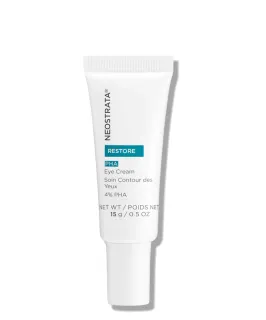
NEOSTRATA PHA Eye Cream

NEOSTRATA PHA Eye Cream

Efficacy100/100IrritancyLow
Edit

Works for

3 of 3 advertised claims delivered

Anti-aging
Gluconolactone, Camellia sinensis leaf extract
Strong evidence
What the product description says
“If you're seeking an antiaging eye cream that also soothes and hydrates, look no further!”
Source: Neostrata

This product can help reduce and prevent fine lines and wrinkles, improve skin elasticity and firmness because it contains gluconolactone.

Keep in mind that it typically takes at least 6 weeks to notice any results because the changes that are needed to improve fine lines and elasticity happen in the deeper layers of the skin. No topical anti-aging product can “erase” wrinkles or fully reverse signs of aging.

GluconolactoneKey activeEffect: HighA polyhydroxy acid (PHA) that helps shed the dead cells from the skin surface revealing smoother skin. Is believed to be genter than AHAs. It helps attract water to the upper layer of the skin and can stimulate production of skin's own hyaluronic acid resulting in improved hydration levels. It has been shown to be helpful against acne and clogged pores if used consistently (e.g over a period of 12 weeks) in high enough concentration. It can help reduce fine lines and wrinkles and improve skin tone with long-term application. Can help neutralize free radicals~5.6–6.8%
Camellia sinensis leaf extractEffect: Low, below effective doseCan contain potent anti-oxidant compounds (abbreviated ECG, GCG, EGC, and EGCG) that might help protect the skin from free radicals. Can help calm down inflammation and has some anti-bacterial properties. Unfortunately, these antioxidants are unstable and lose their effectiveness very quickly in products. The concentration of the antioxidant compounds in the extract also tends to be low to be effective in topical formulation~0.3–0.55%
Exfoliation
Gluconolactone
Strong evidence
What the product description says
“4% Gluconolactone a Polyhydroxy Acid (PHA) that is found naturally in the skin and provides antiaging and gentle exfoliating benefits without sun sensitivity.”
Source: Neostrata

This product can help exfoliate the skin. In other words, it helps break down the bonds between dead cells on the surface of the skin and speed up the skin turnover. Skin often appears softer and brighter after exfoliation, but overdoing it can result in disrupted skin barrier. The following ingredient is doing the exfoliating job in this product: gluconolactone.

GluconolactoneKey activeEffect: HighA polyhydroxy acid (PHA) that helps shed the dead cells from the skin surface revealing smoother skin. Is believed to be genter than AHAs. It helps attract water to the upper layer of the skin and can stimulate production of skin's own hyaluronic acid resulting in improved hydration levels. It has been shown to be helpful against acne and clogged pores if used consistently (e.g over a period of 12 weeks) in high enough concentration. It can help reduce fine lines and wrinkles and improve skin tone with long-term application. Can help neutralize free radicals~5.6–6.8%
Moisturizing
Panthenol, Gluconolactone + 16 more
Strong evidence
What the product description says
“When applied topically, it acts as a moisture sponge to attract water and hydrates at the skin’s surface.”
Source: Neostrata

This product can help improve hydration of the skin with the two types of ingredients.

The first type is called “humectants”:
these ingredients help attract water. When humectants are on the surface of the skin, they “pull in” the moisture from the outside environment, or from within deeper layers of the skin. The following ingredients in this product do the job: arginine, glycerin.

This product also contains ingredients called “occlusives”. They help reduce the speed with which our skin loses moisture to the outside environment. These ingredients also help soften the upper layer of the skin, so it feels less tight and nicer to the touch. The following ingredients in this product do the job: arginine, dimethicone.

The following ingredients in this product are especially good for supporting the skin barrier and helping with the hydration level: panthenol

GluconolactoneKey activeEffect: HighA polyhydroxy acid (PHA) that helps shed the dead cells from the skin surface revealing smoother skin. Is believed to be genter than AHAs. It helps attract water to the upper layer of the skin and can stimulate production of skin's own hyaluronic acid resulting in improved hydration levels. It has been shown to be helpful against acne and clogged pores if used consistently (e.g over a period of 12 weeks) in high enough concentration. It can help reduce fine lines and wrinkles and improve skin tone with long-term application. Can help neutralize free radicals~5.6–6.8%
Oenothera biennis oilKey active· EmollientEffect: HighHelps soften the upper layer of the skin and can support skin barrier function~0.45–0.7%
PanthenolHero· HumectantEffect: HighHelps attract water to the upper layer of the skin and can help improve skin barrier function~0.45–0.65%
Sodium hyaluronateKey active· HumectantEffect: HighOne of the best moisturizing ingredients. Attracts water into the upper layer of the skin~0.25–0.45%
Vitis vinifera seed oilKey active· EmollientEffect: HighA great emollient that can also have anti-oxidant properties~0.35–0.65%
Octyldodecyl neopentanoateKey active· EmollientEffect: HighAn emollient that helps soften the skin. Often used to stabilize other ingredients, for example, sunscreen~4.4–5.4%
ArginineKey active· Humectant, OcclusiveEffect: HighAn amino acid that is naturally present in skin and helps keep it hydrated. When used together with AHAs, it can reduce their irritating effect on the skin~0.15–0.3%
DimethiconeKey active· Emollient, OcclusiveEffect: HighA silicone that helps to reduce water loss from the surface of the skin. Can temporarily "fill in" lines and wrinkles, absorb oil, and create a nice product finish~0.3–0.6%
GlycerinKey active· HumectantEffect: HighOne of the best moisturizing ingredients. Naturally present in skin. It attracts water to the upper layer of the skin working as a humectant~3.1–3.7%
Cetearyl alcoholKey active· EmollientEffect: MediumA non-drying alcohol. Works as an emollient. Helps water and oil mix together and creates a nice product texture~0.6–0.9%
Cetyl ricinoleateKey active· EmollientEffect: MediumAn emollient that helps soften the upper layer of the skin~1.6–2%
Butylene glycol· HumectantEffect: LowUsed to create a nice product texture and help delivery of other ingredients. Might be somewhat helpful in attracting water to the upper layer of the skin~0.2–0.4%
Palmitic acid· EmollientEffect: LowAn emollient that is naturally present in skin and helps soften it~0.75–1.1%
Glyceryl stearate· EmollientEffect: LowAn emollient that softens the skin and forms a protective layer on its surface. Helps water and oil mix together~2.3–2.8%
Propylene glycol· HumectantEffect: LowHelps oil and water mix together and can enhance the penetration of other ingredients into the skin. It can be irritating~0.95–1.15%
Persea gratissima oilUnder-dosedEffect: HighAn emollient that helps soften the skin and could be helpful in repairing its barrier function~0.45–0.65%
Stearic acidEffect: Low, below effective doseHelps oil and water mix together and works as an emollient~0.7–1.05%
Camellia sinensis leaf extractEffect: Low, below effective doseCan contain potent anti-oxidant compounds (abbreviated ECG, GCG, EGC, and EGCG) that might help protect the skin from free radicals. Can help calm down inflammation and has some anti-bacterial properties. Unfortunately, these antioxidants are unstable and lose their effectiveness very quickly in products. The concentration of the antioxidant compounds in the extract also tends to be low to be effective in topical formulation~0.3–0.55%
Evens skin tone
Not advertised by the brand · Gluconolactone, Camellia sinensis leaf extract
Strong evidence

This product can help reduce hypepigmentation and even out the skin tone because it contains the following effective ingredients: gluconolactone

Keep in mind that you would need to apply any topical skincare targetted at hypigmentation consistently for a couple of months to get a result. No topical skincare product can help get rid of hyperpigmentation (including post-acne marks and age spots) instantly.

GluconolactoneKey activeEffect: HighA polyhydroxy acid (PHA) that helps shed the dead cells from the skin surface revealing smoother skin. Is believed to be genter than AHAs. It helps attract water to the upper layer of the skin and can stimulate production of skin's own hyaluronic acid resulting in improved hydration levels. It has been shown to be helpful against acne and clogged pores if used consistently (e.g over a period of 12 weeks) in high enough concentration. It can help reduce fine lines and wrinkles and improve skin tone with long-term application. Can help neutralize free radicals~5.6–6.8%
Camellia sinensis leaf extractEffect: Low, below effective doseCan contain potent anti-oxidant compounds (abbreviated ECG, GCG, EGC, and EGCG) that might help protect the skin from free radicals. Can help calm down inflammation and has some anti-bacterial properties. Unfortunately, these antioxidants are unstable and lose their effectiveness very quickly in products. The concentration of the antioxidant compounds in the extract also tends to be low to be effective in topical formulation~0.3–0.55%
Anti-oxidation
Not advertised by the brand · Gluconolactone, Oenothera biennis oil + 3 more
Moderate evidence

This product contains antioxidants (gluconolactone) that might be able to help neutralize free radicals in skin to lessen the damage it gets from the UV light (sun). There is not enough evidence to confirm their effectiveness in skin though.

GluconolactoneKey activeEffect: MediumA polyhydroxy acid (PHA) that helps shed the dead cells from the skin surface revealing smoother skin. Is believed to be genter than AHAs. It helps attract water to the upper layer of the skin and can stimulate production of skin's own hyaluronic acid resulting in improved hydration levels. It has been shown to be helpful against acne and clogged pores if used consistently (e.g over a period of 12 weeks) in high enough concentration. It can help reduce fine lines and wrinkles and improve skin tone with long-term application. Can help neutralize free radicals~5.6–6.8%
Oenothera biennis oilEffect: LowHelps soften the upper layer of the skin and can support skin barrier function~0.45–0.7%
Vitis vinifera seed oilEffect: LowA great emollient that can also have anti-oxidant properties~0.35–0.65%
Camellia sinensis leaf extractUnder-dosedEffect: MediumCan contain potent anti-oxidant compounds (abbreviated ECG, GCG, EGC, and EGCG) that might help protect the skin from free radicals. Can help calm down inflammation and has some anti-bacterial properties. Unfortunately, these antioxidants are unstable and lose their effectiveness very quickly in products. The concentration of the antioxidant compounds in the extract also tends to be low to be effective in topical formulation~0.3–0.55%
Tocopheryl acetateEffect: Low, below effective doseA more stable but less bio-available form of vitamin E compared to Tocopherol. Might help moisturize and protect the skin from free radicals, but mostly used in low concentrations to stabilize other ingredients.~0.45–0.65%

Can it cause trouble?

Irritancy
13 flagged ingredients
Low risk
We flag 13 ingredients with irritancy potential; the product's overall irritancy is low. The table lists each ingredient's own rating.
IngredientFunctionIrritationEst. amount
Propylene glycolHelps oil and water mix together and can enhance the penetration of other ingredients into the skin. It can be irritatingHigh~0.95–1.15%est.
GluconolactoneA polyhydroxy acid (PHA) that helps shed the dead cells from the skin surface revealing smoother skin. Is believed to be genter than AHAs. It helps attract water to the upper layer of the skin and can stimulate production of skin's own hyaluronic acid resulting in improved hydration levels. It has been shown to be helpful against acne and clogged pores if used consistently (e.g over a period of 12 weeks) in high enough concentration. It can help reduce fine lines and wrinkles and improve skin tone with long-term application. Can help neutralize free radicalsMedium~5.6–6.8%est.
Steareth-2Helps oil and water mix togetherMedium~1.4–1.8%est.
Steareth-21Helps oil and water mix togetherMedium~1.2–1.5%est.
TriethanolamineUsed to adjust pH of the product and can help improve the product's smellMedium~0.5–0.7%est.
Tocopheryl acetateA more stable but less bio-available form of vitamin E compared to Tocopherol. Might help moisturize and protect the skin from free radicals, but mostly used in low concentrations to stabilize other ingredients.Medium~0.45–0.65%est.
Oenothera biennis oilHelps soften the upper layer of the skin and can support skin barrier functionMedium~0.45–0.7%est.
Persea gratissima oilAn emollient that helps soften the skin and could be helpful in repairing its barrier functionMedium~0.45–0.65%est.
Vitis vinifera seed oilA great emollient that can also have anti-oxidant propertiesMedium~0.35–0.65%est.
Myristic acidHelps oil and water mix together. Could be comedogenicMedium~0.25–0.45%est.
BhtA preservativeMedium~0.15–0.25%est.
Disodium edtaStabilizes the product formulationMedium~0.15–0.25%est.
ChlorphenesinA preservativeMedium~0.1–0.2%est.
Comedogenic
2 ingredients rated 2 or more on the 0–5 pore-clogging scale
2 flagged
These ingredients have a comedogenic rating of 2 or more on a 0–5 scale; the table shows each one's rating. In leave-on products they can clog pores in acne-prone skin.
IngredientFunctionRatingEst. amount
Myristic acidHelps oil and water mix together. Could be comedogenic3/5~0.25–0.45%est.
Cetearyl alcoholA non-drying alcohol. Works as an emollient. Helps water and oil mix together and creates a nice product texture2/5~0.6–0.9%est.
Edit

User reviews

Would you recommend?
No community reviews yet.

Be the first — your take helps the next person decide.

Write a review · ~30s

Ingredients

Filter by role to see what each ingredient is doing.

Water~45–55%
Formula
Irritation risk
Low

Plain old water

More about Water
Gluconolactone~5.6–6.8%
Key activeIrritant · medium
Irritation risk
Medium
Works for
ExfoliationAnti-agingEvens skin toneMoisturizingAnti-oxidationAnti-blemish

A polyhydroxy acid (PHA) that helps shed the dead cells from the skin surface revealing smoother skin. Is believed to be genter than AHAs. It helps attract water to the upper layer of the skin and can stimulate production of skin's own hyaluronic acid resulting in improved hydration levels. It has been shown to be helpful against acne and clogged pores if used consistently (e.g over a period of 12 weeks) in high enough concentration. It can help reduce fine lines and wrinkles and improve skin tone with long-term application. Can help neutralize free radicals

More about Gluconolactone
Octyldodecyl neopentanoate~4.4–5.4%
Key active
Irritation risk
Low
Works for
Moisturizing

An emollient that helps soften the skin. Often used to stabilize other ingredients, for example, sunscreen

More about Octyldodecyl neopentanoate
Glycerin~3.1–3.7%
Key active
Irritation risk
Low
Works for
Moisturizing

One of the best moisturizing ingredients. Naturally present in skin. It attracts water to the upper layer of the skin working as a humectant

More about Glycerin
Glyceryl stearate~2.3–2.8%
Formula
Irritation risk
Low
Works for
CleansingMoisturizing

An emollient that softens the skin and forms a protective layer on its surface. Helps water and oil mix together

More about Glyceryl stearate
Peg-100 stearate~2–2.4%
Formula
Irritation risk
Low
Works for
Cleansing

Helps oil and water mix togehter and creates a nice product texture

More about Peg-100 stearate
Cetyl ricinoleate~1.6–2%
Key active
Irritation risk
Low
Works for
Moisturizing

An emollient that helps soften the upper layer of the skin

More about Cetyl ricinoleate
Steareth-2~1.4–1.8%
Irritant · medium
Irritation risk
Medium
Works for
Cleansing

Helps oil and water mix together

More about Steareth-2
Steareth-21~1.2–1.5%
Irritant · medium
Irritation risk
Medium
Works for
Cleansing

Helps oil and water mix together

More about Steareth-21
Propylene glycol~0.95–1.15%
Irritant · high
Irritation risk
High
Works for
Moisturizing

Helps oil and water mix together and can enhance the penetration of other ingredients into the skin. It can be irritating

More about Propylene glycol
Palmitic acid~0.75–1.1%
Formula
Irritation risk
Low
Works for
CleansingMoisturizing

An emollient that is naturally present in skin and helps soften it

More about Palmitic acid
Stearic acid~0.7–1.05%
Formula
Irritation risk
Low
Works for
CleansingMoisturizing

Helps oil and water mix together and works as an emollient

More about Stearic acid
Cetearyl alcohol~0.6–0.9%
Key activeComedogenic 2/5
Irritation risk
Low
Comedogenicity
2/5
Works for
CleansingMoisturizing

A non-drying alcohol. Works as an emollient. Helps water and oil mix together and creates a nice product texture

More about Cetearyl alcohol
Triethanolamine~0.5–0.7%
Irritant · medium
Irritation risk
Medium
Works for
Cleansing

Used to adjust pH of the product and can help improve the product's smell

More about Triethanolamine
Tocopheryl acetate~0.45–0.65%
Irritant · medium
Irritation risk
Medium
Works for
Anti-oxidation

A more stable but less bio-available form of vitamin E compared to Tocopherol. Might help moisturize and protect the skin from free radicals, but mostly used in low concentrations to stabilize other ingredients.

More about Tocopheryl acetate
Panthenol~0.45–0.65%
Hero · Moisturizing
Irritation risk
Low
Works for
MoisturizingReduces rednessReduces irritation

Helps attract water to the upper layer of the skin and can help improve skin barrier function

More about Panthenol
Oenothera biennis oil~0.45–0.7%
Key activeIrritant · medium
Irritation risk
Medium
Works for
MoisturizingAnti-oxidationAnti-blemishAnti-inflammatory

Helps soften the upper layer of the skin and can support skin barrier function

More about Oenothera biennis oil
Persea gratissima oil~0.45–0.65%
Under-dosedIrritant · medium
Irritation risk
Medium
Works for
Moisturizing

An emollient that helps soften the skin and could be helpful in repairing its barrier function

More about Persea gratissima oil
Vitis vinifera seed oil~0.35–0.65%
Key activeIrritant · medium
Irritation risk
Medium
Works for
MoisturizingAnti-oxidation

A great emollient that can also have anti-oxidant properties

More about Vitis vinifera seed oil
Camellia sinensis leaf extract~0.3–0.55%
Under-dosed
Irritation risk
Low
Works for
AntibacterialAnti-oxidationAnti-agingAnti-blemishEvens skin toneMoisturizing

Can contain potent anti-oxidant compounds (abbreviated ECG, GCG, EGC, and EGCG) that might help protect the skin from free radicals. Can help calm down inflammation and has some anti-bacterial properties. Unfortunately, these antioxidants are unstable and lose their effectiveness very quickly in products. The concentration of the antioxidant compounds in the extract also tends to be low to be effective in topical formulation

More about Camellia sinensis leaf extract
Dimethicone~0.3–0.6%
Key active
Irritation risk
Low
Works for
MoisturizingMattifying

A silicone that helps to reduce water loss from the surface of the skin. Can temporarily "fill in" lines and wrinkles, absorb oil, and create a nice product finish

More about Dimethicone
Sodium hyaluronate~0.25–0.45%
Key active
Irritation risk
Low
Works for
Moisturizing

One of the best moisturizing ingredients. Attracts water into the upper layer of the skin

More about Sodium hyaluronate
Propylene glycol hydroxystearate~0.2–0.4%
Formula
Irritation risk
Low
Works for
Cleansing
More about Propylene glycol hydroxystearate
Ethylene/acrylic acid copolymer~0.2–0.35%
Formula
Butylene glycol~0.2–0.4%
Formula
Irritation risk
Low
Works for
Moisturizing

Used to create a nice product texture and help delivery of other ingredients. Might be somewhat helpful in attracting water to the upper layer of the skin

More about Butylene glycol
Myristic acid~0.25–0.45%
Comedogenic 3/5Irritant · medium
Irritation risk
Medium
Comedogenicity
3/5
Works for
Cleansing

Helps oil and water mix together. Could be comedogenic

More about Myristic acid
Arginine~0.15–0.3%
Key active
Irritation risk
Low
Works for
Moisturizing

An amino acid that is naturally present in skin and helps keep it hydrated. When used together with AHAs, it can reduce their irritating effect on the skin

More about Arginine
Bht~0.15–0.25%
Irritant · medium
Irritation risk
Medium

A preservative

More about Bht
Disodium edta~0.15–0.25%
Irritant · medium
Irritation risk
Medium

Stabilizes the product formulation

More about Disodium edta
Methylparaben~0.1–0.2%
Formula
Irritation risk
Low

A preservative

More about Methylparaben
Chlorphenesin~0.1–0.2%
Irritant · medium
Irritation risk
Medium

A preservative

More about Chlorphenesin
Propylparaben~0.1–0.15%
Formula
Irritation risk
Low

A preservative

More about Propylparaben
Ingredient list view

Water, Gluconolactone, Octyldodecyl neopentanoate, Glycerin, Glyceryl stearate, Peg-100 stearate, Cetyl ricinoleate, Steareth-2, Steareth-21, Propylene glycol, Palmitic acid, Stearic acid, Cetearyl alcohol, Triethanolamine, Tocopheryl acetate, Panthenol, Oenothera biennis oil, Persea gratissima oil, Vitis vinifera seed oil, Camellia sinensis leaf extract, Dimethicone, Sodium hyaluronate, Propylene glycol hydroxystearate, Ethylene/acrylic acid copolymer, Butylene glycol, Myristic acid, Arginine, Bht, Disodium edta, Methylparaben, Chlorphenesin, Propylparaben

Compare prices

Retailers ranked by price — lowest first.

Amazon USPrice as of 10/25/2026 15:12 GMT
$54.00
Buy
Neostrata
Price unavailable
Check

Affiliate links · prices updated regularly · As an Amazon Associate, WIMJ earns from qualifying purchases.

Worth comparing, line by line.

Match % combines shared ingredients, the first five ingredients, shared actives and hero ingredients, irritancy (lower counts in the alternative's favour), texture and body area. Only products in the same routine step are compared.

Side-by-side comparison of this product against its closest alternatives
NEOSTRATAPHA Eye CreamYOUR PRODUCTNeutrogenaRapid Firming™ Peptide Multi Action Eye CreamExuvianceBrightening Bionic Eye Cream Plus
Match—54%51%
Price$34.74$39.99+$5.25$77.40+$42.66
Shared key ingredients—8 of 117 of 11
Key difference—Lactobionic AcidLactobionic Acid
Irritancy Low Medium Medium
Drying alcohol———
View product Shop Shop
Cheaper alternatives? See how this stacks up against similar formulas.
We compare ingredient profiles across our catalog — pick the closest match for your budget.
Open dupe finder

Product summary

"NEOSTRATA - PHA Eye Cream" is effective for: Evens skin tone, Anti-aging, Exfoliation and Moisturizing

Ingredient callouts

  • Exfoliating acids (). In this concentration, they will have a noticeable exfoliating effect. They can also have an anti-aging effect and stimulate collagen production in a long-run. PHAs (gluconolactone 5.60% - 6.80%) in this product also work for improving skin hydration. They might be even able to stimulate the production of skin's natural humectants and support the healthy skin microbiome.

Price

The product retails for 54.00$ in the United States and for 34.99£ in the United Kingdom.

For a detailed price comparison: click here.

Sources cited in this review

Every concentration estimate and effectiveness label is anchored to one of these 24 studies and safety reviews.

  1. 1
  2. 2
  3. 3
  4. 4
  5. 5
  6. 6

Affiliate links · As an Amazon Associate, WIMJ earns from qualifying purchases.

As an Amazon Associate, WIMJ earns from qualifying purchases.