![Filorga NCEF-Reverse Supreme Multi-Correction Cream [Wrinkles - Firmness - Radiance]](/_ipx/fit_inside&s_320x320/https://image-delivery.nyc3.cdn.digitaloceanspaces.com/full/33aabea9a059824ed7e1e913ec651e90.jpeg)
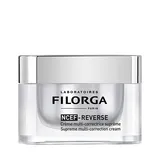
Filorga NCEF-Reverse Supreme Multi-Correction Cream [Wrinkles - Firmness - Radiance]
Works for
3 of 3 advertised claims delivered
Anti-aging16 ingredients credited for this claimStrong support
“NCEF-Reverse Supreme Multi-Correction Cream [Wrinkles .”
This product can help reduce and prevent fine lines and wrinkles, improve skin elasticity and firmness because it contains retinol.
These ingredients in the product can also be helpful, even though there is less evidence for their effectiveness: aspartic acid, dipeptide diaminobutyroyl benzylamide diacetate, folic acid, palmitoyl tetrapeptide-7, palmitoyl tripeptide-1, retinyl acetate, serine, threonine.
Keep in mind that it typically takes at least 6 weeks to notice any results because the changes that are needed to improve fine lines and elasticity happen in the deeper layers of the skin. No topical anti-aging product can “erase” wrinkles or fully reverse signs of aging.
Moisturizing38 ingredients credited for this claimStrong support
“NCEF-Reverse Supreme Multi-Correction Cream [Wrinkles .”
This product can help improve hydration of the skin with the two types of ingredients.
The first type is called “humectants”:
these ingredients help attract water.
When humectants are on the surface of the skin, they “pull in” the moisture from the outside environment, or from
within deeper layers of the skin. The following ingredients in this product do the job:
alanine, aspartic acid.
This product also contains ingredients called “occlusives”. They help reduce the speed with which our skin loses moisture to the outside environment. These ingredients also help soften the upper layer of the skin, so it feels less tight and nicer to the touch. The following ingredients in this product do the job: butyrospermum parkii butter, dimethicone.
The following ingredients in this product are especially good for supporting the skin barrier and helping with the hydration level: dipeptide diaminobutyroyl benzylamide diacetate, palmitoyl tetrapeptide-7, palmitoyl tripeptide-1
Evens skin tone8 ingredients credited for this claimStrong support
“and boosters of efficacy that acts simultaneously to smooth wrinkles, even out skin tone and enhance radiance.”
This product can help reduce hypepigmentation and even out the skin tone because it contains the following effective ingredients: retinol.
In addition, this product contains glutathione. This ingredient (ingredients) might help reduce hyperpigmentation, but the effect, if any, is likely to be small.
The following ingredient (ingredients) in this product might be helpful, but there is no evidence to confirm that it actually can help even out the skin tone: alanine, glucosamine hcl.
Keep in mind that you would need to apply any topical skincare targetted at hypigmentation consistently for a couple of months to get a result. No topical skincare product can help get rid of hyperpigmentation (including post-acne marks and age spots) instantly.
Anti-blemishNot advertised by the brand · 4 ingredients credited for this claimStrong support
This product can help reduce breakouts and clogged pores because it contains the following ingredient: retinol. This ingredient is used for treating acne and can have a noticeable effect.
ExfoliationNot advertised by the brand · 1 ingredient credited for this claimStrong support
This product can help exfoliate the skin. In other words, it helps break down the bonds between dead cells on the surface of the skin and speed up the skin turnover. Skin often appears softer and brighter after exfoliation, but overdoing it can result in disrupted skin barrier. The following ingredient is doing the exfoliating job in this product: retinol.
Anti-oxidationNot advertised by the brand · 10 ingredients credited for this claimStrong support
This product contains antioxidants (glutathione, retinol) that can help neutralize free radicals in skin. By doing so, they can lessen the damage the skin gets from the UV light (sun).
Can it cause trouble?
Irritancy5 strong irritants: Parfum, Alcohol denat. + 3 more — patch-test recommendedHigh risk
Comedogenic2 ingredients rated 2 or more on the 0–5 pore-clogging scale2 flagged


User reviews
Be the first — your take helps the next person decide.
Ingredients
Filter by role to see what each ingredient is doing.
Water~45–55%
Glycerin~4.3–5.3%
- Irritation risk
- Low
One of the best moisturizing ingredients. Naturally present in skin. It attracts water to the upper layer of the skin working as a humectant
More about GlycerinButyrospermum parkii butter~4.2–5.1%
- Irritation risk
- Low
- Comedogenicity
- 3/5
A great moisturising ingredient that softens the skin and reduces water loss from its upper layer. It also can be helpful in protecting skin from free radicals
More about Butyrospermum parkii butterPropanediol~3–3.7%
- Irritation risk
- Low
Acts as a solvent for other ingredients. Speeds up the absorption of other ingredients into the skin
More about PropanediolPolymethyl methacrylate~2.3–2.9%
- Irritation risk
- Low
Is used to enhance product texture and can help to optically mask skin imperfections
More about Polymethyl methacrylateMethylsilanol mannuronate~1.8–2.2%
- Irritation risk
- Low
Cetyl alcohol~1.6–2%
- Irritation risk
- Low
A non-drying alcohol that works to soften the skin and stabilize product formulations helping oil and water mix together
More about Cetyl alcoholSodium potassium aluminum silicate~1.5–1.8%
- Irritation risk
- Low
Dimethicone~1.2–1.5%
- Irritation risk
- Low
A silicone that helps to reduce water loss from the surface of the skin. Can temporarily "fill in" lines and wrinkles, absorb oil, and create a nice product finish
More about DimethiconeMethylpropanediol~0.9–1.1%
Sodium chloride~0.75–1.1%
- Irritation risk
- Low
Used to stabilize mixtures of oil and water, and create thicker, gel-like product textures
More about Sodium chloridePhenoxyethanol~0.55–0.8%
- Irritation risk
- Low
A preservative. It helps prevent bacterial growth in cosmetic products
More about PhenoxyethanolButylene glycol~0.5–0.75%
- Irritation risk
- Low
Used to create a nice product texture and help delivery of other ingredients. Might be somewhat helpful in attracting water to the upper layer of the skin
More about Butylene glycolHydroxyethyl acrylate/sodium acryloyldimethyl taurate copolymer~0.45–0.7%
- Irritation risk
- Medium
A gelling agent that thickens the product consistency and leaves the skin with a velvety finish
More about Hydroxyethyl acrylate/sodium acryloyldimethyl taurate copolymerPolyacrylate crosspolymer-6~0.45–0.65%
- Irritation risk
- Low
Parfum~0.35–0.65%
- Irritation risk
- High
An aromatic blend of unspecified and possibly irritating ingredients
More about ParfumCi 77891~0.45–0.65%
- Irritation risk
- Low
Titanium dioxide~0.5–0.7%
- Irritation risk
- Low
Works as a UV filter when used in high concentrations. It is photostable and is effective mostly against the UVB light, with some protection in the UVA range. In small concentrations, used for its ability to improve the color of cosmetic products. Is usually well tolerated by the skin
More about Titanium dioxideSilica~0.45–0.7%
Sucrose palmitate~0.3–0.6%
Tocopheryl acetate~0.25–0.5%
- Irritation risk
- Medium
A more stable but less bio-available form of vitamin E compared to Tocopherol. Might help moisturize and protect the skin from free radicals, but mostly used in low concentrations to stabilize other ingredients.
More about Tocopheryl acetatePeg-20 castor oil~0.3–0.5%
Ethylhexyl salicylate~0.45–0.7%
- Irritation risk
- Low
Octisalate. A UV filter. It offers some protection against the sun rays that cause sunburn (UVB), but does not protect against the most aging sun rays (UVA). It loses its effectiveness quickly when exposed to sunlight. It is an organic, or so called "chemical" sunscreen
More about Ethylhexyl salicylateChlorphenesin~0.16–0.32%
Hydrolyzed hyaluronic acid~0.25–0.4%
- Irritation risk
- Low
One of the best moisturizing ingredients. Attracts water into the upper layer of the skin. A version of it is naturally present in skin
More about Hydrolyzed hyaluronic acidAlcohol denat.~0.25–0.45%
- Irritation risk
- High
Produces temporary toning effect. Can help dissolve other ingredients or preserve products
More about Alcohol denat.Glucose~0.25–0.45%
- Irritation risk
- Low
Helps attract water to the upper layer of the skin. Could be helpful in restoring the skin barrier function
More about GlucoseDisodium edta~0.25–0.45%
Glyceryl linoleate~0.3–0.55%
- Irritation risk
- Medium
Helps oil and water mix together
More about Glyceryl linoleatePrunus amygdalus dulcis seed~0.25–0.4%
- Irritation risk
- Low
Helps soften the upper layer of the skin
More about Prunus amygdalus dulcis seedButyl methoxydibenzoylmethane~0.45–0.7%
- Irritation risk
- Medium
Avobenzone. An organic, or so-called "chemical" UV filter. Protects against both UVA and UVB rays. Needs to be combined with other filters in a formulation to be stable.
More about Butyl methoxydibenzoylmethanePotassium chloride~0.25–0.45%
- Irritation risk
- Low
Diethylhexyl syringylidenemalonate~0.25–0.45%
- Irritation risk
- Medium
Used to stabilize the product formulation
More about Diethylhexyl syringylidenemalonateCarbomer~0.25–0.45%
- Irritation risk
- Low
Helps create a thicker or gel-like product texture. It is not a surfactant but can be used in gentle cleansing formulations
More about CarbomerPeg-60 hydrogenated castor oil~0.25–0.5%
- Irritation risk
- Medium
Helps oil and water mix together
More about Peg-60 hydrogenated castor oilPolysorbate 60~0.25–0.5%
Sodium lactate~0.25–0.45%
- Irritation risk
- Medium
Helps attract water to the upper layer of the skin. Is often used to adjust the pH level of the product
More about Sodium lactateSorbitan isostearate~0.25–0.45%
- Irritation risk
- Low
Helps oil and water mix together
More about Sorbitan isostearateCalcium chloride~0.25–0.45%
- Irritation risk
- Medium
Helps create a thicker product consistency. Might be irritating
More about Calcium chlorideZea mays oil~0.2–0.4%
- Irritation risk
- Low
- Comedogenicity
- 3/5
A good moisturizing plant oil. Due to the high linoleic acid content, it helps soften the upper layer of the skin, reduce water loss and support skin barrier function
More about Zea mays oilBenzyl alcohol~0.2–0.4%
- Irritation risk
- High
A preservative. Can be used to mask unpleasant smell. Can be irritating
More about Benzyl alcoholSodium hydroxide~0.25–0.45%
Haberlea rhodopensis leaf extract~0.25–0.4%
- Irritation risk
- Medium
A plant extract that if used in high concentration might help to neutralize free radicals in skin
More about Haberlea rhodopensis leaf extractPolysorbate 20~0.25–0.5%
Magnesium sulfate~0.25–0.5%
Glutamine~0.25–0.4%
- Irritation risk
- Low
Citric acid~0.25–0.45%
- Irritation risk
- Medium
Can work as an exfoliant but is typically used to adjust the product pH
More about Citric acidInositol~0.25–0.45%
Calcium pantothenate~0.25–0.45%
- Irritation risk
- Low
Helps support skin barrier function improving skin hydration and reducing sensitivity
More about Calcium pantothenateRetinol~0.2–0.4%
- Irritation risk
- High
Two steps removed from the active form of vitamin A - retinoic acid. Once converted to the retinoic acid in the skin, retinol is proven to be effective against all signs of aging. It improves skin cell turnover, helps fight blemishes and clogged pores, can regulate excess oil production and even skin tone. It can, however, be quite irritating
More about RetinolSodium phosphate~0.25–0.45%
Dipeptide diaminobutyroyl benzylamide diacetate~0.25–0.4%
- Irritation risk
- Low
A type of peptide. Peptides are excellent moisturizers and might be able support collagen production reducing fine lines and wrinkles
More about Dipeptide diaminobutyroyl benzylamide diacetateSodium hyaluronate~0.25–0.45%
- Irritation risk
- Low
One of the best moisturizing ingredients. Attracts water into the upper layer of the skin
More about Sodium hyaluronateSodium citrate~0.25–0.45%
- Irritation risk
- Medium
Helps to control the skin's pH level. Maintains the skin's natural film of amino-lactic acids and oils. Helps to preserve products
More about Sodium citrateAscorbic acid~0.25–0.45%
- Irritation risk
- High
The most well-researched antioxidant that works in skin. Helps neutralize free radicals supporting collagen production, helping to even out the skin tone and preventing early signs of aging
More about Ascorbic acidSodium acetate~0.25–0.45%
- Irritation risk
- Low
Sodium benzoate~0.25–0.45%
Soluble collagen~0.25–0.45%
- Irritation risk
- Low
A typically plant-derived compound that is supposed mimic human collagen. Cannot penetrate the skin barrier so is not particularly useful in skincare products beyond attracting water to the upper layer of the skin
More about Soluble collagenPotassium sorbate~0.25–0.45%
Lysine hcl~0.25–0.4%
Arginine hcl~0.25–0.4%
- Irritation risk
- Low
An amino acid that is naturally present in skin and helps keep it hydrated. When used together with AHAs, it can reduce their irritating effect on the skin
More about Arginine hclRosa moschata seed oil~0.25–0.5%
- Irritation risk
- High
Alanine~0.25–0.4%
- Irritation risk
- Low
An amino-acid that helps to attract water to the upper layer of the skin and might help to lighten the skin, but solid evidence is lacking
More about AlanineDehydroacetic acid~0.25–0.45%
Histidine hcl~0.25–0.4%
- Irritation risk
- Low
A salt of an amino-acid that helps attract water to the upper layer of the skin. Might be helpful in restoring the skin barrier function
More about Histidine hclValine~0.25–0.4%
- Irritation risk
- Low
Leucine~0.25–0.4%
- Irritation risk
- Low
Threonine~0.25–0.45%
- Irritation risk
- Low
An amino-acid that helps to attract water to the upper layer of the skin. In combination with other amino-acids, might help to reduce fine lines and wrinkles
More about ThreonineIsoleucine~0.25–0.4%
- Irritation risk
- Low
An amino acid that can help attract water to the upper layer of the skin and support skin's barrier function
More about IsoleucineTryptophan~0.25–0.45%
- Irritation risk
- Low
Phenylalanine~0.25–0.45%
- Irritation risk
- Low
Tyrosine~0.25–0.4%
Glycine~0.25–0.4%
- Irritation risk
- Low
Helps to attract water to the upper layer of the skin and can help restore the skin barrier function
More about GlycinePolysorbate 80~0.25–0.5%
Serine~0.25–0.4%
- Irritation risk
- Low
An amino-acid that helps to attract water to the upper layer of the skin. In combination with other amino-acids, might help to reduce fine lines and wrinkles
More about SerineCystine~0.25–0.45%
- Irritation risk
- Low
Cyanocobalamin~0.25–0.4%
- Irritation risk
- Low
Can support skin barrier function and reduce inflammation in skin
More about CyanocobalaminGlutathione~0.25–0.45%
- Irritation risk
- Medium
A peptide that can help neutralize free radicals in skin and reduce melanin production resulting in skin lightening effect and reduction in hyperpigmentation. It can also help attract moisture to the upper layer of the skin
More about GlutathioneAsparagine~0.25–0.4%
- Irritation risk
- Low
Aspartic acid~0.25–0.4%
- Irritation risk
- Low
An amino-acid that helps increase skin hydration and might help to slightly improve skin firmness, potentially reducing lines and wrinkles
More about Aspartic acidOrnithine hcl~0.25–0.4%
- Irritation risk
- Low
Glutamic acid~0.25–0.45%
- Irritation risk
- Low
An amino-acid that helps attract water to the upper layer of the skin
More about Glutamic acidNicotinamide adenine dinucleotide~0.25–0.4%
- Irritation risk
- Low
Proline~0.25–0.45%
Biotin~0.25–0.4%
- Irritation risk
- Low
Might have some moisturising properties. Is not effective when applied topically beyond some moisturizing effect
More about BiotinMethionine~0.25–0.4%
- Irritation risk
- Low
Taurine~0.25–0.45%
- Irritation risk
- Medium
Could be helpful in reducing inflammation in skin, evening out the skin tone and neutralizing free radicals, but more research is needed to confirm its effectiveness
More about TaurineHydroxyproline~0.25–0.4%
- Irritation risk
- Low
Is helpful in restoring skin barrier function supporting its moisture levels. Is claimed to stimulte collagen production in skin but evidence is lacking
More about HydroxyprolineGlucosamine hcl~0.25–0.45%
- Irritation risk
- Low
Might be able to stimulate production of skin's natural moisturizing compounds such as hyaluronic acid. Could be helpful for evening the skin tone.
More about Glucosamine hclTocopherol~0.25–0.45%
- Irritation risk
- Low
Pure form of vitamin E. Can help moisturise and protect the skin from free radicals. Often used to help stabilise other ingredients or the formula itself
More about TocopherolCoenzyme a~0.25–0.45%
- Irritation risk
- Low
Helps soften the upper layer of the skin and dissolve other ingredients in a product
More about Coenzyme aPalmitoyl tripeptide-1~0.25–0.5%
- Irritation risk
- Low
A type of peptide. Peptides are excellent moisturizers and might be able support collagen production reducing fine lines and wrinkles
More about Palmitoyl tripeptide-1Sodium glucuronate~0.2–0.4%
- Irritation risk
- Low
Palmitoyl tetrapeptide-7~0.25–0.45%
- Irritation risk
- Low
A type of peptide. Peptides are excellent moisturizers and might be able support collagen production reducing fine lines and wrinkles
More about Palmitoyl tetrapeptide-7Thiamine diphosphate~0.2–0.4%
- Irritation risk
- Low
Ci 17200~0.2–0.35%
Retinyl acetate~0.2–0.35%
Niacin~0.2–0.35%
- Irritation risk
- High
A form of vitamin B3. It is similar in action to niacinamide, but is more likely to cause red flashes in skin as the side effect
More about NiacinNiacinamide~0.15–0.3%
- Irritation risk
- Low
Is proven to be effective in reducing blemishes, evening out skin tone and helping to improve lines and wrinkles. It helps the skin to repair sun damage, calm down inflammation and keep maintain good levels of moisture. The concentration of about 2% is effective for supporting the skin barrier and evening out the skin tone. Concentration of 4-6% is better for helping with acne and balancing the sebum production
More about NiacinamidePyridoxine hcl~0.15–0.25%
- Irritation risk
- Medium
Might help neutralize free radicals in skin
More about Pyridoxine hclRiboflavin~0.15–0.3%
- Irritation risk
- Low
Sodium tocopheryl phosphate~0.15–0.3%
Thiamine hcl~0.1–0.15%
- Irritation risk
- Medium
Can help attract water to the upper layer of the skin. Is studied as a mosquito repellent
More about Thiamine hclFolic acid~0.1–0.15%
- Irritation risk
- Low
Can help stimulate collagen production in skin. While available studies are promising, more research is needed to confirm the efficacy in skin
More about Folic acidIngredient list view
Water, Glycerin, Butyrospermum parkii butter, Propanediol, Polymethyl methacrylate, Methylsilanol mannuronate, Cetyl alcohol, Sodium potassium aluminum silicate, Dimethicone, Methylpropanediol, Sodium chloride, Phenoxyethanol, Butylene glycol, Hydroxyethyl acrylate/sodium acryloyldimethyl taurate copolymer, Polyacrylate crosspolymer-6, Parfum, Ci 77891, Titanium dioxide, Silica, Sucrose palmitate, Tocopheryl acetate, Peg-20 castor oil, Ethylhexyl salicylate, Chlorphenesin, Hydrolyzed hyaluronic acid, Alcohol denat., Glucose, Disodium edta, Glyceryl linoleate, Prunus amygdalus dulcis seed, Butyl methoxydibenzoylmethane, Potassium chloride, Diethylhexyl syringylidenemalonate, Carbomer, Peg-60 hydrogenated castor oil, Polysorbate 60, Sodium lactate, Sorbitan isostearate, Calcium chloride, Zea mays oil, Benzyl alcohol, Sodium hydroxide, Haberlea rhodopensis leaf extract, Polysorbate 20, Magnesium sulfate, Glutamine, Citric acid, Inositol, Calcium pantothenate, Retinol, Sodium phosphate, Dipeptide diaminobutyroyl benzylamide diacetate, Sodium hyaluronate, Sodium citrate, Ascorbic acid, Sodium acetate, Sodium benzoate, Soluble collagen, Potassium sorbate, Lysine hcl, Arginine hcl, Rosa moschata seed oil, Alanine, Dehydroacetic acid, Histidine hcl, Valine, Leucine, Threonine, Isoleucine, Tryptophan, Phenylalanine, Tyrosine, Glycine, Polysorbate 80, Serine, Cystine, Cyanocobalamin, Glutathione, Asparagine, Aspartic acid, Ornithine hcl, Glutamic acid, Nicotinamide adenine dinucleotide, Proline, Biotin, Methionine, Taurine, Hydroxyproline, Glucosamine hcl, Tocopherol, Coenzyme a, Palmitoyl tripeptide-1, Sodium glucuronate, Palmitoyl tetrapeptide-7, Thiamine diphosphate, Ci 17200, Retinyl acetate, Niacin, Niacinamide, Pyridoxine hcl, Riboflavin, Sodium tocopheryl phosphate, Thiamine hcl, Folic acid
Compare prices
Retailers ranked by price — lowest first.
Affiliate links · prices updated regularly · As an Amazon Associate, WIMJ earns from qualifying purchases.
Worth comparing, line by line.
Match % combines shared ingredients, the first five ingredients, shared actives and hero ingredients, irritancy (lower counts in the alternative's favour), texture and body area. Only products in the same routine step are compared.
| FilorgaNCEF-Reverse Supreme Multi-Correction Cream [Wrinkles - Firmness - Radiance]YOUR PRODUCT | AHCEye Cream For Face | Geologie0.2% Retinol Night Cream | Garnier Green LabsRetinol-Berry Super Smoothing Night Serum Cream | |
|---|---|---|---|---|
| Match | — | 80% | 72% | 70% |
| Price | $77.48 | $14.85−$62.63 | $55.00−$22.48 | $30.37−$47.11 |
| Shared key ingredients | — | 18 of 36 | 6 of 36 | 5 of 36 |
| Key difference | — | Copper Tripeptide-1 | Cocos Nucifera Oil | Panthenol |
| Irritancy | High | High | Medium | Medium |
| Drying alcohol | Contains drying alcohol | Contains drying alcohol | — | — |
| View product | Shop | Shop | Shop |

Product summary
Based on the ingredients included, "Filorga - NCEF-Reverse Supreme Multi-Correction Cream [Wrinkles - Firmness - Radiance]" works well for moisturizing the skin. To work well, any moisturizer needs to include a combination of water-binding and emollient ingredients. Filorga - NCEF-Reverse Supreme Multi-Correction Cream [Wrinkles - Firmness - Radiance] ticks this box. Alanine, aspartic acid, glucosamine hcl, glutamic acid and glycerin in this product (humectants) attract water molecules to the upper layer of the skin (the water comes from the outside air or from the deeper layers of the skin if the air is dry). Emollients in this formulation (palmitoyl tetrapeptide-7, palmitoyl tripeptide-1, butyrospermum parkii butter, dimethicone and cetyl alcohol) help to reduce the moisture loss from the skin. They also soften the skin surface and relieve the feeling of dryness and tightness.
Ingredient callouts
- This product also contains vitamin C (Ascorbic Acid). It can be an effective active for anti-aging and evening out the skin tone, but in this moisturizer it is used for stabilizing other ingredients in the formulation. In this concentration (0.25% - 0.45%) it cannot have a noticeable benefit for the skin.
- This moisturizer contains an effective form of retinoids (vitamin A): retinol 0.20% - 0.40%. Retinoids are potent multitasking actives. They work to improve and prevent early signs of aging, reduce hyperpigmentation (age spots and post-acne marks), and prevent inflamed blemishes and clogged pores. The downside of retinoids is that they can be irritating. If you are not already using a retinoid in your routine, it is best to start slowly and apply the retinoid product only a few times per week. If your skin tolerates it well, you can gradually increase the frequency to daily. Because of the irritation risk of retinoids, we recommend to have another, retinoid-free moisturizer in your routine to use on the alternative days or when your skin feels dry.
- We like that this moisturizer contains peptides (palmitoyl tetrapeptide-7 0.25% - 0.45%, palmitoyl tripeptide-1 0.25% - 0.50% and dipeptide diaminobutyroyl benzylamide diacetate 0.25% - 0.40%). There are many different kind of peptides and they are naturally present in our skin. They all are a combination of amino-acids. Some of them work as natural anti-biotics, promote wound-healing and production of collagen. The science is still not settled on how effective peptides in skincare are, but it is very likely that they have a benefit. Peptides might help restore the skin barrier and fight the signs of aging. At the very least, peptides work as humectants: they attract water to the upper layer of the skin and improve its hydration.
Irritation risk
We assess the overall irritancy of this moisturizer to be high. For a detailed overview of all potential irritants: click here
You can see the detailed formula review with the breakdown of all actives in the product and the full ingredient list with estimated concentrations in the tables below.
Price
The product retails for 100.80$ in the United States and for 58.61£ in the United Kingdom.
For a detailed price comparison: click here.
Sources cited in this review
Every concentration estimate and effectiveness label is anchored to one of these 40 studies and safety reviews.
- 1
- 2
- 3Final Report on the Safety Assessment of Dimethicone Copolyoljournals.sagepub.com
- 4Efficacy of a New Topical Nano-hyaluronic Acid in Humansncbi.nlm.nih.gov
- 5Physiochemical properties and application of hyaluronic acid: a systematic reviewonlinelibrary.wiley.com
- 6
![Filorga NCEF-Reverse Supreme Multi-Correction Cream [Wrinkles - Firmness - Radiance]](/_ipx/fit_inside&s_40x40/https://image-delivery.nyc3.cdn.digitaloceanspaces.com/full/33aabea9a059824ed7e1e913ec651e90.jpeg)
Affiliate links · As an Amazon Associate, WIMJ earns from qualifying purchases.