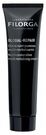
Filorga GLOBAL-REPAIR Nutri-Restorative Cream
Works for
2 of 2 advertised claims delivered
Moisturizing54 ingredients credited for this claimStrong support
“GLOBAL-REPAIR Nutri-Restorative Cream”
This product can help improve hydration of the skin with the two types of ingredients.
The first type is called “humectants”:
these ingredients help attract water.
When humectants are on the surface of the skin, they “pull in” the moisture from the outside environment, or from
within deeper layers of the skin. The following ingredients in this product do the job:
alanine, arginine pca.
This product also contains ingredients called “occlusives”. They help reduce the speed with which our skin loses moisture to the outside environment. These ingredients also help soften the upper layer of the skin, so it feels less tight and nicer to the touch. The following ingredients in this product do the job: caprylic/capric triglyceride, helianthus annuus seed oil.
The following ingredients in this product are especially good for supporting the skin barrier and helping with the hydration level: acetyl tetrapeptide-11, acetyl tetrapeptide-9, ceramide np
Anti-aging17 ingredients credited for this claimModerate support
“Filorga GLOBAL-REPAIR Nutri-Restorative Cream 30ml is a multi-revitalizing anti-aging care with a concentrated formula and an intensive global action.Special for devitalized skin, it acts against the signs of aging dehydration, marked wrinkles, lack of firmness/loose skin, lack of homogeneity, tired complexion.It offers a revitalizing nutritional action 3 super nutrients act in synergy to restore flexibility and vitality,a global anti-aging action 50 meso-ingredients + 4 cellular boosters combine to act on all signs of skin aging,a chrono-boosted action can be used as a cream during the day and as a night mask.Velvet finish.Suitable for all skin types.Made in France.”
This product contains acetyl tetrapeptide-11, acetyl tetrapeptide-9, aspartic acid, folic acid, retinyl acetate, serine, threonine. These ingredients might be able to help reduce and prevent fine lines and wrinkles, improve skin elasticity and firmness, but there is not enough evidence that it actually works.
Anti-oxidationNot advertised by the brand · 16 ingredients credited for this claimStrong support
This product contains antioxidants (arginine pca, glutathione) that can help neutralize free radicals in skin. By doing so, they can lessen the damage the skin gets from the UV light (sun).
The following ingredients - squalene also can have an antioxidant effect, but there is less evidence to confirm their effectiveness in skin.
Evens skin toneNot advertised by the brand · 11 ingredients credited for this claimStrong support
This product can help reduce hypepigmentation and even out the skin tone because it contains the following effective ingredients: glutathione
The following ingredient (ingredients) in this product might be helpful, but there is no evidence to confirm that it actually can help even out the skin tone: alanine, glucosamine hcl.
Keep in mind that you would need to apply any topical skincare targetted at hypigmentation consistently for a couple of months to get a result. No topical skincare product can help get rid of hyperpigmentation (including post-acne marks and age spots) instantly.
Can it cause trouble?
Irritancy2 strong irritants: Parfum, Retinyl acetate — patch-test recommendedHigh risk
Comedogenic2 ingredients rated 2 or more on the 0–5 pore-clogging scale2 flagged


User reviews
Be the first — your take helps the next person decide.
Ingredients
Filter by role to see what each ingredient is doing.
Water~45–55%
C10-18 triglycerides~5.7–7%
- Irritation risk
- Low
Helps soften the skin and attract water to its upper layer. Helps create nice product texture
More about C10-18 triglyceridesCaprylic/capric triglyceride~4.6–5.6%
- Irritation risk
- Medium
A good mix of fatty acids that forms a protective layer on the skin. Improves the shelf life of products. Derived from coconut and glycerin
More about Caprylic/capric triglycerideHeptyl undecylenate~3.3–4%
- Irritation risk
- Medium
Helps soften the upper layer of the skin, reduce water loss from the skin surface over time and create a nice product finish
More about Heptyl undecylenateGlycerin~2.5–3%
- Irritation risk
- Low
One of the best moisturizing ingredients. Naturally present in skin. It attracts water to the upper layer of the skin working as a humectant
More about GlycerinPropanediol~2–2.4%
- Irritation risk
- Low
Acts as a solvent for other ingredients. Speeds up the absorption of other ingredients into the skin
More about PropanediolEthylhexyl palmitate~1.7–2.1%
- Irritation risk
- Low
- Comedogenicity
- 3/5
An emollient that helps soften the skin and create a nice product texture
More about Ethylhexyl palmitateGlyceryl stearate~1.4–1.7%
- Irritation risk
- Low
An emollient that softens the skin and forms a protective layer on its surface. Helps water and oil mix together
More about Glyceryl stearatePeg-100 stearate~1.2–1.5%
- Irritation risk
- Low
Helps oil and water mix togehter and creates a nice product texture
More about Peg-100 stearateButylene glycol~0.8–1.15%
- Irritation risk
- Low
Used to create a nice product texture and help delivery of other ingredients. Might be somewhat helpful in attracting water to the upper layer of the skin
More about Butylene glycolSodium citrate~0.6–0.9%
- Irritation risk
- Medium
Helps to control the skin's pH level. Maintains the skin's natural film of amino-lactic acids and oils. Helps to preserve products
More about Sodium citrateMaltodextrin~0.55–0.8%
- Irritation risk
- Low
Used to stabilize the product formulation and can help absorb oil
More about MaltodextrinHydroxyethyl acrylate/sodium acryloyldimethyl taurate copolymer~0.45–0.65%
- Irritation risk
- Medium
A gelling agent that thickens the product consistency and leaves the skin with a velvety finish
More about Hydroxyethyl acrylate/sodium acryloyldimethyl taurate copolymerArginine pca~0.35–0.65%
- Irritation risk
- Low
An amino-acid. Helps attract water to the upper layer of the skin and can help neutralize free radicals in skin
More about Arginine pcaCetyl alcohol~0.45–0.65%
- Irritation risk
- Low
A non-drying alcohol that works to soften the skin and stabilize product formulations helping oil and water mix together
More about Cetyl alcoholGluconolactone~0.3–0.55%
- Irritation risk
- Medium
A polyhydroxy acid (PHA) that helps shed the dead cells from the skin surface revealing smoother skin. Is believed to be genter than AHAs. It helps attract water to the upper layer of the skin and can stimulate production of skin's own hyaluronic acid resulting in improved hydration levels. It has been shown to be helpful against acne and clogged pores if used consistently (e.g over a period of 12 weeks) in high enough concentration. It can help reduce fine lines and wrinkles and improve skin tone with long-term application. Can help neutralize free radicals
More about GluconolactoneHydrogenated olive oil stearyl esters~0.3–0.55%
- Irritation risk
- Low
Mannitol~0.25–0.5%
- Irritation risk
- Low
Helps to attract water to the upper layer of the skin
More about MannitolParfum~0.25–0.45%
- Irritation risk
- High
An aromatic blend of unspecified and possibly irritating ingredients
More about ParfumSucrose dilaurate~0.25–0.5%
- Irritation risk
- Medium
Helps oil and water mix together. Can be used as a cleansing agent
More about Sucrose dilaurateMaris aqua~0.2–0.4%
Sea water~0.2–0.4%
- Irritation risk
- Low
Dissolves other ingredients. It does not have additional skin benefits compared to plain water
More about Sea waterSimmondsia chinensis seed oil~0.25–0.45%
- Irritation risk
- Medium
Softens the upper layer of skin and helps restore the healthy skin barrier. Has shown to help calm down inflammation in skin. It is a stable oil, meaning that it retains its properties even when exposed to air.
More about Simmondsia chinensis seed oilTribehenin~0.2–0.4%
- Irritation risk
- Low
Used to create a thicker product consistency and soften the upper layer of the skin
More about TribeheninSucrose palmitate~0.25–0.4%
Hydroxyacetophenone~0.2–0.35%
Caprylyl glycol~0.2–0.4%
- Irritation risk
- Medium
Helps preserve products and creates a nice product texture
More about Caprylyl glycolCitric acid~0.2–0.35%
- Irritation risk
- Medium
Can work as an exfoliant but is typically used to adjust the product pH
More about Citric acidSodium hydroxide~0.2–0.35%
Polyacrylate crosspolymer-6~0.2–0.4%
- Irritation risk
- Low
Sodium cocoyl glutamate~0.25–0.5%
- Irritation risk
- Medium
Helps oil and water mix together
More about Sodium cocoyl glutamateTocopherol~0.2–0.35%
- Irritation risk
- Low
Pure form of vitamin E. Can help moisturise and protect the skin from free radicals. Often used to help stabilise other ingredients or the formula itself
More about TocopherolHelianthus annuus seed oil~0.2–0.4%
- Irritation risk
- Low
A great emollient due to its high linoleic acid content. One of the most effective plant oils in helping skin hydration and repairing skin barrier function
More about Helianthus annuus seed oilLecithin~0.25–0.4%
- Irritation risk
- Low
Used mostly for creating emulsions - helping oil and water mix together. Helps soften the upper layer of the skin
More about LecithinLysolecithin~0.2–0.4%
- Irritation risk
- Low
Lecithin derivative. It helps oil and water mix together and can enhance penetration of other ingredients. It helps soften the upper layer of the skin
More about LysolecithinGlyceryl linoleate~0.25–0.45%
- Irritation risk
- Medium
Helps oil and water mix together
More about Glyceryl linoleatePaeonia albiflora root extract~0.2–0.35%
- Irritation risk
- Low
Prunus amygdalus dulcis oil~0.2–0.4%
- Irritation risk
- Low
An emollient that softens the skin
More about Prunus amygdalus dulcis oilPisum sativum extract~0.2–0.35%
- Irritation risk
- Medium
Might be helpful in protecting skin collagen and elastin from breaking down but solid research is lacking
More about Pisum sativum extractPolysorbate 60~0.2–0.4%
Sorbitan isostearate~0.2–0.4%
- Irritation risk
- Low
Helps oil and water mix together
More about Sorbitan isostearateSodium chloride~0.2–0.4%
- Irritation risk
- Low
Used to stabilize mixtures of oil and water, and create thicker, gel-like product textures
More about Sodium chlorideBorago officinalis seed oil~0.2–0.4%
- Irritation risk
- Low
A plant oil that is effective in reducing irritation in skin, restore the barrier function and support its hydration
More about Borago officinalis seed oilOenothera biennis oil~0.25–0.4%
- Irritation risk
- Medium
Helps soften the upper layer of the skin and can support skin barrier function
More about Oenothera biennis oilCamellia oleifera seed oil~0.25–0.4%
- Irritation risk
- Medium
An emollient that does not leave a greasy finish
More about Camellia oleifera seed oilCi 77891~0.15–0.3%
- Irritation risk
- Low
Titanium dioxide~0.3–0.5%
- Irritation risk
- Low
Works as a UV filter when used in high concentrations. It is photostable and is effective mostly against the UVB light, with some protection in the UVA range. In small concentrations, used for its ability to improve the color of cosmetic products. Is usually well tolerated by the skin
More about Titanium dioxideSynthetic fluorphlogopite~0.2–0.4%
- Irritation risk
- Low
A mineral that is used as an optical filter (makes the skin looks nicer through light reflection) and to improve the texture of cosmetic products
More about Synthetic fluorphlogopiteTrihydroxystearin~0.2–0.35%
- Irritation risk
- Low
Helps soften the upper layer of the skin and improve the product texture
More about TrihydroxystearinNiacinamide~0.2–0.35%
- Irritation risk
- Low
Is proven to be effective in reducing blemishes, evening out skin tone and helping to improve lines and wrinkles. It helps the skin to repair sun damage, calm down inflammation and keep maintain good levels of moisture. The concentration of about 2% is effective for supporting the skin barrier and evening out the skin tone. Concentration of 4-6% is better for helping with acne and balancing the sebum production
More about Niacinamide3-o-ethyl ascorbic acid~0.2–0.35%
- Irritation risk
- High
A vitamin C derivative that is more stable but less potent than pure form of vitamin C. Can help neutralize free radicals and help reduce hyperpigmentation, but the required concentration is likely to be much higher than for the pure form of vitamin C, limiting the ingredient's effectiveness in products
More about 3-o-ethyl ascorbic acidLactobacillus ferment~0.2–0.35%
- Irritation risk
- Low
A fermentation product created by bacteria Lactobacillus. The fermented product has anti-bacterial properties and might be helpful in calming down inflammation, but studies are lacking. Helps attract water to the upper layer of the skin. Can be used as a preservative
More about Lactobacillus fermentPotassium azeloyl diglycinate~0.2–0.35%
- Irritation risk
- Low
A derivative of azelaic acid. It is obtained by reacting the chloride of azelaic acid with two molecules of glycine (an amino acid) and potassium hydroxide. It is less studied than azelaic acid, but the available research suggests that it also can be effective in reducing skin redness, hyperpigmentation and blemishes. There are claims that it is more bio-available and more effective than azelaic acid, but no comparison study is available. Potassium azeloyl diglycinate is better soluble in water compared with azelaic acid. Because of this property, products with potassium azeloyl digclycinate can have a nicer texture
More about Potassium azeloyl diglycinateSodium phytate~0.2–0.35%
Ceramide np~0.25–0.4%
- Irritation risk
- Low
A type of lipid similar to ceramides naturally present in skin. Helps to soften the upper layer of the skin and supports the skin barrier function to keep it hydrated. Can help to prevent inflammation in skin
More about Ceramide npSodium hyaluronate~0.2–0.35%
- Irritation risk
- Low
One of the best moisturizing ingredients. Attracts water into the upper layer of the skin
More about Sodium hyaluronate1,2-hexanediol~0.2–0.35%
Glucose~0.2–0.35%
- Irritation risk
- Low
Helps attract water to the upper layer of the skin. Could be helpful in restoring the skin barrier function
More about GlucosePhenoxyethanol~0.2–0.4%
- Irritation risk
- Low
A preservative. It helps prevent bacterial growth in cosmetic products
More about PhenoxyethanolBisabolol~0.15–0.3%
- Irritation risk
- Low
An active component of chamomile plant that historically has been used to calm down irritated skin. A recent study shows that bisabolol indeed can have some anti-inflammatory effect on skin, even though conclusive data is lacking. Bisabolol has a sweet floral scent and can be added to products for its aromatic properties
More about BisabololPotassium chloride~0.2–0.4%
- Irritation risk
- Low
Beta-sitosterol~0.2–0.4%
- Irritation risk
- Low
A phytosterol that can support skin's barrier function and help the skin stay hydrated
More about Beta-sitosterolPhytic acid~0.2–0.35%
- Irritation risk
- Medium
An alpha-hydroxy acid (AHA), but is mostly used to stabilize product formulations in cosmetics
More about Phytic acidSqualene~0.25–0.4%
- Irritation risk
- Low
- Comedogenicity
- 2/5
An oil that is naturally part of skin sebum that helps to soften its upper layer, reduce water loss and neutralize free radicals. It might be comedogenic. Avoid applying large concentrations (or pure oil) before sun exposure as oxidized squalene can clog pores and lead to skin irritation. Today squalene is mostly derived from vegetable oils or synthetized by yeast
More about SqualenePotassium sorbate~0.2–0.35%
Calcium chloride~0.2–0.35%
- Irritation risk
- Medium
Helps create a thicker product consistency. Might be irritating
More about Calcium chlorideSophora japonica flower extract~0.2–0.35%
- Irritation risk
- Low
Acetyl tetrapeptide-11~0.2–0.35%
- Irritation risk
- Low
A type of peptide. Peptides are excellent moisturizers and might be able support collagen production reducing fine lines and wrinkles
More about Acetyl tetrapeptide-11Magnesium sulfate~0.25–0.45%
Glutamine~0.2–0.4%
- Irritation risk
- Low
Acetyl tetrapeptide-9~0.2–0.4%
- Irritation risk
- Low
A type of peptide. Peptides are excellent moisturizers and might be able support collagen production reducing fine lines and wrinkles
More about Acetyl tetrapeptide-9Tin oxide~0.35–0.6%
- Irritation risk
- Low
A colorant that can add a pearl-like appearance to the formulation
More about Tin oxideCi 19140~0.25–0.4%
Sodium phosphate~0.2–0.4%
Ascorbic acid~0.2–0.4%
- Irritation risk
- High
The most well-researched antioxidant that works in skin. Helps neutralize free radicals supporting collagen production, helping to even out the skin tone and preventing early signs of aging
More about Ascorbic acidSodium acetate~0.25–0.45%
- Irritation risk
- Low
Lysine hcl~0.25–0.4%
Arginine hcl~0.25–0.4%
- Irritation risk
- Low
An amino acid that is naturally present in skin and helps keep it hydrated. When used together with AHAs, it can reduce their irritating effect on the skin
More about Arginine hclAlanine~0.25–0.4%
- Irritation risk
- Low
An amino-acid that helps to attract water to the upper layer of the skin and might help to lighten the skin, but solid evidence is lacking
More about AlanineCi 17200~0.25–0.45%
Histidine hcl~0.25–0.4%
- Irritation risk
- Low
A salt of an amino-acid that helps attract water to the upper layer of the skin. Might be helpful in restoring the skin barrier function
More about Histidine hclValine~0.2–0.4%
- Irritation risk
- Low
Leucine~0.25–0.4%
- Irritation risk
- Low
Threonine~0.25–0.45%
- Irritation risk
- Low
An amino-acid that helps to attract water to the upper layer of the skin. In combination with other amino-acids, might help to reduce fine lines and wrinkles
More about ThreonineIsoleucine~0.25–0.4%
- Irritation risk
- Low
An amino acid that can help attract water to the upper layer of the skin and support skin's barrier function
More about IsoleucineTryptophan~0.25–0.45%
- Irritation risk
- Low
Phenylalanine~0.25–0.45%
- Irritation risk
- Low
Tyrosine~0.2–0.4%
Glycine~0.25–0.4%
- Irritation risk
- Low
Helps to attract water to the upper layer of the skin and can help restore the skin barrier function
More about GlycinePolysorbate 80~0.25–0.5%
Glucomannan~0.25–0.4%
- Irritation risk
- Low
Serine~0.2–0.4%
- Irritation risk
- Low
An amino-acid that helps to attract water to the upper layer of the skin. In combination with other amino-acids, might help to reduce fine lines and wrinkles
More about SerineCystine~0.25–0.45%
- Irritation risk
- Low
Cyanocobalamin~0.25–0.4%
- Irritation risk
- Low
Can support skin barrier function and reduce inflammation in skin
More about CyanocobalaminGlutathione~0.25–0.45%
- Irritation risk
- Medium
A peptide that can help neutralize free radicals in skin and reduce melanin production resulting in skin lightening effect and reduction in hyperpigmentation. It can also help attract moisture to the upper layer of the skin
More about GlutathioneAsparagine~0.25–0.4%
- Irritation risk
- Low
Aspartic acid~0.25–0.4%
- Irritation risk
- Low
An amino-acid that helps increase skin hydration and might help to slightly improve skin firmness, potentially reducing lines and wrinkles
More about Aspartic acidOrnithine hcl~0.25–0.4%
- Irritation risk
- Low
Glutamic acid~0.25–0.45%
- Irritation risk
- Low
An amino-acid that helps attract water to the upper layer of the skin
More about Glutamic acidNicotinamide adenine dinucleotide~0.25–0.4%
- Irritation risk
- Low
Proline~0.25–0.45%
Methionine~0.25–0.4%
- Irritation risk
- Low
Taurine~0.25–0.45%
- Irritation risk
- Medium
Could be helpful in reducing inflammation in skin, evening out the skin tone and neutralizing free radicals, but more research is needed to confirm its effectiveness
More about TaurineHydroxyproline~0.25–0.4%
- Irritation risk
- Low
Is helpful in restoring skin barrier function supporting its moisture levels. Is claimed to stimulte collagen production in skin but evidence is lacking
More about HydroxyprolineGlucosamine hcl~0.25–0.45%
- Irritation risk
- Low
Might be able to stimulate production of skin's natural moisturizing compounds such as hyaluronic acid. Could be helpful for evening the skin tone.
More about Glucosamine hclCoenzyme a~0.25–0.4%
- Irritation risk
- Low
Helps soften the upper layer of the skin and dissolve other ingredients in a product
More about Coenzyme aSodium glucuronate~0.25–0.45%
- Irritation risk
- Low
Thiamine diphosphate~0.25–0.45%
- Irritation risk
- Low
Retinyl acetate~0.25–0.45%
Inositol~0.2–0.4%
Niacin~0.2–0.4%
- Irritation risk
- High
A form of vitamin B3. It is similar in action to niacinamide, but is more likely to cause red flashes in skin as the side effect
More about NiacinPyridoxine hcl~0.2–0.4%
- Irritation risk
- Medium
Might help neutralize free radicals in skin
More about Pyridoxine hclBiotin~0.2–0.35%
- Irritation risk
- Low
Might have some moisturising properties. Is not effective when applied topically beyond some moisturizing effect
More about BiotinCalcium pantothenate~0.15–0.3%
- Irritation risk
- Low
Helps support skin barrier function improving skin hydration and reducing sensitivity
More about Calcium pantothenateRiboflavin~0.15–0.3%
- Irritation risk
- Low
Sodium tocopheryl phosphate~0.15–0.3%
Thiamine hcl~0.1–0.2%
- Irritation risk
- Medium
Can help attract water to the upper layer of the skin. Is studied as a mosquito repellent
More about Thiamine hclFolic acid~0.1–0.2%
- Irritation risk
- Low
Can help stimulate collagen production in skin. While available studies are promising, more research is needed to confirm the efficacy in skin
More about Folic acidIngredient list view
Water, C10-18 triglycerides, Caprylic/capric triglyceride, Heptyl undecylenate, Glycerin, Propanediol, Ethylhexyl palmitate, Glyceryl stearate, Peg-100 stearate, Butylene glycol, Sodium citrate, Maltodextrin, Hydroxyethyl acrylate/sodium acryloyldimethyl taurate copolymer, Arginine pca, Cetyl alcohol, Gluconolactone, Hydrogenated olive oil stearyl esters, Mannitol, Parfum, Sucrose dilaurate, Maris aqua, Sea water, Simmondsia chinensis seed oil, Tribehenin, Sucrose palmitate, Hydroxyacetophenone, Caprylyl glycol, Citric acid, Sodium hydroxide, Polyacrylate crosspolymer-6, Sodium cocoyl glutamate, Tocopherol, Helianthus annuus seed oil, Lecithin, Lysolecithin, Glyceryl linoleate, Paeonia albiflora root extract, Prunus amygdalus dulcis oil, Pisum sativum extract, Polysorbate 60, Sorbitan isostearate, Sodium chloride, Borago officinalis seed oil, Oenothera biennis oil, Camellia oleifera seed oil, Ci 77891, Titanium dioxide, Synthetic fluorphlogopite, Trihydroxystearin, Niacinamide, 3-o-ethyl ascorbic acid, Lactobacillus ferment, Potassium azeloyl diglycinate, Sodium phytate, Ceramide np, Sodium hyaluronate, 1,2-hexanediol, Glucose, Phenoxyethanol, Bisabolol, Potassium chloride, Beta-sitosterol, Phytic acid, Squalene, Potassium sorbate, Calcium chloride, Sophora japonica flower extract, Acetyl tetrapeptide-11, Magnesium sulfate, Glutamine, Acetyl tetrapeptide-9, Tin oxide, Ci 19140, Sodium phosphate, Ascorbic acid, Sodium acetate, Lysine hcl, Arginine hcl, Alanine, Ci 17200, Histidine hcl, Valine, Leucine, Threonine, Isoleucine, Tryptophan, Phenylalanine, Tyrosine, Glycine, Polysorbate 80, Glucomannan, Serine, Cystine, Cyanocobalamin, Glutathione, Asparagine, Aspartic acid, Ornithine hcl, Glutamic acid, Nicotinamide adenine dinucleotide, Proline, Methionine, Taurine, Hydroxyproline, Glucosamine hcl, Coenzyme a, Sodium glucuronate, Thiamine diphosphate, Retinyl acetate, Inositol, Niacin, Pyridoxine hcl, Biotin, Calcium pantothenate, Riboflavin, Sodium tocopheryl phosphate, Thiamine hcl, Folic acid
Compare prices
Retailers ranked by price — lowest first.

Worth comparing, line by line.
Match % combines shared ingredients, the first five ingredients, shared actives and hero ingredients, irritancy (lower counts in the alternative's favour), texture and body area. Only products in the same routine step are compared.
| FilorgaGLOBAL-REPAIR Nutri-Restorative CreamYOUR PRODUCT | Medik8Calmwise Colour Correct Cream | Skincare by Dr VTrio Blemish AM Gel Moisturiser | MISSHAActibarrier Strong Moist Cream INTENSIVE | |
|---|---|---|---|---|
| Match | — | 68% | 65% | 59% |
| Price | $37.65 | $62.00+$24.35 | $50.17+$12.52 | $28.11−$9.54 |
| Shared key ingredients | — | 7 of 42 | 4 of 42 | 13 of 42 |
| Key difference | — | Bakuchiol | Sodium Ascorbyl Phosphate | Copper Tripeptide-1 |
| Irritancy | High | Medium | Medium | Medium |
| Drying alcohol | — | — | — | — |
| View product | Shop | Shop | Shop |


Product summary
Based on the ingredients included, "Filorga - GLOBAL-REPAIR Nutri-Restorative Cream" works well for moisturizing the skin. As we expect from a proper moisturizer, the formula includes a combo of effective humectants and emollients. These are the two different types of ingredients that are essential for improving the skin hydration and supporting a healthy skin barrier. Humectants in this product (alanine, arginine pca, aspartic acid, glucosamine hcl and glutamic acid) help to increase the water content in the upper layer of the skin. (These ingredients do so by "capturing" water molecules from the outside air or from within the deeper layers of the skin). Emollients in this formulation (ceramide np, beta-sitosterol, borago officinalis seed oil, oenothera biennis oil and caprylic/capric triglyceride) help to reduce the moisture loss from the skin. They also soften the skin surface and relieve the feeling of dryness and tightness.
Ingredient callouts
- This product also contains Vitamin C (Ascorbic Acid). It can be an effective active for anti-aging and evening out the skin tone, but in this moisturizer it is used for stabilizing other ingredients in the formulation. In this concentration (0.20% - 0.40%) it cannot have a noticeable benefit for the skin.
- This moisturizer includes a form of Retinoids (vitamin A) - retinyl acetate 0.25% - 0.45%, but this type of vitamin A is not very effective. It could in theory help with fine lines and wrinkles, but the effect is most likely minimal.
- Another benefit is that this moisturizer contain ceramides (ceramide np 0.25% - 0.40%). Ceramides are an important part of our natural skin barrier. The Ceramides used in skincare are synthetic or come from plants. They help soften the skin and can help "fill the gaps" in the skin barrier, keeping the skin hydrated and resilient for longer.
- This moisturizer also contains Peptides (acetyl tetrapeptide-9 0.20% - 0.40% and acetyl tetrapeptide-11 0.20% - 0.35%). Peptides are a very big group of ingredients. They all consist of a different combination of aminoacids. Our skin produces Peptides naturally. Some of them work as natural antibiotics, promote wound-healing and production of collagen. The scientists are still studying how effective the topical application of Peptides is, but it is very likely that they are helpful. Peptides might be able to support skin barrier restoration and even have an anti-aging benefit. At the very least, they certainly help attract water to the skin and support the hydration in this way.
Irritation risk
This moisturizer contains some common irritants, including those without a benefit for the skin. We assess the overall irritancy of this moisturizer to be high. For a detailed overview of all potential irritants: click here
You can see the detailed formula review with the breakdown of all actives in the product and the full ingredient list with estimated concentrations in the tables below.
Price
The product retails for 151.38A$ in Australia and from 28.48£ up to 54.99£ in the United Kingdom.
For a detailed price comparison: click here.
Sources cited in this review
Every concentration estimate and effectiveness label is anchored to one of these 71 studies and safety reviews.
- 1
- 2
- 3
- 4
- 5
- 6

Affiliate links · As an Amazon Associate, WIMJ earns from qualifying purchases.