Works for
1 of 1 advertised claim delivered
Moisturizing13 ingredients credited for this claimStrong support
“Moisture Defence .”
This product can help improve hydration of the skin with the two types of ingredients.
The first type is called “humectants”:
these ingredients help attract water.
When humectants are on the surface of the skin, they “pull in” the moisture from the outside environment, or from
within deeper layers of the skin. The following ingredients in this product do the job:
glycerin, sodium hyaluronate.
This product also contains ingredients called “occlusives”. They help reduce the speed with which our skin loses moisture to the outside environment. These ingredients also help soften the upper layer of the skin, so it feels less tight and nicer to the touch. The following ingredients in this product do the job: squalane, hydrogenated ethylhexyl olivate.
The following ingredients in this product are especially good for supporting the skin barrier and helping with the hydration level: dipeptide diaminobutyroyl benzylamide diacetate
Anti-agingNot advertised by the brand · 2 ingredients credited for this claimModerate support
This product contains dipeptide diaminobutyroyl benzylamide diacetate. This ingredient might be able to help reduce and prevent fine lines and wrinkles, improve skin elasticity and firmness, but there is not enough evidence that it actually works.
Can it cause trouble?
Irritancy3 strong irritants: Hibiscus sabdariffa flower extract, Rosa damascena extract + 1 more — patch-test recommendedHigh risk
ComedogenicClean of flagged comedogenic ingredientsNone flagged
User reviews
Be the first — your take helps the next person decide.
Ingredients
Filter by role to see what each ingredient is doing.
Water~45–55%
Diethylene glycol~13–16%
- Irritation risk
- Low
Ethyl ether~5.8–7.1%
- Irritation risk
- Low
Glycerin~3.7–4.5%
- Irritation risk
- Low
One of the best moisturizing ingredients. Naturally present in skin. It attracts water to the upper layer of the skin working as a humectant
More about GlycerinDimethicone crosspolymer~3–3.6%
- Irritation risk
- Low
Used to create a thicker product texture. Helps soften the upper layer of the skin and might be able to prevent moisture loss from its surface
More about Dimethicone crosspolymerPolysorbate 60~2.6–3.2%
Hydrogenated olive oil unsaponifiables~2.3–2.8%
- Irritation risk
- Low
Help soften the upper layer of the skin
More about Hydrogenated olive oil unsaponifiablesDipeptide diaminobutyroyl benzylamide diacetate~1.9–2.4%
- Irritation risk
- Low
A type of peptide. Peptides are excellent moisturizers and might be able support collagen production reducing fine lines and wrinkles
More about Dipeptide diaminobutyroyl benzylamide diacetateTrehalose~1.4–1.8%
- Irritation risk
- Low
A sugar that attracts water to the upper layer of the skin
More about TrehaloseHydrolyzed vegetable protein~1.1–1.4%
Hydrogenated olive oil~0.9–1.1%
- Irritation risk
- Low
Hydrogenated ethylhexyl olivate~0.75–1.1%
- Irritation risk
- Low
Helps soften the upper layer of the skin
More about Hydrogenated ethylhexyl olivateMoringa pterygosperma seed extract~0.7–1.05%
- Irritation risk
- Low
Might help attract water to the upper layer of the skin
More about Moringa pterygosperma seed extractEpilobium angustifolium extract~0.6–0.9%
- Irritation risk
- Medium
A plant extract that might help neutralize free radicals and calm down irritation in skin. However, it can contain compounds that can be irritating themselves
More about Epilobium angustifolium extractAnetholea anisata leaf extract~0.6–0.85%
- Irritation risk
- Low
Tasmannia lanceolata leaf extract~0.6–0.9%
- Irritation risk
- Low
Hibiscus sabdariffa flower extract~0.55–0.85%
- Irritation risk
- High
A plant extract that can be irritating. It might contain a compound anthocyanin that could be helpful in neutralizing free radicals
More about Hibiscus sabdariffa flower extractRosa damascena extract~0.55–0.8%
- Irritation risk
- High
Oil of a very fragrant pink rose used as fragrance in cosmetics. Extensive research has shown it has mixed benefits. In the pro column, inhaling this flower’s scent seems to have relaxing properties and the plant’s petals contain skin-soothing and antioxidant compounds that can benefit skin. On the flipside, the numerous chemicals that create this rose’s distinctive fragrance pose a risk of causing skin aggravation.
More about Rosa damascena extractSodium hyaluronate~0.5–0.8%
- Irritation risk
- Low
One of the best moisturizing ingredients. Attracts water into the upper layer of the skin
More about Sodium hyaluronateTetrahydropiperine~0.5–0.75%
- Irritation risk
- Low
Hydroxyethyl acrylate/sodium acryloyldimethyl taurate copolymer~0.45–0.65%
- Irritation risk
- Medium
A gelling agent that thickens the product consistency and leaves the skin with a velvety finish
More about Hydroxyethyl acrylate/sodium acryloyldimethyl taurate copolymerSqualane~0.5–0.75%
- Irritation risk
- Low
An oil naturally present in skin. Works as an emollient to soften the skin and form a protective layer on its surface without a greasy feeling.
More about SqualaneParfum~0.3–0.6%
- Irritation risk
- High
An aromatic blend of unspecified and possibly irritating ingredients
More about ParfumAloe barbadensis extract~0.3–0.6%
- Irritation risk
- Medium
Traditionally used to treat sunburns, dermatitis and inflammation, but evidence for its effectiveness is lacking. The extract can contain humectants that help attract water into the skin
More about Aloe barbadensis extractCucumis sativus extract~0.3–0.55%
- Irritation risk
- Medium
Tocopheryl acetate~0.3–0.55%
- Irritation risk
- Medium
A more stable but less bio-available form of vitamin E compared to Tocopherol. Might help moisturize and protect the skin from free radicals, but mostly used in low concentrations to stabilize other ingredients.
More about Tocopheryl acetatePhenoxyethanol~0.2–0.35%
- Irritation risk
- Low
A preservative. It helps prevent bacterial growth in cosmetic products
More about PhenoxyethanolCaprylyl glycol~0.2–0.35%
- Irritation risk
- Medium
Helps preserve products and creates a nice product texture
More about Caprylyl glycolSorbic acid~0.15–0.25%
Lactic acid~0.1–0.2%
- Irritation risk
- Medium
An exfoliating and moisturizing alpha-hydroxy acid (AHA). Typically causes less irritation than other AHAs, for example, glycolic acid. At high concentrations (about 15%), lactic acid can help reduce lines and wrinkles. Recent studies show that lactic acid can support the "good" bacteria living on skin's surface (healthy skin microbiome)
More about Lactic acidSodium hydroxide~0.1–0.15%
Ingredient list view
Water, Diethylene glycol, Unknown, Ethyl ether, Glycerin, Dimethicone crosspolymer, Polysorbate 60, Hydrogenated olive oil unsaponifiables, Dipeptide diaminobutyroyl benzylamide diacetate, Trehalose, Hydrolyzed vegetable protein, Hydrogenated olive oil, Hydrogenated ethylhexyl olivate, Moringa pterygosperma seed extract, Epilobium angustifolium extract, Anetholea anisata leaf extract, Tasmannia lanceolata leaf extract, Hibiscus sabdariffa flower extract, Rosa damascena extract, Sodium hyaluronate, Tetrahydropiperine, Hydroxyethyl acrylate/sodium acryloyldimethyl taurate copolymer, Squalane, Parfum, Aloe barbadensis extract, Cucumis sativus extract, Tocopheryl acetate, Phenoxyethanol, Caprylyl glycol, Sorbic acid, Lactic acid, Sodium hydroxide
Compare prices
Retailers ranked by price — lowest first.
Worth comparing, line by line.
Match % combines shared ingredients, the first five ingredients, shared actives and hero ingredients, irritancy (lower counts in the alternative's favour), texture and body area. Only products in the same routine step are compared.
| SkinstitutMoisture Defence - NormalYOUR PRODUCT | Peter Thomas RothPeptide Skinjection™ Moisture Infusion Refillable Cream | HydroPeptideTravel-Size Power Lift Face Moisturizer | NEOGEN X SUR.MEDICSurmedic 24K Gold Caviar Repair Vital Cream | |
|---|---|---|---|---|
| Match | — | 62% | 60% | 59% |
| Price | — | $55.00 | $20.00 | $60.00 |
| Shared key ingredients | — | 5 of 5 | 4 of 5 | 4 of 5 |
| Key difference | — | Tripeptide-1 | Acetyl Dipeptide-1 Cetyl Ester | Copper Tripeptide-1 |
| Irritancy | High | Medium | Medium | Medium |
| Drying alcohol | — | — | — | — |
| View product | Shop | Shop | Shop |



Product summary
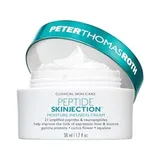
"Skinstitut - Moisture Defence - Normal" is a well-rounded moisturizing product. This moisturizer uses a good combo of humectants and emollients. These both types of ingredients are essentials for improving the skin hydration and keeping the skin barrier healthy. Glycerin, sodium hyaluronate, trehalose, aloe barbadensis extract and caprylyl glycol in this product (humectants) attract water molecules to the upper layer of the skin (the water comes from the outside air or from the deeper layers of the skin if the air is dry). Squalane, hydrogenated ethylhexyl olivate, hydrogenated olive oil unsaponifiables and caprylyl glycol in this product help decrease the water evoporation from the skin, so that it stays hydrated for longer. These ingredients also soften the skin and take away the feeling of tightness and dryness.
Ingredient callouts
- We like that this moisturizer contains peptides (dipeptide diaminobutyroyl benzylamide diacetate 1.90% - 2.40%). There are many different kind of peptides and they are naturally present in our skin. They all are a combination of amino-acids. Some of them work as natural anti-biotics, promote wound-healing and production of collagen. The science is still not settled on how effective peptides in skincare are, but it is very likely that they have a benefit. Peptides might help restore the skin barrier and fight the signs of aging. At the very least, peptides work as humectants: they attract water to the upper layer of the skin and improve its hydration.
Irritation risk
This moisturizer contains some common irritants, including those without a benefit for the skin. We assess the overall irritancy of this moisturizer to be high. For a detailed overview of all potential irritants: click here
You can see the detailed formula review with the breakdown of all actives in the product and the full ingredient list with estimated concentrations in the tables below.
Sources cited in this review
Every concentration estimate and effectiveness label is anchored to one of these 10 studies and safety reviews.
- 1
- 2
- 3
- 4
- 5Hibiscus sabdariffa L. – A phytochemical and pharmacological reviewsciencedirect.com
- 6

Affiliate links · As an Amazon Associate, WIMJ earns from qualifying purchases.