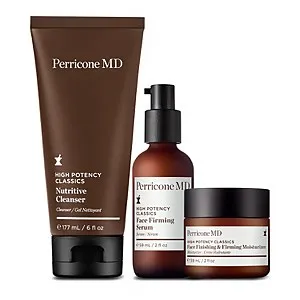
Works for
ExfoliationGlycolic acid, Urea + 2 moreWorks well
“One of our best face wash products features exfoliating alpha lipoic acid to soften, smooth and reduce the appearance of excess oil and enlarged pores.”
This product can help exfoliate the skin. In other words, it helps break down the bonds between dead cells on the surface of the skin and speed up the skin turnover. Skin often appears softer and brighter after exfoliation, but overdoing it can result in disrupted skin barrier. The following ingredient is doing the exfoliating job in this product: glycolic acid.
CleansingSodium laureth sulfate, Lauryl glucoside + 12 moreCan be harsh
“This gentle facial cleanser quickly and effectively removes makeup, excess oil and debris while softening and conditioning.”
This product works by removing dirt and oil from the surface of the skin.
It contains the following cleansing agents that tend to be harsh on the skin: sodium laureth sulfate.
The following cleansing agents are typically mild, but still can cause an irritation or allergy for some people cocamidopropyl betaine.
Keep in mind that cleansing can disrupt the skin barrier, and most people do not need to cleanse their skin more than once per day.
Can it cause trouble?
Irritancy13 strong irritants: Benzophenone-4, Methylchloroisothiazolinone + 11 more — patch-test recommendedHigh risk
Comedogenic6 ingredients rated 2 or more on the 0–5 pore-clogging scale6 flagged

User reviews
Be the first — your take helps the next person decide.
Ingredients
Filter by role to see what each ingredient is doing.
Water~45–55%
Sodium laureth sulfate~9.3–11.4%
- Irritation risk
- High
- Comedogenicity
- 2/5
Works as a foaming cleansing agent
More about Sodium laureth sulfateLauryl glucoside~5–6.2%
Cocamidopropyl betaine~4.5–5.4%
- Irritation risk
- High
Helps water and oil mix together. Used as a cleansing ingredient. Could be an allergen
More about Cocamidopropyl betainePpg-2 hydroxyethyl coco/isostearamide~2.3–2.8%
Dimethyl mea~1.9–2.3%
- Irritation risk
- Low
Thioctic acid~1.5–1.9%
Magnesium aspartate~1.4–1.7%
- Irritation risk
- Low
Might be helpful in restoring skin barrier function and calm down inflammation in skin
More about Magnesium aspartateZinc gluconate~1.1–1.4%
- Irritation risk
- Medium
Typically used to stabilize the product formulations. It is a salt of a polyhydroxy acid (PHA) and in larger concentrations, can help shed the dead cells from the skin surface revealing smoother skin. It can help attract water to the upper layer of the skin. Might to be helpful against acne and clogged pores. Could be helpful in neutralizing free radicals, but solid research is missing. Due to the zinc content, might help calm down inflammation in skin
More about Zinc gluconateCopper gluconate~0.9–1.1%
- Irritation risk
- Medium
Typically used to stabilize the product formulations. It is a salt of polyhydroxy acid (PHA) and in larger concentrations, can help shed the dead cells from the skin surface revealing smoother skin. It can help attract water to the upper layer of the skin. Might to be helpful against acne and clogged pores. Could be helpful in neutralizing free radicals, but solid research is missing
More about Copper gluconateCitric acid~0.65–1%
- Irritation risk
- Medium
Can work as an exfoliant but is typically used to adjust the product pH
More about Citric acidSodium chloride~0.65–0.95%
- Irritation risk
- Low
Used to stabilize mixtures of oil and water, and create thicker, gel-like product textures
More about Sodium chlorideDisodium edta~0.5–0.75%
Benzophenone-4~0.7–1.05%
- Irritation risk
- High
Sulisobenzone. A UV filter. Is typically used to improve the product stability under exposure to UV light. It is effective against both UVA and UVB rays. It can be used is larger concentrations as a sun protection ingredient for the skin, but can be irritating
More about Benzophenone-4Methylchloroisothiazolinone~0.00075–0.0015%
- Irritation risk
- High
A preservative. Is a frequent allergen in cosmetics
More about MethylchloroisothiazolinoneMethylisothiazolinone~0.00075–0.0015%
Parfum~0.4–0.6%
- Irritation risk
- High
An aromatic blend of unspecified and possibly irritating ingredients
More about ParfumWater~0.35–0.65%
Dimethyl mea~0.3–0.6%
- Irritation risk
- Low
Thioctic acid~0.3–0.55%
Isopropyl palmitate~0.3–0.55%
- Irritation risk
- Medium
- Comedogenicity
- 3/5
Helps soften the upper layer of the skin and create a thicker product consistency
More about Isopropyl palmitateCetearyl alcohol~0.3–0.6%
- Irritation risk
- Low
- Comedogenicity
- 2/5
A non-drying alcohol. Works as an emollient. Helps water and oil mix together and creates a nice product texture
More about Cetearyl alcoholTyrosine~0.25–0.45%
Glycolic acid~0.25–0.5%
- Irritation risk
- High
An alpha-hydroxy acid (AHA) that helps to remove the dead skin cells on the surface of the skin reveling a more even, smoother complexation. It is also able to stimulate collagen production with long-term use. Could help to reduce pore congestion. It can be irritating to the skin. Apply sunscreen daily if using products with glycolic acid
More about Glycolic acidDimethyl isosorbide~0.25–0.5%
- Irritation risk
- Low
Used to dissolve other ingredients in a product and can enhance their ability to penetrate the skin
More about Dimethyl isosorbidePropanediol~0.3–0.5%
- Irritation risk
- Low
Acts as a solvent for other ingredients. Speeds up the absorption of other ingredients into the skin
More about PropanediolGlyceryl stearate~0.3–0.55%
- Irritation risk
- Low
An emollient that softens the skin and forms a protective layer on its surface. Helps water and oil mix together
More about Glyceryl stearatePeg-100 stearate~0.35–0.6%
- Irritation risk
- Low
Helps oil and water mix togehter and creates a nice product texture
More about Peg-100 stearateUrea~0.25–0.45%
- Irritation risk
- Low
Naturally present in skin (urea makes up about 7% of natural moisturizing factors in skin). Attracts water to the upper layer of the skin. Also has a positive effect on the skin barrier beyond the humectant action. Can enhance penetration of other ingredients. Is an exfoliating ingredient when used in high concentrations
More about UreaPhosphatidylcholine~0.25–0.5%
- Irritation risk
- Medium
Used to enhance the delivery of other ingredients
More about PhosphatidylcholineXanthan gum~0.25–0.5%
- Irritation risk
- Low
Used to create a thicker product consistency
More about Xanthan gumMagnesium aspartate~0.25–0.45%
- Irritation risk
- Low
Might be helpful in restoring skin barrier function and calm down inflammation in skin
More about Magnesium aspartateZinc gluconate~0.3–0.5%
- Irritation risk
- Medium
Typically used to stabilize the product formulations. It is a salt of a polyhydroxy acid (PHA) and in larger concentrations, can help shed the dead cells from the skin surface revealing smoother skin. It can help attract water to the upper layer of the skin. Might to be helpful against acne and clogged pores. Could be helpful in neutralizing free radicals, but solid research is missing. Due to the zinc content, might help calm down inflammation in skin
More about Zinc gluconateAcetyl tyrosine~0.3–0.5%
- Irritation risk
- Low
Pyridoxine hcl~0.3–0.5%
- Irritation risk
- Medium
Might help neutralize free radicals in skin
More about Pyridoxine hclCopper gluconate~0.3–0.5%
- Irritation risk
- Medium
Typically used to stabilize the product formulations. It is a salt of polyhydroxy acid (PHA) and in larger concentrations, can help shed the dead cells from the skin surface revealing smoother skin. It can help attract water to the upper layer of the skin. Might to be helpful against acne and clogged pores. Could be helpful in neutralizing free radicals, but solid research is missing
More about Copper gluconateSodium hyaluronate~0.3–0.55%
- Irritation risk
- Low
One of the best moisturizing ingredients. Attracts water into the upper layer of the skin
More about Sodium hyaluronateBht~0.3–0.5%
Disodium edta~0.3–0.55%
Ceteareth-20~0.4–0.65%
- Irritation risk
- Medium
- Comedogenicity
- 2/5
Helps oil and water mix together. Has some emollient properties
More about Ceteareth-20Ammonium acryloyldimethyltaurate/vp copolymer~0.3–0.55%
- Irritation risk
- Low
Increases thickness of a product. Texture enhancer for oil-in-water emulsions
More about Ammonium acryloyldimethyltaurate/vp copolymerDimethicone~0.35–0.65%
- Irritation risk
- Low
A silicone that helps to reduce water loss from the surface of the skin. Can temporarily "fill in" lines and wrinkles, absorb oil, and create a nice product finish
More about DimethiconeCaprylyl glycol~0.3–0.6%
- Irritation risk
- Medium
Helps preserve products and creates a nice product texture
More about Caprylyl glycolZinc sulfate~0.3–0.55%
Phenoxyethanol~0.3–0.55%
- Irritation risk
- Low
A preservative. It helps prevent bacterial growth in cosmetic products
More about PhenoxyethanolSorbic acid~0.3–0.55%
Parfum~0.25–0.5%
- Irritation risk
- High
An aromatic blend of unspecified and possibly irritating ingredients
More about ParfumCitral~0.25–0.5%
Citronellol~0.25–0.5%
Geraniol~0.25–0.5%
Limonene~0.25–0.5%
- Irritation risk
- High
A common frangrance that can easily irritate skin, especially if exposed to air, light or heat
More about LimoneneLinalool~0.25–0.5%
Water~0.3–0.55%
Ethylhexyl palmitate~0.3–0.6%
- Irritation risk
- Low
- Comedogenicity
- 3/5
An emollient that helps soften the skin and create a nice product texture
More about Ethylhexyl palmitateGlycerin~0.3–0.6%
- Irritation risk
- Low
One of the best moisturizing ingredients. Naturally present in skin. It attracts water to the upper layer of the skin working as a humectant
More about GlycerinAleurites moluccanus seed oil~0.3–0.5%
- Irritation risk
- Low
Helps soften the upper layer of the skin
More about Aleurites moluccanus seed oilPolyacrylamide~0.3–0.6%
- Irritation risk
- Medium
Used to improve product texture and help oil and water mix together
More about PolyacrylamideCetearyl alcohol~0.35–0.6%
- Irritation risk
- Low
- Comedogenicity
- 2/5
A non-drying alcohol. Works as an emollient. Helps water and oil mix together and creates a nice product texture
More about Cetearyl alcoholC13-14 isoparaffin~0.3–0.6%
- Irritation risk
- Low
Helps soften the upper layer of the skin, dissolve other ingredients and create a thicker product consistency
More about C13-14 isoparaffinPolysorbate 60~0.3–0.6%
Glyceryl stearate~0.35–0.65%
- Irritation risk
- Low
An emollient that softens the skin and forms a protective layer on its surface. Helps water and oil mix together
More about Glyceryl stearatePeg-100 stearate~0.4–0.65%
- Irritation risk
- Low
Helps oil and water mix togehter and creates a nice product texture
More about Peg-100 stearateDimethyl mea~0.3–0.55%
- Irritation risk
- Low
Tetrahexyldecyl ascorbate~0.3–0.55%
- Irritation risk
- Medium
Being a lipid soluble form of vitamin C, it is more stable than ascorbic acid, but still degrades quickly and needs to be stabilized in a formulation with another ingredient. It is claimed to penetrate skin better than pure vitamin C and have the the similar benefits, but solid studies of its effectiveness are lacking. Is likely to require a higher concentration in a product than pure vitamin C to be effective. It might be able to help reduce pore clogging.
More about Tetrahexyldecyl ascorbateTyrosine~0.3–0.5%
Hydrolyzed wheat protein~0.3–0.5%
- Irritation risk
- Medium
Can help attract water to the upper layer of the skin. Avoid if sensitive to gluten
More about Hydrolyzed wheat proteinTocopheryl acetate~0.3–0.55%
- Irritation risk
- Medium
A more stable but less bio-available form of vitamin E compared to Tocopherol. Might help moisturize and protect the skin from free radicals, but mostly used in low concentrations to stabilize other ingredients.
More about Tocopheryl acetateHydrolyzed wheat starch~0.25–0.5%
- Irritation risk
- Low
Citric acid~0.25–0.5%
- Irritation risk
- Medium
Can work as an exfoliant but is typically used to adjust the product pH
More about Citric acidPeg/ppg-18/18 dimethicone~0.3–0.55%
- Irritation risk
- Low
A silicone that mixes with water creating nice light-weight product texture
More about Peg/ppg-18/18 dimethiconeDimethicone~0.3–0.6%
- Irritation risk
- Low
A silicone that helps to reduce water loss from the surface of the skin. Can temporarily "fill in" lines and wrinkles, absorb oil, and create a nice product finish
More about DimethiconeCaprylyl glycol~0.3–0.5%
- Irritation risk
- Medium
Helps preserve products and creates a nice product texture
More about Caprylyl glycolLaureth-7~0.25–0.45%
Hexylene glycol~0.2–0.4%
- Irritation risk
- Medium
Helps create a more spreadable product texture
More about Hexylene glycolPhenoxyethanol~0.2–0.35%
- Irritation risk
- Low
A preservative. It helps prevent bacterial growth in cosmetic products
More about PhenoxyethanolParfum~0.15–0.25%
- Irritation risk
- High
An aromatic blend of unspecified and possibly irritating ingredients
More about ParfumCitronellol~0.1–0.2%
Geraniol~0.1–0.2%
Hydroxycitronellal~0.1–0.25%
- Irritation risk
- High
A fragrance. A likely allergen and can be irritating
More about HydroxycitronellalButylphenyl methylpropional~0.1–0.2%
- Irritation risk
- High
A fragrance. Can trigger allergic reactions and be irritating
More about Butylphenyl methylpropionalBenzyl benzoate~0.05–0.1%
- Irritation risk
- High
Fragrance with sweet balsamic smell. Help to preserve products and dissolve other ingredients. Could trigger allergic reactions and be irritating
More about Benzyl benzoateEugenol~0.05–0.1%
Ingredient list view
Water, Sodium laureth sulfate, Lauryl glucoside, Cocamidopropyl betaine, Ppg-2 hydroxyethyl coco/isostearamide, Dimethyl mea, Thioctic acid, Magnesium aspartate, Zinc gluconate, Copper gluconate, Citric acid, Sodium chloride, Disodium edta, Benzophenone-4, Methylchloroisothiazolinone, Methylisothiazolinone, Parfum, Water, Dimethyl mea, Thioctic acid, Isopropyl palmitate, Cetearyl alcohol, Tyrosine, Glycolic acid, Dimethyl isosorbide, Propanediol, Glyceryl stearate, Peg-100 stearate, Urea, Phosphatidylcholine, Xanthan gum, Magnesium aspartate, Zinc gluconate, Acetyl tyrosine, Pyridoxine hcl, Copper gluconate, Sodium hyaluronate, Bht, Disodium edta, Ceteareth-20, Ammonium acryloyldimethyltaurate/vp copolymer, Dimethicone, Caprylyl glycol, Zinc sulfate, Phenoxyethanol, Sorbic acid, Parfum, Citral, Citronellol, Geraniol, Limonene, Linalool, Water, Ethylhexyl palmitate, Glycerin, Aleurites moluccanus seed oil, Polyacrylamide, Cetearyl alcohol, C13-14 isoparaffin, Polysorbate 60, Glyceryl stearate, Peg-100 stearate, Dimethyl mea, Tetrahexyldecyl ascorbate, Tyrosine, Hydrolyzed wheat protein, Tocopheryl acetate, Hydrolyzed wheat starch, Citric acid, Peg/ppg-18/18 dimethicone, Dimethicone, Caprylyl glycol, Laureth-7, Hexylene glycol, Phenoxyethanol, Parfum, Citronellol, Geraniol, Hydroxycitronellal, Butylphenyl methylpropional, Benzyl benzoate, Eugenol
Compare prices
Retailers ranked by price — lowest first.

Worth comparing, line by line.
Match % combines shared ingredients, the first five ingredients, shared actives and hero ingredients, irritancy (lower counts in the alternative's favour), texture and body area. Only products in the same routine step are compared.
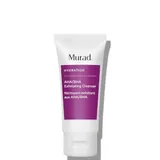
| Perricone MDClassic Firming RegimenYOUR PRODUCT | MuradMini AHA/BHA Exfoliating Cleanser | Elizabeth GrantWonder Effect Triple Action Cleanser | ReplenixGlycolic Acid Resurfacing Cleanser | |
|---|---|---|---|---|
| Match | — | 54% | 53% | 53% |
| Price | — | $19.00 | $16.00 | $77.96 |
| Shared key ingredients | — | 3 of 26 | 11 of 26 | 6 of 26 |
| Key difference | — | Salicylic Acid | Salicylic Acid | Retinyl Palmitate |
| Irritancy | High | Low | High | Medium |
| Drying alcohol | — | — | Contains drying alcohol | — |
| View product | Shop | Shop | Shop |


More alternatives: YEOUTH Vitamin C Facial Cleanser Day/Night CreamNassifMD Dermaceuticals Skin Perfecting Dual Action Face & Body Scrub with 10% Glycolic Acid
Product summary
Based on the ingredients included, "Perricone MD - Classic Firming Regimen" works well for moisturizing the skin. This moisturizer uses a good combo of humectants and emollients. These both types of ingredients are essentials for improving the skin hydration and keeping the skin barrier healthy. Urea, glycerin, sodium hyaluronate, hydrolyzed wheat protein and caprylyl glycol in this product (humectants) attract water molecules to the upper layer of the skin (the water comes from the outside air or from the deeper layers of the skin if the air is dry). Dimethicone, cetearyl alcohol, ethylhexyl palmitate, c13-14 isoparaffin and caprylyl glycol in this product help decrease the water evoporation from the skin, so that it stays hydrated for longer. These ingredients also soften the skin and take away the feeling of tightness and dryness.
Irritation risk
This moisturizer contains a bunch of common irritants, including ingredients that do not provide any known benefit for the skin. It might not be the best choice if your skin is sensitive. We assess the overall irritancy of this moisturizer to be high. For a detailed overview of all potential irritants: click here
You can see the detailed formula review with the breakdown of all actives in the product and the full ingredient list with estimated concentrations in the tables below.
About the brand
According to Cruelty-Free Kitty "Perricone MD" is cruelty free and so is its parent company.
Price
The product retails for 149.00$ in the United States.
For a detailed price comparison: click here.
Sources cited in this review
Every concentration estimate and effectiveness label is anchored to one of these 27 studies and safety reviews.
- 1Surfactants and experimental irritant contact dermatitisncbi.nlm.nih.gov
- 2
- 3Zinc salts in dermatologyncbi.nlm.nih.gov
- 4
- 5
- 6

Affiliate links · As an Amazon Associate, WIMJ earns from qualifying purchases.