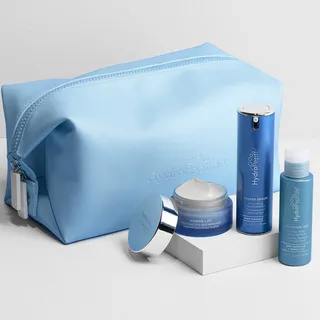
HydroPeptide 3-Step Anti-Aging Skincare Regimen
Works for
CleansingSorbitan stearate, Palmitoyl oligopeptide + 9 moreCleanses gently
“First, Cleansing Gel effectively removes makeup, dirt and excess oil without causing irritation to even the most sensitive skin.”
This product works by removing dirt and oil from the surface of the skin. It uses a combination of mild cleansing agents (cetyl alcohol, palmitoyl oligopeptide, polyglyceryl-3 beeswax, polyglyceryl-6 distearate, polysorbate 60, sodium stearoyl glutamate, sorbitan stearate, steareth-20, sucrose cocoate, xanthan gum) and should be able to cleanse the skin gently. Still keep in mind that any cleansing can disrupt the skin barrier, and most people do not need to cleanse their skin more than once per day.
Anti-blemishSide benefit · Bakuchiol, Kaolin + 3 moreMay help
This product might be able to help reduce blemishes and clogged pores because it contains bakuchiol.
Can it cause trouble?
Irritancy5 strong irritants: Bellis perennis flower extract, Sclareolide + 3 more — patch-test recommendedHigh risk
Comedogenic1 ingredient rated 2 or more on the 0–5 pore-clogging scale1 flagged
User reviews
Be the first — your take helps the next person decide.
Ingredients
Filter by role to see what each ingredient is doing.
Water~45–55%
Glycerin~4.6–5.6%
- Irritation risk
- Low
One of the best moisturizing ingredients. Naturally present in skin. It attracts water to the upper layer of the skin working as a humectant
More about GlycerinIsopentyldiol~4.1–5%
Pentylene glycol~3.1–3.8%
- Irritation risk
- Medium
Used to preserve products, dissolve other ingredients and create a nice product texture
More about Pentylene glycolSimmondsia chinensis leaf extract~2.3–2.8%
- Irritation risk
- Medium
A plant extract that might have an antioxidant effect and help attract water to the upper layer of the skin
More about Simmondsia chinensis leaf extractSorbitan stearate~1.9–2.3%
Hydroxyethyl acrylate/sodium acryloyldimethyl taurate copolymer~1.6–1.9%
- Irritation risk
- Medium
A gelling agent that thickens the product consistency and leaves the skin with a velvety finish
More about Hydroxyethyl acrylate/sodium acryloyldimethyl taurate copolymerMica~1.5–1.8%
- Irritation risk
- Low
Creates an illusion of smoother and more radiant skin tone. Adds shimmer to the skin by reflecting light
More about MicaSqualane~1.2–1.5%
- Irritation risk
- Low
An oil naturally present in skin. Works as an emollient to soften the skin and form a protective layer on its surface without a greasy feeling.
More about SqualaneC13-15 alkane~0.9–1.1%
Diethylhexyl carbonate~0.7–1%
- Irritation risk
- Low
Helps soften the upper layer of the skin
More about Diethylhexyl carbonatePearl powder~0.55–0.8%
- Irritation risk
- Low
Consists of 95% calcium carbonate that does not have any effect on the skin. The remaining 5% can include compounds that can help neutralize free radicals and support skin barrier function
More about Pearl powderAlbizia julibrissin bark extract~0.45–0.7%
- Irritation risk
- High
A plant extract that might help to neutralize free radicals in skin. Is claimed to help reduce hyperpigmentation but evidence is missing
More about Albizia julibrissin bark extractSaccharomyces lysate extract~0.45–0.65%
- Irritation risk
- Low
Helps attract water to the upper layer of the skin. Can have some anti-inflammatory effect
More about Saccharomyces lysate extractSclerotium gum~0.35–0.65%
- Irritation risk
- Low
Used to create gel-like formulas and stabilize emulsions
More about Sclerotium gumHydroxyacetophenone~0.4–0.6%
Olea europaea fruit unsaponifiables~0.45–0.65%
- Irritation risk
- Low
Whey protein~0.35–0.6%
- Irritation risk
- Low
A protein derived from milk. In skincare products, might help to soften the upper layer of the skin
More about Whey proteinCaprylyl glycol~0.3–0.6%
- Irritation risk
- Medium
Helps preserve products and creates a nice product texture
More about Caprylyl glycolPhenylpropanol~0.25–0.5%
- Irritation risk
- High
Helps mask the smell of other ingredients and helps preserve the product formulation
More about PhenylpropanolPropanediol~0.25–0.5%
- Irritation risk
- Low
Acts as a solvent for other ingredients. Speeds up the absorption of other ingredients into the skin
More about PropanediolTetrahexyldecyl ascorbate~0.25–0.45%
- Irritation risk
- Medium
Being a lipid soluble form of vitamin C, it is more stable than ascorbic acid, but still degrades quickly and needs to be stabilized in a formulation with another ingredient. It is claimed to penetrate skin better than pure vitamin C and have the the similar benefits, but solid studies of its effectiveness are lacking. Is likely to require a higher concentration in a product than pure vitamin C to be effective. It might be able to help reduce pore clogging.
More about Tetrahexyldecyl ascorbatePolysorbate 60~0.25–0.5%
Sucrose cocoate~0.25–0.45%
Titanium dioxide~0.3–0.6%
- Irritation risk
- Low
Works as a UV filter when used in high concentrations. It is photostable and is effective mostly against the UVB light, with some protection in the UVA range. In small concentrations, used for its ability to improve the color of cosmetic products. Is usually well tolerated by the skin
More about Titanium dioxideCi 77163~0.25–0.45%
Stearyl glycyrrhetinate~0.2–0.4%
- Irritation risk
- Medium
A fatty acid derived from licorice. Works as an emollient and can help calm down inflammation
More about Stearyl glycyrrhetinateSteareth-20~0.3–0.55%
Sodium hyaluronate~0.25–0.4%
- Irritation risk
- Low
One of the best moisturizing ingredients. Attracts water into the upper layer of the skin
More about Sodium hyaluronateTetrasodium glutamate diacetate~0.25–0.45%
- Irritation risk
- Low
Helps stabilize the product formulation
More about Tetrasodium glutamate diacetatePlankton extract~0.25–0.45%
- Irritation risk
- Medium
- Comedogenicity
- 3/5
Can help attract water to the upper layer of the skin
More about Plankton extractHydroxypropyl cyclodextrin~0.25–0.5%
- Irritation risk
- Medium
Used to stabilize product formulations and help soften the upper layer of the skin
More about Hydroxypropyl cyclodextrinLecithin~0.25–0.5%
- Irritation risk
- Low
Used mostly for creating emulsions - helping oil and water mix together. Helps soften the upper layer of the skin
More about LecithinPalmitoyl tripeptide-38~0.2–0.4%
- Irritation risk
- Low
A type of peptide. Peptides are excellent moisturizers and might be able support collagen production reducing fine lines and wrinkles
More about Palmitoyl tripeptide-38N-hydroxysuccinimide~0.2–0.4%
- Irritation risk
- High
Is claimed to be able to brighten skin tone by removing some blood-related pigmented compounds in skin (hemoglobin and related elements) but solid research is missing. Can be irritating
More about N-hydroxysuccinimideDarutoside~0.2–0.4%
- Irritation risk
- Low
Tocopherol~0.25–0.45%
- Irritation risk
- Low
Pure form of vitamin E. Can help moisturise and protect the skin from free radicals. Often used to help stabilise other ingredients or the formula itself
More about TocopherolChrysin~0.25–0.45%
- Irritation risk
- Medium
Might be helpful in reducing fine lines and wrinkles, as well as lightening the skin, but solid evidence is missing. Could somewhat help in reducing the darkness of the under-eye area. Helps to neutralise free radicals in skin
More about ChrysinPalmitoyl oligopeptide~0.3–0.55%
- Irritation risk
- Low
A type of peptide. Peptides are excellent moisturizers and might be able support collagen production reducing fine lines and wrinkles
More about Palmitoyl oligopeptidePalmitoyl tetrapeptide-7~0.25–0.5%
- Irritation risk
- Low
A type of peptide. Peptides are excellent moisturizers and might be able support collagen production reducing fine lines and wrinkles
More about Palmitoyl tetrapeptide-7Water~0.25–0.45%
Glycerin~0.25–0.5%
- Irritation risk
- Low
One of the best moisturizing ingredients. Naturally present in skin. It attracts water to the upper layer of the skin working as a humectant
More about GlycerinPentylene glycol~0.25–0.5%
- Irritation risk
- Medium
Used to preserve products, dissolve other ingredients and create a nice product texture
More about Pentylene glycolPolyglyceryl-6 distearate~0.25–0.45%
- Irritation risk
- Medium
Helps oil and water mix together while softening the upper layer of the skin
More about Polyglyceryl-6 distearateBellis perennis flower extract~0.2–0.4%
- Irritation risk
- High
A plant extract. Used as a fragrance. Can be irritating
More about Bellis perennis flower extractEthyl macadamiate~0.25–0.45%
Jojoba esters~0.25–0.5%
- Irritation risk
- Medium
An emollient made of jojoba oil. Helps soften the skin and support its barrier function
More about Jojoba esters1,2-hexanediol~0.25–0.4%
Diethylhexyl carbonate~0.25–0.45%
- Irritation risk
- Low
Helps soften the upper layer of the skin
More about Diethylhexyl carbonateSodium stearoyl glutamate~0.3–0.5%
- Irritation risk
- Medium
Helps oil and water mix together
More about Sodium stearoyl glutamateHieracium pilosella extract~0.2–0.4%
- Irritation risk
- Low
Bakuchiol~0.25–0.45%
- Irritation risk
- Medium
A plant extract that is, though different in chemical structure, acts similar to retinoids. First studies show that it can help reduce fine lines and wrinkles, improve skin tone, reduce clogged pores and blemishes, and reduce inflammation. There is no conclusive evidence that bakuchiol is as effective as retinol however. The study that directly compared retinol with bakuchiol used bakuchiol applied twice daily compared to once per day for the retinol. According to this study, bakuchiol is less irritating than retinol. Bakuchiol is extracted from seeds of Babchi plant. Other parts of the plant contain coumarins that could cause allergic and irritant reactions. These compounds should be removed in the extraction process when bakuchiol is produced, but it is a good idea to be cautious and stay away from products that include the Babchi plant extracts other than purified bakuchiol to avoid irritation
More about BakuchiolHydroxyacetophenone~0.25–0.45%
Ammonium acryloyldimethyltaurate/vp copolymer~0.25–0.45%
- Irritation risk
- Low
Increases thickness of a product. Texture enhancer for oil-in-water emulsions
More about Ammonium acryloyldimethyltaurate/vp copolymerLeontopodium alpinum callus culture extract~0.25–0.45%
- Irritation risk
- Low
A plant stem cell extract that might help neutralize free radicals and reduce inflammation in skin
More about Leontopodium alpinum callus culture extractPropanediol~0.25–0.45%
- Irritation risk
- Low
Acts as a solvent for other ingredients. Speeds up the absorption of other ingredients into the skin
More about PropanediolCetyl alcohol~0.25–0.5%
- Irritation risk
- Low
A non-drying alcohol that works to soften the skin and stabilize product formulations helping oil and water mix together
More about Cetyl alcoholPolyglyceryl-3 beeswax~0.25–0.45%
- Irritation risk
- Medium
Helps water and oil mix together. Could be an allergen (beeswax)
More about Polyglyceryl-3 beeswaxCaffeine~0.2–0.4%
- Irritation risk
- Medium
Might be helpful in neutralizing free radicals. Can have a dehydration effect that might somewhat decrease the look of puffy eyes
More about CaffeineXanthan gum~0.25–0.45%
- Irritation risk
- Low
Used to create a thicker product consistency
More about Xanthan gumAcrylates/c10-30 alkyl acrylate crosspolymer~0.25–0.45%
- Irritation risk
- Medium
Maintains the texture of skincare products. Allows the product to spread evenly. Helps oil and water mix together
More about Acrylates/c10-30 alkyl acrylate crosspolymerDipotassium glycyrrhizate~0.2–0.4%
- Irritation risk
- Low
A salt derived from licorice. Works as an emollient to soften the upper layer of the skin and can help calm down inflammation. Might be helpful for skin lightening
More about Dipotassium glycyrrhizateSclareolide~0.2–0.35%
- Irritation risk
- High
Derived from clary sage. Used as a fragrance. Can be irritating
More about SclareolideTetrahexyldecyl ascorbate~0.25–0.45%
- Irritation risk
- Medium
Being a lipid soluble form of vitamin C, it is more stable than ascorbic acid, but still degrades quickly and needs to be stabilized in a formulation with another ingredient. It is claimed to penetrate skin better than pure vitamin C and have the the similar benefits, but solid studies of its effectiveness are lacking. Is likely to require a higher concentration in a product than pure vitamin C to be effective. It might be able to help reduce pore clogging.
More about Tetrahexyldecyl ascorbateTocopherol~0.25–0.45%
- Irritation risk
- Low
Pure form of vitamin E. Can help moisturise and protect the skin from free radicals. Often used to help stabilise other ingredients or the formula itself
More about TocopherolTetrasodium glutamate diacetate~0.25–0.45%
- Irritation risk
- Low
Helps stabilize the product formulation
More about Tetrasodium glutamate diacetateTephrosia purpurea seed extract~0.2–0.4%
- Irritation risk
- Medium
A plant extract that might help attract water to the upper layer of the skin. The manufacturer claims that it can help "break down cortisol production in skin production in skin cells", but actual benefits to the skin are not clear
More about Tephrosia purpurea seed extractVitis vinifera seed extract~0.25–0.45%
- Irritation risk
- Low
A plant extract that contains resveratrol and other anti-oxidant compounds that can help neutralize free radicals, reduce inflammation in skin and even out its tone. Can be also used to stabilize the product formulation
More about Vitis vinifera seed extractCucumis sativus fruit extract~0.25–0.4%
- Irritation risk
- Medium
Might be somewhat helpful in reducing hyperpigmentation and neutralizing free radicals but its typical concentration in a product is too low for having an effect
More about Cucumis sativus fruit extractPentapeptide-18~0.25–0.45%
- Irritation risk
- Low
A type of peptide. Peptides are excellent moisturizers and might be able support collagen production reducing fine lines and wrinkles
More about Pentapeptide-18Acetyl hexapeptide-8~0.2–0.4%
- Irritation risk
- Low
A type of peptide. Peptides are excellent moisturizers and might be able support collagen production reducing fine lines and wrinkles
More about Acetyl hexapeptide-8Water~0.25–0.45%
Glycerin~0.25–0.5%
- Irritation risk
- Low
One of the best moisturizing ingredients. Naturally present in skin. It attracts water to the upper layer of the skin working as a humectant
More about GlycerinSodium polyacrylate~0.25–0.5%
- Irritation risk
- Low
Used to create a gel-like product texture, as well as to stabilize emulsions
More about Sodium polyacrylateSorbitol~0.25–0.4%
- Irritation risk
- Low
Helps attract water to the upper layer of the skin and improves the product texture
More about SorbitolRicinus communis seed oil~0.25–0.45%
- Irritation risk
- Medium
A plant oil that can help soften the skin. It might be helpful in calming down inflammation, but solid research is lacking. Is often used in lip products to create the needed product consistency
More about Ricinus communis seed oilPolyacrylic acid~0.25–0.5%
- Irritation risk
- Low
Cellulose gum~0.25–0.45%
- Irritation risk
- Low
Used to create thicker product consistency and stabilize emulsions
More about Cellulose gumKaolin~0.35–0.65%
- Irritation risk
- Low
A type of clay that consists mainly of aluminum silicate. Helps absorb oil and creates a thicker product consistency. Can be used to add a white color
More about KaolinOctyldodecanol~0.25–0.45%
- Irritation risk
- Low
An emollient that helps to soften the skin and create a pleasant product texture and stabilize the formulation
More about OctyldodecanolButylene glycol~0.25–0.4%
- Irritation risk
- Low
Used to create a nice product texture and help delivery of other ingredients. Might be somewhat helpful in attracting water to the upper layer of the skin
More about Butylene glycolAllantoin~0.2–0.4%
- Irritation risk
- Low
Helps calm down inflammation in skin and can help reduce itching. Helps to repair the skin barrier and keep skin hydrated
More about AllantoinAloe barbadensis leaf juice powder~0.2–0.4%
- Irritation risk
- Medium
Traditionally used to treat sunburns, dermatitis and inflammation, but evidence for its effectiveness is lacking. The extract can contain humectants that help attract water into the skin
More about Aloe barbadensis leaf juice powderAluminum hydroxide~0.25–0.5%
- Irritation risk
- Low
Is used to add opaque (non-transparent) appearance to formulations. Can be used to coat other ingredients for even dispersion. This is a different ingredient compared to the ones used in antipersperants (aluminium chloride and aluminium chlorohydrate)
More about Aluminum hydroxideNiacinamide~0.25–0.45%
- Irritation risk
- Low
Is proven to be effective in reducing blemishes, evening out skin tone and helping to improve lines and wrinkles. It helps the skin to repair sun damage, calm down inflammation and keep maintain good levels of moisture. The concentration of about 2% is effective for supporting the skin barrier and evening out the skin tone. Concentration of 4-6% is better for helping with acne and balancing the sebum production
More about NiacinamidePropylene glycol~0.2–0.4%
- Irritation risk
- High
Helps oil and water mix together and can enhance the penetration of other ingredients into the skin. It can be irritating
More about Propylene glycolRetinyl palmitate~0.2–0.4%
- Irritation risk
- High
Three steps removed from the active form of vitamin A - retinoic acid. To have an effect in the skin, it first needs to be converted twice to become the retinoic acid. This means it is less potent than retinol, but could also be less irritating. Once converted to the retinoic acid in the skin, it helps against all signs of aging, improves skin cell turnover and helps fight blemishes and clogged pores. However, in many cosmetic formulations, it is used in a concentration that is too low to have the full effect
More about Retinyl palmitateTocopheryl acetate~0.25–0.45%
- Irritation risk
- Medium
A more stable but less bio-available form of vitamin E compared to Tocopherol. Might help moisturize and protect the skin from free radicals, but mostly used in low concentrations to stabilize other ingredients.
More about Tocopheryl acetatePhenoxyethanol~0.25–0.45%
- Irritation risk
- Low
A preservative. It helps prevent bacterial growth in cosmetic products
More about PhenoxyethanolTartaric acid~0.25–0.45%
- Irritation risk
- Medium
An AHA (alpha-hydroxy acid). It oxidizes quickly which makes it less effective in skincare formulations. It can support skin's barrier and moisture levels
More about Tartaric acidDisodium edta~0.25–0.45%
Parfum~0.2–0.4%
- Irritation risk
- High
An aromatic blend of unspecified and possibly irritating ingredients
More about ParfumTitanium dioxide~0.3–0.6%
- Irritation risk
- Low
Works as a UV filter when used in high concentrations. It is photostable and is effective mostly against the UVB light, with some protection in the UVA range. In small concentrations, used for its ability to improve the color of cosmetic products. Is usually well tolerated by the skin
More about Titanium dioxideSodium hyaluronate~0.25–0.4%
- Irritation risk
- Low
One of the best moisturizing ingredients. Attracts water into the upper layer of the skin
More about Sodium hyaluronateHydrolyzed collagen~0.25–0.45%
- Irritation risk
- Low
A typically plant-derived compound that is supposed mimic human collagen. Cannot penetrate the skin barrier so is not particularly useful in skincare products beyond attracting water to the upper layer of the skin
More about Hydrolyzed collagenAdenosine~0.2–0.4%
- Irritation risk
- Low
Might help improve cell turnover and reduce inflammation in skin. One study shows that the ingredients might be able to help reduce dynamic wrinkles (for example, in the corners of the eyes or on the forehead)
More about AdenosineAcetyl glutamine~0.2–0.4%
- Irritation risk
- Low
Lecithin~0.25–0.5%
- Irritation risk
- Low
Used mostly for creating emulsions - helping oil and water mix together. Helps soften the upper layer of the skin
More about Lecithin1,2-hexanediol~0.2–0.4%
Bacillus/folic acid/soybean ferment extract~0.2–0.4%
- Irritation risk
- Low
Caprylyl glycol~0.25–0.4%
- Irritation risk
- Medium
Helps preserve products and creates a nice product texture
More about Caprylyl glycolCaviar extract~0.2–0.35%
- Irritation risk
- Low
Ethylhexylglycerin~0.2–0.35%
Ci 42090~0.15–0.3%
Sh-oligopeptide-1~0.15–0.3%
- Irritation risk
- Low
A type of peptide. Peptides are excellent moisturizers and might be able support collagen production reducing fine lines and wrinkles
More about Sh-oligopeptide-1Sh-oligopeptide-2~0.15–0.25%
- Irritation risk
- Low
A type of peptide. Peptides are excellent moisturizers and might be able support collagen production reducing fine lines and wrinkles
More about Sh-oligopeptide-2Sh-polypeptide-1~0.15–0.25%
- Irritation risk
- Low
A lab-made copy of human basic fibroblast growth factor (bFGF), a protein that tells skin cells to multiply. It speeds up wound healing as a prescription drug, but it is too large to pass through intact skin easily, and there is no good evidence it reduces wrinkles in skincare.
More about Sh-polypeptide-1Sh-polypeptide-11~0.15–0.25%
- Irritation risk
- Low
A type of peptide. Peptides are excellent moisturizers and might be able support collagen production reducing fine lines and wrinkles
More about Sh-polypeptide-11Sh-polypeptide-9~0.1–0.15%
- Irritation risk
- Low
A type of peptide. Peptides are excellent moisturizers and might be able support collagen production reducing fine lines and wrinkles
More about Sh-polypeptide-9Linalool~0.05–0.1%
Ingredient list view
Water, Glycerin, Isopentyldiol, Pentylene glycol, Simmondsia chinensis leaf extract, Sorbitan stearate, Hydroxyethyl acrylate/sodium acryloyldimethyl taurate copolymer, Mica, Squalane, C13-15 alkane, Diethylhexyl carbonate, Pearl powder, Albizia julibrissin bark extract, Saccharomyces lysate extract, Sclerotium gum, Hydroxyacetophenone, Olea europaea fruit unsaponifiables, Whey protein, Caprylyl glycol, Phenylpropanol, Propanediol, Tetrahexyldecyl ascorbate, Polysorbate 60, Sucrose cocoate, Titanium dioxide, Ci 77163, Stearyl glycyrrhetinate, Steareth-20, Sodium hyaluronate, Tetrasodium glutamate diacetate, Plankton extract, Hydroxypropyl cyclodextrin, Lecithin, Palmitoyl tripeptide-38, N-hydroxysuccinimide, Darutoside, Tocopherol, Chrysin, Palmitoyl oligopeptide, Palmitoyl tetrapeptide-7, Water, Glycerin, Pentylene glycol, Polyglyceryl-6 distearate, Bellis perennis flower extract, Ethyl macadamiate, Jojoba esters, 1,2-hexanediol, Diethylhexyl carbonate, Sodium stearoyl glutamate, Hieracium pilosella extract, Bakuchiol, Hydroxyacetophenone, Ammonium acryloyldimethyltaurate/vp copolymer, Leontopodium alpinum callus culture extract, Propanediol, Cetyl alcohol, Polyglyceryl-3 beeswax, Caffeine, Xanthan gum, Acrylates/c10-30 alkyl acrylate crosspolymer, Dipotassium glycyrrhizate, Sclareolide, Tetrahexyldecyl ascorbate, Tocopherol, Tetrasodium glutamate diacetate, Tephrosia purpurea seed extract, Vitis vinifera seed extract, Cucumis sativus fruit extract, Pentapeptide-18, Acetyl hexapeptide-8, Water, Glycerin, Sodium polyacrylate, Sorbitol, Ricinus communis seed oil, Polyacrylic acid, Cellulose gum, Kaolin, Octyldodecanol, Butylene glycol, Allantoin, Aloe barbadensis leaf juice powder, Aluminum hydroxide, Niacinamide, Propylene glycol, Retinyl palmitate, Tocopheryl acetate, Phenoxyethanol, Tartaric acid, Disodium edta, Parfum, Titanium dioxide, Sodium hyaluronate, Hydrolyzed collagen, Adenosine, Acetyl glutamine, Lecithin, 1,2-hexanediol, Bacillus/folic acid/soybean ferment extract, Caprylyl glycol, Caviar extract, Ethylhexylglycerin, Ci 42090, Sh-oligopeptide-1, Sh-oligopeptide-2, Sh-polypeptide-1, Sh-polypeptide-11, Sh-polypeptide-9, Linalool
Worth comparing, line by line.
Match % combines shared ingredients, the first five ingredients, shared actives and hero ingredients, irritancy (lower counts in the alternative's favour), texture and body area. Only products in the same routine step are compared.
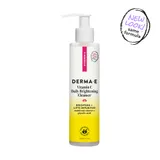
| HydroPeptide3-Step Anti-Aging Skincare RegimenYOUR PRODUCT | Derma EVitamin C Daily Brightening Cleanser | AvèneCLEANANCE Aqua gel opacizzante | NaturiumMulti-Calm Cream Cleanser | |
|---|---|---|---|---|
| Match | — | 67% | 52% | 51% |
| Price | — | $17.95 | — | $15.65 |
| Shared key ingredients | — | 4 of 41 | 3 of 41 | 5 of 41 |
| Key difference | — | Retinol | Diglycerin | Panthenol |
| Irritancy | High | Medium | Medium | Medium |
| Drying alcohol | — | — | — | — |
| View product | Shop | Shop | Shop |


More alternatives: JUICE TO CLEANSE Vinegar Kombucha Vegan CreamIOPE Bio Conditioning Oil in Gel
Sources cited in this review
Every concentration estimate and effectiveness label is anchored to one of these 47 studies and safety reviews.
- 1
- 2Dermatology News Commentary: Jojobamdedge.com
- 3Jojoba in dermatology: A succinct reviewresearchgate.net
- 4
- 5Phytopharmacological properties of Albizia species: A reviewresearchgate.net
- 6Use of Probiotics for Dermal Applicationsresearchgate.net
