Works for:
based on ingredients and %- Moisturizing
- Anti-aging
- Exfoliation
- Evens skin tone
Can it cause trouble?
- Irritation risk: high
- Comedogenic risk ingredients: 8
Key actives
Anti-aging
This product can help reduce and prevent fine lines and wrinkles, improve skin elasticity and firmness because it contains glycolic acid.
Keep in mind that it typically takes at least 6 weeks to notice any results because the changes that are needed to improve fine lines and elasticity happen in the deeper layers of the skin. No topical anti-aging product can “erase” wrinkles or fully reverse signs of aging.
An alpha-hydroxy acid (AHA) that helps to remove the dead skin cells on the surface of the skin reveling a more even, smoother complexation. It is also able to stimulate collagen production with long-term use. Could help to reduce pore congestion. It can be irritating to the skin. Apply sunscreen daily if using products with glycolic acid
Helps attract water to the upper layer of the skin, calm down inflammation and irritation, restore the barrier function and support wound healing. It can be helpful in reducing fine lines and wrinkles
The most well-researched antioxidant that works in skin. Helps neutralize free radicals supporting collagen production, helping to even out the skin tone and preventing early signs of aging
A polyhydroxy acid (PHA) that helps shed the dead cells from the skin surface revealing smoother skin. Is believed to be genter than AHAs. It helps attract water to the upper layer of the skin and can stimulate production of skin's own hyaluronic acid resulting in improved hydration levels. It has been shown to be helpful against acne and clogged pores if used consistently (e.g over a period of 12 weeks) in high enough concentration. It can help reduce fine lines and wrinkles and improve skin tone with long-term application. Can help neutralize free radicals
An exfoliating and moisturizing alpha-hydroxy acid (AHA). Typically causes less irritation than other AHAs, for example, glycolic acid. At high concentrations (about 15%), lactic acid can help reduce lines and wrinkles. Recent studies show that lactic acid can support the "good" bacteria living on skin's surface (healthy skin microbiome)
A plant extract that has been shown to be able to reduce inflammation in skin, support restoration of skin barrier function, as well as support collagen production. Contains active compounds called centelloids: asiaticoside, madecasosside, asiatic acid and madecassic acid. Might be helpful in preventing stretch marks. It can be itself be irritating though.
Pure form of vitamin E. Can help moisturise and protect the skin from free radicals. Often used to help stabilise other ingredients or the formula itself
A plant extract that can help neutralize free radicals in skin and attract water to its upper layer
Traditionally used to treat sunburns, dermatitis and inflammation, but evidence for its effectiveness is lacking. The extract can contain humectants that help attract water into the skin
Evens skin tone
This product can help reduce hypepigmentation and even out the skin tone because it contains the following effective ingredients: glycolic acid
The following ingredient (ingredients) in this product might be helpful, but there is no evidence to confirm that it actually can help even out the skin tone: glycyrrhiza glabra root extract.
Keep in mind that you would need to apply any topical skincare targetted at hypigmentation consistently for a couple of months to get a result. No topical skincare product can help get rid of hyperpigmentation (including post-acne marks and age spots) instantly.
An alpha-hydroxy acid (AHA) that helps to remove the dead skin cells on the surface of the skin reveling a more even, smoother complexation. It is also able to stimulate collagen production with long-term use. Could help to reduce pore congestion. It can be irritating to the skin. Apply sunscreen daily if using products with glycolic acid
A plant extract that can help lighten the skin and calm down inflammation. Might be helpful in neutralizing free radicals
Helps attract water to the upper layer of the skin. Might have some anti-aging, anti-oxidant, and skin lightening properties, but solid evidence is missing
A polyhydroxy acid (PHA) that helps shed the dead cells from the skin surface revealing smoother skin. Is believed to be genter than AHAs. It helps attract water to the upper layer of the skin and can stimulate production of skin's own hyaluronic acid resulting in improved hydration levels. It has been shown to be helpful against acne and clogged pores if used consistently (e.g over a period of 12 weeks) in high enough concentration. It can help reduce fine lines and wrinkles and improve skin tone with long-term application. Can help neutralize free radicals
An exfoliating and moisturizing alpha-hydroxy acid (AHA). Typically causes less irritation than other AHAs, for example, glycolic acid. At high concentrations (about 15%), lactic acid can help reduce lines and wrinkles. Recent studies show that lactic acid can support the "good" bacteria living on skin's surface (healthy skin microbiome)
The most well-researched antioxidant that works in skin. Helps neutralize free radicals supporting collagen production, helping to even out the skin tone and preventing early signs of aging
Exfoliation
This product can help exfoliate the skin. In other words, it helps break down the bonds between dead cells on the surface of the skin and speed up the skin turnover. Skin often appears softer and brighter after exfoliation, but overdoing it can result in disrupted skin barrier. The following ingredient is doing the exfoliating job in this product: glycolic acid.
An alpha-hydroxy acid (AHA) that helps to remove the dead skin cells on the surface of the skin reveling a more even, smoother complexation. It is also able to stimulate collagen production with long-term use. Could help to reduce pore congestion. It can be irritating to the skin. Apply sunscreen daily if using products with glycolic acid
An AHA (alpha-hydroxy acid). It oxidizes quickly which makes it less effective in skincare formulations. It can support skin's barrier and moisture levels
A plant extract that can help neutralize free radicals in skin. It contains a compound salicin that can theoretically be converted into salicylic acid that, in turn, helps reduce inflammation in skin, but the evidence of effectiveness in skin is lacking and the extract is usually not used in a concentration that would enable an exfoliating effect
A polyhydroxy acid (PHA) that helps shed the dead cells from the skin surface revealing smoother skin. Is believed to be genter than AHAs. It helps attract water to the upper layer of the skin and can stimulate production of skin's own hyaluronic acid resulting in improved hydration levels. It has been shown to be helpful against acne and clogged pores if used consistently (e.g over a period of 12 weeks) in high enough concentration. It can help reduce fine lines and wrinkles and improve skin tone with long-term application. Can help neutralize free radicals
An exfoliating and moisturizing alpha-hydroxy acid (AHA). Typically causes less irritation than other AHAs, for example, glycolic acid. At high concentrations (about 15%), lactic acid can help reduce lines and wrinkles. Recent studies show that lactic acid can support the "good" bacteria living on skin's surface (healthy skin microbiome)
Anti-oxidation
This product contains antioxidants (tartaric acid) that might be able to help neutralize free radicals in skin to lessen the damage it gets from the UV light (sun). There is not enough evidence to confirm their effectiveness in skin though.
An AHA (alpha-hydroxy acid). It oxidizes quickly which makes it less effective in skincare formulations. It can support skin's barrier and moisture levels
Helps attract water to the upper layer of the skin, calm down inflammation and irritation, restore the barrier function and support wound healing. It can be helpful in reducing fine lines and wrinkles
A plant extract that can help attract water to the upper layer of the skin and might help to reduce inflammation
A plant extract that can contain an antioxidant compound
Red algae extract that helps attract water to the upper layer of the skin and might contain antioxidants
A plant extract that might help neutralize free radicals in skin. It can be irritating
A plant extract that can help lighten the skin and calm down inflammation. Might be helpful in neutralizing free radicals
A plant extract that might be helpful to neutralize free radicals in skin
A plant extract that is rich in a fragrance compound eugenol that is a frequent allergen and can be irritating. It might also contain anti-oxidants to help neutralize free radicals
A plant extract that can help neutralize free radicals in skin. It contains a compound salicin that can theoretically be converted into salicylic acid that, in turn, helps reduce inflammation in skin, but the evidence of effectiveness in skin is lacking and the extract is usually not used in a concentration that would enable an exfoliating effect
An aromatic plant root extract with a mint-like smell. Can be irritating. Used as a fragrance. Might have some anti-oxidant effect
A plant extract that might contain a compound baicalin that could be helpful in neutralizing free radicals and reducing inflammation in skin. The baicalin concentration in skincare products is often too low for an effective action. Can be used for its fragrant properties
A plant extract that might have an anti-inflammatory effect in skin
Plant extract that might help calm down inflammation and have some anti-oxidant properties
A fruit extract that is used to add a fragrance to the product. It might have some antioxidant properties
A plant extract that can be irritating. It might contain a compound anthocyanin that could be helpful in neutralizing free radicals
Helps attract water to the upper layer of the skin. Might have some anti-aging, anti-oxidant, and skin lightening properties, but solid evidence is missing
A berry extract. Might have some anti-oxidant properties
A fruit extract that might have some anti-oxidant properties but evidence of effectiveness in skin is lacking
Pure form of vitamin E. Can help moisturise and protect the skin from free radicals. Often used to help stabilise other ingredients or the formula itself
The most well-researched antioxidant that works in skin. Helps neutralize free radicals supporting collagen production, helping to even out the skin tone and preventing early signs of aging
A plant extract that can help neutralize free radicals in skin and attract water to its upper layer
A plant extract that has been shown to be able to reduce inflammation in skin, support restoration of skin barrier function, as well as support collagen production. Contains active compounds called centelloids: asiaticoside, madecasosside, asiatic acid and madecassic acid. Might be helpful in preventing stretch marks. It can be itself be irritating though.
A polyhydroxy acid (PHA) that helps shed the dead cells from the skin surface revealing smoother skin. Is believed to be genter than AHAs. It helps attract water to the upper layer of the skin and can stimulate production of skin's own hyaluronic acid resulting in improved hydration levels. It has been shown to be helpful against acne and clogged pores if used consistently (e.g over a period of 12 weeks) in high enough concentration. It can help reduce fine lines and wrinkles and improve skin tone with long-term application. Can help neutralize free radicals
An active component of chamomile plant that historically has been used to calm down irritated skin. A recent study shows that bisabolol indeed can have some anti-inflammatory effect on skin, even though conclusive data is lacking. Bisabolol has a sweet floral scent and can be added to products for its aromatic properties
Moisturizing
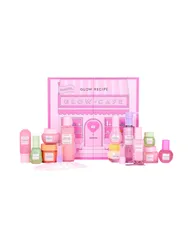
What does the product description say?
And with Papaya Sorbet Enzyme Cleansing Balm, Blueberry Bounce Gentle Cleanser, Avocado Melt Retinol Eye Sleeping Mask and Banana Souffle Moisture Cream this is a festive cornucopia of Glow Recipe skin treatments.
Source: Cultbeauty
This product can help improve hydration of the skin with the two types of ingredients.
The first type is called “humectants”:
these ingredients help attract water.
When humectants are on the surface of the skin, they “pull in” the moisture from the outside environment, or from
within deeper layers of the skin. The following ingredients in this product do the job:
betaine, glutamic acid.
This product also contains ingredients called “occlusives”. They help reduce the speed with which our skin loses moisture to the outside environment. These ingredients also help soften the upper layer of the skin, so it feels less tight and nicer to the touch. The following ingredients in this product do the job: copernicia cerifera wax, helianthus annuus seed oil.
An amino-acid that helps attract water to the upper layer of the skin
One of the best moisturizing ingredients. Naturally present in skin. It attracts water to the upper layer of the skin working as a humectant
A great emollient due to its high linoleic acid content. One of the most effective plant oils in helping skin hydration and repairing skin barrier function
A plant extract that typically contains linolenic and linoleic acids that help soften the upper layer of the skin and can support skin barrier function
One of the best moisturizing ingredients. Attracts water into the upper layer of the skin
Helps attract water to the upper layer of the skin
A plant extract that can help attract water to the upper layer of the skin and might help to reduce inflammation
Helps attract water to the upper layer of the skin, calm down inflammation and irritation, restore the barrier function and support wound healing. It can be helpful in reducing fine lines and wrinkles
Helps attract water to the upper layer of the skin and improves the product texture
An oil naturally present in skin. Works as an emollient to soften the skin and form a protective layer on its surface without a greasy feeling.
Can help attract water to the upper layer of the skin. In crystal form, it can work as a gentle exfoliant, gentler than the salt scrub. Helps stabilize the emulsion
An emollient. Found to be as effective as a moisturizer for dry skin as mineral oil. Could be comedogenic
Helps to soften the upper layer of the skin and create a nice product consistency
Red algae extract that helps attract water to the upper layer of the skin and might contain antioxidants
Attracts water into the upper layer of the skin
Used to stabilize the product formulations and works as an emollient
Helps attract water to the upper layer of the skin. Might have some anti-aging, anti-oxidant, and skin lightening properties, but solid evidence is missing
An AHA (alpha-hydroxy acid). It oxidizes quickly which makes it less effective in skincare formulations. It can support skin's barrier and moisture levels
A non-drying alcohol. Works as an emollient. Helps water and oil mix together and creates a nice product texture
A non-drying alcohol that works to soften the skin and stabilize product formulations helping oil and water mix together
Helps to soften the upper layer of the skin without creating a greasy texture
An emollient that helps soften the skin
Helps to soften the upper layer of the skin and creates a nice product finish on the skin
Brazilian palm wax. Helps soften the upper layer of the skin
Helps to soften the upper layer of the skin
Can help attract water to the upper layer of the skin. Avoid if sensitive to gluten
Helps soften the upper layer of the skin
Helps attract water to the upper layer of the skin. Could be helpful in restoring the skin barrier function
Used to preserve products, dissolve other ingredients and create a nice product texture
Used to create a thicker product consistency and soften the upper layer of the skin
Used to create a nice product texture and help delivery of other ingredients. Might be somewhat helpful in attracting water to the upper layer of the skin
Helps preserve products and creates a nice product texture
Used to improve the product consistency and soften the upper layer of the skin
A plant oil that helps soften the upper layer of the skin. Is unlikely to be helpful in restoring skin barrier function due to the low content of linoleic acid
An emollient that helps to soften the skin and create a pleasant product texture and stabilize the formulation
A plant extract that might have an anti-inflammatory effect in skin
Helps soften the upper layer of the skin and create a nice product consistency
Helps to soften the upper layer of the skin and create a nice product texture
A plant extract that might contain a compound baicalin that could be helpful in neutralizing free radicals and reducing inflammation in skin. The baicalin concentration in skincare products is often too low for an effective action. Can be used for its fragrant properties
Is used to dissolve other ingredients and create nice product texture
Softens the upper layer of skin and helps restore the healthy skin barrier. Has shown to help calm down inflammation in skin. It is a stable oil, meaning that it retains its properties even when exposed to air.
A polyhydroxy acid (PHA) that helps shed the dead cells from the skin surface revealing smoother skin. Is believed to be genter than AHAs. It helps attract water to the upper layer of the skin and can stimulate production of skin's own hyaluronic acid resulting in improved hydration levels. It has been shown to be helpful against acne and clogged pores if used consistently (e.g over a period of 12 weeks) in high enough concentration. It can help reduce fine lines and wrinkles and improve skin tone with long-term application. Can help neutralize free radicals
An exfoliating and moisturizing alpha-hydroxy acid (AHA). Typically causes less irritation than other AHAs, for example, glycolic acid. At high concentrations (about 15%), lactic acid can help reduce lines and wrinkles. Recent studies show that lactic acid can support the "good" bacteria living on skin's surface (healthy skin microbiome)
A plant extract that has been shown to be able to reduce inflammation in skin, support restoration of skin barrier function, as well as support collagen production. Contains active compounds called centelloids: asiaticoside, madecasosside, asiatic acid and madecassic acid. Might be helpful in preventing stretch marks. It can be itself be irritating though.
A good mix of fatty acids that forms a protective layer on the skin. Improves the shelf life of products. Derived from coconut and glycerin
A plant extract that can help neutralize free radicals in skin and attract water to its upper layer
Traditionally used to treat sunburns, dermatitis and inflammation, but evidence for its effectiveness is lacking. The extract can contain humectants that help attract water into the skin
Pure form of vitamin E. Can help moisturise and protect the skin from free radicals. Often used to help stabilise other ingredients or the formula itself
How honest is this product?
| Promise | Can it deliver? |
|---|---|
| Moisturizing |
Total Promises Fulfilled score: 75/100.
Potential irritants
Comedogenic ingredients
User reviews (0)
Averages from community submissions.
No reviews yet for this product.
Be the first to share your experience!
Tried this product?
Help capture what the ingredient list can't—texture, finish, pilling, scent, and more. Answer what you can, skip the rest.
Takes ~30 seconds.
Reviews are shown in aggregate. No personal details.
| Product | Similarity | Price | Irritancy |
|---|---|---|---|
 Glow Recipe Glow Café | Current | - | |
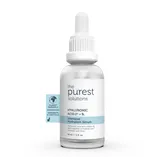 The Purest Solutions Intensive Hydration Serum Hyaluronic Acid %2 + B5 | 40% | $16.99 | |
 Dr Dennis Gross Advanced Retinol + Ferulic Texture Renewal Serum | 40% | $20.00 | |
 Lion Pose UNSPOTTED Dark Spot + Hyperpigmentation AHA Serum | 39% | $78.95 | |
 Lion Pose (NEW) UNSPOTTED Acid Jelly Night Serum | 39% | - | |
 Peace Out Dark Spots Serum | 39% | $36.00 |
Key Actives
A plant extract that has been shown to be able to reduce inflammation in skin, support restoration of skin barrier function, as well as support collagen production. Contains active compounds called centelloids: asiaticoside, madecasosside, asiatic acid and madecassic acid. Might be helpful in preventing stretch marks. It can be itself be irritating though.
Helps attract water to the upper layer of the skin, calm down inflammation and irritation, restore the barrier function and support wound healing. It can be helpful in reducing fine lines and wrinkles
A polyhydroxy acid (PHA) that helps shed the dead cells from the skin surface revealing smoother skin. Is believed to be genter than AHAs. It helps attract water to the upper layer of the skin and can stimulate production of skin's own hyaluronic acid resulting in improved hydration levels. It has been shown to be helpful against acne and clogged pores if used consistently (e.g over a period of 12 weeks) in high enough concentration. It can help reduce fine lines and wrinkles and improve skin tone with long-term application. Can help neutralize free radicals
Helps attract water to the upper layer of the skin, calm down inflammation and irritation, restore the barrier function and support wound healing. It can be helpful in reducing fine lines and wrinkles
Pure form of vitamin E. Can help moisturise and protect the skin from free radicals. Often used to help stabilise other ingredients or the formula itself
A plant extract that can help neutralize free radicals in skin and attract water to its upper layer
An alpha-hydroxy acid (AHA) that helps to remove the dead skin cells on the surface of the skin reveling a more even, smoother complexation. It is also able to stimulate collagen production with long-term use. Could help to reduce pore congestion. It can be irritating to the skin. Apply sunscreen daily if using products with glycolic acid
An exfoliating and moisturizing alpha-hydroxy acid (AHA). Typically causes less irritation than other AHAs, for example, glycolic acid. At high concentrations (about 15%), lactic acid can help reduce lines and wrinkles. Recent studies show that lactic acid can support the "good" bacteria living on skin's surface (healthy skin microbiome)
Pure form of vitamin E. Can help moisturise and protect the skin from free radicals. Often used to help stabilise other ingredients or the formula itself
Pure form of vitamin E. Can help moisturise and protect the skin from free radicals. Often used to help stabilise other ingredients or the formula itself
An active component of chamomile plant that historically has been used to calm down irritated skin. A recent study shows that bisabolol indeed can have some anti-inflammatory effect on skin, even though conclusive data is lacking. Bisabolol has a sweet floral scent and can be added to products for its aromatic properties
An AHA (alpha-hydroxy acid). It oxidizes quickly which makes it less effective in skincare formulations. It can support skin's barrier and moisture levels
An AHA (alpha-hydroxy acid). It oxidizes quickly which makes it less effective in skincare formulations. It can support skin's barrier and moisture levels
A plant extract that has anti-bacterial properties. Can be used to preserve the product. Can be irritating
A plant extract that can help attract water to the upper layer of the skin and might help to reduce inflammation
Red algae extract that helps attract water to the upper layer of the skin and might contain antioxidants
A type of clay that consists mainly of aluminum silicate. Helps absorb oil and creates a thicker product consistency. Can be used to add a white color
A plant extract that has anti-bacterial properties. Can be used to preserve the product. Can be irritating
One of the best moisturizing ingredients. Naturally present in skin. It attracts water to the upper layer of the skin working as a humectant
An amino-acid that helps attract water to the upper layer of the skin
One of the best moisturizing ingredients. Attracts water into the upper layer of the skin
A great emollient due to its high linoleic acid content. One of the most effective plant oils in helping skin hydration and repairing skin barrier function
One of the best moisturizing ingredients. Naturally present in skin. It attracts water to the upper layer of the skin working as a humectant
An oil naturally present in skin. Works as an emollient to soften the skin and form a protective layer on its surface without a greasy feeling.
Softens the upper layer of skin and helps restore the healthy skin barrier. Has shown to help calm down inflammation in skin. It is a stable oil, meaning that it retains its properties even when exposed to air.
Helps attract water to the upper layer of the skin
One of the best moisturizing ingredients. Attracts water into the upper layer of the skin
A plant extract that typically contains linolenic and linoleic acids that help soften the upper layer of the skin and can support skin barrier function
An emollient. Found to be as effective as a moisturizer for dry skin as mineral oil. Could be comedogenic
One of the best moisturizing ingredients. Naturally present in skin. It attracts water to the upper layer of the skin working as a humectant
A good mix of fatty acids that forms a protective layer on the skin. Improves the shelf life of products. Derived from coconut and glycerin
One of the best moisturizing ingredients. Attracts water into the upper layer of the skin
Attracts water into the upper layer of the skin
Works as a UV filter when used in high concentrations. It is photostable and is effective mostly against the UVB light, with some protection in the UVA range. In small concentrations, used for its ability to improve the color of cosmetic products. Is usually well tolerated by the skin
One of the best moisturizing ingredients. Naturally present in skin. It attracts water to the upper layer of the skin working as a humectant
One of the best moisturizing ingredients. Attracts water into the upper layer of the skin
Helps attract water to the upper layer of the skin and improves the product texture
A good mix of fatty acids that forms a protective layer on the skin. Improves the shelf life of products. Derived from coconut and glycerin
Can help attract water to the upper layer of the skin. In crystal form, it can work as a gentle exfoliant, gentler than the salt scrub. Helps stabilize the emulsion
Helps to soften the upper layer of the skin and create a nice product consistency
Helps to soften the upper layer of the skin and create a nice product consistency
A good mix of fatty acids that forms a protective layer on the skin. Improves the shelf life of products. Derived from coconut and glycerin
Can help attract water to the upper layer of the skin. In crystal form, it can work as a gentle exfoliant, gentler than the salt scrub. Helps stabilize the emulsion
Helps to soften the upper layer of the skin and create a nice product consistency
Helps to soften the upper layer of the skin and create a nice product consistency
Works as a UV filter when used in high concentrations. It is photostable and is effective mostly against the UVB light, with some protection in the UVA range. In small concentrations, used for its ability to improve the color of cosmetic products. Is usually well tolerated by the skin
Potential irritants
A plant extract that might contain a compound baicalin that could be helpful in neutralizing free radicals and reducing inflammation in skin. The baicalin concentration in skincare products is often too low for an effective action. Can be used for its fragrant properties
Fragrance with sweet balsamic smell. Help to preserve products and dissolve other ingredients. Could trigger allergic reactions and be irritating
A common frangrance that can easily irritate skin, especially if exposed to air, light or heat
An aromatic blend of unspecified and possibly irritating ingredients
A plant extract that can contain an active compound curcumin, that may have some anti-inflammatory properties when applied to the skin, but solid research is lacking and the typical concentration used in skincare products is too low. Can be an irritant
An aromatic plant root extract with a mint-like smell. Can be irritating. Used as a fragrance. Might have some anti-oxidant effect
A plant extract that has anti-bacterial properties. Can be used to preserve the product. Can be irritating
A plant extract that can help attract water to the upper layer of the skin and might help to reduce inflammation
A plant extract that is rich in a fragrance compound eugenol that is a frequent allergen and can be irritating. It might also contain anti-oxidants to help neutralize free radicals
Used as a fragrance. Canbe irritating
A plant extract that can help neutralize free radicals in skin. It contains a compound salicin that can theoretically be converted into salicylic acid that, in turn, helps reduce inflammation in skin, but the evidence of effectiveness in skin is lacking and the extract is usually not used in a concentration that would enable an exfoliating effect
A plant extract that might help neutralize free radicals in skin. It can be irritating
An alpha-hydroxy acid (AHA) that helps to remove the dead skin cells on the surface of the skin reveling a more even, smoother complexation. It is also able to stimulate collagen production with long-term use. Could help to reduce pore congestion. It can be irritating to the skin. Apply sunscreen daily if using products with glycolic acid
A fruit extract that is used to add a fragrance to the product. It might have some antioxidant properties
Can be drying and contribute to skin irritation. Used in formulars to dissolve other ingredients, create a thinner product consistency or for its antibacterial properties
A plant extract that can be irritating. It might contain a compound anthocyanin that could be helpful in neutralizing free radicals
Helps oil and water mix together and can enhance the penetration of other ingredients into the skin. It can be irritating
The most well-researched antioxidant that works in skin. Helps neutralize free radicals supporting collagen production, helping to even out the skin tone and preventing early signs of aging
A berry extract. Might have some anti-oxidant properties
A plant extract that can contain an antioxidant compound
A plant extract that can help lighten the skin and calm down inflammation. Might be helpful in neutralizing free radicals
Can help attract water to the upper layer of the skin. Avoid if sensitive to gluten
Maintains the texture of skincare products. Allows the product to spread evenly. Helps oil and water mix together
Plant extract that might help calm down inflammation and have some anti-oxidant properties
An emollient that helps soften the skin
Used to preserve products, dissolve other ingredients and create a nice product texture
Softens the upper layer of skin and helps restore the healthy skin barrier. Has shown to help calm down inflammation in skin. It is a stable oil, meaning that it retains its properties even when exposed to air.
A plant extract that has been shown to be able to reduce inflammation in skin, support restoration of skin barrier function, as well as support collagen production. Contains active compounds called centelloids: asiaticoside, madecasosside, asiatic acid and madecassic acid. Might be helpful in preventing stretch marks. It can be itself be irritating though.
A plant extract that typically contains linolenic and linoleic acids that help soften the upper layer of the skin and can support skin barrier function
A plant extract that might be helpful to neutralize free radicals in skin
Traditionally used to treat sunburns, dermatitis and inflammation, but evidence for its effectiveness is lacking. The extract can contain humectants that help attract water into the skin
Helps preserve products and creates a nice product texture
A gelling agent that thickens the product consistency and leaves the skin with a velvety finish
Helps oil and water mix together and used to stabilize product formulations
A good mix of fatty acids that forms a protective layer on the skin. Improves the shelf life of products. Derived from coconut and glycerin
A polyhydroxy acid (PHA) that helps shed the dead cells from the skin surface revealing smoother skin. Is believed to be genter than AHAs. It helps attract water to the upper layer of the skin and can stimulate production of skin's own hyaluronic acid resulting in improved hydration levels. It has been shown to be helpful against acne and clogged pores if used consistently (e.g over a period of 12 weeks) in high enough concentration. It can help reduce fine lines and wrinkles and improve skin tone with long-term application. Can help neutralize free radicals
A plant extract that can help neutralize free radicals in skin and attract water to its upper layer
A preservative that comes from radishes fermented by a bacteria. New research suggests that the preservation properties in the ingredient come from an ammonium salt that is not present naturally in radish root but used in its cultivation. Is problematic because the exact amount of the preservative agents is difficult to determine
Can work as an exfoliant but is typically used to adjust the product pH
A plant oil that helps soften the upper layer of the skin. Is unlikely to be helpful in restoring skin barrier function due to the low content of linoleic acid
Helps thicken the product formula and create a nice product formulation
An exfoliating and moisturizing alpha-hydroxy acid (AHA). Typically causes less irritation than other AHAs, for example, glycolic acid. At high concentrations (about 15%), lactic acid can help reduce lines and wrinkles. Recent studies show that lactic acid can support the "good" bacteria living on skin's surface (healthy skin microbiome)
Used to create a thicker product consistency
Used to create a thicker product consistency and soften the upper layer of the skin
An AHA (alpha-hydroxy acid). It oxidizes quickly which makes it less effective in skincare formulations. It can support skin's barrier and moisture levels
A plant extract that might have an anti-inflammatory effect in skin
A fruit extract that might have some anti-oxidant properties but evidence of effectiveness in skin is lacking
Comedogenic ingredients
An emollient that helps soften the skin
A non-drying alcohol. Works as an emollient. Helps water and oil mix together and creates a nice product texture
An emollient. Found to be as effective as a moisturizer for dry skin as mineral oil. Could be comedogenic
Red algae extract that helps attract water to the upper layer of the skin and might contain antioxidants
Used to stabilize the product formulations and works as an emollient
Helps thicken the product formula and create a nice product formulation
All ingredients
A plant extract that can contain an antioxidant compound
A non-drying alcohol that works to soften the skin and stabilize product formulations helping oil and water mix together
A plant extract that might contain a compound baicalin that could be helpful in neutralizing free radicals and reducing inflammation in skin. The baicalin concentration in skincare products is often too low for an effective action. Can be used for its fragrant properties
One of the best moisturizing ingredients. Naturally present in skin. It attracts water to the upper layer of the skin working as a humectant
A plant extract that can help lighten the skin and calm down inflammation. Might be helpful in neutralizing free radicals
An amino-acid that helps attract water to the upper layer of the skin
Can help attract water to the upper layer of the skin. Avoid if sensitive to gluten
Helps attract water to the upper layer of the skin. Might have some anti-aging, anti-oxidant, and skin lightening properties, but solid evidence is missing
One of the best moisturizing ingredients. Attracts water into the upper layer of the skin
Helps attract water to the upper layer of the skin, calm down inflammation and irritation, restore the barrier function and support wound healing. It can be helpful in reducing fine lines and wrinkles
Maintains the texture of skincare products. Allows the product to spread evenly. Helps oil and water mix together
Plant extract that might help calm down inflammation and have some anti-oxidant properties
A great emollient due to its high linoleic acid content. One of the most effective plant oils in helping skin hydration and repairing skin barrier function
Pure form of vitamin E. Can help moisturise and protect the skin from free radicals. Often used to help stabilise other ingredients or the formula itself
Used to create a nice product texture and help delivery of other ingredients. Might be somewhat helpful in attracting water to the upper layer of the skin
Fragrance with sweet balsamic smell. Help to preserve products and dissolve other ingredients. Could trigger allergic reactions and be irritating
A common frangrance that can easily irritate skin, especially if exposed to air, light or heat
An aromatic blend of unspecified and possibly irritating ingredients
One of the best moisturizing ingredients. Naturally present in skin. It attracts water to the upper layer of the skin working as a humectant
An emollient that helps soften the skin
An oil naturally present in skin. Works as an emollient to soften the skin and form a protective layer on its surface without a greasy feeling.
Used to preserve products, dissolve other ingredients and create a nice product texture
Acts as a solvent for other ingredients. Speeds up the absorption of other ingredients into the skin
Used to create a nice product texture and help delivery of other ingredients. Might be somewhat helpful in attracting water to the upper layer of the skin
A non-drying alcohol. Works as an emollient. Helps water and oil mix together and creates a nice product texture
Softens the upper layer of skin and helps restore the healthy skin barrier. Has shown to help calm down inflammation in skin. It is a stable oil, meaning that it retains its properties even when exposed to air.
A plant extract that has been shown to be able to reduce inflammation in skin, support restoration of skin barrier function, as well as support collagen production. Contains active compounds called centelloids: asiaticoside, madecasosside, asiatic acid and madecassic acid. Might be helpful in preventing stretch marks. It can be itself be irritating though.
A plant extract that can contain an active compound curcumin, that may have some anti-inflammatory properties when applied to the skin, but solid research is lacking and the typical concentration used in skincare products is too low. Can be an irritant
An aromatic plant root extract with a mint-like smell. Can be irritating. Used as a fragrance. Might have some anti-oxidant effect
An active component of chamomile plant that historically has been used to calm down irritated skin. A recent study shows that bisabolol indeed can have some anti-inflammatory effect on skin, even though conclusive data is lacking. Bisabolol has a sweet floral scent and can be added to products for its aromatic properties
One of the best moisturizing ingredients. Attracts water into the upper layer of the skin
A plant extract that typically contains linolenic and linoleic acids that help soften the upper layer of the skin and can support skin barrier function
An emollient. Found to be as effective as a moisturizer for dry skin as mineral oil. Could be comedogenic
A plant extract that might be helpful to neutralize free radicals in skin
A plant extract that has anti-bacterial properties. Can be used to preserve the product. Can be irritating
A plant extract that can help attract water to the upper layer of the skin and might help to reduce inflammation
A plant extract that is rich in a fragrance compound eugenol that is a frequent allergen and can be irritating. It might also contain anti-oxidants to help neutralize free radicals
Red algae extract that helps attract water to the upper layer of the skin and might contain antioxidants
Used as a fragrance. Canbe irritating
Traditionally used to treat sunburns, dermatitis and inflammation, but evidence for its effectiveness is lacking. The extract can contain humectants that help attract water into the skin
Helps soften the upper layer of the skin
Maintains the texture of skincare products. Allows the product to spread evenly. Helps oil and water mix together
Helps to soften the upper layer of the skin without creating a greasy texture
Helps to soften the upper layer of the skin and creates a nice product finish on the skin
Helps preserve products and creates a nice product texture
A gelling agent that thickens the product consistency and leaves the skin with a velvety finish
A preservative. It helps prevent bacterial growth in cosmetic products
An aromatic blend of unspecified and possibly irritating ingredients
One of the best moisturizing ingredients. Naturally present in skin. It attracts water to the upper layer of the skin working as a humectant
A type of clay that consists mainly of aluminum silicate. Helps absorb oil and creates a thicker product consistency. Can be used to add a white color
Helps oil and water mix together and used to stabilize product formulations
A good mix of fatty acids that forms a protective layer on the skin. Improves the shelf life of products. Derived from coconut and glycerin
Used to stabilize the product formulations and works as an emollient
A plant extract that can contain an antioxidant compound
A polyhydroxy acid (PHA) that helps shed the dead cells from the skin surface revealing smoother skin. Is believed to be genter than AHAs. It helps attract water to the upper layer of the skin and can stimulate production of skin's own hyaluronic acid resulting in improved hydration levels. It has been shown to be helpful against acne and clogged pores if used consistently (e.g over a period of 12 weeks) in high enough concentration. It can help reduce fine lines and wrinkles and improve skin tone with long-term application. Can help neutralize free radicals
Dissolves other ingredients. It does not have additional skin benefits compared to plain water
Dissolves other ingredients. It does not have additional skin benefits compared to plain water
A plant extract that can help neutralize free radicals in skin. It contains a compound salicin that can theoretically be converted into salicylic acid that, in turn, helps reduce inflammation in skin, but the evidence of effectiveness in skin is lacking and the extract is usually not used in a concentration that would enable an exfoliating effect
One of the best moisturizing ingredients. Attracts water into the upper layer of the skin
Attracts water into the upper layer of the skin
A plant extract that can help neutralize free radicals in skin and attract water to its upper layer
A preservative that comes from radishes fermented by a bacteria. New research suggests that the preservation properties in the ingredient come from an ammonium salt that is not present naturally in radish root but used in its cultivation. Is problematic because the exact amount of the preservative agents is difficult to determine
Helps preserve products and creates a nice product texture
Can work as an exfoliant but is typically used to adjust the product pH
Used to stabilize the product formulation and can help absorb oil
A plant extract that might help neutralize free radicals in skin. It can be irritating
Helps attract water to the upper layer of the skin. Could be helpful in restoring the skin barrier function
A plant extract that has anti-bacterial properties. Can be used to preserve the product. Can be irritating
A plant oil that helps soften the upper layer of the skin. Is unlikely to be helpful in restoring skin barrier function due to the low content of linoleic acid
Helps thicken the product formula and create a nice product formulation
Works as a UV filter when used in high concentrations. It is photostable and is effective mostly against the UVB light, with some protection in the UVA range. In small concentrations, used for its ability to improve the color of cosmetic products. Is usually well tolerated by the skin
A preservative. It helps prevent bacterial growth in cosmetic products
An aromatic blend of unspecified and possibly irritating ingredients
One of the best moisturizing ingredients. Naturally present in skin. It attracts water to the upper layer of the skin working as a humectant
One of the best moisturizing ingredients. Attracts water into the upper layer of the skin
A type of silicone that helps to create nice product texture and is used as an anti-foaming agent
A plant extract that can contain an antioxidant compound
Acts as a solvent for other ingredients. Speeds up the absorption of other ingredients into the skin
An alpha-hydroxy acid (AHA) that helps to remove the dead skin cells on the surface of the skin reveling a more even, smoother complexation. It is also able to stimulate collagen production with long-term use. Could help to reduce pore congestion. It can be irritating to the skin. Apply sunscreen daily if using products with glycolic acid
An exfoliating and moisturizing alpha-hydroxy acid (AHA). Typically causes less irritation than other AHAs, for example, glycolic acid. At high concentrations (about 15%), lactic acid can help reduce lines and wrinkles. Recent studies show that lactic acid can support the "good" bacteria living on skin's surface (healthy skin microbiome)
A fruit extract that is used to add a fragrance to the product. It might have some antioxidant properties
A plant extract that can help lighten the skin and calm down inflammation. Might be helpful in neutralizing free radicals
Plant extract that might help calm down inflammation and have some anti-oxidant properties
A plant extract that might contain a compound baicalin that could be helpful in neutralizing free radicals and reducing inflammation in skin. The baicalin concentration in skincare products is often too low for an effective action. Can be used for its fragrant properties
Helps attract water to the upper layer of the skin and improves the product texture
Helps attract water to the upper layer of the skin, calm down inflammation and irritation, restore the barrier function and support wound healing. It can be helpful in reducing fine lines and wrinkles
Used to thicken product formulations and create gel-like textures
Can be drying and contribute to skin irritation. Used in formulars to dissolve other ingredients, create a thinner product consistency or for its antibacterial properties
Used to create a nice product texture and help delivery of other ingredients. Might be somewhat helpful in attracting water to the upper layer of the skin
Fragrance with sweet balsamic smell. Help to preserve products and dissolve other ingredients. Could trigger allergic reactions and be irritating
A common frangrance that can easily irritate skin, especially if exposed to air, light or heat
An aromatic blend of unspecified and possibly irritating ingredients
Helps to soften the upper layer of the skin and create a nice product texture
A good mix of fatty acids that forms a protective layer on the skin. Improves the shelf life of products. Derived from coconut and glycerin
Used to create a thicker product consistency
Helps soften the upper layer of the skin and create a nice product consistency
Used to improve the product consistency and soften the upper layer of the skin
An emollient that helps to soften the skin and create a pleasant product texture and stabilize the formulation
Used to create a thicker product consistency and soften the upper layer of the skin
Used to stabilize product formulations and thicken product consistency
Can help attract water to the upper layer of the skin. In crystal form, it can work as a gentle exfoliant, gentler than the salt scrub. Helps stabilize the emulsion
A plant extract that can contain an antioxidant compound
A plant extract that can be irritating. It might contain a compound anthocyanin that could be helpful in neutralizing free radicals
Pure form of vitamin E. Can help moisturise and protect the skin from free radicals. Often used to help stabilise other ingredients or the formula itself
Is used to dissolve other ingredients and create nice product texture
Can work as an exfoliant but is typically used to adjust the product pH
Used to stabilize the product formulation and can help absorb oil
Helps to soften the upper layer of the skin and create a nice product consistency
Brazilian palm wax. Helps soften the upper layer of the skin
Helps to soften the upper layer of the skin and create a nice product consistency
Helps oil and water mix together and can enhance the penetration of other ingredients into the skin. It can be irritating
The most well-researched antioxidant that works in skin. Helps neutralize free radicals supporting collagen production, helping to even out the skin tone and preventing early signs of aging
An AHA (alpha-hydroxy acid). It oxidizes quickly which makes it less effective in skincare formulations. It can support skin's barrier and moisture levels
A plant extract that might have an anti-inflammatory effect in skin
An aromatic blend of unspecified and possibly irritating ingredients
A good mix of fatty acids that forms a protective layer on the skin. Improves the shelf life of products. Derived from coconut and glycerin
Used to create a thicker product consistency
Used to improve the product consistency and soften the upper layer of the skin
Helps soften the upper layer of the skin and create a nice product consistency
Used to create a thicker product consistency and soften the upper layer of the skin
Used to stabilize product formulations and thicken product consistency
An emollient that helps to soften the skin and create a pleasant product texture and stabilize the formulation
Can help attract water to the upper layer of the skin. In crystal form, it can work as a gentle exfoliant, gentler than the salt scrub. Helps stabilize the emulsion
A plant extract that can be irritating. It might contain a compound anthocyanin that could be helpful in neutralizing free radicals
A fruit extract that might have some anti-oxidant properties but evidence of effectiveness in skin is lacking
A berry extract. Might have some anti-oxidant properties
Pure form of vitamin E. Can help moisturise and protect the skin from free radicals. Often used to help stabilise other ingredients or the formula itself
The most well-researched antioxidant that works in skin. Helps neutralize free radicals supporting collagen production, helping to even out the skin tone and preventing early signs of aging
An AHA (alpha-hydroxy acid). It oxidizes quickly which makes it less effective in skincare formulations. It can support skin's barrier and moisture levels
A plant extract that might have an anti-inflammatory effect in skin
Helps to soften the upper layer of the skin and create a nice product consistency
Brazilian palm wax. Helps soften the upper layer of the skin
Helps to soften the upper layer of the skin and create a nice product consistency
Helps oil and water mix together and can enhance the penetration of other ingredients into the skin. It can be irritating
Used to create a nice product texture and help delivery of other ingredients. Might be somewhat helpful in attracting water to the upper layer of the skin
Can work as an exfoliant but is typically used to adjust the product pH
Works as a UV filter when used in high concentrations. It is photostable and is effective mostly against the UVB light, with some protection in the UVA range. In small concentrations, used for its ability to improve the color of cosmetic products. Is usually well tolerated by the skin
An umbrella term for the following three colorants: CI 77491, CI 77492, CI 77499. They might be able to offer some protection against visible light, but the degree of the protection is not clear
An aromatic blend of unspecified and possibly irritating ingredients
Ingredient list view
Citrullus lanatus fruit extract, Water, Cetyl alcohol, Scutellaria baicalensis root extract, Paeonia suffruticosa root extract, Glycerin, Glycyrrhiza glabra root extract, Cetearyl olivate, Glutamic acid, Sorbitan olivate, Hydrolyzed wheat protein, Hydrolyzed soy protein, Hydrolyzed corn protein, Sodium hyaluronate, Cyamopsis tetragonoloba gum, Xanthan gum, Apricot kernel amino acids, Alkanna tinctoria root extract, Beta-glucan, Jasminum sambac flower wax, Acrylates/c10-30 alkyl acrylate crosspolymer, Brassica oleracea capitata leaf extract, Ipomoea batatas root extract, Helianthus annuus seed oil, Tocopherol, Butylene glycol, 1,2-hexanediol, Benzyl benzoate, Limonene, Parfum, Water, Glycerin, Coconut alkanes, Squalane, Pentylene glycol, Propanediol, Butylene glycol, Cetearyl alcohol, Simmondsia chinensis seed oil, Musa sapientum water, Magnesium pca, Centella asiatica extract, Curcuma longa root extract, Salvia miltiorrhiza root extract, Bisabolol, Sodium hyaluronate, Salvia hispanica seed extract, Cocos nucifera fruit extract, Melia azadirachta flower extract, Melia azadirachta leaf extract, Althaea officinalis root extract, Ocimum sanctum leaf extract, Corallina officinalis extract, Ocimum basilicum flower/leaf extract, Aloe barbadensis leaf juice, Capryloyl glycerin/sebacic acid copolymer, Acrylates/c10-30 alkyl acrylate crosspolymer, Coco-caprylate/caprate, Diheptyl succinate, Caprylyl glycol, Ethylhexylglycerin, Hexylene glycol, Xanthan gum, Hydroxyethyl acrylate/sodium acryloyldimethyl taurate copolymer, Tetrasodium glutamate diacetate, Sodium hydroxide, Phenoxyethanol, Polysorbate 60, Sorbitan isostearate, Sodium glycolate, Sodium formate, Parfum, Water, Glycerin, Kaolin, Stearyl alcohol, Hydroxypropyl starch phosphate, Bentonite, Caprylic/capric triglyceride, Glyceryl stearate se, Citrullus lanatus fruit extract, Gluconolactone, Hydrated silica, Sea water, Maris aqua, Sea water, Salix alba bark extract, Sodium stearoyl lactylate, Xanthan gum, Lactobacillus/watermelon fruit ferment extract, Sodium hyaluronate, Hydrolyzed sodium hyaluronate, Bambusa arundinacea stem extract, Lycium barbarum fruit extract, Leuconostoc/radish root ferment filtrate, Caprylyl glycol, 1,2-hexanediol, Citric acid, Maltodextrin, Eclipta prostrata extract, Glucose, Sodium phytate, Silica, Melia azadirachta leaf extract, Potassium sorbate, Hexylene glycol, Moringa oleifera seed oil, Vaccinium corymbosum seed, Hydroxyacetophenone, Carrageenan, Titanium dioxide, Ci 77891, Phenoxyethanol, Parfum, Water, Glycerin, Sodium hyaluronate, Caulerpa lentillifera extract, Simethicone, Citrullus lanatus fruit extract, Silica, Propanediol, Glycolic acid, Lactic acid, Cucurbita pepo fruit extract, Punica granatum fruit extract, Musa sapientum fruit extract, Paeonia suffruticosa root extract, Glycyrrhiza glabra root extract, Brassica oleracea capitata leaf extract, Ipomoea batatas root extract, Scutellaria baicalensis root extract, Betaine, Beta-glucan, Hydroxyethylcellulose, Xanthan gum, Alcohol, Butylene glycol, 1,2-hexanediol, Benzyl benzoate, Limonene, Parfum, Polyglyceryl-2 triisostearate, Polyethylene, Caprylic/capric triglyceride, Diisostearyl malate, Pentaerythrityl tetraisostearate, Phytosteryl/isostearyl/cetyl/stearyl/behenyl dimer dilinoleate, Hydrogenated polyisobutene, Octyldodecanol, Tridecyl trimellitate, Trioctyldodecyl citrate, Dipentaerythrityl hexahydroxystearate/hexastearate/hexarosinate, Macadamia seed oil polyglyceryl-6 esters behenate, Synthetic wax, Silica dimethyl silylate, Citrullus lanatus seed oil, Coconut flower sugar, Isostearic acid, Sucrose, Citrullus lanatus fruit extract, Hibiscus sabdariffa flower extract, Tocopherol, Stearalkonium hectorite, Ethylene/propylene copolymer, Propylene carbonate, Euphorbia cerifera wax, Candelilla cera, Citric acid, Maltodextrin, Copernicia cerifera wax, Copernicia cerifera cera, Copernicia cerifera wax, Dehydroacetic acid, Propylene glycol, Water, Malic acid, Ascorbic acid, Tartaric acid, Crataegus monogyna flower extract, Potassium sorbate, Viola tricolor extract, Ci 45410, Ci 15850, Ci 19140, Parfum, Sodium benzoate, Diisostearyl malate, Caprylic/capric triglyceride, Polyethylene, Pentaerythrityl tetraisostearate, Hydrogenated polyisobutene, Phytosteryl/isostearyl/cetyl/stearyl/behenyl dimer dilinoleate, Tridecyl trimellitate, Macadamia seed oil polyglyceryl-6 esters behenate, Dipentaerythrityl hexahydroxystearate/hexastearate/hexarosinate, Trioctyldodecyl citrate, Silica dimethyl silylate, Synthetic wax, Octyldodecanol, Sucrose, Coconut flower sugar, Vaccinium corymbosum fruit extract, Hibiscus sabdariffa flower extract, Rubus idaeus fruit extract, Vaccinium macrocarpon fruit extract, Tocopherol, Malic acid, Ascorbic acid, Crataegus monogyna flower extract, Tartaric acid, Viola tricolor extract, Euphorbia cerifera wax, Candelilla cera, Copernicia cerifera wax, Copernicia cerifera cera, Copernicia cerifera wax, Water, Propylene glycol, Butylene glycol, 1,2-hexanediol, Dehydroacetic acid, Ethylene/propylene copolymer, Isostearic acid, Citric acid, Sodium benzoate, Potassium sorbate, Titanium dioxide, Ci 15850, Ci 45410, Ci 15850, Iron oxides, Ci 77499, Blue 1 lake, Ci 42090, Parfum
- Analyzing Lycopene Content in Fruits
- Scutellaria baicalensis, the golden herb from the garden of Chinese medicinal plants
- Flavonoids in Treating Psoriasis
- Improvement of skin barrier dysfunction by Scutellaria baicalensis GEOGI extracts through lactic acid fermentation
- Safety Assessment of Scutellaria baicalensis-Derived Ingredients as Used in Cosmetics
- Glycerol and the skin: holistic approach to its origin and functions
- Wheat in skin care
- Extracts from Glycine max (soybean) induce elastin synthesis and inhibit elastase activity
- Dermatological and cosmeceutical benefits of Glycine max (soybean) and its active components
- Safety Assessment of Soy Peptides as Used in Cosmetics
- Hyaluronic acid: A key molecule in skin aging
- Hyaluronan (Hyaluronic Acid): a natural moisturizer for skin care
- β-Glucans: Multi-Functional Modulator of Wound Healing
- Anti-Wrinkle Therapy: Significant New Findings in the Non-Invasive Cosmetic Treatment of Skin Wrinkles with Beta-Glucan
- Skin Health Promotion Effects of Natural Beta-Glucan Derived from Cereals and Microorganisms: A Review
- Anticancer properties of low molecular weight oat beta-glucan – An in vitro study
- A critical review on production and industrial applications 2 of beta-glucans
- Improving skin function with CM-glucan, a biological response modifier from yeast
- Preparation, characterization, and biological properties of β-glucans
- Characterization of a new beta(1-3)-glucan branching activity of Aspergillus fumigatus
- Anti-inflammatory Effects of Brassica oleracea Var. capitata L. (Cabbage) Methanol Extract in Mice with Contact Dermatitis
- Effect of Brassica oleracea in rats skin wound healing
- Effect of Olive and Sunflower Seed Oil on the Adult Skin Barrier: Implications for Neonatal Skin Care
- Topically Applied Sunflower Seed Oil Prevents Invasive Bacterial Infections in Preterm Infants in Egypt
- Effect of topically applied lipids on surfactant-irritated skin
- Impact of topical oils on the skin barrier: possible implications for neonatal health in developing countries
- Vitamin E in dermatology
- Vitamin E and Skin Health
- The influence of alkane chain length on the skin irritation potential of 1,2-alkanediols
- Anti-Inflammatory Effect of Titrated Extract of Centella asiatica in Phthalic Anhydride-Induced Allergic Dermatitis Animal Model
- Centella asiatica in cosmetology
- Triterpene Composition and Bioactivities of Centella asiatica
- Asiaticoside induction for cell-cycle progression, proliferation and collagen synthesis in human dermal fibroblasts
- Assessment report on Centella asiatica (L.) Urban, herba
- Contact dermatitis due to Madecassol
- The Effects of a Standardized Extract of Centella asiatica on Postlaser Resurfacing Wound Healing on the Face: A Split-Face, Double-Blind, Randomized, Placebo-Controlled Trial
- Vaughn, A. R., Branum, A., & Sivamani, R. K. (2016). Effects of Turmeric (Curcuma longa) on Skin Health: A Systematic Review of the Clinical Evidence. Phytotherapy Research, 30(8), 1243–1264. doi:10.1002/ptr.5640
- α-(-)-Bisabolol Reduces Pro-Inflammatory Cytokine Production and Ameliorates Skin Inflammation
- The Chemical Composition and Nutritional Value of Chia Seeds—Current State of Knowledge
- Melia azedarach
- Preliminary and Pharmacological Profile of Melia azedarach L.: An Overview
- Safety Assessment of Alkyl Esters as Used in Cosmetics
- A comparative study of gluconolactone versus benzoyl peroxide in the treatment of acne
- The Polyhydroxy Acid Gluconolactone Protects Against Ultraviolet Radiation in an In Vitro Model of Cutaneous Photoaging
- Applications of hydroxy acids: classification, mechanisms, and photoactivity
- The efficacy of glycolic acid, salicylic acid, gluconolactone, and licochalcone A combined with 0.1% adapalene vs adapalene monotherapy in mild-to-moderate acne vulgaris: a double-blinded within-person comparative study
- A polyhydroxy acid skin care regimen provides antiaging effects comparable to an alpha-hydroxyacid regimen
- The use of polyhydroxy acids (PHAs) in photoaged skin
- Blackwell Publishing, Ltd. Alpha-hydroxyacids and carboxylic acids
- An evaluation of a polyhydroxy acid skin care regimen in combination with azelaic acid 15% gel in rosacea patients
- Aging Skin: Causes, Treatments, and Prevention
- Clinical and cosmeceutical uses of hydroxyacids
- Polyhydroxy Acids (PHAs) Provide Conditioning Effects to Skin Without Increasing Sensitivity to UV Light
- Efficacy and Safety of White Willow Bark (Salix alba) Extract
- An evaluation of the effect of a topical product containing salicin on the visible signs of human skin aging
- Water-soluble polysaccharide from dried Lycium barbarum fruits: Isolation, structural features and antioxidant activity
- Lycium barbarum polysaccharide protects human keratinocytes against UVB-induced photo-damage
- Lycium Barbarum and Human Health
- Potent Antioxidative and UVB Protective Effect of Water Extract of Eclipta prostrata L.
- Topical Glucose Induces Claudin-1 and Filaggrin Expression in a Mouse Model of Atopic Dermatitis and in Keratinocyte Culture, Exerting Anti-inflammatory Effects by Repairing Skin Barrier Function
- Moringa oleifera seed oil: Composition, nutritional aspects and health attributes
- Moringa oleifera Seeds and Oil: Characteristics and Uses for Human Health
- Photoprotective and antiinflammatory effects of topical glycolic acid
- Glycolic acid peel therapy – a current review
- Dual Effects of Alpha-Hydroxy Acids on the Skin
- Epidermal and dermal effects of topical lactic acid
- Dual Effects of Alpha-Hydroxy Acids on the Skin
- Safety Assessment of Polyglyceryl Fatty Acid Esters as Used in Cosmetics
- Safety Assessment of Pentaerythrityl Tetraesters as Used in Cosmetics
- Final report of the cosmetic ingredient review expert panel on the safety assessment of Polyisobutene and Hydrogenated Polyisobutene as used in cosmetics
- Anthocyanin-rich extract from Hibiscus sabdariffa calyx counteracts UVC-caused impairments in rats
- Hibiscus sabdariffa L. – A phytochemical and pharmacological review
- Liposome-containing Hibiscus sabdariffa calyx extract formulations with increased antioxidant activity, improved dermal penetration and reduced dermal toxicity
- 4 Final Report on the Safety Assessment of Sodium Dehydroacetate and Dehydroacetic Acid
- Surfactants and experimental irritant contact dermatitis
- Propylene Glycol
- Skin-sensitizing and irritant properties of propylene glycol
- Control of keratinization with á-hydroxy acids and related compounds: I. Topical treatment of ichthyotic disorders
- Method of treating wrinkles using tartaric acid
- Impact of the condition of storage of tartaric acid solutions on the production and stability of glyoxylic acid
- Immunosuppressive activity of an aqueous Viola tricolor herbal extract
- Scientific Committee on Consumer Safety Opinion on Acid Red 92
- Analysis of Dyes in Cosmetics: Challenges and Recent Developments