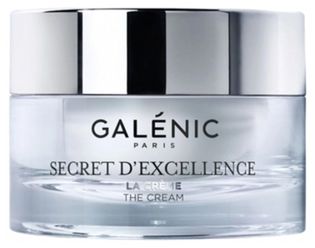
Galénic The Cream

Galénic The Cream

Efficacy62/100IrritancyHigh
Edit

Works for

1 of 2 advertised claims delivered

Moisturizing
18 ingredients credited for this claim
Good support
What the product description says
“Wrinkles are smoothed, the skin is moisturized, unified, luminous and regains its firmness.”
Source: Cocoon Center

This product can help improve hydration of the skin with the two types of ingredients.

The first type is called “humectants”:
these ingredients help attract water. When humectants are on the surface of the skin, they “pull in” the moisture from the outside environment, or from within deeper layers of the skin. The following ingredients in this product do the job: glycerin, isomalt.

This product also contains ingredients called “occlusives”. They help reduce the speed with which our skin loses moisture to the outside environment. These ingredients also help soften the upper layer of the skin, so it feels less tight and nicer to the touch. The following ingredients in this product do the job: butyrospermum parkii butter, dimethicone.

IsomaltKey active· HumectantEffect: HighHelps attract water to the upper layer of the skin~0.25–0.5%
Butyrospermum parkii butterKey active· Emollient, OcclusiveEffect: HighA great moisturising ingredient that softens the skin and reduces water loss from its upper layer. It also can be helpful in protecting skin from free radicals~1.2–1.4%
SqualaneKey active· Emollient, OcclusiveEffect: HighAn oil naturally present in skin. Works as an emollient to soften the skin and form a protective layer on its surface without a greasy feeling.~3.1–3.8%
Sodium hyaluronateKey active· HumectantEffect: HighOne of the best moisturizing ingredients. Attracts water into the upper layer of the skin~0.45–0.65%
GlycerinKey active· HumectantEffect: HighOne of the best moisturizing ingredients. Naturally present in skin. It attracts water to the upper layer of the skin working as a humectant~1.7–2%
Helianthus annuus seed oilKey active· Emollient, OcclusiveEffect: HighA great emollient due to its high linoleic acid content. One of the most effective plant oils in helping skin hydration and repairing skin barrier function~0.3–0.55%
DimethiconeKey active· Emollient, OcclusiveEffect: HighA silicone that helps to reduce water loss from the surface of the skin. Can temporarily "fill in" lines and wrinkles, absorb oil, and create a nice product finish~4.2–5.2%
Pentaerythrityl tetracaprylate/tetracaprateKey active· Emollient, OcclusiveEffect: HighAn emollient that helps soften the skin~4.1–5%
Methyl gluceth-20Key active· HumectantEffect: MediumHelps attract water to the upper layer of the skin and soften it~0.55–0.85%
Dimethicone crosspolymerKey activeEffect: MediumUsed to create a thicker product texture. Helps soften the upper layer of the skin and might be able to prevent moisture loss from its surface~0.8–1.2%
Coco-caprylateKey active· EmollientEffect: MediumAn emollient that softens skin and creates a nice product texture~2.3–2.9%
Hydrogenated starch hydrolysateKey active· HumectantEffect: MediumHelps to attract water to the upper layer of the skin. Can add sweet taste to lip products~0.25–0.5%
Tribehenin· EmollientEffect: LowUsed to create a thicker product consistency and soften the upper layer of the skin~0.1–0.15%
Hydrogenated polyisobutene· Emollient, OcclusiveEffect: LowUsed to improve the product consistency and soften the upper layer of the skin~0.3–0.55%
NiacinamideUnder-dosedEffect: HighIs proven to be effective in reducing blemishes, evening out skin tone and helping to improve lines and wrinkles. It helps the skin to repair sun damage, calm down inflammation and keep maintain good levels of moisture. The concentration of about 2% is effective for supporting the skin barrier and evening out the skin tone. Concentration of 4-6% is better for helping with acne and balancing the sebum production~0.45–0.65%
Lactic acidUnder-dosedEffect: HighAn exfoliating and moisturizing alpha-hydroxy acid (AHA). Typically causes less irritation than other AHAs, for example, glycolic acid. At high concentrations (about 15%), lactic acid can help reduce lines and wrinkles. Recent studies show that lactic acid can support the "good" bacteria living on skin's surface (healthy skin microbiome)~0.25–0.45%
LecithinEffect: Low, below effective doseUsed mostly for creating emulsions - helping oil and water mix together. Helps soften the upper layer of the skin~0.3–0.55%
TocopherolEffect: Low, below effective dosePure form of vitamin E. Can help moisturise and protect the skin from free radicals. Often used to help stabilise other ingredients or the formula itself~0.1–0.2%
Anti-aging
5 ingredients credited for this claim
Limited support
What the product description says
“This Immaculate Cream, a true Global Anti-Aging Exceptional Formula, is the embodiment of the know-how of Galénic formulators.”
Source: Cocoon Center

This product does not contain ingredients that are able to reduce fine lines and wrinkles or help with skin elasticity, but it can improve the look of the skin temporarily through moisturization. Well-moisturized skin might also be able to repair the sun damage better.This ingredient - butyrospermum parkii butter - could be helpful for preventing or repairing signs of aging in theory, but there is no evidence that it actually works.

Butyrospermum parkii butterEffect: LowA great moisturising ingredient that softens the skin and reduces water loss from its upper layer. It also can be helpful in protecting skin from free radicals~1.2–1.4%
NiacinamideUnder-dosedEffect: HighIs proven to be effective in reducing blemishes, evening out skin tone and helping to improve lines and wrinkles. It helps the skin to repair sun damage, calm down inflammation and keep maintain good levels of moisture. The concentration of about 2% is effective for supporting the skin barrier and evening out the skin tone. Concentration of 4-6% is better for helping with acne and balancing the sebum production~0.45–0.65%
Ascorbyl glucosideUnder-dosedEffect: MediumA vitamin C derivative that is more stable but less potent than pure form of vitamin C. Has a potential to boost collagen production, nutralise free radicals and reduce hyperpigmentation, but the required concentration is likely to be much higher than for the pure form of vitamin C, limiting the ingredient's effectiveness in products~0.35–0.65%
Lactic acidUnder-dosedEffect: MediumAn exfoliating and moisturizing alpha-hydroxy acid (AHA). Typically causes less irritation than other AHAs, for example, glycolic acid. At high concentrations (about 15%), lactic acid can help reduce lines and wrinkles. Recent studies show that lactic acid can support the "good" bacteria living on skin's surface (healthy skin microbiome)~0.25–0.45%
TocopherolEffect: Low, below effective dosePure form of vitamin E. Can help moisturise and protect the skin from free radicals. Often used to help stabilise other ingredients or the formula itself~0.1–0.2%

Can it cause trouble?

Irritancy
9 strong irritants: Alpha-isomethyl ionone, Benzyl benzoate + 7 more — patch-test recommended
High risk
We flagged 20 ingredients with irritancy potential. Severity depends on your sensitivity threshold; the table lists the worst offenders first.
IngredientFunctionIrritationEst. amount
Alpha-isomethyl iononeA fragrance. Potential allergen and can be irritatingHigh~0.35–0.65%est.
Benzyl benzoateFragrance with sweet balsamic smell. Help to preserve products and dissolve other ingredients. Could trigger allergic reactions and be irritatingHigh~0.25–0.5%est.
Benzyl salicylateA fragrance. Is a likely irritantHigh~0.25–0.5%est.
CitronellolA fragrance. Can be irritatingHigh~0.25–0.5%est.
CoumarinA fragrance. Is a likely skin allergen and can be irritatingHigh~0.25–0.5%est.
ParfumAn aromatic blend of unspecified and possibly irritating ingredientsHigh~0.25–0.45%est.
GeraniolA fragrance. Can be irritatingHigh~0.25–0.45%est.
LimoneneA common frangrance that can easily irritate skin, especially if exposed to air, light or heatHigh~0.2–0.35%est.
LinaloolA fragrance. Can be irritatingHigh~0.2–0.35%est.
Coco-caprylateAn emollient that softens skin and creates a nice product textureMedium~2.3–2.9%est.
Tribehenin peg-20 estersHelps oil and water mix togetherMedium~1.9–2.4%est.
Ascorbyl glucosideA vitamin C derivative that is more stable but less potent than pure form of vitamin C. Has a potential to boost collagen production, nutralise free radicals and reduce hyperpigmentation, but the required concentration is likely to be much higher than for the pure form of vitamin C, limiting the ingredient's effectiveness in productsMedium~0.35–0.65%est.
Behenic acidHelps water and oil mix togetherMedium~0.45–0.7%est.
Benzoic acidA preservativeMedium~0.25–0.5%est.
Citric acidCan work as an exfoliant but is typically used to adjust the product pHMedium~0.25–0.5%est.
Disodium edtaStabilizes the product formulationMedium~0.25–0.5%est.
Hydroxyethyl acrylate/sodium acryloyldimethyl taurate copolymerA gelling agent that thickens the product consistency and leaves the skin with a velvety finishMedium~0.25–0.5%est.
Lactic acidAn exfoliating and moisturizing alpha-hydroxy acid (AHA). Typically causes less irritation than other AHAs, for example, glycolic acid. At high concentrations (about 15%), lactic acid can help reduce lines and wrinkles. Recent studies show that lactic acid can support the "good" bacteria living on skin's surface (healthy skin microbiome)Medium~0.25–0.45%est.
Sodium citrateHelps to control the skin's pH level. Maintains the skin's natural film of amino-lactic acids and oils. Helps to preserve productsMedium~0.15–0.25%est.
Tocopheryl acetateA more stable but less bio-available form of vitamin E compared to Tocopherol. Might help moisturize and protect the skin from free radicals, but mostly used in low concentrations to stabilize other ingredients.Medium~0.05–0.15%est.
Comedogenic
1 ingredient rated 2 or more on the 0–5 pore-clogging scale
1 flagged
These ingredients have a comedogenic rating of 2 or more on a 0–5 scale; the table shows each one's rating. In leave-on products they can clog pores in acne-prone skin.
IngredientFunctionRatingEst. amount
Butyrospermum parkii butterA great moisturising ingredient that softens the skin and reduces water loss from its upper layer. It also can be helpful in protecting skin from free radicals3/5~1.2–1.4%est.
Edit

User reviews

Would you recommend?
No community reviews yet.

Be the first — your take helps the next person decide.

Write a review · ~30s

Ingredients

Filter by role to see what each ingredient is doing.

Water~45–55%
Formula
Irritation risk
Low

Plain old water

More about Water
Pentaerythrityl tetracaprylate/tetracaprate~4.1–5%
Key active
Irritation risk
Low
Works for
Moisturizing

An emollient that helps soften the skin

More about Pentaerythrityl tetracaprylate/tetracaprate
Dimethicone~4.2–5.2%
Key active
Irritation risk
Low
Works for
MoisturizingMattifying

A silicone that helps to reduce water loss from the surface of the skin. Can temporarily "fill in" lines and wrinkles, absorb oil, and create a nice product finish

More about Dimethicone
Squalane~3.1–3.8%
Key active
Irritation risk
Low
Works for
Moisturizing

An oil naturally present in skin. Works as an emollient to soften the skin and form a protective layer on its surface without a greasy feeling.

More about Squalane
Coco-caprylate~2.3–2.9%
Key activeIrritant · medium
Irritation risk
Medium
Works for
Moisturizing

An emollient that softens skin and creates a nice product texture

More about Coco-caprylate
Tribehenin peg-20 esters~1.9–2.4%
Irritant · medium
Irritation risk
Medium
Works for
Cleansing

Helps oil and water mix together

More about Tribehenin peg-20 esters
Glycerin~1.7–2%
Key active
Irritation risk
Low
Works for
Moisturizing

One of the best moisturizing ingredients. Naturally present in skin. It attracts water to the upper layer of the skin working as a humectant

More about Glycerin
2-hexanol~1.3–1.6%
Formula
Irritation risk
Low
More about 2-hexanol
Butyrospermum parkii butter~1.2–1.4%
Key activeComedogenic 3/5
Irritation risk
Low
Comedogenicity
3/5
Works for
MoisturizingAnti-oxidationAnti-aging

A great moisturising ingredient that softens the skin and reduces water loss from its upper layer. It also can be helpful in protecting skin from free radicals

More about Butyrospermum parkii butter
Dimethicone crosspolymer~0.8–1.2%
Key active
Irritation risk
Low
Works for
Moisturizing

Used to create a thicker product texture. Helps soften the upper layer of the skin and might be able to prevent moisture loss from its surface

More about Dimethicone crosspolymer
Bis-peg-12 dimethicone beeswax~0.65–0.95%
Formula
Methyl gluceth-20~0.55–0.85%
Key active
Irritation risk
Low
Works for
Moisturizing

Helps attract water to the upper layer of the skin and soften it

More about Methyl gluceth-20
Polymethyl methacrylate~0.55–0.8%
Formula
Irritation risk
Low

Is used to enhance product texture and can help to optically mask skin imperfections

More about Polymethyl methacrylate
Chlamydomonas extract~0.45–0.7%
Formula
Sodium hyaluronate~0.45–0.65%
Key active
Irritation risk
Low
Works for
Moisturizing

One of the best moisturizing ingredients. Attracts water into the upper layer of the skin

More about Sodium hyaluronate
Niacinamide~0.45–0.65%
Under-dosed
Irritation risk
Low
Works for
Anti-agingEvens skin toneMoisturizingAnti-blemishReduces irritationAntibacterialReduces rednessAnti-inflammatory

Is proven to be effective in reducing blemishes, evening out skin tone and helping to improve lines and wrinkles. It helps the skin to repair sun damage, calm down inflammation and keep maintain good levels of moisture. The concentration of about 2% is effective for supporting the skin barrier and evening out the skin tone. Concentration of 4-6% is better for helping with acne and balancing the sebum production

More about Niacinamide
Alpha-isomethyl ionone~0.35–0.65%
Irritant · high
Irritation risk
High

A fragrance. Potential allergen and can be irritating

More about Alpha-isomethyl ionone
Ascorbyl glucoside~0.35–0.65%
Under-dosedIrritant · medium
Irritation risk
Medium
Works for
Evens skin toneAnti-agingAnti-oxidation

A vitamin C derivative that is more stable but less potent than pure form of vitamin C. Has a potential to boost collagen production, nutralise free radicals and reduce hyperpigmentation, but the required concentration is likely to be much higher than for the pure form of vitamin C, limiting the ingredient's effectiveness in products

More about Ascorbyl glucoside
Behenic acid~0.45–0.7%
Irritant · medium
Irritation risk
Medium
Works for
Cleansing

Helps water and oil mix together

More about Behenic acid
Benzoic acid~0.25–0.5%
Irritant · medium
Irritation risk
Medium

A preservative

More about Benzoic acid
Benzyl benzoate~0.25–0.5%
Irritant · high
Irritation risk
High

Fragrance with sweet balsamic smell. Help to preserve products and dissolve other ingredients. Could trigger allergic reactions and be irritating

More about Benzyl benzoate
Benzyl salicylate~0.25–0.5%
Irritant · high
Irritation risk
High

A fragrance. Is a likely irritant

More about Benzyl salicylate
Citric acid~0.25–0.5%
Irritant · medium
Irritation risk
Medium

Can work as an exfoliant but is typically used to adjust the product pH

More about Citric acid
Citronellol~0.25–0.5%
Irritant · high
Irritation risk
High

A fragrance. Can be irritating

More about Citronellol
Coumarin~0.25–0.5%
Irritant · high
Irritation risk
High

A fragrance. Is a likely skin allergen and can be irritating

More about Coumarin
Disodium edta~0.25–0.5%
Irritant · medium
Irritation risk
Medium

Stabilizes the product formulation

More about Disodium edta
Parfum~0.25–0.45%
Irritant · high
Irritation risk
High

An aromatic blend of unspecified and possibly irritating ingredients

More about Parfum
Geraniol~0.25–0.45%
Irritant · high
Irritation risk
High

A fragrance. Can be irritating

More about Geraniol
Helianthus annuus seed oil~0.3–0.55%
Key active
Irritation risk
Low
Works for
Moisturizing

A great emollient due to its high linoleic acid content. One of the most effective plant oils in helping skin hydration and repairing skin barrier function

More about Helianthus annuus seed oil
Hydrogenated polyisobutene~0.3–0.55%
Formula
Irritation risk
Low
Works for
Moisturizing

Used to improve the product consistency and soften the upper layer of the skin

More about Hydrogenated polyisobutene
Hydrogenated starch hydrolysate~0.25–0.5%
Key active
Irritation risk
Low
Works for
Moisturizing

Helps to attract water to the upper layer of the skin. Can add sweet taste to lip products

More about Hydrogenated starch hydrolysate
Hydroxyethyl acrylate/sodium acryloyldimethyl taurate copolymer~0.25–0.5%
Irritant · medium
Irritation risk
Medium

A gelling agent that thickens the product consistency and leaves the skin with a velvety finish

More about Hydroxyethyl acrylate/sodium acryloyldimethyl taurate copolymer
Isomalt~0.25–0.5%
Key active
Irritation risk
Low
Works for
Moisturizing

Helps attract water to the upper layer of the skin

More about Isomalt
Lactic acid~0.25–0.45%
Under-dosedIrritant · medium
Irritation risk
Medium
Works for
ExfoliationEvens skin toneMoisturizingAnti-aging

An exfoliating and moisturizing alpha-hydroxy acid (AHA). Typically causes less irritation than other AHAs, for example, glycolic acid. At high concentrations (about 15%), lactic acid can help reduce lines and wrinkles. Recent studies show that lactic acid can support the "good" bacteria living on skin's surface (healthy skin microbiome)

More about Lactic acid
Lecithin~0.3–0.55%
Formula
Irritation risk
Low
Works for
CleansingMoisturizing

Used mostly for creating emulsions - helping oil and water mix together. Helps soften the upper layer of the skin

More about Lecithin
Limonene~0.2–0.35%
Irritant · high
Irritation risk
High

A common frangrance that can easily irritate skin, especially if exposed to air, light or heat

More about Limonene
Linalool~0.2–0.35%
Irritant · high
Irritation risk
High

A fragrance. Can be irritating

More about Linalool
Peg-7 trimethylolpropane coconut ether~0.2–0.4%
Formula
Irritation risk
Low
Works for
Cleansing
More about Peg-7 trimethylolpropane coconut ether
Sodium benzoate~0.15–0.25%
Formula
Irritation risk
Low

A preservative

More about Sodium benzoate
Sodium citrate~0.15–0.25%
Irritant · medium
Irritation risk
Medium

Helps to control the skin's pH level. Maintains the skin's natural film of amino-lactic acids and oils. Helps to preserve products

More about Sodium citrate
Sodium hydroxide~0.1–0.2%
Formula
Irritation risk
Low

Used to adjust the product's pH

More about Sodium hydroxide
Sorbitan isostearate~0.1–0.2%
Formula
Irritation risk
Low
Works for
Cleansing

Helps oil and water mix together

More about Sorbitan isostearate
Tocopherol~0.1–0.2%
Formula
Irritation risk
Low
Works for
Anti-oxidationAnti-agingAnti-inflammatoryMoisturizing

Pure form of vitamin E. Can help moisturise and protect the skin from free radicals. Often used to help stabilise other ingredients or the formula itself

More about Tocopherol
Tocopheryl acetate~0.05–0.15%
Irritant · medium
Irritation risk
Medium
Works for
Anti-oxidation

A more stable but less bio-available form of vitamin E compared to Tocopherol. Might help moisturize and protect the skin from free radicals, but mostly used in low concentrations to stabilize other ingredients.

More about Tocopheryl acetate
Tribehenin~0.1–0.15%
Formula
Irritation risk
Low
Works for
Moisturizing

Used to create a thicker product consistency and soften the upper layer of the skin

More about Tribehenin
Ingredient list view

Water, Pentaerythrityl tetracaprylate/tetracaprate, Dimethicone, Squalane, Coco-caprylate, Tribehenin peg-20 esters, Glycerin, 2-hexanol, Butyrospermum parkii butter, Dimethicone crosspolymer, Bis-peg-12 dimethicone beeswax, Methyl gluceth-20, Polymethyl methacrylate, Chlamydomonas extract, Sodium hyaluronate, Niacinamide, Alpha-isomethyl ionone, Ascorbyl glucoside, Behenic acid, Benzoic acid, Benzyl benzoate, Benzyl salicylate, Citric acid, Citronellol, Coumarin, Disodium edta, Parfum, Geraniol, Helianthus annuus seed oil, Hydrogenated polyisobutene, Hydrogenated starch hydrolysate, Hydroxyethyl acrylate/sodium acryloyldimethyl taurate copolymer, Isomalt, Lactic acid, Lecithin, Limonene, Linalool, Peg-7 trimethylolpropane coconut ether, Sodium benzoate, Sodium citrate, Sodium hydroxide, Sorbitan isostearate, Tocopherol, Tocopheryl acetate, Tribehenin

Compare prices

Retailers ranked by price — lowest first.

Amazon US
Price unavailable
Check

Affiliate links · prices updated regularly · As an Amazon Associate, WIMJ earns from qualifying purchases.

Worth comparing, line by line.

Match % combines shared ingredients, the first five ingredients, shared actives and hero ingredients, irritancy (lower counts in the alternative's favour), texture and body area. Only products in the same routine step are compared.

Side-by-side comparison of this product against its closest alternatives
GalénicThe CreamYOUR PRODUCTJanuary LabsRetexturizing Night Cream23 years oldBakuchiol A CreamLa MuseDaily Essentials Regenerating Cream
Match—83%80%80%
Price$98.27$86.00−$12.27$24.71−$73.56$27.60−$70.67
Shared key ingredients—4 of 116 of 116 of 11
Key difference—Palmitoyl Tripeptide-5BakuchiolAdenosine
Irritancy High Medium Medium Medium
Drying alcohol——— Contains drying alcohol
View product Shop Shop Shop
Cheaper alternatives? See how this stacks up against similar formulas.
We compare ingredient profiles across our catalog — pick the closest match for your budget.
Open dupe finder

Sources cited in this review

Every concentration estimate and effectiveness label is anchored to one of these 20 studies and safety reviews.

  1. 1
  2. 2
  3. 3
  4. 4
  5. 5
  6. 6
Galénic The Cream
GalénicThe Cream

Affiliate links · As an Amazon Associate, WIMJ earns from qualifying purchases.

As an Amazon Associate, WIMJ earns from qualifying purchases.