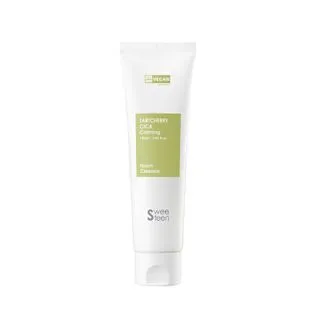
Sweeteen Tartcherry Cica Calming Foam Cleanser
Works for
CleansingStearic acid, Myristic acid + 6 moreCleanses gently
“EVE VEGAN certified facial cleanser offers deep cleansing and soothing care while hydrating skin freshly.”
This product works by removing dirt and oil from the surface of the skin. It uses a combination of mild cleansing agents (glyceryl stearate, hydrogenated lecithin, lauric acid, lauryl glucoside, myristic acid, peg-100 stearate, polysorbate 20, stearic acid) and should be able to cleanse the skin gently. Still keep in mind that any cleansing can disrupt the skin barrier, and most people do not need to cleanse their skin more than once per day.
Can it cause trouble?
Irritancy2 strong irritants: Alcohol, LinaloolMedium risk
Comedogenic2 ingredients rated 2 or more on the 0–5 pore-clogging scale2 flagged

User reviews
Be the first — your take helps the next person decide.
Ingredients
Filter by role to see what each ingredient is doing.
Water~45–55%
Stearic acid~7.2–8.8%
- Irritation risk
- Low
Helps oil and water mix together and works as an emollient
More about Stearic acidMyristic acid~4.5–5.5%
- Irritation risk
- Medium
- Comedogenicity
- 3/5
Helps oil and water mix together. Could be comedogenic
More about Myristic acidLauric acid~3.2–4%
- Irritation risk
- Medium
- Comedogenicity
- 3/5
Helps water and oil mix together. Has anti-bacterial properties that might be helpful in preventing blemishes
More about Lauric acidPotassium hydroxide~2.4–2.9%
Glycerin~2.1–2.5%
- Irritation risk
- Low
One of the best moisturizing ingredients. Naturally present in skin. It attracts water to the upper layer of the skin working as a humectant
More about GlycerinGlyceryl stearate~1.7–2.1%
- Irritation risk
- Low
An emollient that softens the skin and forms a protective layer on its surface. Helps water and oil mix together
More about Glyceryl stearatePeg-100 stearate~1.5–1.9%
- Irritation risk
- Low
Helps oil and water mix togehter and creates a nice product texture
More about Peg-100 stearatePrunus cerasus extract~1.2–1.4%
- Irritation risk
- Low
Polysorbate 20~1–1.2%
Lauryl glucoside~0.9–1.1%
Citric acid~0.65–0.95%
- Irritation risk
- Medium
Can work as an exfoliant but is typically used to adjust the product pH
More about Citric acidHydroxyethylcellulose~0.6–0.9%
- Irritation risk
- Low
Used to thicken product formulations and create gel-like textures
More about HydroxyethylcelluloseEthylhexylglycerin~0.55–0.85%
Disodium edta~0.5–0.8%
Alcohol~0.5–0.8%
- Irritation risk
- High
Can be drying and contribute to skin irritation. Used in formulars to dissolve other ingredients, create a thinner product consistency or for its antibacterial properties
More about AlcoholCaprylic/capric triglyceride~0.55–0.85%
- Irritation risk
- Medium
A good mix of fatty acids that forms a protective layer on the skin. Improves the shelf life of products. Derived from coconut and glycerin
More about Caprylic/capric triglycerideSodium hyaluronate~0.45–0.7%
- Irritation risk
- Low
One of the best moisturizing ingredients. Attracts water into the upper layer of the skin
More about Sodium hyaluronateSodium acetylated hyaluronate~0.45–0.65%
- Irritation risk
- Low
A type of hyaluronic acid that works as an excellent moisturizer by attracting water into the upper layer of the skin. Is typically feels less sticky on the skin compared to the usual hyaluronic acid
More about Sodium acetylated hyaluronateHydrolyzed hyaluronic acid~0.4–0.6%
- Irritation risk
- Low
One of the best moisturizing ingredients. Attracts water into the upper layer of the skin. A version of it is naturally present in skin
More about Hydrolyzed hyaluronic acidHyaluronic acid~0.4–0.6%
- Irritation risk
- Low
One of the best moisturizing ingredients. Attracts water into the upper layer of the skin. Naturally present in skin. Typically has large molecule size unless advertised otherwise on the product label. Helps support skin's barrier function and may help to reduce inflammation
More about Hyaluronic acidSodium hyaluronate crosspolymer~0.35–0.65%
- Irritation risk
- Medium
Attracts water into the upper layer of the skin
More about Sodium hyaluronate crosspolymerHydrolyzed sodium hyaluronate~0.3–0.6%
- Irritation risk
- Low
Attracts water into the upper layer of the skin
More about Hydrolyzed sodium hyaluronatePotassium hyaluronate~0.35–0.6%
- Irritation risk
- Low
Hydroxypropyltrimonium hyaluronate~0.35–0.65%
- Irritation risk
- Low
Centella asiatica leaf extract~0.3–0.6%
- Irritation risk
- Medium
A plant extract that has been shown to be able to reduce inflammation in skin, support restoration of skin barrier function, as well as support collagen production. It can be irritating to sensitive skin. Might be helpful in preventing stretch marks. It could, however, itself be irritating.
More about Centella asiatica leaf extractLactococcus ferment lysate~0.3–0.6%
- Irritation risk
- Low
Consists of remains of dead bacteria cells. Is likely helpful in attracting water to the upper layer of the skin. Might be helpful in reducing inflammation and neutralizing free radicals in skin
More about Lactococcus ferment lysateBifida ferment lysate~0.3–0.6%
- Irritation risk
- Low
Consists of remains of dead yeast bacteria cells. Helps to hydrate the skin and reduce irritation. Might has some anti-oxidant effect
More about Bifida ferment lysateLactobacillus ferment lysate~0.3–0.6%
- Irritation risk
- Low
A "broth" with parts of dead cells of lactobacteria. Might be helpful supporting diverse microbiome in skin, but evidence is lacking
More about Lactobacillus ferment lysateNiacinamide~0.3–0.6%
- Irritation risk
- Low
Is proven to be effective in reducing blemishes, evening out skin tone and helping to improve lines and wrinkles. It helps the skin to repair sun damage, calm down inflammation and keep maintain good levels of moisture. The concentration of about 2% is effective for supporting the skin barrier and evening out the skin tone. Concentration of 4-6% is better for helping with acne and balancing the sebum production
More about NiacinamideDipropylene glycol~0.3–0.5%
- Irritation risk
- Low
Helps to dissolve other ingredients in a formulation. Slows down the rate of product drying
More about Dipropylene glycol1,2-hexanediol~0.3–0.55%
Panthenol~0.3–0.55%
- Irritation risk
- Low
Helps attract water to the upper layer of the skin and can help improve skin barrier function
More about PanthenolHydrogenated lecithin~0.3–0.55%
- Irritation risk
- Low
Helps to retain moisture by creating a protective barrier on the skin. Rich in fatty acids. Improves product texture and helps with the penetration of other ingredients.
More about Hydrogenated lecithinAsiaticoside~0.2–0.4%
- Irritation risk
- Medium
An active compound of Centella Asiatica plant extract. In combination with other active compounds of Centella Asiatica extract (madecasosside, asiatic acid and madecassic acid), asiaticoside has been shown to be helpful in wound-healing, restoring skin barrier function and supporting collagen production in skin. It can, however, itself be irritating
More about AsiaticosideMadecassic acid~0.25–0.45%
- Irritation risk
- Medium
An active compound of Centella Asiatica plant extract. In combination with other active compounds of Centella Asiatica extract (asiaticoside, madecasosside and asiatic acid), madecassic acid has been shown to be helpful in wound-healing, restoring skin barrier function and supporting collagen production in skin. It can, however, itself be irritating
More about Madecassic acidAsiatic acid~0.2–0.4%
- Irritation risk
- Medium
An active compound of Centella Asiatica plant extract. In combination with other active compounds of Centella Asiatica extract (asiaticoside, madecasosside and madecassic acid) asiatic acid has been shown to be helpful in wound-healing, restoring skin barrier function and supporting collagen production in skin. It can, however, itself be irritating
More about Asiatic acidCeramide np~0.2–0.4%
- Irritation risk
- Low
A type of lipid similar to ceramides naturally present in skin. Helps to soften the upper layer of the skin and supports the skin barrier function to keep it hydrated. Can help to prevent inflammation in skin
More about Ceramide npBeta-glucan~0.15–0.25%
- Irritation risk
- Low
Helps attract water to the upper layer of the skin, calm down inflammation and irritation, restore the barrier function and support wound healing. It can be helpful in reducing fine lines and wrinkles
More about Beta-glucanHydroxyacetophenone~0.15–0.3%
1,2-hexanediol~0.15–0.25%
Hydrogenated lecithin~0.1–0.15%
- Irritation risk
- Low
Helps to retain moisture by creating a protective barrier on the skin. Rich in fatty acids. Improves product texture and helps with the penetration of other ingredients.
More about Hydrogenated lecithinLinalool~0.05–0.15%
Ingredient list view
Water, Stearic acid, Myristic acid, Lauric acid, Potassium hydroxide, Glycerin, Glyceryl stearate, Peg-100 stearate, Prunus cerasus extract, Polysorbate 20, Lauryl glucoside, Citric acid, Hydroxyethylcellulose, Ethylhexylglycerin, Disodium edta, Alcohol, Caprylic/capric triglyceride, Sodium hyaluronate, Sodium acetylated hyaluronate, Hydrolyzed hyaluronic acid, Hyaluronic acid, Sodium hyaluronate crosspolymer, Hydrolyzed sodium hyaluronate, Potassium hyaluronate, Hydroxypropyltrimonium hyaluronate, Centella asiatica leaf extract, Lactococcus ferment lysate, Bifida ferment lysate, Lactobacillus ferment lysate, Niacinamide, Dipropylene glycol, 1,2-hexanediol, Panthenol, Hydrogenated lecithin, Asiaticoside, Madecassic acid, Asiatic acid, Ceramide np, Beta-glucan, Hydroxyacetophenone, 1,2-hexanediol, Hydrogenated lecithin, Linalool
Compare prices
Retailers ranked by price — lowest first.

Worth comparing, line by line.
Match % combines shared ingredients, the first five ingredients, shared actives and hero ingredients, irritancy (lower counts in the alternative's favour), texture and body area. Only products in the same routine step are compared.
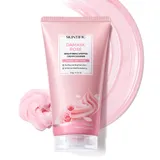
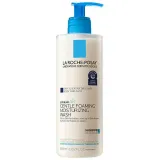
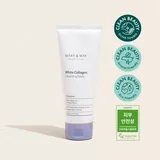
| SweeteenTartcherry Cica Calming Foam CleanserYOUR PRODUCT | skintificDamask Rose Brightening Whipped Cream Cleanser | La Roche-PosayLipikar AP+ Body & Face Wash | Mary&MayWhite Collagen Cleansing Foam | |
|---|---|---|---|---|
| Match | — | 73% | 70% | 69% |
| Price | — | — | $19.99 | $9.95 |
| Shared key ingredients | — | 6 of 26 | 3 of 26 | 6 of 26 |
| Key difference | — | Vitis Vinifera Seed Extract | Butyrospermum Parkii Butter | Beeswax |
| Irritancy | Medium | Medium | Low | Medium |
| Drying alcohol | Contains drying alcohol | — | — | — |
| View product | Shop | Shop | Shop |

More alternatives: Native Sensitive Facial CleanserCeraVe Balancing Air Foam Facial Cleanser
Sources cited in this review
Every concentration estimate and effectiveness label is anchored to one of these 29 studies and safety reviews.
- 1
- 2
- 3Hyaluronic acid: A key molecule in skin agingncbi.nlm.nih.gov
- 4
- 5
- 6Efficacy of a New Topical Nano-hyaluronic Acid in Humansncbi.nlm.nih.gov

Affiliate links · As an Amazon Associate, WIMJ earns from qualifying purchases.