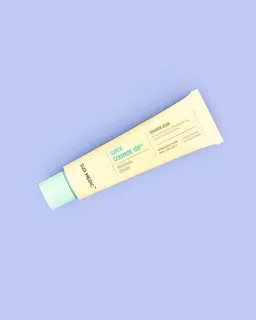
SUR.MEDIC+ Super Ceramide 100 Renewal Cream

SUR.MEDIC+ Super Ceramide 100 Renewal Cream

Efficacy100/100IrritancyHigh

Works for

Anti-aging
Acetyl tetrapeptide-11, Centella asiatica extract + 12 more
Works well
What the product description says
“The result is a glowing, healthy and youthful complexion.”
Source: Soko Glam

This product can help reduce and prevent fine lines and wrinkles, improve skin elasticity and firmness because it contains adenosine.

These ingredients in the product can also be helpful, even though there is less evidence for their effectiveness: acetyl hexapeptide-8, acetyl tetrapeptide-11, centella asiatica extract, dipeptide diaminobutyroyl benzylamide diacetate, oligopeptide-1, palmitoyl tripeptide-5, serine.

Keep in mind that it typically takes at least 6 weeks to notice any results because the changes that are needed to improve fine lines and elasticity happen in the deeper layers of the skin. No topical anti-aging product can “erase” wrinkles or fully reverse signs of aging.

Acetyl tetrapeptide-11Key activeEffect: MediumA type of peptide. Peptides are excellent moisturizers and might be able support collagen production reducing fine lines and wrinkles~0.1–0.3%
Centella asiatica extractKey activeEffect: MediumA plant extract that has been shown to be able to reduce inflammation in skin, support restoration of skin barrier function, as well as support collagen production. Contains active compounds called centelloids: asiaticoside, madecasosside, asiatic acid and madecassic acid. Might be helpful in preventing stretch marks. It can be itself be irritating though.~0.1–0.35%
AdenosineKey activeEffect: HighMight help improve cell turnover and reduce inflammation in skin. One study shows that the ingredients might be able to help reduce dynamic wrinkles (for example, in the corners of the eyes or on the forehead)~0.05–0.25%
Oligopeptide-1Key activeEffect: MediumA type of peptide. Peptides are excellent moisturizers and might be able support collagen production reducing fine lines and wrinkles~0.05–0.2%
Palmitoyl tripeptide-5Key activeEffect: MediumA type of peptide. Peptides are excellent moisturizers and might be able support collagen production reducing fine lines and wrinkles~0.05–0.25%
SerineKey activeEffect: MediumAn amino-acid that helps to attract water to the upper layer of the skin. In combination with other amino-acids, might help to reduce fine lines and wrinkles~0.05–0.25%
Acetyl hexapeptide-8Key activeEffect: MediumA type of peptide. Peptides are excellent moisturizers and might be able support collagen production reducing fine lines and wrinkles~0.05–0.3%
Dipeptide diaminobutyroyl benzylamide diacetateKey activeEffect: MediumA type of peptide. Peptides are excellent moisturizers and might be able support collagen production reducing fine lines and wrinkles~0.05–0.25%
Beta-glucanEffect: LowHelps attract water to the upper layer of the skin, calm down inflammation and irritation, restore the barrier function and support wound healing. It can be helpful in reducing fine lines and wrinkles~0.05–0.3%
Camellia sinensis leaf extractEffect: Low, below effective doseCan contain potent anti-oxidant compounds (abbreviated ECG, GCG, EGC, and EGCG) that might help protect the skin from free radicals. Can help calm down inflammation and has some anti-bacterial properties. Unfortunately, these antioxidants are unstable and lose their effectiveness very quickly in products. The concentration of the antioxidant compounds in the extract also tends to be low to be effective in topical formulation~0.1–0.35%
Hyaluronic acidEffect: Low, below effective doseOne of the best moisturizing ingredients. Attracts water into the upper layer of the skin. Naturally present in skin. Typically has large molecule size unless advertised otherwise on the product label. Helps support skin's barrier function and may help to reduce inflammation~0.05–0.2%
TocopherolEffect: Low, below effective dosePure form of vitamin E. Can help moisturise and protect the skin from free radicals. Often used to help stabilise other ingredients or the formula itself~0.05–0.2%
NiacinamideUnder-dosedIs proven to be effective in reducing blemishes, evening out skin tone and helping to improve lines and wrinkles. It helps the skin to repair sun damage, calm down inflammation and keep maintain good levels of moisture. The concentration of about 2% is effective for supporting the skin barrier and evening out the skin tone. Concentration of 4-6% is better for helping with acne and balancing the sebum production~0.4–0.95%
Lactic acidUnder-dosedAn exfoliating and moisturizing alpha-hydroxy acid (AHA). Typically causes less irritation than other AHAs, for example, glycolic acid. At high concentrations (about 15%), lactic acid can help reduce lines and wrinkles. Recent studies show that lactic acid can support the "good" bacteria living on skin's surface (healthy skin microbiome)~0.05–0.25%
Moisturizing
Acetyl tetrapeptide-11, Ceramide 1 + 46 more
Works well
What the product description says
“With a blend of ginseng water, oil & saponin, this emulsion helps nourish and replenish skin, while delivering additional firming and anti-aging benefits.”
Source: Soko Glam

This product can help improve hydration of the skin with the two types of ingredients.

The first type is called “humectants”:
these ingredients help attract water. When humectants are on the surface of the skin, they “pull in” the moisture from the outside environment, or from within deeper layers of the skin. The following ingredients in this product do the job: alanine, glycerin.

This product also contains ingredients called “occlusives”. They help reduce the speed with which our skin loses moisture to the outside environment. These ingredients also help soften the upper layer of the skin, so it feels less tight and nicer to the touch. The following ingredients in this product do the job: phenyl trimethicone, squalane.

The following ingredients in this product are especially good for supporting the skin barrier and helping with the hydration level: acetyl hexapeptide-8, acetyl tetrapeptide-11, ceramide 1, ceramide 2, ceramide 3, ceramide 4, ceramide 6 ii, dipeptide diaminobutyroyl benzylamide diacetate, oligopeptide-1, palmitoyl tripeptide-5

Acetyl tetrapeptide-11HeroEffect: HighA type of peptide. Peptides are excellent moisturizers and might be able support collagen production reducing fine lines and wrinkles~0.1–0.3%
Ceramide 1Hero· EmollientEffect: HighA type of lipid similar to ceramides naturally present in skin. Helps to soften the upper layer of the skin and supports the skin barrier function to keep it hydrated. Can help to prevent inflammation in skin~0.1–0.4%
Ceramide 2Hero· EmollientEffect: HighA type of lipid similar to ceramides naturally present in skin. Helps to soften the upper layer of the skin and supports the skin barrier function to keep it hydrated. Can help to prevent inflammation in skin~0.1–0.4%
Ceramide 3Hero· EmollientEffect: HighA type of lipid similar to ceramides naturally present in skin. Helps to soften the upper layer of the skin and supports the skin barrier function to keep it hydrated. Can help to prevent inflammation in skin~0.1–0.4%
Ceramide 6 iiHero· EmollientEffect: HighA type of lipid similar to ceramides naturally present in skin. Helps to soften the upper layer of the skin and supports the skin barrier function to keep it hydrated. Can help to prevent inflammation in skin~0.1–0.4%
Oligopeptide-1HeroEffect: HighA type of peptide. Peptides are excellent moisturizers and might be able support collagen production reducing fine lines and wrinkles~0.05–0.2%
Palmitoyl tripeptide-5HeroEffect: HighA type of peptide. Peptides are excellent moisturizers and might be able support collagen production reducing fine lines and wrinkles~0.05–0.25%
Acetyl hexapeptide-8Hero· HumectantEffect: HighA type of peptide. Peptides are excellent moisturizers and might be able support collagen production reducing fine lines and wrinkles~0.05–0.3%
Ceramide 4HeroEffect: High~0.05–0.25%
Dipeptide diaminobutyroyl benzylamide diacetateHeroEffect: HighA type of peptide. Peptides are excellent moisturizers and might be able support collagen production reducing fine lines and wrinkles~0.05–0.25%
GlycerinKey active· HumectantEffect: HighOne of the best moisturizing ingredients. Naturally present in skin. It attracts water to the upper layer of the skin working as a humectant~1.6–2.4%
Cetyl alcoholKey active· EmollientEffect: MediumA non-drying alcohol that works to soften the skin and stabilize product formulations helping oil and water mix together~0.35–0.85%
Coco-caprylate/caprateKey active· EmollientEffect: MediumHelps to soften the upper layer of the skin without creating a greasy texture~0.2–0.75%
Phenyl trimethiconeKey active· OcclusiveEffect: HighA type of silicone that can decrease loss of moisture from the skin surface. It helps create a nice product texture~0.15–0.5%
Diisostearyl malateKey active· EmollientEffect: MediumHelps to soften the upper layer of the skin~0.15–0.65%
SqualaneKey active· Emollient, OcclusiveEffect: HighAn oil naturally present in skin. Works as an emollient to soften the skin and form a protective layer on its surface without a greasy feeling.~0.1–0.4%
SqualeneKey active· Emollient, OcclusiveEffect: HighAn oil that is naturally part of skin sebum that helps to soften its upper layer, reduce water loss and neutralize free radicals. It might be comedogenic. Avoid applying large concentrations (or pure oil) before sun exposure as oxidized squalene can clog pores and lead to skin irritation. Today squalene is mostly derived from vegetable oils or synthetized by yeast~0.1–0.45%
AlanineKey active· HumectantEffect: HighAn amino-acid that helps to attract water to the upper layer of the skin and might help to lighten the skin, but solid evidence is lacking~0.1–0.3%
Centella asiatica extractKey activeEffect: HighA plant extract that has been shown to be able to reduce inflammation in skin, support restoration of skin barrier function, as well as support collagen production. Contains active compounds called centelloids: asiaticoside, madecasosside, asiatic acid and madecassic acid. Might be helpful in preventing stretch marks. It can be itself be irritating though.~0.1–0.35%
Hydrolyzed collagenKey active· Humectant, EmollientEffect: HighA typically plant-derived compound that is supposed mimic human collagen. Cannot penetrate the skin barrier so is not particularly useful in skincare products beyond attracting water to the upper layer of the skin~0.1–0.5%
ProlineKey activeEffect: Medium~0.1–0.35%
Propolis extractKey activeEffect: MediumA complex substance produced by honey bees. Can have anti-bacterial and some anti-oxidant effect. Is an allergen and can be irritating~0.1–0.3%
Adansonia digitata seed oilKey active· EmollientEffect: MediumHelps soften the upper layer of the skin~0.1–0.4%
Hydrolyzed hyaluronic acidKey active· HumectantEffect: HighOne of the best moisturizing ingredients. Attracts water into the upper layer of the skin. A version of it is naturally present in skin~0.05–0.2%
MannitolKey active· HumectantEffect: HighHelps to attract water to the upper layer of the skin~0.05–0.2%
SerineKey activeEffect: HighAn amino-acid that helps to attract water to the upper layer of the skin. In combination with other amino-acids, might help to reduce fine lines and wrinkles~0.05–0.25%
Sodium hyaluronateKey active· HumectantEffect: HighOne of the best moisturizing ingredients. Attracts water into the upper layer of the skin~0.05–0.2%
Beta-glucanKey activeEffect: HighHelps attract water to the upper layer of the skin, calm down inflammation and irritation, restore the barrier function and support wound healing. It can be helpful in reducing fine lines and wrinkles~0.05–0.3%
AdenosineKey activeEffect: MediumMight help improve cell turnover and reduce inflammation in skin. One study shows that the ingredients might be able to help reduce dynamic wrinkles (for example, in the corners of the eyes or on the forehead)~0.05–0.25%
GlucoseKey active· HumectantEffect: MediumHelps attract water to the upper layer of the skin. Could be helpful in restoring the skin barrier function~0.05–0.25%
Neopentyl glycol diheptanoate· EmollientEffect: LowHelps soften the upper layer of the skin and create a nice product consistency~0.35–0.85%
Palmitic acid· EmollientEffect: LowAn emollient that is naturally present in skin and helps soften it~0.15–0.6%
Glyceryl stearate· EmollientEffect: LowAn emollient that softens the skin and forms a protective layer on its surface. Helps water and oil mix together~0.1–0.4%
Caprylyl glycol· Humectant, EmollientEffect: LowHelps preserve products and creates a nice product texture~0.1–0.45%
Butylene glycol· HumectantEffect: LowUsed to create a nice product texture and help delivery of other ingredients. Might be somewhat helpful in attracting water to the upper layer of the skin~0.05–0.2%
Stearic acidEffect: Low, below effective doseHelps oil and water mix together and works as an emollient~0.15–0.55%
Camellia sinensis leaf extractEffect: Low, below effective doseCan contain potent anti-oxidant compounds (abbreviated ECG, GCG, EGC, and EGCG) that might help protect the skin from free radicals. Can help calm down inflammation and has some anti-bacterial properties. Unfortunately, these antioxidants are unstable and lose their effectiveness very quickly in products. The concentration of the antioxidant compounds in the extract also tends to be low to be effective in topical formulation~0.1–0.35%
TocopherolEffect: Low, below effective dosePure form of vitamin E. Can help moisturise and protect the skin from free radicals. Often used to help stabilise other ingredients or the formula itself~0.05–0.2%
NiacinamideUnder-dosedIs proven to be effective in reducing blemishes, evening out skin tone and helping to improve lines and wrinkles. It helps the skin to repair sun damage, calm down inflammation and keep maintain good levels of moisture. The concentration of about 2% is effective for supporting the skin barrier and evening out the skin tone. Concentration of 4-6% is better for helping with acne and balancing the sebum production~0.4–0.95%
Caprylic/capric triglycerideUnder-dosedA good mix of fatty acids that forms a protective layer on the skin. Improves the shelf life of products. Derived from coconut and glycerin~0.1–0.45%
XylitylglucosideUnder-dosedHelps attract water to the upper layer of the skin and repair the skin barrier function~0.05–0.2%
PanthenolUnder-dosedHelps attract water to the upper layer of the skin and can help improve skin barrier function~0.05–0.2%
AnhydroxylitolUnder-dosedHelps attract water to the upper layer of the skin and repair the skin barrir function~0.05–0.25%
Lactic acidUnder-dosedAn exfoliating and moisturizing alpha-hydroxy acid (AHA). Typically causes less irritation than other AHAs, for example, glycolic acid. At high concentrations (about 15%), lactic acid can help reduce lines and wrinkles. Recent studies show that lactic acid can support the "good" bacteria living on skin's surface (healthy skin microbiome)~0.05–0.25%
Bifida ferment lysateUnder-dosedConsists of remains of dead yeast bacteria cells. Helps to hydrate the skin and reduce irritation. Might has some anti-oxidant effect~0.05–0.25%
Cocos nucifera oilUnder-dosedAn emollient. Found to be as effective as a moisturizer for dry skin as mineral oil. Could be comedogenic~0.05–0.3%
Hyaluronic acidUnder-dosedOne of the best moisturizing ingredients. Attracts water into the upper layer of the skin. Naturally present in skin. Typically has large molecule size unless advertised otherwise on the product label. Helps support skin's barrier function and may help to reduce inflammation~0.05–0.2%
AllantoinUnder-dosedHelps calm down inflammation in skin and can help reduce itching. Helps to repair the skin barrier and keep skin hydrated~0.05–0.15%
Anti-oxidation
Side benefit · Camellia sinensis extract, Squalene + 14 more
May help

This product contains antioxidants (camellia sinensis extract, centella asiatica extract, squalene) that might be able to help neutralize free radicals in skin to lessen the damage it gets from the UV light (sun). There is not enough evidence to confirm their effectiveness in skin though.

Camellia sinensis extractKey activeEffect: MediumTea extract. Might be helpful in neutralizing free radicals in skin~4.3–6.5%
SqualeneKey activeEffect: MediumAn oil that is naturally part of skin sebum that helps to soften its upper layer, reduce water loss and neutralize free radicals. It might be comedogenic. Avoid applying large concentrations (or pure oil) before sun exposure as oxidized squalene can clog pores and lead to skin irritation. Today squalene is mostly derived from vegetable oils or synthetized by yeast~0.1–0.45%
Centella asiatica extractKey activeEffect: MediumA plant extract that has been shown to be able to reduce inflammation in skin, support restoration of skin barrier function, as well as support collagen production. Contains active compounds called centelloids: asiaticoside, madecasosside, asiatic acid and madecassic acid. Might be helpful in preventing stretch marks. It can be itself be irritating though.~0.1–0.35%
Propolis extractEffect: LowA complex substance produced by honey bees. Can have anti-bacterial and some anti-oxidant effect. Is an allergen and can be irritating~0.1–0.3%
Calendula officinalis extractEffect: LowA plant extract that might help neutralize free radicals in skin~0.1–0.3%
Pelargonium graveolens flower oilEffect: LowAn essential oil. Can be irritating. Can become an allergen with oxidation~0.1–0.3%
Rose flower oilEffect: LowFlower oil that is used as a fragrance~0.05–0.25%
Beta-glucanEffect: LowHelps attract water to the upper layer of the skin, calm down inflammation and irritation, restore the barrier function and support wound healing. It can be helpful in reducing fine lines and wrinkles~0.05–0.3%
Artemisia vulgaris extractEffect: LowA plant extract that might have some anti-inflammatory and anti-oxidant properties. It can be irritating~0.05–0.25%
AdenosineEffect: LowMight help improve cell turnover and reduce inflammation in skin. One study shows that the ingredients might be able to help reduce dynamic wrinkles (for example, in the corners of the eyes or on the forehead)~0.05–0.25%
Tocopheryl acetateEffect: Low, below effective doseA more stable but less bio-available form of vitamin E compared to Tocopherol. Might help moisturize and protect the skin from free radicals, but mostly used in low concentrations to stabilize other ingredients.~0.05–0.25%
Rosmarinus officinalis leaf oilEffect: Low, below effective doseA plant oil with high content of volatile compounds that can irritate the skin. Can be used as a fragrance. Has anti-bacterial properties and might help neutralize free radicals on the surface of the skin~0.05–0.2%
Anthemis nobilis flower oilEffect: Low, below effective doseAn essential oil that is used as a fragrance and can be irritating. It might have some anti-oxidant effect in skin~0.05–0.25%
Camellia sinensis leaf extractUnder-dosedCan contain potent anti-oxidant compounds (abbreviated ECG, GCG, EGC, and EGCG) that might help protect the skin from free radicals. Can help calm down inflammation and has some anti-bacterial properties. Unfortunately, these antioxidants are unstable and lose their effectiveness very quickly in products. The concentration of the antioxidant compounds in the extract also tends to be low to be effective in topical formulation~0.1–0.35%
TocopherolUnder-dosedPure form of vitamin E. Can help moisturise and protect the skin from free radicals. Often used to help stabilise other ingredients or the formula itself~0.05–0.2%
Bifida ferment lysateUnder-dosedConsists of remains of dead yeast bacteria cells. Helps to hydrate the skin and reduce irritation. Might has some anti-oxidant effect~0.05–0.25%

Can it cause trouble?

Irritancy
13 strong irritants: Citrus aurantium bergamia fruit oil, Lavandula angustifolia oil + 11 more — patch-test recommended
High risk
We flagged 32 ingredients with irritancy potential. Severity depends on your sensitivity threshold; the table lists the worst offenders first.
IngredientFunctionIrritationEst. amount
Propolis extractA complex substance produced by honey bees. Can have anti-bacterial and some anti-oxidant effect. Is an allergen and can be irritatingHigh~3.7–5.5%est.
Coptis japonica extract—High~0.05–0.2%est.
Citrus aurantium bergamia fruit oilA plant oil with a high content of volatile compounds that can irritate the skin and lead to allergic reactions. Can lead to photosensitivityHigh~0.05–0.2%est.
Lavandula angustifolia oilAn essential oil. Potential allergen and can be irritating. It has some anti-bacterial propertiesHigh~0.05–0.2%est.
Citrus aurantium dulcis peel oilAn essentil oil from orange peel. Potential allergen and can be irritatingHigh~0.05–0.25%est.
Aniba rosaeodora wood oil—High~0.05–0.2%est.
Rosmarinus officinalis leaf oilA plant oil with high content of volatile compounds that can irritate the skin. Can be used as a fragrance. Has anti-bacterial properties and might help neutralize free radicals on the surface of the skinHigh~0.05–0.2%est.
Eucalyptus globulus leaf oilAn essential oil that can be very irritating. Has some anti-bacterial propertiesHigh~0.05–0.15%est.
Artemisia vulgaris extractA plant extract that might have some anti-inflammatory and anti-oxidant properties. It can be irritatingHigh~0.05–0.25%est.
Anthemis nobilis flower oilAn essential oil that is used as a fragrance and can be irritating. It might have some anti-oxidant effect in skinHigh~0.05–0.25%est.
Citrus aurantifolia fruit extractUsed as a fragranceHigh~0.1–0.3%est.
Pelargonium graveolens flower oilAn essential oil. Can be irritating. Can become an allergen with oxidationHigh~0.1–0.3%est.
Mentha viridis leaf oilUsed as a fragrance and can be irritatingHigh~0.05–0.25%est.
Rose flower oilFlower oil that is used as a fragranceHigh~0.05–0.25%est.
Calendula officinalis extractA plant extract that might help neutralize free radicals in skinHigh~0.1–0.3%est.
Chamomilla recutita extractPlant extract that can have healing and anti-inflammatory properties. It is a potential allergen and can be irritatingHigh~0.1–0.3%est.
Melissa officinalis leaf extractA plant extract that is added for its fragrance. Can be irritatingHigh~0.05–0.25%est.
Melaleuca alternifolia leaf extractAn essential oil that can be irritating. Has some anti-bacterial propertiesHigh~0.05–0.25%est.
Centella asiatica extractA plant extract that has been shown to be able to reduce inflammation in skin, support restoration of skin barrier function, as well as support collagen production. Contains active compounds called centelloids: asiaticoside, madecasosside, asiatic acid and madecassic acid. Might be helpful in preventing stretch marks. It can be itself be irritating though.Medium~4.7–7%est.
1,2-hexanediolA preservativeMedium~0.45–1%est.
Diisostearyl malateHelps to soften the upper layer of the skinMedium~0.15–0.65%est.
Hydroxyethyl acrylate/sodium acryloyldimethyl taurate copolymerA gelling agent that thickens the product consistency and leaves the skin with a velvety finishMedium~0.1–0.35%est.
Acrylates/c10-30 alkyl acrylate crosspolymerMaintains the texture of skincare products. Allows the product to spread evenly. Helps oil and water mix togetherMedium~0.1–0.45%est.
EthylhexylglycerinA preservativeMedium~0.05–0.2%est.
Caprylic/capric triglycerideA good mix of fatty acids that forms a protective layer on the skin. Improves the shelf life of products. Derived from coconut and glycerinMedium~0.1–0.45%est.
Adansonia digitata seed oilHelps soften the upper layer of the skinMedium~0.1–0.4%est.
Tocopheryl acetateA more stable but less bio-available form of vitamin E compared to Tocopherol. Might help moisturize and protect the skin from free radicals, but mostly used in low concentrations to stabilize other ingredients.Medium~0.05–0.25%est.
Citric acidCan work as an exfoliant but is typically used to adjust the product pHMedium~0.1–0.3%est.
Caprylyl glycolHelps preserve products and creates a nice product textureMedium~0.1–0.45%est.
Lactic acidAn exfoliating and moisturizing alpha-hydroxy acid (AHA). Typically causes less irritation than other AHAs, for example, glycolic acid. At high concentrations (about 15%), lactic acid can help reduce lines and wrinkles. Recent studies show that lactic acid can support the "good" bacteria living on skin's surface (healthy skin microbiome)Medium~0.05–0.25%est.
Sea saltUsed to thicken the product formulation and might help to add minerals to the surface of the skin. It is used in scrubs as a physical exfoliant. Can increase sensitivity to other ingredients if left on the skin or used in high concentrationMedium~0.1–0.3%est.
Disodium edtaStabilizes the product formulationMedium~0.01–0.1%est.
Comedogenic
3 ingredients rated 2 or more on the 0–5 pore-clogging scale
3 flagged
These ingredients have a comedogenic rating of 2 or more on a 0–5 scale; the table shows each one's rating. In leave-on products they can clog pores in acne-prone skin.
IngredientFunctionRatingEst. amount
Cocos nucifera oilAn emollient. Found to be as effective as a moisturizer for dry skin as mineral oil. Could be comedogenic3/5~0.05–0.3%est.
Chlorella minutissima extract—3/5~0.1–0.3%est.
SqualeneAn oil that is naturally part of skin sebum that helps to soften its upper layer, reduce water loss and neutralize free radicals. It might be comedogenic. Avoid applying large concentrations (or pure oil) before sun exposure as oxidized squalene can clog pores and lead to skin irritation. Today squalene is mostly derived from vegetable oils or synthetized by yeast2/5~0.1–0.45%est.

User reviews

Would you recommend?
No community reviews yet.

Be the first — your take helps the next person decide.

Ingredients

Filter by role to see what each ingredient is doing.

Ceramide 1~22–33%
Hero · Moisturizing
Irritation risk
Low
Works for
MoisturizingReduces irritationAnti-inflammatory

A type of lipid similar to ceramides naturally present in skin. Helps to soften the upper layer of the skin and supports the skin barrier function to keep it hydrated. Can help to prevent inflammation in skin

More about Ceramide 1
Centella asiatica extract~4.7–7%
Key activeIrritant · medium
Irritation risk
Medium
Works for
Anti-inflammatoryReduces rednessMoisturizingReduces irritationAnti-oxidationAnti-agingAnti-blemish

A plant extract that has been shown to be able to reduce inflammation in skin, support restoration of skin barrier function, as well as support collagen production. Contains active compounds called centelloids: asiaticoside, madecasosside, asiatic acid and madecassic acid. Might be helpful in preventing stretch marks. It can be itself be irritating though.

More about Centella asiatica extract
Camellia sinensis extract~4.3–6.5%
Key active
Irritation risk
Low
Works for
Anti-oxidation

Tea extract. Might be helpful in neutralizing free radicals in skin

More about Camellia sinensis extract
Propolis extract~3.7–5.5%
Key activeIrritant · high
Irritation risk
High
Works for
MoisturizingAnti-oxidationAntibacterial

A complex substance produced by honey bees. Can have anti-bacterial and some anti-oxidant effect. Is an allergen and can be irritating

More about Propolis extract
Beta-glucan~2.6–3.9%
Key active
Irritation risk
Low
Works for
Anti-inflammatoryReduces irritationMoisturizingAnti-oxidationAnti-agingAnti-blemish

Helps attract water to the upper layer of the skin, calm down inflammation and irritation, restore the barrier function and support wound healing. It can be helpful in reducing fine lines and wrinkles

More about Beta-glucan
Water~1.9–2.9%
Formula
Irritation risk
Low

Plain old water

More about Water
Glycerin~1.6–2.4%
Key active
Irritation risk
Low
Works for
Moisturizing

One of the best moisturizing ingredients. Naturally present in skin. It attracts water to the upper layer of the skin working as a humectant

More about Glycerin
Dipropylene glycol~1.1–1.6%
Formula
Irritation risk
Low

Helps to dissolve other ingredients in a formulation. Slows down the rate of product drying

More about Dipropylene glycol
Propanediol~0.95–1.4%
Formula
Irritation risk
Low

Acts as a solvent for other ingredients. Speeds up the absorption of other ingredients into the skin

More about Propanediol
1,2-hexanediol~0.45–1%
Irritant · medium
Irritation risk
Medium

A preservative

More about 1,2-hexanediol
Niacinamide~0.4–0.95%
Under-dosed
Irritation risk
Low
Works for
Anti-agingAnti-blemishEvens skin toneMoisturizingReduces irritationAntibacterialAnti-inflammatoryReduces redness

Is proven to be effective in reducing blemishes, evening out skin tone and helping to improve lines and wrinkles. It helps the skin to repair sun damage, calm down inflammation and keep maintain good levels of moisture. The concentration of about 2% is effective for supporting the skin barrier and evening out the skin tone. Concentration of 4-6% is better for helping with acne and balancing the sebum production

More about Niacinamide
Neopentyl glycol diheptanoate~0.35–0.85%
Formula
Irritation risk
Low
Works for
Moisturizing

Helps soften the upper layer of the skin and create a nice product consistency

More about Neopentyl glycol diheptanoate
Methyl trimethicone~0.2–0.7%
Formula
Irritation risk
Low

A type of silicone that helps create a silky product finish and dissolve other ingredients

More about Methyl trimethicone
Cetyl alcohol~0.35–0.85%
Key active
Irritation risk
Low
Works for
CleansingMoisturizing

A non-drying alcohol that works to soften the skin and stabilize product formulations helping oil and water mix together

More about Cetyl alcohol
Stearyl alcohol~0.2–0.75%
Formula
Irritation risk
Low
Works for
Cleansing

An emollient that helps soften the skin

More about Stearyl alcohol
Coco-caprylate/caprate~0.2–0.75%
Key active
Irritation risk
Low
Works for
Moisturizing

Helps to soften the upper layer of the skin without creating a greasy texture

More about Coco-caprylate/caprate
Diisostearyl malate~0.15–0.65%
Key activeIrritant · medium
Irritation risk
Medium
Works for
CleansingMoisturizing

Helps to soften the upper layer of the skin

More about Diisostearyl malate
Phenyl trimethicone~0.15–0.5%
Key active
Irritation risk
Low
Works for
Moisturizing

A type of silicone that can decrease loss of moisture from the skin surface. It helps create a nice product texture

More about Phenyl trimethicone
Palmitic acid~0.15–0.6%
Formula
Irritation risk
Low
Works for
CleansingMoisturizing

An emollient that is naturally present in skin and helps soften it

More about Palmitic acid
Hydroxyethyl acrylate/sodium acryloyldimethyl taurate copolymer~0.1–0.35%
Irritant · medium
Irritation risk
Medium

A gelling agent that thickens the product consistency and leaves the skin with a velvety finish

More about Hydroxyethyl acrylate/sodium acryloyldimethyl taurate copolymer
Stearic acid~0.15–0.55%
Formula
Irritation risk
Low
Works for
CleansingMoisturizing

Helps oil and water mix together and works as an emollient

More about Stearic acid
Glycereth-25 pca isostearate~0.05–0.3%
Formula
Irritation risk
Low
Works for
Cleansing
More about Glycereth-25 pca isostearate
Glyceryl stearate~0.1–0.4%
Formula
Irritation risk
Low
Works for
CleansingMoisturizing

An emollient that softens the skin and forms a protective layer on its surface. Helps water and oil mix together

More about Glyceryl stearate
Acrylates/c10-30 alkyl acrylate crosspolymer~0.1–0.45%
Irritant · medium
Irritation risk
Medium

Maintains the texture of skincare products. Allows the product to spread evenly. Helps oil and water mix together

More about Acrylates/c10-30 alkyl acrylate crosspolymer
Tromethamine~0.05–0.2%
Formula
Irritation risk
Low

Helps adjust pH in products

More about Tromethamine
Butylene glycol~0.05–0.2%
Formula
Irritation risk
Low
Works for
Moisturizing

Used to create a nice product texture and help delivery of other ingredients. Might be somewhat helpful in attracting water to the upper layer of the skin

More about Butylene glycol
Coptis japonica extract~0.05–0.2%
Irritant · high
Xanthan gum~0.05–0.2%
Formula
Irritation risk
Low
Works for
Cleansing

Used to create a thicker product consistency

More about Xanthan gum
Ceramide 3~0.1–0.4%
Hero · Moisturizing
Irritation risk
Low
Works for
Reduces irritationMoisturizingAnti-inflammatory

A type of lipid similar to ceramides naturally present in skin. Helps to soften the upper layer of the skin and supports the skin barrier function to keep it hydrated. Can help to prevent inflammation in skin

More about Ceramide 3
Ethylhexylglycerin~0.05–0.2%
Irritant · medium
Irritation risk
Medium

A preservative

More about Ethylhexylglycerin
Adenosine~0.05–0.25%
Key active
Irritation risk
Low
Works for
Anti-agingMoisturizingAnti-oxidation

Might help improve cell turnover and reduce inflammation in skin. One study shows that the ingredients might be able to help reduce dynamic wrinkles (for example, in the corners of the eyes or on the forehead)

More about Adenosine
Citrus aurantium bergamia fruit oil~0.05–0.2%
Irritant · high
Irritation risk
High

A plant oil with a high content of volatile compounds that can irritate the skin and lead to allergic reactions. Can lead to photosensitivity

More about Citrus aurantium bergamia fruit oil
Lavandula angustifolia oil~0.05–0.2%
Irritant · high
Irritation risk
High

An essential oil. Potential allergen and can be irritating. It has some anti-bacterial properties

More about Lavandula angustifolia oil
Centella asiatica extract~0.1–0.35%
Key activeIrritant · medium
Irritation risk
Medium
Works for
Reduces irritationAnti-inflammatoryReduces rednessMoisturizingAnti-agingAnti-oxidationAnti-blemish

A plant extract that has been shown to be able to reduce inflammation in skin, support restoration of skin barrier function, as well as support collagen production. Contains active compounds called centelloids: asiaticoside, madecasosside, asiatic acid and madecassic acid. Might be helpful in preventing stretch marks. It can be itself be irritating though.

More about Centella asiatica extract
Bifida ferment lysate~0.05–0.25%
Under-dosed
Irritation risk
Low
Works for
MoisturizingAnti-oxidationEvens skin tone

Consists of remains of dead yeast bacteria cells. Helps to hydrate the skin and reduce irritation. Might has some anti-oxidant effect

More about Bifida ferment lysate
Citrus aurantium dulcis peel oil~0.05–0.25%
Irritant · high
Irritation risk
High

An essentil oil from orange peel. Potential allergen and can be irritating

More about Citrus aurantium dulcis peel oil
Aniba rosaeodora wood oil~0.05–0.2%
Irritant · high
Rosmarinus officinalis leaf oil~0.05–0.2%
Irritant · high
Irritation risk
High
Works for
Anti-oxidationAntibacterial

A plant oil with high content of volatile compounds that can irritate the skin. Can be used as a fragrance. Has anti-bacterial properties and might help neutralize free radicals on the surface of the skin

More about Rosmarinus officinalis leaf oil
Eucalyptus globulus leaf oil~0.05–0.15%
Irritant · high
Irritation risk
High
Works for
Antibacterial

An essential oil that can be very irritating. Has some anti-bacterial properties

More about Eucalyptus globulus leaf oil
Sodium hyaluronate~0.05–0.2%
Key active
Irritation risk
Low
Works for
Moisturizing

One of the best moisturizing ingredients. Attracts water into the upper layer of the skin

More about Sodium hyaluronate
Caprylic/capric triglyceride~0.1–0.45%
Under-dosedIrritant · medium
Irritation risk
Medium
Works for
Moisturizing

A good mix of fatty acids that forms a protective layer on the skin. Improves the shelf life of products. Derived from coconut and glycerin

More about Caprylic/capric triglyceride
Adansonia digitata seed oil~0.1–0.4%
Key activeIrritant · medium
Irritation risk
Medium
Works for
Moisturizing

Helps soften the upper layer of the skin

More about Adansonia digitata seed oil
Hydrogenated lecithin~0.05–0.25%
Formula
Irritation risk
Low
Works for
Cleansing

Helps to retain moisture by creating a protective barrier on the skin. Rich in fatty acids. Improves product texture and helps with the penetration of other ingredients.

More about Hydrogenated lecithin
Hyaluronic acid~0.05–0.2%
Under-dosed
Irritation risk
Low
Works for
MoisturizingAnti-inflammatoryAnti-aging

One of the best moisturizing ingredients. Attracts water into the upper layer of the skin. Naturally present in skin. Typically has large molecule size unless advertised otherwise on the product label. Helps support skin's barrier function and may help to reduce inflammation

More about Hyaluronic acid
Tocopheryl acetate~0.05–0.25%
Irritant · medium
Irritation risk
Medium
Works for
Anti-oxidation

A more stable but less bio-available form of vitamin E compared to Tocopherol. Might help moisturize and protect the skin from free radicals, but mostly used in low concentrations to stabilize other ingredients.

More about Tocopheryl acetate
Tocopherol~0.05–0.2%
Under-dosed
Irritation risk
Low
Works for
Anti-oxidationMoisturizingAnti-agingAnti-inflammatory

Pure form of vitamin E. Can help moisturise and protect the skin from free radicals. Often used to help stabilise other ingredients or the formula itself

More about Tocopherol
Squalane~0.1–0.4%
Key active
Irritation risk
Low
Works for
Moisturizing

An oil naturally present in skin. Works as an emollient to soften the skin and form a protective layer on its surface without a greasy feeling.

More about Squalane
Artemisia vulgaris extract~0.05–0.25%
Irritant · high
Irritation risk
High
Works for
Anti-inflammatoryAnti-oxidation

A plant extract that might have some anti-inflammatory and anti-oxidant properties. It can be irritating

More about Artemisia vulgaris extract
Allantoin~0.05–0.15%
Under-dosed
Irritation risk
Low
Works for
MoisturizingAnti-inflammatoryAnti-blemishReduces irritationReduces rednessExfoliation

Helps calm down inflammation in skin and can help reduce itching. Helps to repair the skin barrier and keep skin hydrated

More about Allantoin
Cocos nucifera oil~0.05–0.3%
Under-dosedComedogenic 3/5
Irritation risk
Low
Comedogenicity
3/5
Works for
Moisturizing

An emollient. Found to be as effective as a moisturizer for dry skin as mineral oil. Could be comedogenic

More about Cocos nucifera oil
Panthenol~0.05–0.2%
Under-dosed
Irritation risk
Low
Works for
MoisturizingReduces rednessReduces irritation

Helps attract water to the upper layer of the skin and can help improve skin barrier function

More about Panthenol
Hydrolyzed collagen~0.1–0.5%
Key active
Irritation risk
Low
Works for
Moisturizing

A typically plant-derived compound that is supposed mimic human collagen. Cannot penetrate the skin barrier so is not particularly useful in skincare products beyond attracting water to the upper layer of the skin

More about Hydrolyzed collagen
Ceramide 2~0.1–0.4%
Hero · Moisturizing
Irritation risk
Low
Works for
MoisturizingAnti-inflammatory

A type of lipid similar to ceramides naturally present in skin. Helps to soften the upper layer of the skin and supports the skin barrier function to keep it hydrated. Can help to prevent inflammation in skin

More about Ceramide 2
Ceramide 4~0.05–0.25%
Hero · Moisturizing
Irritation risk
Low
Works for
Moisturizing
More about Ceramide 4
Mannitol~0.05–0.2%
Key active
Irritation risk
Low
Works for
Moisturizing

Helps to attract water to the upper layer of the skin

More about Mannitol
Bentonite~0.1–0.35%
Formula
Irritation risk
Low
Works for
Anti-blemish

Helps stabilize the product formulation

More about Bentonite
Ceramide 1~0.1–0.4%
Hero · Moisturizing
Irritation risk
Low
Works for
MoisturizingReduces irritationAnti-inflammatory

A type of lipid similar to ceramides naturally present in skin. Helps to soften the upper layer of the skin and supports the skin barrier function to keep it hydrated. Can help to prevent inflammation in skin

More about Ceramide 1
Ceramide 6 ii~0.1–0.4%
Hero · Moisturizing
Irritation risk
Low
Works for
MoisturizingAnti-inflammatory

A type of lipid similar to ceramides naturally present in skin. Helps to soften the upper layer of the skin and supports the skin barrier function to keep it hydrated. Can help to prevent inflammation in skin

More about Ceramide 6 ii
Xylitylglucoside~0.05–0.2%
Under-dosed
Irritation risk
Low
Works for
Moisturizing

Helps attract water to the upper layer of the skin and repair the skin barrier function

More about Xylitylglucoside
Anhydroxylitol~0.05–0.25%
Under-dosed
Irritation risk
Low
Works for
Moisturizing

Helps attract water to the upper layer of the skin and repair the skin barrir function

More about Anhydroxylitol
Hydrolyzed hyaluronic acid~0.05–0.2%
Key active
Irritation risk
Low
Works for
Moisturizing

One of the best moisturizing ingredients. Attracts water into the upper layer of the skin. A version of it is naturally present in skin

More about Hydrolyzed hyaluronic acid
Xylitol~0.05–0.2%
Formula
Irritation risk
Low

Helps attract water to the upper layer of the skin and repair the skin barrier function

More about Xylitol
Olive oil decyl esters~0.05–0.25%
Formula
Camellia sinensis leaf extract~0.1–0.35%
Under-dosed
Irritation risk
Low
Works for
AntibacterialAnti-oxidationAnti-agingAnti-blemishEvens skin toneMoisturizing

Can contain potent anti-oxidant compounds (abbreviated ECG, GCG, EGC, and EGCG) that might help protect the skin from free radicals. Can help calm down inflammation and has some anti-bacterial properties. Unfortunately, these antioxidants are unstable and lose their effectiveness very quickly in products. The concentration of the antioxidant compounds in the extract also tends to be low to be effective in topical formulation

More about Camellia sinensis leaf extract
Anthemis nobilis flower oil~0.05–0.25%
Irritant · high
Irritation risk
High
Works for
Anti-inflammatoryAnti-oxidation

An essential oil that is used as a fragrance and can be irritating. It might have some anti-oxidant effect in skin

More about Anthemis nobilis flower oil
Citrus aurantifolia fruit extract~0.1–0.3%
Irritant · high
Irritation risk
High

Used as a fragrance

More about Citrus aurantifolia fruit extract
Adansonia digitata leaf extract~0.1–0.3%
Formula
Citric acid~0.1–0.3%
Irritant · medium
Irritation risk
Medium

Can work as an exfoliant but is typically used to adjust the product pH

More about Citric acid
Hydrated silica~0.15–0.55%
Formula
Irritation risk
Low
Works for
Mattifying
More about Hydrated silica
Glucose~0.05–0.25%
Key active
Irritation risk
Low
Works for
Moisturizing

Helps attract water to the upper layer of the skin. Could be helpful in restoring the skin barrier function

More about Glucose
Pelargonium graveolens flower oil~0.1–0.3%
Irritant · high
Irritation risk
High
Works for
Anti-oxidation

An essential oil. Can be irritating. Can become an allergen with oxidation

More about Pelargonium graveolens flower oil
Pseudoalteromonas ferment extract~0.05–0.25%
Formula
Mentha viridis leaf oil~0.05–0.25%
Irritant · high
Irritation risk
High

Used as a fragrance and can be irritating

More about Mentha viridis leaf oil
Caprylyl glycol~0.1–0.45%
Irritant · medium
Irritation risk
Medium
Works for
Moisturizing

Helps preserve products and creates a nice product texture

More about Caprylyl glycol
Lactic acid~0.05–0.25%
Under-dosedIrritant · medium
Irritation risk
Medium
Works for
Evens skin toneMoisturizingExfoliationAnti-aging

An exfoliating and moisturizing alpha-hydroxy acid (AHA). Typically causes less irritation than other AHAs, for example, glycolic acid. At high concentrations (about 15%), lactic acid can help reduce lines and wrinkles. Recent studies show that lactic acid can support the "good" bacteria living on skin's surface (healthy skin microbiome)

More about Lactic acid
Rose flower oil~0.05–0.25%
Irritant · high
Irritation risk
High
Works for
Anti-oxidation

Flower oil that is used as a fragrance

More about Rose flower oil
Calendula officinalis extract~0.1–0.3%
Irritant · high
Irritation risk
High
Works for
Anti-oxidationAnti-inflammatory

A plant extract that might help neutralize free radicals in skin

More about Calendula officinalis extract
Chamomilla recutita extract~0.1–0.3%
Irritant · high
Irritation risk
High
Works for
Anti-inflammatory

Plant extract that can have healing and anti-inflammatory properties. It is a potential allergen and can be irritating

More about Chamomilla recutita extract
Propolis extract~0.1–0.3%
Key activeIrritant · high
Irritation risk
High
Works for
MoisturizingAnti-oxidationAntibacterial

A complex substance produced by honey bees. Can have anti-bacterial and some anti-oxidant effect. Is an allergen and can be irritating

More about Propolis extract
Squalene~0.1–0.45%
Key activeComedogenic 2/5
Irritation risk
Low
Comedogenicity
2/5
Works for
MoisturizingAnti-oxidation

An oil that is naturally part of skin sebum that helps to soften its upper layer, reduce water loss and neutralize free radicals. It might be comedogenic. Avoid applying large concentrations (or pure oil) before sun exposure as oxidized squalene can clog pores and lead to skin irritation. Today squalene is mostly derived from vegetable oils or synthetized by yeast

More about Squalene
Palmitoyl tripeptide-5~0.05–0.25%
Hero · Moisturizing
Irritation risk
Low
Works for
MoisturizingAnti-aging

A type of peptide. Peptides are excellent moisturizers and might be able support collagen production reducing fine lines and wrinkles

More about Palmitoyl tripeptide-5
Chlorella minutissima extract~0.1–0.3%
Comedogenic 3/5
Irritation risk
Low
Comedogenicity
3/5
More about Chlorella minutissima extract
Acetyl tetrapeptide-11~0.1–0.3%
Hero · Moisturizing
Irritation risk
Low
Works for
MoisturizingAnti-aging

A type of peptide. Peptides are excellent moisturizers and might be able support collagen production reducing fine lines and wrinkles

More about Acetyl tetrapeptide-11
Phellinus linteus extract~0.1–0.35%
Formula
Dipeptide diaminobutyroyl benzylamide diacetate~0.05–0.25%
Hero · Moisturizing
Irritation risk
Low
Works for
MoisturizingAnti-aging

A type of peptide. Peptides are excellent moisturizers and might be able support collagen production reducing fine lines and wrinkles

More about Dipeptide diaminobutyroyl benzylamide diacetate
Melissa officinalis leaf extract~0.05–0.25%
Irritant · high
Irritation risk
High

A plant extract that is added for its fragrance. Can be irritating

More about Melissa officinalis leaf extract
Serine~0.05–0.25%
Key active
Irritation risk
Low
Works for
MoisturizingAnti-aging

An amino-acid that helps to attract water to the upper layer of the skin. In combination with other amino-acids, might help to reduce fine lines and wrinkles

More about Serine
Alanine~0.1–0.3%
Key active
Irritation risk
Low
Works for
MoisturizingEvens skin tone

An amino-acid that helps to attract water to the upper layer of the skin and might help to lighten the skin, but solid evidence is lacking

More about Alanine
Proline~0.1–0.35%
Key active
Irritation risk
Low
Works for
Moisturizing
More about Proline
Sodium phosphate~0.05–0.3%
Formula
Irritation risk
Low

Helps stabilize the product formulation

More about Sodium phosphate
Sea salt~0.1–0.3%
Irritant · medium
Irritation risk
Medium
Works for
Exfoliation

Used to thicken the product formulation and might help to add minerals to the surface of the skin. It is used in scrubs as a physical exfoliant. Can increase sensitivity to other ingredients if left on the skin or used in high concentration

More about Sea salt
Acetyl hexapeptide-8~0.05–0.3%
Hero · Moisturizing
Irritation risk
Low
Works for
MoisturizingAnti-aging

A type of peptide. Peptides are excellent moisturizers and might be able support collagen production reducing fine lines and wrinkles

More about Acetyl hexapeptide-8
Beta-glucan~0.05–0.3%
Key active
Irritation risk
Low
Works for
MoisturizingAnti-inflammatoryReduces irritationAnti-agingAnti-blemishAnti-oxidation

Helps attract water to the upper layer of the skin, calm down inflammation and irritation, restore the barrier function and support wound healing. It can be helpful in reducing fine lines and wrinkles

More about Beta-glucan
Sodium hydroxide~0.05–0.25%
Formula
Irritation risk
Low

Used to adjust the product's pH

More about Sodium hydroxide
Melaleuca alternifolia leaf extract~0.05–0.25%
Irritant · high
Irritation risk
High

An essential oil that can be irritating. Has some anti-bacterial properties

More about Melaleuca alternifolia leaf extract
Oligopeptide-1~0.05–0.2%
Hero · Moisturizing
Irritation risk
Low
Works for
MoisturizingAnti-aging

A type of peptide. Peptides are excellent moisturizers and might be able support collagen production reducing fine lines and wrinkles

More about Oligopeptide-1
Disodium edta~0.01–0.1%
Irritant · medium
Irritation risk
Medium

Stabilizes the product formulation

More about Disodium edta
Ingredient list view

Ceramide 1, Centella asiatica extract, Camellia sinensis extract, Propolis extract, Beta-glucan, Water, Glycerin, Dipropylene glycol, Propanediol, 1,2-hexanediol, Niacinamide, Neopentyl glycol diheptanoate, Methyl trimethicone, Cetyl alcohol, Stearyl alcohol, Coco-caprylate/caprate, Diisostearyl malate, Phenyl trimethicone, Palmitic acid, Hydroxyethyl acrylate/sodium acryloyldimethyl taurate copolymer, Stearic acid, Glycereth-25 pca isostearate, Glyceryl stearate, Acrylates/c10-30 alkyl acrylate crosspolymer, Tromethamine, Butylene glycol, Coptis japonica extract, Xanthan gum, Ceramide 3, Ethylhexylglycerin, Adenosine, Citrus aurantium bergamia fruit oil, Lavandula angustifolia oil, Centella asiatica extract, Bifida ferment lysate, Citrus aurantium dulcis peel oil, Aniba rosaeodora wood oil, Rosmarinus officinalis leaf oil, Eucalyptus globulus leaf oil, Sodium hyaluronate, Caprylic/capric triglyceride, Adansonia digitata seed oil, Hydrogenated lecithin, Hyaluronic acid, Tocopheryl acetate, Tocopherol, Squalane, Artemisia vulgaris extract, Allantoin, Cocos nucifera oil, Panthenol, Hydrolyzed collagen, Ceramide 2, Ceramide 4, Mannitol, Bentonite, Ceramide 1, Ceramide 6 ii, Xylitylglucoside, Anhydroxylitol, Hydrolyzed hyaluronic acid, Xylitol, Olive oil decyl esters, Camellia sinensis leaf extract, Anthemis nobilis flower oil, Citrus aurantifolia fruit extract, Adansonia digitata leaf extract, Citric acid, Hydrated silica, Glucose, Pelargonium graveolens flower oil, Pseudoalteromonas ferment extract, Mentha viridis leaf oil, Caprylyl glycol, Lactic acid, Rose flower oil, Calendula officinalis extract, Chamomilla recutita extract, Propolis extract, Squalene, Palmitoyl tripeptide-5, Chlorella minutissima extract, Acetyl tetrapeptide-11, Phellinus linteus extract, Dipeptide diaminobutyroyl benzylamide diacetate, Melissa officinalis leaf extract, Serine, Alanine, Proline, Sodium phosphate, Sea salt, Acetyl hexapeptide-8, Beta-glucan, Sodium hydroxide, Melaleuca alternifolia leaf extract, Oligopeptide-1, Disodium edta

Compare prices

Retailers ranked by price — lowest first.

Amazon USPrice as of 11/10 03:28 GMT
$34.00
Buy

Affiliate links · As an Amazon Associate, WIMJ earns from qualifying purchases.

Worth comparing, line by line.

Match % combines shared ingredients, the first five ingredients, shared actives and hero ingredients, irritancy (lower counts in the alternative's favour), texture and body area. Only products in the same routine step are compared.

Side-by-side comparison of this product against its closest alternatives
SUR.MEDIC+Super Ceramide 100 Renewal CreamYOUR PRODUCTMeditimeBotalinum Concentrate Care CreamCos De BAHAMC Multi Vita Moisture CreamBacielHydra Barrier Cica Cream
Match—67%67%67%
Price$34.00$25.16−$8.84——
Shared key ingredients—14 of 327 of 328 of 32
Key difference—MadecassosideMadecassosideCeramide Np
Irritancy High High Low Medium
Drying alcohol————
View product Shop Shop Shop

More alternatives: ONE THING Cica Ceramide CreamThe Saem Repair Rx Intense Cream

Cheaper alternatives? See how this stacks up against similar formulas.
We compare ingredient profiles across our catalog — pick the closest match for your budget.
Open dupe finder

Product summary

Based on the ingredient list, "SUR. MEDIC+ - Super Ceramide 100™ Renewal Cream" can work well for skin moisturization. As we expect from a proper moisturizer, the formula includes a combo of effective humectants and emollients. These are the two different types of ingredients that are essential for improving the skin hydration and supporting a healthy skin barrier. Acetyl hexapeptide-8, alanine, glycerin, hydrolyzed collagen and hydrolyzed hyaluronic acid in this product (humectants) attract water molecules to the upper layer of the skin (the water comes from the outside air or from the deeper layers of the skin if the air is dry). Emollients in this formulation (ceramide 1, ceramide 2, ceramide 3, ceramide 6 ii and hydrolyzed collagen) help to reduce the moisture loss from the skin. They also soften the skin surface and relieve the feeling of dryness and tightness.

Ingredient callouts

  • Another benefit is that this moisturizer contain ceramides (ceramide 6 ii 0.10% - 0.40%, ceramide 1 0.10% - 0.40%, ceramide 4 0.05% - 0.25%, ceramide 2 0.10% - 0.40%, ceramide 3 0.10% - 0.40% and ceramide 1 22.00% - 33.00%). Ceramides are an important part of our natural skin barrier. The Ceramides used in skincare are synthetic or come from plants. They help soften the skin and can help "fill the gaps" in the skin barrier, keeping the skin hydrated and resilient for longer.
  • This moisturizer also contains Peptides (oligopeptide-1 0.05% - 0.20%, acetyl hexapeptide-8 0.05% - 0.30%, dipeptide diaminobutyroyl benzylamide diacetate 0.05% - 0.25%, acetyl tetrapeptide-11 0.10% - 0.30% and palmitoyl tripeptide-5 0.05% - 0.25%). Peptides are a very big group of ingredients. They all consist of a different combination of aminoacids. Our skin produces Peptides naturally. Some of them work as natural antibiotics, promote wound-healing and production of collagen. The scientists are still studying how effective the topical application of Peptides is, but it is very likely that they are helpful. Peptides might be able to support skin barrier restoration and even have an anti-aging benefit. At the very least, they certainly help attract water to the skin and support the hydration in this way.
  • Adenosine 0.05% - 0.25%. It is a compound that in involved in many biological processes inside the skin cells. According one high-quality clinical trial, topical Adenosine in low concentrations can somewhat help improve "deep wrinkles" - the wrinkles that appear with age in places where our faces are most dynamic (for example, on the forehead or in the corners of the eyes).
This product contains ingredients that could be beneficial, but their concentrations are too low in this formulation: lactic acid, panthenol, allantoin, vitamin e, caprylic/capric triglyceride, bifida ferment lysate, centella asiatica extract, stearic acid and niacinamide

Irritation risk

This moisturizer contains a bunch of common irritants, including ingredients that do not provide any known benefit for the skin. It might not be the best choice if your skin is sensitive. We assess the overall irritancy of this moisturizer to be high. For a detailed overview of all potential irritants: click here

You can see the detailed formula review with the breakdown of all actives in the product and the full ingredient list with estimated concentrations in the tables below.

Price

The product retails for 34.00$ in the United States.

For a detailed price comparison: click here.

Sources cited in this review

Every concentration estimate and effectiveness label is anchored to one of these 55 studies and safety reviews.

  1. 1
  2. 2
  3. 3
  4. 4
  5. 5
  6. 6
SUR.MEDIC+ Super Ceramide 100 Renewal Cream
SUR.MEDIC+Super Ceramide 100 Renewal Cream

Affiliate links · As an Amazon Associate, WIMJ earns from qualifying purchases.

As an Amazon Associate, WIMJ earns from qualifying purchases.