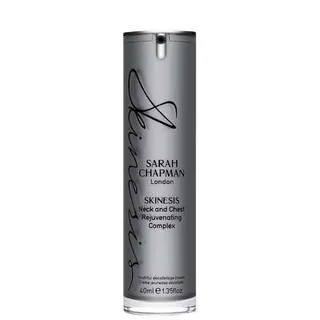
Sarah Chapman London Serum & Treatment Skinesis Neck & Chest Rejuvenating Complex

Sarah Chapman London Serum & Treatment Skinesis Neck & Chest Rejuvenating Complex

Efficacy41/100IrritancyHigh

Works for

Moisturizing
Caprylic/capric triglyceride, Glycerin + 20 more
Works
What the product description says
“Sarah Chapman London Serum & Treatment Skinesis Intense Hydrating Booster 30ml €79,80 Produkt anzeigen”
Source: Allbeauty

This product can help improve hydration of the skin with the two types of ingredients.

The first type is called “humectants”:
these ingredients help attract water. When humectants are on the surface of the skin, they “pull in” the moisture from the outside environment, or from within deeper layers of the skin. The following ingredients in this product do the job: glycerin, sodium pca.

This product also contains ingredients called “occlusives”. They help reduce the speed with which our skin loses moisture to the outside environment. These ingredients also help soften the upper layer of the skin, so it feels less tight and nicer to the touch. The following ingredients in this product do the job: caprylic/capric triglyceride, dimethicone.

Caprylic/capric triglycerideKey active· Emollient, OcclusiveEffect: HighA good mix of fatty acids that forms a protective layer on the skin. Improves the shelf life of products. Derived from coconut and glycerin~5.9–7.2%
GlycerinKey active· HumectantEffect: HighOne of the best moisturizing ingredients. Naturally present in skin. It attracts water to the upper layer of the skin working as a humectant~4.2–5.2%
Glyceryl stearate seKey activeEffect: MediumUsed to stabilize the product formulations and works as an emollient~2.9–3.5%
DimethiconeKey active· Emollient, OcclusiveEffect: HighA silicone that helps to reduce water loss from the surface of the skin. Can temporarily "fill in" lines and wrinkles, absorb oil, and create a nice product finish~2.5–3.1%
CyclopentasiloxaneKey active· EmollientEffect: MediumA silicone that helps improve the product texture and spreadability. Can absorb oil creating a short-term mattifying effect on the skin~1.7–2.1%
Cetearyl alcoholKey active· EmollientEffect: MediumA non-drying alcohol. Works as an emollient. Helps water and oil mix together and creates a nice product texture~1.5–1.9%
Simmondsia chinensis seed oilKey active· Emollient, OcclusiveEffect: HighSoftens the upper layer of skin and helps restore the healthy skin barrier. Has shown to help calm down inflammation in skin. It is a stable oil, meaning that it retains its properties even when exposed to air.~1.3–1.6%
Prunus amygdalus dulcis seedKey activeEffect: HighHelps soften the upper layer of the skin~0.95–1.15%
Cetyl alcoholKey active· EmollientEffect: MediumA non-drying alcohol that works to soften the skin and stabilize product formulations helping oil and water mix together~0.6–0.85%
Sesamum indicum seed oilKey active· EmollientEffect: HighA good moisturizing plant oil. Due to the high linoleic acid content, it helps soften the upper layer of the skin, reduce water loss and support skin barrier function~0.55–0.8%
GlycosaminoglycansKey active· EmollientEffect: HighLong sugars that help attract water to the upper layer of the skin~0.5–0.75%
SqualaneKey active· Emollient, OcclusiveEffect: HighAn oil naturally present in skin. Works as an emollient to soften the skin and form a protective layer on its surface without a greasy feeling.~0.3–0.6%
Sodium pcaKey active· HumectantEffect: HighNaturally present in skin and helps to attract water to its upper layer~0.25–0.5%
Sorbitol· HumectantEffect: LowHelps attract water to the upper layer of the skin and improves the product texture~2–2.4%
Butylene glycol· HumectantEffect: LowUsed to create a nice product texture and help delivery of other ingredients. Might be somewhat helpful in attracting water to the upper layer of the skin~0.7–1.05%
Caprylyl glycol· Humectant, EmollientEffect: LowHelps preserve products and creates a nice product texture~0.45–0.7%
Peg-8 dimethiconeEffect: LowA type of silicone that can help create nice product texture and soften the upper layer of the skin~0.3–0.55%
Aloe barbadensis leaf juice powderEffect: LowTraditionally used to treat sunburns, dermatitis and inflammation, but evidence for its effectiveness is lacking. The extract can contain humectants that help attract water into the skin~0.2–0.4%
CyclohexasiloxaneEffect: Low, below effective doseA silicone that serves as an emollient. Helps create a nice non-greasy feels~0.65–0.95%
NiacinamideUnder-dosedIs proven to be effective in reducing blemishes, evening out skin tone and helping to improve lines and wrinkles. It helps the skin to repair sun damage, calm down inflammation and keep maintain good levels of moisture. The concentration of about 2% is effective for supporting the skin barrier and evening out the skin tone. Concentration of 4-6% is better for helping with acne and balancing the sebum production~0.45–0.7%
Butyrospermum parkii butterUnder-dosedA great moisturising ingredient that softens the skin and reduces water loss from its upper layer. It also can be helpful in protecting skin from free radicals~0.3–0.6%
AllantoinUnder-dosedHelps calm down inflammation in skin and can help reduce itching. Helps to repair the skin barrier and keep skin hydrated~0.2–0.4%
Anti-aging
Decarboxy carnosine hcl, Butyrospermum parkii butter + 4 more
Not delivered
What the product description says
“It improves skin density and reduces fine lines and wrinkles.”
Source: Allbeauty

This product does not contain ingredients that are able to reduce fine lines and wrinkles or help with skin elasticity, but it can improve the look of the skin temporarily through moisturization. Well-moisturized skin might also be able to repair the sun damage better.This ingredient - decarboxy carnosine hcl - could be helpful for preventing or repairing signs of aging in theory, but there is no evidence that it actually works.

This ingredient decarboxy carnosine hcl might be able to help neutralize free radicals in skin and help it fight off some of the sun damage.

Decarboxy carnosine hclEffect: LowMight be able to protect the skin from free radicals, but further evidence of effectiveness is needed~0.25–0.45%
Butyrospermum parkii butterEffect: Low, below effective doseA great moisturising ingredient that softens the skin and reduces water loss from its upper layer. It also can be helpful in protecting skin from free radicals~0.3–0.6%
Phyllanthus emblica fruit extractEffect: Low, below effective doseA plant extract that might be helpful in neutralizing free radicals and have a skin lightening effect if used in high enough concentrations~0.25–0.5%
NiacinamideUnder-dosedIs proven to be effective in reducing blemishes, evening out skin tone and helping to improve lines and wrinkles. It helps the skin to repair sun damage, calm down inflammation and keep maintain good levels of moisture. The concentration of about 2% is effective for supporting the skin barrier and evening out the skin tone. Concentration of 4-6% is better for helping with acne and balancing the sebum production~0.45–0.7%
Tetrahexyldecyl ascorbateUnder-dosedBeing a lipid soluble form of vitamin C, it is more stable than ascorbic acid, but still degrades quickly and needs to be stabilized in a formulation with another ingredient. It is claimed to penetrate skin better than pure vitamin C and have the the similar benefits, but solid studies of its effectiveness are lacking. Is likely to require a higher concentration in a product than pure vitamin C to be effective. It might be able to help reduce pore clogging.~0.25–0.45%
Retinyl palmitateUnder-dosedThree steps removed from the active form of vitamin A - retinoic acid. To have an effect in the skin, it first needs to be converted twice to become the retinoic acid. This means it is less potent than retinol, but could also be less irritating. Once converted to the retinoic acid in the skin, it helps against all signs of aging, improves skin cell turnover and helps fight blemishes and clogged pores. However, in many cosmetic formulations, it is used in a concentration that is too low to have the full effect~0.15–0.3%
Evens skin tone
Niacinamide ~0.45–0.7%, below the ~1% it needs + 2 more
Under-dosed
What the product description says
“It also counteracts pigmentation issues.”
Source: Allbeauty

Effective ingredients missing or their concentration is too low

Phyllanthus emblica fruit extractEffect: Low, below effective doseA plant extract that might be helpful in neutralizing free radicals and have a skin lightening effect if used in high enough concentrations~0.25–0.5%
NiacinamideUnder-dosedIs proven to be effective in reducing blemishes, evening out skin tone and helping to improve lines and wrinkles. It helps the skin to repair sun damage, calm down inflammation and keep maintain good levels of moisture. The concentration of about 2% is effective for supporting the skin barrier and evening out the skin tone. Concentration of 4-6% is better for helping with acne and balancing the sebum production~0.45–0.7%
Tetrahexyldecyl ascorbateUnder-dosedBeing a lipid soluble form of vitamin C, it is more stable than ascorbic acid, but still degrades quickly and needs to be stabilized in a formulation with another ingredient. It is claimed to penetrate skin better than pure vitamin C and have the the similar benefits, but solid studies of its effectiveness are lacking. Is likely to require a higher concentration in a product than pure vitamin C to be effective. It might be able to help reduce pore clogging.~0.25–0.45%
Retinyl palmitateUnder-dosedThree steps removed from the active form of vitamin A - retinoic acid. To have an effect in the skin, it first needs to be converted twice to become the retinoic acid. This means it is less potent than retinol, but could also be less irritating. Once converted to the retinoic acid in the skin, it helps against all signs of aging, improves skin cell turnover and helps fight blemishes and clogged pores. However, in many cosmetic formulations, it is used in a concentration that is too low to have the full effect~0.15–0.3%
Anti-oxidation
Side benefit · Decarboxy carnosine hcl, Butyrospermum parkii butter + 3 more
May help

This product contains antioxidants (decarboxy carnosine hcl) that can help neutralize free radicals in skin to lessen the damage it gets from the UV light (sun). There is some human evidence for this effect in skin, though it is smaller or less consistent than the evidence for the best antioxidants.

Decarboxy carnosine hclKey activeEffect: MediumMight be able to protect the skin from free radicals, but further evidence of effectiveness is needed~0.25–0.45%
Butyrospermum parkii butterEffect: Low, below effective doseA great moisturising ingredient that softens the skin and reduces water loss from its upper layer. It also can be helpful in protecting skin from free radicals~0.3–0.6%
Tocopheryl acetateEffect: Low, below effective doseA more stable but less bio-available form of vitamin E compared to Tocopherol. Might help moisturize and protect the skin from free radicals, but mostly used in low concentrations to stabilize other ingredients.~0.25–0.5%
Tetrahexyldecyl ascorbateUnder-dosedBeing a lipid soluble form of vitamin C, it is more stable than ascorbic acid, but still degrades quickly and needs to be stabilized in a formulation with another ingredient. It is claimed to penetrate skin better than pure vitamin C and have the the similar benefits, but solid studies of its effectiveness are lacking. Is likely to require a higher concentration in a product than pure vitamin C to be effective. It might be able to help reduce pore clogging.~0.25–0.45%
Phyllanthus emblica fruit extractUnder-dosedA plant extract that might be helpful in neutralizing free radicals and have a skin lightening effect if used in high enough concentrations~0.25–0.5%

Can it cause trouble?

Irritancy
4 strong irritants: Retinyl palmitate, Citrus aurantium amara flower oil + 2 more — patch-test recommended
High risk
We flagged 15 ingredients with irritancy potential. Severity depends on your sensitivity threshold; the table lists the worst offenders first.
IngredientFunctionIrritationEst. amount
Retinyl palmitateThree steps removed from the active form of vitamin A - retinoic acid. To have an effect in the skin, it first needs to be converted twice to become the retinoic acid. This means it is less potent than retinol, but could also be less irritating. Once converted to the retinoic acid in the skin, it helps against all signs of aging, improves skin cell turnover and helps fight blemishes and clogged pores. However, in many cosmetic formulations, it is used in a concentration that is too low to have the full effectHigh~0.15–0.3%est.
Citrus aurantium amara flower oilUsed as a fragrance. Can be irritatingHigh~0.15–0.3%est.
LinaloolA fragrance. Can be irritatingHigh~0.1–0.2%est.
Benzyl benzoateFragrance with sweet balsamic smell. Help to preserve products and dissolve other ingredients. Could trigger allergic reactions and be irritatingHigh~0.1–0.15%est.
Caprylic/capric triglycerideA good mix of fatty acids that forms a protective layer on the skin. Improves the shelf life of products. Derived from coconut and glycerinMedium~5.9–7.2%est.
Simmondsia chinensis seed oilSoftens the upper layer of skin and helps restore the healthy skin barrier. Has shown to help calm down inflammation in skin. It is a stable oil, meaning that it retains its properties even when exposed to air.Medium~1.3–1.6%est.
Caprylyl glycolHelps preserve products and creates a nice product textureMedium~0.45–0.7%est.
TriethanolamineUsed to adjust pH of the product and can help improve the product's smellMedium~0.3–0.6%est.
Hydroxyethyl acrylate/sodium acryloyldimethyl taurate copolymerA gelling agent that thickens the product consistency and leaves the skin with a velvety finishMedium~0.25–0.5%est.
Polysorbate 60Helps oil and water mix togetherMedium~0.3–0.55%est.
Tocopheryl acetateA more stable but less bio-available form of vitamin E compared to Tocopherol. Might help moisturize and protect the skin from free radicals, but mostly used in low concentrations to stabilize other ingredients.Medium~0.25–0.5%est.
Phyllanthus emblica fruit extractA plant extract that might be helpful in neutralizing free radicals and have a skin lightening effect if used in high enough concentrationsMedium~0.25–0.5%est.
Tetrahexyldecyl ascorbateBeing a lipid soluble form of vitamin C, it is more stable than ascorbic acid, but still degrades quickly and needs to be stabilized in a formulation with another ingredient. It is claimed to penetrate skin better than pure vitamin C and have the the similar benefits, but solid studies of its effectiveness are lacking. Is likely to require a higher concentration in a product than pure vitamin C to be effective. It might be able to help reduce pore clogging.Medium~0.25–0.45%est.
Aloe barbadensis leaf juice powderTraditionally used to treat sunburns, dermatitis and inflammation, but evidence for its effectiveness is lacking. The extract can contain humectants that help attract water into the skinMedium~0.2–0.4%est.
Disodium edtaStabilizes the product formulationMedium~0.2–0.35%est.
Comedogenic
3 ingredients rated 2 or more on the 0–5 pore-clogging scale
3 flagged
These ingredients have a comedogenic rating of 2 or more on a 0–5 scale; the table shows each one's rating. In leave-on products they can clog pores in acne-prone skin.
IngredientFunctionRatingEst. amount
Butyrospermum parkii butterA great moisturising ingredient that softens the skin and reduces water loss from its upper layer. It also can be helpful in protecting skin from free radicals3/5~0.3–0.6%est.
Glyceryl stearate seUsed to stabilize the product formulations and works as an emollient2/5~2.9–3.5%est.
Cetearyl alcoholA non-drying alcohol. Works as an emollient. Helps water and oil mix together and creates a nice product texture2/5~1.5–1.9%est.

User reviews

Would you recommend?
No community reviews yet.

Be the first — your take helps the next person decide.

Ingredients

Filter by role to see what each ingredient is doing.

Water~45–55%
Formula
Irritation risk
Low

Plain old water

More about Water
Caprylic/capric triglyceride~5.9–7.2%
Key activeIrritant · medium
Irritation risk
Medium
Works for
Moisturizing

A good mix of fatty acids that forms a protective layer on the skin. Improves the shelf life of products. Derived from coconut and glycerin

More about Caprylic/capric triglyceride
Glycerin~4.2–5.2%
Key active
Irritation risk
Low
Works for
Moisturizing

One of the best moisturizing ingredients. Naturally present in skin. It attracts water to the upper layer of the skin working as a humectant

More about Glycerin
Glyceryl stearate se~2.9–3.5%
Key activeComedogenic 2/5
Irritation risk
Low
Comedogenicity
2/5
Works for
CleansingMoisturizing

Used to stabilize the product formulations and works as an emollient

More about Glyceryl stearate se
Dimethicone~2.5–3.1%
Key active
Irritation risk
Low
Works for
MoisturizingMattifying

A silicone that helps to reduce water loss from the surface of the skin. Can temporarily "fill in" lines and wrinkles, absorb oil, and create a nice product finish

More about Dimethicone
Sorbitol~2–2.4%
Formula
Irritation risk
Low
Works for
Moisturizing

Helps attract water to the upper layer of the skin and improves the product texture

More about Sorbitol
Cyclopentasiloxane~1.7–2.1%
Key active
Irritation risk
Low
Works for
MoisturizingMattifying

A silicone that helps improve the product texture and spreadability. Can absorb oil creating a short-term mattifying effect on the skin

More about Cyclopentasiloxane
Cetearyl alcohol~1.5–1.9%
Key activeComedogenic 2/5
Irritation risk
Low
Comedogenicity
2/5
Works for
CleansingMoisturizing

A non-drying alcohol. Works as an emollient. Helps water and oil mix together and creates a nice product texture

More about Cetearyl alcohol
Simmondsia chinensis seed oil~1.3–1.6%
Key activeIrritant · medium
Irritation risk
Medium
Works for
Moisturizing

Softens the upper layer of skin and helps restore the healthy skin barrier. Has shown to help calm down inflammation in skin. It is a stable oil, meaning that it retains its properties even when exposed to air.

More about Simmondsia chinensis seed oil
Prunus amygdalus dulcis seed~0.95–1.15%
Key active
Irritation risk
Low
Works for
Moisturizing

Helps soften the upper layer of the skin

More about Prunus amygdalus dulcis seed
Butylene glycol~0.7–1.05%
Formula
Irritation risk
Low
Works for
Moisturizing

Used to create a nice product texture and help delivery of other ingredients. Might be somewhat helpful in attracting water to the upper layer of the skin

More about Butylene glycol
Cyclohexasiloxane~0.65–0.95%
Formula
Irritation risk
Low
Works for
Moisturizing

A silicone that serves as an emollient. Helps create a nice non-greasy feels

More about Cyclohexasiloxane
Sesamum indicum seed oil~0.55–0.8%
Key active
Irritation risk
Low
Works for
Moisturizing

A good moisturizing plant oil. Due to the high linoleic acid content, it helps soften the upper layer of the skin, reduce water loss and support skin barrier function

More about Sesamum indicum seed oil
Cetyl alcohol~0.6–0.85%
Key active
Irritation risk
Low
Works for
CleansingMoisturizing

A non-drying alcohol that works to soften the skin and stabilize product formulations helping oil and water mix together

More about Cetyl alcohol
Niacinamide~0.45–0.7%
Under-dosed
Irritation risk
Low
Works for
Evens skin toneAnti-blemishAnti-agingMoisturizingReduces irritationAnti-inflammatoryReduces rednessAntibacterial

Is proven to be effective in reducing blemishes, evening out skin tone and helping to improve lines and wrinkles. It helps the skin to repair sun damage, calm down inflammation and keep maintain good levels of moisture. The concentration of about 2% is effective for supporting the skin barrier and evening out the skin tone. Concentration of 4-6% is better for helping with acne and balancing the sebum production

More about Niacinamide
Glycosaminoglycans~0.5–0.75%
Key active
Irritation risk
Low
Works for
Moisturizing

Long sugars that help attract water to the upper layer of the skin

More about Glycosaminoglycans
Caprylyl glycol~0.45–0.7%
Irritant · medium
Irritation risk
Medium
Works for
Moisturizing

Helps preserve products and creates a nice product texture

More about Caprylyl glycol
Sodium polystyrene sulfonate~0.4–0.65%
Formula
Irritation risk
Low
Works for
Cleansing
More about Sodium polystyrene sulfonate
Sorghum bicolor stalk juice~0.3–0.55%
Formula
Triethanolamine~0.3–0.6%
Irritant · medium
Irritation risk
Medium
Works for
Cleansing

Used to adjust pH of the product and can help improve the product's smell

More about Triethanolamine
Peg-8 dimethicone~0.3–0.55%
Formula
Irritation risk
Low
Works for
Moisturizing

A type of silicone that can help create nice product texture and soften the upper layer of the skin

More about Peg-8 dimethicone
Butyrospermum parkii butter~0.3–0.6%
Under-dosedComedogenic 3/5
Irritation risk
Low
Comedogenicity
3/5
Works for
MoisturizingAnti-oxidationAnti-aging

A great moisturising ingredient that softens the skin and reduces water loss from its upper layer. It also can be helpful in protecting skin from free radicals

More about Butyrospermum parkii butter
Decarboxy carnosine hcl~0.25–0.45%
Key active
Irritation risk
Low
Works for
Anti-oxidationAnti-aging

Might be able to protect the skin from free radicals, but further evidence of effectiveness is needed

More about Decarboxy carnosine hcl
Sodium pca~0.25–0.5%
Key active
Irritation risk
Low
Works for
Moisturizing

Naturally present in skin and helps to attract water to its upper layer

More about Sodium pca
Brassica campestris/aleurites fordi oil copolymer~0.25–0.5%
Formula
Hydroxyethyl acrylate/sodium acryloyldimethyl taurate copolymer~0.25–0.5%
Irritant · medium
Irritation risk
Medium

A gelling agent that thickens the product consistency and leaves the skin with a velvety finish

More about Hydroxyethyl acrylate/sodium acryloyldimethyl taurate copolymer
Dicetyl phosphate~0.3–0.5%
Formula
Irritation risk
Low
Works for
Cleansing
More about Dicetyl phosphate
Ceteth-10 phosphate~0.35–0.65%
Formula
Irritation risk
Low
Works for
Cleansing
More about Ceteth-10 phosphate
Carbomer~0.25–0.5%
Formula
Irritation risk
Low
Works for
Cleansing

Helps create a thicker or gel-like product texture. It is not a surfactant but can be used in gentle cleansing formulations

More about Carbomer
Squalane~0.3–0.6%
Key active
Irritation risk
Low
Works for
Moisturizing

An oil naturally present in skin. Works as an emollient to soften the skin and form a protective layer on its surface without a greasy feeling.

More about Squalane
Polysorbate 60~0.3–0.55%
Irritant · medium
Irritation risk
Medium
Works for
Cleansing

Helps oil and water mix together

More about Polysorbate 60
Tocopheryl acetate~0.25–0.5%
Irritant · medium
Irritation risk
Medium
Works for
Anti-oxidation

A more stable but less bio-available form of vitamin E compared to Tocopherol. Might help moisturize and protect the skin from free radicals, but mostly used in low concentrations to stabilize other ingredients.

More about Tocopheryl acetate
Propanediol~0.3–0.5%
Formula
Irritation risk
Low

Acts as a solvent for other ingredients. Speeds up the absorption of other ingredients into the skin

More about Propanediol
Nylon-12~0.3–0.55%
Formula
Irritation risk
Low

Used to create a nice product consistency

More about Nylon-12
Phyllanthus emblica fruit extract~0.25–0.5%
Under-dosedIrritant · medium
Irritation risk
Medium
Works for
Anti-oxidationAnti-agingEvens skin tone

A plant extract that might be helpful in neutralizing free radicals and have a skin lightening effect if used in high enough concentrations

More about Phyllanthus emblica fruit extract
Geranylgeranylisopropanol~0.25–0.45%
Formula
Hexapeptide-10~0.25–0.45%
Formula
Irritation risk
Low
More about Hexapeptide-10
Allantoin~0.2–0.4%
Under-dosed
Irritation risk
Low
Works for
MoisturizingAnti-inflammatoryReduces irritationReduces rednessAnti-blemishExfoliation

Helps calm down inflammation in skin and can help reduce itching. Helps to repair the skin barrier and keep skin hydrated

More about Allantoin
Tetrahexyldecyl ascorbate~0.25–0.45%
Under-dosedIrritant · medium
Irritation risk
Medium
Works for
Evens skin toneAnti-agingAnti-oxidation

Being a lipid soluble form of vitamin C, it is more stable than ascorbic acid, but still degrades quickly and needs to be stabilized in a formulation with another ingredient. It is claimed to penetrate skin better than pure vitamin C and have the the similar benefits, but solid studies of its effectiveness are lacking. Is likely to require a higher concentration in a product than pure vitamin C to be effective. It might be able to help reduce pore clogging.

More about Tetrahexyldecyl ascorbate
Dictyopteris polypodioides extract~0.25–0.5%
Formula
Aloe barbadensis leaf juice powder~0.2–0.4%
Irritant · medium
Irritation risk
Medium
Works for
Moisturizing

Traditionally used to treat sunburns, dermatitis and inflammation, but evidence for its effectiveness is lacking. The extract can contain humectants that help attract water into the skin

More about Aloe barbadensis leaf juice powder
Disodium edta~0.2–0.35%
Irritant · medium
Irritation risk
Medium

Stabilizes the product formulation

More about Disodium edta
Eryngium maritimum callus culture filtrate~0.2–0.35%
Formula
Jasminum officinale oil~0.1–0.2%
Formula
Retinyl palmitate~0.15–0.3%
Under-dosedIrritant · high
Irritation risk
High
Works for
Evens skin toneAnti-blemishAnti-agingExfoliation

Three steps removed from the active form of vitamin A - retinoic acid. To have an effect in the skin, it first needs to be converted twice to become the retinoic acid. This means it is less potent than retinol, but could also be less irritating. Once converted to the retinoic acid in the skin, it helps against all signs of aging, improves skin cell turnover and helps fight blemishes and clogged pores. However, in many cosmetic formulations, it is used in a concentration that is too low to have the full effect

More about Retinyl palmitate
Citrus aurantium amara flower oil~0.15–0.3%
Irritant · high
Irritation risk
High

Used as a fragrance. Can be irritating

More about Citrus aurantium amara flower oil
Linalool~0.1–0.2%
Irritant · high
Irritation risk
High

A fragrance. Can be irritating

More about Linalool
Benzyl benzoate~0.1–0.15%
Irritant · high
Irritation risk
High

Fragrance with sweet balsamic smell. Help to preserve products and dissolve other ingredients. Could trigger allergic reactions and be irritating

More about Benzyl benzoate
Ingredient list view

Water, Caprylic/capric triglyceride, Glycerin, Glyceryl stearate se, Dimethicone, Sorbitol, Cyclopentasiloxane, Cetearyl alcohol, Simmondsia chinensis seed oil, Prunus amygdalus dulcis seed, Butylene glycol, Cyclohexasiloxane, Sesamum indicum seed oil, Cetyl alcohol, Niacinamide, Glycosaminoglycans, Caprylyl glycol, Sodium polystyrene sulfonate, Sorghum bicolor stalk juice, Triethanolamine, Peg-8 dimethicone, Butyrospermum parkii butter, Decarboxy carnosine hcl, Sodium pca, Brassica campestris/aleurites fordi oil copolymer, Hydroxyethyl acrylate/sodium acryloyldimethyl taurate copolymer, Dicetyl phosphate, Ceteth-10 phosphate, Carbomer, Squalane, Polysorbate 60, Tocopheryl acetate, Propanediol, Nylon-12, Phyllanthus emblica fruit extract, Geranylgeranylisopropanol, Hexapeptide-10, Allantoin, Tetrahexyldecyl ascorbate, Dictyopteris polypodioides extract, Aloe barbadensis leaf juice powder, Disodium edta, Eryngium maritimum callus culture filtrate, Jasminum officinale oil, Retinyl palmitate, Citrus aurantium amara flower oil, Linalool, Benzyl benzoate

Compare prices

Retailers ranked by price — lowest first.

No pricing data available yet for this product.

Worth comparing, line by line.

Match % combines shared ingredients, the first five ingredients, shared actives and hero ingredients, irritancy (lower counts in the alternative's favour), texture and body area. Only products in the same routine step are compared.

Side-by-side comparison of this product against its closest alternatives
Sarah Chapman LondonSerum & Treatment Skinesis Neck & Chest Rejuvenating ComplexYOUR PRODUCTmirenesseFast Fix Chin Tuck V Shape Lifting SerumMarcelle2% Hyaluronic Acid + Probiotic SerumOurselfAdvanced Regenerative Serum
Match—89%87%86%
Price——$25.21—
Shared key ingredients—6 of 164 of 165 of 16
Key difference—Acetyl Dipeptide-1 Cetyl EsterDimethiconolAminopropyl Ascorbyl Phosphate
Irritancy High Medium Low Low
Drying alcohol————
View product Shop Shop Shop

More alternatives: Dr Dennis Gross DRx BioRejuvenation SerumAbib Jericho Rose Bifida Serum Firming Drop

Cheaper alternatives? Browse formulas in the same category.
We compare ingredient profiles across our catalog — pick the closest match for your budget.
Open dupe finder

Product summary

"Sarah Chapman London - Serum & Treatment Skinesis Neck & Chest Rejuvenating Complex" could be helpful for: Moisturizing, but its actives are not the most effective or are not well-studied.

Ingredient callouts

  • this product includes a form of Retinoids (vitamin A) - retinyl palmitate 0.15% - 0.30%, but this type of vitamin A is not very effective. It could in theory help with fine lines and wrinkles, but the effect is most likely minimal.
  • Humectants (sodium pca 0.25% - 0.50% and glycerin 4.20% - 5.20%). These ingredients help attract water to the upper layer of the skin and improve the skin hydration.

Price

The product retails from 63.90£ up to 1769.00£ in the United Kingdom.

For a detailed price comparison: click here.

Sources cited in this review

Every concentration estimate and effectiveness label is anchored to one of these 16 studies and safety reviews.

  1. 1
  2. 2
  3. 3
  4. 4
  5. 5
  6. 6
Sarah Chapman London Serum & Treatment Skinesis Neck & Chest Rejuvenating Complex
Sarah Chapman LondonSerum & Treatment Skinesis Neck & Chest Rejuvenating Complex

Affiliate links · As an Amazon Associate, WIMJ earns from qualifying purchases.

As an Amazon Associate, WIMJ earns from qualifying purchases.