Works for
1 of 1 advertised claim delivered
Moisturizing23 ingredients credited for this claimStrong support
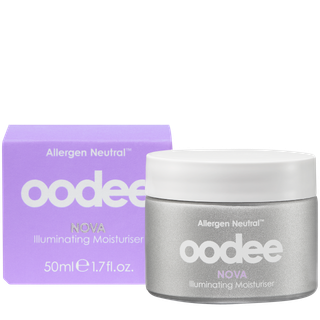
“Nova Illuminating Moisturiser”
This product can help improve hydration of the skin with the two types of ingredients.
The first type is called “humectants”:
these ingredients help attract water.
When humectants are on the surface of the skin, they “pull in” the moisture from the outside environment, or from
within deeper layers of the skin. The following ingredients in this product do the job:
arginine, betaine.
This product also contains ingredients called “occlusives”. They help reduce the speed with which our skin loses moisture to the outside environment. These ingredients also help soften the upper layer of the skin, so it feels less tight and nicer to the touch. The following ingredients in this product do the job: arginine, helianthus annuus seed oil.
The following ingredients in this product are especially good for supporting the skin barrier and helping with the hydration level: panthenol
Anti-oxidationNot advertised by the brand · 10 ingredients credited for this claimModerate support
This product contains antioxidants (tocopheryl linoleate) that might be able to help neutralize free radicals in skin to lessen the damage it gets from the UV light (sun). There is not enough evidence to confirm their effectiveness in skin though.
Can it cause trouble?
Irritancy2 strong irritants: Parfum, Citrus aurantium dulcis callus culture extractMedium risk
Comedogenic3 ingredients rated 2 or more on the 0–5 pore-clogging scale3 flagged

User reviews
Be the first — your take helps the next person decide.
Ingredients
Filter by role to see what each ingredient is doing.
Water~45–55%
Pentylene glycol~5–6.1%
- Irritation risk
- Medium
Used to preserve products, dissolve other ingredients and create a nice product texture
More about Pentylene glycolVitis vinifera seed oil~4.3–5.3%
- Irritation risk
- Medium
A great emollient that can also have anti-oxidant properties
More about Vitis vinifera seed oilGlycerin~3.2–4%
- Irritation risk
- Low
One of the best moisturizing ingredients. Naturally present in skin. It attracts water to the upper layer of the skin working as a humectant
More about GlycerinCetearyl alcohol~2.7–3.3%
- Irritation risk
- Low
- Comedogenicity
- 2/5
A non-drying alcohol. Works as an emollient. Helps water and oil mix together and creates a nice product texture
More about Cetearyl alcoholCrambe abyssinica seed oil~2.2–2.7%
- Irritation risk
- Medium
Helps soften the upper layer of the skin
More about Crambe abyssinica seed oilEuphorbia cerifera wax~2.3–2.8%
- Irritation risk
- Low
Simmondsia chinensis seed oil~1.7–2%
- Irritation risk
- Medium
Softens the upper layer of skin and helps restore the healthy skin barrier. Has shown to help calm down inflammation in skin. It is a stable oil, meaning that it retains its properties even when exposed to air.
More about Simmondsia chinensis seed oilCetearyl olivate~1.3–1.6%
Betaine~1.1–1.3%
- Irritation risk
- Low
Helps attract water to the upper layer of the skin and improves the product texture
More about BetaineGlyceryl stearate se~0.95–1.15%
- Irritation risk
- Low
- Comedogenicity
- 2/5
Used to stabilize the product formulations and works as an emollient
More about Glyceryl stearate seNiacinamide~0.75–1.15%
- Irritation risk
- Low
Is proven to be effective in reducing blemishes, evening out skin tone and helping to improve lines and wrinkles. It helps the skin to repair sun damage, calm down inflammation and keep maintain good levels of moisture. The concentration of about 2% is effective for supporting the skin barrier and evening out the skin tone. Concentration of 4-6% is better for helping with acne and balancing the sebum production
More about NiacinamidePanthenol~0.75–1.1%
- Irritation risk
- Low
Helps attract water to the upper layer of the skin and can help improve skin barrier function
More about PanthenolSodium citrate~0.7–1%
- Irritation risk
- Medium
Helps to control the skin's pH level. Maintains the skin's natural film of amino-lactic acids and oils. Helps to preserve products
More about Sodium citrateSorbitan olivate~0.7–1%
Stearic acid~0.75–1.1%
- Irritation risk
- Low
Helps oil and water mix together and works as an emollient
More about Stearic acidSaccharomyces/rice ferment filtrate~0.6–0.9%
- Irritation risk
- Low
A product of yeast fermentation. Can contain humectants that help attract water to the upper layer of the skin and might help neutralize free oxidants
More about Saccharomyces/rice ferment filtrateParfum~0.55–0.85%
- Irritation risk
- High
An aromatic blend of unspecified and possibly irritating ingredients
More about ParfumPropanediol~0.55–0.85%
- Irritation risk
- Low
Acts as a solvent for other ingredients. Speeds up the absorption of other ingredients into the skin
More about PropanediolArginine~0.5–0.75%
- Irritation risk
- Low
An amino acid that is naturally present in skin and helps keep it hydrated. When used together with AHAs, it can reduce their irritating effect on the skin
More about ArginineNigella sativa seed oil~0.5–0.75%
- Irritation risk
- Medium
Helps soften the upper layer of the skin and support the skin's barrier due to the high content of linoleic acid
More about Nigella sativa seed oilPyrus malus seed oil~0.55–0.8%
- Irritation risk
- High
Can contain essential oil that can be irritating. Can help to soften the upper layer of the skin. Might be helpful in neutralizing free radicals
More about Pyrus malus seed oilRibes nigrum seed oil~0.5–0.75%
- Irritation risk
- Medium
An emollient. Can be helpful for restoring skin barrier function.
More about Ribes nigrum seed oilCitrus aurantium dulcis callus culture extract~0.45–0.7%
- Irritation risk
- High
Salicylic acid~0.45–0.7%
- Irritation risk
- High
Used for skin exfoliation. It has an anti-inflammatory and anti-bacterial effect, helps to unclog pores, prevent blemishes and speed up healing of the existing ones. Sometimes referred to as a BHA (beta-hydroxy acid)
More about Salicylic acidSodium stearoyl glutamate~0.5–0.75%
- Irritation risk
- Medium
Helps oil and water mix together
More about Sodium stearoyl glutamatePolygonum fagopyrum sprout extract~0.45–0.7%
- Irritation risk
- Low
Sodium hyaluronate~0.45–0.7%
- Irritation risk
- Low
One of the best moisturizing ingredients. Attracts water into the upper layer of the skin
More about Sodium hyaluronateTocopheryl linoleate~0.45–0.7%
- Irritation risk
- Medium
A relative of vitamin E (Tocopherol). It can have an anti-oxidant effect in skin and/or to stabilize the product fromulation. It could be irritating but most of the reported allergy and irritation cases appeared in one geographic location (Switzerland) in 1992, and might be due to the quality issues in manufacturing of a particular batch of the ingredient
More about Tocopheryl linoleateInulin~0.45–0.65%
- Irritation risk
- Low
Helps attract water to the upper layer of the skin. Is claimed to support the growth of "good" bacteria in skin (as a "prebiotic"), but the research is lacking
More about InulinButylene glycol~0.45–0.65%
- Irritation risk
- Low
Used to create a nice product texture and help delivery of other ingredients. Might be somewhat helpful in attracting water to the upper layer of the skin
More about Butylene glycolLeuconostoc/radish root ferment filtrate~0.3–0.6%
- Irritation risk
- Medium
A preservative that comes from radishes fermented by a bacteria. New research suggests that the preservation properties in the ingredient come from an ammonium salt that is not present naturally in radish root but used in its cultivation. Is problematic because the exact amount of the preservative agents is difficult to determine
More about Leuconostoc/radish root ferment filtratePhytic acid~0.3–0.6%
- Irritation risk
- Medium
An alpha-hydroxy acid (AHA), but is mostly used to stabilize product formulations in cosmetics
More about Phytic acidLaminaria digitata extract~0.3–0.55%
- Irritation risk
- Low
- Comedogenicity
- 3/5
Seaweed extract that helps the skin to attract water and make it more smooth for touch. Also shows promise of anti-aging properties, but good research is lacking at the moment
More about Laminaria digitata extract1,2-hexanediol~0.3–0.55%
Alpha-glucan oligosaccharide~0.3–0.6%
- Irritation risk
- Low
Helps attract water to the upper layer of the skin
More about Alpha-glucan oligosaccharideGluconolactone~0.25–0.5%
- Irritation risk
- Medium
A polyhydroxy acid (PHA) that helps shed the dead cells from the skin surface revealing smoother skin. Is believed to be genter than AHAs. It helps attract water to the upper layer of the skin and can stimulate production of skin's own hyaluronic acid resulting in improved hydration levels. It has been shown to be helpful against acne and clogged pores if used consistently (e.g over a period of 12 weeks) in high enough concentration. It can help reduce fine lines and wrinkles and improve skin tone with long-term application. Can help neutralize free radicals
More about GluconolactoneXanthan gum~0.25–0.45%
- Irritation risk
- Low
Used to create a thicker product consistency
More about Xanthan gumHelianthus annuus seed oil~0.25–0.45%
- Irritation risk
- Low
A great emollient due to its high linoleic acid content. One of the most effective plant oils in helping skin hydration and repairing skin barrier function
More about Helianthus annuus seed oilSodium benzoate~0.15–0.3%
Perilla frutescens sprout extract~0.2–0.4%
- Irritation risk
- Low
Citric acid~0.15–0.25%
- Irritation risk
- Medium
Can work as an exfoliant but is typically used to adjust the product pH
More about Citric acidCalcium gluconate~0.15–0.3%
- Irritation risk
- Low
Helps attract water to the upper layer of the skin and helps to improve appearance of the product
More about Calcium gluconateBeta-carotene~0.15–0.25%
Daucus carota sativa root extract~0.1–0.2%
- Irritation risk
- Low
Carrot extract. Might have anti-oxidant properties and be used to add orange color
More about Daucus carota sativa root extractDaucus carota sativa seed oil~0.1–0.2%
- Irritation risk
- Low
A plant oil that might help neutralize free radicals and have an anti-bacterial effect
More about Daucus carota sativa seed oilAscorbyl palmitate~0.05%
- Irritation risk
- Medium
Being a lipid soluble form of vitamin C, it is more stable and can penetrate the skin better than L-Ascorbic acid. It is effective in protecting the skin from free radicals, as well as evening the skin tone, but is less effective in stimulating collagen production compared to L-Ascorbic acid.
More about Ascorbyl palmitateIngredient list view
Water, Pentylene glycol, Vitis vinifera seed oil, Glycerin, Cetearyl alcohol, Crambe abyssinica seed oil, Euphorbia cerifera wax, Simmondsia chinensis seed oil, Cetearyl olivate, Betaine, Glyceryl stearate se, Niacinamide, Panthenol, Sodium citrate, Sorbitan olivate, Stearic acid, Saccharomyces/rice ferment filtrate, Parfum, Propanediol, Arginine, Nigella sativa seed oil, Pyrus malus seed oil, Ribes nigrum seed oil, Citrus aurantium dulcis callus culture extract, Salicylic acid, Sodium stearoyl glutamate, Polygonum fagopyrum sprout extract, Sodium hyaluronate, Tocopheryl linoleate, Inulin, Butylene glycol, Leuconostoc/radish root ferment filtrate, Phytic acid, Laminaria digitata extract, 1,2-hexanediol, Alpha-glucan oligosaccharide, Gluconolactone, Xanthan gum, Helianthus annuus seed oil, Sodium benzoate, Perilla frutescens sprout extract, Citric acid, Calcium gluconate, Beta-carotene, Daucus carota sativa root extract, Daucus carota sativa seed oil, Ascorbyl palmitate
Compare prices
Retailers ranked by price — lowest first.

Affiliate links · prices updated regularly
Worth comparing, line by line.
Match % combines shared ingredients, the first five ingredients, shared actives and hero ingredients, irritancy (lower counts in the alternative's favour), texture and body area. Only products in the same routine step are compared.
| OodeeNova Illuminating MoisturiserYOUR PRODUCT | Sonya DakarSuper Clear | e.l.f. CosmeticsBlemish Breakthrough Blemish Calming Water Cream | CeraVePsoriasis Moisturizing Cream | |
|---|---|---|---|---|
| Match | — | 78% | 75% | 74% |
| Price | $72.71 | $55.00−$17.71 | — | — |
| Shared key ingredients | — | 5 of 16 | 4 of 16 | 3 of 16 |
| Key difference | — | Ginkgo Biloba Leaf Extract | Acetyl Glucosamine | Ceramide Ap |
| Irritancy | Medium | High | Low | Low |
| Drying alcohol | — | — | — | — |
| View product | Shop | Shop | Shop |


Product summary
Based on the ingredients included, "Oodee - Nova Illuminating Moisturiser" works well for moisturizing the skin. As we expect from a proper moisturizer, the formula includes a combo of effective humectants and emollients. These are the two different types of ingredients that are essential for improving the skin hydration and supporting a healthy skin barrier. Humectants in this product (panthenol, arginine, betaine, glycerin and sodium hyaluronate) help to increase the water content in the upper layer of the skin. (These ingredients do so by "capturing" water molecules from the outside air or from within the deeper layers of the skin). Nigella sativa seed oil, ribes nigrum seed oil, vitis vinifera seed oil, arginine and helianthus annuus seed oil in this product help decrease the water evoporation from the skin, so that it stays hydrated for longer. These ingredients also soften the skin and take away the feeling of tightness and dryness.
Ingredient callouts
- This formulation also includes panthenol (pro-vitamin B5) at about 0.75% - 1.10% concentration. In this concentration, panthenol works effectively to improve the skin barrier and reduce inflammation.
Irritation risk
This formulation includes some common irritants, including ingredients that do not provide a benefit for the skin. We assess the overall irritancy of this moisturizer to be medium. For a detailed overview of all potential irritants: click here
You can see the detailed formula review with the breakdown of all actives in the product and the full ingredient list with estimated concentrations in the tables below.
Price
The product retails for 55.00£ in the United Kingdom.
For a detailed price comparison: click here.
Sources cited in this review
Every concentration estimate and effectiveness label is anchored to one of these 34 studies and safety reviews.
- 1
- 2
- 3
- 4Skin moisturizing effects of panthenol-based formulationspdfs.semanticscholar.org
- 5
- 6

Affiliate links · As an Amazon Associate, WIMJ earns from qualifying purchases.