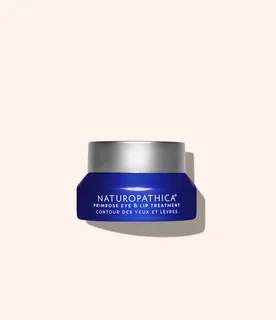
Naturopathica Hydrating Primrose Eye & Lip Treatment
Works for
MoisturizingHelianthus annuus seed oil, Cetearyl alcohol + 9 moreWorks
“Hydrating Primrose Eye & Lip Treatment”
This product can help improve hydration of the skin with the two types of ingredients.
The first type is called “humectants”:
these ingredients help attract water.
When humectants are on the surface of the skin, they “pull in” the moisture from the outside environment, or from
within deeper layers of the skin. The following ingredients in this product do the job:
anhydroxylitol, glycerin.
This product also contains ingredients called “occlusives”. They help reduce the speed with which our skin loses moisture to the outside environment. These ingredients also help soften the upper layer of the skin, so it feels less tight and nicer to the touch. The following ingredients in this product do the job: helianthus annuus seed oil, oenothera biennis oil.
Anti-agingDipalmitoyl hydroxyproline, Lactic acidNot delivered
“A light blend of hydrating evening primrose oil and regenerating acai fruit oil that helps reduce the appearance of fine lines.”
This product does not contain ingredients that are able to reduce fine lines and wrinkles or help with skin elasticity, but it can improve the look of the skin temporarily through moisturization. Well-moisturized skin might also be able to repair the sun damage better.This ingredient - dipalmitoyl hydroxyproline - could be helpful for preventing or repairing signs of aging in theory, but there is no evidence that it actually works.
Can it cause trouble?
Irritancy5 strong irritants: Rosa damascena flower water, Rosa damascena flower oil + 3 more — patch-test recommendedHigh risk
Comedogenic2 ingredients rated 2 or more on the 0–5 pore-clogging scale2 flagged

User reviews
Be the first — your take helps the next person decide.
Ingredients
Filter by role to see what each ingredient is doing.
Water~40–60%
Helianthus annuus seed oil~4.8–7.2%
- Irritation risk
- Low
A great emollient due to its high linoleic acid content. One of the most effective plant oils in helping skin hydration and repairing skin barrier function
More about Helianthus annuus seed oilCetearyl alcohol~3.2–4.8%
- Irritation risk
- Low
- Comedogenicity
- 2/5
A non-drying alcohol. Works as an emollient. Helps water and oil mix together and creates a nice product texture
More about Cetearyl alcoholOenothera biennis oil~2.7–4.1%
- Irritation risk
- Medium
Helps soften the upper layer of the skin and can support skin barrier function
More about Oenothera biennis oilRosa damascena flower water~2–3%
- Irritation risk
- High
Used to add a nice rose smell to the product. Might help attract water to the upper layer of the skin and have some anti-oxidant effect. Can be irritating
More about Rosa damascena flower waterPopulus tremuloides bark extract~1.6–2.4%
- Irritation risk
- Low
Glycerin~1.4–2.1%
- Irritation risk
- Low
One of the best moisturizing ingredients. Naturally present in skin. It attracts water to the upper layer of the skin working as a humectant
More about GlycerinCetearyl glucoside~1.1–1.7%
- Irritation risk
- Medium
Helps water and oil in the product mix well together and improves product texture
More about Cetearyl glucosideCetearyl wheat straw glycosides~0.9–1.35%
- Irritation risk
- Medium
Helps water and oil mix together. Avoid if sensitive to gluten
More about Cetearyl wheat straw glycosidesXylitylglucoside~0.6–1.35%
- Irritation risk
- Low
Helps attract water to the upper layer of the skin and repair the skin barrier function
More about XylitylglucosideAnhydroxylitol~0.45–1.1%
- Irritation risk
- Low
Helps attract water to the upper layer of the skin and repair the skin barrir function
More about AnhydroxylitolXylitol~0.4–0.95%
- Irritation risk
- Low
Helps attract water to the upper layer of the skin and repair the skin barrier function
More about XylitolEuterpe oleracea fruit oil~0.35–0.8%
- Irritation risk
- Medium
A plant oil that might help neutralize free radicals, but evidence of effectiveness in skin is lacking
More about Euterpe oleracea fruit oilDipalmitoyl hydroxyproline~0.2–0.75%
- Irritation risk
- Low
Is claimed to stimulate collagen and elastin production, as well as work as an anti-oxidant. There is however not enough evidence for its effectiveness
More about Dipalmitoyl hydroxyprolineCrithmum maritimum extract~0.15–0.6%
- Irritation risk
- Low
- Comedogenicity
- 3/5
An algae extract that might have anti-oxidant properties
More about Crithmum maritimum extractBisabolol~0.1–0.5%
- Irritation risk
- Low
An active component of chamomile plant that historically has been used to calm down irritated skin. A recent study shows that bisabolol indeed can have some anti-inflammatory effect on skin, even though conclusive data is lacking. Bisabolol has a sweet floral scent and can be added to products for its aromatic properties
More about BisabololRosa damascena flower oil~0.1–0.45%
- Irritation risk
- High
Used as a fragrance. Can be irritating
More about Rosa damascena flower oilPelargonium graveolens leaf oil~0.1–0.35%
- Irritation risk
- High
An essential oil used as a fragrance. Can be irritating
More about Pelargonium graveolens leaf oilRosmarinus officinalis leaf extract~0.05–0.15%
- Irritation risk
- High
Can be helpful in reducing inflammation in skin, including inflamed acne. It can be irritating
More about Rosmarinus officinalis leaf extractSodium anisate~0.05–0.15%
Lactic acid~0.01–0.1%
- Irritation risk
- Medium
An exfoliating and moisturizing alpha-hydroxy acid (AHA). Typically causes less irritation than other AHAs, for example, glycolic acid. At high concentrations (about 15%), lactic acid can help reduce lines and wrinkles. Recent studies show that lactic acid can support the "good" bacteria living on skin's surface (healthy skin microbiome)
More about Lactic acidIngredient list view
Water, Helianthus annuus seed oil, Cetearyl alcohol, Oenothera biennis oil, Rosa damascena flower water, Populus tremuloides bark extract, Glycerin, Cetearyl glucoside, Cetearyl wheat straw glycosides, Xylitylglucoside, Anhydroxylitol, Xylitol, Euterpe oleracea fruit oil, Dipalmitoyl hydroxyproline, Crithmum maritimum extract, Bisabolol, Rosa damascena flower oil, Pelargonium graveolens leaf oil, Unknown, Rosmarinus officinalis leaf extract, Sodium anisate, Lactic acid
Compare prices
Retailers ranked by price — lowest first.

Worth comparing, line by line.
Match % combines shared ingredients, the first five ingredients, shared actives and hero ingredients, irritancy (lower counts in the alternative's favour), texture and body area. Only products in the same routine step are compared.
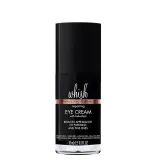
| NaturopathicaHydrating Primrose Eye & Lip TreatmentYOUR PRODUCT | NEOGEN X SUR.MEDICV.Biome Advanced Eye Cream | WhishRepairing Eye Cream With Bakuchiol | MALIN + GOETZRevitalizing Eye Cream | |
|---|---|---|---|---|
| Match | — | 61% | 61% | 57% |
| Price | $64.00 | $25.16−$38.84 | $59.42−$4.58 | $90.49+$26.49 |
| Shared key ingredients | — | 0 of 5 | 4 of 5 | 4 of 5 |
| Key difference | — | Tripeptide-1 | Bakuchiol | Isosorbide Dicaprylate |
| Irritancy | High | Low | Medium | Medium |
| Drying alcohol | — | — | — | — |
| View product | Shop | Shop | Shop |


More alternatives: Laboratoires de Biarritz HYDRA-PROTECT + Revitalizing Eye Contour Organicskincode-Swiss Cellular Wrinkle Prohibiting Eye Contour Cream
Sources cited in this review
Every concentration estimate and effectiveness label is anchored to one of these 13 studies and safety reviews.
- 1
- 2
- 3Effect of topically applied lipids on surfactant-irritated skinonlinelibrary.wiley.com
- 4
- 5
- 6

Affiliate links · As an Amazon Associate, WIMJ earns from qualifying purchases.