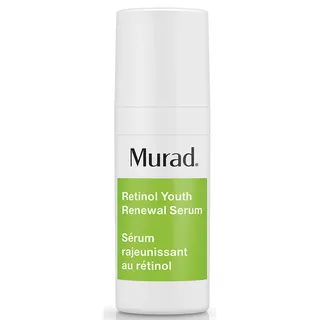
Murad Retinol Youth Renewal Serum

Murad Retinol Youth Renewal Serum

Efficacy100/100IrritancyHigh

Works for

Evens skin tone
Retinol, Hydroxypinacolone retinoate + 3 more
Works well
What the product description says
“In 14 days: 100% showed visible improvements in elasticity, firmness and radiance, 93% showed visible improvements in fine lines, wrinkles, and dark spots, and 96% agree skin looks healthier†”
Source: Murad

This product can help reduce hypepigmentation and even out the skin tone because it contains the following effective ingredients: hydroxypinacolone retinoate, retinol.

Keep in mind that you would need to apply any topical skincare targetted at hypigmentation consistently for a couple of months to get a result. No topical skincare product can help get rid of hyperpigmentation (including post-acne marks and age spots) instantly.

RetinolHeroEffect: HighTwo steps removed from the active form of vitamin A - retinoic acid. Once converted to the retinoic acid in the skin, retinol is proven to be effective against all signs of aging. It improves skin cell turnover, helps fight blemishes and clogged pores, can regulate excess oil production and even skin tone. It can, however, be quite irritating~0.55–0.8%
Hydroxypinacolone retinoateHeroEffect: HighA derivative of the most potent form of vitamin A, retinoic acid. The ingredient can be sold under name Granactive Retinoid. Note that if a skincare brand discloses the concentration of Granactive Retinoid in a product, the concentration refers to a diluted form of Hydroxypinacolone Retinoate: 1% of Granactive Retinoid corresponds to 0.1% of Hydroxypinacolone Retinoate. Hydroxypinacolone Retinoate (HPR) is a unique derivative of retinoic acid because it can directly work in the skin and does not require additional conversion steps. According to studies done by the manufacturer on models of human skin (not real people), this derivative is more effective than other cosmetic versions of retinoids (such as retinol, retinaldehyde, and retinyl palmitate), and, at the same time, causes less irritation. It has been also demonstrated to be more stable than retinol which makes formulating with easier and increases the chances that a product with it will maintain its effectiveness after opening. The packaging should still ideally be air-tight. HPR is available over the counter in the EU, UK, Asia, Australia and New Zealand, but is only with a prescription in Canada.~0.01–0.05%
TaurineEffect: LowCould be helpful in reducing inflammation in skin, evening out the skin tone and neutralizing free radicals, but more research is needed to confirm its effectiveness~0.25–0.45%
Retinyl linoleateUnder-dosedAn ester of a retinoid and linoleic acid. Three steps removed from the bioactive form of retinoid, retinoic acid. Once converted to retinoic acid in skin, it can help reduce wrinkles, stimulate collagen production, even out skin tone and reduce blemishes. The concentrations used in cosmetic products are often not high enough to have a positive effect in skin.~0.5–0.75%
Lactic acidUnder-dosedAn exfoliating and moisturizing alpha-hydroxy acid (AHA). Typically causes less irritation than other AHAs, for example, glycolic acid. At high concentrations (about 15%), lactic acid can help reduce lines and wrinkles. Recent studies show that lactic acid can support the "good" bacteria living on skin's surface (healthy skin microbiome)~0.2–0.4%
Anti-aging
Retinol, Hydroxypinacolone retinoate + 3 more
Works well
What the product description says
“In 14 days: 100% showed visible improvements in elasticity, firmness and radiance, 93% showed visible improvements in fine lines, wrinkles, and dark spots, and 96% agree skin looks healthier†”
Source: Murad

This product can help reduce and prevent fine lines and wrinkles, improve skin elasticity and firmness because it contains hydroxypinacolone retinoate, retinol.

Keep in mind that it typically takes at least 6 weeks to notice any results because the changes that are needed to improve fine lines and elasticity happen in the deeper layers of the skin. No topical anti-aging product can “erase” wrinkles or fully reverse signs of aging.

RetinolHeroEffect: HighTwo steps removed from the active form of vitamin A - retinoic acid. Once converted to the retinoic acid in the skin, retinol is proven to be effective against all signs of aging. It improves skin cell turnover, helps fight blemishes and clogged pores, can regulate excess oil production and even skin tone. It can, however, be quite irritating~0.55–0.8%
Hydroxypinacolone retinoateHeroEffect: HighA derivative of the most potent form of vitamin A, retinoic acid. The ingredient can be sold under name Granactive Retinoid. Note that if a skincare brand discloses the concentration of Granactive Retinoid in a product, the concentration refers to a diluted form of Hydroxypinacolone Retinoate: 1% of Granactive Retinoid corresponds to 0.1% of Hydroxypinacolone Retinoate. Hydroxypinacolone Retinoate (HPR) is a unique derivative of retinoic acid because it can directly work in the skin and does not require additional conversion steps. According to studies done by the manufacturer on models of human skin (not real people), this derivative is more effective than other cosmetic versions of retinoids (such as retinol, retinaldehyde, and retinyl palmitate), and, at the same time, causes less irritation. It has been also demonstrated to be more stable than retinol which makes formulating with easier and increases the chances that a product with it will maintain its effectiveness after opening. The packaging should still ideally be air-tight. HPR is available over the counter in the EU, UK, Asia, Australia and New Zealand, but is only with a prescription in Canada.~0.01–0.05%
TocopherolEffect: Low, below effective dosePure form of vitamin E. Can help moisturise and protect the skin from free radicals. Often used to help stabilise other ingredients or the formula itself~0.25–0.45%
Retinyl linoleateUnder-dosedAn ester of a retinoid and linoleic acid. Three steps removed from the bioactive form of retinoid, retinoic acid. Once converted to retinoic acid in skin, it can help reduce wrinkles, stimulate collagen production, even out skin tone and reduce blemishes. The concentrations used in cosmetic products are often not high enough to have a positive effect in skin.~0.5–0.75%
Lactic acidUnder-dosedAn exfoliating and moisturizing alpha-hydroxy acid (AHA). Typically causes less irritation than other AHAs, for example, glycolic acid. At high concentrations (about 15%), lactic acid can help reduce lines and wrinkles. Recent studies show that lactic acid can support the "good" bacteria living on skin's surface (healthy skin microbiome)~0.2–0.4%
Moisturizing
Urea, Dimethicone + 23 more
Works well
What the product description says
“Loaded with a replenishing host of ingredients starring squalane, hyaluronic acid, swertia flower extract, tomato and soybean extracts just to name a few, this fast-acting formula works to increase your skin's resilience and deliver a surge of hydration to the areas that need it most.”
Source: Cultbeauty

This product can help improve hydration of the skin with the two types of ingredients.

The first type is called “humectants”:
these ingredients help attract water. When humectants are on the surface of the skin, they “pull in” the moisture from the outside environment, or from within deeper layers of the skin. The following ingredients in this product do the job: betaine, glycerin.

This product also contains ingredients called “occlusives”. They help reduce the speed with which our skin loses moisture to the outside environment. These ingredients also help soften the upper layer of the skin, so it feels less tight and nicer to the touch. The following ingredients in this product do the job: dimethicone, squalane.

The following ingredients in this product are especially good for supporting the skin barrier and helping with the hydration level: urea

UreaHero· HumectantEffect: HighNaturally present in skin (urea makes up about 7% of natural moisturizing factors in skin). Attracts water to the upper layer of the skin. Also has a positive effect on the skin barrier beyond the humectant action. Can enhance penetration of other ingredients. Is an exfoliating ingredient when used in high concentrations~0.3–0.55%
DimethiconeKey active· Emollient, OcclusiveEffect: HighA silicone that helps to reduce water loss from the surface of the skin. Can temporarily "fill in" lines and wrinkles, absorb oil, and create a nice product finish~5.6–6.8%
GlycerinKey active· HumectantEffect: HighOne of the best moisturizing ingredients. Naturally present in skin. It attracts water to the upper layer of the skin working as a humectant~3.1–3.8%
Sodium hyaluronateKey active· HumectantEffect: HighOne of the best moisturizing ingredients. Attracts water into the upper layer of the skin~0.8–1.2%
Collagen amino acidsKey activeEffect: HighHelp attract water to the upper layer of the skin, soften it and support the skin barrier function~0.45–0.65%
Sodium acetylated hyaluronateKey active· HumectantEffect: HighA type of hyaluronic acid that works as an excellent moisturizer by attracting water into the upper layer of the skin. Is typically feels less sticky on the skin compared to the usual hyaluronic acid~0.4–0.6%
Chlorella vulgaris extractKey activeEffect: MediumA plant extract that can help to attract water to the upper layer of the skin and might have some anti-oxidant and anti-inflammatory properties~0.4–0.6%
Hydrolyzed sodium hyaluronateKey activeEffect: HighAttracts water into the upper layer of the skin~0.3–0.55%
Sodium hyaluronate crosspolymerKey active· HumectantEffect: HighAttracts water into the upper layer of the skin~0.3–0.6%
SqualaneKey active· Emollient, OcclusiveEffect: HighAn oil naturally present in skin. Works as an emollient to soften the skin and form a protective layer on its surface without a greasy feeling.~0.3–0.5%
Helianthus annuus extractKey active· EmollientEffect: HighHelps soften the upper layer of the skin~0.25–0.45%
TrehaloseKey active· HumectantEffect: HighA sugar that attracts water to the upper layer of the skin~0.25–0.45%
InositolKey active· HumectantEffect: High~0.25–0.45%
Cetyl alcoholKey active· EmollientEffect: MediumA non-drying alcohol that works to soften the skin and stabilize product formulations helping oil and water mix together~0.25–0.5%
Coco-caprylate/caprateKey active· EmollientEffect: MediumHelps to soften the upper layer of the skin without creating a greasy texture~0.25–0.45%
Saccharomyces fermentKey activeEffect: HighA product of yeast fermentation. Helps attract water to the upper layer of the skin~0.2–0.4%
BetaineKey active· HumectantEffect: HighHelps attract water to the upper layer of the skin and improves the product texture~0.2–0.4%
Lauroyl lysineKey activeEffect: MediumHelps soften the upper layer of the skin and creates a nice product texture~0.2–0.4%
GlucoseKey active· HumectantEffect: MediumHelps attract water to the upper layer of the skin. Could be helpful in restoring the skin barrier function~0.2–0.4%
Glyceryl stearate· EmollientEffect: LowAn emollient that softens the skin and forms a protective layer on its surface. Helps water and oil mix together~1.2–1.4%
Dicaprylyl carbonate· EmollientEffect: LowHelps products spread more easily and works as an emollient to soften skin~0.25–0.45%
Pentylene glycol· EmollientEffect: LowUsed to preserve products, dissolve other ingredients and create a nice product texture~0.25–0.5%
TocopherolEffect: Low, below effective dosePure form of vitamin E. Can help moisturise and protect the skin from free radicals. Often used to help stabilise other ingredients or the formula itself~0.25–0.45%
LecithinEffect: Low, below effective doseUsed mostly for creating emulsions - helping oil and water mix together. Helps soften the upper layer of the skin~0.25–0.5%
Lactic acidUnder-dosedAn exfoliating and moisturizing alpha-hydroxy acid (AHA). Typically causes less irritation than other AHAs, for example, glycolic acid. At high concentrations (about 15%), lactic acid can help reduce lines and wrinkles. Recent studies show that lactic acid can support the "good" bacteria living on skin's surface (healthy skin microbiome)~0.2–0.4%
Anti-oxidation
Side benefit · Retinol, Haematococcus pluvialis extract + 6 more
Works well

This product contains antioxidants (retinol) that can help neutralize free radicals in skin. By doing so, they can lessen the damage the skin gets from the UV light (sun).

The following ingredients - haematococcus pluvialis extract also can have an antioxidant effect, but there is less evidence to confirm their effectiveness in skin.

RetinolKey activeEffect: HighTwo steps removed from the active form of vitamin A - retinoic acid. Once converted to the retinoic acid in the skin, retinol is proven to be effective against all signs of aging. It improves skin cell turnover, helps fight blemishes and clogged pores, can regulate excess oil production and even skin tone. It can, however, be quite irritating~0.55–0.8%
Haematococcus pluvialis extractKey activeEffect: MediumGreen algae extract that might contain antioxidant astaxanthin~0.4–0.65%
Chlorella vulgaris extractEffect: LowA plant extract that can help to attract water to the upper layer of the skin and might have some anti-oxidant and anti-inflammatory properties~0.4–0.6%
TaurineEffect: LowCould be helpful in reducing inflammation in skin, evening out the skin tone and neutralizing free radicals, but more research is needed to confirm its effectiveness~0.25–0.45%
Tocopheryl acetateEffect: Low, below effective doseA more stable but less bio-available form of vitamin E compared to Tocopherol. Might help moisturize and protect the skin from free radicals, but mostly used in low concentrations to stabilize other ingredients.~0.25–0.45%
Rosmarinus officinalis leaf extractEffect: Low, below effective doseCan be helpful in reducing inflammation in skin, including inflamed acne. It can be irritating~0.2–0.4%
Retinyl linoleateUnder-dosedAn ester of a retinoid and linoleic acid. Three steps removed from the bioactive form of retinoid, retinoic acid. Once converted to retinoic acid in skin, it can help reduce wrinkles, stimulate collagen production, even out skin tone and reduce blemishes. The concentrations used in cosmetic products are often not high enough to have a positive effect in skin.~0.5–0.75%
TocopherolUnder-dosedPure form of vitamin E. Can help moisturise and protect the skin from free radicals. Often used to help stabilise other ingredients or the formula itself~0.25–0.45%
Exfoliation
Side benefit · Retinol, Urea + 2 more
Works well

This product can help exfoliate the skin. In other words, it helps break down the bonds between dead cells on the surface of the skin and speed up the skin turnover. Skin often appears softer and brighter after exfoliation, but overdoing it can result in disrupted skin barrier. The following ingredient is doing the exfoliating job in this product: retinol.

RetinolKey activeEffect: HighTwo steps removed from the active form of vitamin A - retinoic acid. Once converted to the retinoic acid in the skin, retinol is proven to be effective against all signs of aging. It improves skin cell turnover, helps fight blemishes and clogged pores, can regulate excess oil production and even skin tone. It can, however, be quite irritating~0.55–0.8%
UreaKey activeEffect: MediumNaturally present in skin (urea makes up about 7% of natural moisturizing factors in skin). Attracts water to the upper layer of the skin. Also has a positive effect on the skin barrier beyond the humectant action. Can enhance penetration of other ingredients. Is an exfoliating ingredient when used in high concentrations~0.3–0.55%
Hydroxypinacolone retinoateKey activeEffect: MediumA derivative of the most potent form of vitamin A, retinoic acid. The ingredient can be sold under name Granactive Retinoid. Note that if a skincare brand discloses the concentration of Granactive Retinoid in a product, the concentration refers to a diluted form of Hydroxypinacolone Retinoate: 1% of Granactive Retinoid corresponds to 0.1% of Hydroxypinacolone Retinoate. Hydroxypinacolone Retinoate (HPR) is a unique derivative of retinoic acid because it can directly work in the skin and does not require additional conversion steps. According to studies done by the manufacturer on models of human skin (not real people), this derivative is more effective than other cosmetic versions of retinoids (such as retinol, retinaldehyde, and retinyl palmitate), and, at the same time, causes less irritation. It has been also demonstrated to be more stable than retinol which makes formulating with easier and increases the chances that a product with it will maintain its effectiveness after opening. The packaging should still ideally be air-tight. HPR is available over the counter in the EU, UK, Asia, Australia and New Zealand, but is only with a prescription in Canada.~0.01–0.05%
Lactic acidUnder-dosedAn exfoliating and moisturizing alpha-hydroxy acid (AHA). Typically causes less irritation than other AHAs, for example, glycolic acid. At high concentrations (about 15%), lactic acid can help reduce lines and wrinkles. Recent studies show that lactic acid can support the "good" bacteria living on skin's surface (healthy skin microbiome)~0.2–0.4%
Anti-blemish
Side benefit · Retinol, Hydroxypinacolone retinoate + 3 more
Works well

This product can help reduce breakouts and clogged pores because it contains the following ingredient: hydroxypinacolone retinoate, retinol. These ingredients is used for treating acne and can have a noticeable effect.

RetinolHeroEffect: HighTwo steps removed from the active form of vitamin A - retinoic acid. Once converted to the retinoic acid in the skin, retinol is proven to be effective against all signs of aging. It improves skin cell turnover, helps fight blemishes and clogged pores, can regulate excess oil production and even skin tone. It can, however, be quite irritating~0.55–0.8%
Hydroxypinacolone retinoateHeroEffect: HighA derivative of the most potent form of vitamin A, retinoic acid. The ingredient can be sold under name Granactive Retinoid. Note that if a skincare brand discloses the concentration of Granactive Retinoid in a product, the concentration refers to a diluted form of Hydroxypinacolone Retinoate: 1% of Granactive Retinoid corresponds to 0.1% of Hydroxypinacolone Retinoate. Hydroxypinacolone Retinoate (HPR) is a unique derivative of retinoic acid because it can directly work in the skin and does not require additional conversion steps. According to studies done by the manufacturer on models of human skin (not real people), this derivative is more effective than other cosmetic versions of retinoids (such as retinol, retinaldehyde, and retinyl palmitate), and, at the same time, causes less irritation. It has been also demonstrated to be more stable than retinol which makes formulating with easier and increases the chances that a product with it will maintain its effectiveness after opening. The packaging should still ideally be air-tight. HPR is available over the counter in the EU, UK, Asia, Australia and New Zealand, but is only with a prescription in Canada.~0.01–0.05%
TaurineEffect: LowCould be helpful in reducing inflammation in skin, evening out the skin tone and neutralizing free radicals, but more research is needed to confirm its effectiveness~0.25–0.45%
Retinyl linoleateUnder-dosedAn ester of a retinoid and linoleic acid. Three steps removed from the bioactive form of retinoid, retinoic acid. Once converted to retinoic acid in skin, it can help reduce wrinkles, stimulate collagen production, even out skin tone and reduce blemishes. The concentrations used in cosmetic products are often not high enough to have a positive effect in skin.~0.5–0.75%
Rosmarinus officinalis leaf extractUnder-dosedCan be helpful in reducing inflammation in skin, including inflamed acne. It can be irritating~0.2–0.4%

Can it cause trouble?

Irritancy
6 strong irritants: Hydroxypinacolone retinoate, Retinol + 4 more — patch-test recommended
High risk
We flagged 23 ingredients with irritancy potential. Severity depends on your sensitivity threshold; the table lists the worst offenders first.
IngredientFunctionIrritationEst. amount
Hydroxypinacolone retinoateA derivative of the most potent form of vitamin A, retinoic acid. The ingredient can be sold under name Granactive Retinoid. Note that if a skincare brand discloses the concentration of Granactive Retinoid in a product, the concentration refers to a diluted form of Hydroxypinacolone Retinoate: 1% of Granactive Retinoid corresponds to 0.1% of Hydroxypinacolone Retinoate. Hydroxypinacolone Retinoate (HPR) is a unique derivative of retinoic acid because it can directly work in the skin and does not require additional conversion steps. According to studies done by the manufacturer on models of human skin (not real people), this derivative is more effective than other cosmetic versions of retinoids (such as retinol, retinaldehyde, and retinyl palmitate), and, at the same time, causes less irritation. It has been also demonstrated to be more stable than retinol which makes formulating with easier and increases the chances that a product with it will maintain its effectiveness after opening. The packaging should still ideally be air-tight. HPR is available over the counter in the EU, UK, Asia, Australia and New Zealand, but is only with a prescription in Canada.High~0.01–0.05%est.
RetinolTwo steps removed from the active form of vitamin A - retinoic acid. Once converted to the retinoic acid in the skin, retinol is proven to be effective against all signs of aging. It improves skin cell turnover, helps fight blemishes and clogged pores, can regulate excess oil production and even skin tone. It can, however, be quite irritatingHigh~0.55–0.8%est.
Retinyl linoleateAn ester of a retinoid and linoleic acid. Three steps removed from the bioactive form of retinoid, retinoic acid. Once converted to retinoic acid in skin, it can help reduce wrinkles, stimulate collagen production, even out skin tone and reduce blemishes. The concentrations used in cosmetic products are often not high enough to have a positive effect in skin.High~0.5–0.75%est.
Rosmarinus officinalis leaf extractCan be helpful in reducing inflammation in skin, including inflamed acne. It can be irritatingHigh~0.2–0.4%est.
CitronellolA fragrance. Can be irritatingHigh~0.15–0.3%est.
Alpha-isomethyl iononeA fragrance. Potential allergen and can be irritatingHigh~0.15–0.25%est.
ParfumAn aromatic blend of unspecified and possibly irritating ingredientsHigh~0.1–0.15%est.
Haematococcus pluvialis extractGreen algae extract that might contain antioxidant astaxanthinMedium~0.4–0.65%est.
Chlorella vulgaris extractA plant extract that can help to attract water to the upper layer of the skin and might have some anti-oxidant and anti-inflammatory propertiesMedium~0.4–0.6%est.
Sodium hyaluronate crosspolymerAttracts water into the upper layer of the skinMedium~0.3–0.6%est.
TaurineCould be helpful in reducing inflammation in skin, evening out the skin tone and neutralizing free radicals, but more research is needed to confirm its effectivenessMedium~0.25–0.45%est.
Tocopheryl acetateA more stable but less bio-available form of vitamin E compared to Tocopherol. Might help moisturize and protect the skin from free radicals, but mostly used in low concentrations to stabilize other ingredients.Medium~0.25–0.45%est.
PhosphatidylcholineUsed to enhance the delivery of other ingredientsMedium~0.25–0.45%est.
Sodium stearoyl glutamateHelps oil and water mix togetherMedium~0.3–0.5%est.
Tapioca starchUsed to create a thicker product consistencyMedium~0.25–0.45%est.
Pentylene glycolUsed to preserve products, dissolve other ingredients and create a nice product textureMedium~0.25–0.5%est.
EthylhexylglycerinA preservativeMedium~0.25–0.45%est.
Lactic acidAn exfoliating and moisturizing alpha-hydroxy acid (AHA). Typically causes less irritation than other AHAs, for example, glycolic acid. At high concentrations (about 15%), lactic acid can help reduce lines and wrinkles. Recent studies show that lactic acid can support the "good" bacteria living on skin's surface (healthy skin microbiome)Medium~0.2–0.4%est.
C12-20 alkyl glucosideHelps water and oil mix togetherMedium~0.25–0.45%est.
Polyglyceryl-10 laurateHelps water and oil mix togetherMedium~0.25–0.45%est.
Leuconostoc/radish root ferment filtrateA preservative that comes from radishes fermented by a bacteria. New research suggests that the preservation properties in the ingredient come from an ammonium salt that is not present naturally in radish root but used in its cultivation. Is problematic because the exact amount of the preservative agents is difficult to determineMedium~0.2–0.4%est.
Citric acidCan work as an exfoliant but is typically used to adjust the product pHMedium~0.2–0.35%est.
ChlorphenesinA preservativeMedium~0.15–0.25%est.
Comedogenic
1 ingredient rated 2 or more on the 0–5 pore-clogging scale
1 flagged
These ingredients have a comedogenic rating of 2 or more on a 0–5 scale; the table shows each one's rating. In leave-on products they can clog pores in acne-prone skin.
IngredientFunctionRatingEst. amount
Chlorella vulgaris extractA plant extract that can help to attract water to the upper layer of the skin and might have some anti-oxidant and anti-inflammatory properties3/5~0.4–0.6%est.

User reviews

Would you recommend?
No community reviews yet.

Be the first — your take helps the next person decide.

Ingredients

Filter by role to see what each ingredient is doing.

Water~45–55%
Formula
Irritation risk
Low

Plain old water

More about Water
Dimethicone~5.6–6.8%
Key active
Irritation risk
Low
Works for
MoisturizingMattifying

A silicone that helps to reduce water loss from the surface of the skin. Can temporarily "fill in" lines and wrinkles, absorb oil, and create a nice product finish

More about Dimethicone
Propanediol~3.9–4.8%
Formula
Irritation risk
Low

Acts as a solvent for other ingredients. Speeds up the absorption of other ingredients into the skin

More about Propanediol
Glycerin~3.1–3.8%
Key active
Irritation risk
Low
Works for
Moisturizing

One of the best moisturizing ingredients. Naturally present in skin. It attracts water to the upper layer of the skin working as a humectant

More about Glycerin
C9-12 alkane~2.3–2.8%
Formula
Irritation risk
Low

Helps dissolve other ingredients in a formulation

More about C9-12 alkane
C14-22 alcohols~1.9–2.3%
Formula
Irritation risk
Low

A non-drying alcohol that helps stabilize product formulations

More about C14-22 alcohols
Oryza sativa bran extract~1.6–2%
Formula
Irritation risk
Low

Used to thicken the product consistency

More about Oryza sativa bran extract
Peg-100 stearate~1.5–1.8%
Formula
Irritation risk
Low
Works for
Cleansing

Helps oil and water mix togehter and creates a nice product texture

More about Peg-100 stearate
Glyceryl stearate~1.2–1.4%
Formula
Irritation risk
Low
Works for
CleansingMoisturizing

An emollient that softens the skin and forms a protective layer on its surface. Helps water and oil mix together

More about Glyceryl stearate
Sodium hyaluronate~0.8–1.2%
Key active
Irritation risk
Low
Works for
Moisturizing

One of the best moisturizing ingredients. Attracts water into the upper layer of the skin

More about Sodium hyaluronate
Hydroxypinacolone retinoate~0.01–0.05%
Hero · Anti-aging, Evens skin tone, Anti-blemishIrritant · high
Irritation risk
High
Works for
Anti-blemishAnti-agingEvens skin toneExfoliation

A derivative of the most potent form of vitamin A, retinoic acid. The ingredient can be sold under name Granactive Retinoid. Note that if a skincare brand discloses the concentration of Granactive Retinoid in a product, the concentration refers to a diluted form of Hydroxypinacolone Retinoate: 1% of Granactive Retinoid corresponds to 0.1% of Hydroxypinacolone Retinoate. Hydroxypinacolone Retinoate (HPR) is a unique derivative of retinoic acid because it can directly work in the skin and does not require additional conversion steps. According to studies done by the manufacturer on models of human skin (not real people), this derivative is more effective than other cosmetic versions of retinoids (such as retinol, retinaldehyde, and retinyl palmitate), and, at the same time, causes less irritation. It has been also demonstrated to be more stable than retinol which makes formulating with easier and increases the chances that a product with it will maintain its effectiveness after opening. The packaging should still ideally be air-tight. HPR is available over the counter in the EU, UK, Asia, Australia and New Zealand, but is only with a prescription in Canada.

More about Hydroxypinacolone retinoate
Retinol~0.55–0.8%
Hero · Anti-aging, Evens skin tone, Anti-blemishIrritant · high
Irritation risk
High
Works for
Evens skin toneAnti-blemishMattifyingExfoliationAnti-oxidationAnti-aging

Two steps removed from the active form of vitamin A - retinoic acid. Once converted to the retinoic acid in the skin, retinol is proven to be effective against all signs of aging. It improves skin cell turnover, helps fight blemishes and clogged pores, can regulate excess oil production and even skin tone. It can, however, be quite irritating

More about Retinol
Retinyl linoleate~0.5–0.75%
Under-dosedIrritant · high
Irritation risk
High
Works for
Anti-oxidationAnti-agingAnti-blemishEvens skin tone

An ester of a retinoid and linoleic acid. Three steps removed from the bioactive form of retinoid, retinoic acid. Once converted to retinoic acid in skin, it can help reduce wrinkles, stimulate collagen production, even out skin tone and reduce blemishes. The concentrations used in cosmetic products are often not high enough to have a positive effect in skin.

More about Retinyl linoleate
Collagen amino acids~0.45–0.65%
Key active
Irritation risk
Low
Works for
Moisturizing

Help attract water to the upper layer of the skin, soften it and support the skin barrier function

More about Collagen amino acids
Haematococcus pluvialis extract~0.4–0.65%
Key activeIrritant · medium
Irritation risk
Medium
Works for
Anti-oxidation

Green algae extract that might contain antioxidant astaxanthin

More about Haematococcus pluvialis extract
Chlorella vulgaris extract~0.4–0.6%
Key activeComedogenic 3/5Irritant · medium
Irritation risk
Medium
Comedogenicity
3/5
Works for
MoisturizingAnti-inflammatoryAnti-oxidation

A plant extract that can help to attract water to the upper layer of the skin and might have some anti-oxidant and anti-inflammatory properties

More about Chlorella vulgaris extract
Sodium acetylated hyaluronate~0.4–0.6%
Key active
Irritation risk
Low
Works for
Moisturizing

A type of hyaluronic acid that works as an excellent moisturizer by attracting water into the upper layer of the skin. Is typically feels less sticky on the skin compared to the usual hyaluronic acid

More about Sodium acetylated hyaluronate
Sodium hyaluronate crosspolymer~0.3–0.6%
Key activeIrritant · medium
Irritation risk
Medium
Works for
Moisturizing

Attracts water into the upper layer of the skin

More about Sodium hyaluronate crosspolymer
Hydrolyzed sodium hyaluronate~0.3–0.55%
Key active
Irritation risk
Low
Works for
Moisturizing

Attracts water into the upper layer of the skin

More about Hydrolyzed sodium hyaluronate
Urea~0.3–0.55%
Hero · Moisturizing
Irritation risk
Low
Works for
MoisturizingExfoliation

Naturally present in skin (urea makes up about 7% of natural moisturizing factors in skin). Attracts water to the upper layer of the skin. Also has a positive effect on the skin barrier beyond the humectant action. Can enhance penetration of other ingredients. Is an exfoliating ingredient when used in high concentrations

More about Urea
Yeast amino acids~0.25–0.5%
Formula
Trehalose~0.25–0.45%
Key active
Irritation risk
Low
Works for
Moisturizing

A sugar that attracts water to the upper layer of the skin

More about Trehalose
Inositol~0.25–0.45%
Key active
Irritation risk
Low
Works for
Moisturizing
More about Inositol
Taurine~0.25–0.45%
Irritant · medium
Irritation risk
Medium
Works for
Anti-inflammatoryAnti-blemishAnti-oxidationEvens skin tone

Could be helpful in reducing inflammation in skin, evening out the skin tone and neutralizing free radicals, but more research is needed to confirm its effectiveness

More about Taurine
Betaine~0.2–0.4%
Key active
Irritation risk
Low
Works for
Moisturizing

Helps attract water to the upper layer of the skin and improves the product texture

More about Betaine
Tocopherol~0.25–0.45%
Under-dosed
Irritation risk
Low
Works for
Anti-oxidationAnti-inflammatoryMoisturizingAnti-aging

Pure form of vitamin E. Can help moisturise and protect the skin from free radicals. Often used to help stabilise other ingredients or the formula itself

More about Tocopherol
Tocopheryl acetate~0.25–0.45%
Irritant · medium
Irritation risk
Medium
Works for
Anti-oxidation

A more stable but less bio-available form of vitamin E compared to Tocopherol. Might help moisturize and protect the skin from free radicals, but mostly used in low concentrations to stabilize other ingredients.

More about Tocopheryl acetate
Saccharomyces ferment~0.2–0.4%
Key active
Irritation risk
Low
Works for
Moisturizing

A product of yeast fermentation. Helps attract water to the upper layer of the skin

More about Saccharomyces ferment
Helianthus annuus extract~0.25–0.45%
Key active
Irritation risk
Low
Works for
Moisturizing

Helps soften the upper layer of the skin

More about Helianthus annuus extract
Phosphatidylcholine~0.25–0.45%
Irritant · medium
Irritation risk
Medium
Works for
Cleansing

Used to enhance the delivery of other ingredients

More about Phosphatidylcholine
Rosmarinus officinalis leaf extract~0.2–0.4%
Under-dosedIrritant · high
Irritation risk
High
Works for
Anti-blemishAntibacterialAnti-oxidation

Can be helpful in reducing inflammation in skin, including inflamed acne. It can be irritating

More about Rosmarinus officinalis leaf extract
Sodium stearoyl glutamate~0.3–0.5%
Irritant · medium
Irritation risk
Medium
Works for
Cleansing

Helps oil and water mix together

More about Sodium stearoyl glutamate
Tapioca starch~0.25–0.45%
Irritant · medium
Irritation risk
Medium

Used to create a thicker product consistency

More about Tapioca starch
Squalane~0.3–0.5%
Key active
Irritation risk
Low
Works for
Moisturizing

An oil naturally present in skin. Works as an emollient to soften the skin and form a protective layer on its surface without a greasy feeling.

More about Squalane
Pentylene glycol~0.25–0.5%
Irritant · medium
Irritation risk
Medium
Works for
Moisturizing

Used to preserve products, dissolve other ingredients and create a nice product texture

More about Pentylene glycol
Ethylhexylglycerin~0.25–0.45%
Irritant · medium
Irritation risk
Medium

A preservative

More about Ethylhexylglycerin
Lactic acid~0.2–0.4%
Under-dosedIrritant · medium
Irritation risk
Medium
Works for
Evens skin toneMoisturizingExfoliationAnti-aging

An exfoliating and moisturizing alpha-hydroxy acid (AHA). Typically causes less irritation than other AHAs, for example, glycolic acid. At high concentrations (about 15%), lactic acid can help reduce lines and wrinkles. Recent studies show that lactic acid can support the "good" bacteria living on skin's surface (healthy skin microbiome)

More about Lactic acid
Dicaprylyl carbonate~0.25–0.45%
Formula
Irritation risk
Low
Works for
Moisturizing

Helps products spread more easily and works as an emollient to soften skin

More about Dicaprylyl carbonate
Dimethyl isosorbide~0.25–0.45%
Formula
Irritation risk
Low

Used to dissolve other ingredients in a product and can enhance their ability to penetrate the skin

More about Dimethyl isosorbide
Ammonium acryloyldimethyltaurate/vp copolymer~0.25–0.45%
Formula
Irritation risk
Low

Increases thickness of a product. Texture enhancer for oil-in-water emulsions

More about Ammonium acryloyldimethyltaurate/vp copolymer
Cetyl alcohol~0.25–0.5%
Key active
Irritation risk
Low
Works for
CleansingMoisturizing

A non-drying alcohol that works to soften the skin and stabilize product formulations helping oil and water mix together

More about Cetyl alcohol
C12-20 alkyl glucoside~0.25–0.45%
Irritant · medium
Irritation risk
Medium
Works for
Cleansing

Helps water and oil mix together

More about C12-20 alkyl glucoside
Polyglyceryl-10 laurate~0.25–0.45%
Irritant · medium
Irritation risk
Medium
Works for
Cleansing

Helps water and oil mix together

More about Polyglyceryl-10 laurate
Coco-caprylate/caprate~0.25–0.45%
Key active
Irritation risk
Low
Works for
Moisturizing

Helps to soften the upper layer of the skin without creating a greasy texture

More about Coco-caprylate/caprate
Lauroyl lysine~0.2–0.4%
Key active
Irritation risk
Low
Works for
Moisturizing

Helps soften the upper layer of the skin and creates a nice product texture

More about Lauroyl lysine
Xanthan gum~0.25–0.45%
Formula
Irritation risk
Low
Works for
Cleansing

Used to create a thicker product consistency

More about Xanthan gum
Synthetic fluorphlogopite~0.25–0.45%
Formula
Irritation risk
Low

A mineral that is used as an optical filter (makes the skin looks nicer through light reflection) and to improve the texture of cosmetic products

More about Synthetic fluorphlogopite
Lecithin~0.25–0.5%
Formula
Irritation risk
Low
Works for
CleansingMoisturizing

Used mostly for creating emulsions - helping oil and water mix together. Helps soften the upper layer of the skin

More about Lecithin
Tin oxide~0.35–0.6%
Formula
Irritation risk
Low

A colorant that can add a pearl-like appearance to the formulation

More about Tin oxide
Glucose~0.2–0.4%
Key active
Irritation risk
Low
Works for
Moisturizing

Helps attract water to the upper layer of the skin. Could be helpful in restoring the skin barrier function

More about Glucose
Leuconostoc/radish root ferment filtrate~0.2–0.4%
Irritant · medium
Irritation risk
Medium

A preservative that comes from radishes fermented by a bacteria. New research suggests that the preservation properties in the ingredient come from an ammonium salt that is not present naturally in radish root but used in its cultivation. Is problematic because the exact amount of the preservative agents is difficult to determine

More about Leuconostoc/radish root ferment filtrate
Tetrasodium glutamate diacetate~0.2–0.4%
Formula
Irritation risk
Low

Helps stabilize the product formulation

More about Tetrasodium glutamate diacetate
Citric acid~0.2–0.35%
Irritant · medium
Irritation risk
Medium

Can work as an exfoliant but is typically used to adjust the product pH

More about Citric acid
Sodium hydroxide~0.2–0.35%
Formula
Irritation risk
Low

Used to adjust the product's pH

More about Sodium hydroxide
Phenoxyethanol~0.2–0.35%
Formula
Irritation risk
Low

A preservative. It helps prevent bacterial growth in cosmetic products

More about Phenoxyethanol
Chlorphenesin~0.15–0.25%
Irritant · medium
Irritation risk
Medium

A preservative

More about Chlorphenesin
Tetramethyl acetyloctahydronaphthalenes~0.15–0.25%
Formula
Linalyl acetate~0.15–0.3%
Formula
Citronellol~0.15–0.3%
Irritant · high
Irritation risk
High

A fragrance. Can be irritating

More about Citronellol
Alpha-isomethyl ionone~0.15–0.25%
Irritant · high
Irritation risk
High

A fragrance. Potential allergen and can be irritating

More about Alpha-isomethyl ionone
Parfum~0.1–0.15%
Irritant · high
Irritation risk
High

An aromatic blend of unspecified and possibly irritating ingredients

More about Parfum
Titanium dioxide~0.1–0.2%
Formula
Irritation risk
Low
Works for
Sun protection

Works as a UV filter when used in high concentrations. It is photostable and is effective mostly against the UVB light, with some protection in the UVA range. In small concentrations, used for its ability to improve the color of cosmetic products. Is usually well tolerated by the skin

More about Titanium dioxide
Ingredient list view

Water, Dimethicone, Propanediol, Glycerin, C9-12 alkane, C14-22 alcohols, Oryza sativa bran extract, Peg-100 stearate, Glyceryl stearate, Sodium hyaluronate, Hydroxypinacolone retinoate, Retinol, Retinyl linoleate, Collagen amino acids, Haematococcus pluvialis extract, Chlorella vulgaris extract, Sodium acetylated hyaluronate, Sodium hyaluronate crosspolymer, Hydrolyzed sodium hyaluronate, Urea, Yeast amino acids, Trehalose, Inositol, Taurine, Betaine, Tocopherol, Tocopheryl acetate, Saccharomyces ferment, Helianthus annuus extract, Phosphatidylcholine, Rosmarinus officinalis leaf extract, Sodium stearoyl glutamate, Tapioca starch, Squalane, Pentylene glycol, Ethylhexylglycerin, Lactic acid, Dicaprylyl carbonate, Dimethyl isosorbide, Ammonium acryloyldimethyltaurate/vp copolymer, Cetyl alcohol, C12-20 alkyl glucoside, Polyglyceryl-10 laurate, Coco-caprylate/caprate, Lauroyl lysine, Xanthan gum, Synthetic fluorphlogopite, Lecithin, Tin oxide, Glucose, Leuconostoc/radish root ferment filtrate, Tetrasodium glutamate diacetate, Citric acid, Sodium hydroxide, Phenoxyethanol, Chlorphenesin, Tetramethyl acetyloctahydronaphthalenes, Linalyl acetate, Citronellol, Alpha-isomethyl ionone, Parfum, Titanium dioxide

Compare prices

Retailers ranked by price — lowest first.

SpaceNK US
≈ $91.46
Buy
Amazon USPrice as of 11/12 15:23 GMT
$94.00
Buy
Murad
$97.00
Buy
Sephora
$97.00
Buy
Ulta1 oz
$97.00
Buy

Affiliate links · As an Amazon Associate, WIMJ earns from qualifying purchases.

Worth comparing, line by line.

Match % combines shared ingredients, the first five ingredients, shared actives and hero ingredients, irritancy (lower counts in the alternative's favour), texture and body area. Only products in the same routine step are compared.

Side-by-side comparison of this product against its closest alternatives
MuradRetinol Youth Renewal SerumYOUR PRODUCTMad HippieSuper A SerumThe INKEY List CARetinol SerumZelensPower A Retexturising and Renewing Serum
Match—77%77%74%
Price≈ $91.46$28.99≈ −$62.47$14.62≈ −$76.84$57.62≈ −$33.84
Shared key ingredients—6 of 206 of 206 of 20
Key difference—BakuchiolPalmitoyl Tripeptide-1Linoleic Acid
Irritancy High High Medium Medium
Drying alcohol————
View product Shop Shop Shop

More alternatives: IOPE Expert Retinol RX 2% Reti-Jection Serum for WrinklesSUNDAY RILEY A+ High-Dose Retinoid Serum

Cheaper alternatives? See how this stacks up against similar formulas.
We compare ingredient profiles across our catalog — pick the closest match for your budget.
Open dupe finder

Product summary

"Murad - Retinol Youth Renewal Serum" is effective for: Evens skin tone, Anti-aging, Exfoliation, Moisturizing and Anti-blemish

Ingredient callouts

  • this product contains an effective form of Retinoids (vitamin A): retinol 0.70% - 1.00% and hydroxypinacolone retinoate 0.05% - 0.05%. Retinoids are potent multitasking actives. They work to improve and prevent early signs of aging, reduce hyperpigmentation (age spots and post-acne marks), and prevent inflamed blemishes and clogged pores. The downside of Retinoids is that they can be irritating. If you are not already using a Retinoid in your routine, it is best to start slowly and apply the Retinoid product only a few times per week. If your skin tolerates it well, you can gradually increase the frequency to daily.
  • Ceramides (ceramide np 0.55% - 0.85%). Ceramides are a type of lipids that our skin produces itself. They are a building block of the skin's barrier. Ceramides used in skincare are synthetic or extracted from plants. They work well for softening the skin surface and "patch holes" in the skin's barrier.
  • Humectants (sodium hyaluronate 0.50% - 0.70%, betaine 0.25% - 0.45%, urea 0.30% - 0.50%, trehalose 0.25% - 0.50%, inositol 0.25% - 0.50% and glycerin 0.30% - 0.55%). These ingredients help attract water to the upper layer of the skin and improve the skin hydration.

About the brand

According to Cruelty-Free Kitty "Murad" is cruelty free, but its parent company is not.

Price

The product retails from 101.82A$ up to 138.00A$ in Australia, from 25.00£ up to 119.00£ in the United Kingdom, from 25.00$ up to 102.70$ in the United States and for 118.00CA$ in Canada.

For a detailed price comparison: click here.

Sources cited in this review

Every concentration estimate and effectiveness label is anchored to one of these 32 studies and safety reviews.

  1. 1
  2. 2
  3. 3
  4. 4
  5. 5
  6. 6
Murad Retinol Youth Renewal Serum
MuradRetinol Youth Renewal Serum

Affiliate links · As an Amazon Associate, WIMJ earns from qualifying purchases.

As an Amazon Associate, WIMJ earns from qualifying purchases.