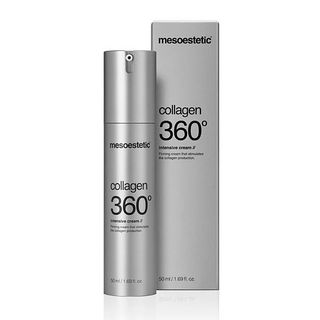
Mesoestetic Collagen 360 Degree Intensive Cream
Works for
2 of 2 advertised claims delivered
MoisturizingPanthenol, Urea + 15 moreStrong evidence
“The appearance of fine lines and wrinkles is dramatically reduced.”
This product can help improve hydration of the skin with the two types of ingredients.
The first type is called “humectants”:
these ingredients help attract water.
When humectants are on the surface of the skin, they “pull in” the moisture from the outside environment, or from
within deeper layers of the skin. The following ingredients in this product do the job:
allantoin, glycerin.
This product also contains ingredients called “occlusives”. They help reduce the speed with which our skin loses moisture to the outside environment. These ingredients also help soften the upper layer of the skin, so it feels less tight and nicer to the touch. The following ingredients in this product do the job: dimethicone, helianthus annuus seed oil.
The following ingredients in this product are especially good for supporting the skin barrier and helping with the hydration level: panthenol, urea
Anti-agingSerine, Niacinamide + 3 moreModerate evidence
“The appearance of fine lines and wrinkles is dramatically reduced.”
This product contains serine. This ingredient might be able to help reduce and prevent fine lines and wrinkles, improve skin elasticity and firmness, but there is not enough evidence that it actually works.
Can it cause trouble?
Irritancy10 strong irritants: Alcohol denat., Rosmarinus officinalis leaf extract + 8 more — patch-test recommendedHigh risk
ComedogenicClean of flagged comedogenic ingredientsNone flagged

User reviews
Be the first — your take helps the next person decide.
Ingredients
Filter by role to see what each ingredient is doing.
Water~45–55%
Hydrogen~4.9–6%
- Irritation risk
- Low
Allantoin~3.8–4.7%
- Irritation risk
- Low
Helps calm down inflammation in skin and can help reduce itching. Helps to repair the skin barrier and keep skin hydrated
More about AllantoinAlcohol denat.~3.1–3.8%
- Irritation risk
- High
Produces temporary toning effect. Can help dissolve other ingredients or preserve products
More about Alcohol denat.Glycerin~2.5–3%
- Irritation risk
- Low
One of the best moisturizing ingredients. Naturally present in skin. It attracts water to the upper layer of the skin working as a humectant
More about GlycerinSodium lactate~1.9–2.4%
- Irritation risk
- Medium
Helps attract water to the upper layer of the skin. Is often used to adjust the pH level of the product
More about Sodium lactateSerine~1.6–2%
- Irritation risk
- Low
An amino-acid that helps to attract water to the upper layer of the skin. In combination with other amino-acids, might help to reduce fine lines and wrinkles
More about SerineSorbitol~1.5–1.8%
- Irritation risk
- Low
Helps attract water to the upper layer of the skin and improves the product texture
More about SorbitolTea-lactate~1.2–1.4%
- Irritation risk
- Low
Urea~0.95–1.15%
- Irritation risk
- Low
Naturally present in skin (urea makes up about 7% of natural moisturizing factors in skin). Attracts water to the upper layer of the skin. Also has a positive effect on the skin barrier beyond the humectant action. Can enhance penetration of other ingredients. Is an exfoliating ingredient when used in high concentrations
More about UreaSodium chloride~0.75–1.1%
- Irritation risk
- Low
Used to stabilize mixtures of oil and water, and create thicker, gel-like product textures
More about Sodium chlorideLauryl diethylenediaminoglycine~0.55–0.85%
- Irritation risk
- Low
Lauryl aminopropylglycine~0.5–0.75%
- Irritation risk
- Low
Ethylhexyl methoxycinnamate~0.7–1.05%
- Irritation risk
- High
Octinoxate. When used in higher concentrations, works as a sunscreen protecting the skin from UVB rays. When used in lower concentration, helps to preserve the product formulation. Is shown to be harmful to coral reefs - consider avoiding bathing in coral reef areas when wearing a product with this ingredient. It can be irritating
More about Ethylhexyl methoxycinnamateAscorbyl glucoside~0.45–0.65%
- Irritation risk
- Medium
A vitamin C derivative that is more stable but less potent than pure form of vitamin C. Has a potential to boost collagen production, nutralise free radicals and reduce hyperpigmentation, but the required concentration is likely to be much higher than for the pure form of vitamin C, limiting the ingredient's effectiveness in products
More about Ascorbyl glucosideButylene glycol dicaprylate/dicaprate~0.45–0.7%
- Irritation risk
- Low
Helps soften the upper layer of the skin
More about Butylene glycol dicaprylate/dicaprateCyclopentasiloxane~0.45–0.7%
- Irritation risk
- Low
A silicone that helps improve the product texture and spreadability. Can absorb oil creating a short-term mattifying effect on the skin
More about CyclopentasiloxaneTocopheryl acetate~0.4–0.6%
- Irritation risk
- Medium
A more stable but less bio-available form of vitamin E compared to Tocopherol. Might help moisturize and protect the skin from free radicals, but mostly used in low concentrations to stabilize other ingredients.
More about Tocopheryl acetateBiosaccharide gum-2~0.3–0.55%
- Irritation risk
- Low
Panthenol~0.3–0.55%
- Irritation risk
- Low
Helps attract water to the upper layer of the skin and can help improve skin barrier function
More about PanthenolSodium acrylates copolymer~0.25–0.5%
- Irritation risk
- Medium
Used to create a thicker product consistency
More about Sodium acrylates copolymerHydrogenated polyisobutene~0.3–0.55%
- Irritation risk
- Low
Used to improve the product consistency and soften the upper layer of the skin
More about Hydrogenated polyisobutenePhospholipids~0.25–0.5%
- Irritation risk
- Low
Emollients that are naturaly present in skin. In addition, they help water and oil mix together in the product
More about PhospholipidsPolyglyceryl-10 stearate~0.25–0.5%
- Irritation risk
- Medium
Helps water and oil mix together and softens the upper layer of the skin
More about Polyglyceryl-10 stearateHelianthus annuus seed oil~0.3–0.55%
- Irritation risk
- Low
A great emollient due to its high linoleic acid content. One of the most effective plant oils in helping skin hydration and repairing skin barrier function
More about Helianthus annuus seed oilButyl methoxydibenzoylmethane~0.45–0.7%
- Irritation risk
- Medium
Avobenzone. An organic, or so-called "chemical" UV filter. Protects against both UVA and UVB rays. Needs to be combined with other filters in a formulation to be stable.
More about Butyl methoxydibenzoylmethaneGlyceryl stearate citrate~0.3–0.55%
- Irritation risk
- Low
Helps oil and water mix together while softening the upper layer of the skin
More about Glyceryl stearate citrateNiacinamide~0.25–0.5%
- Irritation risk
- Low
Is proven to be effective in reducing blemishes, evening out skin tone and helping to improve lines and wrinkles. It helps the skin to repair sun damage, calm down inflammation and keep maintain good levels of moisture. The concentration of about 2% is effective for supporting the skin barrier and evening out the skin tone. Concentration of 4-6% is better for helping with acne and balancing the sebum production
More about NiacinamideDimethicone~0.3–0.55%
- Irritation risk
- Low
A silicone that helps to reduce water loss from the surface of the skin. Can temporarily "fill in" lines and wrinkles, absorb oil, and create a nice product finish
More about DimethiconeCentella asiatica extract~0.3–0.6%
- Irritation risk
- Medium
A plant extract that has been shown to be able to reduce inflammation in skin, support restoration of skin barrier function, as well as support collagen production. Contains active compounds called centelloids: asiaticoside, madecasosside, asiatic acid and madecassic acid. Might be helpful in preventing stretch marks. It can be itself be irritating though.
More about Centella asiatica extractRosmarinus officinalis leaf extract~0.2–0.4%
- Irritation risk
- High
Can be helpful in reducing inflammation in skin, including inflamed acne. It can be irritating
More about Rosmarinus officinalis leaf extractHelianthus annuus seed oil~0.25–0.5%
- Irritation risk
- Low
A great emollient due to its high linoleic acid content. One of the most effective plant oils in helping skin hydration and repairing skin barrier function
More about Helianthus annuus seed oilRetinyl palmitate~0.2–0.4%
- Irritation risk
- High
Three steps removed from the active form of vitamin A - retinoic acid. To have an effect in the skin, it first needs to be converted twice to become the retinoic acid. This means it is less potent than retinol, but could also be less irritating. Once converted to the retinoic acid in the skin, it helps against all signs of aging, improves skin cell turnover and helps fight blemishes and clogged pores. However, in many cosmetic formulations, it is used in a concentration that is too low to have the full effect
More about Retinyl palmitateDisodium edta~0.2–0.4%
Methylisothiazolinone~0.00075–0.0015%
Methylchloroisothiazolinone~0.00075–0.0015%
- Irritation risk
- High
A preservative. Is a frequent allergen in cosmetics
More about MethylchloroisothiazolinoneParfum~0.15–0.3%
- Irritation risk
- High
An aromatic blend of unspecified and possibly irritating ingredients
More about ParfumBht~0.15–0.25%
Citral~0.1–0.2%
Linalool~0.15–0.25%
Limonene~0.1–0.2%
- Irritation risk
- High
A common frangrance that can easily irritate skin, especially if exposed to air, light or heat
More about LimoneneGeraniol~0.05–0.1%
Ingredient list view
Water, Hydrogen, Allantoin, Alcohol denat., Glycerin, Sodium lactate, Serine, Sorbitol, Tea-lactate, Urea, Sodium chloride, Lauryl diethylenediaminoglycine, Lauryl aminopropylglycine, Ethylhexyl methoxycinnamate, Ascorbyl glucoside, Butylene glycol dicaprylate/dicaprate, Cyclopentasiloxane, Tocopheryl acetate, Biosaccharide gum-2, Panthenol, Sodium acrylates copolymer, Hydrogenated polyisobutene, Phospholipids, Polyglyceryl-10 stearate, Helianthus annuus seed oil, Butyl methoxydibenzoylmethane, Glyceryl stearate citrate, Niacinamide, Dimethicone, Centella asiatica extract, Rosmarinus officinalis leaf extract, Helianthus annuus seed oil, Retinyl palmitate, Disodium edta, Methylisothiazolinone, Methylchloroisothiazolinone, Parfum, Bht, Citral, Linalool, Limonene, Unknown, Geraniol
Compare prices
Retailers ranked by price — lowest first.
Affiliate links · prices updated regularly · As an Amazon Associate, WIMJ earns from qualifying purchases.
Worth comparing, line by line.
Match % combines shared ingredients, the first five ingredients, shared actives and hero ingredients, irritancy (lower counts in the alternative's favour), texture and body area. Only products in the same routine step are compared.
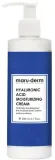
| MesoesteticCollagen 360 Degree Intensive CreamYOUR PRODUCT | SimpleKind To Skin Replenishing Rich Moisturizer | MarudermHyaluronic Acid Moisturizer Face & Body Cream | ISDINIsdinceutics Prevent Hyaluronic Moisture Sensitive Skin | |
|---|---|---|---|---|
| Match | — | 89% | 88% | 87% |
| Price | $87.10 | $3.32−$83.78 | $21.99−$65.11 | $38.50−$48.60 |
| Shared key ingredients | — | 8 of 16 | 7 of 16 | 6 of 16 |
| Key difference | — | Pantolactone | Fructose | Hydrolyzed Hyaluronic Acid |
| Irritancy | High | Low | Low | Medium |
| Drying alcohol | Contains drying alcohol | — | — | — |
| View product | Shop | Shop | Shop |


Product summary
"Mesoestetic - Collagen 360 Degree Intensive Cream" has a good moisturizing formula. To work well, any moisturizer needs to include a combination of water-binding and emollient ingredients. Mesoestetic - Collagen 360 Degree Intensive Cream ticks this box. Humectants in this product (panthenol, urea, allantoin, glycerin and sodium lactate) help to increase the water content in the upper layer of the skin. (These ingredients do so by "capturing" water molecules from the outside air or from within the deeper layers of the skin). Emollients in this formulation (dimethicone, helianthus annuus seed oil, butylene glycol dicaprylate/dicaprate, cyclopentasiloxane and glyceryl stearate citrate) help to reduce the moisture loss from the skin. They also soften the skin surface and relieve the feeling of dryness and tightness.
Ingredient callouts
- this moisturizer includes a form of Retinoids (vitamin A) - retinyl palmitate 0.20% - 0.40%, but this type of vitamin A is not very effective. It could in theory help with fine lines and wrinkles, but the effect is most likely minimal.
- In addition, this moisturizer contains Allantoin (3.80% - 4.70%). Allantoin is helpful in wound-healing and can help restore the skin barrier faster. It might also be able to improve scars, but the evidence is not very strong for this.
Irritation risk
This moisturizer contains a bunch of common irritants, including ingredients that do not provide any known benefit for the skin. It might not be the best choice if your skin is sensitive. We assess the overall irritancy of this moisturizer to be high. For a detailed overview of all potential irritants: click here
You can see the detailed formula review with the breakdown of all actives in the product and the full ingredient list with estimated concentrations in the tables below.
Price
The product retails for 64.99£ in the United Kingdom.
For a detailed price comparison: click here.
Sources cited in this review
Every concentration estimate and effectiveness label is anchored to one of these 31 studies and safety reviews.
- 1
- 2
- 3Topical palmitoyl pentapeptide provides improvement in photoaged human facial skinonlinelibrary.wiley.com
- 4Topical urea in skincare: A reviewpubmed.ncbi.nlm.nih.gov
- 5The Roles of Vitamin C in Skin Healthncbi.nlm.nih.gov
- 6

Affiliate links · As an Amazon Associate, WIMJ earns from qualifying purchases.