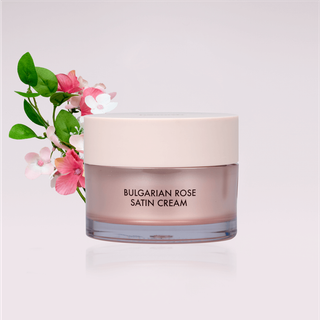
Heimish Bulgarian Rose Satin Cream

Heimish Bulgarian Rose Satin Cream

Efficacy100/100IrritancyHigh
Edit

Works for

3 of 3 advertised claims delivered

Moisturizing
20 ingredients credited for this claim
Strong support
What the product description says
“Bulgarian Rose Satin Cream”
From product name

This product can help improve hydration of the skin with the two types of ingredients.

The first type is called “humectants”:
these ingredients help attract water. When humectants are on the surface of the skin, they “pull in” the moisture from the outside environment, or from within deeper layers of the skin. The following ingredients in this product do the job: glycerin, butylene glycol.

This product also contains ingredients called “occlusives”. They help reduce the speed with which our skin loses moisture to the outside environment. These ingredients also help soften the upper layer of the skin, so it feels less tight and nicer to the touch. The following ingredients in this product do the job: butyrospermum parkii butter, dimethicone.

The following ingredients in this product are especially good for supporting the skin barrier and helping with the hydration level: lactobionic acid, niacinamide

GlycerinKey active· HumectantEffect: HighOne of the best moisturizing ingredients. Naturally present in skin. It attracts water to the upper layer of the skin working as a humectant~23–34%
DimethiconeKey active· Emollient, OcclusiveEffect: HighA silicone that helps to reduce water loss from the surface of the skin. Can temporarily "fill in" lines and wrinkles, absorb oil, and create a nice product finish~3.7–5.5%
NiacinamideHeroEffect: HighIs proven to be effective in reducing blemishes, evening out skin tone and helping to improve lines and wrinkles. It helps the skin to repair sun damage, calm down inflammation and keep maintain good levels of moisture. The concentration of about 2% is effective for supporting the skin barrier and evening out the skin tone. Concentration of 4-6% is better for helping with acne and balancing the sebum production~2.5–3.7%
DimethiconolKey active· Emollient, OcclusiveEffect: HighA silicone that makes products more spreadable and keeps skin smooth. Helps to add gloss to skin and may visually fill in fine lines/wrinkles for short time~0.2–0.8%
Lactobionic acidHeroEffect: HighA polyhydroxy acid (PHA) that helps shed dead cells from the surface of the skin revealing a smoother, more even skin. PHAs tend to be gentler on the skin compared to AHAs (for example, glycolic acid). It also has hydrating properties and helps attract water to the upper layer of the skin. It can help calm down inflammation in skin and support restoration of the barrier function. It has an anti-oxidant effect as well. It can help reduce fine line, wrinkles and improve skin elasticity~0.3–0.7%
Butyrospermum parkii butterKey active· Emollient, OcclusiveEffect: HighA great moisturising ingredient that softens the skin and reduces water loss from its upper layer. It also can be helpful in protecting skin from free radicals~1.7–2.6%
AdenosineKey activeEffect: MediumMight help improve cell turnover and reduce inflammation in skin. One study shows that the ingredients might be able to help reduce dynamic wrinkles (for example, in the corners of the eyes or on the forehead)~0.15–0.6%
Tartaric acidKey activeEffect: MediumAn AHA (alpha-hydroxy acid). It oxidizes quickly which makes it less effective in skincare formulations. It can support skin's barrier and moisture levels~0.35–0.85%
CyclopentasiloxaneKey active· EmollientEffect: MediumA silicone that helps improve the product texture and spreadability. Can absorb oil creating a short-term mattifying effect on the skin~2–3%
Hydrogenated polydecene· EmollientEffect: LowHelps to soften the upper layer of the skin and create a nice product texture~0.2–0.7%
Palmitic acid· EmollientEffect: LowAn emollient that is naturally present in skin and helps soften it~1.1–1.7%
Propylene glycol· HumectantEffect: LowHelps oil and water mix together and can enhance the penetration of other ingredients into the skin. It can be irritating~0.3–0.75%
Rosa damascena flower water· HumectantEffect: LowUsed to add a nice rose smell to the product. Might help attract water to the upper layer of the skin and have some anti-oxidant effect. Can be irritating63%
Viola tricolor extract· EmollientEffect: LowA plant extract that might have an anti-inflammatory effect in skin~0.35–0.8%
Butylene glycol· HumectantEffect: LowUsed to create a nice product texture and help delivery of other ingredients. Might be somewhat helpful in attracting water to the upper layer of the skin~0.15–0.65%
Caprylyl glycol· Humectant, EmollientEffect: LowHelps preserve products and creates a nice product texture~0.15–0.55%
Cetyl ethylhexanoate· EmollientEffect: LowAn emollient that helps soften the skin and creates a thicker product texture~4.6–6.9%
Isohexadecane· EmollientEffect: LowImproves the texture of the product and helps soften the skin. Helps oil and water mix together and can be used as a cleansing agent~0.35–0.75%
Stearic acidEffect: Low, below effective doseHelps oil and water mix together and works as an emollient~0.35–0.8%
Camellia sinensis leaf extractEffect: Low, below effective doseCan contain potent anti-oxidant compounds (abbreviated ECG, GCG, EGC, and EGCG) that might help protect the skin from free radicals. Can help calm down inflammation and has some anti-bacterial properties. Unfortunately, these antioxidants are unstable and lose their effectiveness very quickly in products. The concentration of the antioxidant compounds in the extract also tends to be low to be effective in topical formulation~0.2–0.8%
Anti-aging
6 ingredients credited for this claim
Strong support
What the product description says
“This moisturiser is formulated with 63% rose water which helps to hydrate and brighten skin reducing the signs of ageing.”
Source: beauty and Seoul

This product can help reduce and prevent fine lines and wrinkles, improve skin elasticity and firmness because it contains adenosine, lactobionic acid, niacinamide.

Keep in mind that it typically takes at least 6 weeks to notice any results because the changes that are needed to improve fine lines and elasticity happen in the deeper layers of the skin. No topical anti-aging product can “erase” wrinkles or fully reverse signs of aging.

AdenosineKey activeEffect: HighMight help improve cell turnover and reduce inflammation in skin. One study shows that the ingredients might be able to help reduce dynamic wrinkles (for example, in the corners of the eyes or on the forehead)~0.15–0.6%
Lactobionic acidKey activeEffect: HighA polyhydroxy acid (PHA) that helps shed dead cells from the surface of the skin revealing a smoother, more even skin. PHAs tend to be gentler on the skin compared to AHAs (for example, glycolic acid). It also has hydrating properties and helps attract water to the upper layer of the skin. It can help calm down inflammation in skin and support restoration of the barrier function. It has an anti-oxidant effect as well. It can help reduce fine line, wrinkles and improve skin elasticity~0.3–0.7%
NiacinamideKey activeEffect: HighIs proven to be effective in reducing blemishes, evening out skin tone and helping to improve lines and wrinkles. It helps the skin to repair sun damage, calm down inflammation and keep maintain good levels of moisture. The concentration of about 2% is effective for supporting the skin barrier and evening out the skin tone. Concentration of 4-6% is better for helping with acne and balancing the sebum production~2.5–3.7%
Butyrospermum parkii butterEffect: LowA great moisturising ingredient that softens the skin and reduces water loss from its upper layer. It also can be helpful in protecting skin from free radicals~1.7–2.6%
Ascorbic acidUnder-dosedEffect: HighThe most well-researched antioxidant that works in skin. Helps neutralize free radicals supporting collagen production, helping to even out the skin tone and preventing early signs of aging~0.35–0.8%
Camellia sinensis leaf extractEffect: Low, below effective doseCan contain potent anti-oxidant compounds (abbreviated ECG, GCG, EGC, and EGCG) that might help protect the skin from free radicals. Can help calm down inflammation and has some anti-bacterial properties. Unfortunately, these antioxidants are unstable and lose their effectiveness very quickly in products. The concentration of the antioxidant compounds in the extract also tends to be low to be effective in topical formulation~0.2–0.8%
Evens skin tone
4 ingredients credited for this claim
Strong support
What the product description says
“It also contains Lactic Acid which helps promote cell regeneration as well as Vitamin B3 which improves skin tone by reducing the appearance of enlarged pores and fine lines. The result? A brighter, clearer complexion! 55 ml / 1.94 oz”
Source: beauty and Seoul

This product can help reduce hypepigmentation and even out the skin tone because it contains the following effective ingredients: lactobionic acid, niacinamide

Keep in mind that you would need to apply any topical skincare targetted at hypigmentation consistently for a couple of months to get a result. No topical skincare product can help get rid of hyperpigmentation (including post-acne marks and age spots) instantly.

Lactobionic acidKey activeEffect: HighA polyhydroxy acid (PHA) that helps shed dead cells from the surface of the skin revealing a smoother, more even skin. PHAs tend to be gentler on the skin compared to AHAs (for example, glycolic acid). It also has hydrating properties and helps attract water to the upper layer of the skin. It can help calm down inflammation in skin and support restoration of the barrier function. It has an anti-oxidant effect as well. It can help reduce fine line, wrinkles and improve skin elasticity~0.3–0.7%
NiacinamideKey activeEffect: HighIs proven to be effective in reducing blemishes, evening out skin tone and helping to improve lines and wrinkles. It helps the skin to repair sun damage, calm down inflammation and keep maintain good levels of moisture. The concentration of about 2% is effective for supporting the skin barrier and evening out the skin tone. Concentration of 4-6% is better for helping with acne and balancing the sebum production~2.5–3.7%
Ascorbic acidUnder-dosedEffect: HighThe most well-researched antioxidant that works in skin. Helps neutralize free radicals supporting collagen production, helping to even out the skin tone and preventing early signs of aging~0.35–0.8%
Camellia sinensis leaf extractEffect: Low, below effective doseCan contain potent anti-oxidant compounds (abbreviated ECG, GCG, EGC, and EGCG) that might help protect the skin from free radicals. Can help calm down inflammation and has some anti-bacterial properties. Unfortunately, these antioxidants are unstable and lose their effectiveness very quickly in products. The concentration of the antioxidant compounds in the extract also tends to be low to be effective in topical formulation~0.2–0.8%
Anti-oxidation
Not advertised by the brand · 11 ingredients credited for this claim
Strong support

This product contains antioxidants (lactobionic acid) that can help neutralize free radicals in skin. By doing so, they can lessen the damage the skin gets from the UV light (sun).

The following ingredients - tartaric acid also can have an antioxidant effect, but there is less evidence to confirm their effectiveness in skin.

Lactobionic acidKey activeEffect: HighA polyhydroxy acid (PHA) that helps shed dead cells from the surface of the skin revealing a smoother, more even skin. PHAs tend to be gentler on the skin compared to AHAs (for example, glycolic acid). It also has hydrating properties and helps attract water to the upper layer of the skin. It can help calm down inflammation in skin and support restoration of the barrier function. It has an anti-oxidant effect as well. It can help reduce fine line, wrinkles and improve skin elasticity~0.3–0.7%
Tartaric acidKey activeEffect: MediumAn AHA (alpha-hydroxy acid). It oxidizes quickly which makes it less effective in skincare formulations. It can support skin's barrier and moisture levels~0.35–0.85%
Viola tricolor extractEffect: LowA plant extract that might have an anti-inflammatory effect in skin~0.35–0.8%
AdenosineEffect: LowMight help improve cell turnover and reduce inflammation in skin. One study shows that the ingredients might be able to help reduce dynamic wrinkles (for example, in the corners of the eyes or on the forehead)~0.15–0.6%
Butyrospermum parkii butterEffect: LowA great moisturising ingredient that softens the skin and reduces water loss from its upper layer. It also can be helpful in protecting skin from free radicals~1.7–2.6%
Pelargonium graveolens flower oilEffect: LowAn essential oil. Can be irritating. Can become an allergen with oxidation~0.15–0.65%
Rosa damascena flower waterEffect: LowUsed to add a nice rose smell to the product. Might help attract water to the upper layer of the skin and have some anti-oxidant effect. Can be irritating63%
Hibiscus sabdariffa flower extractEffect: LowA plant extract that can be irritating. It might contain a compound anthocyanin that could be helpful in neutralizing free radicals~0.5–1.2%
Vaccinium macrocarpon fruit extractEffect: LowA berry extract. Might have some anti-oxidant properties~0.2–0.7%
Ascorbic acidUnder-dosedEffect: HighThe most well-researched antioxidant that works in skin. Helps neutralize free radicals supporting collagen production, helping to even out the skin tone and preventing early signs of aging~0.35–0.8%
Camellia sinensis leaf extractUnder-dosedEffect: MediumCan contain potent anti-oxidant compounds (abbreviated ECG, GCG, EGC, and EGCG) that might help protect the skin from free radicals. Can help calm down inflammation and has some anti-bacterial properties. Unfortunately, these antioxidants are unstable and lose their effectiveness very quickly in products. The concentration of the antioxidant compounds in the extract also tends to be low to be effective in topical formulation~0.2–0.8%
Exfoliation
Not advertised by the brand · 2 ingredients credited for this claim
Strong support

This product can help exfoliate the skin. In other words, it helps break down the bonds between dead cells on the surface of the skin and speed up the skin turnover. Skin often appears softer and brighter after exfoliation, but overdoing it can result in disrupted skin barrier. The following ingredient is doing the exfoliating job in this product: lactobionic acid.

Lactobionic acidKey activeEffect: HighA polyhydroxy acid (PHA) that helps shed dead cells from the surface of the skin revealing a smoother, more even skin. PHAs tend to be gentler on the skin compared to AHAs (for example, glycolic acid). It also has hydrating properties and helps attract water to the upper layer of the skin. It can help calm down inflammation in skin and support restoration of the barrier function. It has an anti-oxidant effect as well. It can help reduce fine line, wrinkles and improve skin elasticity~0.3–0.7%
Tartaric acidKey activeEffect: MediumAn AHA (alpha-hydroxy acid). It oxidizes quickly which makes it less effective in skincare formulations. It can support skin's barrier and moisture levels~0.35–0.85%
Anti-blemish
Not advertised by the brand · 3 ingredients credited for this claim
Strong support

This product can help reduce breakouts and clogged pores because it contains the following ingredient: niacinamide. This ingredient is used for treating acne and can have a noticeable effect.

The following ingredient (ingredients) in this product might be helpful, but there is no evidence to confirm that it actually works: lactobionic acid

NiacinamideHeroEffect: HighIs proven to be effective in reducing blemishes, evening out skin tone and helping to improve lines and wrinkles. It helps the skin to repair sun damage, calm down inflammation and keep maintain good levels of moisture. The concentration of about 2% is effective for supporting the skin barrier and evening out the skin tone. Concentration of 4-6% is better for helping with acne and balancing the sebum production~2.5–3.7%
Lactobionic acidKey activeEffect: MediumA polyhydroxy acid (PHA) that helps shed dead cells from the surface of the skin revealing a smoother, more even skin. PHAs tend to be gentler on the skin compared to AHAs (for example, glycolic acid). It also has hydrating properties and helps attract water to the upper layer of the skin. It can help calm down inflammation in skin and support restoration of the barrier function. It has an anti-oxidant effect as well. It can help reduce fine line, wrinkles and improve skin elasticity~0.3–0.7%
Camellia sinensis leaf extractEffect: Low, below effective doseCan contain potent anti-oxidant compounds (abbreviated ECG, GCG, EGC, and EGCG) that might help protect the skin from free radicals. Can help calm down inflammation and has some anti-bacterial properties. Unfortunately, these antioxidants are unstable and lose their effectiveness very quickly in products. The concentration of the antioxidant compounds in the extract also tends to be low to be effective in topical formulation~0.2–0.8%

Can it cause trouble?

Irritancy
6 strong irritants: Rosa damascena flower water, Hibiscus sabdariffa flower extract + 4 more — patch-test recommended
High risk
We flagged 21 ingredients with irritancy potential. Severity depends on your sensitivity threshold; the table lists the worst offenders first.
IngredientFunctionIrritationEst. amount
Rosa damascena flower waterUsed to add a nice rose smell to the product. Might help attract water to the upper layer of the skin and have some anti-oxidant effect. Can be irritatingHigh63%
Hibiscus sabdariffa flower extractA plant extract that can be irritating. It might contain a compound anthocyanin that could be helpful in neutralizing free radicalsHigh~0.5–1.2%est.
Ascorbic acidThe most well-researched antioxidant that works in skin. Helps neutralize free radicals supporting collagen production, helping to even out the skin tone and preventing early signs of agingHigh~0.35–0.8%est.
Propylene glycolHelps oil and water mix together and can enhance the penetration of other ingredients into the skin. It can be irritatingHigh~0.3–0.75%est.
Vaccinium macrocarpon fruit extractA berry extract. Might have some anti-oxidant propertiesHigh~0.2–0.7%est.
Lavandula angustifolia flower extractEssential oil that can be irritatingHigh~0.2–0.75%est.
Citrus aurantium dulcis peel oilAn essentil oil from orange peel. Potential allergen and can be irritatingHigh~0.15–0.6%est.
Pelargonium graveolens flower oilAn essential oil. Can be irritating. Can become an allergen with oxidationHigh~0.15–0.65%est.
ParfumAn aromatic blend of unspecified and possibly irritating ingredientsHigh~0.05–0.2%est.
Cetyl ethylhexanoateAn emollient that helps soften the skin and creates a thicker product textureMedium~4.6–6.9%est.
Citric acidCan work as an exfoliant but is typically used to adjust the product pHMedium~0.85–1.3%est.
Viola tricolor extractA plant extract that might have an anti-inflammatory effect in skinMedium~0.35–0.8%est.
Tartaric acidAn AHA (alpha-hydroxy acid). It oxidizes quickly which makes it less effective in skincare formulations. It can support skin's barrier and moisture levelsMedium~0.35–0.85%est.
Lactobionic acidA polyhydroxy acid (PHA) that helps shed dead cells from the surface of the skin revealing a smoother, more even skin. PHAs tend to be gentler on the skin compared to AHAs (for example, glycolic acid). It also has hydrating properties and helps attract water to the upper layer of the skin. It can help calm down inflammation in skin and support restoration of the barrier function. It has an anti-oxidant effect as well. It can help reduce fine line, wrinkles and improve skin elasticityMedium~0.3–0.7%est.
Sodium polyacryloyldimethyl taurateHelps oil and water mix togetherMedium~0.15–0.65%est.
Sorbitan oleateHelps oil and water mix togetherMedium~0.15–0.65%est.
Myristic acidHelps oil and water mix together. Could be comedogenicMedium~0.15–0.7%est.
Disodium edtaStabilizes the product formulationMedium~0.1–0.45%est.
ChlorphenesinA preservativeMedium~0.05–0.3%est.
Caprylyl glycolHelps preserve products and creates a nice product textureMedium~0.15–0.55%est.
EthylhexylglycerinA preservativeMedium~0.1–0.35%est.
Comedogenic
3 ingredients rated 2 or more on the 0–5 pore-clogging scale
3 flagged
These ingredients have a comedogenic rating of 2 or more on a 0–5 scale; the table shows each one's rating. In leave-on products they can clog pores in acne-prone skin.
IngredientFunctionRatingEst. amount
Butyrospermum parkii butterA great moisturising ingredient that softens the skin and reduces water loss from its upper layer. It also can be helpful in protecting skin from free radicals3/5~1.7–2.6%est.
Myristic acidHelps oil and water mix together. Could be comedogenic3/5~0.15–0.7%est.
Sorbitan oleateHelps oil and water mix together2/5~0.15–0.65%est.
Edit

User reviews

Would you recommend?
No community reviews yet.

Be the first — your take helps the next person decide.

Write a review · ~30s

Ingredients

Filter by role to see what each ingredient is doing.

Rosa damascena flower water63%
Irritant · high
Irritation risk
High
Works for
MoisturizingAnti-oxidation

Used to add a nice rose smell to the product. Might help attract water to the upper layer of the skin and have some anti-oxidant effect. Can be irritating

More about Rosa damascena flower water
Glycerin~23–34%
Key active
Irritation risk
Low
Works for
Moisturizing

One of the best moisturizing ingredients. Naturally present in skin. It attracts water to the upper layer of the skin working as a humectant

More about Glycerin
Propanediol~4.8–7.2%
Formula
Irritation risk
Low

Acts as a solvent for other ingredients. Speeds up the absorption of other ingredients into the skin

More about Propanediol
Cetyl ethylhexanoate~4.6–6.9%
Irritant · medium
Irritation risk
Medium
Works for
Moisturizing

An emollient that helps soften the skin and creates a thicker product texture

More about Cetyl ethylhexanoate
Dimethicone~3.7–5.5%
Key active
Irritation risk
Low
Works for
MoisturizingMattifying

A silicone that helps to reduce water loss from the surface of the skin. Can temporarily "fill in" lines and wrinkles, absorb oil, and create a nice product finish

More about Dimethicone
Niacinamide~2.5–3.7%
Hero · Moisturizing, Anti-blemish
Irritation risk
Low
Works for
MoisturizingAnti-agingEvens skin toneAnti-blemishReduces irritationReduces rednessAntibacterialAnti-inflammatory

Is proven to be effective in reducing blemishes, evening out skin tone and helping to improve lines and wrinkles. It helps the skin to repair sun damage, calm down inflammation and keep maintain good levels of moisture. The concentration of about 2% is effective for supporting the skin barrier and evening out the skin tone. Concentration of 4-6% is better for helping with acne and balancing the sebum production

More about Niacinamide
Cyclopentasiloxane~2–3%
Key active
Irritation risk
Low
Works for
MattifyingMoisturizing

A silicone that helps improve the product texture and spreadability. Can absorb oil creating a short-term mattifying effect on the skin

More about Cyclopentasiloxane
Butyrospermum parkii butter~1.7–2.6%
Key activeComedogenic 3/5
Irritation risk
Low
Comedogenicity
3/5
Works for
MoisturizingAnti-agingAnti-oxidation

A great moisturising ingredient that softens the skin and reduces water loss from its upper layer. It also can be helpful in protecting skin from free radicals

More about Butyrospermum parkii butter
Water~1.3–1.9%
Formula
Irritation risk
Low

Plain old water

More about Water
Palmitic acid~1.1–1.7%
Formula
Irritation risk
Low
Works for
CleansingMoisturizing

An emollient that is naturally present in skin and helps soften it

More about Palmitic acid
Citric acid~0.85–1.3%
Irritant · medium
Irritation risk
Medium

Can work as an exfoliant but is typically used to adjust the product pH

More about Citric acid
Hibiscus sabdariffa flower extract~0.5–1.2%
Irritant · high
Irritation risk
High
Works for
Anti-oxidation

A plant extract that can be irritating. It might contain a compound anthocyanin that could be helpful in neutralizing free radicals

More about Hibiscus sabdariffa flower extract
Crataegus monogyna flower extract~0.45–1.05%
Formula
Viola tricolor extract~0.35–0.8%
Irritant · medium
Irritation risk
Medium
Works for
Anti-inflammatoryAnti-oxidationMoisturizing

A plant extract that might have an anti-inflammatory effect in skin

More about Viola tricolor extract
Tartaric acid~0.35–0.85%
Key activeIrritant · medium
Irritation risk
Medium
Works for
MoisturizingAnti-oxidationExfoliation

An AHA (alpha-hydroxy acid). It oxidizes quickly which makes it less effective in skincare formulations. It can support skin's barrier and moisture levels

More about Tartaric acid
Ascorbic acid~0.35–0.8%
Under-dosedIrritant · high
Irritation risk
High
Works for
Evens skin toneAnti-oxidationAnti-aging

The most well-researched antioxidant that works in skin. Helps neutralize free radicals supporting collagen production, helping to even out the skin tone and preventing early signs of aging

More about Ascorbic acid
Malic acid~0.35–0.8%
Formula
Irritation risk
Low

Helps adjust the product pH

More about Malic acid
Propylene glycol~0.3–0.75%
Irritant · high
Irritation risk
High
Works for
Moisturizing

Helps oil and water mix together and can enhance the penetration of other ingredients into the skin. It can be irritating

More about Propylene glycol
Lactobionic acid~0.3–0.7%
Hero · MoisturizingIrritant · medium
Irritation risk
Medium
Works for
ExfoliationMoisturizingAnti-oxidationEvens skin toneAnti-agingAnti-inflammatoryAnti-blemish

A polyhydroxy acid (PHA) that helps shed dead cells from the surface of the skin revealing a smoother, more even skin. PHAs tend to be gentler on the skin compared to AHAs (for example, glycolic acid). It also has hydrating properties and helps attract water to the upper layer of the skin. It can help calm down inflammation in skin and support restoration of the barrier function. It has an anti-oxidant effect as well. It can help reduce fine line, wrinkles and improve skin elasticity

More about Lactobionic acid
Camellia sinensis leaf extract~0.2–0.8%
Under-dosed
Irritation risk
Low
Works for
Anti-oxidationAntibacterialAnti-agingMoisturizingEvens skin toneAnti-blemish

Can contain potent anti-oxidant compounds (abbreviated ECG, GCG, EGC, and EGCG) that might help protect the skin from free radicals. Can help calm down inflammation and has some anti-bacterial properties. Unfortunately, these antioxidants are unstable and lose their effectiveness very quickly in products. The concentration of the antioxidant compounds in the extract also tends to be low to be effective in topical formulation

More about Camellia sinensis leaf extract
Vaccinium macrocarpon fruit extract~0.2–0.7%
Irritant · high
Irritation risk
High
Works for
Anti-oxidation

A berry extract. Might have some anti-oxidant properties

More about Vaccinium macrocarpon fruit extract
Butylene glycol~0.15–0.65%
Formula
Irritation risk
Low
Works for
Moisturizing

Used to create a nice product texture and help delivery of other ingredients. Might be somewhat helpful in attracting water to the upper layer of the skin

More about Butylene glycol
Castanea crenata shell extract~0.15–0.65%
Formula
Lavandula angustifolia flower extract~0.2–0.75%
Irritant · high
Irritation risk
High

Essential oil that can be irritating

More about Lavandula angustifolia flower extract
Stearic acid~0.35–0.8%
Formula
Irritation risk
Low
Works for
CleansingMoisturizing

Helps oil and water mix together and works as an emollient

More about Stearic acid
Sodium acrylate/sodium acryloyldimethyl taurate copolymer~0.35–0.8%
Formula
Irritation risk
Low

Used to create a thicker product consistency

More about Sodium acrylate/sodium acryloyldimethyl taurate copolymer
Sodium polyacryloyldimethyl taurate~0.15–0.65%
Irritant · medium
Irritation risk
Medium

Helps oil and water mix together

More about Sodium polyacryloyldimethyl taurate
Titanium dioxide~0.3–0.75%
Formula
Irritation risk
Low
Works for
Sun protection

Works as a UV filter when used in high concentrations. It is photostable and is effective mostly against the UVB light, with some protection in the UVA range. In small concentrations, used for its ability to improve the color of cosmetic products. Is usually well tolerated by the skin

More about Titanium dioxide
Ci 77891~0.15–0.6%
Formula
Irritation risk
Low
More about Ci 77891
Isohexadecane~0.35–0.75%
Formula
Irritation risk
Low
Works for
CleansingMoisturizing

Improves the texture of the product and helps soften the skin. Helps oil and water mix together and can be used as a cleansing agent

More about Isohexadecane
Hydrogenated polydecene~0.2–0.7%
Formula
Irritation risk
Low
Works for
Moisturizing

Helps to soften the upper layer of the skin and create a nice product texture

More about Hydrogenated polydecene
Dimethiconol~0.2–0.8%
Key active
Irritation risk
Low
Works for
Moisturizing

A silicone that makes products more spreadable and keeps skin smooth. Helps to add gloss to skin and may visually fill in fine lines/wrinkles for short time

More about Dimethiconol
Sodium polyacrylate starch~0.35–0.8%
Formula
Irritation risk
Low

Used to create a thicker product consistency

More about Sodium polyacrylate starch
Polysorbate 80~0.15–0.7%
Formula
Irritation risk
Low
Works for
Cleansing

Helps water and oil mix together

More about Polysorbate 80
Dimethicone/vinyl dimethicone crosspolymer~0.15–0.65%
Formula
Irritation risk
Low

Used to stabilize product formulations and create a nice product texture

More about Dimethicone/vinyl dimethicone crosspolymer
Trideceth-10~0.2–0.8%
Formula
Irritation risk
Low
Works for
Cleansing
More about Trideceth-10
Sorbitan oleate~0.15–0.65%
Comedogenic 2/5Irritant · medium
Irritation risk
Medium
Comedogenicity
2/5
Works for
Cleansing

Helps oil and water mix together

More about Sorbitan oleate
Citrus aurantium dulcis peel oil~0.15–0.6%
Irritant · high
Irritation risk
High

An essentil oil from orange peel. Potential allergen and can be irritating

More about Citrus aurantium dulcis peel oil
Adenosine~0.15–0.6%
Key active
Irritation risk
Low
Works for
Anti-agingMoisturizingAnti-oxidation

Might help improve cell turnover and reduce inflammation in skin. One study shows that the ingredients might be able to help reduce dynamic wrinkles (for example, in the corners of the eyes or on the forehead)

More about Adenosine
Pelargonium graveolens flower oil~0.15–0.65%
Irritant · high
Irritation risk
High
Works for
Anti-oxidation

An essential oil. Can be irritating. Can become an allergen with oxidation

More about Pelargonium graveolens flower oil
Myristic acid~0.15–0.7%
Comedogenic 3/5Irritant · medium
Irritation risk
Medium
Comedogenicity
3/5
Works for
Cleansing

Helps oil and water mix together. Could be comedogenic

More about Myristic acid
Mica~0.15–0.7%
Formula
Irritation risk
Low

Creates an illusion of smoother and more radiant skin tone. Adds shimmer to the skin by reflecting light

More about Mica
Triethoxycaprylylsilane~0.15–0.55%
Formula
Irritation risk
Low

A type of silicone that helps oil and water mix well together. Helps to disperse other ingredients, e.g. pigments, evenly in a formulation

More about Triethoxycaprylylsilane
Silica~0.35–0.8%
Formula
Irritation risk
Low

Used to absorb oil and can temporarily mattify skin

More about Silica
Tin oxide~0.35–0.75%
Formula
Irritation risk
Low

A colorant that can add a pearl-like appearance to the formulation

More about Tin oxide
Disodium edta~0.1–0.45%
Irritant · medium
Irritation risk
Medium

Stabilizes the product formulation

More about Disodium edta
Phenoxyethanol~0.1–0.4%
Formula
Irritation risk
Low

A preservative. It helps prevent bacterial growth in cosmetic products

More about Phenoxyethanol
Chlorphenesin~0.05–0.3%
Irritant · medium
Irritation risk
Medium

A preservative

More about Chlorphenesin
Caprylyl glycol~0.15–0.55%
Irritant · medium
Irritation risk
Medium
Works for
Moisturizing

Helps preserve products and creates a nice product texture

More about Caprylyl glycol
Ethylhexylglycerin~0.1–0.35%
Irritant · medium
Irritation risk
Medium

A preservative

More about Ethylhexylglycerin
Ci 77491~0.05–0.25%
Formula
Irritation risk
Low

A red colorant made of iron oxide. Typically is not irritating

More about Ci 77491
Parfum~0.05–0.2%
Irritant · high
Irritation risk
High

An aromatic blend of unspecified and possibly irritating ingredients

More about Parfum
Ingredient list view

Rosa damascena flower water, Glycerin, Propanediol, Cetyl ethylhexanoate, Dimethicone, Niacinamide, Cyclopentasiloxane, Butyrospermum parkii butter, Water, Palmitic acid, Citric acid, Hibiscus sabdariffa flower extract, Crataegus monogyna flower extract, Viola tricolor extract, Tartaric acid, Ascorbic acid, Malic acid, Propylene glycol, Lactobionic acid, Camellia sinensis leaf extract, Vaccinium macrocarpon fruit extract, Butylene glycol, Castanea crenata shell extract, Lavandula angustifolia flower extract, Stearic acid, Sodium acrylate/sodium acryloyldimethyl taurate copolymer, Sodium polyacryloyldimethyl taurate, Titanium dioxide, Ci 77891, Isohexadecane, Hydrogenated polydecene, Dimethiconol, Sodium polyacrylate starch, Polysorbate 80, Dimethicone/vinyl dimethicone crosspolymer, Trideceth-10, Sorbitan oleate, Citrus aurantium dulcis peel oil, Adenosine, Pelargonium graveolens flower oil, Myristic acid, Mica, Triethoxycaprylylsilane, Silica, Tin oxide, Disodium edta, Phenoxyethanol, Chlorphenesin, Caprylyl glycol, Ethylhexylglycerin, Ci 77491, Parfum

Compare prices

Retailers ranked by price — lowest first.

Yesstyle
$18.20
Buy
Amazon USPrice as of 10/15/2026 03:37 GMT
$39.35
Buy

Affiliate links · prices updated regularly · As an Amazon Associate, WIMJ earns from qualifying purchases.

Worth comparing, line by line.

Match % combines shared ingredients, the first five ingredients, shared actives and hero ingredients, irritancy (lower counts in the alternative's favour), texture and body area. Only products in the same routine step are compared.

Side-by-side comparison of this product against its closest alternatives
HeimishBulgarian Rose Satin CreamYOUR PRODUCTSerendi BeautyLa-bloom Vital Repair CreamHolika HolikaPrime Youth Black Snail Repair CreamLa MuseDaily Essentials Regenerating Cream
Match—74%74%73%
Price$18.20$74.42+$56.22$27.44+$9.24$27.60+$9.40
Shared key ingredients—5 of 117 of 116 of 11
Key difference—Oligopeptide-1Acetyl Heptapeptide-9Ceramide Np
Irritancy High Medium Medium Medium
Drying alcohol——— Contains drying alcohol
View product Shop Shop Shop
Cheaper alternatives? See how this stacks up against similar formulas.
We compare ingredient profiles across our catalog — pick the closest match for your budget.
Open dupe finder

Product summary

Judging from the ingredient list, "Heimish - Bulgarian Rose Satin Cream" works well for improving skin hydration The formulation is based on a combination of good humectants and emollients. Both are needed to increase the skin hydration level. Humectants in this product (glycerin, butylene glycol, caprylyl glycol, propylene glycol and rosa damascena flower water) help to increase the water content in the upper layer of the skin. (These ingredients do so by "capturing" water molecules from the outside air or from within the deeper layers of the skin). Emollients in this formulation (butyrospermum parkii butter, dimethicone, dimethiconol, cyclopentasiloxane and caprylyl glycol) help to reduce the moisture loss from the skin. They also soften the skin surface and relieve the feeling of dryness and tightness.

Ingredient callouts

  • We particularly like that there is a good concentration of Niacinamide (2.50% - 3.70%) in this moisturizer. Niacinamide is a well-studied multi-tasking active. It is a great ingredient to have in a moisturizer. It is stable, and can work well in almost any hydrating formulation. There is solid evidence that Niacinamide can help support skin barrier, regulate oil production and reduce acne and clogged pores. It also helps to fight photodamage and help improve the skin tone, reducing pigmentation marks.
  • This product also contains Vitamin C (Ascorbic Acid). It can be an effective active for anti-aging and evening out the skin tone, but in this moisturizer it is used for stabilizing other ingredients in the formulation. In this concentration (0.35% - 0.80%) it cannot have a noticeable benefit for the skin.
  • Adenosine 0.15% - 0.60%. It is a chemical present inside our skin cells. A clinical trial confirmed that topical application of Adenosine in a low concentration can reduce dynamic wrinkles (these are the wrinkles that appear with age in a places where our mimic is the most active, for example, in the corners of the eyes or on the forehead).
This product contains ingredients that could be beneficial, but their concentrations are too low in this formulation: stearic acid, vitamin c and titanium dioxide

Irritation risk

There are quite a few common irritants in this product, including ingredients without particular skin benefits. We would not recommend it for sensitive skin. We assess the overall irritancy of this moisturizer to be high. For a detailed overview of all potential irritants: click here

You can see the detailed formula review with the breakdown of all actives in the product and the full ingredient list with estimated concentrations in the tables below.

Price

The product retails at around 25.35£ in the United Kingdom, for 27.90A$ in Australia, for 72.07CA$ in Canada and from 18.20$ up to 28.92$ in the United States.

For a detailed price comparison: click here.

Sources cited in this review

Every concentration estimate and effectiveness label is anchored to one of these 28 studies and safety reviews.

  1. 1
  2. 2
  3. 3
  4. 4
  5. 5
  6. 6
Heimish Bulgarian Rose Satin Cream
HeimishBulgarian Rose Satin Cream

Affiliate links · As an Amazon Associate, WIMJ earns from qualifying purchases.

As an Amazon Associate, WIMJ earns from qualifying purchases.