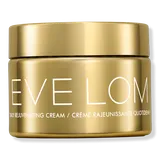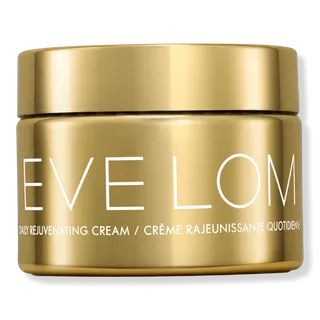
Eve Lom Daily Rejuvenating Cream

Eve Lom Daily Rejuvenating Cream

Efficacy87/100IrritancyHigh

Works for

Anti-aging
Retinol, Hyaluronic acid + 2 more
Works well
What the product description says
“Infused with the power of EVE LOM Time Retreat Complex, this rich but quick-absorbing day cream is clinically proven to visibly improve fine lines and wrinkles while leaving skin firmer and more elastic with a plump, supple, hydrated feel.”
Source: Ulta

This product can help reduce and prevent fine lines and wrinkles, improve skin elasticity and firmness because it contains retinol.

Keep in mind that it typically takes at least 6 weeks to notice any results because the changes that are needed to improve fine lines and elasticity happen in the deeper layers of the skin. No topical anti-aging product can “erase” wrinkles or fully reverse signs of aging.

RetinolHeroEffect: HighTwo steps removed from the active form of vitamin A - retinoic acid. Once converted to the retinoic acid in the skin, retinol is proven to be effective against all signs of aging. It improves skin cell turnover, helps fight blemishes and clogged pores, can regulate excess oil production and even skin tone. It can, however, be quite irritating~0.2–0.4%
Hyaluronic acidEffect: LowOne of the best moisturizing ingredients. Attracts water into the upper layer of the skin. Naturally present in skin. Typically has large molecule size unless advertised otherwise on the product label. Helps support skin's barrier function and may help to reduce inflammation~0.2–0.35%
TocopherolEffect: Low, below effective dosePure form of vitamin E. Can help moisturise and protect the skin from free radicals. Often used to help stabilise other ingredients or the formula itself~0.15–0.3%
Ascorbyl palmitateEffect: Low, below effective doseBeing a lipid soluble form of vitamin C, it is more stable and can penetrate the skin better than L-Ascorbic acid. It is effective in protecting the skin from free radicals, as well as evening the skin tone, but is less effective in stimulating collagen production compared to L-Ascorbic acid.~0.15–0.25%
Moisturizing
Caprylic/capric triglyceride, C12-15 alkyl benzoate + 19 more
Works
What the product description says
“Infused with the power of EVE LOM Time Retreat Complex, this rich but quick-absorbing day cream is clinically proven to visibly improve fine lines and wrinkles while leaving skin firmer and more elastic with a plump, supple, hydrated feel.”
Source: Ulta

This product can help improve hydration of the skin with the two types of ingredients.

The first type is called “humectants”:
these ingredients help attract water. When humectants are on the surface of the skin, they “pull in” the moisture from the outside environment, or from within deeper layers of the skin. The following ingredients in this product do the job: anhydroxylitol, betaine.

This product also contains ingredients called “occlusives”. They help reduce the speed with which our skin loses moisture to the outside environment. These ingredients also help soften the upper layer of the skin, so it feels less tight and nicer to the touch. The following ingredients in this product do the job: caprylic/capric triglyceride, dimethicone.

Caprylic/capric triglycerideKey active· Emollient, OcclusiveEffect: HighA good mix of fatty acids that forms a protective layer on the skin. Improves the shelf life of products. Derived from coconut and glycerin~5.6–6.8%
C12-15 alkyl benzoateKey active· EmollientEffect: MediumEnhances the product texture and makes it more spreadable. Helps reduce water loss from the outer layer of skin. Extands the shelf life by preventing bacteria growth~3.2–3.9%
GlycerinKey active· HumectantEffect: HighOne of the best moisturizing ingredients. Naturally present in skin. It attracts water to the upper layer of the skin working as a humectant~2–2.5%
DimethiconeKey active· Emollient, OcclusiveEffect: HighA silicone that helps to reduce water loss from the surface of the skin. Can temporarily "fill in" lines and wrinkles, absorb oil, and create a nice product finish~1.8–2.2%
Glyceryl stearate seKey activeEffect: MediumUsed to stabilize the product formulations and works as an emollient~0.95–1.2%
XylitylglucosideKey active· HumectantEffect: HighHelps attract water to the upper layer of the skin and repair the skin barrier function~0.7–1%
BetaineKey active· HumectantEffect: HighHelps attract water to the upper layer of the skin and improves the product texture~0.55–0.85%
AnhydroxylitolKey active· HumectantEffect: HighHelps attract water to the upper layer of the skin and repair the skin barrir function~0.45–0.7%
Crambe abyssinica seed oilKey activeEffect: MediumHelps soften the upper layer of the skin~0.35–0.6%
Helianthus annuus seed oilKey active· Emollient, OcclusiveEffect: HighA great emollient due to its high linoleic acid content. One of the most effective plant oils in helping skin hydration and repairing skin barrier function~0.3–0.55%
Sodium hyaluronateKey active· HumectantEffect: HighOne of the best moisturizing ingredients. Attracts water into the upper layer of the skin~0.3–0.5%
Lactobacillus fermentKey active· HumectantEffect: HighA fermentation product created by bacteria Lactobacillus. The fermented product has anti-bacterial properties and might be helpful in calming down inflammation, but studies are lacking. Helps attract water to the upper layer of the skin. Can be used as a preservative~0.2–0.4%
Hyaluronic acidKey active· HumectantEffect: HighOne of the best moisturizing ingredients. Attracts water into the upper layer of the skin. Naturally present in skin. Typically has large molecule size unless advertised otherwise on the product label. Helps support skin's barrier function and may help to reduce inflammation~0.2–0.35%
C12-16 alcohols· EmollientEffect: LowHelps soften the upper layer of the skin and improve the product's texture~2.4–2.9%
Pentylene glycol· EmollientEffect: LowUsed to preserve products, dissolve other ingredients and create a nice product texture~1.5–1.8%
Palmitic acid· EmollientEffect: LowAn emollient that is naturally present in skin and helps soften it~0.55–0.85%
Tephrosia purpurea seed extractEffect: LowA plant extract that might help attract water to the upper layer of the skin. The manufacturer claims that it can help "break down cortisol production in skin production in skin cells", but actual benefits to the skin are not clear~0.2–0.4%
Rosa damascena flower oilEffect: LowUsed as a fragrance. Can be irritating~0.2–0.4%
LecithinEffect: Low, below effective doseUsed mostly for creating emulsions - helping oil and water mix together. Helps soften the upper layer of the skin~0.45–0.7%
TocopherolEffect: Low, below effective dosePure form of vitamin E. Can help moisturise and protect the skin from free radicals. Often used to help stabilise other ingredients or the formula itself~0.15–0.3%
Avena sativa kernel extractUnder-dosedAn effective moisturizing and skin barrier repair ingredient. Helps calm down inflammation and has some anti-oxidant properties~0.25–0.45%
Exfoliation
Side benefit · Retinol
Works well

This product can help exfoliate the skin. In other words, it helps break down the bonds between dead cells on the surface of the skin and speed up the skin turnover. Skin often appears softer and brighter after exfoliation, but overdoing it can result in disrupted skin barrier. The following ingredient is doing the exfoliating job in this product: retinol.

RetinolKey activeEffect: HighTwo steps removed from the active form of vitamin A - retinoic acid. Once converted to the retinoic acid in the skin, retinol is proven to be effective against all signs of aging. It improves skin cell turnover, helps fight blemishes and clogged pores, can regulate excess oil production and even skin tone. It can, however, be quite irritating~0.2–0.4%
Anti-oxidation
Side benefit · Retinol, Lactobacillus ferment + 5 more
Works well

This product contains antioxidants (retinol) that can help neutralize free radicals in skin. By doing so, they can lessen the damage the skin gets from the UV light (sun).

RetinolKey activeEffect: HighTwo steps removed from the active form of vitamin A - retinoic acid. Once converted to the retinoic acid in the skin, retinol is proven to be effective against all signs of aging. It improves skin cell turnover, helps fight blemishes and clogged pores, can regulate excess oil production and even skin tone. It can, however, be quite irritating~0.2–0.4%
Lactobacillus fermentEffect: LowA fermentation product created by bacteria Lactobacillus. The fermented product has anti-bacterial properties and might be helpful in calming down inflammation, but studies are lacking. Helps attract water to the upper layer of the skin. Can be used as a preservative~0.2–0.4%
Tocopheryl acetateEffect: Low, below effective doseA more stable but less bio-available form of vitamin E compared to Tocopherol. Might help moisturize and protect the skin from free radicals, but mostly used in low concentrations to stabilize other ingredients.~0.25–0.45%
Avena sativa kernel extractEffect: Low, below effective doseAn effective moisturizing and skin barrier repair ingredient. Helps calm down inflammation and has some anti-oxidant properties~0.25–0.45%
Rosmarinus officinalis leaf extractEffect: Low, below effective doseCan be helpful in reducing inflammation in skin, including inflamed acne. It can be irritating~0.2–0.35%
Ascorbyl palmitateEffect: Low, below effective doseBeing a lipid soluble form of vitamin C, it is more stable and can penetrate the skin better than L-Ascorbic acid. It is effective in protecting the skin from free radicals, as well as evening the skin tone, but is less effective in stimulating collagen production compared to L-Ascorbic acid.~0.15–0.25%
TocopherolUnder-dosedPure form of vitamin E. Can help moisturise and protect the skin from free radicals. Often used to help stabilise other ingredients or the formula itself~0.15–0.3%
Evens skin tone
Side benefit · Retinol
Works well

This product can help reduce hypepigmentation and even out the skin tone because it contains the following effective ingredients: retinol.

Keep in mind that you would need to apply any topical skincare targetted at hypigmentation consistently for a couple of months to get a result. No topical skincare product can help get rid of hyperpigmentation (including post-acne marks and age spots) instantly.

RetinolHeroEffect: HighTwo steps removed from the active form of vitamin A - retinoic acid. Once converted to the retinoic acid in the skin, retinol is proven to be effective against all signs of aging. It improves skin cell turnover, helps fight blemishes and clogged pores, can regulate excess oil production and even skin tone. It can, however, be quite irritating~0.2–0.4%
Anti-blemish
Side benefit · Retinol, Rosmarinus officinalis leaf extract
Works well

This product can help reduce breakouts and clogged pores because it contains the following ingredient: retinol. This ingredient is used for treating acne and can have a noticeable effect.

RetinolHeroEffect: HighTwo steps removed from the active form of vitamin A - retinoic acid. Once converted to the retinoic acid in the skin, retinol is proven to be effective against all signs of aging. It improves skin cell turnover, helps fight blemishes and clogged pores, can regulate excess oil production and even skin tone. It can, however, be quite irritating~0.2–0.4%
Rosmarinus officinalis leaf extractUnder-dosedCan be helpful in reducing inflammation in skin, including inflamed acne. It can be irritating~0.2–0.35%

Can it cause trouble?

Irritancy
7 strong irritants: Alcohol, Retinol + 5 more — patch-test recommended
High risk
We flagged 22 ingredients with irritancy potential. Severity depends on your sensitivity threshold; the table lists the worst offenders first.
IngredientFunctionIrritationEst. amount
AlcoholCan be drying and contribute to skin irritation. Used in formulars to dissolve other ingredients, create a thinner product consistency or for its antibacterial propertiesHigh~0.25–0.45%est.
RetinolTwo steps removed from the active form of vitamin A - retinoic acid. Once converted to the retinoic acid in the skin, retinol is proven to be effective against all signs of aging. It improves skin cell turnover, helps fight blemishes and clogged pores, can regulate excess oil production and even skin tone. It can, however, be quite irritatingHigh~0.2–0.4%est.
Rosmarinus officinalis leaf extractCan be helpful in reducing inflammation in skin, including inflamed acne. It can be irritatingHigh~0.2–0.35%est.
Rosa damascena extractOil of a very fragrant pink rose used as fragrance in cosmetics. Extensive research has shown it has mixed benefits. In the pro column, inhaling this flower’s scent seems to have relaxing properties and the plant’s petals contain skin-soothing and antioxidant compounds that can benefit skin. On the flipside, the numerous chemicals that create this rose’s distinctive fragrance pose a risk of causing skin aggravation.High~0.2–0.4%est.
Rosa damascena flower oilUsed as a fragrance. Can be irritatingHigh~0.2–0.4%est.
CitronellolA fragrance. Can be irritatingHigh~0.1–0.15%est.
GeraniolA fragrance. Can be irritatingHigh~0.1–0.15%est.
Caprylic/capric triglycerideA good mix of fatty acids that forms a protective layer on the skin. Improves the shelf life of products. Derived from coconut and glycerinMedium~5.6–6.8%est.
C12-16 alcoholsHelps soften the upper layer of the skin and improve the product's textureMedium~2.4–2.9%est.
Pentylene glycolUsed to preserve products, dissolve other ingredients and create a nice product textureMedium~1.5–1.8%est.
1,2-hexanediolA preservativeMedium~0.4–0.6%est.
Crambe abyssinica seed oilHelps soften the upper layer of the skinMedium~0.35–0.6%est.
HydroxyacetophenoneUsed to increase effectiveness of preservativesMedium~0.3–0.6%est.
MethylpropanediolHelps dissolve other ingredients in a formulationMedium~0.25–0.5%est.
Tocopheryl acetateA more stable but less bio-available form of vitamin E compared to Tocopherol. Might help moisturize and protect the skin from free radicals, but mostly used in low concentrations to stabilize other ingredients.Medium~0.25–0.45%est.
Citric acidCan work as an exfoliant but is typically used to adjust the product pHMedium~0.2–0.4%est.
Disodium edtaStabilizes the product formulationMedium~0.2–0.4%est.
Tephrosia purpurea seed extractA plant extract that might help attract water to the upper layer of the skin. The manufacturer claims that it can help "break down cortisol production in skin production in skin cells", but actual benefits to the skin are not clearMedium~0.2–0.4%est.
BhtA preservativeMedium~0.15–0.3%est.
Potassium sorbateA preservativeMedium~0.15–0.25%est.
BhaHelps preserve the product formulationMedium~0.15–0.25%est.
Ascorbyl palmitateBeing a lipid soluble form of vitamin C, it is more stable and can penetrate the skin better than L-Ascorbic acid. It is effective in protecting the skin from free radicals, as well as evening the skin tone, but is less effective in stimulating collagen production compared to L-Ascorbic acid.Medium~0.15–0.25%est.
Comedogenic
1 ingredient rated 2 or more on the 0–5 pore-clogging scale
1 flagged
These ingredients have a comedogenic rating of 2 or more on a 0–5 scale; the table shows each one's rating. In leave-on products they can clog pores in acne-prone skin.
IngredientFunctionRatingEst. amount
Glyceryl stearate seUsed to stabilize the product formulations and works as an emollient2/5~0.95–1.2%est.

User reviews

Would you recommend?
No community reviews yet.

Be the first — your take helps the next person decide.

Ingredients

Filter by role to see what each ingredient is doing.

Water~45–55%
Formula
Irritation risk
Low

Plain old water

More about Water
Caprylic/capric triglyceride~5.6–6.8%
Key activeIrritant · medium
Irritation risk
Medium
Works for
Moisturizing

A good mix of fatty acids that forms a protective layer on the skin. Improves the shelf life of products. Derived from coconut and glycerin

More about Caprylic/capric triglyceride
Propanediol~4–4.9%
Formula
Irritation risk
Low

Acts as a solvent for other ingredients. Speeds up the absorption of other ingredients into the skin

More about Propanediol
C12-15 alkyl benzoate~3.2–3.9%
Key active
Irritation risk
Low
Works for
Moisturizing

Enhances the product texture and makes it more spreadable. Helps reduce water loss from the outer layer of skin. Extands the shelf life by preventing bacteria growth

More about C12-15 alkyl benzoate
C12-16 alcohols~2.4–2.9%
Irritant · medium
Irritation risk
Medium
Works for
Moisturizing

Helps soften the upper layer of the skin and improve the product's texture

More about C12-16 alcohols
Glycerin~2–2.5%
Key active
Irritation risk
Low
Works for
Moisturizing

One of the best moisturizing ingredients. Naturally present in skin. It attracts water to the upper layer of the skin working as a humectant

More about Glycerin
Dimethicone~1.8–2.2%
Key active
Irritation risk
Low
Works for
MoisturizingMattifying

A silicone that helps to reduce water loss from the surface of the skin. Can temporarily "fill in" lines and wrinkles, absorb oil, and create a nice product finish

More about Dimethicone
Pentylene glycol~1.5–1.8%
Irritant · medium
Irritation risk
Medium
Works for
Moisturizing

Used to preserve products, dissolve other ingredients and create a nice product texture

More about Pentylene glycol
Sodium acrylates crosspolymer-2~1.2–1.4%
Formula
Glyceryl stearate se~0.95–1.2%
Key activeComedogenic 2/5
Irritation risk
Low
Comedogenicity
2/5
Works for
CleansingMoisturizing

Used to stabilize the product formulations and works as an emollient

More about Glyceryl stearate se
Xylitylglucoside~0.7–1%
Key active
Irritation risk
Low
Works for
Moisturizing

Helps attract water to the upper layer of the skin and repair the skin barrier function

More about Xylitylglucoside
Betaine~0.55–0.85%
Key active
Irritation risk
Low
Works for
Moisturizing

Helps attract water to the upper layer of the skin and improves the product texture

More about Betaine
Palmitic acid~0.55–0.85%
Formula
Irritation risk
Low
Works for
CleansingMoisturizing

An emollient that is naturally present in skin and helps soften it

More about Palmitic acid
Anhydroxylitol~0.45–0.7%
Key active
Irritation risk
Low
Works for
Moisturizing

Helps attract water to the upper layer of the skin and repair the skin barrir function

More about Anhydroxylitol
Hydrogenated lecithin~0.45–0.65%
Formula
Irritation risk
Low
Works for
Cleansing

Helps to retain moisture by creating a protective barrier on the skin. Rich in fatty acids. Improves product texture and helps with the penetration of other ingredients.

More about Hydrogenated lecithin
Lecithin~0.45–0.7%
Formula
Irritation risk
Low
Works for
CleansingMoisturizing

Used mostly for creating emulsions - helping oil and water mix together. Helps soften the upper layer of the skin

More about Lecithin
1,2-hexanediol~0.4–0.6%
Irritant · medium
Irritation risk
Medium

A preservative

More about 1,2-hexanediol
Crambe abyssinica seed oil~0.35–0.6%
Key activeIrritant · medium
Irritation risk
Medium
Works for
Moisturizing

Helps soften the upper layer of the skin

More about Crambe abyssinica seed oil
Hydroxyacetophenone~0.3–0.6%
Irritant · medium
Irritation risk
Medium

Used to increase effectiveness of preservatives

More about Hydroxyacetophenone
Sodium hyaluronate~0.3–0.5%
Key active
Irritation risk
Low
Works for
Moisturizing

One of the best moisturizing ingredients. Attracts water into the upper layer of the skin

More about Sodium hyaluronate
Helianthus annuus seed oil~0.3–0.55%
Key active
Irritation risk
Low
Works for
Moisturizing

A great emollient due to its high linoleic acid content. One of the most effective plant oils in helping skin hydration and repairing skin barrier function

More about Helianthus annuus seed oil
Methylpropanediol~0.25–0.5%
Irritant · medium
Irritation risk
Medium

Helps dissolve other ingredients in a formulation

More about Methylpropanediol
Polyacrylate crosspolymer-6~0.25–0.45%
Formula
Xylitol~0.2–0.4%
Formula
Irritation risk
Low

Helps attract water to the upper layer of the skin and repair the skin barrier function

More about Xylitol
Tocopheryl acetate~0.25–0.45%
Irritant · medium
Irritation risk
Medium
Works for
Anti-oxidation

A more stable but less bio-available form of vitamin E compared to Tocopherol. Might help moisturize and protect the skin from free radicals, but mostly used in low concentrations to stabilize other ingredients.

More about Tocopheryl acetate
Alcohol~0.25–0.45%
Irritant · high
Irritation risk
High
Works for
Antibacterial

Can be drying and contribute to skin irritation. Used in formulars to dissolve other ingredients, create a thinner product consistency or for its antibacterial properties

More about Alcohol
Polysorbate 20~0.25–0.45%
Formula
Irritation risk
Low
Works for
Cleansing

Helps oil and water mix together

More about Polysorbate 20
Retinol~0.2–0.4%
Hero · Anti-aging, Evens skin tone, Anti-blemishIrritant · high
Irritation risk
High
Works for
Anti-oxidationAnti-agingExfoliationMattifyingAnti-blemishEvens skin tone

Two steps removed from the active form of vitamin A - retinoic acid. Once converted to the retinoic acid in the skin, retinol is proven to be effective against all signs of aging. It improves skin cell turnover, helps fight blemishes and clogged pores, can regulate excess oil production and even skin tone. It can, however, be quite irritating

More about Retinol
Citric acid~0.2–0.4%
Irritant · medium
Irritation risk
Medium

Can work as an exfoliant but is typically used to adjust the product pH

More about Citric acid
Avena sativa kernel extract~0.25–0.45%
Under-dosed
Irritation risk
Low
Works for
Anti-inflammatoryReduces irritationMoisturizingReduces rednessAnti-oxidation

An effective moisturizing and skin barrier repair ingredient. Helps calm down inflammation and has some anti-oxidant properties

More about Avena sativa kernel extract
Lactobacillus ferment~0.2–0.4%
Key active
Irritation risk
Low
Works for
MoisturizingAnti-oxidationAnti-inflammatoryReduces irritation

A fermentation product created by bacteria Lactobacillus. The fermented product has anti-bacterial properties and might be helpful in calming down inflammation, but studies are lacking. Helps attract water to the upper layer of the skin. Can be used as a preservative

More about Lactobacillus ferment
Disodium edta~0.2–0.4%
Irritant · medium
Irritation risk
Medium

Stabilizes the product formulation

More about Disodium edta
Rosmarinus officinalis leaf extract~0.2–0.35%
Under-dosedIrritant · high
Irritation risk
High
Works for
Anti-blemishAntibacterialAnti-oxidation

Can be helpful in reducing inflammation in skin, including inflamed acne. It can be irritating

More about Rosmarinus officinalis leaf extract
Rosa damascena extract~0.2–0.4%
Irritant · high
Irritation risk
High

Oil of a very fragrant pink rose used as fragrance in cosmetics. Extensive research has shown it has mixed benefits. In the pro column, inhaling this flower’s scent seems to have relaxing properties and the plant’s petals contain skin-soothing and antioxidant compounds that can benefit skin. On the flipside, the numerous chemicals that create this rose’s distinctive fragrance pose a risk of causing skin aggravation.

More about Rosa damascena extract
Tephrosia purpurea seed extract~0.2–0.4%
Irritant · medium
Irritation risk
Medium
Works for
Moisturizing

A plant extract that might help attract water to the upper layer of the skin. The manufacturer claims that it can help "break down cortisol production in skin production in skin cells", but actual benefits to the skin are not clear

More about Tephrosia purpurea seed extract
Rosa damascena flower oil~0.2–0.4%
Irritant · high
Irritation risk
High
Works for
Moisturizing

Used as a fragrance. Can be irritating

More about Rosa damascena flower oil
Sodium benzoate~0.2–0.4%
Formula
Irritation risk
Low

A preservative

More about Sodium benzoate
Potassium phosphate~0.2–0.4%
Formula
Irritation risk
Low

Helps regulate the pH of the formulation

More about Potassium phosphate
Hyaluronic acid~0.2–0.35%
Key active
Irritation risk
Low
Works for
MoisturizingAnti-inflammatoryAnti-aging

One of the best moisturizing ingredients. Attracts water into the upper layer of the skin. Naturally present in skin. Typically has large molecule size unless advertised otherwise on the product label. Helps support skin's barrier function and may help to reduce inflammation

More about Hyaluronic acid
Silanetriol~0.2–0.35%
Formula
Irritation risk
Low
More about Silanetriol
Bht~0.15–0.3%
Irritant · medium
Irritation risk
Medium

A preservative

More about Bht
Potassium sorbate~0.15–0.25%
Irritant · medium
Irritation risk
Medium

A preservative

More about Potassium sorbate
Bha~0.15–0.25%
Irritant · medium
Irritation risk
Medium

Helps preserve the product formulation

More about Bha
Tocopherol~0.15–0.3%
Under-dosed
Irritation risk
Low
Works for
Anti-oxidationMoisturizingAnti-inflammatoryAnti-aging

Pure form of vitamin E. Can help moisturise and protect the skin from free radicals. Often used to help stabilise other ingredients or the formula itself

More about Tocopherol
Ascorbyl palmitate~0.15–0.25%
Irritant · medium
Irritation risk
Medium
Works for
Anti-agingAnti-oxidation

Being a lipid soluble form of vitamin C, it is more stable and can penetrate the skin better than L-Ascorbic acid. It is effective in protecting the skin from free radicals, as well as evening the skin tone, but is less effective in stimulating collagen production compared to L-Ascorbic acid.

More about Ascorbyl palmitate
Citronellol~0.1–0.15%
Irritant · high
Irritation risk
High

A fragrance. Can be irritating

More about Citronellol
Geraniol~0.1–0.15%
Irritant · high
Irritation risk
High

A fragrance. Can be irritating

More about Geraniol
Ingredient list view

Water, Caprylic/capric triglyceride, Propanediol, C12-15 alkyl benzoate, C12-16 alcohols, Glycerin, Dimethicone, Pentylene glycol, Sodium acrylates crosspolymer-2, Glyceryl stearate se, Xylitylglucoside, Betaine, Palmitic acid, Anhydroxylitol, Hydrogenated lecithin, Lecithin, 1,2-hexanediol, Crambe abyssinica seed oil, Hydroxyacetophenone, Sodium hyaluronate, Helianthus annuus seed oil, Methylpropanediol, Polyacrylate crosspolymer-6, Xylitol, Tocopheryl acetate, Alcohol, Polysorbate 20, Retinol, Citric acid, Avena sativa kernel extract, Lactobacillus ferment, Disodium edta, Rosmarinus officinalis leaf extract, Rosa damascena extract, Tephrosia purpurea seed extract, Rosa damascena flower oil, Sodium benzoate, Potassium phosphate, Hyaluronic acid, Silanetriol, Bht, Potassium sorbate, Bha, Tocopherol, Ascorbyl palmitate, Citronellol, Geraniol

Worth comparing, line by line.

Match % combines shared ingredients, the first five ingredients, shared actives and hero ingredients, irritancy (lower counts in the alternative's favour), texture and body area. Only products in the same routine step are compared.

Side-by-side comparison of this product against its closest alternatives
Eve LomDaily Rejuvenating CreamYOUR PRODUCTNaturopathicaArgan & Retinol Wrinkle Repair Night CreamCentellian24Madeca Cream Time ReverseCOSRXThe Retinol 0.1 Cream
Match—87%85%83%
Price$140.00$136.00−$4.00$16.12−$123.88$17.91−$122.09
Shared key ingredients—8 of 126 of 127 of 12
Key difference—Palmitoyl Tripeptide-38NiacinamideAdenosine
Irritancy High High High Medium
Drying alcohol Contains drying alcohol Contains drying alcohol ——
View product Shop Shop Shop

More alternatives: Dermalogica Overnight Retinol Repair with Buffer Creamthis works No Wrinkles Extreme Moisturiser

Cheaper alternatives? See how this stacks up against similar formulas.
We compare ingredient profiles across our catalog — pick the closest match for your budget.
Open dupe finder

Sources cited in this review

Every concentration estimate and effectiveness label is anchored to one of these 24 studies and safety reviews.

  1. 1
  2. 2
  3. 3
  4. 4
  5. 5
  6. 6
Eve Lom Daily Rejuvenating Cream
Eve LomDaily Rejuvenating Cream