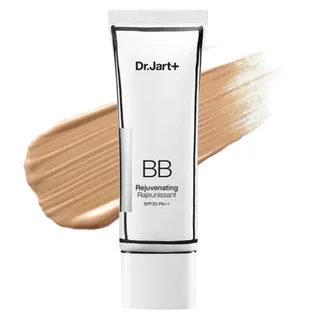
Dr. Jart+ Dermakeup Rejuvenating Beauty Balm
Works for
MoisturizingCeramide ns, Ceramide eop + 33 moreWorks well
“Moisturizing, non-comedogenic beauty balm containing Centella Asiatica to keep the skin calm.”
This product can help improve hydration of the skin with the two types of ingredients.
The first type is called “humectants”:
these ingredients help attract water.
When humectants are on the surface of the skin, they “pull in” the moisture from the outside environment, or from
within deeper layers of the skin. The following ingredients in this product do the job:
glycerin, hydrolyzed hyaluronic acid.
This product also contains ingredients called “occlusives”. They help reduce the speed with which our skin loses moisture to the outside environment. These ingredients also help soften the upper layer of the skin, so it feels less tight and nicer to the touch. The following ingredients in this product do the job: beeswax, dimethicone.
The following ingredients in this product are especially good for supporting the skin barrier and helping with the hydration level: ceramide ap, ceramide as, ceramide eop, ceramide np, ceramide ns, copper tripeptide-1, palmitoyl pentapeptide-4
Evens skin toneNiacinamide ~0.5–0.8%, below the ~1% it needs + 1 moreUnder-dosed
“Medium, buildable coverage to conceal redness, dark spots, and uneven skin tone.”
Effective ingredients missing or their concentration is too low
Anti-oxidationSide benefit · Ubiquinone, Adenosine + 6 moreWorks well
This product contains antioxidants (ubiquinone) that can help neutralize free radicals in skin. By doing so, they can lessen the damage the skin gets from the UV light (sun).
Anti-agingSide benefit · Adenosine, Copper tripeptide-1 + 6 moreWorks well
This product can help reduce and prevent fine lines and wrinkles, improve skin elasticity and firmness because it contains adenosine.
These ingredients in the product can also be helpful, even though there is less evidence for their effectiveness: copper tripeptide-1, palmitoyl pentapeptide-4.
Keep in mind that it typically takes at least 6 weeks to notice any results because the changes that are needed to improve fine lines and elasticity happen in the deeper layers of the skin. No topical anti-aging product can “erase” wrinkles or fully reverse signs of aging.
Can it cause trouble?
Irritancy3 strong irritants: Retinyl palmitate, Cinnamomum cassia bark extract + 1 more — patch-test recommendedHigh risk
Comedogenic2 ingredients rated 2 or more on the 0–5 pore-clogging scale2 flagged

User reviews
Be the first — your take helps the next person decide.
Ingredients
Filter by role to see what each ingredient is doing.
Water~45–55%
Ci 77499~5.3–6.5%
Ethylhexyl methoxycinnamate~4.4–5.4%
- Irritation risk
- High
Octinoxate. When used in higher concentrations, works as a sunscreen protecting the skin from UVB rays. When used in lower concentration, helps to preserve the product formulation. Is shown to be harmful to coral reefs - consider avoiding bathing in coral reef areas when wearing a product with this ingredient. It can be irritating
More about Ethylhexyl methoxycinnamateButylene glycol~3.1–3.8%
- Irritation risk
- Low
Used to create a nice product texture and help delivery of other ingredients. Might be somewhat helpful in attracting water to the upper layer of the skin
More about Butylene glycolC12-15 alkyl benzoate~2.4–2.9%
- Irritation risk
- Low
Enhances the product texture and makes it more spreadable. Helps reduce water loss from the outer layer of skin. Extands the shelf life by preventing bacteria growth
More about C12-15 alkyl benzoateZinc oxide~2.8–3.4%
- Irritation risk
- Low
A broad spectrum sunblock (protects from both UVA and UVB rays). Is suitable for most sensitive skins. In small concentrations, can be used as a colorant
More about Zinc oxideCyclopentasiloxane~1.7–2%
- Irritation risk
- Low
A silicone that helps improve the product texture and spreadability. Can absorb oil creating a short-term mattifying effect on the skin
More about CyclopentasiloxaneEthylhexyl salicylate~1.9–2.4%
- Irritation risk
- Low
Octisalate. A UV filter. It offers some protection against the sun rays that cause sunburn (UVB), but does not protect against the most aging sun rays (UVA). It loses its effectiveness quickly when exposed to sunlight. It is an organic, or so called "chemical" sunscreen
More about Ethylhexyl salicylateGlycerin~1.2–1.5%
- Irritation risk
- Low
One of the best moisturizing ingredients. Naturally present in skin. It attracts water to the upper layer of the skin working as a humectant
More about GlycerinC13-15 alkane~0.9–1.1%
Cetyl peg/ppg-10/1 dimethicone~0.65–0.95%
- Irritation risk
- Low
A type of silicone that helps water and oil mix together. Can help to soften upper layer of the skin
More about Cetyl peg/ppg-10/1 dimethiconeNiacinamide~0.5–0.8%
- Irritation risk
- Low
Is proven to be effective in reducing blemishes, evening out skin tone and helping to improve lines and wrinkles. It helps the skin to repair sun damage, calm down inflammation and keep maintain good levels of moisture. The concentration of about 2% is effective for supporting the skin barrier and evening out the skin tone. Concentration of 4-6% is better for helping with acne and balancing the sebum production
More about NiacinamideSodium chloride~0.55–0.8%
- Irritation risk
- Low
Used to stabilize mixtures of oil and water, and create thicker, gel-like product textures
More about Sodium chlorideCetyl ethylhexanoate~0.45–0.7%
- Irritation risk
- Medium
An emollient that helps soften the skin and creates a thicker product texture
More about Cetyl ethylhexanoateDimethicone~0.45–0.65%
- Irritation risk
- Low
A silicone that helps to reduce water loss from the surface of the skin. Can temporarily "fill in" lines and wrinkles, absorb oil, and create a nice product finish
More about DimethiconeCyclohexasiloxane~0.4–0.6%
- Irritation risk
- Low
A silicone that serves as an emollient. Helps create a nice non-greasy feels
More about CyclohexasiloxaneSilica~0.55–0.8%
Polypropylsilsesquioxane~0.3–0.6%
- Irritation risk
- Low
Beeswax~0.3–0.6%
- Irritation risk
- Low
Forms a protective barrier that holds water and keeps dry skin hydrated. Keeps an emulsion from separating into its oil and liquid components, and increases the thickness of a product. Can be an allergen
More about BeeswaxTocopheryl acetate~0.25–0.45%
- Irritation risk
- Medium
A more stable but less bio-available form of vitamin E compared to Tocopherol. Might help moisturize and protect the skin from free radicals, but mostly used in low concentrations to stabilize other ingredients.
More about Tocopheryl acetatePanthenol~0.2–0.4%
- Irritation risk
- Low
Helps attract water to the upper layer of the skin and can help improve skin barrier function
More about PanthenolPolyglyceryl-10 oleate~0.2–0.35%
- Irritation risk
- Low
Helps soften the upper layer of the skin
More about Polyglyceryl-10 oleateHydrogenated lecithin~0.2–0.35%
- Irritation risk
- Low
Helps to retain moisture by creating a protective barrier on the skin. Rich in fatty acids. Improves product texture and helps with the penetration of other ingredients.
More about Hydrogenated lecithinOpuntia coccinellifera fruit extract~0.15–0.3%
- Irritation risk
- High
A plant extract that might help neutralize free radicals in skin
More about Opuntia coccinellifera fruit extractHydrolyzed hyaluronic acid~0.15–0.3%
- Irritation risk
- Low
One of the best moisturizing ingredients. Attracts water into the upper layer of the skin. A version of it is naturally present in skin
More about Hydrolyzed hyaluronic acidSodium ascorbyl phosphate~0.2–0.35%
- Irritation risk
- Medium
A stable derivative of vitamin C. It is oil-soluble which means it is more likely to penetrate the skin compared to the pure form of vitamin C (which is water-soluble), but it is less bio-available and is way less effective in stimulating collagen and reducing wrinkles compared to the pure form of vitamin C (L-ascorbic acid) and its other derivatives (for example, magnesium ascorbyl phosphate). At the same time, this vitamin C derivative has been shown in studies to be effective in reducing acne, blemishes and clogged pores. It is less irritating then the pure form of vitamin C
More about Sodium ascorbyl phosphateRetinyl palmitate~0.15–0.3%
- Irritation risk
- High
Three steps removed from the active form of vitamin A - retinoic acid. To have an effect in the skin, it first needs to be converted twice to become the retinoic acid. This means it is less potent than retinol, but could also be less irritating. Once converted to the retinoic acid in the skin, it helps against all signs of aging, improves skin cell turnover and helps fight blemishes and clogged pores. However, in many cosmetic formulations, it is used in a concentration that is too low to have the full effect
More about Retinyl palmitateHydrolyzed keratin~0.2–0.35%
- Irritation risk
- Low
Centella asiatica extract~0.25–0.45%
- Irritation risk
- Medium
A plant extract that has been shown to be able to reduce inflammation in skin, support restoration of skin barrier function, as well as support collagen production. Contains active compounds called centelloids: asiaticoside, madecasosside, asiatic acid and madecassic acid. Might be helpful in preventing stretch marks. It can be itself be irritating though.
More about Centella asiatica extractBiotin~0.2–0.35%
- Irritation risk
- Low
Might have some moisturising properties. Is not effective when applied topically beyond some moisturizing effect
More about BiotinUbiquinone~0.2–0.4%
- Irritation risk
- Low
Coenzyme Q10. It helps neutralize free radicals in skin, improves skin hydration and might be helpful agains fine lines and wrinkles. It can be an allergen
More about UbiquinoneGlyceryl arachidonate~0.25–0.5%
- Irritation risk
- Medium
Helps water and oil mix together
More about Glyceryl arachidonateGlyceryl linoleate~0.25–0.5%
- Irritation risk
- Medium
Helps oil and water mix together
More about Glyceryl linoleateGlyceryl linolenate~0.25–0.45%
- Irritation risk
- Low
Helps soften the upper layer of the skin
More about Glyceryl linolenateCopper tripeptide-1~0.2–0.35%
- Irritation risk
- Low
A naturally occurring peptide. One of the most studied peptides in dermatology. It is sometimes abbreviated GHK-Cu. Belongs to the class of carrier peptides. It stimulates both synthesis and breakdown of collagen in skin. It is released in skin wounds and inflammation to support healing. It accelerates wound-healing of the skin and can stimulate hair growth. There are preliminary studies that confirm that copper tripeptide can help support collagen production reducing fine lines and wrinkles and decrease inflammation in skin.
More about Copper tripeptide-1Palmitoyl pentapeptide-4~0.2–0.4%
- Irritation risk
- Low
A type of peptide. Peptides are excellent moisturizers and might be able support collagen production reducing fine lines and wrinkles
More about Palmitoyl pentapeptide-4Ceramide np~0.25–0.45%
- Irritation risk
- Low
A type of lipid similar to ceramides naturally present in skin. Helps to soften the upper layer of the skin and supports the skin barrier function to keep it hydrated. Can help to prevent inflammation in skin
More about Ceramide npCeramide ap~0.2–0.4%
- Irritation risk
- Low
A type of lipid similar to ceramides naturally present in skin. Helps to soften the upper layer of the skin and supports the skin barrier function to keep it hydrated. Can help to prevent inflammation in skin
More about Ceramide apCeramide eop~0.25–0.45%
- Irritation risk
- Low
A type of lipid similar to ceramides naturally present in skin. Helps to soften the upper layer of the skin and supports the skin barrier function to keep it hydrated. Can help to prevent inflammation in skin
More about Ceramide eopCeramide ns~0.25–0.45%
- Irritation risk
- Low
A type of lipid similar to ceramides naturally present in skin. Helps to soften the upper layer of the skin and supports the skin barrier function to keep it hydrated. Can help to prevent inflammation in skin
More about Ceramide nsCeramide as~0.2–0.4%
- Irritation risk
- Low
A type of lipid similar to ceramides naturally present in skin. Helps to soften the upper layer of the skin and supports the skin barrier function to keep it hydrated. Can help to prevent inflammation in skin
More about Ceramide asOligopeptide-29~0.25–0.45%
- Irritation risk
- Low
Hibiscus esculentus fruit extract~0.2–0.4%
- Irritation risk
- High
A plant extract that might help to neutralize free radicals. It can be irritating
More about Hibiscus esculentus fruit extractCapryloyl glycine~0.3–0.55%
- Irritation risk
- Low
Helps oil and water mix together, preserve cosmetic products, and attract water to the upper layer of the skin
More about Capryloyl glycineHexylene glycol~0.2–0.4%
- Irritation risk
- Medium
Helps create a more spreadable product texture
More about Hexylene glycolCinnamomum cassia bark extract~0.25–0.45%
Sarcosine~0.2–0.4%
- Irritation risk
- Low
Helps to enhance the penetration of other ingredients and attract water to the upper layer of the skin
More about SarcosineRepagermanium~0.2–0.4%
- Irritation risk
- Low
Quaternium-90 bentonite~0.2–0.4%
- Irritation risk
- Low
Disteardimonium hectorite~0.2–0.4%
- Irritation risk
- Low
A type of clay that is used to thicken the product consistency
More about Disteardimonium hectoriteMethyl methacrylate crosspolymer~0.25–0.45%
- Irritation risk
- Low
Helps thicken the product consistency
More about Methyl methacrylate crosspolymerSorbitan sesquioleate~0.25–0.45%
- Irritation risk
- High
Used to help oil and water mix together. Can be irritating
More about Sorbitan sesquioleateVinyl dimethicone/methicone silsesquioxane crosspolymer~0.2–0.4%
- Irritation risk
- Low
A type of silicone that create a smooth product finish and can create an optical soft-focus effect on the skin. Helps to thicken the product consistency
More about Vinyl dimethicone/methicone silsesquioxane crosspolymerAluminum hydroxide~0.25–0.45%
- Irritation risk
- Low
Is used to add opaque (non-transparent) appearance to formulations. Can be used to coat other ingredients for even dispersion. This is a different ingredient compared to the ones used in antipersperants (aluminium chloride and aluminium chlorohydrate)
More about Aluminum hydroxideStearic acid~0.35–0.6%
- Irritation risk
- Low
Helps oil and water mix together and works as an emollient
More about Stearic acidPortulaca oleracea extract~0.2–0.4%
- Irritation risk
- Medium
A plant extract that has some anti-oxidant activity, but solid research is lacking. Can help attract water to the upper layer of the skin
More about Portulaca oleracea extractDimethicone/vinyl dimethicone crosspolymer~0.2–0.4%
- Irritation risk
- Low
Used to stabilize product formulations and create a nice product texture
More about Dimethicone/vinyl dimethicone crosspolymerPolyglyceryl-4 isostearate~0.25–0.45%
- Irritation risk
- Medium
Helps water and oil mix together
More about Polyglyceryl-4 isostearatePropylene carbonate~0.25–0.45%
- Irritation risk
- Low
Is used to dissolve other ingredients and create nice product texture
More about Propylene carbonateHexyl laurate~0.25–0.45%
- Irritation risk
- Medium
Helps soften the upper layer of the skin and create a nice product consistency
More about Hexyl laurateMica~0.25–0.45%
- Irritation risk
- Low
Creates an illusion of smoother and more radiant skin tone. Adds shimmer to the skin by reflecting light
More about MicaSodium benzoate~0.2–0.4%
Hydrogen dimethicone~0.25–0.45%
- Irritation risk
- Low
Helps the function of sunscreen and pigment ingredients in the formulation
More about Hydrogen dimethiconePotassium sorbate~0.25–0.4%
Polyhydroxystearic acid~0.25–0.45%
- Irritation risk
- Medium
Used to create a thicker product consistency and stabilize the formulation
More about Polyhydroxystearic acidTriethoxycaprylylsilane~0.25–0.4%
- Irritation risk
- Low
A type of silicone that helps oil and water mix well together. Helps to disperse other ingredients, e.g. pigments, evenly in a formulation
More about TriethoxycaprylylsilaneAdenosine~0.2–0.4%
- Irritation risk
- Low
Might help improve cell turnover and reduce inflammation in skin. One study shows that the ingredients might be able to help reduce dynamic wrinkles (for example, in the corners of the eyes or on the forehead)
More about AdenosineEthylhexyl palmitate~0.25–0.45%
- Irritation risk
- Low
- Comedogenicity
- 3/5
An emollient that helps soften the skin and create a nice product texture
More about Ethylhexyl palmitateIsopropyl myristate~0.25–0.45%
- Irritation risk
- Low
- Comedogenicity
- 3/5
An emollient that helps soften the skin. Could be comedogenic
More about Isopropyl myristateIsostearic acid~0.3–0.5%
- Irritation risk
- Low
Used to create a nice product texture
More about Isostearic acidLecithin~0.25–0.45%
- Irritation risk
- Low
Used mostly for creating emulsions - helping oil and water mix together. Helps soften the upper layer of the skin
More about LecithinPolyglyceryl-3 polyricinoleate~0.2–0.4%
- Irritation risk
- Medium
Helps oil and water mix together
More about Polyglyceryl-3 polyricinoleatePolysorbate 20~0.2–0.4%
Sodium hyaluronate~0.15–0.3%
- Irritation risk
- Low
One of the best moisturizing ingredients. Attracts water into the upper layer of the skin
More about Sodium hyaluronateDisodium edta~0.15–0.3%
1,2-hexanediol~0.15–0.3%
Ci 77491~0.15–0.3%
- Irritation risk
- Low
A red colorant made of iron oxide. Typically is not irritating
More about Ci 77491Ci 77492~0.1–0.2%
Ci 77499~0.1–0.2%
Ingredient list view
Water, Ci 77499, Ethylhexyl methoxycinnamate, Butylene glycol, C12-15 alkyl benzoate, Zinc oxide, Cyclopentasiloxane, Ethylhexyl salicylate, Glycerin, C13-15 alkane, Cetyl peg/ppg-10/1 dimethicone, Niacinamide, Sodium chloride, Cetyl ethylhexanoate, Dimethicone, Cyclohexasiloxane, Silica, Polypropylsilsesquioxane, Beeswax, Tocopheryl acetate, Panthenol, Polyglyceryl-10 oleate, Hydrogenated lecithin, Opuntia coccinellifera fruit extract, Hydrolyzed hyaluronic acid, Sodium ascorbyl phosphate, Retinyl palmitate, Hydrolyzed keratin, Centella asiatica extract, Biotin, Ubiquinone, Glyceryl arachidonate, Glyceryl linoleate, Glyceryl linolenate, Copper tripeptide-1, Palmitoyl pentapeptide-4, Ceramide np, Ceramide ap, Ceramide eop, Ceramide ns, Ceramide as, Oligopeptide-29, Hibiscus esculentus fruit extract, Capryloyl glycine, Hexylene glycol, Cinnamomum cassia bark extract, Sarcosine, Repagermanium, Quaternium-90 bentonite, Disteardimonium hectorite, Methyl methacrylate crosspolymer, Sorbitan sesquioleate, Vinyl dimethicone/methicone silsesquioxane crosspolymer, Aluminum hydroxide, Stearic acid, Portulaca oleracea extract, Dimethicone/vinyl dimethicone crosspolymer, Polyglyceryl-4 isostearate, Propylene carbonate, Hexyl laurate, Mica, Sodium benzoate, Hydrogen dimethicone, Potassium sorbate, Polyhydroxystearic acid, Triethoxycaprylylsilane, Adenosine, Ethylhexyl palmitate, Isopropyl myristate, Isostearic acid, Lecithin, Polyglyceryl-3 polyricinoleate, Polysorbate 20, Sodium hyaluronate, Disodium edta, 1,2-hexanediol, Ci 77491, Ci 77492, Ci 77499
Compare prices
Retailers ranked by price — lowest first.

Worth comparing, line by line.
Match % combines shared ingredients, the first five ingredients, shared actives and hero ingredients, irritancy (lower counts in the alternative's favour), texture and body area. Only products in the same routine step are compared.
| Dr. Jart+Dermakeup Rejuvenating Beauty BalmYOUR PRODUCT | MedicubePDRN Pink Peptide Cream | TIRTIRMatcha Calming Cream | NACIFICUyu cream | |
|---|---|---|---|---|
| Match | — | 86% | 81% | 80% |
| Price | — | $15.63 | $22.36 | $14.99 |
| Shared key ingredients | — | 14 of 24 | 12 of 24 | 11 of 24 |
| Key difference | — | Palmitoyl Tetrapeptide-7 | Dipeptide-2 | Tripeptide-1 |
| Irritancy | High | Medium | Medium | Medium |
| Drying alcohol | — | — | — | — |
| View product | Shop | Shop | Shop |
More alternatives: SUNGBOON EDITOR Alaska Salmon PDRN Ultra Moisturizing Barrier CreamNEOGEN X SUR.MEDIC Surmedic 24K Gold Caviar Repair Vital Cream
Product summary
"Dr. Jart+ - Buy Dr. Jart Dermakeup Rejuvenating Beauty Balm in Australia - Korean Skincare Online" is a well-rounded moisturizing product. The formulation is based on a combination of good humectants and emollients. Both are needed to increase the skin hydration level. Humectants in this product (glycerin, hydrolyzed hyaluronic acid, sarcosine, sodium hyaluronate and butylene glycol) help to increase the water content in the upper layer of the skin. (These ingredients do so by "capturing" water molecules from the outside air or from within the deeper layers of the skin). Emollients in this formulation (ceramide eop, ceramide np, ceramide ns, isopropyl myristate and beeswax) help to reduce the moisture loss from the skin. They also soften the skin surface and relieve the feeling of dryness and tightness.
Ingredient callouts
- this moisturizer includes a form of Retinoids (vitamin A) - retinyl palmitate 0.15% - 0.30%, but this type of vitamin A is not very effective. It could in theory help with fine lines and wrinkles, but the effect is most likely minimal.
- As a plus, this moisturizer also contains Ceramides (ceramide as 0.20% - 0.40%, ceramide ns 0.25% - 0.45%, ceramide eop 0.25% - 0.45%, ceramide ap 0.20% - 0.40% and ceramide np 0.25% - 0.45%). Ceramides are a type of lipids that our skin produces itself. They are a building block of the skin's barrier. Ceramides used in skincare are synthetic or extracted from plants. They work well for softening the skin surface and "patch holes" in the skin's barrier.
- We like that this moisturizer contains peptides (palmitoyl pentapeptide-4 0.20% - 0.40% and copper tripeptide-1 0.20% - 0.35%). There are many different kind of Peptides and they are naturally present in our skin. They all are a combination of aminoacids. Some of them work as natural antibiotics, promote wound-healing and production of collagen. The science is still not settled on how effective Peptides are in skincare, but it is very likely that they have a benefit. Peptides might help restore the skin barrier and fight the signs of aging. At the very least, Peptides work as humectants: they attract water to the upper layer of the skin and improve its hydration.
- Adenosine 0.20% - 0.40%. It is a chemical present inside our skin cells. A clinical trial confirmed that topical application of Adenosine in a low concentration can reduce dynamic wrinkles (these are the wrinkles that appear with age in a places where our mimic is the most active, for example, in the corners of the eyes or on the forehead).
Irritation risk
There are some common irritants in this product, including ingredients that do not have benefits for the skin. We assess the overall irritancy of this moisturizer to be high. For a detailed overview of all potential irritants: click here
You can see the detailed formula review with the breakdown of all actives in the product and the full ingredient list with estimated concentrations in the tables below.
Price
The product retails for 28.95A$ in Australia.
For a detailed price comparison: click here.
Sources cited in this review
Every concentration estimate and effectiveness label is anchored to one of these 43 studies and safety reviews.
- 1A review of inorganic UV filters zinc oxide and titanium dioxideonlinelibrary.wiley.com
- 2
- 3
- 4
- 5
- 6

Affiliate links · As an Amazon Associate, WIMJ earns from qualifying purchases.