Works for
1 of 1 advertised claim delivered
Moisturizing2 ingredients credited for this claimGood support
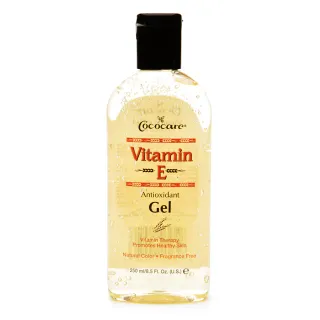
“Vitamin Therapy Promotes Healthy Skin Uniquely formulated, Cococare Vitamin E Gel provides skin with natural moisturizers that help soften, condition and restore skin tones.”
This product contains good ingredients to attract water to the upper layer of the skin. These ingredients are called "humectants": glycerin, propylene glycol.
When humectants are on the surface of the skin, they “pull in” the moisture from the outside environment, or from within deeper layers of the skin. If the air is dry, humectants can speed up the moisture loss from the skin. This is why it is a good idea to use another product on top of this one to help "seal in" the moisture (look for ingredients like dimethicone, squalane, oils and butters).
Evens skin toneNot advertised by the brand · 1 ingredient credited for this claimModerate support
The following ingredient (ingredients) in this product might be helpful, but there is no evidence to confirm that it actually works: retinyl palmitate.
Anti-agingNot advertised by the brand · 1 ingredient credited for this claimModerate support
This product contains retinyl palmitate. This ingredient might be able to help reduce and prevent fine lines and wrinkles, improve skin elasticity and firmness, but there is not enough evidence that it actually works.
Can it cause trouble?
Irritancy5 strong irritants: Retinyl palmitate, Rosmarinus officinalis leaf extract + 3 more — patch-test recommendedHigh risk
ComedogenicClean of flagged comedogenic ingredientsNone flagged
User reviews
Be the first — your take helps the next person decide.
Ingredients
Filter by role to see what each ingredient is doing.
Water~40–60%
Glycerin~3.8–5.6%
- Irritation risk
- Low
One of the best moisturizing ingredients. Naturally present in skin. It attracts water to the upper layer of the skin working as a humectant
More about GlycerinPropylene glycol~3.5–5.3%
- Irritation risk
- High
Helps oil and water mix together and can enhance the penetration of other ingredients into the skin. It can be irritating
More about Propylene glycolTocopheryl acetate~2.8–4.2%
- Irritation risk
- Medium
A more stable but less bio-available form of vitamin E compared to Tocopherol. Might help moisturize and protect the skin from free radicals, but mostly used in low concentrations to stabilize other ingredients.
More about Tocopheryl acetateRetinyl palmitate~2.1–3.1%
- Irritation risk
- High
Three steps removed from the active form of vitamin A - retinoic acid. To have an effect in the skin, it first needs to be converted twice to become the retinoic acid. This means it is less potent than retinol, but could also be less irritating. Once converted to the retinoic acid in the skin, it helps against all signs of aging, improves skin cell turnover and helps fight blemishes and clogged pores. However, in many cosmetic formulations, it is used in a concentration that is too low to have the full effect
More about Retinyl palmitateBeta-carotene~1.7–2.5%
Arctium lappa root extract~1.4–2%
- Irritation risk
- High
Plant extract. Has some anti-microbial and anti-oxidant properties. Can be irritating
More about Arctium lappa root extractAnthemis nobilis flower oil~1.1–1.6%
- Irritation risk
- High
An essential oil that is used as a fragrance and can be irritating. It might have some anti-oxidant effect in skin
More about Anthemis nobilis flower oilChamomilla recutita extract~0.95–1.4%
- Irritation risk
- High
Plant extract that can have healing and anti-inflammatory properties. It is a potential allergen and can be irritating
More about Chamomilla recutita extractLawsonia inermis extract~0.55–1.3%
- Irritation risk
- Low
Rosmarinus officinalis leaf extract~0.45–1%
- Irritation risk
- High
Can be helpful in reducing inflammation in skin, including inflamed acne. It can be irritating
More about Rosmarinus officinalis leaf extractEquisetum hyemale extract~0.4–0.9%
- Irritation risk
- Low
Benzophenone-3~0.45–1.1%
- Irritation risk
- High
Same as oxybenzone. Protects in the UVB and short UVA range. In small concentrations, used to stabilize product formulation. Can be irritating. Is shown to be harmful to coral reefs - consider avoiding bathing in coral reef areas when wearing a product with this ingredient. It can penetrate the skin and get absorbed into bloodstream faster than other popular filters available in the US. The study that produced this finding did not address any potential health effects of the absorption
More about Benzophenone-3Triethanolamine~0.15–0.7%
- Irritation risk
- Medium
Used to adjust pH of the product and can help improve the product's smell
More about TriethanolamineCarbomer~0.1–0.5%
- Irritation risk
- Low
Helps create a thicker or gel-like product texture. It is not a surfactant but can be used in gentle cleansing formulations
More about CarbomerTrisodium edta~0.1–0.35%
Sodium benzoate~0.05–0.2%
Dmdm hydantoin~0.05–0.15%
- Irritation risk
- High
A preservative that releases formaldehyde and can be irritating
More about Dmdm hydantoinDiazolidinyl urea~0.05–0.15%
- Irritation risk
- High
A preservative. Works by releasing formaldehyde. Can be irritating
More about Diazolidinyl ureaIngredient list view
Water, Glycerin, Propylene glycol, Tocopheryl acetate, Retinyl palmitate, Beta-carotene, Arctium lappa root extract, Anthemis nobilis flower oil, Chamomilla recutita extract, Lawsonia inermis extract, Rosmarinus officinalis leaf extract, Equisetum hyemale extract, Benzophenone-3, Triethanolamine, Carbomer, Trisodium edta, Sodium benzoate, Dmdm hydantoin, Diazolidinyl urea
Compare prices
Retailers ranked by price — lowest first.

Product summary
"Cococare - Vitamin E Antioxidant Gel" is a well-rounded moisturizing product.
Ingredient callouts
- this moisturizer includes a form of retinoids (vitamin A) - retinyl palmitate 2.10% - 3.10%, but this type of vitamin A is not very effective. It could in theory help with fine lines and wrinkles, but the effect is most likely minimal.
- This formulation also uses an effective concentration of panthenol (pro-vitamin B5) - about 1.70% - 2.50%. Panthenol helps strengthen the skin barrier, improve hydration and reduce inflammation in skin.
Irritation risk
We assess the overall irritancy of this moisturizer to be high. For a detailed overview of all potential irritants: click here
You can see the detailed formula review with the breakdown of all actives in the product and the full ingredient list with estimated concentrations in the tables below.
Price
The product retails for 19.25CA$ in Canada and from 6.99$ up to 8.03$ in the United States.
For a detailed price comparison: click here.
Sources cited in this review
Every concentration estimate and effectiveness label is anchored to one of these 13 studies and safety reviews.
- 1
- 2Surfactants and experimental irritant contact dermatitisncbi.nlm.nih.gov
- 3Propylene Glycolpubmed.ncbi.nlm.nih.gov
- 4Skin-sensitizing and irritant properties of propylene glycolonlinelibrary.wiley.com
- 5
- 6Safety Assessment of Anthemis nobilis– Derived Ingredients as Used in Cosmeticsjournals.sagepub.com

Affiliate links · As an Amazon Associate, WIMJ earns from qualifying purchases.