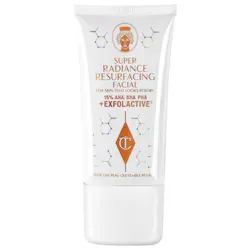
Charlotte Tilbury Super Radiance Resurfacing Facial Treatment
Works for
4 of 4 advertised claims delivered
ExfoliationGlycolic acid, Copper gluconate + 4 moreStrong evidence
“6 oz/ 50 mL Super Radiance Resurfacing Facial .”
This product can help exfoliate the skin. In other words, it helps break down the bonds between dead cells on the surface of the skin and speed up the skin turnover. Skin often appears softer and brighter after exfoliation, but overdoing it can result in disrupted skin barrier. The following ingredient is doing the exfoliating job in this product: glycolic acid.
MoisturizingNiacinamide, Acetyl tetrapeptide-11 + 28 moreStrong evidence
“A two-in-one facial with a resurfacing AHA/BHA/PHA-acid blend and hydrating polyglutamic acid to reveal radiant, glowing, youthful-looking skin.”
This product can help improve hydration of the skin with the two types of ingredients.
The first type is called “humectants”:
these ingredients help attract water.
When humectants are on the surface of the skin, they “pull in” the moisture from the outside environment, or from
within deeper layers of the skin. The following ingredients in this product do the job:
glycerin, polyglutamic acid.
This product also contains ingredients called “occlusives”. They help reduce the speed with which our skin loses moisture to the outside environment. These ingredients also help soften the upper layer of the skin, so it feels less tight and nicer to the touch. The following ingredients in this product do the job: chondrus crispus extract, helianthus annuus seed oil.
The following ingredients in this product are especially good for supporting the skin barrier and helping with the hydration level: acetyl tetrapeptide-11, acetyl tetrapeptide-9, niacinamide
Evens skin toneGlutathione, Glycolic acid + 6 moreStrong evidence
“removing dead skin cells, unclogging pores, and minimizing the appearance of wrinkles, uneven skin texture, and hyperpigmentation.”
This product can help reduce hypepigmentation and even out the skin tone because it contains the following effective ingredients: glutathione, glycolic acid, niacinamide
Keep in mind that you would need to apply any topical skincare targetted at hypigmentation consistently for a couple of months to get a result. No topical skincare product can help get rid of hyperpigmentation (including post-acne marks and age spots) instantly.
Anti-agingNiacinamide, Glycolic acid + 9 moreStrong evidence
“Natural extract from prickly pear cactus that reduces appearance of wrinkles. . Polyglutamic Acid.”
This product can help reduce and prevent fine lines and wrinkles, improve skin elasticity and firmness because it contains glycolic acid, niacinamide.
These ingredients in the product can also be helpful, even though there is less evidence for their effectiveness: acetyl tetrapeptide-11, acetyl tetrapeptide-9.
Keep in mind that it typically takes at least 6 weeks to notice any results because the changes that are needed to improve fine lines and elasticity happen in the deeper layers of the skin. No topical anti-aging product can “erase” wrinkles or fully reverse signs of aging.
Anti-oxidationNot advertised by the brand · Glutathione, Schisandra chinensis fruit extract + 10 moreStrong evidence
This product contains antioxidants (glutathione) that can help neutralize free radicals in skin. By doing so, they can lessen the damage the skin gets from the UV light (sun).
Anti-blemishNot advertised by the brand · Niacinamide, Glycolic acid + 5 moreGood evidence
This product might be able to help reduce blemishes and clogged pores because it contains niacinamide.
The following ingredient (ingredients) in this product might be helpful, but there is no evidence to confirm that it actually works: glycolic acid
Can it cause trouble?
Irritancy9 strong irritants: Parfum, Plumeria rubra flower extract + 7 more — patch-test recommendedHigh risk
Comedogenic4 ingredients rated 2 or more on the 0–5 pore-clogging scale4 flagged

User reviews
Be the first — your take helps the next person decide.
Ingredients
Filter by role to see what each ingredient is doing.
Water~45–55%
Niacinamide~4.7–5.8%
- Irritation risk
- Low
Is proven to be effective in reducing blemishes, evening out skin tone and helping to improve lines and wrinkles. It helps the skin to repair sun damage, calm down inflammation and keep maintain good levels of moisture. The concentration of about 2% is effective for supporting the skin barrier and evening out the skin tone. Concentration of 4-6% is better for helping with acne and balancing the sebum production
More about NiacinamideGlycereth-26~4.1–5%
Triheptanoin~3.2–4%
- Irritation risk
- Low
A synthetic triglyceride. Helps soften the upper layer of the skin
More about TriheptanoinGlycerin~2.6–3.2%
- Irritation risk
- Low
One of the best moisturizing ingredients. Naturally present in skin. It attracts water to the upper layer of the skin working as a humectant
More about GlycerinMethyl gluceth-20~2.1–2.6%
- Irritation risk
- Low
Helps attract water to the upper layer of the skin and soften it
More about Methyl gluceth-20Silica~1.9–2.4%
Camellia oleifera seed oil~1.5–1.8%
- Irritation risk
- Medium
An emollient that does not leave a greasy finish
More about Camellia oleifera seed oilQuartz powder~1.4–1.7%
- Irritation risk
- Low
Amethyst powder~1.1–1.4%
- Irritation risk
- Low
Ruby powder~0.7–1.05%
- Irritation risk
- Low
Gold~0.6–0.95%
Butyrospermum parkii oil~0.6–0.9%
- Irritation risk
- Low
- Comedogenicity
- 3/5
Phenoxyethanol~0.55–0.8%
- Irritation risk
- Low
A preservative. It helps prevent bacterial growth in cosmetic products
More about PhenoxyethanolDimethyl isosorbide~0.5–0.75%
- Irritation risk
- Low
Used to dissolve other ingredients in a product and can enhance their ability to penetrate the skin
More about Dimethyl isosorbidePolysorbate 20~0.55–0.8%
Glyceryl stearate~0.55–0.8%
- Irritation risk
- Low
An emollient that softens the skin and forms a protective layer on its surface. Helps water and oil mix together
More about Glyceryl stearateButylene glycol~0.45–0.7%
- Irritation risk
- Low
Used to create a nice product texture and help delivery of other ingredients. Might be somewhat helpful in attracting water to the upper layer of the skin
More about Butylene glycolOctyldodecyl oleate~0.45–0.7%
- Irritation risk
- Low
Benzyl alcohol~0.35–0.6%
- Irritation risk
- High
A preservative. Can be used to mask unpleasant smell. Can be irritating
More about Benzyl alcoholMyrothamnus flabellifolia leaf extract~0.45–0.65%
- Irritation risk
- Low
Peg-100 stearate~0.5–0.75%
- Irritation risk
- Low
Helps oil and water mix togehter and creates a nice product texture
More about Peg-100 stearateOctyldodecyl stearoyl stearate~0.4–0.65%
- Irritation risk
- Low
Schisandra chinensis fruit extract~0.3–0.6%
- Irritation risk
- Medium
A berry extract that might help neutralize free radicals on the surface of the skin
More about Schisandra chinensis fruit extractCarbomer~0.35–0.6%
- Irritation risk
- Low
Helps create a thicker or gel-like product texture. It is not a surfactant but can be used in gentle cleansing formulations
More about CarbomerSodium gluconate~0.3–0.6%
Sodium hyaluronate~0.35–0.6%
- Irritation risk
- Low
One of the best moisturizing ingredients. Attracts water into the upper layer of the skin
More about Sodium hyaluronateChondrus crispus extract~0.35–0.65%
- Irritation risk
- Low
- Comedogenicity
- 3/5
Red algae extract that helps attract water to the upper layer of the skin and create a nicer product consistency
More about Chondrus crispus extractSodium hydroxide~0.35–0.6%
Saussurea involucrata callus extract~0.4–0.6%
- Irritation risk
- Low
Tocopheryl acetate~0.35–0.65%
- Irritation risk
- Medium
A more stable but less bio-available form of vitamin E compared to Tocopherol. Might help moisturize and protect the skin from free radicals, but mostly used in low concentrations to stabilize other ingredients.
More about Tocopheryl acetateAloe barbadensis leaf juice~0.35–0.6%
- Irritation risk
- Medium
Traditionally used to treat sunburns, dermatitis and inflammation, but evidence for its effectiveness is lacking. The extract can contain humectants that help attract water into the skin
More about Aloe barbadensis leaf juicePolyglutamic acid~0.35–0.6%
- Irritation risk
- Low
Helps attract water to the upper layer of the skin.
More about Polyglutamic acidPentylene glycol~0.45–0.65%
- Irritation risk
- Medium
Used to preserve products, dissolve other ingredients and create a nice product texture
More about Pentylene glycolSorbitol~0.35–0.6%
- Irritation risk
- Low
Helps attract water to the upper layer of the skin and improves the product texture
More about SorbitolMagnesium aspartate~0.3–0.6%
- Irritation risk
- Low
Might be helpful in restoring skin barrier function and calm down inflammation in skin
More about Magnesium aspartateZinc gluconate~0.3–0.6%
- Irritation risk
- Medium
Typically used to stabilize the product formulations. It is a salt of a polyhydroxy acid (PHA) and in larger concentrations, can help shed the dead cells from the skin surface revealing smoother skin. It can help attract water to the upper layer of the skin. Might to be helpful against acne and clogged pores. Could be helpful in neutralizing free radicals, but solid research is missing. Due to the zinc content, might help calm down inflammation in skin
More about Zinc gluconateRosa canina fruit extract~0.3–0.6%
- Irritation risk
- Medium
A plant extract that might have some anti-oxidant properties, but evidence is lacking
More about Rosa canina fruit extractPolyhydroxystearic acid~0.4–0.6%
- Irritation risk
- Medium
Used to create a thicker product consistency and stabilize the formulation
More about Polyhydroxystearic acidOctyldodecanol~0.35–0.65%
- Irritation risk
- Low
An emollient that helps to soften the skin and create a pleasant product texture and stabilize the formulation
More about OctyldodecanolSodium benzoate~0.25–0.5%
Propanediol~0.35–0.65%
- Irritation risk
- Low
Acts as a solvent for other ingredients. Speeds up the absorption of other ingredients into the skin
More about PropanediolBiosaccharide gum-4~0.3–0.6%
Xanthan gum~0.35–0.65%
- Irritation risk
- Low
Used to create a thicker product consistency
More about Xanthan gumParfum~0.3–0.6%
- Irritation risk
- High
An aromatic blend of unspecified and possibly irritating ingredients
More about ParfumPlumeria alba flower extract~0.35–0.6%
- Irritation risk
- Low
Plumeria rubra flower extract~0.3–0.6%
- Irritation risk
- High
Used to add a nice smell to the product. Can be irritating
More about Plumeria rubra flower extractLithothamnion calcareum extract~0.3–0.6%
- Irritation risk
- Low
- Comedogenicity
- 3/5
A mineral-rich extract from red algae. Might be able to help attract water to the upper layer of the skin
More about Lithothamnion calcareum extractLactic acid~0.3–0.6%
- Irritation risk
- Medium
An exfoliating and moisturizing alpha-hydroxy acid (AHA). Typically causes less irritation than other AHAs, for example, glycolic acid. At high concentrations (about 15%), lactic acid can help reduce lines and wrinkles. Recent studies show that lactic acid can support the "good" bacteria living on skin's surface (healthy skin microbiome)
More about Lactic acidPotassium sorbate~0.3–0.6%
Caprylyl glycol~0.4–0.6%
- Irritation risk
- Medium
Helps preserve products and creates a nice product texture
More about Caprylyl glycolCopper gluconate~0.3–0.6%
- Irritation risk
- Medium
Typically used to stabilize the product formulations. It is a salt of polyhydroxy acid (PHA) and in larger concentrations, can help shed the dead cells from the skin surface revealing smoother skin. It can help attract water to the upper layer of the skin. Might to be helpful against acne and clogged pores. Could be helpful in neutralizing free radicals, but solid research is missing
More about Copper gluconateHydrated silica~0.5–0.75%
1,2-hexanediol~0.35–0.6%
Citric acid~0.35–0.6%
- Irritation risk
- Medium
Can work as an exfoliant but is typically used to adjust the product pH
More about Citric acidSolanum tuberosum pulp extract~0.35–0.6%
- Irritation risk
- Low
Acetyl tetrapeptide-11~0.3–0.6%
- Irritation risk
- Low
A type of peptide. Peptides are excellent moisturizers and might be able support collagen production reducing fine lines and wrinkles
More about Acetyl tetrapeptide-11Acetyl tetrapeptide-9~0.3–0.6%
- Irritation risk
- Low
A type of peptide. Peptides are excellent moisturizers and might be able support collagen production reducing fine lines and wrinkles
More about Acetyl tetrapeptide-9Dehydroacetic acid~0.35–0.6%
Ascorbic acid~0.35–0.6%
- Irritation risk
- High
The most well-researched antioxidant that works in skin. Helps neutralize free radicals supporting collagen production, helping to even out the skin tone and preventing early signs of aging
More about Ascorbic acidGlutathione~0.35–0.6%
- Irritation risk
- Medium
A peptide that can help neutralize free radicals in skin and reduce melanin production resulting in skin lightening effect and reduction in hyperpigmentation. It can also help attract moisture to the upper layer of the skin
More about GlutathioneLimonene~0.3–0.6%
- Irritation risk
- High
A common frangrance that can easily irritate skin, especially if exposed to air, light or heat
More about LimoneneGeraniol~0.3–0.6%
Citronellol~0.3–0.6%
Linalool~0.3–0.6%
Citral~0.3–0.6%
Water~0.35–0.6%
Glycerin~0.4–0.6%
- Irritation risk
- Low
One of the best moisturizing ingredients. Naturally present in skin. It attracts water to the upper layer of the skin working as a humectant
More about GlycerinGlycolic acid~0.35–0.6%
- Irritation risk
- High
An alpha-hydroxy acid (AHA) that helps to remove the dead skin cells on the surface of the skin reveling a more even, smoother complexation. It is also able to stimulate collagen production with long-term use. Could help to reduce pore congestion. It can be irritating to the skin. Apply sunscreen daily if using products with glycolic acid
More about Glycolic acidSodium hydroxide~0.35–0.6%
Hydroxyethyl acrylate/sodium acryloyldimethyl taurate copolymer~0.35–0.6%
- Irritation risk
- Medium
A gelling agent that thickens the product consistency and leaves the skin with a velvety finish
More about Hydroxyethyl acrylate/sodium acryloyldimethyl taurate copolymerCetearyl alcohol~0.45–0.65%
- Irritation risk
- Low
- Comedogenicity
- 2/5
A non-drying alcohol. Works as an emollient. Helps water and oil mix together and creates a nice product texture
More about Cetearyl alcoholGlyceryl stearate~0.45–0.65%
- Irritation risk
- Low
An emollient that softens the skin and forms a protective layer on its surface. Helps water and oil mix together
More about Glyceryl stearatePeg-100 stearate~0.45–0.7%
- Irritation risk
- Low
Helps oil and water mix togehter and creates a nice product texture
More about Peg-100 stearatePersea gratissima oil~0.45–0.65%
- Irritation risk
- Medium
An emollient that helps soften the skin and could be helpful in repairing its barrier function
More about Persea gratissima oilSalicylic acid~0.3–0.6%
- Irritation risk
- High
Used for skin exfoliation. It has an anti-inflammatory and anti-bacterial effect, helps to unclog pores, prevent blemishes and speed up healing of the existing ones. Sometimes referred to as a BHA (beta-hydroxy acid)
More about Salicylic acidCamellia oleifera seed oil~0.4–0.65%
- Irritation risk
- Medium
An emollient that does not leave a greasy finish
More about Camellia oleifera seed oilAloe barbadensis leaf juice~0.35–0.6%
- Irritation risk
- Medium
Traditionally used to treat sunburns, dermatitis and inflammation, but evidence for its effectiveness is lacking. The extract can contain humectants that help attract water into the skin
More about Aloe barbadensis leaf juiceAgave tequilana leaf extract~0.35–0.6%
- Irritation risk
- Low
Phenoxyethanol~0.35–0.65%
- Irritation risk
- Low
A preservative. It helps prevent bacterial growth in cosmetic products
More about PhenoxyethanolButylene glycol~0.35–0.6%
- Irritation risk
- Low
Used to create a nice product texture and help delivery of other ingredients. Might be somewhat helpful in attracting water to the upper layer of the skin
More about Butylene glycolCaprylyl glycol~0.4–0.6%
- Irritation risk
- Medium
Helps preserve products and creates a nice product texture
More about Caprylyl glycolMyrothamnus flabellifolia leaf extract~0.4–0.65%
- Irritation risk
- Low
Polysorbate 60~0.4–0.6%
Sorbitan isostearate~0.35–0.65%
- Irritation risk
- Low
Helps oil and water mix together
More about Sorbitan isostearateSodium gluconate~0.3–0.6%
Acrylates/c10-30 alkyl acrylate crosspolymer~0.4–0.6%
- Irritation risk
- Medium
Maintains the texture of skincare products. Allows the product to spread evenly. Helps oil and water mix together
More about Acrylates/c10-30 alkyl acrylate crosspolymerHydrolyzed opuntia ficus-indica flower extract~0.45–0.7%
- Irritation risk
- High
A plant extract. Can help attract water the upper layer of the skin and might have some anti-oxidant properties
More about Hydrolyzed opuntia ficus-indica flower extractAllantoin~0.3–0.55%
- Irritation risk
- Low
Helps calm down inflammation in skin and can help reduce itching. Helps to repair the skin barrier and keep skin hydrated
More about AllantoinSodium hyaluronate~0.35–0.6%
- Irritation risk
- Low
One of the best moisturizing ingredients. Attracts water into the upper layer of the skin
More about Sodium hyaluronate1,2-hexanediol~0.3–0.6%
Polyglutamic acid~0.35–0.6%
- Irritation risk
- Low
Helps attract water to the upper layer of the skin.
More about Polyglutamic acidTocopherol~0.35–0.6%
- Irritation risk
- Low
Pure form of vitamin E. Can help moisturise and protect the skin from free radicals. Often used to help stabilise other ingredients or the formula itself
More about TocopherolParfum~0.3–0.55%
- Irritation risk
- High
An aromatic blend of unspecified and possibly irritating ingredients
More about ParfumMaltodextrin~0.3–0.6%
- Irritation risk
- Low
Used to stabilize the product formulation and can help absorb oil
More about MaltodextrinEthylhexylglycerin~0.3–0.55%
Hydrolyzed gardenia florida extract~0.3–0.5%
- Irritation risk
- High
Used as a fragrance. Might have some anti-oxidant properties
More about Hydrolyzed gardenia florida extractHelianthus annuus seed oil~0.3–0.55%
- Irritation risk
- Low
A great emollient due to its high linoleic acid content. One of the most effective plant oils in helping skin hydration and repairing skin barrier function
More about Helianthus annuus seed oilCitric acid~0.25–0.45%
- Irritation risk
- Medium
Can work as an exfoliant but is typically used to adjust the product pH
More about Citric acidPotassium sorbate~0.2–0.4%
Sodium benzoate~0.15–0.3%
Gardenia florida fruit extract~0.15–0.3%
- Irritation risk
- High
Used as a fragrance. Can be irritating.
More about Gardenia florida fruit extractLimonene~0.15–0.3%
- Irritation risk
- High
A common frangrance that can easily irritate skin, especially if exposed to air, light or heat
More about LimoneneGeraniol~0.15–0.25%
Citronellol~0.1–0.15%
Linalool~0.1–0.15%
Ingredient list view
Water, Niacinamide, Glycereth-26, Triheptanoin, Glycerin, Methyl gluceth-20, Silica, Camellia oleifera seed oil, Quartz powder, Amethyst powder, Ruby powder, Gold, Butyrospermum parkii oil, Phenoxyethanol, Dimethyl isosorbide, Polysorbate 20, Glyceryl stearate, Butylene glycol, Octyldodecyl oleate, Benzyl alcohol, Myrothamnus flabellifolia leaf extract, Peg-100 stearate, Octyldodecyl stearoyl stearate, Schisandra chinensis fruit extract, Carbomer, Sodium gluconate, Sodium hyaluronate, Chondrus crispus extract, Sodium hydroxide, Saussurea involucrata callus extract, Tocopheryl acetate, Aloe barbadensis leaf juice, Polyglutamic acid, Pentylene glycol, Sorbitol, Magnesium aspartate, Zinc gluconate, Rosa canina fruit extract, Polyhydroxystearic acid, Octyldodecanol, Sodium benzoate, Propanediol, Biosaccharide gum-4, Xanthan gum, Parfum, Plumeria alba flower extract, Plumeria rubra flower extract, Lithothamnion calcareum extract, Lactic acid, Potassium sorbate, Caprylyl glycol, Copper gluconate, Hydrated silica, 1,2-hexanediol, Citric acid, Solanum tuberosum pulp extract, Acetyl tetrapeptide-11, Acetyl tetrapeptide-9, Dehydroacetic acid, Ascorbic acid, Glutathione, Limonene, Geraniol, Citronellol, Linalool, Citral, Water, Glycerin, Glycolic acid, Sodium hydroxide, Hydroxyethyl acrylate/sodium acryloyldimethyl taurate copolymer, Cetearyl alcohol, Glyceryl stearate, Peg-100 stearate, Persea gratissima oil, Salicylic acid, Camellia oleifera seed oil, Aloe barbadensis leaf juice, Agave tequilana leaf extract, Phenoxyethanol, Butylene glycol, Caprylyl glycol, Myrothamnus flabellifolia leaf extract, Polysorbate 60, Sorbitan isostearate, Sodium gluconate, Acrylates/c10-30 alkyl acrylate crosspolymer, Hydrolyzed opuntia ficus-indica flower extract, Allantoin, Sodium hyaluronate, 1,2-hexanediol, Polyglutamic acid, Tocopherol, Parfum, Maltodextrin, Ethylhexylglycerin, Hydrolyzed gardenia florida extract, Helianthus annuus seed oil, Citric acid, Potassium sorbate, Sodium benzoate, Gardenia florida fruit extract, Limonene, Geraniol, Citronellol, Linalool
Compare prices
Retailers ranked by price — lowest first.
Worth comparing, line by line.
Match % combines shared ingredients, the first five ingredients, shared actives and hero ingredients, irritancy (lower counts in the alternative's favour), texture and body area. Only products in the same routine step are compared.
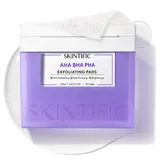
| Charlotte TilburySuper Radiance Resurfacing Facial TreatmentYOUR PRODUCT | CeraVeBlemish Control Gel Moisturiser with 2% Salicylic Acid & Niacinamide for Blemish-Prone Skin | skintificAHA BHA PHA Exfoliating Pads | SkinfixResurface+ AHA/BHA Niacinamide Exfoliating Pads for Face and Targeted Body | |
|---|---|---|---|---|
| Match | — | 73% | 72% | 72% |
| Price | — | $16.58 | $15.21 | $48.59 |
| Shared key ingredients | — | 6 of 22 | 6 of 22 | 4 of 22 |
| Key difference | — | Ceramide Ap | Gluconolactone | — |
| Irritancy | High | Low | Medium | Medium |
| Drying alcohol | — | — | — | — |
| View product | Shop | Shop | Shop |


Product summary
Based on the ingredients included, "Charlotte Tilbury - Super Radiance Resurfacing Facial Treatment" works well for moisturizing the skin. This moisturizer uses a good combo of humectants and emollients. These both types of ingredients are essentials for improving the skin hydration and keeping the skin barrier healthy. Humectants in this product (glycerin, polyglutamic acid, sodium hyaluronate, methyl gluceth-20 and butylene glycol) help to increase the water content in the upper layer of the skin. (These ingredients do so by "capturing" water molecules from the outside air or from within the deeper layers of the skin). Butyrospermum parkii oil, chondrus crispus extract, helianthus annuus seed oil, cetearyl alcohol and caprylyl glycol in this product help decrease the water evoporation from the skin, so that it stays hydrated for longer. These ingredients also soften the skin and take away the feeling of tightness and dryness.
Ingredient callouts
- We love that this moisturizer contains a good concentration of niacinamide 4.70% - 5.80%. Niacinamide is a perfect active in a moistruizer because it helps calm down inflamation in skin and support the skin barrier. More than that, it is helpful for most common skin concerns: it helps regulat oil production, help reduce acne and clogged pores, improve skin tone and prevent pigmentation marks. It also helps fight photodamage.
- This product also contains vitamin C (Ascorbic Acid). It can be an effective active for anti-aging and evening out the skin tone, but in this moisturizer it is used for stabilizing other ingredients in the formulation. In this concentration (0.35% - 0.60%) it cannot have a noticeable benefit for the skin.
- This moistruizer also contains peptides (acetyl tetrapeptide-9 0.30% - 0.60% and acetyl tetrapeptide-11 0.30% - 0.60%). Peptides is a very big group of ingredients. They all consist of a different combination of amino-acids. Our skin produces peptides naturally. Some of them work as natural anti-biotics, promote wound-healing and production of collagen. The scientists are still studying how effective the topical application of peptides is, but it is very likely that peptides in skincare are helpful. They might be able to support skin barrier restoration and even have an anti-aging benefit. At the very least, they certainly help attract water to the skin and support the hydration in this way.
Irritation risk
This moisturizer contains a bunch of common irritants, including ingredients that do not provide any known benefit for the skin. It might not be the best choice if your skin is sensitive. We assess the overall irritancy of this moisturizer to be high. For a detailed overview of all potential irritants: click here
You can see the detailed formula review with the breakdown of all actives in the product and the full ingredient list with estimated concentrations in the tables below.
Sources cited in this review
Every concentration estimate and effectiveness label is anchored to one of these 40 studies and safety reviews.
- 1
- 2
- 3
- 4
- 5
- 6Hyaluronic acid: A key molecule in skin agingncbi.nlm.nih.gov

Affiliate links · As an Amazon Associate, WIMJ earns from qualifying purchases.