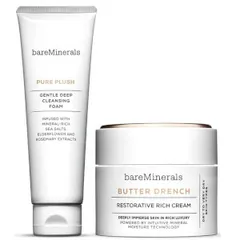
Works for:
based on ingredients and %- Cleansing
Can it cause trouble?
- Irritation risk: high
- Comedogenic risk ingredients: 7
Key actives
Works for
Cleansing
What does the product description say?
Cleanser and Moisturiser
Source: From product name
This product works by removing dirt and oil from the surface of the skin. It uses a combination of mild cleansing agents (carbomer, cetyl alcohol, glyceryl stearate se, isostearic acid, lauric acid, lauryl betaine, myristic acid, peg-100 stearate, polysorbate 20, sodium methyl cocoyl taurate, sorbitan tristearate, stearic acid, stearyl alcohol) and should be able to cleanse the skin gently. Still keep in mind that any cleansing can disrupt the skin barrier, and most people do not need to cleanse their skin more than once per day.
Even though this formulation is mild, the following cleansing agents could trigger an irritation or allergy for some people: sodium methyl cocoyl taurate
Helps create a thicker or gel-like product texture. It is not a surfactant but can be used in gentle cleansing formulations
A non-drying alcohol that works to soften the skin and stabilize product formulations helping oil and water mix together
Used to stabilize the product formulations and works as an emollient
Used to create a nice product texture
Helps water and oil mix together. Has anti-bacterial properties that might be helpful in preventing blemishes
Helps water and oil mix together
Helps oil and water mix together. Could be comedogenic
Helps oil and water mix togehter and creates a nice product texture
Helps oil and water mix together
Helps oil and water mix together. Can be used as cleansing agent
Helps oil and water mix together
Helps oil and water mix together and works as an emollient
An emollient that helps soften the skin
How honest is this product?
| Promise | Can it deliver? |
|---|---|
| Cleansing |
Total Promises Fulfilled score: 100/100.
We receive a small commission for purchases made through these links at no cost for you. Thank you for your support! Learn more
Affiliate link · supports WIMJ at no cost to you
Potential irritants
Comedogenic ingredients
User reviews (0)
Averages from community submissions.
No reviews yet for this product.
Be the first to share your experience!
Tried this product?
Help capture what the ingredient list can't—texture, finish, pilling, scent, and more. Answer what you can, skip the rest.
Takes ~30 seconds.
Reviews are shown in aggregate. No personal details.
Key Actives
Helps calm down inflammation in skin and can help reduce itching. Helps to repair the skin barrier and keep skin hydrated
Might be able to stimulate production of skin's natural moisturizing compounds such as hyaluronic acid. Could be helpful for evening the skin tone.
Pure form of vitamin E. Can help moisturise and protect the skin from free radicals. Often used to help stabilise other ingredients or the formula itself
Helps water and oil mix together. Has anti-bacterial properties that might be helpful in preventing blemishes
Can be helpful in reducing inflammation in skin, including inflamed acne. It can be irritating
A great moisturising ingredient that softens the skin and reduces water loss from its upper layer. It also can be helpful in protecting skin from free radicals
A type of lipid similar to ceramides naturally present in skin. Helps to soften the upper layer of the skin and supports the skin barrier function to keep it hydrated. Can help to prevent inflammation in skin
Helps oil and water mix together and works as an emollient
Used to stabilize the product formulations and works as an emollient
A plant extract that might help neutralize free radicals in skin
A silicone that helps to reduce water loss from the surface of the skin. Can temporarily "fill in" lines and wrinkles, absorb oil, and create a nice product finish
Used to stabilize the product formulations and works as an emollient
A non-drying alcohol that works to soften the skin and stabilize product formulations helping oil and water mix together
Naturally present in skin (urea makes up about 7% of natural moisturizing factors in skin). Attracts water to the upper layer of the skin. Also has a positive effect on the skin barrier beyond the humectant action. Can enhance penetration of other ingredients. Is an exfoliating ingredient when used in high concentrations
Plant extract that helps the skin to attract water and make it more smooth for touch. Also shows promise of anti-aging properties, but research is not extensive yet
A mix of amino acids and plant-based lipids. Helps to soften the upper layer of the skin and reduce water loss over time
A type of peptide. Peptides are excellent moisturizers and might be able support collagen production reducing fine lines and wrinkles
A type of peptide. Peptides are excellent moisturizers and might be able support collagen production reducing fine lines and wrinkles
One of the best moisturizing ingredients. Naturally present in skin. It attracts water to the upper layer of the skin working as a humectant
Helps oil and water mix together. Could be comedogenic
Helps oil and water mix together. Can be used as cleansing agent
One of the best moisturizing ingredients. Naturally present in skin. It attracts water to the upper layer of the skin working as a humectant
An emollient. Is not recommended for acne-prone skin as it can be comedogenic
Helps oil and water mix togehter and creates a nice product texture
Helps to soften the upper layer of the skin and create a nice product consistency
Helps to soften the upper layer of the skin and create a nice product consistency
An emollient that helps soften the skin
A moisturizing ingredient that works as a humectant to attract water to the upper layer of the skin.
Naturally present in skin and helps to attract water to its upper layer
Helps oil and water mix together
Helps create a thicker or gel-like product texture. It is not a surfactant but can be used in gentle cleansing formulations
One of the best moisturizing ingredients. Attracts water into the upper layer of the skin
Potential irritants
Helps oil and water mix together. Can be used as cleansing agent
Can be helpful in reducing inflammation in skin, including inflamed acne. It can be irritating
A plant extract that might help neutralize free radicals in skin
An aromatic blend of unspecified and possibly irritating ingredients
A common frangrance that can easily irritate skin, especially if exposed to air, light or heat
Can be drying and contribute to skin irritation. Used in formulars to dissolve other ingredients, create a thinner product consistency or for its antibacterial properties
A plant extract that might have some anti-bacterial properties, but might also cause photosensitivity in skin
An aromatic blend of unspecified and possibly irritating ingredients
A common frangrance that can easily irritate skin, especially if exposed to air, light or heat
Helps oil and water mix together. Could be comedogenic
Helps water and oil mix together. Has anti-bacterial properties that might be helpful in preventing blemishes
Used to thicken the product formulation and might help to add minerals to the surface of the skin. It is used in scrubs as a physical exfoliant. Can increase sensitivity to other ingredients if left on the skin or used in high concentration
Used to thicken the product formulation and might help to add minerals to the surface of the skin. It is used in scrubs as a physical exfoliant. Can increase sensitivity to other ingredients if left on the skin or used in high concentration
An emollient. Is not recommended for acne-prone skin as it can be comedogenic
A moisturizing ingredient that works as a humectant to attract water to the upper layer of the skin.
Helps to control the skin's pH level. Maintains the skin's natural film of amino-lactic acids and oils. Helps to preserve products
Can work as an exfoliant but is typically used to adjust the product pH
Comedogenic ingredients
Helps oil and water mix together. Could be comedogenic
Helps water and oil mix together. Has anti-bacterial properties that might be helpful in preventing blemishes
Used to stabilize the product formulations and works as an emollient
Used to stabilize the product formulations and works as an emollient
An emollient. Is not recommended for acne-prone skin as it can be comedogenic
A great moisturising ingredient that softens the skin and reduces water loss from its upper layer. It also can be helpful in protecting skin from free radicals
Plant extract that helps the skin to attract water and make it more smooth for touch. Also shows promise of anti-aging properties, but research is not extensive yet
All ingredients
One of the best moisturizing ingredients. Naturally present in skin. It attracts water to the upper layer of the skin working as a humectant
Helps oil and water mix together. Could be comedogenic
Helps water and oil mix together. Has anti-bacterial properties that might be helpful in preventing blemishes
Helps oil and water mix together. Can be used as cleansing agent
Used to create a nice product texture and help delivery of other ingredients. Might be somewhat helpful in attracting water to the upper layer of the skin
Used to stabilize the product formulations and works as an emollient
Helps soften the upper layer of the skin and create a nice product finish
Can be helpful in reducing inflammation in skin, including inflamed acne. It can be irritating
A plant extract that might help neutralize free radicals in skin
Used to thicken the product formulation and might help to add minerals to the surface of the skin. It is used in scrubs as a physical exfoliant. Can increase sensitivity to other ingredients if left on the skin or used in high concentration
Used to thicken the product formulation and might help to add minerals to the surface of the skin. It is used in scrubs as a physical exfoliant. Can increase sensitivity to other ingredients if left on the skin or used in high concentration
An aromatic blend of unspecified and possibly irritating ingredients
A common frangrance that can easily irritate skin, especially if exposed to air, light or heat
A preservative. It helps prevent bacterial growth in cosmetic products
One of the best moisturizing ingredients. Naturally present in skin. It attracts water to the upper layer of the skin working as a humectant
Used to create a nice product texture and help delivery of other ingredients. Might be somewhat helpful in attracting water to the upper layer of the skin
A silicone that helps to reduce water loss from the surface of the skin. Can temporarily "fill in" lines and wrinkles, absorb oil, and create a nice product finish
Used to create a nice product consistency while softening the upper layer of the skin
Acts as a solvent for other ingredients. Speeds up the absorption of other ingredients into the skin
An emollient that helps soften the skin. Can increase penetration of other ingredients
Used to stabilize the product formulations and works as an emollient
A non-drying alcohol that works to soften the skin and stabilize product formulations helping oil and water mix together
An emollient. Is not recommended for acne-prone skin as it can be comedogenic
Helps oil and water mix togehter and creates a nice product texture
A great moisturising ingredient that softens the skin and reduces water loss from its upper layer. It also can be helpful in protecting skin from free radicals
Helps to soften the upper layer of the skin and create a nice product consistency
Brazilian palm wax. Helps soften the upper layer of the skin
Helps to soften the upper layer of the skin and create a nice product consistency
Used to improve the product consistency and soften the upper layer of the skin
Helps to soften the upper layer of the skin and create a nice product texture
Non-drying alcohol that helps water and oil mix together. Also serves as an emollient
Naturally present in skin (urea makes up about 7% of natural moisturizing factors in skin). Attracts water to the upper layer of the skin. Also has a positive effect on the skin barrier beyond the humectant action. Can enhance penetration of other ingredients. Is an exfoliating ingredient when used in high concentrations
Might be able to stimulate production of skin's natural moisturizing compounds such as hyaluronic acid. Could be helpful for evening the skin tone.
Plant extract that helps the skin to attract water and make it more smooth for touch. Also shows promise of anti-aging properties, but research is not extensive yet
A moisturizing ingredient that works as a humectant to attract water to the upper layer of the skin.
Naturally present in skin and helps to attract water to its upper layer
Helps calm down inflammation in skin and can help reduce itching. Helps to repair the skin barrier and keep skin hydrated
Helps to control the skin's pH level. Maintains the skin's natural film of amino-lactic acids and oils. Helps to preserve products
A mix of amino acids and plant-based lipids. Helps to soften the upper layer of the skin and reduce water loss over time
Can be drying and contribute to skin irritation. Used in formulars to dissolve other ingredients, create a thinner product consistency or for its antibacterial properties
Can work as an exfoliant but is typically used to adjust the product pH
Helps create a thicker or gel-like product texture. It is not a surfactant but can be used in gentle cleansing formulations
One of the best moisturizing ingredients. Attracts water into the upper layer of the skin
A plant extract that might have some anti-bacterial properties, but might also cause photosensitivity in skin
A type of peptide. Peptides are excellent moisturizers and might be able support collagen production reducing fine lines and wrinkles
A type of peptide. Peptides are excellent moisturizers and might be able support collagen production reducing fine lines and wrinkles
A type of lipid similar to ceramides naturally present in skin. Helps to soften the upper layer of the skin and supports the skin barrier function to keep it hydrated. Can help to prevent inflammation in skin
Pure form of vitamin E. Can help moisturise and protect the skin from free radicals. Often used to help stabilise other ingredients or the formula itself
An aromatic blend of unspecified and possibly irritating ingredients
A common frangrance that can easily irritate skin, especially if exposed to air, light or heat
A preservative. It helps prevent bacterial growth in cosmetic products
Ingredient list view
Water, Glycerin, Stearic acid, Myristic acid, Peg-8, Potassium hydroxide, Lauric acid, Sodium methyl cocoyl taurate, Butylene glycol, Glyceryl stearate se, Sodium polyacrylate starch, Disodium edta, Polyquaternium-39, Citrus grandis fruit extract, Rosmarinus officinalis leaf extract, Sambucus nigra flower extract, Sea salt, Maris sal, Parfum, Limonene, Sodium benzoate, Phenoxyethanol, Cream, Water, Glycerin, Butylene glycol, Dimethicone, Pentaerythrityl tetraethylhexanoate, Propanediol, Tricaprylin, Glyceryl stearate se, Cetyl alcohol, Silica, Myristyl myristate, Peg-100 stearate, Butyrospermum parkii butter, Copernicia cerifera wax, Copernicia cerifera cera, Copernicia cerifera wax, Hydrogenated polyisobutene, Hydrogenated polydecene, Behenyl alcohol, Dimethylacrylamide/sodium acryloyldimethyltaurate crosspolymer, Isostearic acid, Stearyl alcohol, Urea, Glucosamine hcl, Algae extract, Saccharomyces cerevisiae extract, Sodium pca, Allantoin, Ethylhexylglycerin, Lauryl betaine, Sodium citrate, Disodium edta, Sorbitan tristearate, Phytosteryl/octyldodecyl lauroyl glutamate, Alcohol, Citric acid, Carbomer, Polysorbate 20, Sodium hyaluronate, Hypericum erectum extract, Palmitoyl tetrapeptide-7, Palmitoyl tripeptide-1, Ceramide np, Tocopherol, Parfum, Geraniol, Limonene, Linalool, Citral, Sodium benzoate, Phenoxyethanol
- Glycerol and the skin: holistic approach to its origin and functions
- The fatty acid profile of the skin surface lipid layer in papulopustular rosacea
- Safety Assessment of Alkyl Taurate Amides and Taurate Salts as Used in Cosmetics
- Allergic contact dermatitis induced by rosemary leaf extract in a cleansing gel
- Safety Assessment of Rosmarinus officinalis (Rosemary)-Derived Ingredients as Used in Cosmetics
- Rosmarinus officinalis Extract Suppresses Propionibacterium acnes–Induced Inflammatory Responses
- The antioxidant properties of alcoholic extracts from Sambucus nigra L. (antioxidant properties of extracts)
- Inhibition of Proinflammatory Activities of Major Periodontal Pathogens by Aqueous Extracts From Elder Flower (Sambucus nigra)
- Dimethicone as a protective ingredient in topical medications
- Final Report on the Safety Assessment of Dimethicone Copolyol
- Safety Assessment of Pentaerythrityl Tetraesters as Used in Cosmetics
- Final report of the cosmetic ingredient review expert panel on the safety assessment of Polyisobutene and Hydrogenated Polyisobutene as used in cosmetics
- Safety Assessment of Polyene Group as Used in Cosmetics
- Topical urea in skincare: A review
- Glucosamine: an ingredient with skin and other benefits
- Profile of wound healing process induced by allantoin
- Final report on the safety assessment of sorbitan caprylate, sorbitan cocoate, sorbitan diisostearate, sorbitan dioleate, sorbitan distearate, sorbitan isostearate, sorbitan olivate, sorbitan sesquiisostearate, sorbitan sesquistearate, and sorbitan triisostearate
- Hyaluronic acid: A key molecule in skin aging
- Hyaluronan (Hyaluronic Acid): a natural moisturizer for skin care
- Effect of topical application of Hypericum perforatum extract (St. John's wort) on skin sensitivity to solar simulated radiation
- Skin hydration is significantly increased by a cream formulated to mimic the skin’s own natural moisturizing systems
- Topically Applied Ceramides Interact with the Stratum Corneum Lipid Matrix in Compromised Ex Vivo Skin
- Vitamin E in dermatology
- Vitamin E and Skin Health
- Annex I: Clinical evidence regarding sensitisation to individual fragrance chemicals and to natural extracts