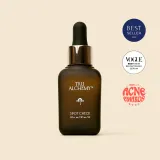
Tula Go Away Acne Spot Treatment

Tula Go Away Acne Spot Treatment

Efficacy100/100IrritancyMedium

Works for

Anti-blemish
Niacinamide, Azelaic acid + 2 more
Works well
What the product description says
“Go Away Acne Spot Treatment”
From product name

This product can help reduce breakouts and clogged pores because it contains the following ingredient: azelaic acid, niacinamide. These ingredients is used for treating acne and can have a noticeable effect.

The following ingredient (ingredients) in this product might be helpful, but there is no evidence to confirm that it actually works: capryloyl salicylic acid

NiacinamideHeroEffect: HighIs proven to be effective in reducing blemishes, evening out skin tone and helping to improve lines and wrinkles. It helps the skin to repair sun damage, calm down inflammation and keep maintain good levels of moisture. The concentration of about 2% is effective for supporting the skin barrier and evening out the skin tone. Concentration of 4-6% is better for helping with acne and balancing the sebum production~1.6–2%
Azelaic acidHeroEffect: HighIs produced by a yeast that lives on normal human skin. It is used in medicine as a topical treatment for mild to moderate acne. It has a mild exfoliating effect. It can also help reduce hyperpigmentation, helps calm down inflammation and can help neutralize free radicals~0.8–1.2%
Capryloyl salicylic acidKey activeEffect: Medium~0.5–0.75%
Aloe barbadensis leaf juiceEffect: Low, below effective doseTraditionally used to treat sunburns, dermatitis and inflammation, but evidence for its effectiveness is lacking. The extract can contain humectants that help attract water into the skin~0.45–0.65%
Evens skin tone
Niacinamide, Azelaic acid + 3 more
Works well
What the product description says
“Plus, it helps prevent future acne and fade marks left behind from past blemishes.”
Source: Ulta

This product can help reduce hypepigmentation and even out the skin tone because it contains the following effective ingredients: azelaic acid, niacinamide

The following ingredient (ingredients) in this product might be helpful, but there is no evidence to confirm that it actually can help even out the skin tone: capryloyl salicylic acid, glycyrrhiza glabra root extract.

Keep in mind that you would need to apply any topical skincare targetted at hypigmentation consistently for a couple of months to get a result. No topical skincare product can help get rid of hyperpigmentation (including post-acne marks and age spots) instantly.

NiacinamideKey activeEffect: HighIs proven to be effective in reducing blemishes, evening out skin tone and helping to improve lines and wrinkles. It helps the skin to repair sun damage, calm down inflammation and keep maintain good levels of moisture. The concentration of about 2% is effective for supporting the skin barrier and evening out the skin tone. Concentration of 4-6% is better for helping with acne and balancing the sebum production~1.6–2%
Azelaic acidKey activeEffect: HighIs produced by a yeast that lives on normal human skin. It is used in medicine as a topical treatment for mild to moderate acne. It has a mild exfoliating effect. It can also help reduce hyperpigmentation, helps calm down inflammation and can help neutralize free radicals~0.8–1.2%
Capryloyl salicylic acidKey activeEffect: Medium~0.5–0.75%
Glycyrrhiza glabra root extractEffect: LowA plant extract that can help lighten the skin and calm down inflammation. Might be helpful in neutralizing free radicals~0.3–0.55%
Lactic acidUnder-dosedAn exfoliating and moisturizing alpha-hydroxy acid (AHA). Typically causes less irritation than other AHAs, for example, glycolic acid. At high concentrations (about 15%), lactic acid can help reduce lines and wrinkles. Recent studies show that lactic acid can support the "good" bacteria living on skin's surface (healthy skin microbiome)~1.1–1.4%
Anti-oxidation
Side benefit · Azelaic acid, Lactococcus ferment lysate + 5 more
Works well

This product contains antioxidants (azelaic acid) that can help neutralize free radicals in skin. By doing so, they can lessen the damage the skin gets from the UV light (sun).

Azelaic acidKey activeEffect: HighIs produced by a yeast that lives on normal human skin. It is used in medicine as a topical treatment for mild to moderate acne. It has a mild exfoliating effect. It can also help reduce hyperpigmentation, helps calm down inflammation and can help neutralize free radicals~0.8–1.2%
Lactococcus ferment lysateEffect: LowConsists of remains of dead bacteria cells. Is likely helpful in attracting water to the upper layer of the skin. Might be helpful in reducing inflammation and neutralizing free radicals in skin~1.4–1.7%
Vaccinium angustifolium fruit extractEffect: LowA plant extract tha can have anti-oxidant properties, but evidence of effectiveness in skin is lacking~0.35–0.65%
Glycyrrhiza glabra root extractEffect: LowA plant extract that can help lighten the skin and calm down inflammation. Might be helpful in neutralizing free radicals~0.3–0.55%
Zingiber officinale root extractEffect: LowA plant extract that can contain an irritating essential oil. Might have some anti-oxidant effect, but evidence is lacking~0.3–0.55%
BisabololEffect: Low, below effective doseAn active component of chamomile plant that historically has been used to calm down irritated skin. A recent study shows that bisabolol indeed can have some anti-inflammatory effect on skin, even though conclusive data is lacking. Bisabolol has a sweet floral scent and can be added to products for its aromatic properties~0.25–0.45%
TocopherolUnder-dosedPure form of vitamin E. Can help moisturise and protect the skin from free radicals. Often used to help stabilise other ingredients or the formula itself~0.2–0.4%
Anti-aging
Side benefit · Niacinamide, Lactococcus ferment lysate + 3 more
Works well

This product can help reduce and prevent fine lines and wrinkles, improve skin elasticity and firmness because it contains niacinamide.

Keep in mind that it typically takes at least 6 weeks to notice any results because the changes that are needed to improve fine lines and elasticity happen in the deeper layers of the skin. No topical anti-aging product can “erase” wrinkles or fully reverse signs of aging.

NiacinamideKey activeEffect: HighIs proven to be effective in reducing blemishes, evening out skin tone and helping to improve lines and wrinkles. It helps the skin to repair sun damage, calm down inflammation and keep maintain good levels of moisture. The concentration of about 2% is effective for supporting the skin barrier and evening out the skin tone. Concentration of 4-6% is better for helping with acne and balancing the sebum production~1.6–2%
Lactococcus ferment lysateEffect: LowConsists of remains of dead bacteria cells. Is likely helpful in attracting water to the upper layer of the skin. Might be helpful in reducing inflammation and neutralizing free radicals in skin~1.4–1.7%
Aloe barbadensis leaf juiceEffect: Low, below effective doseTraditionally used to treat sunburns, dermatitis and inflammation, but evidence for its effectiveness is lacking. The extract can contain humectants that help attract water into the skin~0.45–0.65%
TocopherolEffect: Low, below effective dosePure form of vitamin E. Can help moisturise and protect the skin from free radicals. Often used to help stabilise other ingredients or the formula itself~0.2–0.4%
Lactic acidUnder-dosedAn exfoliating and moisturizing alpha-hydroxy acid (AHA). Typically causes less irritation than other AHAs, for example, glycolic acid. At high concentrations (about 15%), lactic acid can help reduce lines and wrinkles. Recent studies show that lactic acid can support the "good" bacteria living on skin's surface (healthy skin microbiome)~1.1–1.4%
Exfoliation
Side benefit · Azelaic acid, Capryloyl salicylic acid + 1 more
Works well

This product can help exfoliate the skin. In other words, it helps break down the bonds between dead cells on the surface of the skin and speed up the skin turnover. Skin often appears softer and brighter after exfoliation, but overdoing it can result in disrupted skin barrier. The following ingredient is doing the exfoliating job in this product: capryloyl salicylic acid.

Azelaic acidKey activeEffect: MediumIs produced by a yeast that lives on normal human skin. It is used in medicine as a topical treatment for mild to moderate acne. It has a mild exfoliating effect. It can also help reduce hyperpigmentation, helps calm down inflammation and can help neutralize free radicals~0.8–1.2%
Capryloyl salicylic acidKey activeEffect: High~0.5–0.75%
Lactic acidUnder-dosedAn exfoliating and moisturizing alpha-hydroxy acid (AHA). Typically causes less irritation than other AHAs, for example, glycolic acid. At high concentrations (about 15%), lactic acid can help reduce lines and wrinkles. Recent studies show that lactic acid can support the "good" bacteria living on skin's surface (healthy skin microbiome)~1.1–1.4%
Moisturizing
Side benefit · Niacinamide, Glycerin + 8 more
Works well

This product can help improve hydration of the skin with the two types of ingredients.

The first type is called “humectants”:
these ingredients help attract water. When humectants are on the surface of the skin, they “pull in” the moisture from the outside environment, or from within deeper layers of the skin. The following ingredients in this product do the job: glycerin, butylene glycol.

This product also contains ingredients called “occlusives”. They help reduce the speed with which our skin loses moisture to the outside environment. These ingredients also help soften the upper layer of the skin, so it feels less tight and nicer to the touch. The following ingredients in this product do the job: dimethicone, caprylyl glycol.

The following ingredients in this product are especially good for supporting the skin barrier and helping with the hydration level: niacinamide

NiacinamideHeroEffect: HighIs proven to be effective in reducing blemishes, evening out skin tone and helping to improve lines and wrinkles. It helps the skin to repair sun damage, calm down inflammation and keep maintain good levels of moisture. The concentration of about 2% is effective for supporting the skin barrier and evening out the skin tone. Concentration of 4-6% is better for helping with acne and balancing the sebum production~1.6–2%
GlycerinKey active· HumectantEffect: HighOne of the best moisturizing ingredients. Naturally present in skin. It attracts water to the upper layer of the skin working as a humectant~3.9–4.7%
Lactococcus ferment lysateKey activeEffect: HighConsists of remains of dead bacteria cells. Is likely helpful in attracting water to the upper layer of the skin. Might be helpful in reducing inflammation and neutralizing free radicals in skin~1.4–1.7%
DimethiconeKey active· Emollient, OcclusiveEffect: HighA silicone that helps to reduce water loss from the surface of the skin. Can temporarily "fill in" lines and wrinkles, absorb oil, and create a nice product finish~0.25–0.45%
Butylene glycol· HumectantEffect: LowUsed to create a nice product texture and help delivery of other ingredients. Might be somewhat helpful in attracting water to the upper layer of the skin~1.9–2.3%
Isohexadecane· EmollientEffect: LowImproves the texture of the product and helps soften the skin. Helps oil and water mix together and can be used as a cleansing agent~0.25–0.5%
Caprylyl glycol· Humectant, EmollientEffect: LowHelps preserve products and creates a nice product texture~0.25–0.4%
Aloe barbadensis leaf juiceEffect: Low, below effective doseTraditionally used to treat sunburns, dermatitis and inflammation, but evidence for its effectiveness is lacking. The extract can contain humectants that help attract water into the skin~0.45–0.65%
TocopherolEffect: Low, below effective dosePure form of vitamin E. Can help moisturise and protect the skin from free radicals. Often used to help stabilise other ingredients or the formula itself~0.2–0.4%
Lactic acidUnder-dosedAn exfoliating and moisturizing alpha-hydroxy acid (AHA). Typically causes less irritation than other AHAs, for example, glycolic acid. At high concentrations (about 15%), lactic acid can help reduce lines and wrinkles. Recent studies show that lactic acid can support the "good" bacteria living on skin's surface (healthy skin microbiome)~1.1–1.4%

Can it cause trouble?

Irritancy
2 strong irritants: Melaleuca alternifolia leaf oil, Zingiber officinale root extract
Medium risk
We flagged 15 ingredients with irritancy potential. Severity depends on your sensitivity threshold; the table lists the worst offenders first.
IngredientFunctionIrritationEst. amount
Melaleuca alternifolia leaf oilAn essential oil that can be irritating. Has some anti-bacterial propertiesHigh~0.6–0.9%est.
Capryloyl salicylic acid—High~0.5–0.75%est.
Zingiber officinale root extractA plant extract that can contain an irritating essential oil. Might have some anti-oxidant effect, but evidence is lackingHigh~0.3–0.55%est.
Lactic acidAn exfoliating and moisturizing alpha-hydroxy acid (AHA). Typically causes less irritation than other AHAs, for example, glycolic acid. At high concentrations (about 15%), lactic acid can help reduce lines and wrinkles. Recent studies show that lactic acid can support the "good" bacteria living on skin's surface (healthy skin microbiome)Medium~1.1–1.4%est.
Aloe barbadensis leaf juiceTraditionally used to treat sunburns, dermatitis and inflammation, but evidence for its effectiveness is lacking. The extract can contain humectants that help attract water into the skinMedium~0.45–0.65%est.
Vaccinium angustifolium fruit extractA plant extract tha can have anti-oxidant properties, but evidence of effectiveness in skin is lackingMedium~0.35–0.65%est.
Glycyrrhiza glabra root extractA plant extract that can help lighten the skin and calm down inflammation. Might be helpful in neutralizing free radicalsMedium~0.3–0.55%est.
Citric acidCan work as an exfoliant but is typically used to adjust the product pHMedium~0.3–0.6%est.
Trisodium ethylenediamine disuccinateUsed to improve stability of the formulationMedium~0.2–0.4%est.
1,2-hexanediolA preservativeMedium~0.2–0.35%est.
Caprylyl glycolHelps preserve products and creates a nice product textureMedium~0.25–0.4%est.
Sodium citrateHelps to control the skin's pH level. Maintains the skin's natural film of amino-lactic acids and oils. Helps to preserve productsMedium~0.2–0.35%est.
EthylhexylglycerinA preservativeMedium~0.2–0.35%est.
HydroxyacetophenoneUsed to increase effectiveness of preservativesMedium~0.2–0.35%est.
Potassium sorbateA preservativeMedium~0.1–0.15%est.
Comedogenic
Clean of flagged comedogenic ingredients
None flagged
Did this help you decide?

User reviews

Would you recommend?
No community reviews yet.

Be the first — your take helps the next person decide.

Ingredients

Filter by role to see what each ingredient is doing.

Water~45–55%
Formula
Irritation risk
Low

Plain old water

More about Water
Isosorbide~4.4–5.4%
Formula
Irritation risk
Low
More about Isosorbide
Glycerin~3.9–4.7%
Key active
Irritation risk
Low
Works for
Moisturizing

One of the best moisturizing ingredients. Naturally present in skin. It attracts water to the upper layer of the skin working as a humectant

More about Glycerin
Acrylamide/sodium acryloyldimethyltaurate copolymer~3.1–3.8%
Formula
Irritation risk
Low

Helps water and oil mix together and create gel-like textures

More about Acrylamide/sodium acryloyldimethyltaurate copolymer
Propanediol~2.3–2.8%
Formula
Irritation risk
Low

Acts as a solvent for other ingredients. Speeds up the absorption of other ingredients into the skin

More about Propanediol
Butylene glycol~1.9–2.3%
Formula
Irritation risk
Low
Works for
Moisturizing

Used to create a nice product texture and help delivery of other ingredients. Might be somewhat helpful in attracting water to the upper layer of the skin

More about Butylene glycol
Niacinamide~1.6–2%
Hero · Moisturizing, Anti-blemish
Irritation risk
Low
Works for
Anti-agingEvens skin toneMoisturizingAnti-blemishReduces irritationAnti-inflammatoryReduces rednessAntibacterial

Is proven to be effective in reducing blemishes, evening out skin tone and helping to improve lines and wrinkles. It helps the skin to repair sun damage, calm down inflammation and keep maintain good levels of moisture. The concentration of about 2% is effective for supporting the skin barrier and evening out the skin tone. Concentration of 4-6% is better for helping with acne and balancing the sebum production

More about Niacinamide
Lactococcus ferment lysate~1.4–1.7%
Key active
Irritation risk
Low
Works for
MoisturizingAnti-oxidationAnti-agingAnti-inflammatory

Consists of remains of dead bacteria cells. Is likely helpful in attracting water to the upper layer of the skin. Might be helpful in reducing inflammation and neutralizing free radicals in skin

More about Lactococcus ferment lysate
Lactic acid~1.1–1.4%
Under-dosedIrritant · medium
Irritation risk
Medium
Works for
ExfoliationEvens skin toneMoisturizingAnti-aging

An exfoliating and moisturizing alpha-hydroxy acid (AHA). Typically causes less irritation than other AHAs, for example, glycolic acid. At high concentrations (about 15%), lactic acid can help reduce lines and wrinkles. Recent studies show that lactic acid can support the "good" bacteria living on skin's surface (healthy skin microbiome)

More about Lactic acid
Azelaic acid~0.8–1.2%
Hero · Anti-blemish
Irritation risk
Low
Works for
Evens skin toneAnti-blemishAnti-oxidationExfoliation

Is produced by a yeast that lives on normal human skin. It is used in medicine as a topical treatment for mild to moderate acne. It has a mild exfoliating effect. It can also help reduce hyperpigmentation, helps calm down inflammation and can help neutralize free radicals

More about Azelaic acid
Melaleuca alternifolia leaf oil~0.6–0.9%
Irritant · high
Irritation risk
High
Works for
Antibacterial

An essential oil that can be irritating. Has some anti-bacterial properties

More about Melaleuca alternifolia leaf oil
Capryloyl salicylic acid~0.5–0.75%
Key activeIrritant · high
Irritation risk
High
Works for
ExfoliationAnti-blemishEvens skin tone
More about Capryloyl salicylic acid
Aloe barbadensis leaf juice~0.45–0.65%
Irritant · medium
Irritation risk
Medium
Works for
MoisturizingAnti-inflammatoryAntibacterialReduces rednessReduces irritationAnti-agingAnti-blemish

Traditionally used to treat sunburns, dermatitis and inflammation, but evidence for its effectiveness is lacking. The extract can contain humectants that help attract water into the skin

More about Aloe barbadensis leaf juice
Vaccinium angustifolium fruit extract~0.35–0.65%
Irritant · medium
Irritation risk
Medium
Works for
Anti-oxidation

A plant extract tha can have anti-oxidant properties, but evidence of effectiveness in skin is lacking

More about Vaccinium angustifolium fruit extract
Glycyrrhiza glabra root extract~0.3–0.55%
Irritant · medium
Irritation risk
Medium
Works for
Reduces rednessAnti-inflammatoryAnti-oxidationEvens skin toneAntibacterial

A plant extract that can help lighten the skin and calm down inflammation. Might be helpful in neutralizing free radicals

More about Glycyrrhiza glabra root extract
Zingiber officinale root extract~0.3–0.55%
Irritant · high
Irritation risk
High
Works for
Anti-oxidation

A plant extract that can contain an irritating essential oil. Might have some anti-oxidant effect, but evidence is lacking

More about Zingiber officinale root extract
Citric acid~0.3–0.6%
Irritant · medium
Irritation risk
Medium

Can work as an exfoliant but is typically used to adjust the product pH

More about Citric acid
Bisabolol~0.25–0.45%
Formula
Irritation risk
Low
Works for
Reduces irritationAnti-inflammatoryAnti-oxidation

An active component of chamomile plant that historically has been used to calm down irritated skin. A recent study shows that bisabolol indeed can have some anti-inflammatory effect on skin, even though conclusive data is lacking. Bisabolol has a sweet floral scent and can be added to products for its aromatic properties

More about Bisabolol
Morinda citrifolia extract~0.25–0.5%
Formula
Xanthan gum~0.25–0.5%
Formula
Irritation risk
Low
Works for
Cleansing

Used to create a thicker product consistency

More about Xanthan gum
Trisodium ethylenediamine disuccinate~0.2–0.4%
Irritant · medium
Irritation risk
Medium

Used to improve stability of the formulation

More about Trisodium ethylenediamine disuccinate
Tocopherol~0.2–0.4%
Under-dosed
Irritation risk
Low
Works for
Anti-oxidationAnti-inflammatoryAnti-agingMoisturizing

Pure form of vitamin E. Can help moisturise and protect the skin from free radicals. Often used to help stabilise other ingredients or the formula itself

More about Tocopherol
1,2-hexanediol~0.2–0.35%
Irritant · medium
Irritation risk
Medium

A preservative

More about 1,2-hexanediol
Caprylyl glycol~0.25–0.4%
Irritant · medium
Irritation risk
Medium
Works for
Moisturizing

Helps preserve products and creates a nice product texture

More about Caprylyl glycol
Carbomer~0.2–0.4%
Formula
Irritation risk
Low
Works for
Cleansing

Helps create a thicker or gel-like product texture. It is not a surfactant but can be used in gentle cleansing formulations

More about Carbomer
Silica~0.3–0.55%
Formula
Irritation risk
Low

Used to absorb oil and can temporarily mattify skin

More about Silica
Sodium citrate~0.2–0.35%
Irritant · medium
Irritation risk
Medium

Helps to control the skin's pH level. Maintains the skin's natural film of amino-lactic acids and oils. Helps to preserve products

More about Sodium citrate
Diethylhexyl sodium sulfosuccinate~0.3–0.55%
Formula
Irritation risk
Low
Works for
Cleansing
More about Diethylhexyl sodium sulfosuccinate
Dimethicone~0.25–0.45%
Key active
Irritation risk
Low
Works for
MoisturizingMattifying

A silicone that helps to reduce water loss from the surface of the skin. Can temporarily "fill in" lines and wrinkles, absorb oil, and create a nice product finish

More about Dimethicone
Ethylhexylglycerin~0.2–0.35%
Irritant · medium
Irritation risk
Medium

A preservative

More about Ethylhexylglycerin
Hydroxyacetophenone~0.2–0.35%
Irritant · medium
Irritation risk
Medium

Used to increase effectiveness of preservatives

More about Hydroxyacetophenone
Isohexadecane~0.25–0.5%
Formula
Irritation risk
Low
Works for
CleansingMoisturizing

Improves the texture of the product and helps soften the skin. Helps oil and water mix together and can be used as a cleansing agent

More about Isohexadecane
Peg-40 stearate~0.2–0.35%
Formula
Irritation risk
Low
Works for
Cleansing

Helps oil and water mix together

More about Peg-40 stearate
Polyglyceryl-2 isostearate~0.2–0.35%
Formula
Irritation risk
Low
Works for
Cleansing
More about Polyglyceryl-2 isostearate
Polysorbate 80~0.15–0.3%
Formula
Irritation risk
Low
Works for
Cleansing

Helps water and oil mix together

More about Polysorbate 80
Potassium sorbate~0.1–0.15%
Irritant · medium
Irritation risk
Medium

A preservative

More about Potassium sorbate
Sodium benzoate~0.05–0.1%
Formula
Irritation risk
Low

A preservative

More about Sodium benzoate
Sodium chloride~0.1–0.2%
Formula
Irritation risk
Low

Used to stabilize mixtures of oil and water, and create thicker, gel-like product textures

More about Sodium chloride
Sodium hydroxide~0.05–0.15%
Formula
Irritation risk
Low

Used to adjust the product's pH

More about Sodium hydroxide
Sorbitan stearate~0.05–0.1%
Formula
Irritation risk
Low
Works for
Cleansing

Helps water and oil mix together

More about Sorbitan stearate
Phenoxyethanol~0.1–0.2%
Formula
Irritation risk
Low

A preservative. It helps prevent bacterial growth in cosmetic products

More about Phenoxyethanol
Ingredient list view

Water, Isosorbide, Glycerin, Acrylamide/sodium acryloyldimethyltaurate copolymer, Propanediol, Butylene glycol, Niacinamide, Lactococcus ferment lysate, Lactic acid, Azelaic acid, Melaleuca alternifolia leaf oil, Capryloyl salicylic acid, Aloe barbadensis leaf juice, Vaccinium angustifolium fruit extract, Glycyrrhiza glabra root extract, Zingiber officinale root extract, Citric acid, Bisabolol, Morinda citrifolia extract, Xanthan gum, Trisodium ethylenediamine disuccinate, Tocopherol, 1,2-hexanediol, Caprylyl glycol, Carbomer, Silica, Sodium citrate, Diethylhexyl sodium sulfosuccinate, Dimethicone, Ethylhexylglycerin, Hydroxyacetophenone, Isohexadecane, Peg-40 stearate, Polyglyceryl-2 isostearate, Polysorbate 80, Potassium sorbate, Sodium benzoate, Sodium chloride, Sodium hydroxide, Sorbitan stearate, Phenoxyethanol

Compare prices

Retailers ranked by price — lowest first.

Amazon US
Price unavailable Out of stock
Check

Affiliate links · As an Amazon Associate, WIMJ earns from qualifying purchases.

Worth comparing, line by line.

Match % combines shared ingredients, the first five ingredients, shared actives and hero ingredients, irritancy (lower counts in the alternative's favour), texture and body area. Only products in the same routine step are compared.

Side-by-side comparison of this product against its closest alternatives
TulaGo Away Acne Spot TreatmentYOUR PRODUCTSkinfixAcne+ 2% BHA Spot TreatmentTarteSugar Rush - No Bullzit Acne Spot TreatmentTru AlchemySpot Check
Match—71%54%54%
Price—$22.50—$35.00
Shared key ingredients—3 of 93 of 92 of 9
Key difference—Salicylic AcidCaffeineGlycolic Acid
Irritancy Medium Low High Low
Drying alcohol—— Contains drying alcohol —
View product Shop Shop Shop

More alternatives: DHC Age and Sun Spot Targeted GelAESTURA Theracne 365 Spot Treatment

Cheaper alternatives? Browse formulas in the same category.
We compare ingredient profiles across our catalog — pick the closest match for your budget.
Open dupe finder

Product summary

"Tula - Go Away Acne Spot Treatment" is effective for: Anti-blemish, Evens skin tone, Anti-aging, Exfoliation and Moisturizing

Ingredient callouts

  • A good concentration of Niacinamide (1.60% - 2.00%). Niacinamide is a well-studied multi-tasking active. It is stable, and can work well in almost any hydrating formulation. There is solid evidence that Niacinamide can help support skin barrier, regulate oil production and reduce acne and clogged pores. It also helps to fight photodamage and improve the skin tone, reducing pigmentation marks.
  • This product contains acids (lactic acid 1.10% - 1.40%). Their concentration is low, and they will not have a strong exfoliating effect. Instead, they work to support the skin natural acid mantle and to attract water (as humectants). Lactic acid is particularly good in attracting water to the upper layer of the skin and improving the skin barrier.
  • Humectants (glycerin 3.90% - 4.70%). These ingredients help attract water to the upper layer of the skin and improve the skin hydration.

About the brand

According to Cruelty-Free Kitty "Tula" is cruelty free, but its parent company is not.

Tula Go Away Acne Spot Treatment
TulaGo Away Acne Spot Treatment

Affiliate links · As an Amazon Associate, WIMJ earns from qualifying purchases.

As an Amazon Associate, WIMJ earns from qualifying purchases.