Works for
2 of 2 advertised claims delivered
Anti-agingGluconolactone, Acetyl decapeptide-3 + 9 moreStrong evidence
“The face cream is designed to revitalise the complexion and reduce the appearance of fine lines with a firming and lifting effect.”
This product can help reduce and prevent fine lines and wrinkles, improve skin elasticity and firmness because it contains gluconolactone.
These ingredients in the product can also be helpful, even though there is less evidence for their effectiveness: acetyl decapeptide-3, adenosine phosphate, palmitoyl tripeptide-5, sh-oligopeptide-1, sh-polypeptide-2.
Keep in mind that it typically takes at least 6 weeks to notice any results because the changes that are needed to improve fine lines and elasticity happen in the deeper layers of the skin. No topical anti-aging product can “erase” wrinkles or fully reverse signs of aging.
MoisturizingSh-oligopeptide-1, Acetyl decapeptide-3 + 30 moreStrong evidence
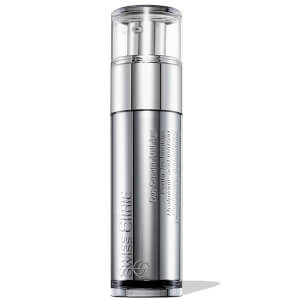
“Pamper your skin with the luxuriously hydrating Swiss Clinic Day Cream .”
This product can help improve hydration of the skin with the two types of ingredients.
The first type is called “humectants”:
these ingredients help attract water.
When humectants are on the surface of the skin, they “pull in” the moisture from the outside environment, or from
within deeper layers of the skin. The following ingredients in this product do the job:
glycerin, hyaluronic acid.
This product also contains ingredients called “occlusives”. They help reduce the speed with which our skin loses moisture to the outside environment. These ingredients also help soften the upper layer of the skin, so it feels less tight and nicer to the touch. The following ingredients in this product do the job: dimethicone, helianthus annuus seed oil.
The following ingredients in this product are especially good for supporting the skin barrier and helping with the hydration level: acetyl decapeptide-3, palmitoyl tripeptide-5, sh-oligopeptide-1
ExfoliationNot advertised by the brand · Gluconolactone, Retinyl palmitate + 1 moreStrong evidence
This product can help exfoliate the skin. In other words, it helps break down the bonds between dead cells on the surface of the skin and speed up the skin turnover. Skin often appears softer and brighter after exfoliation, but overdoing it can result in disrupted skin barrier. The following ingredient is doing the exfoliating job in this product: gluconolactone.
Evens skin toneNot advertised by the brand · Gluconolactone, Hydrolyzed yeast extract + 2 moreStrong evidence
This product can help reduce hypepigmentation and even out the skin tone because it contains the following effective ingredients: gluconolactone
Keep in mind that you would need to apply any topical skincare targetted at hypigmentation consistently for a couple of months to get a result. No topical skincare product can help get rid of hyperpigmentation (including post-acne marks and age spots) instantly.
Anti-oxidationNot advertised by the brand · Gluconolactone, Ginkgo biloba leaf extract + 7 moreModerate evidence
This product contains antioxidants (ginkgo biloba leaf extract, gluconolactone) that might be able to help neutralize free radicals in skin to lessen the damage it gets from the UV light (sun). There is not enough evidence to confirm their effectiveness in skin though.
Can it cause trouble?
Irritancy4 strong irritants: Parfum, Retinyl palmitate + 2 more — patch-test recommendedHigh risk
Comedogenic3 ingredients rated 2 or more on the 0–5 pore-clogging scale3 flagged
User reviews
Be the first — your take helps the next person decide.
Ingredients
Filter by role to see what each ingredient is doing.
Water~45–55%
Butylene glycol~5.9–7.2%
- Irritation risk
- Low
Used to create a nice product texture and help delivery of other ingredients. Might be somewhat helpful in attracting water to the upper layer of the skin
More about Butylene glycolDimethicone~4.4–5.3%
- Irritation risk
- Low
A silicone that helps to reduce water loss from the surface of the skin. Can temporarily "fill in" lines and wrinkles, absorb oil, and create a nice product finish
More about DimethiconeCyclopentasiloxane~3.1–3.8%
- Irritation risk
- Low
A silicone that helps improve the product texture and spreadability. Can absorb oil creating a short-term mattifying effect on the skin
More about CyclopentasiloxaneGlycerin~2.3–2.8%
- Irritation risk
- Low
One of the best moisturizing ingredients. Naturally present in skin. It attracts water to the upper layer of the skin working as a humectant
More about GlycerinPolysilicone-11~1.9–2.3%
- Irritation risk
- Low
A silicone that forms a light film on the skin surface helping to bind water and temporarily absorb oils creating a matt and powdery feel
More about Polysilicone-11Octyldodecyl lactate~1.5–1.9%
- Irritation risk
- Low
Polyacrylate-13~1.4–1.7%
- Irritation risk
- Low
Used to create a thicker product consistency and stabilize the product formulation
More about Polyacrylate-13Polymethylsilsesquioxane~1.1–1.3%
- Irritation risk
- Low
A silicone that improves product texture and helps dissolve other ingredients. Can form a non-greasy film on the skin to prevent moisture loss
More about PolymethylsilsesquioxaneGluconolactone~0.65–1%
- Irritation risk
- Medium
A polyhydroxy acid (PHA) that helps shed the dead cells from the skin surface revealing smoother skin. Is believed to be genter than AHAs. It helps attract water to the upper layer of the skin and can stimulate production of skin's own hyaluronic acid resulting in improved hydration levels. It has been shown to be helpful against acne and clogged pores if used consistently (e.g over a period of 12 weeks) in high enough concentration. It can help reduce fine lines and wrinkles and improve skin tone with long-term application. Can help neutralize free radicals
More about GluconolactonePhenoxyethanol~0.5–0.75%
- Irritation risk
- Low
A preservative. It helps prevent bacterial growth in cosmetic products
More about PhenoxyethanolPolyisobutene~0.55–0.8%
Propylene glycol~0.35–0.6%
- Irritation risk
- High
Helps oil and water mix together and can enhance the penetration of other ingredients into the skin. It can be irritating
More about Propylene glycolParfum~0.3–0.55%
- Irritation risk
- High
An aromatic blend of unspecified and possibly irritating ingredients
More about ParfumSodium benzoate~0.25–0.5%
Decyl glucoside~0.4–0.6%
- Irritation risk
- High
Helps oil and water mix together. Can be irritating
More about Decyl glucosideHydroxyethylcellulose~0.3–0.55%
- Irritation risk
- Low
Used to thicken product formulations and create gel-like textures
More about HydroxyethylcelluloseLactic acid~0.2–0.4%
- Irritation risk
- Medium
An exfoliating and moisturizing alpha-hydroxy acid (AHA). Typically causes less irritation than other AHAs, for example, glycolic acid. At high concentrations (about 15%), lactic acid can help reduce lines and wrinkles. Recent studies show that lactic acid can support the "good" bacteria living on skin's surface (healthy skin microbiome)
More about Lactic acidPolysorbate 20~0.25–0.4%
Sorbitan isostearate~0.2–0.35%
- Irritation risk
- Low
Helps oil and water mix together
More about Sorbitan isostearateVaccinium myrtillus fruit extract~0.15–0.3%
- Irritation risk
- Medium
A plant extract that might help neutralize free radicals in skin, but research on its efficacy in skin is lacking
More about Vaccinium myrtillus fruit extractTocopheryl acetate~0.15–0.3%
- Irritation risk
- Medium
A more stable but less bio-available form of vitamin E compared to Tocopherol. Might help moisturize and protect the skin from free radicals, but mostly used in low concentrations to stabilize other ingredients.
More about Tocopheryl acetateApricot kernel oil polyglyceryl-6 esters~0.2–0.35%
Retinyl palmitate~0.15–0.25%
- Irritation risk
- High
Three steps removed from the active form of vitamin A - retinoic acid. To have an effect in the skin, it first needs to be converted twice to become the retinoic acid. This means it is less potent than retinol, but could also be less irritating. Once converted to the retinoic acid in the skin, it helps against all signs of aging, improves skin cell turnover and helps fight blemishes and clogged pores. However, in many cosmetic formulations, it is used in a concentration that is too low to have the full effect
More about Retinyl palmitateSodium hyaluronate~0.15–0.25%
- Irritation risk
- Low
One of the best moisturizing ingredients. Attracts water into the upper layer of the skin
More about Sodium hyaluronateSaccharum officinarum extract~0.15–0.25%
- Irritation risk
- Low
Sugar extract that helps attract water to the upper layer of the skin
More about Saccharum officinarum extractPolyglyceryl-10 dipalmitate~0.2–0.35%
Hydrolyzed wheat protein~0.15–0.25%
- Irritation risk
- Medium
Can help attract water to the upper layer of the skin. Avoid if sensitive to gluten
More about Hydrolyzed wheat proteinHelianthus annuus seed oil~0.2–0.35%
- Irritation risk
- Low
A great emollient due to its high linoleic acid content. One of the most effective plant oils in helping skin hydration and repairing skin barrier function
More about Helianthus annuus seed oilSunflower seed oil polyglyceryl-6 esters~0.2–0.35%
Polyglyceryl-10 oleate~0.15–0.3%
- Irritation risk
- Low
Helps soften the upper layer of the skin
More about Polyglyceryl-10 oleateCaprylyl glycol~0.2–0.35%
- Irritation risk
- Medium
Helps preserve products and creates a nice product texture
More about Caprylyl glycolHexylene glycol~0.15–0.3%
- Irritation risk
- Medium
Helps create a more spreadable product texture
More about Hexylene glycolHydrolyzed hyaluronic acid~0.15–0.3%
- Irritation risk
- Low
One of the best moisturizing ingredients. Attracts water into the upper layer of the skin. A version of it is naturally present in skin
More about Hydrolyzed hyaluronic acidPentylene glycol~0.2–0.4%
- Irritation risk
- Medium
Used to preserve products, dissolve other ingredients and create a nice product texture
More about Pentylene glycolLecithin~0.2–0.4%
- Irritation risk
- Low
Used mostly for creating emulsions - helping oil and water mix together. Helps soften the upper layer of the skin
More about LecithinEthylhexyl palmitate~0.2–0.4%
- Irritation risk
- Low
- Comedogenicity
- 3/5
An emollient that helps soften the skin and create a nice product texture
More about Ethylhexyl palmitatePolyglyceryl-6 oleate~0.2–0.4%
Dicetyl phosphate~0.2–0.4%
Citrus limon fruit extract~0.2–0.35%
- Irritation risk
- High
Used as a fragrance. Can be irritating and cause photosensitivity
More about Citrus limon fruit extractCitrus aurantium dulcis fruit extract~0.2–0.35%
- Irritation risk
- High
A plant extract that is used as a fragrance. Can be irritating and lead to photosensitivity
More about Citrus aurantium dulcis fruit extractCalcium gluconate~0.2–0.4%
- Irritation risk
- Low
Helps attract water to the upper layer of the skin and helps to improve appearance of the product
More about Calcium gluconateMaltodextrin~0.2–0.4%
- Irritation risk
- Low
Used to stabilize the product formulation and can help absorb oil
More about MaltodextrinManilkara multinervis leaf extract~0.2–0.35%
- Irritation risk
- Low
Sorbitan palmitate~0.2–0.4%
- Irritation risk
- Medium
Helps water and oil mix together and stabilize the product formulation
More about Sorbitan palmitatePunica granatum seed extract~0.2–0.35%
Hydrolyzed yeast extract~0.2–0.35%
- Irritation risk
- Low
Helps attract water to the upper layer of the skin and might have some anti-oxidant and skin lightening properties
More about Hydrolyzed yeast extractSorbitan oleate~0.2–0.4%
- Irritation risk
- Medium
- Comedogenicity
- 2/5
Helps oil and water mix together
More about Sorbitan oleateGuanosine~0.2–0.4%
- Irritation risk
- Low
Uracil~0.2–0.4%
- Irritation risk
- Low
Adenosine phosphate~0.2–0.4%
- Irritation risk
- Low
Might help improve cell turnover and reduce inflammation in skin. One study shows that the ingredients might be able to stimulate collagen production in skin
More about Adenosine phosphateAcer saccharum extract~0.2–0.4%
- Irritation risk
- Medium
A plant extract that contains small percentage of AHAs. Is unlikely to have any skin benefit due the small concentration of the active compounds
More about Acer saccharum extractEthylhexyl stearate~0.25–0.5%
- Irritation risk
- Low
Helps soften the upper layer of the skin
More about Ethylhexyl stearateKaempferol~0.25–0.5%
- Irritation risk
- Low
Panax ginseng root extract~0.25–0.5%
- Irritation risk
- High
A plant extract that might have some anti-inflammatory properties, but solid evidence is lacking. It can be irritating
More about Panax ginseng root extractMagnolol~0.25–0.45%
- Irritation risk
- Low
Honokiol~0.2–0.4%
- Irritation risk
- Low
Ginkgo biloba leaf extract~0.25–0.4%
- Irritation risk
- High
A plant extract that might help neutralize free radicals and reduce inflammation in skin. It can be irritating
More about Ginkgo biloba leaf extractUlva lactuca extract~0.25–0.4%
- Irritation risk
- Low
Hyaluronic acid~0.25–0.45%
- Irritation risk
- Low
One of the best moisturizing ingredients. Attracts water into the upper layer of the skin. Naturally present in skin. Typically has large molecule size unless advertised otherwise on the product label. Helps support skin's barrier function and may help to reduce inflammation
More about Hyaluronic acidPalmitoyl tripeptide-5~0.25–0.4%
- Irritation risk
- Low
A type of peptide. Peptides are excellent moisturizers and might be able support collagen production reducing fine lines and wrinkles
More about Palmitoyl tripeptide-5Beta-glucan~0.25–0.4%
- Irritation risk
- Low
Helps attract water to the upper layer of the skin, calm down inflammation and irritation, restore the barrier function and support wound healing. It can be helpful in reducing fine lines and wrinkles
More about Beta-glucanTocopherol~0.25–0.45%
- Irritation risk
- Low
Pure form of vitamin E. Can help moisturise and protect the skin from free radicals. Often used to help stabilise other ingredients or the formula itself
More about TocopherolPolysorbate 60~0.25–0.5%
Disodium phosphate~0.25–0.45%
- Irritation risk
- Low
Helps adjust the product pH and stabilize the formulation
More about Disodium phosphateSodium isostearate~0.3–0.6%
Polyglyceryl-4 diisostearate/polyhydroxystearate/sebacate~0.25–0.45%
- Irritation risk
- Medium
Helps water and oil mix together
More about Polyglyceryl-4 diisostearate/polyhydroxystearate/sebacateBenzyl alcohol~0.2–0.4%
- Irritation risk
- High
A preservative. Can be used to mask unpleasant smell. Can be irritating
More about Benzyl alcoholSodium hyaluronate crosspolymer~0.25–0.45%
- Irritation risk
- Medium
Attracts water into the upper layer of the skin
More about Sodium hyaluronate crosspolymerSilica dimethyl silylate~0.25–0.5%
Disodium edta~0.2–0.4%
Glycine soja oil~0.25–0.4%
- Irritation risk
- Medium
- Comedogenicity
- 2/5
A good emollient that helps soften the skin and helps repair its barrier function. It can clog pores if used in high concentrations.
More about Glycine soja oilSodium oleate~0.65–0.95%
- Irritation risk
- Medium
Helps oil and water mix together and create a thicker product consistency
More about Sodium oleateHydrogenated lecithin~0.2–0.35%
- Irritation risk
- Low
Helps to retain moisture by creating a protective barrier on the skin. Rich in fatty acids. Improves product texture and helps with the penetration of other ingredients.
More about Hydrogenated lecithinSodium phosphate~0.15–0.3%
Potassium sorbate~0.15–0.3%
Acetyl decapeptide-3~0.15–0.3%
- Irritation risk
- Low
A type of peptide. Peptides are excellent moisturizers and might be able support collagen production reducing fine lines and wrinkles
More about Acetyl decapeptide-3Sh-polypeptide-2~0.1–0.2%
- Irritation risk
- Low
A type of peptide. Peptides are excellent moisturizers and might be able support collagen production reducing fine lines and wrinkles
More about Sh-polypeptide-2Sh-oligopeptide-1~0.1–0.2%
- Irritation risk
- Low
A type of peptide. Peptides are excellent moisturizers and might be able support collagen production reducing fine lines and wrinkles
More about Sh-oligopeptide-1Ingredient list view
Water, Butylene glycol, Dimethicone, Cyclopentasiloxane, Glycerin, Polysilicone-11, Octyldodecyl lactate, Polyacrylate-13, Polymethylsilsesquioxane, Gluconolactone, Phenoxyethanol, Polyisobutene, Propylene glycol, Parfum, Sodium benzoate, Decyl glucoside, Hydroxyethylcellulose, Lactic acid, Polysorbate 20, Sorbitan isostearate, Vaccinium myrtillus fruit extract, Tocopheryl acetate, Apricot kernel oil polyglyceryl-6 esters, Retinyl palmitate, Sodium hyaluronate, Saccharum officinarum extract, Polyglyceryl-10 dipalmitate, Hydrolyzed wheat protein, Helianthus annuus seed oil, Sunflower seed oil polyglyceryl-6 esters, Polyglyceryl-10 oleate, Caprylyl glycol, Hexylene glycol, Hydrolyzed hyaluronic acid, Pentylene glycol, Lecithin, Ethylhexyl palmitate, Polyglyceryl-6 oleate, Dicetyl phosphate, Citrus limon fruit extract, Citrus aurantium dulcis fruit extract, Calcium gluconate, Maltodextrin, Manilkara multinervis leaf extract, Sorbitan palmitate, Punica granatum seed extract, Hydrolyzed yeast extract, Sorbitan oleate, Guanosine, Uracil, Adenosine phosphate, Acer saccharum extract, Ethylhexyl stearate, Kaempferol, Panax ginseng root extract, Magnolol, Honokiol, Ginkgo biloba leaf extract, Ulva lactuca extract, Hyaluronic acid, Palmitoyl tripeptide-5, Beta-glucan, Tocopherol, Polysorbate 60, Disodium phosphate, Sodium isostearate, Polyglyceryl-4 diisostearate/polyhydroxystearate/sebacate, Benzyl alcohol, Sodium hyaluronate crosspolymer, Silica dimethyl silylate, Disodium edta, Glycine soja oil, Sodium oleate, Hydrogenated lecithin, Sodium phosphate, Potassium sorbate, Acetyl decapeptide-3, Sh-polypeptide-2, Sh-oligopeptide-1
Compare prices
Retailers ranked by price — lowest first.

Product summary
"Swiss Clinic - Day Cream" has a good moisturizing formula. The formulation is based on a combination of good humectants and emollients. Both are needed to increase the skin hydration level. Humectants in this product (glycerin, hyaluronic acid, hydrolyzed hyaluronic acid, hydrolyzed yeast extract and sodium hyaluronate) help to increase the water content in the upper layer of the skin. (These ingredients do so by "capturing" water molecules from the outside air or from within the deeper layers of the skin). Glycine soja oil, dimethicone, helianthus annuus seed oil, cyclopentasiloxane and ethylhexyl palmitate in this product help decrease the water evoporation from the skin, so that it stays hydrated for longer. These ingredients also soften the skin and take away the feeling of tightness and dryness.
Ingredient callouts
- This product contains acids (gluconolactone and lactic acid). Their concentration is low, and they will not have a strong exfoliating effect. Instead, they work to support the skin natural acid mantle and to attract water (as humectants). PHAs (gluconolactone) especially are great for improving skin hydration. They might be even able to stimulate the production of skin's natural humectants and support the healthy skin microbiome.
- This moisturizer includes a form of retinoids (vitamin A) - retinyl palmitate 0.15% - 0.25%, but this type of vitamin A is not very effective. It could in theory help with fine lines and wrinkles, but the effect is most likely minimal.
- We like that this moisturizer contains peptides (sh-oligopeptide-1 0.10% - 0.20%, palmitoyl tripeptide-5 0.25% - 0.40% and acetyl decapeptide-3 0.15% - 0.30%). There are many different kind of peptides and they are naturally present in our skin. They all are a combination of amino-acids. Some of them work as natural anti-biotics, promote wound-healing and production of collagen. The science is still not settled on how effective peptides in skincare are, but it is very likely that they have a benefit. Peptides might help restore the skin barrier and fight the signs of aging. At the very least, peptides work as humectants: they attract water to the upper layer of the skin and improve its hydration.
Irritation risk
This moisturizer contains a bunch of common irritants, including ingredients that do not provide any known benefit for the skin. It might not be the best choice if your skin is sensitive. We assess the overall irritancy of this moisturizer to be high. For a detailed overview of all potential irritants: click here
You can see the detailed formula review with the breakdown of all actives in the product and the full ingredient list with estimated concentrations in the tables below.
Price
The product retails for 64.00$ in the United States, from 44.80£ up to 64.00£ in the United Kingdom and for 78.40CA$ in Canada.
For a detailed price comparison: click here.
Sources cited in this review
Every concentration estimate and effectiveness label is anchored to one of these 53 studies and safety reviews.
- 1
- 2Final Report on the Safety Assessment of Dimethicone Copolyoljournals.sagepub.com
- 3
- 4
- 5
- 6

Affiliate links · As an Amazon Associate, WIMJ earns from qualifying purchases.