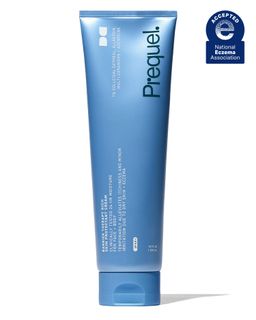
Works for
1 of 1 advertised claim delivered
Moisturizing25 ingredients credited for this claimStrong support
“Formulated with a nourishing blend of 1% colloidal oatmeal, ceramides, allantoin and adenosine, this intensely moisturizing cream absorbs easily and provides relief to dry, irritated skin.”
This product can help improve hydration of the skin with the two types of ingredients.
The first type is called “humectants”:
these ingredients help attract water.
When humectants are on the surface of the skin, they “pull in” the moisture from the outside environment, or from
within deeper layers of the skin. The following ingredients in this product do the job:
allantoin, glycerin.
This product also contains ingredients called “occlusives”. They help reduce the speed with which our skin loses moisture to the outside environment. These ingredients also help soften the upper layer of the skin, so it feels less tight and nicer to the touch. The following ingredients in this product do the job: butyrospermum parkii butter, caprylic/capric triglyceride.
The following ingredients in this product are especially good for supporting the skin barrier and helping with the hydration level: caprooyl phytosphingosine, caprooyl sphingosine, ceramide ap, ceramide eop, ceramide eos, ceramide np, ceramide ns, colloidal oatmeal
Anti-agingNot advertised by the brand · 5 ingredients credited for this claimStrong support
This product can help reduce and prevent fine lines and wrinkles, improve skin elasticity and firmness because it contains adenosine.
Keep in mind that it typically takes at least 6 weeks to notice any results because the changes that are needed to improve fine lines and elasticity happen in the deeper layers of the skin. No topical anti-aging product can “erase” wrinkles or fully reverse signs of aging.
Can it cause trouble?
Irritancy12 flagged ingredientsMedium risk
Comedogenic2 ingredients rated 2 or more on the 0–5 pore-clogging scale2 flagged


User reviews
Be the first — your take helps the next person decide.
Ingredients
Filter by role to see what each ingredient is doing.
Colloidal oatmeal1%
- Irritation risk
- Low
Helps to restore skin barrier function, soften the upper layer of the skin and calm down inflammation
More about Colloidal oatmealWater~45–55%
Carthamus tinctorius seed oil~5.9–7.2%
- Irritation risk
- Low
An emollient that helps soften the skin and might help calm down inflammation
More about Carthamus tinctorius seed oilCetyl alcohol~4.5–5.5%
- Irritation risk
- Low
A non-drying alcohol that works to soften the skin and stabilize product formulations helping oil and water mix together
More about Cetyl alcoholGlycerin~3.8–4.6%
- Irritation risk
- Low
One of the best moisturizing ingredients. Naturally present in skin. It attracts water to the upper layer of the skin working as a humectant
More about GlycerinCaprylic/capric triglyceride~3.2–4%
- Irritation risk
- Medium
A good mix of fatty acids that forms a protective layer on the skin. Improves the shelf life of products. Derived from coconut and glycerin
More about Caprylic/capric triglycerideDimethicone~2.5–3%
- Irritation risk
- Low
A silicone that helps to reduce water loss from the surface of the skin. Can temporarily "fill in" lines and wrinkles, absorb oil, and create a nice product finish
More about DimethiconeButyrospermum parkii butter~2–2.4%
- Irritation risk
- Low
- Comedogenicity
- 3/5
A great moisturising ingredient that softens the skin and reduces water loss from its upper layer. It also can be helpful in protecting skin from free radicals
More about Butyrospermum parkii butterCetearyl olivate~1.5–1.9%
C10-18 triglycerides~1.4–1.7%
- Irritation risk
- Low
Helps soften the skin and attract water to its upper layer. Helps create nice product texture
More about C10-18 triglyceridesSorbitan olivate~1.1–1.4%
Adenosine~0.8–1.2%
- Irritation risk
- Low
Might help improve cell turnover and reduce inflammation in skin. One study shows that the ingredients might be able to help reduce dynamic wrinkles (for example, in the corners of the eyes or on the forehead)
More about AdenosineAllantoin~0.65–1%
- Irritation risk
- Low
Helps calm down inflammation in skin and can help reduce itching. Helps to repair the skin barrier and keep skin hydrated
More about AllantoinCeramide np~0.7–1%
- Irritation risk
- Low
A type of lipid similar to ceramides naturally present in skin. Helps to soften the upper layer of the skin and supports the skin barrier function to keep it hydrated. Can help to prevent inflammation in skin
More about Ceramide npCeramide ns~0.65–0.95%
- Irritation risk
- Low
A type of lipid similar to ceramides naturally present in skin. Helps to soften the upper layer of the skin and supports the skin barrier function to keep it hydrated. Can help to prevent inflammation in skin
More about Ceramide nsCeramide ap~0.55–0.85%
- Irritation risk
- Low
A type of lipid similar to ceramides naturally present in skin. Helps to soften the upper layer of the skin and supports the skin barrier function to keep it hydrated. Can help to prevent inflammation in skin
More about Ceramide apCeramide eop~0.6–0.9%
- Irritation risk
- Low
A type of lipid similar to ceramides naturally present in skin. Helps to soften the upper layer of the skin and supports the skin barrier function to keep it hydrated. Can help to prevent inflammation in skin
More about Ceramide eopCeramide eos~0.55–0.8%
- Irritation risk
- Low
A type of lipid similar to ceramides naturally present in skin. Helps to soften the upper layer of the skin and supports the skin barrier function to keep it hydrated. Can help to prevent inflammation in skin
More about Ceramide eosCholesterol~0.6–0.85%
- Irritation risk
- Low
An emollient that is naturally found in skin
More about CholesterolCaprooyl phytosphingosine~0.5–0.8%
- Irritation risk
- Low
A component of ceramides. Helps to soften the upper layer of the skin and supports the skin barrier function to keep it hydrated. Can help to prevent inflammation in skin
More about Caprooyl phytosphingosineCaprooyl sphingosine~0.45–0.7%
- Irritation risk
- Low
A component of ceramides. Helps to soften the upper layer of the skin and supports the skin barrier function to keep it hydrated. Can help to prevent inflammation in skin
More about Caprooyl sphingosinePhospholipids~0.45–0.65%
- Irritation risk
- Low
Emollients that are naturaly present in skin. In addition, they help water and oil mix together in the product
More about PhospholipidsGlycolipids~0.45–0.65%
- Irritation risk
- Low
Sodium stearoyl glutamate~0.5–0.7%
- Irritation risk
- Medium
Helps oil and water mix together
More about Sodium stearoyl glutamateBehenic acid~0.55–0.8%
Ceteareth-25~0.5–0.75%
Glycine soja oil~0.4–0.6%
- Irritation risk
- Medium
- Comedogenicity
- 2/5
A good emollient that helps soften the skin and helps repair its barrier function. It can clog pores if used in high concentrations.
More about Glycine soja oilGlycine soja sterols~0.45–0.65%
- Irritation risk
- Low
An emollient that helps soften the skin
More about Glycine soja sterolsAscorbyl palmitate~0.4–0.6%
- Irritation risk
- Medium
Being a lipid soluble form of vitamin C, it is more stable and can penetrate the skin better than L-Ascorbic acid. It is effective in protecting the skin from free radicals, as well as evening the skin tone, but is less effective in stimulating collagen production compared to L-Ascorbic acid.
More about Ascorbyl palmitateTocopherol~0.35–0.65%
- Irritation risk
- Low
Pure form of vitamin E. Can help moisturise and protect the skin from free radicals. Often used to help stabilise other ingredients or the formula itself
More about TocopherolLecithin~0.45–0.65%
- Irritation risk
- Low
Used mostly for creating emulsions - helping oil and water mix together. Helps soften the upper layer of the skin
More about LecithinGlyceryl stearate~0.45–0.65%
- Irritation risk
- Low
An emollient that softens the skin and forms a protective layer on its surface. Helps water and oil mix together
More about Glyceryl stearateGlyceryl oleate~0.35–0.6%
- Irritation risk
- High
Helps oil and water mix together. Can be irritating
More about Glyceryl oleateCarbomer~0.3–0.55%
- Irritation risk
- Low
Helps create a thicker or gel-like product texture. It is not a surfactant but can be used in gentle cleansing formulations
More about CarbomerHydroxyacetophenone~0.3–0.55%
Phenoxyethanol~0.3–0.5%
- Irritation risk
- Low
A preservative. It helps prevent bacterial growth in cosmetic products
More about PhenoxyethanolEthylhexylglycerin~0.25–0.5%
Tocopheryl acetate~0.25–0.45%
- Irritation risk
- Medium
A more stable but less bio-available form of vitamin E compared to Tocopherol. Might help moisturize and protect the skin from free radicals, but mostly used in low concentrations to stabilize other ingredients.
More about Tocopheryl acetateTetrasodium glutamate diacetate~0.2–0.35%
- Irritation risk
- Low
Helps stabilize the product formulation
More about Tetrasodium glutamate diacetateSodium chloride~0.2–0.35%
- Irritation risk
- Low
Used to stabilize mixtures of oil and water, and create thicker, gel-like product textures
More about Sodium chlorideLactic acid~0.15–0.3%
- Irritation risk
- Medium
An exfoliating and moisturizing alpha-hydroxy acid (AHA). Typically causes less irritation than other AHAs, for example, glycolic acid. At high concentrations (about 15%), lactic acid can help reduce lines and wrinkles. Recent studies show that lactic acid can support the "good" bacteria living on skin's surface (healthy skin microbiome)
More about Lactic acidSodium hydroxide~0.15–0.25%
Citric acid~0.1–0.2%
- Irritation risk
- Medium
Can work as an exfoliant but is typically used to adjust the product pH
More about Citric acidIngredient list view
Colloidal oatmeal, Water, Carthamus tinctorius seed oil, Cetyl alcohol, Glycerin, Caprylic/capric triglyceride, Dimethicone, Butyrospermum parkii butter, Cetearyl olivate, C10-18 triglycerides, Sorbitan olivate, Adenosine, Allantoin, Unknown, Ceramide np, Ceramide ns, Ceramide ap, Ceramide eop, Ceramide eos, Cholesterol, Caprooyl phytosphingosine, Caprooyl sphingosine, Phospholipids, Glycolipids, Sodium stearoyl glutamate, Behenic acid, Ceteareth-25, Glycine soja oil, Glycine soja sterols, Ascorbyl palmitate, Tocopherol, Lecithin, Glyceryl stearate, Glyceryl oleate, Carbomer, Hydroxyacetophenone, Phenoxyethanol, Ethylhexylglycerin, Tocopheryl acetate, Tetrasodium glutamate diacetate, Sodium chloride, Lactic acid, Sodium hydroxide, Citric acid
Compare prices
Retailers ranked by price — lowest first.

Affiliate links · prices updated regularly
Worth comparing, line by line.
Match % combines shared ingredients, the first five ingredients, shared actives and hero ingredients, irritancy (lower counts in the alternative's favour), texture and body area. Only products in the same routine step are compared.
| PrequelBARRIER THERAPY RICHYOUR PRODUCT | RevolutionCeramides Moisture Cream | REVOLUTION SKINCARECeramides Moisture Cream | Medik8ADVANCED PRO COLLAGEN+ PEPTIDE CREAM | |
|---|---|---|---|---|
| Match | — | 59% | 59% | 55% |
| Price | $20.00 | $11.89−$8.11 | $12.00−$8.00 | $99.00+$79.00 |
| Shared key ingredients | — | 12 of 19 | 12 of 19 | 12 of 19 |
| Key difference | — | Sodium Hyaluronate | Sodium Hyaluronate | Oligopeptide-1 |
| Irritancy | Medium | Low | Low | Medium |
| Drying alcohol | — | — | — | — |
| View product | Shop | Shop | Shop |
Sources cited in this review
Every concentration estimate and effectiveness label is anchored to one of these 16 studies and safety reviews.
- 1
- 2
- 3
- 4Final Report on the Safety Assessment of Dimethicone Copolyoljournals.sagepub.com
- 5
- 6

Affiliate links · As an Amazon Associate, WIMJ earns from qualifying purchases.