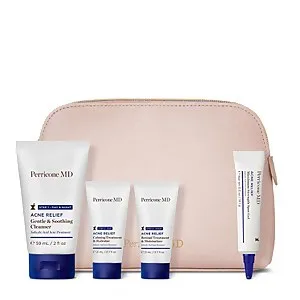
Perricone MD On-The-Go Acne Relief Essentials
Works for
Anti-blemishRetinol, NiacinamideWorks well
“On-The-Go Acne Relief Essentials”
This product can help reduce breakouts and clogged pores because it contains the following ingredient: retinol. This ingredient is used for treating acne and can have a noticeable effect.
ExfoliationSide benefit the brand mentions · Urea, Retinol + 1 moreWorks well
“The powerful combination of retinol, citrulline and niacinamide helps to accelerate surface skin exfoliation and renewal, visibly calm skin and reduce redness, while gently and visibly erasing imperfections overnight.”
This product can help exfoliate the skin. In other words, it helps break down the bonds between dead cells on the surface of the skin and speed up the skin turnover. Skin often appears softer and brighter after exfoliation, but overdoing it can result in disrupted skin barrier. The following ingredient is doing the exfoliating job in this product: retinol.
Anti-oxidationNot advertised by the brand · Retinol, Tocopheryl acetateWorks well
This product contains antioxidants (retinol) that can help neutralize free radicals in skin. By doing so, they can lessen the damage the skin gets from the UV light (sun).
Evens skin toneNot advertised by the brand · Retinol, Niacinamide + 1 moreWorks well
This product can help reduce hypepigmentation and even out the skin tone because it contains the following effective ingredients: retinol.
Keep in mind that you would need to apply any topical skincare targetted at hypigmentation consistently for a couple of months to get a result. No topical skincare product can help get rid of hyperpigmentation (including post-acne marks and age spots) instantly.
Anti-agingNot advertised by the brand · Retinol, Niacinamide + 1 moreWorks well
This product can help reduce and prevent fine lines and wrinkles, improve skin elasticity and firmness because it contains retinol.
Keep in mind that it typically takes at least 6 weeks to notice any results because the changes that are needed to improve fine lines and elasticity happen in the deeper layers of the skin. No topical anti-aging product can “erase” wrinkles or fully reverse signs of aging.
MoisturizingSide benefit the brand mentions · Urea, Panthenol + 15 moreWorks well
“Lactic and succinic acids support a healthy surface skin microbiome for a clearer, more radiant complexion, while citrulline and squalane fight irritation, nourish, hydrate, soothe and visibly reduce redness.”
This product can help improve hydration of the skin with the two types of ingredients.
The first type is called “humectants”:
these ingredients help attract water.
When humectants are on the surface of the skin, they “pull in” the moisture from the outside environment, or from
within deeper layers of the skin. The following ingredients in this product do the job:
arginine, citrulline.
This product also contains ingredients called “occlusives”. They help reduce the speed with which our skin loses moisture to the outside environment. These ingredients also help soften the upper layer of the skin, so it feels less tight and nicer to the touch. The following ingredients in this product do the job: arginine, dimethicone.
The following ingredients in this product are especially good for supporting the skin barrier and helping with the hydration level: panthenol, urea
Can it cause trouble?
Irritancy5 strong irritants: Sd alcohol 40-b, Retinol + 3 more — patch-test recommendedHigh risk
Comedogenic2 ingredients rated 2 or more on the 0–5 pore-clogging scale2 flagged
User reviews
Be the first — your take helps the next person decide.
Ingredients
Filter by role to see what each ingredient is doing.
Glycerin~22–34%
- Irritation risk
- Low
One of the best moisturizing ingredients. Naturally present in skin. It attracts water to the upper layer of the skin working as a humectant
More about GlycerinSodium cocoyl isethionate~7.5–11.2%
- Irritation risk
- Medium
Helps water and oil mix together. Can be used as a cleansing agent
More about Sodium cocoyl isethionateEthylhexyl palmitate~4.6–6.9%
- Irritation risk
- Low
- Comedogenicity
- 3/5
An emollient that helps soften the skin and create a nice product texture
More about Ethylhexyl palmitateSilica cetyl silylate~3.4–5.1%
- Irritation risk
- Low
Sucrose~2.4–3.6%
- Irritation risk
- Low
Can help attract water to the upper layer of the skin. In crystal form, it can work as a gentle exfoliant, gentler than the salt scrub. Helps stabilize the emulsion
More about SucroseSqualane~2.1–3.2%
- Irritation risk
- Low
An oil naturally present in skin. Works as an emollient to soften the skin and form a protective layer on its surface without a greasy feeling.
More about SqualanePolyacrylamide~1.4–2.2%
- Irritation risk
- Medium
Used to improve product texture and help oil and water mix together
More about PolyacrylamideWater~1.2–1.7%
Caprylyl glycol~1–1.5%
- Irritation risk
- Medium
Helps preserve products and creates a nice product texture
More about Caprylyl glycolC13-14 isoparaffin~0.8–1.2%
- Irritation risk
- Low
Helps soften the upper layer of the skin, dissolve other ingredients and create a thicker product consistency
More about C13-14 isoparaffinLaureth-7~0.45–1.05%
Phenoxyethanol~0.35–0.85%
- Irritation risk
- Low
A preservative. It helps prevent bacterial growth in cosmetic products
More about PhenoxyethanolWater~0.35–0.8%
Sd alcohol 40-b~0.3–0.7%
- Irritation risk
- High
Can be drying and contribute to skin irritation. Used in formulars to dissolve other ingredients, create a thinner product consistency or for its antibacterial properties
More about Sd alcohol 40-bGlycerin~0.3–0.7%
- Irritation risk
- Low
One of the best moisturizing ingredients. Naturally present in skin. It attracts water to the upper layer of the skin working as a humectant
More about GlycerinC12-15 alkyl lactate~0.35–0.8%
- Irritation risk
- Low
Pvp~0.3–0.75%
- Irritation risk
- Medium
Helps evenly disperse other ingredients in a formulation and create an even layer on the surface of the skin
More about PvpDimethicone~0.3–0.75%
- Irritation risk
- Low
A silicone that helps to reduce water loss from the surface of the skin. Can temporarily "fill in" lines and wrinkles, absorb oil, and create a nice product finish
More about DimethiconePolysorbate 20~0.15–0.65%
Citrulline~0.15–0.55%
- Irritation risk
- Low
An amino-acid that helps attract water to the upper layer of the skin
More about CitrullineSqualane~0.2–0.75%
- Irritation risk
- Low
An oil naturally present in skin. Works as an emollient to soften the skin and form a protective layer on its surface without a greasy feeling.
More about SqualaneLactic acid~0.15–0.5%
- Irritation risk
- Medium
An exfoliating and moisturizing alpha-hydroxy acid (AHA). Typically causes less irritation than other AHAs, for example, glycolic acid. At high concentrations (about 15%), lactic acid can help reduce lines and wrinkles. Recent studies show that lactic acid can support the "good" bacteria living on skin's surface (healthy skin microbiome)
More about Lactic acidSuccinic acid~0.15–0.5%
- Irritation risk
- Low
Polyacrylamide~0.15–0.65%
- Irritation risk
- Medium
Used to improve product texture and help oil and water mix together
More about PolyacrylamideDimethicone/vinyl dimethicone crosspolymer~0.15–0.5%
- Irritation risk
- Low
Used to stabilize product formulations and create a nice product texture
More about Dimethicone/vinyl dimethicone crosspolymerC13-14 isoparaffin~0.15–0.65%
- Irritation risk
- Low
Helps soften the upper layer of the skin, dissolve other ingredients and create a thicker product consistency
More about C13-14 isoparaffinLaureth-7~0.15–0.55%
Phenoxyethanol~0.15–0.55%
- Irritation risk
- Low
A preservative. It helps prevent bacterial growth in cosmetic products
More about PhenoxyethanolSodium benzoate~0.15–0.5%
Potassium sorbate~0.15–0.5%
Water~0.15–0.5%
Sd alcohol 40-b~0.15–0.5%
- Irritation risk
- High
Can be drying and contribute to skin irritation. Used in formulars to dissolve other ingredients, create a thinner product consistency or for its antibacterial properties
More about Sd alcohol 40-bGlycerin~0.15–0.6%
- Irritation risk
- Low
One of the best moisturizing ingredients. Naturally present in skin. It attracts water to the upper layer of the skin working as a humectant
More about GlycerinDicaprylyl ether~0.15–0.65%
- Irritation risk
- Low
Helps soften the upper layer of the skin while creating a non-greasy feel on the skin. Helps to dissolve other ingredients
More about Dicaprylyl etherNiacinamide~0.15–0.5%
- Irritation risk
- Low
Is proven to be effective in reducing blemishes, evening out skin tone and helping to improve lines and wrinkles. It helps the skin to repair sun damage, calm down inflammation and keep maintain good levels of moisture. The concentration of about 2% is effective for supporting the skin barrier and evening out the skin tone. Concentration of 4-6% is better for helping with acne and balancing the sebum production
More about NiacinamideCitrulline~0.1–0.5%
- Irritation risk
- Low
An amino-acid that helps attract water to the upper layer of the skin
More about CitrullineArginine~0.1–0.45%
- Irritation risk
- Low
An amino acid that is naturally present in skin and helps keep it hydrated. When used together with AHAs, it can reduce their irritating effect on the skin
More about ArginineMethyl gluceth-20~0.1–0.5%
- Irritation risk
- Low
Helps attract water to the upper layer of the skin and soften it
More about Methyl gluceth-20Cetearyl alcohol~0.15–0.7%
- Irritation risk
- Low
- Comedogenicity
- 2/5
A non-drying alcohol. Works as an emollient. Helps water and oil mix together and creates a nice product texture
More about Cetearyl alcoholCarbomer~0.15–0.5%
- Irritation risk
- Low
Helps create a thicker or gel-like product texture. It is not a surfactant but can be used in gentle cleansing formulations
More about CarbomerXanthan gum~0.15–0.5%
- Irritation risk
- Low
Used to create a thicker product consistency
More about Xanthan gumTocopheryl acetate~0.2–0.7%
- Irritation risk
- Medium
A more stable but less bio-available form of vitamin E compared to Tocopherol. Might help moisturize and protect the skin from free radicals, but mostly used in low concentrations to stabilize other ingredients.
More about Tocopheryl acetateRetinol~0.1–0.45%
- Irritation risk
- High
Two steps removed from the active form of vitamin A - retinoic acid. Once converted to the retinoic acid in the skin, retinol is proven to be effective against all signs of aging. It improves skin cell turnover, helps fight blemishes and clogged pores, can regulate excess oil production and even skin tone. It can, however, be quite irritating
More about RetinolCitric acid~0.15–0.5%
- Irritation risk
- Medium
Can work as an exfoliant but is typically used to adjust the product pH
More about Citric acidSodium hydroxide~0.15–0.5%
Disodium edta~0.15–0.5%
Peg-20 methyl glucose sesquistearate~0.15–0.55%
- Irritation risk
- Medium
Helps oil and water mix together
More about Peg-20 methyl glucose sesquistearatePeg-100 stearate~0.15–0.7%
- Irritation risk
- Low
Helps oil and water mix togehter and creates a nice product texture
More about Peg-100 stearateGlyceryl stearate~0.15–0.7%
- Irritation risk
- Low
An emollient that softens the skin and forms a protective layer on its surface. Helps water and oil mix together
More about Glyceryl stearateMethyl glucose sesquistearate~0.15–0.7%
- Irritation risk
- Medium
Helps water and oil mix together
More about Methyl glucose sesquistearatePolysorbate 20~0.15–0.55%
Phenoxyethanol~0.15–0.55%
- Irritation risk
- Low
A preservative. It helps prevent bacterial growth in cosmetic products
More about PhenoxyethanolSodium benzoate~0.15–0.5%
Potassium sorbate~0.15–0.5%
Water~0.1–0.5%
Sd alcohol 40-b~0.1–0.5%
- Irritation risk
- High
Can be drying and contribute to skin irritation. Used in formulars to dissolve other ingredients, create a thinner product consistency or for its antibacterial properties
More about Sd alcohol 40-bPropanediol~0.15–0.55%
- Irritation risk
- Low
Acts as a solvent for other ingredients. Speeds up the absorption of other ingredients into the skin
More about PropanediolHamamelis virginiana water~0.1–0.45%
- Irritation risk
- High
A plant extract that can help calm down inflammation in skin. Can, however, itself be irritating
More about Hamamelis virginiana waterGlycerin~0.15–0.55%
- Irritation risk
- Low
One of the best moisturizing ingredients. Naturally present in skin. It attracts water to the upper layer of the skin working as a humectant
More about GlycerinSucrose~0.15–0.65%
- Irritation risk
- Low
Can help attract water to the upper layer of the skin. In crystal form, it can work as a gentle exfoliant, gentler than the salt scrub. Helps stabilize the emulsion
More about SucroseCitrulline~0.15–0.65%
- Irritation risk
- Low
An amino-acid that helps attract water to the upper layer of the skin
More about CitrullineHydroxyethylcellulose~0.2–0.75%
- Irritation risk
- Low
Used to thicken product formulations and create gel-like textures
More about HydroxyethylcelluloseUrea~0.15–0.6%
- Irritation risk
- Low
Naturally present in skin (urea makes up about 7% of natural moisturizing factors in skin). Attracts water to the upper layer of the skin. Also has a positive effect on the skin barrier beyond the humectant action. Can enhance penetration of other ingredients. Is an exfoliating ingredient when used in high concentrations
More about UreaPanthenol~0.15–0.55%
- Irritation risk
- Low
Helps attract water to the upper layer of the skin and can help improve skin barrier function
More about PanthenolLactic acid~0.15–0.55%
- Irritation risk
- Medium
An exfoliating and moisturizing alpha-hydroxy acid (AHA). Typically causes less irritation than other AHAs, for example, glycolic acid. At high concentrations (about 15%), lactic acid can help reduce lines and wrinkles. Recent studies show that lactic acid can support the "good" bacteria living on skin's surface (healthy skin microbiome)
More about Lactic acidMelaleuca alternifolia leaf oil~0.1–0.4%
- Irritation risk
- High
An essential oil that can be irritating. Has some anti-bacterial properties
More about Melaleuca alternifolia leaf oilSodium hydroxide~0.1–0.4%
Tetrasodium glutamate diacetate~0.1–0.4%
- Irritation risk
- Low
Helps stabilize the product formulation
More about Tetrasodium glutamate diacetateSuccinic acid~0.1–0.35%
- Irritation risk
- Low
Alcohol~0.05–0.25%
- Irritation risk
- High
Can be drying and contribute to skin irritation. Used in formulars to dissolve other ingredients, create a thinner product consistency or for its antibacterial properties
More about AlcoholPolysorbate 20~0.05–0.3%
Ingredient list view
Glycerin, Sodium cocoyl isethionate, Ethylhexyl palmitate, Silica cetyl silylate, Sucrose, Squalane, Polyacrylamide, Water, Caprylyl glycol, C13-14 isoparaffin, Laureth-7, Phenoxyethanol, Water, Sd alcohol 40-b, Glycerin, C12-15 alkyl lactate, Pvp, Dimethicone, Polysorbate 20, Citrulline, Squalane, Lactic acid, Succinic acid, Polyacrylamide, Dimethicone/vinyl dimethicone crosspolymer, C13-14 isoparaffin, Laureth-7, Phenoxyethanol, Sodium benzoate, Potassium sorbate, Water, Sd alcohol 40-b, Glycerin, Dicaprylyl ether, Niacinamide, Citrulline, Arginine, Methyl gluceth-20, Cetearyl alcohol, Carbomer, Xanthan gum, Tocopheryl acetate, Retinol, Citric acid, Sodium hydroxide, Disodium edta, Peg-20 methyl glucose sesquistearate, Peg-100 stearate, Glyceryl stearate, Methyl glucose sesquistearate, Polysorbate 20, Phenoxyethanol, Sodium benzoate, Potassium sorbate, Water, Sd alcohol 40-b, Propanediol, Hamamelis virginiana water, Glycerin, Sucrose, Citrulline, Hydroxyethylcellulose, Urea, Panthenol, Lactic acid, Melaleuca alternifolia leaf oil, Sodium hydroxide, Tetrasodium glutamate diacetate, Succinic acid, Alcohol, Polysorbate 20
Compare prices
Retailers ranked by price — lowest first.

Worth comparing, line by line.
Match % combines shared ingredients, the first five ingredients, shared actives and hero ingredients, irritancy (lower counts in the alternative's favour), texture and body area. Only products in the same routine step are compared.
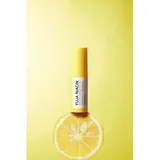
| Perricone MDOn-The-Go Acne Relief EssentialsYOUR PRODUCT | Some By MiYuja Niacin Dark Spot Correcting Stick | |
|---|---|---|
| Match | — | 49% |
| Price | — | $17.47 |
| Shared key ingredients | — | 4 of 10 |
| Key difference | — | Madecassoside |
| Irritancy | High | High |
| Drying alcohol | Contains drying alcohol | — |
| View product | Shop |
Sources cited in this review
Every concentration estimate and effectiveness label is anchored to one of these 16 studies and safety reviews.
- 1
- 2Final Report on the Safety Assessment of Sodium Cocoyl Isethionatejournals.sagepub.com
- 3Safety Assessment of Isoparaffins as Used in Cosmeticsjournals.sagepub.com
- 4
- 5Final Report on the Safety Assessment of Dimethicone Copolyoljournals.sagepub.com
- 6

Affiliate links · As an Amazon Associate, WIMJ earns from qualifying purchases.