Works for:
based on ingredients and %- Evens skin tone
- Moisturizing
- Anti-oxidation
- Anti-aging
Can it cause trouble?
- Irritation risk: high
- Comedogenic risk ingredients: 0
Key actives
Product Summary
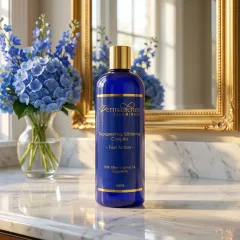
"Permanence - Illuminate Depigmenting Whitening Complex" is effective for: Moisturizing and Evens skin tone
This product could be helpful for: Anti-aging, but its actives are not the most effective or are not well-studied.
Ingredient callouts
- this product includes a form of Retinoids (vitamin A) - retinyl palmitate 2.80% - 4.20%, but this type of vitamin A is not very effective. It could in theory help with fine lines and wrinkles, but the effect is most likely minimal.
- Peptides (palmitoyl oligopeptide 0.45% - 1.00%). Peptides are a very big group of ingredients. They all consist of a different combination of aminoacids. Our skin produces Peptides naturally. Some of them work as natural antibiotics, promote wound-healing and production of collagen. The scientists are still studying how effective the topical application of Peptides is, but it is very likely that theynare helpful. Peptides might be able to support skin barrier restoration and even have an anti-aging benefit. At the very least, they certainly help attract water to the skin and support the hydration in this way.
- Humectants (sodium pca 0.10% - 0.50%, sodium hyaluronate 0.10% - 0.50% and hyaluronic acid 1.50% - 2.20%). These ingredients help attract water to the upper layer of the skin and improve the skin hydration.
Anti-oxidation
This product contains antioxidants (glutathione, kojic acid) that can help neutralize free radicals in skin. By doing so, they can lessen the damage the skin gets from the UV light (sun).
A peptide that can help neutralize free radicals in skin and reduce melanin production resulting in skin lightening effect and reduction in hyperpigmentation. It can also help attract moisture to the upper layer of the skin
Helps to reduce hyperpigmentation and neutralize free radicals. Can be irritating
A plant extract that might help neutralize free radicals in skin, but research on its efficacy in skin is lacking
A plant extract that can help lighten the skin and calm down inflammation. Might be helpful in neutralizing free radicals
Being a lipid soluble form of vitamin C, it is more stable and can penetrate the skin better than L-Ascorbic acid. It is effective in protecting the skin from free radicals, as well as evening the skin tone, but is less effective in stimulating collagen production compared to L-Ascorbic acid.
Evens skin tone
What does the product description say?
Illuminate Depigmenting Whitening Complex
Source: Permanence Skincare
This product can help reduce hypepigmentation and even out the skin tone because it contains the following effective ingredients: alpha-arbutin, glutathione, kojic acid, undecylenoyl phenylalanine
The following ingredient (ingredients) in this product might be helpful, but there is no evidence to confirm that it actually can help even out the skin tone: glycyrrhiza glabra root extract, retinyl palmitate.
Keep in mind that you would need to apply any topical skincare targetted at hypigmentation consistently for a couple of months to get a result. No topical skincare product can help get rid of hyperpigmentation (including post-acne marks and age spots) instantly.
Might help reduce hyperpigmentation when used regularly over a long period of time. Is more effective than beta-arbutin
A peptide that can help neutralize free radicals in skin and reduce melanin production resulting in skin lightening effect and reduction in hyperpigmentation. It can also help attract moisture to the upper layer of the skin
Helps to reduce hyperpigmentation and neutralize free radicals. Can be irritating
An amino-acid based compound that is effective in reducing hyperpigmentation. It can help lighten sun spots and support more even skin tone.
Three steps removed from the active form of vitamin A - retinoic acid. To have an effect in the skin, it first needs to be converted twice to become the retinoic acid. This means it is less potent than retinol, but could also be less irritating. Once converted to the retinoic acid in the skin, it helps against all signs of aging, improves skin cell turnover and helps fight blemishes and clogged pores. However, in many cosmetic formulations, it is used in a concentration that is too low to have the full effect
A plant extract that can help lighten the skin and calm down inflammation. Might be helpful in neutralizing free radicals
Moisturizing
This product contains good ingredients to attract water to the upper layer of the skin. These ingredients are called "humectants": hyaluronic acid, sodium hyaluronate.
When humectants are on the surface of the skin, they “pull in” the moisture from the outside environment, or from within deeper layers of the skin. If the air is dry, humectants can speed up the moisture loss from the skin. This is why it is a good idea to use another product on top of this one to help "seal in" the moisture (look for ingredients like dimethicone, squalane, oils and butters).
The following ingredients in this product are especially good for supporting the skin barrier and helping with the hydration level: palmitoyl oligopeptide
Naturally present in skin and helps to attract water to its upper layer
A peptide that can help neutralize free radicals in skin and reduce melanin production resulting in skin lightening effect and reduction in hyperpigmentation. It can also help attract moisture to the upper layer of the skin
One of the best moisturizing ingredients. Attracts water into the upper layer of the skin. Naturally present in skin. Typically has large molecule size unless advertised otherwise on the product label. Helps support skin's barrier function and may help to reduce inflammation
A type of peptide. Peptides are excellent moisturizers and might be able support collagen production reducing fine lines and wrinkles
One of the best moisturizing ingredients. Attracts water into the upper layer of the skin
A non-drying alcohol that works to soften the skin and stabilize product formulations helping oil and water mix together
Cannot penetrate the skin barrier so is not particularly useful in skincare products
Helps oil and water mix together and works as an emollient
An emollient that helps soften the skin and could be helpful in repairing its barrier function
Traditionally used to treat sunburns, dermatitis and inflammation, but evidence for its effectiveness is lacking. The extract can contain humectants that help attract water into the skin
Anti-aging
This product contains palmitoyl oligopeptide, retinyl palmitate. These ingredients might be able to help reduce and prevent fine lines and wrinkles, improve skin elasticity and firmness, but there is not enough evidence that it actually works.
A type of peptide. Peptides are excellent moisturizers and might be able support collagen production reducing fine lines and wrinkles
Three steps removed from the active form of vitamin A - retinoic acid. To have an effect in the skin, it first needs to be converted twice to become the retinoic acid. This means it is less potent than retinol, but could also be less irritating. Once converted to the retinoic acid in the skin, it helps against all signs of aging, improves skin cell turnover and helps fight blemishes and clogged pores. However, in many cosmetic formulations, it is used in a concentration that is too low to have the full effect
One of the best moisturizing ingredients. Attracts water into the upper layer of the skin. Naturally present in skin. Typically has large molecule size unless advertised otherwise on the product label. Helps support skin's barrier function and may help to reduce inflammation
Being a lipid soluble form of vitamin C, it is more stable and can penetrate the skin better than L-Ascorbic acid. It is effective in protecting the skin from free radicals, as well as evening the skin tone, but is less effective in stimulating collagen production compared to L-Ascorbic acid.
Traditionally used to treat sunburns, dermatitis and inflammation, but evidence for its effectiveness is lacking. The extract can contain humectants that help attract water into the skin
How honest is this product?
| Promise | Can it deliver? |
|---|---|
| Evens skin tone |
Total Promises Fulfilled score: 100/100.
We receive a small commission for purchases made through these links at no cost for you. Thank you for your support! Learn more
Affiliate link · supports WIMJ at no cost to you
Potential irritants
Comedogenic ingredients
No comedogenic ingredients detected
User reviews (0)
Averages from community submissions.
No reviews yet for this product.
Be the first to share your experience!
Tried this product?
Help capture what the ingredient list can't—texture, finish, pilling, scent, and more. Answer what you can, skip the rest.
Takes ~30 seconds.
Reviews are shown in aggregate. No personal details.
Key Actives
Three steps removed from the active form of vitamin A - retinoic acid. To have an effect in the skin, it first needs to be converted twice to become the retinoic acid. This means it is less potent than retinol, but could also be less irritating. Once converted to the retinoic acid in the skin, it helps against all signs of aging, improves skin cell turnover and helps fight blemishes and clogged pores. However, in many cosmetic formulations, it is used in a concentration that is too low to have the full effect
A peptide that can help neutralize free radicals in skin and reduce melanin production resulting in skin lightening effect and reduction in hyperpigmentation. It can also help attract moisture to the upper layer of the skin
One of the best moisturizing ingredients. Attracts water into the upper layer of the skin. Naturally present in skin. Typically has large molecule size unless advertised otherwise on the product label. Helps support skin's barrier function and may help to reduce inflammation
A type of peptide. Peptides are excellent moisturizers and might be able support collagen production reducing fine lines and wrinkles
Helps to reduce hyperpigmentation and neutralize free radicals. Can be irritating
Might help reduce hyperpigmentation when used regularly over a long period of time. Is more effective than beta-arbutin
An amino-acid based compound that is effective in reducing hyperpigmentation. It can help lighten sun spots and support more even skin tone.
One of the best moisturizing ingredients. Attracts water into the upper layer of the skin
Naturally present in skin and helps to attract water to its upper layer
An emollient that helps soften the skin and could be helpful in repairing its barrier function
Potential irritants
Three steps removed from the active form of vitamin A - retinoic acid. To have an effect in the skin, it first needs to be converted twice to become the retinoic acid. This means it is less potent than retinol, but could also be less irritating. Once converted to the retinoic acid in the skin, it helps against all signs of aging, improves skin cell turnover and helps fight blemishes and clogged pores. However, in many cosmetic formulations, it is used in a concentration that is too low to have the full effect
An amino-acid based compound that is effective in reducing hyperpigmentation. It can help lighten sun spots and support more even skin tone.
Helps to reduce hyperpigmentation and neutralize free radicals. Can be irritating
Plant extract that can have healing and anti-inflammatory properties. It is a potential allergen and can be irritating
An aromatic blend of unspecified and possibly irritating ingredients
A plant extract that might help neutralize free radicals in skin, but research on its efficacy in skin is lacking
Might help reduce hyperpigmentation when used regularly over a long period of time. Is more effective than beta-arbutin
A plant extract that can help lighten the skin and calm down inflammation. Might be helpful in neutralizing free radicals
A peptide that can help neutralize free radicals in skin and reduce melanin production resulting in skin lightening effect and reduction in hyperpigmentation. It can also help attract moisture to the upper layer of the skin
Traditionally used to treat sunburns, dermatitis and inflammation, but evidence for its effectiveness is lacking. The extract can contain humectants that help attract water into the skin
Being a lipid soluble form of vitamin C, it is more stable and can penetrate the skin better than L-Ascorbic acid. It is effective in protecting the skin from free radicals, as well as evening the skin tone, but is less effective in stimulating collagen production compared to L-Ascorbic acid.
An emollient that helps soften the skin and could be helpful in repairing its barrier function
Comedogenic ingredients
We couldn't find any comedogenic ingredients in this product
All ingredients
A plant extract that might help neutralize free radicals in skin, but research on its efficacy in skin is lacking
Might help reduce hyperpigmentation when used regularly over a long period of time. Is more effective than beta-arbutin
Three steps removed from the active form of vitamin A - retinoic acid. To have an effect in the skin, it first needs to be converted twice to become the retinoic acid. This means it is less potent than retinol, but could also be less irritating. Once converted to the retinoic acid in the skin, it helps against all signs of aging, improves skin cell turnover and helps fight blemishes and clogged pores. However, in many cosmetic formulations, it is used in a concentration that is too low to have the full effect
An amino-acid based compound that is effective in reducing hyperpigmentation. It can help lighten sun spots and support more even skin tone.
A plant extract that can help lighten the skin and calm down inflammation. Might be helpful in neutralizing free radicals
A peptide that can help neutralize free radicals in skin and reduce melanin production resulting in skin lightening effect and reduction in hyperpigmentation. It can also help attract moisture to the upper layer of the skin
One of the best moisturizing ingredients. Attracts water into the upper layer of the skin. Naturally present in skin. Typically has large molecule size unless advertised otherwise on the product label. Helps support skin's barrier function and may help to reduce inflammation
Cannot penetrate the skin barrier so is not particularly useful in skincare products
Helps to reduce hyperpigmentation and neutralize free radicals. Can be irritating
Traditionally used to treat sunburns, dermatitis and inflammation, but evidence for its effectiveness is lacking. The extract can contain humectants that help attract water into the skin
A non-drying alcohol that works to soften the skin and stabilize product formulations helping oil and water mix together
Plant extract that can have healing and anti-inflammatory properties. It is a potential allergen and can be irritating
A type of peptide. Peptides are excellent moisturizers and might be able support collagen production reducing fine lines and wrinkles
One of the best moisturizing ingredients. Attracts water into the upper layer of the skin
Naturally present in skin and helps to attract water to its upper layer
Being a lipid soluble form of vitamin C, it is more stable and can penetrate the skin better than L-Ascorbic acid. It is effective in protecting the skin from free radicals, as well as evening the skin tone, but is less effective in stimulating collagen production compared to L-Ascorbic acid.
An emollient that helps soften the skin and could be helpful in repairing its barrier function
A preservative. It helps prevent bacterial growth in cosmetic products
An aromatic blend of unspecified and possibly irritating ingredients
Ingredient list view
Vaccinium myrtillus fruit extract, Unknown, Cysteamine, Alpha-arbutin, Retinyl palmitate, Undecylenoyl phenylalanine, Glycyrrhiza glabra root extract, Glutathione, Hyaluronic acid, Morus alba extract, Collagen, Carica papaya leaf extract, Kojic acid, Aloe barbadensis leaf juice, Sodium glycolate, Stearic acid, Cetyl alcohol, Chamomilla recutita flower extract, Calendula officinalis flower, Palmitoyl oligopeptide, Unknown, Cyamopsis tetragonoloba gum, Sodium hyaluronate, Sodium pca, Ascorbyl palmitate, Persea gratissima oil, Phenoxyethanol, Parfum
- Lonicera caerulea and Vaccinium myrtillus fruit polyphenols protect HaCaT keratinocytes against UVB-induced phototoxic stress and DNA damage
- Herbal Medicine: Biomolecular and Clinical Aspects. 2nd edition.
- A randomized, double‐blind, vehicle‐controlled study of a preparation containing undecylenoyl phenylalanine 2% in the treatment of solar lentigines
- Glutathione as a skin whitening agent: Facts, myths, evidence and controversies
- Glutathione for skin lightening: a regnant myth or evidence-based verity?
- Glutathione for skin lightening for dermatologists and cosmetologists
- Efficacy of a New Topical Nano-hyaluronic Acid in Humans
- Physiochemical properties and application of hyaluronic acid: a systematic review
- TOPICAL TREATMENT OF MELASMA
- Postinflammatory hyperpigmentation: a review of the epidemiology, clinical features, and treatment options in skin of color.
- Hyaluronic acid: A key molecule in skin aging
- Hyaluronan (Hyaluronic Acid): a natural moisturizer for skin care