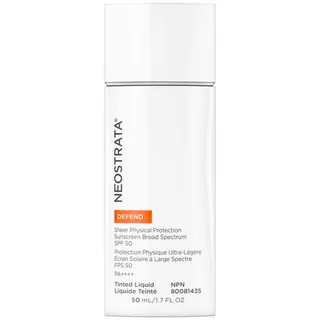
NEOSTRATA Sheer Physical Protection SPF 50

NEOSTRATA Sheer Physical Protection SPF 50

SPF 50Efficacy90/100IrritancyLow·3 UV filters

Works for

Sun protection
SPF 50 · 3 UV filters
Broad spectrum
SPF 50Broad spectrumMineral + chemical filtersTinted

This product offers a good level of protection against both UVB and UVA rays.

This sunscreen uses organic (so-called "chemical") sunscreen filters. Organic, or "chemical" filters usually provide reliable sun protection and rarely leave a white cast. Sunscreens with organic filters can sting eyes.

This product can be considered "reef safe" because it does not contain the UV filters (oxybenzone and octinoxate) that can be harmful to coral reefs when present in the water in high concentrations.

UV spectrum
UVB290–320 nmUVA II320–340 nmUVA I340–400 nm
Butyloctyl Salicylate
Titanium Dioxide
Zinc Oxide
FilterCoverageWhat it doesEst. amount
Butyloctyl SalicylateUVBA synthetic ester of salicylic acid that is used to help disperse pigments and boost effectiveness of sunscreen ingredients. It is able to absorb UV light (working as an organic, or chemical filter), but is not approved as a sunscreen ingredient on its own~3–3.6%
Titanium Dioxide Mineral UVBUVA2 Photo-stable Works as a UV filter when used in high concentrations. It is photostable and is effective mostly against the UVB light, with some protection in the UVA range. In small concentrations, used for its ability to improve the color of cosmetic products. Is usually well tolerated by the skin7%
Zinc Oxide Mineral UVBUVA Photo-stable A broad spectrum sunblock (protects from both UVA and UVB rays). Is suitable for most sensitive skins. In small concentrations, can be used as a colorant6%
~ marks concentrations estimated from label position and typical use levels
Reef-safe
No oxybenzone or octinoxate — the two filters banned in Hawaii, Florida Keys and Aruba.
Anti-aging
Gluconolactone, Lactobionic acid + 2 more
Works well
What the product description says
“Potent antioxidants EGCG Green Tea Extract, Lactobionic Acid and Vitamin E work to neutralize free radicals and help preserve healthy DNA, promoting youthful looking skin.”
Source: Skinstore

This product can help reduce and prevent fine lines and wrinkles, improve skin elasticity and firmness because it contains gluconolactone, lactobionic acid.

These ingredients in the product can also be helpful, even though there is less evidence for their effectiveness: epigallocatechin gallate.

Keep in mind that it typically takes at least 6 weeks to notice any results because the changes that are needed to improve fine lines and elasticity happen in the deeper layers of the skin. No topical anti-aging product can “erase” wrinkles or fully reverse signs of aging.

This product can also help prevent early signs of skin aging because it offers a good level of broad spectrum sun protection. Sun damage is the main cause of premature skin aging, and protecting your skin from the sun is the best anti-aging strategy.

GluconolactoneKey activeEffect: HighA polyhydroxy acid (PHA) that helps shed the dead cells from the skin surface revealing smoother skin. Is believed to be genter than AHAs. It helps attract water to the upper layer of the skin and can stimulate production of skin's own hyaluronic acid resulting in improved hydration levels. It has been shown to be helpful against acne and clogged pores if used consistently (e.g over a period of 12 weeks) in high enough concentration. It can help reduce fine lines and wrinkles and improve skin tone with long-term application. Can help neutralize free radicals~2.5–3.1%
Lactobionic acidKey activeEffect: HighA polyhydroxy acid (PHA) that helps shed dead cells from the surface of the skin revealing a smoother, more even skin. PHAs tend to be gentler on the skin compared to AHAs (for example, glycolic acid). It also has hydrating properties and helps attract water to the upper layer of the skin. It can help calm down inflammation in skin and support restoration of the barrier function. It has an anti-oxidant effect as well. It can help reduce fine line, wrinkles and improve skin elasticity~1.1–1.3%
Epigallocatechin gallateKey activeEffect: MediumA polyphenol found in tea. This particular compound abbreviated EGCG is the most powerful antioxidant among those extracted from tea (usually green tea). Unfortunately, EGCG is unstable, requires a low pH (below 4) to prevent quick degradation, and does not penetrate the skin very well. This is why the full anti-oxidant effect of EGCG is typically not realized when it is added to topical skincare~0.75–1.1%
TocopherolEffect: Low, below effective dosePure form of vitamin E. Can help moisturise and protect the skin from free radicals. Often used to help stabilise other ingredients or the formula itself~0.6–0.9%
Exfoliation
Side benefit · Gluconolactone, Lactobionic acid
Works well

This product can help exfoliate the skin. In other words, it helps break down the bonds between dead cells on the surface of the skin and speed up the skin turnover. Skin often appears softer and brighter after exfoliation, but overdoing it can result in disrupted skin barrier. The following ingredient is doing the exfoliating job in this product: gluconolactone, lactobionic acid.

GluconolactoneKey activeEffect: HighA polyhydroxy acid (PHA) that helps shed the dead cells from the skin surface revealing smoother skin. Is believed to be genter than AHAs. It helps attract water to the upper layer of the skin and can stimulate production of skin's own hyaluronic acid resulting in improved hydration levels. It has been shown to be helpful against acne and clogged pores if used consistently (e.g over a period of 12 weeks) in high enough concentration. It can help reduce fine lines and wrinkles and improve skin tone with long-term application. Can help neutralize free radicals~2.5–3.1%
Lactobionic acidKey activeEffect: HighA polyhydroxy acid (PHA) that helps shed dead cells from the surface of the skin revealing a smoother, more even skin. PHAs tend to be gentler on the skin compared to AHAs (for example, glycolic acid). It also has hydrating properties and helps attract water to the upper layer of the skin. It can help calm down inflammation in skin and support restoration of the barrier function. It has an anti-oxidant effect as well. It can help reduce fine line, wrinkles and improve skin elasticity~1.1–1.3%
Moisturizing
Side benefit the brand mentions · Lactobionic acid, Isododecane + 8 more
Works well
What the product description says
“This mattifying fluid sunscreen combines potent antioxidants with a Polyhydroxy Acid (PHA) complex to protect and strengthen skin's moisture barrier against environmental aggressors.”
Source: Neostrata

This product can help soften the skin and reduce its moisture loss with emollients and occlusives: dimethicone, isododecane.

Keep in mind that this product does not contain effective ingredients to attract water to the upper layer of the skin. This is why an additional product with humectants like glycerin or hyaluronic acid can be helpful (apply it before this product for the best results).

The following ingredients in this product are especially good for supporting the skin barrier and helping with the hydration level: lactobionic acid

Lactobionic acidHeroEffect: HighA polyhydroxy acid (PHA) that helps shed dead cells from the surface of the skin revealing a smoother, more even skin. PHAs tend to be gentler on the skin compared to AHAs (for example, glycolic acid). It also has hydrating properties and helps attract water to the upper layer of the skin. It can help calm down inflammation in skin and support restoration of the barrier function. It has an anti-oxidant effect as well. It can help reduce fine line, wrinkles and improve skin elasticity~1.1–1.3%
IsododecaneKey active· Emollient, OcclusiveEffect: MediumAn emollient that helps soften the skin and can decrease moisture loss. Helps create a nice product texture~6.6–8.1%
DimethiconeKey active· Emollient, OcclusiveEffect: HighA silicone that helps to reduce water loss from the surface of the skin. Can temporarily "fill in" lines and wrinkles, absorb oil, and create a nice product finish~6–7.4%
C12-15 alkyl benzoateKey active· EmollientEffect: MediumEnhances the product texture and makes it more spreadable. Helps reduce water loss from the outer layer of skin. Extands the shelf life by preventing bacteria growth~4.7–5.7%
GluconolactoneKey activeEffect: HighA polyhydroxy acid (PHA) that helps shed the dead cells from the skin surface revealing smoother skin. Is believed to be genter than AHAs. It helps attract water to the upper layer of the skin and can stimulate production of skin's own hyaluronic acid resulting in improved hydration levels. It has been shown to be helpful against acne and clogged pores if used consistently (e.g over a period of 12 weeks) in high enough concentration. It can help reduce fine lines and wrinkles and improve skin tone with long-term application. Can help neutralize free radicals~2.5–3.1%
Hydrogenated polydecene· EmollientEffect: LowHelps to soften the upper layer of the skin and create a nice product texture~3.5–4.2%
Epigallocatechin gallateEffect: LowA polyphenol found in tea. This particular compound abbreviated EGCG is the most powerful antioxidant among those extracted from tea (usually green tea). Unfortunately, EGCG is unstable, requires a low pH (below 4) to prevent quick degradation, and does not penetrate the skin very well. This is why the full anti-oxidant effect of EGCG is typically not realized when it is added to topical skincare~0.75–1.1%
Isohexadecane· EmollientEffect: LowImproves the texture of the product and helps soften the skin. Helps oil and water mix together and can be used as a cleansing agent~0.6–0.95%
Propylene carbonateEffect: LowIs used to dissolve other ingredients and create nice product texture~0.35–0.65%
TocopherolEffect: Low, below effective dosePure form of vitamin E. Can help moisturise and protect the skin from free radicals. Often used to help stabilise other ingredients or the formula itself~0.6–0.9%
Anti-oxidation
Side benefit · Gluconolactone, Lactobionic acid + 3 more
Works well

This product contains antioxidants (lactobionic acid) that can help neutralize free radicals in skin. By doing so, they can lessen the damage the skin gets from the UV light (sun).

The following ingredients - epigallocatechin gallate, gluconolactone also can have an antioxidant effect, but there is less evidence to confirm their effectiveness in skin.

GluconolactoneKey activeEffect: MediumA polyhydroxy acid (PHA) that helps shed the dead cells from the skin surface revealing smoother skin. Is believed to be genter than AHAs. It helps attract water to the upper layer of the skin and can stimulate production of skin's own hyaluronic acid resulting in improved hydration levels. It has been shown to be helpful against acne and clogged pores if used consistently (e.g over a period of 12 weeks) in high enough concentration. It can help reduce fine lines and wrinkles and improve skin tone with long-term application. Can help neutralize free radicals~2.5–3.1%
Lactobionic acidKey activeEffect: HighA polyhydroxy acid (PHA) that helps shed dead cells from the surface of the skin revealing a smoother, more even skin. PHAs tend to be gentler on the skin compared to AHAs (for example, glycolic acid). It also has hydrating properties and helps attract water to the upper layer of the skin. It can help calm down inflammation in skin and support restoration of the barrier function. It has an anti-oxidant effect as well. It can help reduce fine line, wrinkles and improve skin elasticity~1.1–1.3%
Epigallocatechin gallateKey activeEffect: MediumA polyphenol found in tea. This particular compound abbreviated EGCG is the most powerful antioxidant among those extracted from tea (usually green tea). Unfortunately, EGCG is unstable, requires a low pH (below 4) to prevent quick degradation, and does not penetrate the skin very well. This is why the full anti-oxidant effect of EGCG is typically not realized when it is added to topical skincare~0.75–1.1%
Tocopheryl acetateEffect: LowA more stable but less bio-available form of vitamin E compared to Tocopherol. Might help moisturize and protect the skin from free radicals, but mostly used in low concentrations to stabilize other ingredients.~0.8–1.2%
TocopherolUnder-dosedPure form of vitamin E. Can help moisturise and protect the skin from free radicals. Often used to help stabilise other ingredients or the formula itself~0.6–0.9%
Evens skin tone
Side benefit · Gluconolactone, Lactobionic acid + 1 more
Works well

This product offers broad spectrum sun protection. It means that it can prevent hyperpigmentation and help keep the skin tone even (sun damage is the main factor causing age spots, darkening of post-acne marks and other discolorations).

GluconolactoneKey activeEffect: HighA polyhydroxy acid (PHA) that helps shed the dead cells from the skin surface revealing smoother skin. Is believed to be genter than AHAs. It helps attract water to the upper layer of the skin and can stimulate production of skin's own hyaluronic acid resulting in improved hydration levels. It has been shown to be helpful against acne and clogged pores if used consistently (e.g over a period of 12 weeks) in high enough concentration. It can help reduce fine lines and wrinkles and improve skin tone with long-term application. Can help neutralize free radicals~2.5–3.1%
Lactobionic acidKey activeEffect: HighA polyhydroxy acid (PHA) that helps shed dead cells from the surface of the skin revealing a smoother, more even skin. PHAs tend to be gentler on the skin compared to AHAs (for example, glycolic acid). It also has hydrating properties and helps attract water to the upper layer of the skin. It can help calm down inflammation in skin and support restoration of the barrier function. It has an anti-oxidant effect as well. It can help reduce fine line, wrinkles and improve skin elasticity~1.1–1.3%
Epigallocatechin gallateKey activeEffect: MediumA polyphenol found in tea. This particular compound abbreviated EGCG is the most powerful antioxidant among those extracted from tea (usually green tea). Unfortunately, EGCG is unstable, requires a low pH (below 4) to prevent quick degradation, and does not penetrate the skin very well. This is why the full anti-oxidant effect of EGCG is typically not realized when it is added to topical skincare~0.75–1.1%

Can it cause trouble?

Irritancy
12 flagged ingredients
Low risk
We flag 12 ingredients with irritancy potential; the product's overall irritancy is low. The table lists each ingredient's own rating.
IngredientFunctionIrritationEst. amount
Sodium bisulfiteA preservativeHigh~0.1–0.2%est.
Butyloctyl salicylateA synthetic ester of salicylic acid that is used to help disperse pigments and boost effectiveness of sunscreen ingredients. It is able to absorb UV light (working as an organic, or chemical filter), but is not approved as a sunscreen ingredient on its ownMedium~3–3.6%est.
GluconolactoneA polyhydroxy acid (PHA) that helps shed the dead cells from the skin surface revealing smoother skin. Is believed to be genter than AHAs. It helps attract water to the upper layer of the skin and can stimulate production of skin's own hyaluronic acid resulting in improved hydration levels. It has been shown to be helpful against acne and clogged pores if used consistently (e.g over a period of 12 weeks) in high enough concentration. It can help reduce fine lines and wrinkles and improve skin tone with long-term application. Can help neutralize free radicalsMedium~2.5–3.1%est.
Ammonium hydroxideHelps adjust the product pHMedium~1.3–1.6%est.
Lactobionic acidA polyhydroxy acid (PHA) that helps shed dead cells from the surface of the skin revealing a smoother, more even skin. PHAs tend to be gentler on the skin compared to AHAs (for example, glycolic acid). It also has hydrating properties and helps attract water to the upper layer of the skin. It can help calm down inflammation in skin and support restoration of the barrier function. It has an anti-oxidant effect as well. It can help reduce fine line, wrinkles and improve skin elasticityMedium~1.1–1.3%est.
Peg-9 polydimethylsiloxyethyl dimethiconeA type of silicone that helps water and oil mix togetherMedium~1–1.2%est.
Phenethyl benzoateUsed as a fragranceMedium~1–1.2%est.
Tocopheryl acetateA more stable but less bio-available form of vitamin E compared to Tocopherol. Might help moisturize and protect the skin from free radicals, but mostly used in low concentrations to stabilize other ingredients.Medium~0.8–1.2%est.
Polyhydroxystearic acidUsed to create a thicker product consistency and stabilize the formulationMedium~0.75–1.15%est.
EthylhexylglycerinA preservativeMedium~0.6–0.9%est.
Dimethicone/peg-10/15 crosspolymerHelps oil and water mix togetherMedium~0.55–0.85%est.
Sodium citrateHelps to control the skin's pH level. Maintains the skin's natural film of amino-lactic acids and oils. Helps to preserve productsMedium~0.5–0.75%est.
Comedogenic
Clean of flagged comedogenic ingredients
None flagged

User reviews

Would you recommend?
No community reviews yet.

Be the first — your take helps the next person decide.

Ingredients

Filter by role to see what each ingredient is doing.

Titanium dioxide7%
UV filterKey active
Irritation risk
Low
Works for
Sun protection

Works as a UV filter when used in high concentrations. It is photostable and is effective mostly against the UVB light, with some protection in the UVA range. In small concentrations, used for its ability to improve the color of cosmetic products. Is usually well tolerated by the skin

More about Titanium dioxide
Zinc oxide6%
UV filterKey active
Irritation risk
Low
Works for
Sun protection

A broad spectrum sunblock (protects from both UVA and UVB rays). Is suitable for most sensitive skins. In small concentrations, can be used as a colorant

More about Zinc oxide
Water~45–55%
Formula
Irritation risk
Low

Plain old water

More about Water
Dimethicone~6–7.4%
Key active
Irritation risk
Low
Works for
MoisturizingMattifying

A silicone that helps to reduce water loss from the surface of the skin. Can temporarily "fill in" lines and wrinkles, absorb oil, and create a nice product finish

More about Dimethicone
Isododecane~6.6–8.1%
Key active
Irritation risk
Low
Works for
Moisturizing

An emollient that helps soften the skin and can decrease moisture loss. Helps create a nice product texture

More about Isododecane
C12-15 alkyl benzoate~4.7–5.7%
Key active
Irritation risk
Low
Works for
Moisturizing

Enhances the product texture and makes it more spreadable. Helps reduce water loss from the outer layer of skin. Extands the shelf life by preventing bacteria growth

More about C12-15 alkyl benzoate
Hydrogenated polydecene~3.5–4.2%
Formula
Irritation risk
Low
Works for
Moisturizing

Helps to soften the upper layer of the skin and create a nice product texture

More about Hydrogenated polydecene
Butyloctyl salicylate~3–3.6%
UV filterKey activeIrritant · medium
Irritation risk
Medium
Works for
Sun protection

A synthetic ester of salicylic acid that is used to help disperse pigments and boost effectiveness of sunscreen ingredients. It is able to absorb UV light (working as an organic, or chemical filter), but is not approved as a sunscreen ingredient on its own

More about Butyloctyl salicylate
Gluconolactone~2.5–3.1%
Key activeIrritant · medium
Irritation risk
Medium
Works for
ExfoliationMoisturizingAnti-agingEvens skin toneAnti-oxidationAnti-blemish

A polyhydroxy acid (PHA) that helps shed the dead cells from the skin surface revealing smoother skin. Is believed to be genter than AHAs. It helps attract water to the upper layer of the skin and can stimulate production of skin's own hyaluronic acid resulting in improved hydration levels. It has been shown to be helpful against acne and clogged pores if used consistently (e.g over a period of 12 weeks) in high enough concentration. It can help reduce fine lines and wrinkles and improve skin tone with long-term application. Can help neutralize free radicals

More about Gluconolactone
Styrene/acrylates copolymer~2.1–2.6%
Formula
Irritation risk
Low

Used to create an even product consistency. Can help boost efficiency of sunscreen filters

More about Styrene/acrylates copolymer
Alumina~1.9–2.3%
Formula
Irritation risk
Low

The same compound that is used safely in dental implants and bone cements. In cosmetics, it is used to improve the consistency of products

More about Alumina
Ammonium hydroxide~1.3–1.6%
Irritant · medium
Irritation risk
Medium

Helps adjust the product pH

More about Ammonium hydroxide
Lactobionic acid~1.1–1.3%
Hero · MoisturizingIrritant · medium
Irritation risk
Medium
Works for
MoisturizingAnti-oxidationAnti-agingExfoliationEvens skin toneAnti-blemishAnti-inflammatory

A polyhydroxy acid (PHA) that helps shed dead cells from the surface of the skin revealing a smoother, more even skin. PHAs tend to be gentler on the skin compared to AHAs (for example, glycolic acid). It also has hydrating properties and helps attract water to the upper layer of the skin. It can help calm down inflammation in skin and support restoration of the barrier function. It has an anti-oxidant effect as well. It can help reduce fine line, wrinkles and improve skin elasticity

More about Lactobionic acid
Peg-9 polydimethylsiloxyethyl dimethicone~1–1.2%
Irritant · medium
Irritation risk
Medium
Works for
Cleansing

A type of silicone that helps water and oil mix together

More about Peg-9 polydimethylsiloxyethyl dimethicone
Phenethyl benzoate~1–1.2%
Irritant · medium
Irritation risk
Medium

Used as a fragrance

More about Phenethyl benzoate
Nylon-12~1–1.2%
Formula
Irritation risk
Low

Used to create a nice product consistency

More about Nylon-12
Tocopheryl acetate~0.8–1.2%
Irritant · medium
Irritation risk
Medium
Works for
Anti-oxidation

A more stable but less bio-available form of vitamin E compared to Tocopherol. Might help moisturize and protect the skin from free radicals, but mostly used in low concentrations to stabilize other ingredients.

More about Tocopheryl acetate
Epigallocatechin gallate~0.75–1.1%
Key active
Irritation risk
Low
Works for
Anti-oxidationEvens skin toneAnti-blemishAnti-agingMoisturizing

A polyphenol found in tea. This particular compound abbreviated EGCG is the most powerful antioxidant among those extracted from tea (usually green tea). Unfortunately, EGCG is unstable, requires a low pH (below 4) to prevent quick degradation, and does not penetrate the skin very well. This is why the full anti-oxidant effect of EGCG is typically not realized when it is added to topical skincare

More about Epigallocatechin gallate
Polyhydroxystearic acid~0.75–1.15%
Irritant · medium
Irritation risk
Medium
Works for
Cleansing

Used to create a thicker product consistency and stabilize the formulation

More about Polyhydroxystearic acid
Ethylhexylglycerin~0.6–0.9%
Irritant · medium
Irritation risk
Medium

A preservative

More about Ethylhexylglycerin
Tocopherol~0.6–0.9%
Under-dosed
Irritation risk
Low
Works for
Anti-oxidationAnti-agingAnti-inflammatoryMoisturizing

Pure form of vitamin E. Can help moisturise and protect the skin from free radicals. Often used to help stabilise other ingredients or the formula itself

More about Tocopherol
Dimethicone/peg-10/15 crosspolymer~0.55–0.85%
Irritant · medium
Irritation risk
Medium

Helps oil and water mix together

More about Dimethicone/peg-10/15 crosspolymer
Hydrogen dimethicone~0.55–0.8%
Formula
Irritation risk
Low

Helps the function of sunscreen and pigment ingredients in the formulation

More about Hydrogen dimethicone
Isohexadecane~0.6–0.95%
Formula
Irritation risk
Low
Works for
CleansingMoisturizing

Improves the texture of the product and helps soften the skin. Helps oil and water mix together and can be used as a cleansing agent

More about Isohexadecane
Sodium citrate~0.5–0.75%
Irritant · medium
Irritation risk
Medium

Helps to control the skin's pH level. Maintains the skin's natural film of amino-lactic acids and oils. Helps to preserve products

More about Sodium citrate
Disteardimonium hectorite~0.45–0.65%
Formula
Irritation risk
Low

A type of clay that is used to thicken the product consistency

More about Disteardimonium hectorite
Magnesium sulfate~0.4–0.6%
Formula
Irritation risk
Low

Used to create a thicker product consistency

More about Magnesium sulfate
Dipropylene glycol~0.3–0.55%
Formula
Irritation risk
Low

Helps to dissolve other ingredients in a formulation. Slows down the rate of product drying

More about Dipropylene glycol
Propylene carbonate~0.35–0.65%
Formula
Irritation risk
Low
Works for
Moisturizing

Is used to dissolve other ingredients and create nice product texture

More about Propylene carbonate
Sodium bisulfite~0.1–0.2%
Irritant · high
Irritation risk
High

A preservative

More about Sodium bisulfite
Triethoxycaprylylsilane~0.25–0.45%
Formula
Irritation risk
Low

A type of silicone that helps oil and water mix well together. Helps to disperse other ingredients, e.g. pigments, evenly in a formulation

More about Triethoxycaprylylsilane
Phenoxyethanol~0.2–0.35%
Formula
Irritation risk
Low

A preservative. It helps prevent bacterial growth in cosmetic products

More about Phenoxyethanol
Iron oxides~0.15–0.3%
Formula
Irritation risk
Low
Works for
Sun protection

An umbrella term for the following three colorants: CI 77491, CI 77492, CI 77499. They might be able to offer some protection against visible light, but the degree of the protection is not clear

More about Iron oxides
Iron oxides~0.15–0.25%
Formula
Irritation risk
Low
Works for
Sun protection

An umbrella term for the following three colorants: CI 77491, CI 77492, CI 77499. They might be able to offer some protection against visible light, but the degree of the protection is not clear

More about Iron oxides
Iron oxides~0.1–0.2%
Formula
Irritation risk
Low
Works for
Sun protection

An umbrella term for the following three colorants: CI 77491, CI 77492, CI 77499. They might be able to offer some protection against visible light, but the degree of the protection is not clear

More about Iron oxides
Ingredient list view

Titanium dioxide, Zinc oxide, Water, Dimethicone, Isododecane, C12-15 alkyl benzoate, Hydrogenated polydecene, Butyloctyl salicylate, Gluconolactone, Styrene/acrylates copolymer, Alumina, Ammonium hydroxide, Lactobionic acid, Peg-9 polydimethylsiloxyethyl dimethicone, Phenethyl benzoate, Nylon-12, Tocopheryl acetate, Epigallocatechin gallate, Polyhydroxystearic acid, Ethylhexylglycerin, Tocopherol, Dimethicone/peg-10/15 crosspolymer, Hydrogen dimethicone, Isohexadecane, Sodium citrate, Disteardimonium hectorite, Magnesium sulfate, Dipropylene glycol, Propylene carbonate, Sodium bisulfite, Triethoxycaprylylsilane, Phenoxyethanol, Iron oxides, Iron oxides, Iron oxides

Compare prices

Retailers ranked by price — lowest first.

Amazon US
Price unavailable Out of stock
Check

Affiliate links · As an Amazon Associate, WIMJ earns from qualifying purchases.

Worth comparing, line by line.

Match % combines shared ingredients, the first five ingredients, shared actives and hero ingredients, irritancy (lower counts in the alternative's favour), texture and body area. Only products in the same routine step are compared.

Side-by-side comparison of this product against its closest alternatives
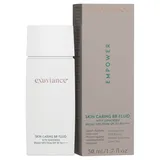
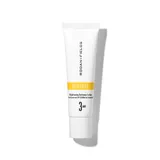
NEOSTRATASheer Physical Protection SPF 50YOUR PRODUCTExuvianceSkin Caring BB Fluid SPF50Rodan + FieldsREVERSE Brightening Defense Fluid Lotion SPF 50La Roche-PosayAnthelios Mineral Zinc Oxide Sunscreen SPF 50
Match—73%45%44%
Price—$46.00—$29.99
Shared key ingredients—8 of 83 of 85 of 8
Key difference——NiacinamideTriethylhexanoin
Irritancy Low Low Low Low
SPFSPF 50SPF 50SPF 50SPF 50
Drying alcohol————
View product Shop Shop Shop

More alternatives: SkinCeuticals Sheer Physical UV Defense SPF 50Heliocare 360 Pediatric Mineral SPF 50+

Cheaper alternatives? Browse formulas in the same category.
We compare ingredient profiles across our catalog — pick the closest match for your budget.
Open dupe finder

Product summary

Based on the ingredients included, we believe that "NEOSTRATA - Sheer Physical Protection SPF 50" can offer reliable sun protection. It can protect from both UVA and UVB rays. This is great news because not all sunscreens with SPF ratings give UVA protection. (UVA rays do not cause sunburn, but still damage our skin and lead to early aging).

This product should also be hydrating enough to use without an additional moisturizer during the day. This product prevents early signs of aging by protecting against sun damage (all broad spectrum sunscreens do that).

Sunscreen filters

This is a "mixed" sunscreen in the sense that it uses both mineral and organic (so-called "chemical") sun filters. The organic filters in the product are: butyloctyl salicylate. As for the mineral filters, this sunscreen uses both titanium dioxide and zinc oxide.

Irritation risk

There are some common irritants in this product, including ingredients that do not have benefits for the skin. We assess the overall irritancy of this product to be low. For a detailed overview of all potential irritants: click here

You can see the detailed formula review with the breakdown of all actives in the product and the full ingredient list with estimated concentrations in the tables below.

Price

The product retails from 35.75$ up to 38.00$ in the United States, for 105.92A$ in Australia, for 30.00£ in the United Kingdom and for 45.60CA$ in Canada.

For a detailed price comparison: click here.

Sources cited in this review

Every concentration estimate and effectiveness label is anchored to one of these 31 studies and safety reviews.

  1. 1
  2. 2
  3. 3
  4. 4
  5. 5
  6. 6
NEOSTRATA Sheer Physical Protection SPF 50
NEOSTRATASheer Physical Protection SPF 50

Affiliate links · As an Amazon Associate, WIMJ earns from qualifying purchases.

As an Amazon Associate, WIMJ earns from qualifying purchases.