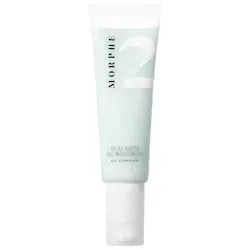
Morphe 2 Total Softie Gel Moisturizer
Works for
1 of 2 advertised claims delivered
Moisturizing17 ingredients credited for this claimGood support
“2 Total Softie Gel Moisturizer”
This product can help improve hydration of the skin with the two types of ingredients.
The first type is called “humectants”:
these ingredients help attract water.
When humectants are on the surface of the skin, they “pull in” the moisture from the outside environment, or from
within deeper layers of the skin. The following ingredients in this product do the job:
hyaluronic acid, sodium hyaluronate.
This product also contains ingredients called “occlusives”. They help reduce the speed with which our skin loses moisture to the outside environment. These ingredients also help soften the upper layer of the skin, so it feels less tight and nicer to the touch. The following ingredients in this product do the job: caprylic/capric triglyceride, dimethicone.
Evens skin tone1 ingredient credited for this claimWeak support
“Niacinamide helps to brighten and even skin tone.”
Effective ingredients missing or their concentration is too low
Can it cause trouble?
Irritancy7 strong irritants: Citrus aurantium amara flower water, Parfum + 5 more — patch-test recommendedHigh risk
ComedogenicClean of flagged comedogenic ingredientsNone flagged


User reviews
Be the first — your take helps the next person decide.
Ingredients
Filter by role to see what each ingredient is doing.
Water~45–55%
Caprylic/capric triglyceride~5.3–6.4%
- Irritation risk
- Medium
A good mix of fatty acids that forms a protective layer on the skin. Improves the shelf life of products. Derived from coconut and glycerin
More about Caprylic/capric triglycerideSqualane~4.5–5.5%
- Irritation risk
- Low
An oil naturally present in skin. Works as an emollient to soften the skin and form a protective layer on its surface without a greasy feeling.
More about SqualaneDicaprylyl carbonate~3.2–3.9%
- Irritation risk
- Low
Helps products spread more easily and works as an emollient to soften skin
More about Dicaprylyl carbonatePropanediol~2.3–2.9%
- Irritation risk
- Low
Acts as a solvent for other ingredients. Speeds up the absorption of other ingredients into the skin
More about PropanediolDimethicone~2–2.5%
- Irritation risk
- Low
A silicone that helps to reduce water loss from the surface of the skin. Can temporarily "fill in" lines and wrinkles, absorb oil, and create a nice product finish
More about Dimethicone1,2-hexanediol~0.75–1.15%
Simmondsia chinensis seed oil~1.5–1.9%
- Irritation risk
- Medium
Softens the upper layer of skin and helps restore the healthy skin barrier. Has shown to help calm down inflammation in skin. It is a stable oil, meaning that it retains its properties even when exposed to air.
More about Simmondsia chinensis seed oilHydroxyethyl acrylate/sodium acryloyldimethyl taurate copolymer~1.2–1.4%
- Irritation risk
- Medium
A gelling agent that thickens the product consistency and leaves the skin with a velvety finish
More about Hydroxyethyl acrylate/sodium acryloyldimethyl taurate copolymerAloe barbadensis leaf juice~0.95–1.15%
- Irritation risk
- Medium
Traditionally used to treat sunburns, dermatitis and inflammation, but evidence for its effectiveness is lacking. The extract can contain humectants that help attract water into the skin
More about Aloe barbadensis leaf juiceNiacinamide~0.7–1.05%
- Irritation risk
- Low
Is proven to be effective in reducing blemishes, evening out skin tone and helping to improve lines and wrinkles. It helps the skin to repair sun damage, calm down inflammation and keep maintain good levels of moisture. The concentration of about 2% is effective for supporting the skin barrier and evening out the skin tone. Concentration of 4-6% is better for helping with acne and balancing the sebum production
More about NiacinamideCucumis sativus fruit water~0.55–0.85%
Citrus aurantium amara flower water~0.5–0.75%
- Irritation risk
- High
A citrus plant essential oil (in a less concentrated format). Used as a fragrance and can be irritating
More about Citrus aurantium amara flower waterPhenoxyethanol~0.5–0.7%
- Irritation risk
- Low
A preservative. It helps prevent bacterial growth in cosmetic products
More about PhenoxyethanolDimethiconol~0.5–0.75%
- Irritation risk
- Low
A silicone that makes products more spreadable and keeps skin smooth. Helps to add gloss to skin and may visually fill in fine lines/wrinkles for short time
More about DimethiconolLysolecithin~0.45–0.7%
- Irritation risk
- Low
Lecithin derivative. It helps oil and water mix together and can enhance penetration of other ingredients. It helps soften the upper layer of the skin
More about LysolecithinSclerotium gum~0.4–0.65%
- Irritation risk
- Low
Used to create gel-like formulas and stabilize emulsions
More about Sclerotium gumPolyisobutene~0.45–0.65%
Sodium hydroxide~0.35–0.6%
Ethylhexylglycerin~0.3–0.6%
Disodium edta~0.3–0.55%
Glycine soja sterols~0.3–0.6%
- Irritation risk
- Low
An emollient that helps soften the skin
More about Glycine soja sterolsLinoleic acid~0.45–0.65%
- Irritation risk
- Low
An excellent emollient. Helps soften the skin, restore its barrier function, and can help to calm down inflammation. It can be helpful to prevent blemishes and clogged pores
More about Linoleic acidPhospholipids~0.25–0.5%
- Irritation risk
- Low
Emollients that are naturaly present in skin. In addition, they help water and oil mix together in the product
More about PhospholipidsPullulan~0.3–0.55%
- Irritation risk
- High
Creates a thin drying film on the skin resulting in a short-term tightening effect
More about PullulanXanthan gum~0.3–0.5%
- Irritation risk
- Low
Used to create a thicker product consistency
More about Xanthan gumPeg-7 trimethylolpropane coconut ether~0.3–0.55%
Sodium hyaluronate~0.25–0.5%
- Irritation risk
- Low
One of the best moisturizing ingredients. Attracts water into the upper layer of the skin
More about Sodium hyaluronateHyaluronic acid~0.25–0.5%
- Irritation risk
- Low
One of the best moisturizing ingredients. Attracts water into the upper layer of the skin. Naturally present in skin. Typically has large molecule size unless advertised otherwise on the product label. Helps support skin's barrier function and may help to reduce inflammation
More about Hyaluronic acidSorbitan isostearate~0.3–0.5%
- Irritation risk
- Low
Helps oil and water mix together
More about Sorbitan isostearatePolysorbate 60~0.3–0.55%
Ricinus communis seed oil~0.3–0.55%
- Irritation risk
- Medium
A plant oil that can help soften the skin. It might be helpful in calming down inflammation, but solid research is lacking. Is often used in lip products to create the needed product consistency
More about Ricinus communis seed oilCitric acid~0.25–0.45%
- Irritation risk
- Medium
Can work as an exfoliant but is typically used to adjust the product pH
More about Citric acidPotassium sorbate~0.25–0.5%
Sodium benzoate~0.25–0.45%
Silica~0.35–0.65%
Tocopherol~0.25–0.45%
- Irritation risk
- Low
Pure form of vitamin E. Can help moisturise and protect the skin from free radicals. Often used to help stabilise other ingredients or the formula itself
More about TocopherolLeuconostoc/radish root ferment filtrate~0.2–0.4%
- Irritation risk
- Medium
A preservative that comes from radishes fermented by a bacteria. New research suggests that the preservation properties in the ingredient come from an ammonium salt that is not present naturally in radish root but used in its cultivation. Is problematic because the exact amount of the preservative agents is difficult to determine
More about Leuconostoc/radish root ferment filtrateParfum~0.2–0.35%
- Irritation risk
- High
An aromatic blend of unspecified and possibly irritating ingredients
More about ParfumHexyl cinnamal~0.15–0.3%
Hydroxycitronellal~0.15–0.3%
- Irritation risk
- High
A fragrance. A likely allergen and can be irritating
More about HydroxycitronellalLinalool~0.15–0.25%
Limonene~0.15–0.25%
- Irritation risk
- High
A common frangrance that can easily irritate skin, especially if exposed to air, light or heat
More about LimoneneBenzyl benzoate~0.15–0.25%
- Irritation risk
- High
Fragrance with sweet balsamic smell. Help to preserve products and dissolve other ingredients. Could trigger allergic reactions and be irritating
More about Benzyl benzoateCi 42090~0.15–0.25%
Ci 60725~0.1–0.15%
- Irritation risk
- Low
Ingredient list view
Water, Caprylic/capric triglyceride, Squalane, Dicaprylyl carbonate, Propanediol, Dimethicone, 1,2-hexanediol, Simmondsia chinensis seed oil, Hydroxyethyl acrylate/sodium acryloyldimethyl taurate copolymer, Aloe barbadensis leaf juice, Niacinamide, Cucumis sativus fruit water, Citrus aurantium amara flower water, Phenoxyethanol, Dimethiconol, Lysolecithin, Sclerotium gum, Polyisobutene, Sodium hydroxide, Ethylhexylglycerin, Disodium edta, Glycine soja sterols, Linoleic acid, Phospholipids, Pullulan, Xanthan gum, Peg-7 trimethylolpropane coconut ether, Sodium hyaluronate, Hyaluronic acid, Sorbitan isostearate, Polysorbate 60, Ricinus communis seed oil, Citric acid, Potassium sorbate, Sodium benzoate, Silica, Tocopherol, Leuconostoc/radish root ferment filtrate, Parfum, Hexyl cinnamal, Hydroxycitronellal, Linalool, Limonene, Benzyl benzoate, Ci 42090, Ci 60725
Compare prices
Retailers ranked by price — lowest first.

Affiliate links · prices updated regularly
Worth comparing, line by line.
Match % combines shared ingredients, the first five ingredients, shared actives and hero ingredients, irritancy (lower counts in the alternative's favour), texture and body area. Only products in the same routine step are compared.
| Morphe2 Total Softie Gel MoisturizerYOUR PRODUCT | Dermarche LabsSMARTSYNC Probiotic Science Balancing Gel-Cream | OriginsGinZing Gel Moisturizer | JuneCellRejuvenation Lifting Skin Emulsion | |
|---|---|---|---|---|
| Match | — | 89% | 82% | 80% |
| Price | $11.63 | $21.99+$10.36 | $39.00+$27.37 | $66.10+$54.47 |
| Shared key ingredients | — | 6 of 13 | 4 of 13 | 8 of 13 |
| Key difference | — | Anhydroxylitol | Glycerin | Copper Tripeptide-1 |
| Irritancy | High | Medium | High | High |
| Drying alcohol | — | — | — | Contains drying alcohol |
| View product | Shop | Shop | Shop |


Sources cited in this review
Every concentration estimate and effectiveness label is anchored to one of these 17 studies and safety reviews.
- 1
- 2Final Report on the Safety Assessment of Dimethicone Copolyoljournals.sagepub.com
- 3
- 4
- 5
- 6

Affiliate links · As an Amazon Associate, WIMJ earns from qualifying purchases.