Works for
2 of 3 advertised claims delivered
Anti-aging4 ingredients credited for this claimStrong support
“It contains ginseng root extract, peptide and hyaluronic acid to improve skin's texture, firmness and elasticity for a radiant and youthful complexion.”
This product can help reduce and prevent fine lines and wrinkles, improve skin elasticity and firmness because it contains adenosine.
These ingredients in the product can also be helpful, even though there is less evidence for their effectiveness: acetyl hexapeptide-8.
Keep in mind that it typically takes at least 6 weeks to notice any results because the changes that are needed to improve fine lines and elasticity happen in the deeper layers of the skin. No topical anti-aging product can “erase” wrinkles or fully reverse signs of aging.
Moisturizing27 ingredients credited for this claimStrong support
“It contains ginseng root extract, peptide and hyaluronic acid to improve skin's texture, firmness and elasticity for a radiant and youthful complexion.”
This product can help improve hydration of the skin with the two types of ingredients.
The first type is called “humectants”:
these ingredients help attract water.
When humectants are on the surface of the skin, they “pull in” the moisture from the outside environment, or from
within deeper layers of the skin. The following ingredients in this product do the job:
fructooligosaccharides, fructose.
This product also contains ingredients called “occlusives”. They help reduce the speed with which our skin loses moisture to the outside environment. These ingredients also help soften the upper layer of the skin, so it feels less tight and nicer to the touch. The following ingredients in this product do the job: dimethicone, helianthus annuus seed oil.
The following ingredients in this product are especially good for supporting the skin barrier and helping with the hydration level: acetyl hexapeptide-8, ceramide np, phytosphingosine
Evens skin tone3 ingredients credited for this claimWeak support
“Part of MISSHA's renewed Chogongjin Youngan collection, this anti-aging cream is powered by 35% fermented BIO Gongjin™ to hydrate and nourish skin, fade dark spots, and smooth deep wrinkles.”
Effective ingredients missing or their concentration is too low
Anti-oxidationNot advertised by the brand · 9 ingredients credited for this claimModerate support
This product contains antioxidants (cornus officinalis fruit extract) that might be able to help neutralize free radicals in skin to lessen the damage it gets from the UV light (sun). There is not enough evidence to confirm their effectiveness in skin though.
Can it cause trouble?
Irritancy10 strong irritants: Thymus vulgaris extract, Ocimum sanctum leaf extract + 8 more — patch-test recommendedHigh risk
Comedogenic5 ingredients rated 2 or more on the 0–5 pore-clogging scale5 flagged


User reviews
Be the first — your take helps the next person decide.
Ingredients
Filter by role to see what each ingredient is doing.
Phellinus linteus extract~22–34%
- Irritation risk
- Low
Dipropylene glycol~5.2–7.8%
- Irritation risk
- Low
Helps to dissolve other ingredients in a formulation. Slows down the rate of product drying
More about Dipropylene glycolDimethicone~4.6–6.9%
- Irritation risk
- Low
A silicone that helps to reduce water loss from the surface of the skin. Can temporarily "fill in" lines and wrinkles, absorb oil, and create a nice product finish
More about DimethiconeCyclopentasiloxane~3.7–5.6%
- Irritation risk
- Low
A silicone that helps improve the product texture and spreadability. Can absorb oil creating a short-term mattifying effect on the skin
More about CyclopentasiloxaneButylene glycol~2.6–3.9%
- Irritation risk
- Low
Used to create a nice product texture and help delivery of other ingredients. Might be somewhat helpful in attracting water to the upper layer of the skin
More about Butylene glycolWater~1.9–2.8%
Glycerin~1.5–2.3%
- Irritation risk
- Low
One of the best moisturizing ingredients. Naturally present in skin. It attracts water to the upper layer of the skin working as a humectant
More about GlycerinCetearyl alcohol~1.3–2%
- Irritation risk
- Low
- Comedogenicity
- 2/5
A non-drying alcohol. Works as an emollient. Helps water and oil mix together and creates a nice product texture
More about Cetearyl alcoholPca dimethicone~1–1.5%
- Irritation risk
- Low
Pentylene glycol~0.85–1.3%
- Irritation risk
- Medium
Used to preserve products, dissolve other ingredients and create a nice product texture
More about Pentylene glycolGlycereth-26~0.45–1.05%
Niacinamide~0.35–0.85%
- Irritation risk
- Low
Is proven to be effective in reducing blemishes, evening out skin tone and helping to improve lines and wrinkles. It helps the skin to repair sun damage, calm down inflammation and keep maintain good levels of moisture. The concentration of about 2% is effective for supporting the skin barrier and evening out the skin tone. Concentration of 4-6% is better for helping with acne and balancing the sebum production
More about NiacinamidePetrolatum~0.35–0.85%
- Irritation risk
- Low
One of the most effective and the most studied occlusive ingredients that creates a protective layer on top of the skin preventing moisture loss
More about PetrolatumTrisiloxane~0.2–0.75%
Glyceryl stearate se~0.15–0.7%
- Irritation risk
- Low
- Comedogenicity
- 2/5
Used to stabilize the product formulations and works as an emollient
More about Glyceryl stearate seChlorella vulgaris extract~0.15–0.65%
- Irritation risk
- Medium
- Comedogenicity
- 3/5
A plant extract that can help to attract water to the upper layer of the skin and might have some anti-oxidant and anti-inflammatory properties
More about Chlorella vulgaris extractTheobroma cacao seed extract~0.15–0.65%
- Irritation risk
- Low
- Comedogenicity
- 3/5
Macadamia integrifolia seed oil~0.2–0.7%
- Irritation risk
- Low
A plant oil that helps soften the upper layer of the skin
More about Macadamia integrifolia seed oilVincetoxicum atratum extract~0.1–0.5%
- Irritation risk
- Low
Althaea rosea flower extract~0.1–0.45%
- Irritation risk
- Low
Angelica gigas extract~0.1–0.4%
- Irritation risk
- Low
Cornus officinalis fruit extract~0.1–0.35%
- Irritation risk
- High
A plant extract that contains anti-oxidants. It might help to neutralize free radicals in skin. Can be used to help preserve the product formulation
More about Cornus officinalis fruit extractThymus vulgaris extract~0.05–0.25%
- Irritation risk
- High
Velvet extract~0.1–0.35%
- Irritation risk
- Low
Hydrolyzed hyaluronic acid~0.1–0.35%
- Irritation risk
- Low
One of the best moisturizing ingredients. Attracts water into the upper layer of the skin. A version of it is naturally present in skin
More about Hydrolyzed hyaluronic acidHelianthus annuus seed oil~0.15–0.5%
- Irritation risk
- Low
A great emollient due to its high linoleic acid content. One of the most effective plant oils in helping skin hydration and repairing skin barrier function
More about Helianthus annuus seed oilCandida bombicola/glucose/methyl rapeseedate ferment~0.15–0.55%
- Irritation risk
- Low
Helps water and oil mix together and preserve the product formulation
More about Candida bombicola/glucose/methyl rapeseedate fermentPanax ginseng root extract~0.15–0.5%
- Irritation risk
- High
A plant extract that might have some anti-inflammatory properties, but solid evidence is lacking. It can be irritating
More about Panax ginseng root extractEclipta prostrata extract~0.1–0.4%
- Irritation risk
- High
A plant extract that might help neutralize free radicals in skin. It can be irritating
More about Eclipta prostrata extractMelia azadirachta leaf extract~0.1–0.4%
- Irritation risk
- High
A plant extract that has anti-bacterial properties. Can be used to preserve the product. Can be irritating
More about Melia azadirachta leaf extractMelia azadirachta flower extract~0.1–0.4%
- Irritation risk
- Medium
A plant extract that might be helpful to neutralize free radicals in skin
More about Melia azadirachta flower extractOcimum sanctum leaf extract~0.1–0.4%
- Irritation risk
- High
A plant extract that is rich in a fragrance compound eugenol that is a frequent allergen and can be irritating. It might also contain anti-oxidants to help neutralize free radicals
More about Ocimum sanctum leaf extractCurcuma longa root extract~0.1–0.35%
- Irritation risk
- High
A plant extract that can contain an active compound curcumin, that may have some anti-inflammatory properties when applied to the skin, but solid research is lacking and the typical concentration used in skincare products is too low. Can be an irritant
More about Curcuma longa root extractCorallina officinalis extract~0.1–0.4%
- Irritation risk
- Low
- Comedogenicity
- 3/5
Red algae extract that helps attract water to the upper layer of the skin and might contain antioxidants
More about Corallina officinalis extractMacadamia ternifolia seed oil~0.15–0.55%
- Irritation risk
- Medium
Plant oil from nuts that helps soften the upper layer of the skin. Contains a high concentration of oleic acid that can weaken skin's barrier function and increase water-loss while enhancing penetration of other ingredients
More about Macadamia ternifolia seed oilMoringa oleifera seed oil~0.15–0.55%
- Irritation risk
- Medium
A plant oil that helps soften the upper layer of the skin. Is unlikely to be helpful in restoring skin barrier function due to the low content of linoleic acid
More about Moringa oleifera seed oilDimethicone~0.15–0.6%
- Irritation risk
- Low
A silicone that helps to reduce water loss from the surface of the skin. Can temporarily "fill in" lines and wrinkles, absorb oil, and create a nice product finish
More about DimethiconeGlyceryl stearate~0.15–0.6%
- Irritation risk
- Low
An emollient that softens the skin and forms a protective layer on its surface. Helps water and oil mix together
More about Glyceryl stearatePeg-100 stearate~0.15–0.6%
- Irritation risk
- Low
Helps oil and water mix togehter and creates a nice product texture
More about Peg-100 stearateAmmonium acryloyldimethyltaurate/vp copolymer~0.1–0.4%
- Irritation risk
- Low
Increases thickness of a product. Texture enhancer for oil-in-water emulsions
More about Ammonium acryloyldimethyltaurate/vp copolymerPeg-150 distearate~0.1–0.5%
- Irritation risk
- Medium
Helps oil and water mix together
More about Peg-150 distearateCaprylyl glycol~0.15–0.55%
- Irritation risk
- Medium
Helps preserve products and creates a nice product texture
More about Caprylyl glycolGlucose~0.1–0.45%
- Irritation risk
- Low
Helps attract water to the upper layer of the skin. Could be helpful in restoring the skin barrier function
More about GlucoseFructooligosaccharides~0.1–0.45%
- Irritation risk
- Low
Help attract water to the upper layer of the skin
More about FructooligosaccharidesFructose~0.1–0.45%
- Irritation risk
- Low
Helps attract water to the upper layer of the skin
More about FructoseDextrin~0.15–0.5%
- Irritation risk
- Low
A sugar that is used to stabilize the product formulation. Can help attract water to the upper layer of the skin
More about DextrinDipotassium glycyrrhizate~0.1–0.45%
- Irritation risk
- Low
A salt derived from licorice. Works as an emollient to soften the upper layer of the skin and can help calm down inflammation. Might be helpful for skin lightening
More about Dipotassium glycyrrhizateAdenosine~0.1–0.45%
- Irritation risk
- Low
Might help improve cell turnover and reduce inflammation in skin. One study shows that the ingredients might be able to help reduce dynamic wrinkles (for example, in the corners of the eyes or on the forehead)
More about Adenosine1,2-hexanediol~0.1–0.45%
Sodium phytate~0.1–0.45%
Ceramide np~0.15–0.6%
- Irritation risk
- Low
A type of lipid similar to ceramides naturally present in skin. Helps to soften the upper layer of the skin and supports the skin barrier function to keep it hydrated. Can help to prevent inflammation in skin
More about Ceramide npPhytosphingosine~0.15–0.65%
- Irritation risk
- Low
A type of lipid that is naturally present in skin. It might help in repairing skin barrier function and has anti-bacterial effect
More about PhytosphingosineEthylhexylglycerin~0.1–0.45%
3-o-ethyl ascorbic acid~0.1–0.45%
- Irritation risk
- High
A vitamin C derivative that is more stable but less potent than pure form of vitamin C. Can help neutralize free radicals and help reduce hyperpigmentation, but the required concentration is likely to be much higher than for the pure form of vitamin C, limiting the ingredient's effectiveness in products
More about 3-o-ethyl ascorbic acidPolyglyceryl-10 pentastearate~0.1–0.45%
- Irritation risk
- Low
Methylpropanediol~0.1–0.45%
Sodium stearoyl glutamate~0.15–0.6%
- Irritation risk
- Medium
Helps oil and water mix together
More about Sodium stearoyl glutamateHydrolyzed elastin~0.15–0.6%
- Irritation risk
- Low
Acetyl hexapeptide-8~0.1–0.45%
- Irritation risk
- Low
A type of peptide. Peptides are excellent moisturizers and might be able support collagen production reducing fine lines and wrinkles
More about Acetyl hexapeptide-8Xanthan gum~0.1–0.45%
- Irritation risk
- Low
Used to create a thicker product consistency
More about Xanthan gumBht~0.1–0.45%
Phenoxyethanol~0.1–0.45%
- Irritation risk
- Low
A preservative. It helps prevent bacterial growth in cosmetic products
More about PhenoxyethanolParfum~0.1–0.4%
- Irritation risk
- High
An aromatic blend of unspecified and possibly irritating ingredients
More about ParfumBenzyl salicylate~0.1–0.4%
Ionone~0.1–0.4%
- Irritation risk
- Low
Citronellol~0.1–0.4%
Geraniol~0.1–0.4%
Linalool~0.1–0.4%
Limonene~0.1–0.35%
- Irritation risk
- High
A common frangrance that can easily irritate skin, especially if exposed to air, light or heat
More about LimoneneHydroxycitronellal~0.1–0.4%
- Irritation risk
- High
A fragrance. A likely allergen and can be irritating
More about HydroxycitronellalHexyl cinnamal~0.1–0.35%
Gold~0.05–0.3%
Ci 77480~0.05–0.3%
- Irritation risk
- Low
Ingredient list view
Phellinus linteus extract, Dipropylene glycol, Dimethicone, Cyclopentasiloxane, Butylene glycol, Water, Glycerin, Cetearyl alcohol, Pca dimethicone, Pentylene glycol, Glycereth-26, Niacinamide, Petrolatum, Trisiloxane, Glyceryl stearate se, Chlorella vulgaris extract, Theobroma cacao seed extract, Macadamia integrifolia seed oil, Vincetoxicum atratum extract, Althaea rosea flower extract, Angelica gigas extract, Cornus officinalis fruit extract, Thymus vulgaris extract, Velvet extract, Hydrolyzed hyaluronic acid, Helianthus annuus seed oil, Candida bombicola/glucose/methyl rapeseedate ferment, Panax ginseng root extract, Eclipta prostrata extract, Melia azadirachta leaf extract, Melia azadirachta flower extract, Ocimum sanctum leaf extract, Curcuma longa root extract, Corallina officinalis extract, Macadamia ternifolia seed oil, Moringa oleifera seed oil, Dimethicone, Glyceryl stearate, Peg-100 stearate, Ammonium acryloyldimethyltaurate/vp copolymer, Peg-150 distearate, Caprylyl glycol, Glucose, Fructooligosaccharides, Fructose, Dextrin, Dipotassium glycyrrhizate, Adenosine, 1,2-hexanediol, Sodium phytate, Ceramide np, Phytosphingosine, Ethylhexylglycerin, 3-o-ethyl ascorbic acid, Polyglyceryl-10 pentastearate, Methylpropanediol, Sodium stearoyl glutamate, Hydrolyzed elastin, Acetyl hexapeptide-8, Xanthan gum, Bht, Phenoxyethanol, Parfum, Benzyl salicylate, Ionone, Citronellol, Geraniol, Linalool, Limonene, Hydroxycitronellal, Hexyl cinnamal, Gold, Ci 77480
Compare prices
Retailers ranked by price — lowest first.

Affiliate links · prices updated regularly
Worth comparing, line by line.
Match % combines shared ingredients, the first five ingredients, shared actives and hero ingredients, irritancy (lower counts in the alternative's favour), texture and body area. Only products in the same routine step are compared.
| MISSHAChogongjin Youngan Jin CreamYOUR PRODUCT | MAXCLINICCollarich Intensive Cream | The SaemSnail Essential EX Wrinkle Solution Multi Cream | LABIOTTEPremium Collagen Full Up Cream | |
|---|---|---|---|---|
| Match | — | 82% | 82% | 81% |
| Price | $48.90 | $18.00−$30.90 | $23.00−$25.90 | $49.30 |
| Shared key ingredients | — | 8 of 17 | 11 of 17 | 9 of 17 |
| Key difference | — | Acetylphytosphingosine | Acetyl Dipeptide-1 Cetyl Ester | Panthenol |
| Irritancy | High | Medium | Medium | Medium |
| Drying alcohol | — | — | — | — |
| View product | Shop | Shop | Shop |


Product summary
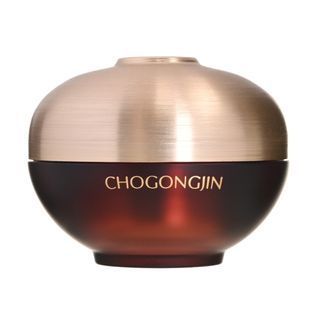
Based on the ingredients included, "MISSHA - Chogongjin Youngan Jin Cream" works well for moisturizing the skin. To work well, any moisturizer needs to include a combination of water-binding and emollient ingredients. MISSHA - Chogongjin Youngan Jin Cream ticks this box. Humectants in this product (acetyl hexapeptide-8, fructooligosaccharides, fructose, glycerin and hydrolyzed hyaluronic acid) help to increase the water content in the upper layer of the skin. (These ingredients do so by "capturing" water molecules from the outside air or from within the deeper layers of the skin). Emollients in this formulation (ceramide np, phytosphingosine, dimethicone, helianthus annuus seed oil and cetearyl alcohol) help to reduce the moisture loss from the skin. They also soften the skin surface and relieve the feeling of dryness and tightness.
Ingredient callouts
- Another benefit is that this moisturizer contain ceramides (phytosphingosine 0.15% - 0.65% and ceramide np 0.15% - 0.60%). Ceramides are an important part of our natural skin barrier. The Ceramides used in skincare are synthetic or come from plants. They help soften the skin and can help "fill the gaps" in the skin barrier, keeping the skin hydrated and resilient for longer.
- We like that this moisturizer contains peptides (acetyl hexapeptide-8 0.10% - 0.45%). There are many different kind of Peptides and they are naturally present in our skin. They all are a combination of aminoacids. Some of them work as natural antibiotics, promote wound-healing and production of collagen. The science is still not settled on how effective Peptides are in skincare, but it is very likely that they have a benefit. Peptides might help restore the skin barrier and fight the signs of aging. At the very least, Peptides work as humectants: they attract water to the upper layer of the skin and improve its hydration.
- Adenosine 0.10% - 0.45%. It is a chemical present inside our skin cells. A clinical trial confirmed that topical application of Adenosine in a low concentration can reduce dynamic wrinkles (these are the wrinkles that appear with age in a places where our mimic is the most active, for example, in the corners of the eyes or on the forehead).
Irritation risk
There are quite a few common irritants in this product, including ingredients without particular skin benefits. We would not recommend it for sensitive skin. We assess the overall irritancy of this moisturizer to be high. For a detailed overview of all potential irritants: click here
You can see the detailed formula review with the breakdown of all actives in the product and the full ingredient list with estimated concentrations in the tables below.
Price
The product retails for 48.90$ in the United States.
For a detailed price comparison: click here.
Sources cited in this review
Every concentration estimate and effectiveness label is anchored to one of these 31 studies and safety reviews.
- 1
- 2Final Report on the Safety Assessment of Dimethicone Copolyoljournals.sagepub.com
- 3
- 4
- 5
- 6

Affiliate links · As an Amazon Associate, WIMJ earns from qualifying purchases.