Works for:
based on ingredients and %- Moisturizing
Doesn't work for:
based on ingredients and %- Anti-blemish
- Exfoliation
Can it cause trouble?
- Irritation risk: high
- Comedogenic risk ingredients: 1
Key actives
Moisturizing
What does the product description say?
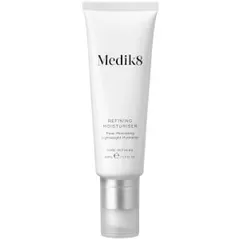
Refining Moisturiser
Source: From product name
This product can help improve hydration of the skin with the two types of ingredients.
The first type is called “humectants”:
these ingredients help attract water.
When humectants are on the surface of the skin, they “pull in” the moisture from the outside environment, or from
within deeper layers of the skin. The following ingredients in this product do the job:
glycerin, caprylyl glycol.
This product also contains ingredients called “occlusives”. They help reduce the speed with which our skin loses moisture to the outside environment. These ingredients also help soften the upper layer of the skin, so it feels less tight and nicer to the touch. The following ingredients in this product do the job: caprylic/capric triglyceride, dimethicone.
A good mix of fatty acids that forms a protective layer on the skin. Improves the shelf life of products. Derived from coconut and glycerin
A silicone that helps to reduce water loss from the surface of the skin. Can temporarily "fill in" lines and wrinkles, absorb oil, and create a nice product finish
One of the best moisturizing ingredients. Naturally present in skin. It attracts water to the upper layer of the skin working as a humectant
A good emollient that helps soften the skin and helps repair its barrier function. It can clog pores if used in high concentrations.
A non-drying alcohol that works to soften the skin and stabilize product formulations helping oil and water mix together
An emollient that softens the skin and forms a protective layer on its surface. Helps water and oil mix together
Helps preserve products and creates a nice product texture
Helps oil and water mix together and works as an emollient
Helps to stabilize the product formulation while softening the upper layer of the skin. Can be irritating
Helps calm down inflammation in skin and can help reduce itching. Helps to repair the skin barrier and keep skin hydrated
Anti-blemish
What does the product description say?
Red Clover Extract, a powerful botanical, helps to regulate the production of excess oil and sebum, meaning pores are less likely to become blocked and irritated.
Source: Lookfantastic
Effective ingredients missing or their concentration is too low.
A type of clay that consists mainly of aluminum silicate. Helps absorb oil and creates a thicker product consistency. Can be used to add a white color
Helps stabilize the product formulation
Helps calm down inflammation in skin and can help reduce itching. Helps to repair the skin barrier and keep skin hydrated
A plant extract that can help neutralize free radicals in skin. It contains a compound salicin that can theoretically be converted into salicylic acid that, in turn, helps reduce inflammation in skin, but the evidence of effectiveness in skin is lacking and the extract is usually not used in a concentration that would enable an exfoliating effect
Exfoliation
What does the product description say?
L-Mandelic Acid acts as a gentle exfoliant, leaving both the surface of your skin and your pores with a revived look and feel.
Source: Lookfantastic
This product does not contain effective exfoliating ingredients. It might be able to deliver physical exfoliation, that is scrub off some of the dead cells on the surface of the skin. We do not recommend physical exfoliation, because it is not uniform (some bits of skin can get exfoliated too much while others not at all). It can also traumatize the skin and aggrevate acne and other skin conditions.
A plant extract that can help neutralize free radicals in skin. It contains a compound salicin that can theoretically be converted into salicylic acid that, in turn, helps reduce inflammation in skin, but the evidence of effectiveness in skin is lacking and the extract is usually not used in a concentration that would enable an exfoliating effect
Helps calm down inflammation in skin and can help reduce itching. Helps to repair the skin barrier and keep skin hydrated
How honest is this product?
| Promise | Can it deliver? |
|---|---|
| Moisturizing | |
| Exfoliation | |
| Anti-blemish |
Total Promises Fulfilled score: 25/100.
We receive a small commission for purchases made through these links at no cost for you. Thank you for your support! Learn more
Affiliate link · supports WIMJ at no cost to you
Potential irritants
Comedogenic ingredients
User reviews (0)
Averages from community submissions.
No reviews yet for this product.
Be the first to share your experience!
Tried this product?
Help capture what the ingredient list can't—texture, finish, pilling, scent, and more. Answer what you can, skip the rest.
Takes ~30 seconds.
Reviews are shown in aggregate. No personal details.
Key Actives
Helps calm down inflammation in skin and can help reduce itching. Helps to repair the skin barrier and keep skin hydrated
A type of clay that consists mainly of aluminum silicate. Helps absorb oil and creates a thicker product consistency. Can be used to add a white color
A silicone that helps to reduce water loss from the surface of the skin. Can temporarily "fill in" lines and wrinkles, absorb oil, and create a nice product finish
One of the best moisturizing ingredients. Naturally present in skin. It attracts water to the upper layer of the skin working as a humectant
A good mix of fatty acids that forms a protective layer on the skin. Improves the shelf life of products. Derived from coconut and glycerin
Works as a UV filter when used in high concentrations. It is photostable and is effective mostly against the UVB light, with some protection in the UVA range. In small concentrations, used for its ability to improve the color of cosmetic products. Is usually well tolerated by the skin
A good emollient that helps soften the skin and helps repair its barrier function. It can clog pores if used in high concentrations.
Potential irritants
Produces temporary toning effect. Can help dissolve other ingredients or preserve products
A plant extract that might help neutralize free radicals in skin. Can contain volalite oils and be irritating
A berry extract. Might have some anti-oxidant properties
A plant extract that has some anti-oxidant and anti-bacterial properties. Can be irritating
A plant oil with high content of volatile compounds that can irritate the skin. Can be used as a fragrance. Has anti-bacterial properties and might help neutralize free radicals on the surface of the skin
A plant extract that can help neutralize free radicals in skin. It contains a compound salicin that can theoretically be converted into salicylic acid that, in turn, helps reduce inflammation in skin, but the evidence of effectiveness in skin is lacking and the extract is usually not used in a concentration that would enable an exfoliating effect
Plant extract that can have healing and anti-inflammatory properties. It is a potential allergen and can be irritating
A plant extract that might help neutralize free radicals in skin. Can contain volalite oils and be irritating
An aromatic blend of unspecified and possibly irritating ingredients
A fragrance. Is a common allergen and irritant
Can be drying and contribute to skin irritation. Used in formulars to dissolve other ingredients, create a thinner product consistency or for its antibacterial properties
Helps to stabilize the product formulation while softening the upper layer of the skin. Can be irritating
A good mix of fatty acids that forms a protective layer on the skin. Improves the shelf life of products. Derived from coconut and glycerin
Used as a cleansing agent. Helps water and oil mix together
Helps preserve products and creates a nice product texture
A more stable but less bio-available form of vitamin E compared to Tocopherol. Might help moisturize and protect the skin from free radicals, but mostly used in low concentrations to stabilize other ingredients.
A good emollient that helps soften the skin and helps repair its barrier function. It can clog pores if used in high concentrations.
An alpha-hydroxy acid (AHA), but is mostly used to stabilize product formulations in cosmetics
Used to improve stability of the formulation
Can work as an exfoliant but is typically used to adjust the product pH
Comedogenic ingredients
A good emollient that helps soften the skin and helps repair its barrier function. It can clog pores if used in high concentrations.
All ingredients
One of the best moisturizing ingredients. Naturally present in skin. It attracts water to the upper layer of the skin working as a humectant
A type of clay that consists mainly of aluminum silicate. Helps absorb oil and creates a thicker product consistency. Can be used to add a white color
A good mix of fatty acids that forms a protective layer on the skin. Improves the shelf life of products. Derived from coconut and glycerin
Produces temporary toning effect. Can help dissolve other ingredients or preserve products
A non-drying alcohol that works to soften the skin and stabilize product formulations helping oil and water mix together
Works as a UV filter when used in high concentrations. It is photostable and is effective mostly against the UVB light, with some protection in the UVA range. In small concentrations, used for its ability to improve the color of cosmetic products. Is usually well tolerated by the skin
An emollient that softens the skin and forms a protective layer on its surface. Helps water and oil mix together
Used as a cleansing agent. Helps water and oil mix together
A silicone that helps to reduce water loss from the surface of the skin. Can temporarily "fill in" lines and wrinkles, absorb oil, and create a nice product finish
A plant extract that might help neutralize free radicals in skin. Can contain volalite oils and be irritating
Helps calm down inflammation in skin and can help reduce itching. Helps to repair the skin barrier and keep skin hydrated
A berry extract. Might have some anti-oxidant properties
A plant extract that has some anti-oxidant and anti-bacterial properties. Can be irritating
Helps preserve products and creates a nice product texture
A plant oil with high content of volatile compounds that can irritate the skin. Can be used as a fragrance. Has anti-bacterial properties and might help neutralize free radicals on the surface of the skin
A plant extract that can help neutralize free radicals in skin. It contains a compound salicin that can theoretically be converted into salicylic acid that, in turn, helps reduce inflammation in skin, but the evidence of effectiveness in skin is lacking and the extract is usually not used in a concentration that would enable an exfoliating effect
A more stable but less bio-available form of vitamin E compared to Tocopherol. Might help moisturize and protect the skin from free radicals, but mostly used in low concentrations to stabilize other ingredients.
Helps create a thicker or gel-like product texture. It is not a surfactant but can be used in gentle cleansing formulations
Plant extract that can have healing and anti-inflammatory properties. It is a potential allergen and can be irritating
A good emollient that helps soften the skin and helps repair its barrier function. It can clog pores if used in high concentrations.
A plant extract that might help neutralize free radicals in skin. Can contain volalite oils and be irritating
Used to stabilize the product formulation and can help absorb oil
An aromatic blend of unspecified and possibly irritating ingredients
A fragrance. Is a common allergen and irritant
Can be drying and contribute to skin irritation. Used in formulars to dissolve other ingredients, create a thinner product consistency or for its antibacterial properties
An alpha-hydroxy acid (AHA), but is mostly used to stabilize product formulations in cosmetics
Used to improve stability of the formulation
Can work as an exfoliant but is typically used to adjust the product pH
Helps to stabilize the product formulation while softening the upper layer of the skin. Can be irritating
Used to stabilize mixtures of oil and water, and create thicker, gel-like product textures
Ingredient list view
Water, Glycerin, Bentonite, Kaolin, Glyceryl ricinoleate, Caprylic/capric triglyceride, Stearic acid, Alcohol denat., Cetyl alcohol, Titanium dioxide, Ci 77891, Glycol distearate, Glyceryl stearate, Cocamidopropyl hydroxysultaine, Dimethicone, Lonicera caprifolium flower extract, Phenethyl alcohol, Hydrolyzed cranberry fruit/leaf extract, Allantoin, Vaccinium macrocarpon fruit extract, Calendula officinalis flower extract, Caprylyl glycol, Rosmarinus officinalis leaf oil, Salix alba bark extract, Tocopheryl acetate, Xanthan gum, Carbomer, Chamomilla recutita flower extract, Glycine soja oil, Lonicera japonica flower extract, Passiflora incarnata flower extract, Potassium sorbate, Maltodextrin, Parfum, Lavandula angustifolia herb oil, Alcohol, Phytic acid, Sodium hydroxide, Trisodium ethylenediamine disuccinate, Citric acid, Myristyl alcohol, Stearyl alcohol, Sodium chloride
- Glycerol and the skin: holistic approach to its origin and functions
- Dimethicone as a protective ingredient in topical medications
- Final Report on the Safety Assessment of Dimethicone Copolyol
- VOLATILE CONSTITUENTS FROM THE FLOWERS OF TWO SPECIES OF HONEYSUCKLE ( LONICERA JAPONICA AND LONICERA CAPRIFOLIUM )
- Final Report on the Safety Assessment of Phenethyl Alcohol
- Profile of wound healing process induced by allantoin
- Topical application of Calendula officinalis (L.): Formulation and evaluation of hydrophilic cream with antioxidant activity
- The seamy side of natural medicines: contact sensitization to arnica (Arnica montana L.) and marigold (Calendula officinalis L.)
- Final report on the safety assessment of Calendula officinalis extract and Calendula officinalis
- Contact dermatitis as an adverse reaction to some topically used European herbal medicinal products – part 1: Achillea millefolium–Curcuma longa
- Assessment report on Rosmarinus officinalis L., aetheroleum and Rosmarinus officinalis L., folium
- Screening of plant extracts for antimicrobial activity against bacteria and yeasts with dermatological relevance
- Occupational contact dermatitis due to essential oils
- The in vitro antimicrobial activity and chemometric modelling of 59 commercial essential oils against pathogens of dermatological relevance
- Antimicrobial and Antioxidant Properties of Rosemary and Sage (Rosmarinus officinalis L. and Salvia officinalis L., Lamiaceae) Essential Oils
- Chemical Composition, Plant Genetic Differences, Antimicrobial and Antifungal Activity Investigation of the Essential Oil of Rosmarinus officinalis L.
- Efficacy and Safety of White Willow Bark (Salix alba) Extract
- An evaluation of the effect of a topical product containing salicin on the visible signs of human skin aging
- Chemical composition of the essential oils from the flower, leaf and stem of Lonicera japonica
- Cosmetic and dermatologic use of alpha hydroxy acids
- Comparative Evaluation of Efficacy and Tolerability of Glycolic Acid, Salicylic Mandelic Acid, and Phytic Acid Combination Peels in Melasma
- Cosmetic allergy from myristyl alcohol
- Contact Sensitization to Emulsifying Agents: An Underrated Issue?
- Patch testing with myristyl alcohol