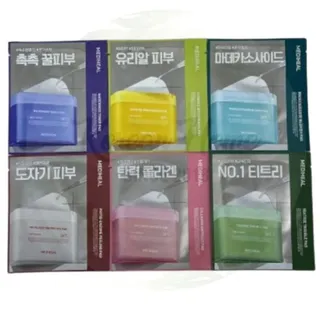
Works for
MoisturizingMadecassoside, Palmitoyl tripeptide-1 + 45 moreWorks well
“Watermide Moisture Pad: Delivers deep, refreshing hydration and visible de-puffing”
This product can help improve hydration of the skin with the two types of ingredients.
The first type is called “humectants”:
these ingredients help attract water.
When humectants are on the surface of the skin, they “pull in” the moisture from the outside environment, or from
within deeper layers of the skin. The following ingredients in this product do the job:
alanine, arginine.
This product also contains ingredients called “occlusives”. They help reduce the speed with which our skin loses moisture to the outside environment. These ingredients also help soften the upper layer of the skin, so it feels less tight and nicer to the touch. The following ingredients in this product do the job: arginine, squalane.
The following ingredients in this product are especially good for supporting the skin barrier and helping with the hydration level: acetyl hexapeptide-8, ceramide np, copper tripeptide-1, madecassoside, palmitoyl pentapeptide-4, palmitoyl tripeptide-1, tripeptide-1
Evens skin toneRetinol, Capryloyl salicylic acid + 4 moreWorks well
“Vitamide Brightening Pad: Enriched with vitamins and niacinamide to help even out your skin tone and add a radiant glow.”
This product can help reduce hypepigmentation and even out the skin tone because it contains the following effective ingredients: retinol.
In addition, this product contains betaine salicylate. This ingredient (ingredients) might help reduce hyperpigmentation, but the effect, if any, is likely to be small.
The following ingredient (ingredients) in this product might be helpful, but there is no evidence to confirm that it actually can help even out the skin tone: alanine, capryloyl salicylic acid, madecassoside.
Keep in mind that you would need to apply any topical skincare targetted at hypigmentation consistently for a couple of months to get a result. No topical skincare product can help get rid of hyperpigmentation (including post-acne marks and age spots) instantly.
ExfoliationBetaine salicylate, Capryloyl salicylic acid + 3 moreWorks well
“Phyto-Enzyme Peeling Pad: Natural enzymes to help slough away dead skin cells, revealing a smoother and brighter complexion.”
This product can help exfoliate the skin. In other words, it helps break down the bonds between dead cells on the surface of the skin and speed up the skin turnover. Skin often appears softer and brighter after exfoliation, but overdoing it can result in disrupted skin barrier. The following ingredient is doing the exfoliating job in this product: betaine salicylate, capryloyl salicylic acid, retinol.
Anti-blemishRetinol, Betaine salicylate + 7 moreWorks well
“Teatree Trouble Pad: Helps control excess oil, reduce the appearance of blemishes, and keep your skin clear and balanced.”
This product can help reduce breakouts and clogged pores because it contains the following ingredient: retinol. This ingredient is used for treating acne and can have a noticeable effect.
In addition, this product contains betaine salicylate. It can help in reducing blemishes, even though it is less effective.
The following ingredient (ingredients) in this product might be helpful, but there is no evidence to confirm that it actually works: capryloyl salicylic acid
Anti-agingRetinol, Threonine + 16 moreWorks well
“Retinol Collagen Lifting Pad: Combines the benefits of retinol and collagen to help improve skin texture, lift sagging skin, and diminish the appearance of fine lines.”
This product can help reduce and prevent fine lines and wrinkles, improve skin elasticity and firmness because it contains retinol, adenosine.
These ingredients in the product can also be helpful, even though there is less evidence for their effectiveness: acetyl hexapeptide-8, asiaticoside, centella asiatica leaf extract, copper tripeptide-1, lysine, madecassoside, palmitoyl pentapeptide-4, palmitoyl tripeptide-1, serine, threonine, tripeptide-1.
Keep in mind that it typically takes at least 6 weeks to notice any results because the changes that are needed to improve fine lines and elasticity happen in the deeper layers of the skin. No topical anti-aging product can “erase” wrinkles or fully reverse signs of aging.
Anti-oxidationSide benefit · Madecassoside, Retinol + 11 moreWorks well
This product contains antioxidants (asiaticoside, madecassoside, retinol) that can help neutralize free radicals in skin. By doing so, they can lessen the damage the skin gets from the UV light (sun).
Can it cause trouble?
Irritancy15 strong irritants: Lavandula angustifolia oil, Chamomilla recutita flower oil + 13 more — patch-test recommendedHigh risk
ComedogenicClean of flagged comedogenic ingredientsNone flagged
User reviews
Be the first — your take helps the next person decide.
Ingredients
Filter by role to see what each ingredient is doing.
Water~45–55%
Dipropylene glycol~5.9–7.2%
- Irritation risk
- Low
Helps to dissolve other ingredients in a formulation. Slows down the rate of product drying
More about Dipropylene glycolGlycereth-26~3.7–4.6%
Betaine~2.9–3.6%
- Irritation risk
- Low
Helps attract water to the upper layer of the skin and improves the product texture
More about Betaine1,2-hexanediol~1.2–1.4%
Glycerin~1.9–2.4%
- Irritation risk
- Low
One of the best moisturizing ingredients. Naturally present in skin. It attracts water to the upper layer of the skin working as a humectant
More about GlycerinDiphenyl dimethicone~1.6–1.9%
Hydroxyacetophenone~1.3–1.6%
Triethylhexanoin~1–1.2%
- Irritation risk
- Medium
Helps soften the upper layer of the skin
More about TriethylhexanoinHydrogenated lecithin~0.7–1.05%
- Irritation risk
- Low
Helps to retain moisture by creating a protective barrier on the skin. Rich in fatty acids. Improves product texture and helps with the penetration of other ingredients.
More about Hydrogenated lecithinAllantoin~0.3–0.6%
- Irritation risk
- Low
Helps calm down inflammation in skin and can help reduce itching. Helps to repair the skin barrier and keep skin hydrated
More about AllantoinOctyldodeceth-16~0.35–0.6%
Polyglyceryl-10 oleate~0.2–0.4%
- Irritation risk
- Low
Helps soften the upper layer of the skin
More about Polyglyceryl-10 oleateSphingomonas ferment extract~0.15–0.3%
- Irritation risk
- Low
Adenosine~0.15–0.3%
- Irritation risk
- Low
Might help improve cell turnover and reduce inflammation in skin. One study shows that the ingredients might be able to help reduce dynamic wrinkles (for example, in the corners of the eyes or on the forehead)
More about AdenosineDisodium edta~0.15–0.3%
Sodium polyacrylate~0.2–0.4%
- Irritation risk
- Low
Used to create a gel-like product texture, as well as to stabilize emulsions
More about Sodium polyacrylateHydrolyzed collagen~0.2–0.4%
- Irritation risk
- Low
A typically plant-derived compound that is supposed mimic human collagen. Cannot penetrate the skin barrier so is not particularly useful in skincare products beyond attracting water to the upper layer of the skin
More about Hydrolyzed collagenLavandula angustifolia oil~0.15–0.3%
- Irritation risk
- High
An essential oil. Potential allergen and can be irritating. It has some anti-bacterial properties
More about Lavandula angustifolia oilPhytosterols~0.2–0.35%
- Irritation risk
- Medium
Lipids that work as an emollient and can be helpful in repairing skin barrier function
More about PhytosterolsChamomilla recutita flower oil~0.1–0.2%
- Irritation risk
- High
Plant oil that can have healing and anti-inflammatory properties. It contains volatile compouunds that are potential allergens and can be irritating
More about Chamomilla recutita flower oilRetinol~0.1–0.15%
- Irritation risk
- High
Two steps removed from the active form of vitamin A - retinoic acid. Once converted to the retinoic acid in the skin, retinol is proven to be effective against all signs of aging. It improves skin cell turnover, helps fight blemishes and clogged pores, can regulate excess oil production and even skin tone. It can, however, be quite irritating
More about RetinolBeta-glucan~0.05–0.15%
- Irritation risk
- Low
Helps attract water to the upper layer of the skin, calm down inflammation and irritation, restore the barrier function and support wound healing. It can be helpful in reducing fine lines and wrinkles
More about Beta-glucanCeramide np~0.1–0.2%
- Irritation risk
- Low
A type of lipid similar to ceramides naturally present in skin. Helps to soften the upper layer of the skin and supports the skin barrier function to keep it hydrated. Can help to prevent inflammation in skin
More about Ceramide npWater~0.1–0.15%
Glycerin~0.1–0.2%
- Irritation risk
- Low
One of the best moisturizing ingredients. Naturally present in skin. It attracts water to the upper layer of the skin working as a humectant
More about GlycerinGlycereth-26~0.1–0.15%
1,2-hexanediol~0.1–0.15%
Diphenyl dimethicone~0.1–0.2%
Triethylhexanoin~0.05–0.1%
- Irritation risk
- Medium
Helps soften the upper layer of the skin
More about TriethylhexanoinBetaine~0.05–0.15%
- Irritation risk
- Low
Helps attract water to the upper layer of the skin and improves the product texture
More about BetaineHydroxyacetophenone~0.1–0.15%
Hydrogenated lecithin~0.1–0.2%
- Irritation risk
- Low
Helps to retain moisture by creating a protective barrier on the skin. Rich in fatty acids. Improves product texture and helps with the penetration of other ingredients.
More about Hydrogenated lecithinPolyglyceryl-10 oleate~0.1–0.15%
- Irritation risk
- Low
Helps soften the upper layer of the skin
More about Polyglyceryl-10 oleateHydroxyethyl urea~0.1–0.15%
- Irritation risk
- Low
A synthetic humectant made from urea. It pulls water into the upper layer of the skin about as well as glycerin, but without glycerin's stickiness. Unlike urea, it has not been shown to exfoliate. Lab and animal tests suggest a low risk of irritation at the levels used in products.
More about Hydroxyethyl ureaDipotassium glycyrrhizate~0.05–0.15%
- Irritation risk
- Low
A salt derived from licorice. Works as an emollient to soften the upper layer of the skin and can help calm down inflammation. Might be helpful for skin lightening
More about Dipotassium glycyrrhizateSodium citrate~0.1–0.15%
- Irritation risk
- Medium
Helps to control the skin's pH level. Maintains the skin's natural film of amino-lactic acids and oils. Helps to preserve products
More about Sodium citrateAllantoin~0.05–0.1%
- Irritation risk
- Low
Helps calm down inflammation in skin and can help reduce itching. Helps to repair the skin barrier and keep skin hydrated
More about AllantoinOctyldodeceth-16~0.1–0.2%
Xanthan gum~0.1–0.15%
- Irritation risk
- Low
Used to create a thicker product consistency
More about Xanthan gumHydroxyethylcellulose~0.1–0.2%
- Irritation risk
- Low
Used to thicken product formulations and create gel-like textures
More about HydroxyethylcelluloseCollagen extract~0.05–0.15%
- Irritation risk
- Low
Adenosine~0.05–0.15%
- Irritation risk
- Low
Might help improve cell turnover and reduce inflammation in skin. One study shows that the ingredients might be able to help reduce dynamic wrinkles (for example, in the corners of the eyes or on the forehead)
More about AdenosineCitric acid~0.1–0.15%
- Irritation risk
- Medium
Can work as an exfoliant but is typically used to adjust the product pH
More about Citric acidDisodium edta~0.1–0.15%
Olea europaea fruit oil~0.1–0.15%
- Irritation risk
- Medium
An emollient that helps soften the skin but is not effective for restoring its barrier function. Might be helpful to calm down inflammation
More about Olea europaea fruit oilButylene glycol~0.1–0.15%
- Irritation risk
- Low
Used to create a nice product texture and help delivery of other ingredients. Might be somewhat helpful in attracting water to the upper layer of the skin
More about Butylene glycolPelargonium graveolens flower oil~0.1–0.15%
- Irritation risk
- High
An essential oil. Can be irritating. Can become an allergen with oxidation
More about Pelargonium graveolens flower oilLavandula angustifolia oil~0.05–0.15%
- Irritation risk
- High
An essential oil. Potential allergen and can be irritating. It has some anti-bacterial properties
More about Lavandula angustifolia oilAnthemis nobilis flower oil~0.05–0.1%
- Irritation risk
- High
An essential oil that is used as a fragrance and can be irritating. It might have some anti-oxidant effect in skin
More about Anthemis nobilis flower oilCitrus aurantium dulcis peel oil~0.05–0.15%
- Irritation risk
- High
An essentil oil from orange peel. Potential allergen and can be irritating
More about Citrus aurantium dulcis peel oilJuniperus mexicana oil~0.1–0.15%
- Irritation risk
- Low
Mangifera indica fruit extract~0.05–0.15%
- Irritation risk
- Medium
A fruit extract that might help attract water to the upper layer of the skin. There is no evidence of other benefits in skin
More about Mangifera indica fruit extractLactobacillus ferment~0.05–0.15%
- Irritation risk
- Low
A fermentation product created by bacteria Lactobacillus. The fermented product has anti-bacterial properties and might be helpful in calming down inflammation, but studies are lacking. Helps attract water to the upper layer of the skin. Can be used as a preservative
More about Lactobacillus fermentCeramide np~0.1–0.2%
- Irritation risk
- Low
A type of lipid similar to ceramides naturally present in skin. Helps to soften the upper layer of the skin and supports the skin barrier function to keep it hydrated. Can help to prevent inflammation in skin
More about Ceramide npMilk protein extract~0.1–0.15%
- Irritation risk
- Low
Caprylyl glycol~0.1–0.2%
- Irritation risk
- Medium
Helps preserve products and creates a nice product texture
More about Caprylyl glycolTripeptide-1~0.1–0.2%
- Irritation risk
- Low
A type of peptide. Peptides are excellent moisturizers and might be able support collagen production reducing fine lines and wrinkles
More about Tripeptide-1Acetyl hexapeptide-8~0.05–0.15%
- Irritation risk
- Low
A type of peptide. Peptides are excellent moisturizers and might be able support collagen production reducing fine lines and wrinkles
More about Acetyl hexapeptide-8Copper tripeptide-1~0.05–0.15%
- Irritation risk
- Low
A naturally occurring peptide. One of the most studied peptides in dermatology. It is sometimes abbreviated GHK-Cu. Belongs to the class of carrier peptides. It stimulates both synthesis and breakdown of collagen in skin. It is released in skin wounds and inflammation to support healing. It accelerates wound-healing of the skin and can stimulate hair growth. There are preliminary studies that confirm that copper tripeptide can help support collagen production reducing fine lines and wrinkles and decrease inflammation in skin.
More about Copper tripeptide-1Palmitoyl tripeptide-1~0.1–0.2%
- Irritation risk
- Low
A type of peptide. Peptides are excellent moisturizers and might be able support collagen production reducing fine lines and wrinkles
More about Palmitoyl tripeptide-1Palmitoyl pentapeptide-4~0.05–0.15%
- Irritation risk
- Low
A type of peptide. Peptides are excellent moisturizers and might be able support collagen production reducing fine lines and wrinkles
More about Palmitoyl pentapeptide-4Water~0.1–0.15%
Dipropylene glycol~0.05–0.1%
- Irritation risk
- Low
Helps to dissolve other ingredients in a formulation. Slows down the rate of product drying
More about Dipropylene glycolNiacinamide~0.1–0.15%
- Irritation risk
- Low
Is proven to be effective in reducing blemishes, evening out skin tone and helping to improve lines and wrinkles. It helps the skin to repair sun damage, calm down inflammation and keep maintain good levels of moisture. The concentration of about 2% is effective for supporting the skin barrier and evening out the skin tone. Concentration of 4-6% is better for helping with acne and balancing the sebum production
More about NiacinamideGlycereth-26~0.1–0.15%
1,2-hexanediol~0.1–0.15%
Hippophae rhamnoides water~0.05–0.1%
- Irritation risk
- Medium
A plant-infused water. The concentration of compounds with potential skin benefits is unlikely to be effective
More about Hippophae rhamnoides waterHydroxyacetophenone~0.1–0.15%
Betaine~0.05–0.15%
- Irritation risk
- Low
Helps attract water to the upper layer of the skin and improves the product texture
More about BetaineOctyldodeceth-16~0.1–0.2%
Hydroxyethyl urea~0.1–0.15%
- Irritation risk
- Low
A synthetic humectant made from urea. It pulls water into the upper layer of the skin about as well as glycerin, but without glycerin's stickiness. Unlike urea, it has not been shown to exfoliate. Lab and animal tests suggest a low risk of irritation at the levels used in products.
More about Hydroxyethyl ureaAllantoin~0.05–0.1%
- Irritation risk
- Low
Helps calm down inflammation in skin and can help reduce itching. Helps to repair the skin barrier and keep skin hydrated
More about AllantoinDipotassium glycyrrhizate~0.05–0.15%
- Irritation risk
- Low
A salt derived from licorice. Works as an emollient to soften the upper layer of the skin and can help calm down inflammation. Might be helpful for skin lightening
More about Dipotassium glycyrrhizateTrehalose~0.1–0.15%
- Irritation risk
- Low
A sugar that attracts water to the upper layer of the skin
More about TrehaloseXanthan gum~0.1–0.15%
- Irritation risk
- Low
Used to create a thicker product consistency
More about Xanthan gumHydroxyethylcellulose~0.1–0.2%
- Irritation risk
- Low
Used to thicken product formulations and create gel-like textures
More about HydroxyethylcellulosePolyglyceryl-10 laurate~0.1–0.15%
- Irritation risk
- Medium
Helps water and oil mix together
More about Polyglyceryl-10 laurateDisodium edta~0.1–0.15%
Olea europaea fruit oil~0.1–0.15%
- Irritation risk
- Medium
An emollient that helps soften the skin but is not effective for restoring its barrier function. Might be helpful to calm down inflammation
More about Olea europaea fruit oilHydrogenated lecithin~0.1–0.2%
- Irritation risk
- Low
Helps to retain moisture by creating a protective barrier on the skin. Rich in fatty acids. Improves product texture and helps with the penetration of other ingredients.
More about Hydrogenated lecithinPelargonium graveolens flower oil~0.1–0.15%
- Irritation risk
- High
An essential oil. Can be irritating. Can become an allergen with oxidation
More about Pelargonium graveolens flower oilLavandula angustifolia oil~0.05–0.15%
- Irritation risk
- High
An essential oil. Potential allergen and can be irritating. It has some anti-bacterial properties
More about Lavandula angustifolia oilAnthemis nobilis flower oil~0.05–0.1%
- Irritation risk
- High
An essential oil that is used as a fragrance and can be irritating. It might have some anti-oxidant effect in skin
More about Anthemis nobilis flower oilCitrus aurantium dulcis peel oil~0.05–0.15%
- Irritation risk
- High
An essentil oil from orange peel. Potential allergen and can be irritating
More about Citrus aurantium dulcis peel oilJuniperus mexicana oil~0.1–0.15%
- Irritation risk
- Low
Riboflavin~0.05–0.15%
- Irritation risk
- Low
Sodium ascorbyl phosphate~0.1–0.15%
- Irritation risk
- Medium
A stable derivative of vitamin C. It is oil-soluble which means it is more likely to penetrate the skin compared to the pure form of vitamin C (which is water-soluble), but it is less bio-available and is way less effective in stimulating collagen and reducing wrinkles compared to the pure form of vitamin C (L-ascorbic acid) and its other derivatives (for example, magnesium ascorbyl phosphate). At the same time, this vitamin C derivative has been shown in studies to be effective in reducing acne, blemishes and clogged pores. It is less irritating then the pure form of vitamin C
More about Sodium ascorbyl phosphatePyridoxine hcl~0.05–0.15%
- Irritation risk
- Medium
Might help neutralize free radicals in skin
More about Pyridoxine hclRetinol~0.05–0.1%
- Irritation risk
- High
Two steps removed from the active form of vitamin A - retinoic acid. Once converted to the retinoic acid in the skin, retinol is proven to be effective against all signs of aging. It improves skin cell turnover, helps fight blemishes and clogged pores, can regulate excess oil production and even skin tone. It can, however, be quite irritating
More about RetinolTocopheryl acetate~0.1–0.2%
- Irritation risk
- Medium
A more stable but less bio-available form of vitamin E compared to Tocopherol. Might help moisturize and protect the skin from free radicals, but mostly used in low concentrations to stabilize other ingredients.
More about Tocopheryl acetateMenadione~0.1–0.15%
- Irritation risk
- Low
Thiamine hcl~0.05–0.15%
- Irritation risk
- Medium
Can help attract water to the upper layer of the skin. Is studied as a mosquito repellent
More about Thiamine hclCitronellol~0.05–0.1%
Linalool~0.05–0.1%
Geraniol~0.05–0.1%
Limonene~0.05–0.1%
- Irritation risk
- High
A common frangrance that can easily irritate skin, especially if exposed to air, light or heat
More about LimoneneWater~0.1–0.15%
Dipropylene glycol~0.05–0.1%
- Irritation risk
- Low
Helps to dissolve other ingredients in a formulation. Slows down the rate of product drying
More about Dipropylene glycolGlycerin~0.1–0.2%
- Irritation risk
- Low
One of the best moisturizing ingredients. Naturally present in skin. It attracts water to the upper layer of the skin working as a humectant
More about GlycerinButylene glycol~0.1–0.15%
- Irritation risk
- Low
Used to create a nice product texture and help delivery of other ingredients. Might be somewhat helpful in attracting water to the upper layer of the skin
More about Butylene glycol1,2-hexanediol~0.1–0.15%
Betaine salicylate~0.1–0.15%
- Irritation risk
- Medium
Exfoliating acid, a "relative" of salicylic acid
More about Betaine salicylateBetaine~0.05–0.15%
- Irritation risk
- Low
Helps attract water to the upper layer of the skin and improves the product texture
More about BetaineHydroxyacetophenone~0.1–0.15%
Tromethamine~0.1–0.15%
Octyldodeceth-16~0.1–0.2%
Sodium citrate~0.1–0.15%
- Irritation risk
- Medium
Helps to control the skin's pH level. Maintains the skin's natural film of amino-lactic acids and oils. Helps to preserve products
More about Sodium citrateCitric acid~0.1–0.15%
- Irritation risk
- Medium
Can work as an exfoliant but is typically used to adjust the product pH
More about Citric acidDisodium edta~0.1–0.15%
Papain~0.05–0.15%
- Irritation risk
- High
An enzyme extracted from papaya fruit. Can have an exfoliating effect on the skin. Can be irritating
More about PapainPogostemon cablin oil~0.05–0.1%
- Irritation risk
- Low
Juniperus virginiana oil~0.05–0.15%
- Irritation risk
- Medium
Cedarwood oil. Used as a fragrance. Can be irritating
More about Juniperus virginiana oilCapryloyl salicylic acid~0.05–0.15%
- Irritation risk
- High
Artemisia vulgaris oil~0.05–0.1%
- Irritation risk
- Low
Beta-glucan~0.05–0.15%
- Irritation risk
- Low
Helps attract water to the upper layer of the skin, calm down inflammation and irritation, restore the barrier function and support wound healing. It can be helpful in reducing fine lines and wrinkles
More about Beta-glucanMentha arvensis leaf oil~0.1–0.15%
Water~0.1–0.15%
Dipropylene glycol~0.05–0.1%
- Irritation risk
- Low
Helps to dissolve other ingredients in a formulation. Slows down the rate of product drying
More about Dipropylene glycolGlycereth-26~0.1–0.15%
Niacinamide~0.1–0.15%
- Irritation risk
- Low
Is proven to be effective in reducing blemishes, evening out skin tone and helping to improve lines and wrinkles. It helps the skin to repair sun damage, calm down inflammation and keep maintain good levels of moisture. The concentration of about 2% is effective for supporting the skin barrier and evening out the skin tone. Concentration of 4-6% is better for helping with acne and balancing the sebum production
More about NiacinamideGlycerin~0.1–0.2%
- Irritation risk
- Low
One of the best moisturizing ingredients. Naturally present in skin. It attracts water to the upper layer of the skin working as a humectant
More about Glycerin1,2-hexanediol~0.1–0.15%
Diphenyl dimethicone~0.1–0.2%
Triethylhexanoin~0.05–0.1%
- Irritation risk
- Medium
Helps soften the upper layer of the skin
More about TriethylhexanoinHydroxyacetophenone~0.1–0.15%
Hydrogenated lecithin~0.1–0.2%
- Irritation risk
- Low
Helps to retain moisture by creating a protective barrier on the skin. Rich in fatty acids. Improves product texture and helps with the penetration of other ingredients.
More about Hydrogenated lecithinPolyglyceryl-10 oleate~0.1–0.15%
- Irritation risk
- Low
Helps soften the upper layer of the skin
More about Polyglyceryl-10 oleateCentella asiatica extract~0.1–0.25%
- Irritation risk
- Medium
A plant extract that has been shown to be able to reduce inflammation in skin, support restoration of skin barrier function, as well as support collagen production. Contains active compounds called centelloids: asiaticoside, madecasosside, asiatic acid and madecassic acid. Might be helpful in preventing stretch marks. It can be itself be irritating though.
More about Centella asiatica extractDipotassium glycyrrhizate~0.05–0.15%
- Irritation risk
- Low
A salt derived from licorice. Works as an emollient to soften the upper layer of the skin and can help calm down inflammation. Might be helpful for skin lightening
More about Dipotassium glycyrrhizateSodium citrate~0.1–0.15%
- Irritation risk
- Medium
Helps to control the skin's pH level. Maintains the skin's natural film of amino-lactic acids and oils. Helps to preserve products
More about Sodium citrateAllantoin~0.05–0.1%
- Irritation risk
- Low
Helps calm down inflammation in skin and can help reduce itching. Helps to repair the skin barrier and keep skin hydrated
More about AllantoinOctyldodeceth-16~0.1–0.2%
Citric acid~0.1–0.15%
- Irritation risk
- Medium
Can work as an exfoliant but is typically used to adjust the product pH
More about Citric acidDisodium edta~0.1–0.15%
Polyglyceryl-10 laurate~0.1–0.15%
- Irritation risk
- Medium
Helps water and oil mix together
More about Polyglyceryl-10 laurateJuniperus virginiana oil~0.05–0.15%
- Irritation risk
- Medium
Cedarwood oil. Used as a fragrance. Can be irritating
More about Juniperus virginiana oilButylene glycol~0.1–0.15%
- Irritation risk
- Low
Used to create a nice product texture and help delivery of other ingredients. Might be somewhat helpful in attracting water to the upper layer of the skin
More about Butylene glycolArtemisia vulgaris oil~0.05–0.1%
- Irritation risk
- Low
Pogostemon cablin oil~0.05–0.1%
- Irritation risk
- Low
Madecassoside~0.1–0.15%
- Irritation risk
- Medium
An antioxidant that is typically derived from plant Centella Asiatica. It can help neutralize free radicals in skin and support skin barrier function. It could, however, itself be irritating. It is often unstable in formulations
More about MadecassosideRosmarinus officinalis leaf oil~0.05–0.15%
- Irritation risk
- High
A plant oil with high content of volatile compounds that can irritate the skin. Can be used as a fragrance. Has anti-bacterial properties and might help neutralize free radicals on the surface of the skin
More about Rosmarinus officinalis leaf oilViola odorata leaf extract~0.1–0.15%
- Irritation risk
- Low
Centella asiatica root extract~0.05–0.15%
- Irritation risk
- Low
Centella asiatica leaf extract~0.05–0.15%
- Irritation risk
- Medium
A plant extract that has been shown to be able to reduce inflammation in skin, support restoration of skin barrier function, as well as support collagen production. It can be irritating to sensitive skin. Might be helpful in preventing stretch marks. It could, however, itself be irritating.
More about Centella asiatica leaf extractSaccharomyces ferment~0.05–0.15%
- Irritation risk
- Low
A product of yeast fermentation. Helps attract water to the upper layer of the skin
More about Saccharomyces fermentMangifera indica fruit extract~0.05–0.15%
- Irritation risk
- Medium
A fruit extract that might help attract water to the upper layer of the skin. There is no evidence of other benefits in skin
More about Mangifera indica fruit extractLactobacillus ferment~0.05–0.15%
- Irritation risk
- Low
A fermentation product created by bacteria Lactobacillus. The fermented product has anti-bacterial properties and might be helpful in calming down inflammation, but studies are lacking. Helps attract water to the upper layer of the skin. Can be used as a preservative
More about Lactobacillus fermentAsiaticoside~0.05–0.1%
- Irritation risk
- Medium
An active compound of Centella Asiatica plant extract. In combination with other active compounds of Centella Asiatica extract (madecasosside, asiatic acid and madecassic acid), asiaticoside has been shown to be helpful in wound-healing, restoring skin barrier function and supporting collagen production in skin. It can, however, itself be irritating
More about AsiaticosideMadecassic acid~0.05–0.15%
- Irritation risk
- Medium
An active compound of Centella Asiatica plant extract. In combination with other active compounds of Centella Asiatica extract (asiaticoside, madecasosside and asiatic acid), madecassic acid has been shown to be helpful in wound-healing, restoring skin barrier function and supporting collagen production in skin. It can, however, itself be irritating
More about Madecassic acidAsiatic acid~0.05–0.15%
- Irritation risk
- Medium
An active compound of Centella Asiatica plant extract. In combination with other active compounds of Centella Asiatica extract (asiaticoside, madecasosside and madecassic acid) asiatic acid has been shown to be helpful in wound-healing, restoring skin barrier function and supporting collagen production in skin. It can, however, itself be irritating
More about Asiatic acidMelaleuca alternifolia leaf water~0.05–0.15%
- Irritation risk
- High
Butylene glycol~0.1–0.15%
- Irritation risk
- Low
Used to create a nice product texture and help delivery of other ingredients. Might be somewhat helpful in attracting water to the upper layer of the skin
More about Butylene glycolMethylpropanediol~0.1–0.15%
1,2-hexanediol~0.1–0.15%
Hydroxyacetophenone~0.1–0.15%
Melaleuca alternifolia leaf water~0.05–0.15%
- Irritation risk
- High
Lactobacillus ferment~0.05–0.15%
- Irritation risk
- Low
A fermentation product created by bacteria Lactobacillus. The fermented product has anti-bacterial properties and might be helpful in calming down inflammation, but studies are lacking. Helps attract water to the upper layer of the skin. Can be used as a preservative
More about Lactobacillus fermentDipotassium glycyrrhizate~0.05–0.15%
- Irritation risk
- Low
A salt derived from licorice. Works as an emollient to soften the upper layer of the skin and can help calm down inflammation. Might be helpful for skin lightening
More about Dipotassium glycyrrhizateSodium citrate~0.1–0.15%
- Irritation risk
- Medium
Helps to control the skin's pH level. Maintains the skin's natural film of amino-lactic acids and oils. Helps to preserve products
More about Sodium citrateAllantoin~0.05–0.1%
- Irritation risk
- Low
Helps calm down inflammation in skin and can help reduce itching. Helps to repair the skin barrier and keep skin hydrated
More about AllantoinOctyldodeceth-16~0.1–0.2%
Glycerin~0.1–0.2%
- Irritation risk
- Low
One of the best moisturizing ingredients. Naturally present in skin. It attracts water to the upper layer of the skin working as a humectant
More about GlycerinCitric acid~0.1–0.15%
- Irritation risk
- Medium
Can work as an exfoliant but is typically used to adjust the product pH
More about Citric acidDisodium edta~0.1–0.2%
Melaleuca alternifolia leaf oil~0.1–0.2%
- Irritation risk
- High
An essential oil that can be irritating. Has some anti-bacterial properties
More about Melaleuca alternifolia leaf oilHydrogenated lecithin~0.15–0.25%
- Irritation risk
- Low
Helps to retain moisture by creating a protective barrier on the skin. Rich in fatty acids. Improves product texture and helps with the penetration of other ingredients.
More about Hydrogenated lecithinMelaleuca alternifolia leaf extract~0.1–0.15%
- Irritation risk
- High
An essential oil that can be irritating. Has some anti-bacterial properties
More about Melaleuca alternifolia leaf extractMelaleuca alternifolia extract~0.1–0.2%
- Irritation risk
- Low
Mangifera indica fruit extract~0.1–0.2%
- Irritation risk
- Medium
A fruit extract that might help attract water to the upper layer of the skin. There is no evidence of other benefits in skin
More about Mangifera indica fruit extractWater~0.1–0.2%
Dipropylene glycol~0.1–0.2%
- Irritation risk
- Low
Helps to dissolve other ingredients in a formulation. Slows down the rate of product drying
More about Dipropylene glycolGlycereth-26~0.15–0.25%
Betaine~0.1–0.2%
- Irritation risk
- Low
Helps attract water to the upper layer of the skin and improves the product texture
More about BetaineOlea europaea fruit oil~0.15–0.25%
- Irritation risk
- Medium
An emollient that helps soften the skin but is not effective for restoring its barrier function. Might be helpful to calm down inflammation
More about Olea europaea fruit oilAbies sibirica oil~0.1–0.15%
- Irritation risk
- Low
Rosmarinus officinalis leaf oil~0.1–0.2%
- Irritation risk
- High
A plant oil with high content of volatile compounds that can irritate the skin. Can be used as a fragrance. Has anti-bacterial properties and might help neutralize free radicals on the surface of the skin
More about Rosmarinus officinalis leaf oilSalvia sclarea oil~0.1–0.2%
- Irritation risk
- High
Anthemis nobilis flower oil~0.1–0.15%
- Irritation risk
- High
An essential oil that is used as a fragrance and can be irritating. It might have some anti-oxidant effect in skin
More about Anthemis nobilis flower oilJuniperus mexicana oil~0.15–0.25%
- Irritation risk
- Low
Chamomilla recutita flower oil~0.1–0.2%
- Irritation risk
- High
Plant oil that can have healing and anti-inflammatory properties. It contains volatile compouunds that are potential allergens and can be irritating
More about Chamomilla recutita flower oilSodium hyaluronate~0.15–0.25%
- Irritation risk
- Low
One of the best moisturizing ingredients. Attracts water into the upper layer of the skin
More about Sodium hyaluronateOctyldodeceth-16~0.15–0.3%
Sodium pca~0.15–0.25%
- Irritation risk
- Low
Naturally present in skin and helps to attract water to its upper layer
More about Sodium pcaHydroxyethyl urea~0.15–0.25%
- Irritation risk
- Low
A synthetic humectant made from urea. It pulls water into the upper layer of the skin about as well as glycerin, but without glycerin's stickiness. Unlike urea, it has not been shown to exfoliate. Lab and animal tests suggest a low risk of irritation at the levels used in products.
More about Hydroxyethyl ureaXanthan gum~0.15–0.3%
- Irritation risk
- Low
Used to create a thicker product consistency
More about Xanthan gumSodium citrate~0.15–0.25%
- Irritation risk
- Medium
Helps to control the skin's pH level. Maintains the skin's natural film of amino-lactic acids and oils. Helps to preserve products
More about Sodium citrateAllantoin~0.15–0.25%
- Irritation risk
- Low
Helps calm down inflammation in skin and can help reduce itching. Helps to repair the skin barrier and keep skin hydrated
More about AllantoinCitric acid~0.15–0.25%
- Irritation risk
- Medium
Can work as an exfoliant but is typically used to adjust the product pH
More about Citric acidDisodium edta~0.15–0.25%
Glycerin~0.2–0.35%
- Irritation risk
- Low
One of the best moisturizing ingredients. Naturally present in skin. It attracts water to the upper layer of the skin working as a humectant
More about GlycerinDipotassium glycyrrhizate~0.15–0.25%
- Irritation risk
- Low
A salt derived from licorice. Works as an emollient to soften the upper layer of the skin and can help calm down inflammation. Might be helpful for skin lightening
More about Dipotassium glycyrrhizateButylene glycol~0.15–0.25%
- Irritation risk
- Low
Used to create a nice product texture and help delivery of other ingredients. Might be somewhat helpful in attracting water to the upper layer of the skin
More about Butylene glycolSorbitol~0.15–0.25%
- Irritation risk
- Low
Helps attract water to the upper layer of the skin and improves the product texture
More about SorbitolBeta-glucan~0.15–0.25%
- Irritation risk
- Low
Helps attract water to the upper layer of the skin, calm down inflammation and irritation, restore the barrier function and support wound healing. It can be helpful in reducing fine lines and wrinkles
More about Beta-glucanSerine~0.15–0.25%
- Irritation risk
- Low
An amino-acid that helps to attract water to the upper layer of the skin. In combination with other amino-acids, might help to reduce fine lines and wrinkles
More about SerineGlycine~0.15–0.25%
- Irritation risk
- Low
Helps to attract water to the upper layer of the skin and can help restore the skin barrier function
More about GlycineSqualane~0.2–0.35%
- Irritation risk
- Low
An oil naturally present in skin. Works as an emollient to soften the skin and form a protective layer on its surface without a greasy feeling.
More about SqualaneGlutamic acid~0.15–0.25%
- Irritation risk
- Low
An amino-acid that helps attract water to the upper layer of the skin
More about Glutamic acidAlanine~0.15–0.25%
- Irritation risk
- Low
An amino-acid that helps to attract water to the upper layer of the skin and might help to lighten the skin, but solid evidence is lacking
More about AlanineLysine~0.15–0.25%
- Irritation risk
- Low
An amino-acid that helps to attract water to the upper layer of the skin. In combination with other amino-acids, might help to reduce fine lines and wrinkles
More about LysineArginine~0.15–0.25%
- Irritation risk
- Low
An amino acid that is naturally present in skin and helps keep it hydrated. When used together with AHAs, it can reduce their irritating effect on the skin
More about ArginineThreonine~0.15–0.25%
- Irritation risk
- Low
An amino-acid that helps to attract water to the upper layer of the skin. In combination with other amino-acids, might help to reduce fine lines and wrinkles
More about ThreonineDimethylsilanol hyaluronate~0.15–0.25%
- Irritation risk
- Low
Hydrolyzed sodium hyaluronate~0.15–0.25%
- Irritation risk
- Low
Attracts water into the upper layer of the skin
More about Hydrolyzed sodium hyaluronateHydrolyzed hyaluronic acid~0.15–0.25%
- Irritation risk
- Low
One of the best moisturizing ingredients. Attracts water into the upper layer of the skin. A version of it is naturally present in skin
More about Hydrolyzed hyaluronic acidPotassium hyaluronate~0.2–0.35%
- Irritation risk
- Low
Proline~0.2–0.4%
Hyaluronic acid~0.15–0.3%
- Irritation risk
- Low
One of the best moisturizing ingredients. Attracts water into the upper layer of the skin. Naturally present in skin. Typically has large molecule size unless advertised otherwise on the product label. Helps support skin's barrier function and may help to reduce inflammation
More about Hyaluronic acidSodium hyaluronate crosspolymer~0.15–0.3%
- Irritation risk
- Medium
Attracts water into the upper layer of the skin
More about Sodium hyaluronate crosspolymerHydroxypropyltrimonium hyaluronate~0.15–0.3%
- Irritation risk
- Low
Sodium hyaluronate dimethylsilanol~0.15–0.3%
- Irritation risk
- Low
Sodium acetylated hyaluronate~0.15–0.3%
- Irritation risk
- Low
A type of hyaluronic acid that works as an excellent moisturizer by attracting water into the upper layer of the skin. Is typically feels less sticky on the skin compared to the usual hyaluronic acid
More about Sodium acetylated hyaluronate1,2-hexanediol~0.1–0.25%
Hydroxyacetophenone~0.1–0.15%
Ingredient list view
Water, Dipropylene glycol, Glycereth-26, Betaine, 1,2-hexanediol, Glycerin, Diphenyl dimethicone, Hydroxyacetophenone, Triethylhexanoin, Hydrogenated lecithin, Allantoin, Octyldodeceth-16, Polyglyceryl-10 oleate, Sphingomonas ferment extract, Adenosine, Disodium edta, Sodium polyacrylate, Hydrolyzed collagen, Lavandula angustifolia oil, Phytosterols, Chamomilla recutita flower oil, Retinol, Beta-glucan, Ceramide np, Water, Glycerin, Glycereth-26, 1,2-hexanediol, Diphenyl dimethicone, Triethylhexanoin, Betaine, Hydroxyacetophenone, Hydrogenated lecithin, Polyglyceryl-10 oleate, Hydroxyethyl urea, Dipotassium glycyrrhizate, Sodium citrate, Allantoin, Octyldodeceth-16, Xanthan gum, Hydroxyethylcellulose, Collagen extract, Adenosine, Citric acid, Disodium edta, Olea europaea fruit oil, Butylene glycol, Pelargonium graveolens flower oil, Lavandula angustifolia oil, Anthemis nobilis flower oil, Citrus aurantium dulcis peel oil, Juniperus mexicana oil, Mangifera indica fruit extract, Lactobacillus ferment, Ceramide np, Milk protein extract, Caprylyl glycol, Tripeptide-1, Acetyl hexapeptide-8, Copper tripeptide-1, Palmitoyl tripeptide-1, Palmitoyl pentapeptide-4, Water, Dipropylene glycol, Niacinamide, Glycereth-26, 1,2-hexanediol, Hippophae rhamnoides water, Hydroxyacetophenone, Betaine, Octyldodeceth-16, Hydroxyethyl urea, Allantoin, Dipotassium glycyrrhizate, Trehalose, Xanthan gum, Hydroxyethylcellulose, Polyglyceryl-10 laurate, Disodium edta, Olea europaea fruit oil, Hydrogenated lecithin, Pelargonium graveolens flower oil, Lavandula angustifolia oil, Anthemis nobilis flower oil, Citrus aurantium dulcis peel oil, Juniperus mexicana oil, Riboflavin, Sodium ascorbyl phosphate, Pyridoxine hcl, Retinol, Tocopheryl acetate, Menadione, Thiamine hcl, Citronellol, Linalool, Geraniol, Limonene, Water, Dipropylene glycol, Glycerin, Butylene glycol, 1,2-hexanediol, Betaine salicylate, Betaine, Hydroxyacetophenone, Tromethamine, Octyldodeceth-16, Sodium citrate, Citric acid, Disodium edta, Papain, Pogostemon cablin oil, Juniperus virginiana oil, Capryloyl salicylic acid, Artemisia vulgaris oil, Beta-glucan, Mentha arvensis leaf oil, Water, Dipropylene glycol, Glycereth-26, Niacinamide, Glycerin, 1,2-hexanediol, Diphenyl dimethicone, Triethylhexanoin, Hydroxyacetophenone, Hydrogenated lecithin, Polyglyceryl-10 oleate, Centella asiatica extract, Dipotassium glycyrrhizate, Sodium citrate, Allantoin, Octyldodeceth-16, Citric acid, Disodium edta, Polyglyceryl-10 laurate, Juniperus virginiana oil, Butylene glycol, Artemisia vulgaris oil, Pogostemon cablin oil, Madecassoside, Rosmarinus officinalis leaf oil, Viola odorata leaf extract, Centella asiatica root extract, Centella asiatica leaf extract, Saccharomyces ferment, Mangifera indica fruit extract, Lactobacillus ferment, Asiaticoside, Madecassic acid, Asiatic acid, Melaleuca alternifolia leaf water, Butylene glycol, Methylpropanediol, 1,2-hexanediol, Hydroxyacetophenone, Melaleuca alternifolia leaf water, Lactobacillus ferment, Dipotassium glycyrrhizate, Sodium citrate, Allantoin, Octyldodeceth-16, Glycerin, Citric acid, Disodium edta, Melaleuca alternifolia leaf oil, Hydrogenated lecithin, Melaleuca alternifolia leaf extract, Melaleuca alternifolia extract, Mangifera indica fruit extract, Water, Dipropylene glycol, Glycereth-26, Betaine, Olea europaea fruit oil, Abies sibirica oil, Rosmarinus officinalis leaf oil, Salvia sclarea oil, Anthemis nobilis flower oil, Juniperus mexicana oil, Chamomilla recutita flower oil, Sodium hyaluronate, Octyldodeceth-16, Sodium pca, Hydroxyethyl urea, Xanthan gum, Sodium citrate, Allantoin, Citric acid, Disodium edta, Glycerin, Dipotassium glycyrrhizate, Butylene glycol, Sorbitol, Beta-glucan, Serine, Glycine, Squalane, Glutamic acid, Alanine, Lysine, Arginine, Threonine, Dimethylsilanol hyaluronate, Hydrolyzed sodium hyaluronate, Hydrolyzed hyaluronic acid, Potassium hyaluronate, Proline, Hyaluronic acid, Sodium hyaluronate crosspolymer, Hydroxypropyltrimonium hyaluronate, Sodium hyaluronate dimethylsilanol, Sodium acetylated hyaluronate, 1,2-hexanediol, Hydroxyacetophenone
Compare prices
Retailers ranked by price — lowest first.

Worth comparing, line by line.
Match % combines shared ingredients, the first five ingredients, shared actives and hero ingredients, irritancy (lower counts in the alternative's favour), texture and body area. Only products in the same routine step are compared.
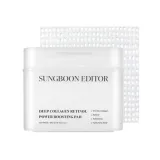
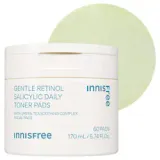
| MEDIHEALToner Pad 2pcsYOUR PRODUCT | SUNGBOON EDITORDeep Collagen Retinol Power Boosting Pad | innisfreeDaily Korean Gentle Retinol + Salicylic Acid Soothing Toner Pads for Acne-Prone Skin | VT CosmeticsCica Reti-A Essence 0.3 | |
|---|---|---|---|---|
| Match | — | 74% | 71% | 68% |
| Price | — | $16.33 | $28.00 | $16.51 |
| Shared key ingredients | — | 18 of 44 | 10 of 44 | 12 of 44 |
| Key difference | — | Butyrospermum Parkii Butter | Niacinamide | Hydroxypinacolone Retinoate |
| Irritancy | High | High | Medium | High |
| Drying alcohol | — | — | — | — |
| View product | Shop | Shop | Shop |


More alternatives: Medicube PDRN Pink Collagen Toning Gel Toner Pad (70 Pads)MISSHA Vita C Plus Tone Up Ampoule Pads
Product summary
"MEDIHEAL - Buy Mediheal Toner Pad 2pcs in Australia - Korean Skincare Online" is effective for: Exfoliation, Moisturizing, Evens skin tone, Anti-aging and Anti-blemish
Ingredient callouts
- this product contains an effective form of Retinoids (vitamin A): retinol 0.20% - 0.75%, retinol 0.20% - 0.75% and retinol 25.00% - 37.00%. Retinoids are potent multitasking actives. They work to improve and prevent early signs of aging, reduce hyperpigmentation (age spots and post-acne marks), and prevent inflamed blemishes and clogged pores. The downside of Retinoids is that they can be irritating. If you are not already using a Retinoid in your routine, it is best to start slowly and apply the Retinoid product only a few times per week. If your skin tolerates it well, you can gradually increase the frequency to daily.
- Ceramides (ceramide np 0.35% - 0.80% and ceramide np 0.35% - 0.85%). Ceramides are an important part of our natural skin barrier. The Ceramides used in skincare are synthetic or come from plants. They help soften the skin and can help "fill the gaps" in the skin barrier, keeping the skin hydrated and resilient for longer.
- Peptides (palmitoyl pentapeptide-4 0.20% - 0.80%, palmitoyl tripeptide-1 0.35% - 0.80%, copper tripeptide-1 0.20% - 0.80%, acetyl hexapeptide-8 0.20% - 0.75% and tripeptide-1 0.35% - 0.80%). There are many different kind of Peptides and they are naturally present in our skin. They all are a combination of aminoacids. Some of them work as natural antibiotics, promote wound-healing and production of collagen. The science is still not settled on how effective Peptides are in skincare, but it is very likely that they have a benefit. They might help restore the skin barrier and fight the signs of aging. At the very least, Peptides work as humectants: they attract water to the upper layer of the skin and improve its hydration.
- Adenosine 0.20% - 0.80%. It is a compound that in involved in many biological processes inside the skin cells. According one high-quality clinical trial, topical Adenosine in low concentrations can somewhat help improve "deep wrinkles" - the wrinkles that appear with age in places where our faces are most dynamic (for example, on the forehead or in the corners of the eyes).
- Actives derived from an extract of the Centella Asiatica plant (also known as Gotu Kola) - madecassic acid 0.30% - 0.75%, asiatic acid 0.30% - 0.75%, asiaticoside 0.30% - 0.70%, madecassoside 0.35% - 0.80% and madecassoside 0.20% - 0.80% The Centella Asiatica Actives help strengthen and restore the skin barrier, decrease inflammation in skin and neutralize free radicals. They also can help to reduce scarring. The good news is that these actives work even in low concentrations.
- Humectants (glycerin 0.15% - 0.55%, lactobacillus ferment 0.15% - 0.65%, lactobacillus ferment 0.35% - 0.75%, glycerin 0.35% - 0.80%, betaine 0.20% - 0.75%, glycerin 0.30% - 0.75%, trehalose 0.20% - 0.75%, hydroxyethyl urea 0.20% - 0.75%, betaine 0.20% - 0.75%, acetyl hexapeptide-8 0.20% - 0.75%, lactobacillus ferment 0.20% - 0.75%, hydroxyethyl urea 0.20% - 0.75%, betaine 0.20% - 0.75%, glycerin 0.30% - 0.75%, hydrolyzed collagen 0.45% - 1.10%, glycerin 1.40% - 2.10% and betaine 2.10% - 3.10%). These ingredients help attract water to the upper layer of the skin and improve the skin hydration.
Price
The product retails for 1.20A$ in Australia.
For a detailed price comparison: click here.
Sources cited in this review
Every concentration estimate and effectiveness label is anchored to one of these 76 studies and safety reviews.
- 1
- 2
- 3
- 4
- 5
- 6

Affiliate links · As an Amazon Associate, WIMJ earns from qualifying purchases.