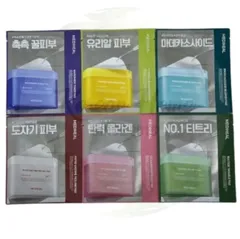
Works for:
based on ingredients and %- Anti-aging
- Exfoliation
- Moisturizing
- Evens skin tone
Can it cause trouble?
- Irritation risk: high
- Comedogenic risk ingredients: 0
Key actives
Product Summary
"MEDIHEAL - Buy Mediheal Toner Pad 2pcs in Australia - Korean Skincare Online" is effective for: Exfoliation, Moisturizing, Evens skin tone, Anti-aging and Anti-blemish
Ingredient callouts
- this product contains an effective form of Retinoids (vitamin A): retinol 0.20% - 0.75%, retinol 0.20% - 0.75% and retinol 25.00% - 37.00%. Retinoids are potent multitasking actives. They work to improve and prevent early signs of aging, reduce hyperpigmentation (age spots and post-acne marks), and prevent inflamed blemishes and clogged pores. The downside of Retinoids is that they can be irritating. If you are not already using a Retinoid in your routine, it is best to start slowly and apply the Retinoid product only a few times per week. If your skin tolerates it well, you can gradually increase the frequency to daily.
- Ceramides (ceramide np 0.35% - 0.80% and ceramide np 0.35% - 0.85%). Ceramides are an important part of our natural skin barrier. The Ceramides used in skincare are synthetic or come from plants. They help soften the skin and can help "fill the gaps" in the skin barrier, keeping the skin hydrated and resilient for longer.
- Peptides (palmitoyl pentapeptide-4 0.20% - 0.80%, palmitoyl tripeptide-1 0.35% - 0.80%, copper tripeptide-1 0.20% - 0.80%, acetyl hexapeptide-8 0.20% - 0.75% and tripeptide-1 0.35% - 0.80%). There are many different kind of Peptides and they are naturally present in our skin. They all are a combination of aminoacids. Some of them work as natural antibiotics, promote wound-healing and production of collagen. The science is still not settled on how effective Peptides are in skincare, but it is very likely that they have a benefit. They might help restore the skin barrier and fight the signs of aging. At the very least, Peptides work as humectants: they attract water to the upper layer of the skin and improve its hydration.
- Adenosine 0.20% - 0.80%. It is a compound that in involved in many biological processes inside the skin cells. According one high-quality clinical trial, topical Adenosine in low concentrations can somewhat help improve "deep wrinkles" - the wrinkles that appear with age in places where our faces are most dynamic (for example, on the forehead or in the corners of the eyes).
- Actives derived from an extract of the Centella Asiatica plant (also known as Gotu Kola) - madecassic acid 0.30% - 0.75%, asiatic acid 0.30% - 0.75%, asiaticoside 0.30% - 0.70%, madecassoside 0.35% - 0.80% and madecassoside 0.20% - 0.80% The Centella Asiatica Actives help strengthen and restore the skin barrier, decrease inflammation in skin and neutralize free radicals. They also can help to reduce scarring. The good news is that these actives work even in low concentrations.
- Humectants (glycerin 0.15% - 0.55%, lactobacillus ferment 0.15% - 0.65%, lactobacillus ferment 0.35% - 0.75%, glycerin 0.35% - 0.80%, betaine 0.20% - 0.75%, glycerin 0.30% - 0.75%, trehalose 0.20% - 0.75%, hydroxyethyl urea 0.20% - 0.75%, betaine 0.20% - 0.75%, acetyl hexapeptide-8 0.20% - 0.75%, lactobacillus ferment 0.20% - 0.75%, hydroxyethyl urea 0.20% - 0.75%, betaine 0.20% - 0.75%, glycerin 0.30% - 0.75%, hydrolyzed collagen 0.45% - 1.10%, glycerin 1.40% - 2.10% and betaine 2.10% - 3.10%). These ingredients help attract water to the upper layer of the skin and improve the skin hydration.
Price
The product retails for 1.20A$ in Australia.
For a detailed price comparison: click here.
Anti-aging
What does the product description say?
Retinol Collagen Lifting Pad Combines the benefits of retinol and collagen to help improve skin texture, lift sagging skin, and diminish the appearance of fine lines.
Source: Lila Beauty
This product can help reduce and prevent fine lines and wrinkles, improve skin elasticity and firmness because it contains retinol, adenosine.
These ingredients in the product can also be helpful, even though there is less evidence for their effectiveness: acetyl hexapeptide-8, asiaticoside, centella asiatica leaf extract, copper tripeptide-1, madecassoside, palmitoyl pentapeptide-4, palmitoyl tripeptide-1, tripeptide-1.
Keep in mind that it typically takes at least 6 weeks to notice any results because the changes that are needed to improve fine lines and elasticity happen in the deeper layers of the skin. No topical anti-aging product can “erase” wrinkles or fully reverse signs of aging.
Two steps removed from the active form of vitamin A - retinoic acid. Once converted to the retinoic acid in the skin, retinol is proven to be effective against all signs of aging. It improves skin cell turnover, helps fight blemishes and clogged pores, can regulate excess oil production and even skin tone. It can, however, be quite irritating
Might help improve cell turnover and reduce inflammation in skin. One study shows that the ingredients might be able to help reduce dynamic wrinkles (for example, in the corners of the eyes or on the forehead)
An antioxidant that is typically derived from plant Centella Asiatica. It can help neutralize free radicals in skin and support skin barrier function. It could, however, itself be irritating. It is often unstable in formulations
A type of peptide. Peptides are excellent moisturizers and might be able support collagen production reducing fine lines and wrinkles
A type of peptide. Peptides are excellent moisturizers and might be able support collagen production reducing fine lines and wrinkles
A plant extract that has been shown to be able to reduce inflammation in skin, support restoration of skin barrier function, as well as support collagen production. It can be irritating to sensitive skin. Might be helpful in preventing stretch marks. It could, however, itself be irritating.
A type of peptide. Peptides are excellent moisturizers and might be able support collagen production reducing fine lines and wrinkles
A type of peptide. Peptides are excellent moisturizers and might be able support collagen production reducing fine lines and wrinkles
An active compound of Centella Asiatica plant extract. In combination with other active compounds of Centella Asiatica extract (madecasosside, asiatic acid and madecassic acid), asiaticoside has been shown to be helpful in wound-healing, restoring skin barrier function and supporting collagen production in skin. It can, however, itself be irritating
A naturally occurring peptide. One of the most studied peptides in dermatology. It is sometimes abbreviated GHK-Cu. Belongs to the class of carrier peptides. It stimulates both synthesis and breakdown of collagen in skin. It is released in skin wounds and inflammation to support healing. It accelerates wound-healing of the skin and can stimulate hair growth. There are preliminary studies that confirm that copper tripeptide can help support collagen production reducing fine lines and wrinkles and decrease inflammation in skin.
Helps attract water to the upper layer of the skin, calm down inflammation and irritation, restore the barrier function and support wound healing. It can be helpful in reducing fine lines and wrinkles
Is proven to be effective in reducing blemishes, evening out skin tone and helping to improve lines and wrinkles. It helps the skin to repair sun damage, calm down inflammation and keep maintain good levels of moisture. The concentration of about 2% is effective for supporting the skin barrier and evening out the skin tone. Concentration of 4-6% is better for helping with acne and balancing the sebum production
A plant extract that has been shown to be able to reduce inflammation in skin, support restoration of skin barrier function, as well as support collagen production. Contains active compounds called centelloids: asiaticoside, madecasosside, asiatic acid and madecassic acid. Might be helpful in preventing stretch marks. It can be itself be irritating though.
A stable derivative of vitamin C. It is oil-soluble which means it is more likely to penetrate the skin compared to the pure form of vitamin C (which is water-soluble), but it is less bio-available and is way less effective in stimulating collagen and reducing wrinkles compared to the pure form of vitamin C (L-ascorbic acid) and its other derivatives (for example, magnesium ascorbyl phosphate). At the same time, this vitamin C derivative has been shown in studies to be effective in reducing acne, blemishes and clogged pores. It is less irritating then the pure form of vitamin C
Anti-blemish
This product can help reduce breakouts and clogged pores because it contains the following ingredient: retinol. This ingredient is used for treating acne and can have a noticeable effect.
In addition, this product contains betaine salicylate. It can help in reducing blemishes, even though it is less effective.
The following ingredient (ingredients) in this product might be helpful, but there is no evidence to confirm that it actually works: capryloyl salicylic acid
Exfoliating acid, a "relative" of salicylic acid
Two steps removed from the active form of vitamin A - retinoic acid. Once converted to the retinoic acid in the skin, retinol is proven to be effective against all signs of aging. It improves skin cell turnover, helps fight blemishes and clogged pores, can regulate excess oil production and even skin tone. It can, however, be quite irritating
Helps attract water to the upper layer of the skin, calm down inflammation and irritation, restore the barrier function and support wound healing. It can be helpful in reducing fine lines and wrinkles
A plant extract that has been shown to be able to reduce inflammation in skin, support restoration of skin barrier function, as well as support collagen production. It can be irritating to sensitive skin. Might be helpful in preventing stretch marks. It could, however, itself be irritating.
A stable derivative of vitamin C. It is oil-soluble which means it is more likely to penetrate the skin compared to the pure form of vitamin C (which is water-soluble), but it is less bio-available and is way less effective in stimulating collagen and reducing wrinkles compared to the pure form of vitamin C (L-ascorbic acid) and its other derivatives (for example, magnesium ascorbyl phosphate). At the same time, this vitamin C derivative has been shown in studies to be effective in reducing acne, blemishes and clogged pores. It is less irritating then the pure form of vitamin C
Is proven to be effective in reducing blemishes, evening out skin tone and helping to improve lines and wrinkles. It helps the skin to repair sun damage, calm down inflammation and keep maintain good levels of moisture. The concentration of about 2% is effective for supporting the skin barrier and evening out the skin tone. Concentration of 4-6% is better for helping with acne and balancing the sebum production
A plant extract that has been shown to be able to reduce inflammation in skin, support restoration of skin barrier function, as well as support collagen production. Contains active compounds called centelloids: asiaticoside, madecasosside, asiatic acid and madecassic acid. Might be helpful in preventing stretch marks. It can be itself be irritating though.
Helps calm down inflammation in skin and can help reduce itching. Helps to repair the skin barrier and keep skin hydrated
Anti-oxidation
This product contains antioxidants (asiaticoside, madecassoside, retinol) that can help neutralize free radicals in skin. By doing so, they can lessen the damage the skin gets from the UV light (sun).
An active compound of Centella Asiatica plant extract. In combination with other active compounds of Centella Asiatica extract (madecasosside, asiatic acid and madecassic acid), asiaticoside has been shown to be helpful in wound-healing, restoring skin barrier function and supporting collagen production in skin. It can, however, itself be irritating
An antioxidant that is typically derived from plant Centella Asiatica. It can help neutralize free radicals in skin and support skin barrier function. It could, however, itself be irritating. It is often unstable in formulations
Two steps removed from the active form of vitamin A - retinoic acid. Once converted to the retinoic acid in the skin, retinol is proven to be effective against all signs of aging. It improves skin cell turnover, helps fight blemishes and clogged pores, can regulate excess oil production and even skin tone. It can, however, be quite irritating
A fermentation product created by bacteria Lactobacillus. The fermented product has anti-bacterial properties and might be helpful in calming down inflammation, but studies are lacking. Helps attract water to the upper layer of the skin. Can be used as a preservative
Helps attract water to the upper layer of the skin, calm down inflammation and irritation, restore the barrier function and support wound healing. It can be helpful in reducing fine lines and wrinkles
Might help neutralize free radicals in skin
Might help improve cell turnover and reduce inflammation in skin. One study shows that the ingredients might be able to help reduce dynamic wrinkles (for example, in the corners of the eyes or on the forehead)
An essential oil. Can be irritating. Can become an allergen with oxidation
A plant extract that has been shown to be able to reduce inflammation in skin, support restoration of skin barrier function, as well as support collagen production. Contains active compounds called centelloids: asiaticoside, madecasosside, asiatic acid and madecassic acid. Might be helpful in preventing stretch marks. It can be itself be irritating though.
A stable derivative of vitamin C. It is oil-soluble which means it is more likely to penetrate the skin compared to the pure form of vitamin C (which is water-soluble), but it is less bio-available and is way less effective in stimulating collagen and reducing wrinkles compared to the pure form of vitamin C (L-ascorbic acid) and its other derivatives (for example, magnesium ascorbyl phosphate). At the same time, this vitamin C derivative has been shown in studies to be effective in reducing acne, blemishes and clogged pores. It is less irritating then the pure form of vitamin C
A more stable but less bio-available form of vitamin E compared to Tocopherol. Might help moisturize and protect the skin from free radicals, but mostly used in low concentrations to stabilize other ingredients.
An essential oil that is used as a fragrance and can be irritating. It might have some anti-oxidant effect in skin
Evens skin tone
This product can help reduce hypepigmentation and even out the skin tone because it contains the following effective ingredients: retinol.
In addition, this product contains betaine salicylate, hydroxyethyl urea. This ingredient (ingredients) might help reduce hyperpigmentation, but the effect, if any, is likely to be small.
The following ingredient (ingredients) in this product might be helpful, but there is no evidence to confirm that it actually can help even out the skin tone: capryloyl salicylic acid, madecassoside.
Keep in mind that you would need to apply any topical skincare targetted at hypigmentation consistently for a couple of months to get a result. No topical skincare product can help get rid of hyperpigmentation (including post-acne marks and age spots) instantly.
Two steps removed from the active form of vitamin A - retinoic acid. Once converted to the retinoic acid in the skin, retinol is proven to be effective against all signs of aging. It improves skin cell turnover, helps fight blemishes and clogged pores, can regulate excess oil production and even skin tone. It can, however, be quite irritating
An antioxidant that is typically derived from plant Centella Asiatica. It can help neutralize free radicals in skin and support skin barrier function. It could, however, itself be irritating. It is often unstable in formulations
Is proven to be effective in reducing blemishes, evening out skin tone and helping to improve lines and wrinkles. It helps the skin to repair sun damage, calm down inflammation and keep maintain good levels of moisture. The concentration of about 2% is effective for supporting the skin barrier and evening out the skin tone. Concentration of 4-6% is better for helping with acne and balancing the sebum production
A salt derived from licorice. Works as an emollient to soften the upper layer of the skin and can help calm down inflammation. Might be helpful for skin lightening
Exfoliation
This product can help exfoliate the skin. In other words, it helps break down the bonds between dead cells on the surface of the skin and speed up the skin turnover. Skin often appears softer and brighter after exfoliation, but overdoing it can result in disrupted skin barrier. The following ingredient is doing the exfoliating job in this product: betaine salicylate, capryloyl salicylic acid, hydroxyethyl urea, retinol.
Two steps removed from the active form of vitamin A - retinoic acid. Once converted to the retinoic acid in the skin, retinol is proven to be effective against all signs of aging. It improves skin cell turnover, helps fight blemishes and clogged pores, can regulate excess oil production and even skin tone. It can, however, be quite irritating
A derivative of urea, a compound that is naturally present in skin. Attracts water to the upper layer of the skin. Can enhance penetration of other ingredients
Exfoliating acid, a "relative" of salicylic acid
An enzyme extracted from papaya fruit. Can have an exfoliating effect on the skin. Can be irritating
Helps calm down inflammation in skin and can help reduce itching. Helps to repair the skin barrier and keep skin hydrated
Moisturizing
This product can help improve hydration of the skin with the two types of ingredients.
The first type is called “humectants”:
these ingredients help attract water.
When humectants are on the surface of the skin, they “pull in” the moisture from the outside environment, or from
within deeper layers of the skin. The following ingredients in this product do the job:
betaine, glycerin.
This product also contains ingredients called “occlusives”. They help reduce the speed with which our skin loses moisture to the outside environment. These ingredients also help soften the upper layer of the skin, so it feels less tight and nicer to the touch. The following ingredients in this product do the job: hydrolyzed collagen, olea europaea fruit oil.
The following ingredients in this product are especially good for supporting the skin barrier and helping with the hydration level: acetyl hexapeptide-8, ceramide np, copper tripeptide-1, madecassoside, palmitoyl pentapeptide-4, palmitoyl tripeptide-1, tripeptide-1
A type of peptide. Peptides are excellent moisturizers and might be able support collagen production reducing fine lines and wrinkles
A type of peptide. Peptides are excellent moisturizers and might be able support collagen production reducing fine lines and wrinkles
One of the best moisturizing ingredients. Naturally present in skin. It attracts water to the upper layer of the skin working as a humectant
A typically plant-derived compound that is supposed mimic human collagen. Cannot penetrate the skin barrier so is not particularly useful in skincare products beyond attracting water to the upper layer of the skin
A derivative of urea, a compound that is naturally present in skin. Attracts water to the upper layer of the skin. Can enhance penetration of other ingredients
A fermentation product created by bacteria Lactobacillus. The fermented product has anti-bacterial properties and might be helpful in calming down inflammation, but studies are lacking. Helps attract water to the upper layer of the skin. Can be used as a preservative
An active compound of Centella Asiatica plant extract. In combination with other active compounds of Centella Asiatica extract (asiaticoside, madecasosside and asiatic acid), madecassic acid has been shown to be helpful in wound-healing, restoring skin barrier function and supporting collagen production in skin. It can, however, itself be irritating
An antioxidant that is typically derived from plant Centella Asiatica. It can help neutralize free radicals in skin and support skin barrier function. It could, however, itself be irritating. It is often unstable in formulations
A type of peptide. Peptides are excellent moisturizers and might be able support collagen production reducing fine lines and wrinkles
A product of yeast fermentation. Helps attract water to the upper layer of the skin
A sugar that attracts water to the upper layer of the skin
Helps soften the upper layer of the skin
A type of peptide. Peptides are excellent moisturizers and might be able support collagen production reducing fine lines and wrinkles
An active compound of Centella Asiatica plant extract. In combination with other active compounds of Centella Asiatica extract (asiaticoside, madecasosside and madecassic acid) asiatic acid has been shown to be helpful in wound-healing, restoring skin barrier function and supporting collagen production in skin. It can, however, itself be irritating
An active compound of Centella Asiatica plant extract. In combination with other active compounds of Centella Asiatica extract (madecasosside, asiatic acid and madecassic acid), asiaticoside has been shown to be helpful in wound-healing, restoring skin barrier function and supporting collagen production in skin. It can, however, itself be irritating
Helps attract water to the upper layer of the skin, calm down inflammation and irritation, restore the barrier function and support wound healing. It can be helpful in reducing fine lines and wrinkles
Helps attract water to the upper layer of the skin and improves the product texture
A type of lipid similar to ceramides naturally present in skin. Helps to soften the upper layer of the skin and supports the skin barrier function to keep it hydrated. Can help to prevent inflammation in skin
A naturally occurring peptide. One of the most studied peptides in dermatology. It is sometimes abbreviated GHK-Cu. Belongs to the class of carrier peptides. It stimulates both synthesis and breakdown of collagen in skin. It is released in skin wounds and inflammation to support healing. It accelerates wound-healing of the skin and can stimulate hair growth. There are preliminary studies that confirm that copper tripeptide can help support collagen production reducing fine lines and wrinkles and decrease inflammation in skin.
Cannot penetrate the skin barrier so is not particularly useful in skincare products
An emollient that helps soften the skin but is not effective for restoring its barrier function. Might be helpful to calm down inflammation
Helps soften the upper layer of the skin
Might help improve cell turnover and reduce inflammation in skin. One study shows that the ingredients might be able to help reduce dynamic wrinkles (for example, in the corners of the eyes or on the forehead)
Helps preserve products and creates a nice product texture
A fruit extract that might help attract water to the upper layer of the skin. There is no evidence of other benefits in skin
Used to create a nice product texture and help delivery of other ingredients. Might be somewhat helpful in attracting water to the upper layer of the skin
A plant extract that has been shown to be able to reduce inflammation in skin, support restoration of skin barrier function, as well as support collagen production. Contains active compounds called centelloids: asiaticoside, madecasosside, asiatic acid and madecassic acid. Might be helpful in preventing stretch marks. It can be itself be irritating though.
Helps calm down inflammation in skin and can help reduce itching. Helps to repair the skin barrier and keep skin hydrated
Is proven to be effective in reducing blemishes, evening out skin tone and helping to improve lines and wrinkles. It helps the skin to repair sun damage, calm down inflammation and keep maintain good levels of moisture. The concentration of about 2% is effective for supporting the skin barrier and evening out the skin tone. Concentration of 4-6% is better for helping with acne and balancing the sebum production
A salt derived from licorice. Works as an emollient to soften the upper layer of the skin and can help calm down inflammation. Might be helpful for skin lightening
How honest is this product?
| Promise | Can it deliver? |
|---|---|
| Anti-aging |
Total Promises Fulfilled score: 100/100.
We receive a small commission for purchases made through these links at no cost for you. Thank you for your support! Learn more
Affiliate link · supports WIMJ at no cost to you
Potential irritants
Comedogenic ingredients
No comedogenic ingredients detected
User reviews (0)
Averages from community submissions.
No reviews yet for this product.
Be the first to share your experience!
Tried this product?
Help capture what the ingredient list can't—texture, finish, pilling, scent, and more. Answer what you can, skip the rest.
Takes ~30 seconds.
Reviews are shown in aggregate. No personal details.
| Product | Similarity | Price | Irritancy |
|---|---|---|---|
 MEDIHEAL Buy Mediheal Toner Pad 2pcs in Australia - Korean Skincare Online | Current | $1.20 | |
 The Saem Buy The Saem Bio Solution Mask Sheet in Australia - Korean Skincare Online | 80% | $2.50 | |
 Anua Buy Anua Retinol 0.3% + Niacin Renewing Serum in Australia - Korean Skincare and Cosmetics | 78% | $30.95 | |
 ISNTREE Buy Isntree Hyper Retinol EX 1.0 Serum in Australia - Korean Skin Care and Cosmetics | 76% | $23.50 | |
 innisfree Buy Innisfree Retinol Green Tea PDRN Skinbooster Ampoule Gel Mask in Australia - Korean Skincare Online | 75% | $4.95 | |
 Meebak Cica cream | 74% | $18.73 |
Key Actives
Is proven to be effective in reducing blemishes, evening out skin tone and helping to improve lines and wrinkles. It helps the skin to repair sun damage, calm down inflammation and keep maintain good levels of moisture. The concentration of about 2% is effective for supporting the skin barrier and evening out the skin tone. Concentration of 4-6% is better for helping with acne and balancing the sebum production
Is proven to be effective in reducing blemishes, evening out skin tone and helping to improve lines and wrinkles. It helps the skin to repair sun damage, calm down inflammation and keep maintain good levels of moisture. The concentration of about 2% is effective for supporting the skin barrier and evening out the skin tone. Concentration of 4-6% is better for helping with acne and balancing the sebum production
A plant extract that has been shown to be able to reduce inflammation in skin, support restoration of skin barrier function, as well as support collagen production. Contains active compounds called centelloids: asiaticoside, madecasosside, asiatic acid and madecassic acid. Might be helpful in preventing stretch marks. It can be itself be irritating though.
Two steps removed from the active form of vitamin A - retinoic acid. Once converted to the retinoic acid in the skin, retinol is proven to be effective against all signs of aging. It improves skin cell turnover, helps fight blemishes and clogged pores, can regulate excess oil production and even skin tone. It can, however, be quite irritating
Helps calm down inflammation in skin and can help reduce itching. Helps to repair the skin barrier and keep skin hydrated
Two steps removed from the active form of vitamin A - retinoic acid. Once converted to the retinoic acid in the skin, retinol is proven to be effective against all signs of aging. It improves skin cell turnover, helps fight blemishes and clogged pores, can regulate excess oil production and even skin tone. It can, however, be quite irritating
Helps attract water to the upper layer of the skin, calm down inflammation and irritation, restore the barrier function and support wound healing. It can be helpful in reducing fine lines and wrinkles
Helps calm down inflammation in skin and can help reduce itching. Helps to repair the skin barrier and keep skin hydrated
Helps calm down inflammation in skin and can help reduce itching. Helps to repair the skin barrier and keep skin hydrated
Two steps removed from the active form of vitamin A - retinoic acid. Once converted to the retinoic acid in the skin, retinol is proven to be effective against all signs of aging. It improves skin cell turnover, helps fight blemishes and clogged pores, can regulate excess oil production and even skin tone. It can, however, be quite irritating
Helps attract water to the upper layer of the skin, calm down inflammation and irritation, restore the barrier function and support wound healing. It can be helpful in reducing fine lines and wrinkles
Helps calm down inflammation in skin and can help reduce itching. Helps to repair the skin barrier and keep skin hydrated
Helps calm down inflammation in skin and can help reduce itching. Helps to repair the skin barrier and keep skin hydrated
A plant extract that has been shown to be able to reduce inflammation in skin, support restoration of skin barrier function, as well as support collagen production. It can be irritating to sensitive skin. Might be helpful in preventing stretch marks. It could, however, itself be irritating.
A fermentation product created by bacteria Lactobacillus. The fermented product has anti-bacterial properties and might be helpful in calming down inflammation, but studies are lacking. Helps attract water to the upper layer of the skin. Can be used as a preservative
An antioxidant that is typically derived from plant Centella Asiatica. It can help neutralize free radicals in skin and support skin barrier function. It could, however, itself be irritating. It is often unstable in formulations
An antioxidant that is typically derived from plant Centella Asiatica. It can help neutralize free radicals in skin and support skin barrier function. It could, however, itself be irritating. It is often unstable in formulations
A fermentation product created by bacteria Lactobacillus. The fermented product has anti-bacterial properties and might be helpful in calming down inflammation, but studies are lacking. Helps attract water to the upper layer of the skin. Can be used as a preservative
An active compound of Centella Asiatica plant extract. In combination with other active compounds of Centella Asiatica extract (madecasosside, asiatic acid and madecassic acid), asiaticoside has been shown to be helpful in wound-healing, restoring skin barrier function and supporting collagen production in skin. It can, however, itself be irritating
A fermentation product created by bacteria Lactobacillus. The fermented product has anti-bacterial properties and might be helpful in calming down inflammation, but studies are lacking. Helps attract water to the upper layer of the skin. Can be used as a preservative
Might help improve cell turnover and reduce inflammation in skin. One study shows that the ingredients might be able to help reduce dynamic wrinkles (for example, in the corners of the eyes or on the forehead)
A type of lipid similar to ceramides naturally present in skin. Helps to soften the upper layer of the skin and supports the skin barrier function to keep it hydrated. Can help to prevent inflammation in skin
A salt derived from licorice. Works as an emollient to soften the upper layer of the skin and can help calm down inflammation. Might be helpful for skin lightening
Might help improve cell turnover and reduce inflammation in skin. One study shows that the ingredients might be able to help reduce dynamic wrinkles (for example, in the corners of the eyes or on the forehead)
A type of lipid similar to ceramides naturally present in skin. Helps to soften the upper layer of the skin and supports the skin barrier function to keep it hydrated. Can help to prevent inflammation in skin
A salt derived from licorice. Works as an emollient to soften the upper layer of the skin and can help calm down inflammation. Might be helpful for skin lightening
A salt derived from licorice. Works as an emollient to soften the upper layer of the skin and can help calm down inflammation. Might be helpful for skin lightening
An active compound of Centella Asiatica plant extract. In combination with other active compounds of Centella Asiatica extract (asiaticoside, madecasosside and madecassic acid) asiatic acid has been shown to be helpful in wound-healing, restoring skin barrier function and supporting collagen production in skin. It can, however, itself be irritating
A salt derived from licorice. Works as an emollient to soften the upper layer of the skin and can help calm down inflammation. Might be helpful for skin lightening
A derivative of urea, a compound that is naturally present in skin. Attracts water to the upper layer of the skin. Can enhance penetration of other ingredients
A type of peptide. Peptides are excellent moisturizers and might be able support collagen production reducing fine lines and wrinkles
A type of peptide. Peptides are excellent moisturizers and might be able support collagen production reducing fine lines and wrinkles
A naturally occurring peptide. One of the most studied peptides in dermatology. It is sometimes abbreviated GHK-Cu. Belongs to the class of carrier peptides. It stimulates both synthesis and breakdown of collagen in skin. It is released in skin wounds and inflammation to support healing. It accelerates wound-healing of the skin and can stimulate hair growth. There are preliminary studies that confirm that copper tripeptide can help support collagen production reducing fine lines and wrinkles and decrease inflammation in skin.
A type of peptide. Peptides are excellent moisturizers and might be able support collagen production reducing fine lines and wrinkles
A type of peptide. Peptides are excellent moisturizers and might be able support collagen production reducing fine lines and wrinkles
A derivative of urea, a compound that is naturally present in skin. Attracts water to the upper layer of the skin. Can enhance penetration of other ingredients
Exfoliating acid, a "relative" of salicylic acid
An active compound of Centella Asiatica plant extract. In combination with other active compounds of Centella Asiatica extract (asiaticoside, madecasosside and asiatic acid), madecassic acid has been shown to be helpful in wound-healing, restoring skin barrier function and supporting collagen production in skin. It can, however, itself be irritating
Helps attract water to the upper layer of the skin and improves the product texture
One of the best moisturizing ingredients. Naturally present in skin. It attracts water to the upper layer of the skin working as a humectant
Helps soften the upper layer of the skin
Used to create a gel-like product texture, as well as to stabilize emulsions
A typically plant-derived compound that is supposed mimic human collagen. Cannot penetrate the skin barrier so is not particularly useful in skincare products beyond attracting water to the upper layer of the skin
One of the best moisturizing ingredients. Naturally present in skin. It attracts water to the upper layer of the skin working as a humectant
Helps soften the upper layer of the skin
Helps attract water to the upper layer of the skin and improves the product texture
Helps attract water to the upper layer of the skin and improves the product texture
A sugar that attracts water to the upper layer of the skin
One of the best moisturizing ingredients. Naturally present in skin. It attracts water to the upper layer of the skin working as a humectant
Helps attract water to the upper layer of the skin and improves the product texture
One of the best moisturizing ingredients. Naturally present in skin. It attracts water to the upper layer of the skin working as a humectant
Helps soften the upper layer of the skin
A product of yeast fermentation. Helps attract water to the upper layer of the skin
One of the best moisturizing ingredients. Naturally present in skin. It attracts water to the upper layer of the skin working as a humectant
Potential irritants
Two steps removed from the active form of vitamin A - retinoic acid. Once converted to the retinoic acid in the skin, retinol is proven to be effective against all signs of aging. It improves skin cell turnover, helps fight blemishes and clogged pores, can regulate excess oil production and even skin tone. It can, however, be quite irritating
An essential oil. Potential allergen and can be irritating. It has some anti-bacterial properties
Plant oil that can have healing and anti-inflammatory properties. It contains volatile compouunds that are potential allergens and can be irritating
Two steps removed from the active form of vitamin A - retinoic acid. Once converted to the retinoic acid in the skin, retinol is proven to be effective against all signs of aging. It improves skin cell turnover, helps fight blemishes and clogged pores, can regulate excess oil production and even skin tone. It can, however, be quite irritating
An essential oil. Can be irritating. Can become an allergen with oxidation
An essential oil. Potential allergen and can be irritating. It has some anti-bacterial properties
An essential oil that is used as a fragrance and can be irritating. It might have some anti-oxidant effect in skin
An essentil oil from orange peel. Potential allergen and can be irritating
An essential oil. Can be irritating. Can become an allergen with oxidation
An essential oil. Potential allergen and can be irritating. It has some anti-bacterial properties
An essential oil that is used as a fragrance and can be irritating. It might have some anti-oxidant effect in skin
An essentil oil from orange peel. Potential allergen and can be irritating
Two steps removed from the active form of vitamin A - retinoic acid. Once converted to the retinoic acid in the skin, retinol is proven to be effective against all signs of aging. It improves skin cell turnover, helps fight blemishes and clogged pores, can regulate excess oil production and even skin tone. It can, however, be quite irritating
A common frangrance that can easily irritate skin, especially if exposed to air, light or heat
An enzyme extracted from papaya fruit. Can have an exfoliating effect on the skin. Can be irritating
An essential oil that can be irritating. Has some anti-bacterial properties
Helps to control the skin's pH level. Maintains the skin's natural film of amino-lactic acids and oils. Helps to preserve products
Can work as an exfoliant but is typically used to adjust the product pH
An emollient that helps soften the skin but is not effective for restoring its barrier function. Might be helpful to calm down inflammation
A fruit extract that might help attract water to the upper layer of the skin. There is no evidence of other benefits in skin
Helps preserve products and creates a nice product texture
A plant-infused water. The concentration of compounds with potential skin benefits is unlikely to be effective
An emollient that helps soften the skin but is not effective for restoring its barrier function. Might be helpful to calm down inflammation
A stable derivative of vitamin C. It is oil-soluble which means it is more likely to penetrate the skin compared to the pure form of vitamin C (which is water-soluble), but it is less bio-available and is way less effective in stimulating collagen and reducing wrinkles compared to the pure form of vitamin C (L-ascorbic acid) and its other derivatives (for example, magnesium ascorbyl phosphate). At the same time, this vitamin C derivative has been shown in studies to be effective in reducing acne, blemishes and clogged pores. It is less irritating then the pure form of vitamin C
A more stable but less bio-available form of vitamin E compared to Tocopherol. Might help moisturize and protect the skin from free radicals, but mostly used in low concentrations to stabilize other ingredients.
Can help attract water to the upper layer of the skin. Is studied as a mosquito repellent
Helps to control the skin's pH level. Maintains the skin's natural film of amino-lactic acids and oils. Helps to preserve products
Can work as an exfoliant but is typically used to adjust the product pH
Cedarwood oil. Used as a fragrance. Can be irritating
An antioxidant that is typically derived from plant Centella Asiatica. It can help neutralize free radicals in skin and support skin barrier function. It could, however, itself be irritating. It is often unstable in formulations
A plant extract that has been shown to be able to reduce inflammation in skin, support restoration of skin barrier function, as well as support collagen production. Contains active compounds called centelloids: asiaticoside, madecasosside, asiatic acid and madecassic acid. Might be helpful in preventing stretch marks. It can be itself be irritating though.
Helps to control the skin's pH level. Maintains the skin's natural film of amino-lactic acids and oils. Helps to preserve products
Can work as an exfoliant but is typically used to adjust the product pH
Cedarwood oil. Used as a fragrance. Can be irritating
An antioxidant that is typically derived from plant Centella Asiatica. It can help neutralize free radicals in skin and support skin barrier function. It could, however, itself be irritating. It is often unstable in formulations
A plant extract that has been shown to be able to reduce inflammation in skin, support restoration of skin barrier function, as well as support collagen production. It can be irritating to sensitive skin. Might be helpful in preventing stretch marks. It could, however, itself be irritating.
A fruit extract that might help attract water to the upper layer of the skin. There is no evidence of other benefits in skin
An active compound of Centella Asiatica plant extract. In combination with other active compounds of Centella Asiatica extract (madecasosside, asiatic acid and madecassic acid), asiaticoside has been shown to be helpful in wound-healing, restoring skin barrier function and supporting collagen production in skin. It can, however, itself be irritating
An active compound of Centella Asiatica plant extract. In combination with other active compounds of Centella Asiatica extract (asiaticoside, madecasosside and asiatic acid), madecassic acid has been shown to be helpful in wound-healing, restoring skin barrier function and supporting collagen production in skin. It can, however, itself be irritating
An active compound of Centella Asiatica plant extract. In combination with other active compounds of Centella Asiatica extract (asiaticoside, madecasosside and madecassic acid) asiatic acid has been shown to be helpful in wound-healing, restoring skin barrier function and supporting collagen production in skin. It can, however, itself be irritating
Helps to control the skin's pH level. Maintains the skin's natural film of amino-lactic acids and oils. Helps to preserve products
Can work as an exfoliant but is typically used to adjust the product pH
A fruit extract that might help attract water to the upper layer of the skin. There is no evidence of other benefits in skin
Comedogenic ingredients
We couldn't find any comedogenic ingredients in this product
All ingredients
Two steps removed from the active form of vitamin A - retinoic acid. Once converted to the retinoic acid in the skin, retinol is proven to be effective against all signs of aging. It improves skin cell turnover, helps fight blemishes and clogged pores, can regulate excess oil production and even skin tone. It can, however, be quite irritating
Cannot penetrate the skin barrier so is not particularly useful in skincare products
Helps to dissolve other ingredients in a formulation. Slows down the rate of product drying
Helps attract water to the upper layer of the skin and improves the product texture
One of the best moisturizing ingredients. Naturally present in skin. It attracts water to the upper layer of the skin working as a humectant
Helps to retain moisture by creating a protective barrier on the skin. Rich in fatty acids. Improves product texture and helps with the penetration of other ingredients.
Helps calm down inflammation in skin and can help reduce itching. Helps to repair the skin barrier and keep skin hydrated
Might help improve cell turnover and reduce inflammation in skin. One study shows that the ingredients might be able to help reduce dynamic wrinkles (for example, in the corners of the eyes or on the forehead)
Used to create a gel-like product texture, as well as to stabilize emulsions
A typically plant-derived compound that is supposed mimic human collagen. Cannot penetrate the skin barrier so is not particularly useful in skincare products beyond attracting water to the upper layer of the skin
An essential oil. Potential allergen and can be irritating. It has some anti-bacterial properties
Plant oil that can have healing and anti-inflammatory properties. It contains volatile compouunds that are potential allergens and can be irritating
Two steps removed from the active form of vitamin A - retinoic acid. Once converted to the retinoic acid in the skin, retinol is proven to be effective against all signs of aging. It improves skin cell turnover, helps fight blemishes and clogged pores, can regulate excess oil production and even skin tone. It can, however, be quite irritating
Helps attract water to the upper layer of the skin, calm down inflammation and irritation, restore the barrier function and support wound healing. It can be helpful in reducing fine lines and wrinkles
A type of lipid similar to ceramides naturally present in skin. Helps to soften the upper layer of the skin and supports the skin barrier function to keep it hydrated. Can help to prevent inflammation in skin
One of the best moisturizing ingredients. Naturally present in skin. It attracts water to the upper layer of the skin working as a humectant
Helps attract water to the upper layer of the skin and improves the product texture
Helps to retain moisture by creating a protective barrier on the skin. Rich in fatty acids. Improves product texture and helps with the penetration of other ingredients.
A derivative of urea, a compound that is naturally present in skin. Attracts water to the upper layer of the skin. Can enhance penetration of other ingredients
A salt derived from licorice. Works as an emollient to soften the upper layer of the skin and can help calm down inflammation. Might be helpful for skin lightening
Helps to control the skin's pH level. Maintains the skin's natural film of amino-lactic acids and oils. Helps to preserve products
Helps calm down inflammation in skin and can help reduce itching. Helps to repair the skin barrier and keep skin hydrated
Used to thicken product formulations and create gel-like textures
Might help improve cell turnover and reduce inflammation in skin. One study shows that the ingredients might be able to help reduce dynamic wrinkles (for example, in the corners of the eyes or on the forehead)
Can work as an exfoliant but is typically used to adjust the product pH
An emollient that helps soften the skin but is not effective for restoring its barrier function. Might be helpful to calm down inflammation
Used to create a nice product texture and help delivery of other ingredients. Might be somewhat helpful in attracting water to the upper layer of the skin
An essential oil. Can be irritating. Can become an allergen with oxidation
An essential oil. Potential allergen and can be irritating. It has some anti-bacterial properties
An essential oil that is used as a fragrance and can be irritating. It might have some anti-oxidant effect in skin
An essentil oil from orange peel. Potential allergen and can be irritating
A fruit extract that might help attract water to the upper layer of the skin. There is no evidence of other benefits in skin
A fermentation product created by bacteria Lactobacillus. The fermented product has anti-bacterial properties and might be helpful in calming down inflammation, but studies are lacking. Helps attract water to the upper layer of the skin. Can be used as a preservative
A type of lipid similar to ceramides naturally present in skin. Helps to soften the upper layer of the skin and supports the skin barrier function to keep it hydrated. Can help to prevent inflammation in skin
Helps preserve products and creates a nice product texture
A type of peptide. Peptides are excellent moisturizers and might be able support collagen production reducing fine lines and wrinkles
A type of peptide. Peptides are excellent moisturizers and might be able support collagen production reducing fine lines and wrinkles
A naturally occurring peptide. One of the most studied peptides in dermatology. It is sometimes abbreviated GHK-Cu. Belongs to the class of carrier peptides. It stimulates both synthesis and breakdown of collagen in skin. It is released in skin wounds and inflammation to support healing. It accelerates wound-healing of the skin and can stimulate hair growth. There are preliminary studies that confirm that copper tripeptide can help support collagen production reducing fine lines and wrinkles and decrease inflammation in skin.
A type of peptide. Peptides are excellent moisturizers and might be able support collagen production reducing fine lines and wrinkles
A type of peptide. Peptides are excellent moisturizers and might be able support collagen production reducing fine lines and wrinkles
Helps to dissolve other ingredients in a formulation. Slows down the rate of product drying
Is proven to be effective in reducing blemishes, evening out skin tone and helping to improve lines and wrinkles. It helps the skin to repair sun damage, calm down inflammation and keep maintain good levels of moisture. The concentration of about 2% is effective for supporting the skin barrier and evening out the skin tone. Concentration of 4-6% is better for helping with acne and balancing the sebum production
A plant-infused water. The concentration of compounds with potential skin benefits is unlikely to be effective
Helps attract water to the upper layer of the skin and improves the product texture
A derivative of urea, a compound that is naturally present in skin. Attracts water to the upper layer of the skin. Can enhance penetration of other ingredients
Helps calm down inflammation in skin and can help reduce itching. Helps to repair the skin barrier and keep skin hydrated
A salt derived from licorice. Works as an emollient to soften the upper layer of the skin and can help calm down inflammation. Might be helpful for skin lightening
Used to thicken product formulations and create gel-like textures
An emollient that helps soften the skin but is not effective for restoring its barrier function. Might be helpful to calm down inflammation
Helps to retain moisture by creating a protective barrier on the skin. Rich in fatty acids. Improves product texture and helps with the penetration of other ingredients.
An essential oil. Can be irritating. Can become an allergen with oxidation
An essential oil. Potential allergen and can be irritating. It has some anti-bacterial properties
An essential oil that is used as a fragrance and can be irritating. It might have some anti-oxidant effect in skin
An essentil oil from orange peel. Potential allergen and can be irritating
A stable derivative of vitamin C. It is oil-soluble which means it is more likely to penetrate the skin compared to the pure form of vitamin C (which is water-soluble), but it is less bio-available and is way less effective in stimulating collagen and reducing wrinkles compared to the pure form of vitamin C (L-ascorbic acid) and its other derivatives (for example, magnesium ascorbyl phosphate). At the same time, this vitamin C derivative has been shown in studies to be effective in reducing acne, blemishes and clogged pores. It is less irritating then the pure form of vitamin C
Two steps removed from the active form of vitamin A - retinoic acid. Once converted to the retinoic acid in the skin, retinol is proven to be effective against all signs of aging. It improves skin cell turnover, helps fight blemishes and clogged pores, can regulate excess oil production and even skin tone. It can, however, be quite irritating
A more stable but less bio-available form of vitamin E compared to Tocopherol. Might help moisturize and protect the skin from free radicals, but mostly used in low concentrations to stabilize other ingredients.
Can help attract water to the upper layer of the skin. Is studied as a mosquito repellent
A common frangrance that can easily irritate skin, especially if exposed to air, light or heat
Helps to dissolve other ingredients in a formulation. Slows down the rate of product drying
One of the best moisturizing ingredients. Naturally present in skin. It attracts water to the upper layer of the skin working as a humectant
Used to create a nice product texture and help delivery of other ingredients. Might be somewhat helpful in attracting water to the upper layer of the skin
Helps attract water to the upper layer of the skin and improves the product texture
Helps to control the skin's pH level. Maintains the skin's natural film of amino-lactic acids and oils. Helps to preserve products
Can work as an exfoliant but is typically used to adjust the product pH
An enzyme extracted from papaya fruit. Can have an exfoliating effect on the skin. Can be irritating
Cedarwood oil. Used as a fragrance. Can be irritating
Helps attract water to the upper layer of the skin, calm down inflammation and irritation, restore the barrier function and support wound healing. It can be helpful in reducing fine lines and wrinkles
An antioxidant that is typically derived from plant Centella Asiatica. It can help neutralize free radicals in skin and support skin barrier function. It could, however, itself be irritating. It is often unstable in formulations
Helps to dissolve other ingredients in a formulation. Slows down the rate of product drying
Is proven to be effective in reducing blemishes, evening out skin tone and helping to improve lines and wrinkles. It helps the skin to repair sun damage, calm down inflammation and keep maintain good levels of moisture. The concentration of about 2% is effective for supporting the skin barrier and evening out the skin tone. Concentration of 4-6% is better for helping with acne and balancing the sebum production
One of the best moisturizing ingredients. Naturally present in skin. It attracts water to the upper layer of the skin working as a humectant
Helps to retain moisture by creating a protective barrier on the skin. Rich in fatty acids. Improves product texture and helps with the penetration of other ingredients.
A plant extract that has been shown to be able to reduce inflammation in skin, support restoration of skin barrier function, as well as support collagen production. Contains active compounds called centelloids: asiaticoside, madecasosside, asiatic acid and madecassic acid. Might be helpful in preventing stretch marks. It can be itself be irritating though.
A salt derived from licorice. Works as an emollient to soften the upper layer of the skin and can help calm down inflammation. Might be helpful for skin lightening
Helps to control the skin's pH level. Maintains the skin's natural film of amino-lactic acids and oils. Helps to preserve products
Helps calm down inflammation in skin and can help reduce itching. Helps to repair the skin barrier and keep skin hydrated
Can work as an exfoliant but is typically used to adjust the product pH
Cedarwood oil. Used as a fragrance. Can be irritating
Used to create a nice product texture and help delivery of other ingredients. Might be somewhat helpful in attracting water to the upper layer of the skin
An antioxidant that is typically derived from plant Centella Asiatica. It can help neutralize free radicals in skin and support skin barrier function. It could, however, itself be irritating. It is often unstable in formulations
A plant extract that has been shown to be able to reduce inflammation in skin, support restoration of skin barrier function, as well as support collagen production. It can be irritating to sensitive skin. Might be helpful in preventing stretch marks. It could, however, itself be irritating.
A product of yeast fermentation. Helps attract water to the upper layer of the skin
A fruit extract that might help attract water to the upper layer of the skin. There is no evidence of other benefits in skin
A fermentation product created by bacteria Lactobacillus. The fermented product has anti-bacterial properties and might be helpful in calming down inflammation, but studies are lacking. Helps attract water to the upper layer of the skin. Can be used as a preservative
An active compound of Centella Asiatica plant extract. In combination with other active compounds of Centella Asiatica extract (madecasosside, asiatic acid and madecassic acid), asiaticoside has been shown to be helpful in wound-healing, restoring skin barrier function and supporting collagen production in skin. It can, however, itself be irritating
An active compound of Centella Asiatica plant extract. In combination with other active compounds of Centella Asiatica extract (asiaticoside, madecasosside and asiatic acid), madecassic acid has been shown to be helpful in wound-healing, restoring skin barrier function and supporting collagen production in skin. It can, however, itself be irritating
An active compound of Centella Asiatica plant extract. In combination with other active compounds of Centella Asiatica extract (asiaticoside, madecasosside and madecassic acid) asiatic acid has been shown to be helpful in wound-healing, restoring skin barrier function and supporting collagen production in skin. It can, however, itself be irritating
Used to create a nice product texture and help delivery of other ingredients. Might be somewhat helpful in attracting water to the upper layer of the skin
A fermentation product created by bacteria Lactobacillus. The fermented product has anti-bacterial properties and might be helpful in calming down inflammation, but studies are lacking. Helps attract water to the upper layer of the skin. Can be used as a preservative
A salt derived from licorice. Works as an emollient to soften the upper layer of the skin and can help calm down inflammation. Might be helpful for skin lightening
Helps to control the skin's pH level. Maintains the skin's natural film of amino-lactic acids and oils. Helps to preserve products
Helps calm down inflammation in skin and can help reduce itching. Helps to repair the skin barrier and keep skin hydrated
One of the best moisturizing ingredients. Naturally present in skin. It attracts water to the upper layer of the skin working as a humectant
Can work as an exfoliant but is typically used to adjust the product pH
An essential oil that can be irritating. Has some anti-bacterial properties
Helps to retain moisture by creating a protective barrier on the skin. Rich in fatty acids. Improves product texture and helps with the penetration of other ingredients.
A fruit extract that might help attract water to the upper layer of the skin. There is no evidence of other benefits in skin
Ingredient list view
Retinol, Collagen, Water, Dipropylene glycol, Glycereth-26, Betaine, 1,2-hexanediol, Glycerin, Diphenyl dimethicone, Hydroxyacetophenone, Triethylhexanoin, Hydrogenated lecithin, Allantoin, Octyldodeceth-16, Polyglyceryl-10 oleate, Sphingomonas ferment extract, Adenosine, Disodium edta, Sodium polyacrylate, Hydrolyzed collagen, Lavandula angustifolia oil, Unknown, Chamomilla recutita flower oil, Retinol, Beta-glucan, Ceramide np, Collagen water, Glycerin, Glycereth-26, 1,2-hexanediol, Diphenyl dimethicone, Triethylhexanoin, Betaine, Hydroxyacetophenone, Hydrogenated lecithin, Polyglyceryl-10 oleate, Hydroxyethyl urea, Dipotassium glycyrrhizate, Sodium citrate, Allantoin, Octyldodeceth-16, Xanthan gum, Hydroxyethylcellulose, Collagen extract, Adenosine, Citric acid, Disodium edta, Olea europaea fruit oil, Butylene glycol, Pelargonium graveolens flower oil, Lavandula angustifolia oil, Anthemis nobilis flower oil, Citrus aurantium dulcis peel oil, Juniperus mexicana oil, Mangifera indica fruit extract, Lactobacillus ferment, Ceramide np, Milk protein extract, Caprylyl glycol, Tripeptide-1, Acetyl hexapeptide-8, Copper tripeptide-1, Palmitoyl tripeptide-1, Palmitoyl pentapeptide-4, Water, Dipropylene glycol, Niacinamide, Glycereth-26, 1,2-hexanediol, Hippophae rhamnoides water, Hydroxyacetophenone, Betaine, Octyldodeceth-16, Hydroxyethyl urea, Allantoin, Dipotassium glycyrrhizate, Trehalose, Xanthan gum, Hydroxyethylcellulose, Polyglyceryl-10 laurate, Disodium edta, Olea europaea fruit oil, Hydrogenated lecithin, Pelargonium graveolens flower oil, Lavandula angustifolia oil, Anthemis nobilis flower oil, Citrus aurantium dulcis peel oil, Juniperus mexicana oil, Riboflavin, Sodium ascorbyl phosphate, Pyridoxine hcl, Retinol, Tocopheryl acetate, Menadione, Thiamine hcl, Citronellol, Linalool, Geraniol, Limonene, Water, Dipropylene glycol, Glycerin, Butylene glycol, 1,2-hexanediol, Betaine salicylate, Betaine, Hydroxyacetophenone, Tromethamine, Octyldodeceth-16, Sodium citrate, Citric acid, Disodium edta, Papain, Pogostemon cablin oil, Juniperus virginiana oil, Capryloyl salicylic acid, Artemisia vulgaris oil, Beta-glucan, Mentha arvensis leaf oil, Madecassoside, Water, Dipropylene glycol, Glycereth-26, Niacinamide, Glycerin, 1,2-hexanediol, Diphenyl dimethicone, Triethylhexanoin, Hydroxyacetophenone, Hydrogenated lecithin, Polyglyceryl-10 oleate, Centella asiatica extract, Dipotassium glycyrrhizate, Sodium citrate, Allantoin, Octyldodeceth-16, Citric acid, Disodium edta, Polyglyceryl-10 laurate, Juniperus virginiana oil, Butylene glycol, Artemisia vulgaris oil, Pogostemon cablin oil, Madecassoside, Rosmarinus officinalis oil, Viola odorata leaf extract, Centella asiatica root extract, Centella asiatica leaf extract, Saccharomyces ferment, Mangifera indica fruit extract, Lactobacillus ferment, Asiaticoside, Madecassic acid, Asiatic acid, Melaleuca alternifolia extract, Water, Butylene glycol, Methylpropanediol, 1,2-hexanediol, Hydroxyacetophenone, Melaleuca alternifolia leaf water, Lactobacillus ferment, Dipotassium glycyrrhizate, Sodium citrate, Allantoin, Octyldodeceth-16, Glycerin, Citric acid, Disodium edta, Melaleuca alternifolia leaf oil, Hydrogenated lecithin, Melaleuca alternifolia (tea tree) extract, Mangifera indica fruit extract
- Retinoids in the treatment of skin aging: an overview of clinical efficacy and safety
- Improvement of naturally aged skin with vitamin A (retinol)
- A comparative study of the effects of retinol and retinoic acid on histological, molecular, and clinical properties of human skin
- Safety Assessment of Glycerin Ethoxylates as Used in Cosmetics
- The influence of alkane chain length on the skin irritation potential of 1,2-alkanediols
- Glycerol and the skin: holistic approach to its origin and functions
- Amended Safety Assessment of Triglycerides as Used in Cosmetics
- Profile of wound healing process induced by allantoin
- Evaluation of anti-wrinkle efficacy of adenosine-containing products using the FOITS technique
- β-Glucans: Multi-Functional Modulator of Wound Healing
- Anti-Wrinkle Therapy: Significant New Findings in the Non-Invasive Cosmetic Treatment of Skin Wrinkles with Beta-Glucan
- Skin Health Promotion Effects of Natural Beta-Glucan Derived from Cereals and Microorganisms: A Review
- Anticancer properties of low molecular weight oat beta-glucan – An in vitro study
- A critical review on production and industrial applications 2 of beta-glucans
- Improving skin function with CM-glucan, a biological response modifier from yeast
- Preparation, characterization, and biological properties of β-glucans
- Characterization of a new beta(1-3)-glucan branching activity of Aspergillus fumigatus
- Skin hydration is significantly increased by a cream formulated to mimic the skin’s own natural moisturizing systems
- Topically Applied Ceramides Interact with the Stratum Corneum Lipid Matrix in Compromised Ex Vivo Skin
- Safety Assessment of Hydroxyethyl Urea As Used in Cosmetics
- Ameliorating effect of dipotassium glycyrrhizinate on an IL-4- and IL-13-induced atopic dermatitis-like skin-equivalent model
- Final report on the safety assessment of Glycyrrhetinic Acid, Potassium Glycyrrhetinate, Disodium Succinoyl Glycyrrhetinate, Glyceryl Glycyrrhetinate, Glycyrrhetinyl Stearate, Stearyl Glycyrrhetinate, Glycyrrhizic Acid, Ammonium Glycyrrhizate, Dipotassium Glycyrrhizate, Disodium Glycyrrhizate, Trisodium Glycyrrhizate, Methyl Glycyrrhizate, and Potassium Glycyrrhizinate.
- Use of “natural” oils for moisturization: Review of olive, coconut, and sunflower seed oil
- Fragrance Compound Geraniol Forms Contact Allergens on Air Exposure. Identification and Quantification of Oxidation Products and Effect on Skin Sensitization
- Safety Assessment of Anthemis nobilis– Derived Ingredients as Used in Cosmetics
- The effect of probiotics on immune regulation, acne, and photoaging
- Comparison of clinical and histological effects between lactobacillus-fermented Chamaecyparis obtusa and tea tree oil for the treatment of acne: an eight-week double-blind randomized controlled split-face study
- Use of Probiotics for Dermal Applications
- Regenerative and Protective Actions of the GHK-Cu Peptide in the Light of the New Gene Data
- Topical Peptide Treatments with Effective Anti-Aging Results
- Effects of topical creams containing vitamin C, a copper-binding peptide cream and melatonin compared with tretinoin on the ultrastructure of normal skin - A pilot clinical, histologic, and ultrastructural study
- Selected Biomarkers Revealed Potential Skin Toxicity Caused by Certain Copper Compounds
- Niacinamide - mechanisms of action and its topical use in dermatology
- Gehring, W. (2004). Nicotinic acid/niacinamide and the skin. Journal of Cosmetic Dermatology, 3(2), 88–93. doi:10.1111/j.1473-2130.2004.00115.x
- In Vitro Assessment of Skin Irritation Potential of Surfactant-based Formulations by Using a 3-D Skin Reconstructed Tissue Model and Cytokine Response
- Sodium ascorbyl phosphate shows in vitro and in vivo efficacy in the prevention and treatment of acne vulgaris
- Sodium ascorbyl phosphate in topical microemulsions
- Final report of the safety assessment of L-Ascorbic Acid, Calcium Ascorbate, Magnesium Ascorbate, Magnesium Ascorbyl Phosphate, Sodium Ascorbate, and Sodium Ascorbyl Phosphate as used in cosmetics
- Regulation of collagen synthesis in human dermal fibroblasts by the sodium and magnesium salts of ascorbyl-2-phosphate
- Comparison of clinical efficacies of sodium ascorbyl phosphate, retinol and their combination in acne treatment
- Application of l-ascorbic acid and its derivatives (sodium ascorbyl phosphate and magnesium ascorbyl phosphate) in topical cosmetic formulations: stability studies
- Sodium L-ascorbyl-2-phosphate 5% lotion for the treatment of acne vulgaris: a randomized, double-blind, controlled trial
- Annex I: Clinical evidence regarding sensitisation to individual fragrance chemicals and to natural extracts
- Safety Assessment of Tromethamine as Used in Cosmetics
- Centella asiatica in Dermatology: An Overview
- Protective effect of madecassoside on H2O2-induced oxidative stress and autophagy activation in human melanocytes
- Madecassoside, a triterpenoid saponin isolated from Centella asiatica herbs, protects endothelial cells against oxidative stress
- Madecassoside Inhibits Melanin Synthesis by Blocking Ultraviolet-Induced Inflammation
- Contact dermatitis due to Madecassol
- The Effects of a Standardized Extract of Centella asiatica on Postlaser Resurfacing Wound Healing on the Face: A Split-Face, Double-Blind, Randomized, Placebo-Controlled Trial
- Stability Study of the Active Constituents in the Centella asiatica Extract Formulations
- Anti-Inflammatory Effect of Titrated Extract of Centella asiatica in Phthalic Anhydride-Induced Allergic Dermatitis Animal Model
- Centella asiatica in cosmetology
- Triterpene Composition and Bioactivities of Centella asiatica
- Asiaticoside induction for cell-cycle progression, proliferation and collagen synthesis in human dermal fibroblasts
- Assessment report on Centella asiatica (L.) Urban, herba
- Contact dermatitis due to Madecassol
- Contact dermatitis due to Madecassol
- Centella asiatica in Dermatology: An Overview