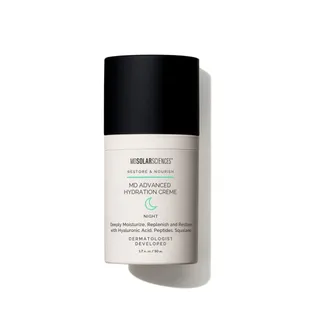
MDSolarSciences MD Advanced Hydration Crème

MDSolarSciences MD Advanced Hydration Crème

Efficacy58/100IrritancyHigh

Works for

Moisturizing
Ceramide ap, Ceramide eop + 34 more
Works well
What the product description says
“Rejuvenate dry, dull skin while you sleep with this time-released intensely hydrating night cream.”
Source: MD Solar Sciences

This product can help improve hydration of the skin with the two types of ingredients.

The first type is called “humectants”:
these ingredients help attract water. When humectants are on the surface of the skin, they “pull in” the moisture from the outside environment, or from within deeper layers of the skin. The following ingredients in this product do the job: glycerin, sodium hyaluronate.

This product also contains ingredients called “occlusives”. They help reduce the speed with which our skin loses moisture to the outside environment. These ingredients also help soften the upper layer of the skin, so it feels less tight and nicer to the touch. The following ingredients in this product do the job: caprylic/capric triglyceride, dimethicone.

The following ingredients in this product are especially good for supporting the skin barrier and helping with the hydration level: ceramide ap, ceramide eop, ceramide np, palmitoyl tetrapeptide-7, palmitoyl tripeptide-1, phytosphingosine

Ceramide apHero· EmollientEffect: HighA type of lipid similar to ceramides naturally present in skin. Helps to soften the upper layer of the skin and supports the skin barrier function to keep it hydrated. Can help to prevent inflammation in skin~0.3–0.55%
Ceramide eopHero· EmollientEffect: HighA type of lipid similar to ceramides naturally present in skin. Helps to soften the upper layer of the skin and supports the skin barrier function to keep it hydrated. Can help to prevent inflammation in skin~0.3–0.55%
Ceramide npHero· EmollientEffect: HighA type of lipid similar to ceramides naturally present in skin. Helps to soften the upper layer of the skin and supports the skin barrier function to keep it hydrated. Can help to prevent inflammation in skin~0.3–0.55%
PhytosphingosineHero· EmollientEffect: HighA type of lipid that is naturally present in skin. It might help in repairing skin barrier function and has anti-bacterial effect~0.3–0.6%
Palmitoyl tetrapeptide-7Hero· EmollientEffect: HighA type of peptide. Peptides are excellent moisturizers and might be able support collagen production reducing fine lines and wrinkles~0.15–0.25%
Palmitoyl tripeptide-1Hero· EmollientEffect: HighA type of peptide. Peptides are excellent moisturizers and might be able support collagen production reducing fine lines and wrinkles~0.15–0.25%
GlycerinKey active· HumectantEffect: HighOne of the best moisturizing ingredients. Naturally present in skin. It attracts water to the upper layer of the skin working as a humectant~4.4–5.4%
Caprylic/capric triglycerideKey active· Emollient, OcclusiveEffect: HighA good mix of fatty acids that forms a protective layer on the skin. Improves the shelf life of products. Derived from coconut and glycerin~4.2–5.1%
Cetyl alcoholKey active· EmollientEffect: MediumA non-drying alcohol that works to soften the skin and stabilize product formulations helping oil and water mix together~2.5–3%
Vitis vinifera seed oilKey active· EmollientEffect: HighA great emollient that can also have anti-oxidant properties~1.9–2.4%
Ethylhexyl palmitateKey active· EmollientEffect: MediumAn emollient that helps soften the skin and create a nice product texture~1.6–2%
DimethiconeKey active· Emollient, OcclusiveEffect: HighA silicone that helps to reduce water loss from the surface of the skin. Can temporarily "fill in" lines and wrinkles, absorb oil, and create a nice product finish~1.5–1.8%
SqualaneKey active· Emollient, OcclusiveEffect: HighAn oil naturally present in skin. Works as an emollient to soften the skin and form a protective layer on its surface without a greasy feeling.~1.3–1.5%
Theobroma grandiflorum seed butterKey activeEffect: HighHelps soften the upper layer of the skin and might as well help to attract moisture to its upper layer~0.4–0.6%
Cetearyl alcoholKey active· EmollientEffect: MediumA non-drying alcohol. Works as an emollient. Helps water and oil mix together and creates a nice product texture~0.35–0.65%
CholesterolKey active· EmollientEffect: HighAn emollient that is naturally found in skin~0.3–0.6%
Helianthus annuus seed oilKey active· Emollient, OcclusiveEffect: HighA great emollient due to its high linoleic acid content. One of the most effective plant oils in helping skin hydration and repairing skin barrier function~0.3–0.55%
Carthamus tinctorius seed oilKey active· EmollientEffect: HighAn emollient that helps soften the skin and might help calm down inflammation~0.3–0.55%
Cetyl palmitateKey active· EmollientEffect: MediumAn emollient that helps soften the skin and is used to improve product texture and stability~0.3–0.55%
ProlineKey activeEffect: Medium~0.3–0.5%
Sodium hyaluronateKey active· HumectantEffect: HighOne of the best moisturizing ingredients. Attracts water into the upper layer of the skin~0.25–0.5%
Vitis vinifera fruit extractKey activeEffect: MediumA plant extract that helps attract water to the upper layer of the skin. It might be helpful in neutralizing free radicals in skin, but is less potent than the extract from the seeds~0.25–0.45%
Tremella fuciformis sporocarp extractKey active· HumectantEffect: HighMushroom extract that helps attract water to the upper layer of the skin~0.2–0.4%
C12-15 alkyl benzoateKey active· EmollientEffect: MediumEnhances the product texture and makes it more spreadable. Helps reduce water loss from the outer layer of skin. Extands the shelf life by preventing bacteria growth~0.2–0.4%
Sorbitol· HumectantEffect: LowHelps attract water to the upper layer of the skin and improves the product texture~0.95–1.15%
Caprylyl glycol· Humectant, EmollientEffect: LowHelps preserve products and creates a nice product texture~0.45–0.65%
Glyceryl stearate· EmollientEffect: LowAn emollient that softens the skin and forms a protective layer on its surface. Helps water and oil mix together~0.45–0.65%
Hydrogenated polyisobutene· Emollient, OcclusiveEffect: LowUsed to improve the product consistency and soften the upper layer of the skin~0.3–0.55%
Camellia sinensis leaf extractEffect: LowCan contain potent anti-oxidant compounds (abbreviated ECG, GCG, EGC, and EGCG) that might help protect the skin from free radicals. Can help calm down inflammation and has some anti-bacterial properties. Unfortunately, these antioxidants are unstable and lose their effectiveness very quickly in products. The concentration of the antioxidant compounds in the extract also tends to be low to be effective in topical formulation~0.3–0.5%
Propylene glycol· HumectantEffect: LowHelps oil and water mix together and can enhance the penetration of other ingredients into the skin. It can be irritating~0.25–0.5%
Rosa damascena flower oilEffect: LowUsed as a fragrance. Can be irritating~0.25–0.5%
LecithinEffect: Low, below effective doseUsed mostly for creating emulsions - helping oil and water mix together. Helps soften the upper layer of the skin~0.3–0.55%
Aloe barbadensis leaf juiceEffect: Low, below effective doseTraditionally used to treat sunburns, dermatitis and inflammation, but evidence for its effectiveness is lacking. The extract can contain humectants that help attract water into the skin~0.25–0.5%
TocopherolEffect: Low, below effective dosePure form of vitamin E. Can help moisturise and protect the skin from free radicals. Often used to help stabilise other ingredients or the formula itself~0.2–0.4%
NiacinamideUnder-dosedIs proven to be effective in reducing blemishes, evening out skin tone and helping to improve lines and wrinkles. It helps the skin to repair sun damage, calm down inflammation and keep maintain good levels of moisture. The concentration of about 2% is effective for supporting the skin barrier and evening out the skin tone. Concentration of 4-6% is better for helping with acne and balancing the sebum production~0.3–0.5%
Laminaria digitata extractUnder-dosedSeaweed extract that helps the skin to attract water and make it more smooth for touch. Also shows promise of anti-aging properties, but good research is lacking at the moment~0.25–0.5%
Anti-aging
Palmitoyl tripeptide-1, Palmitoyl tetrapeptide-7 + 7 more
May help
What the product description says
“Hyaluronic acid helps your skin retain moisture while ceramides help protect the skin barrier, squalane soothes sun damage, and peptides reduce the appearance of wrinkles and dark spots.”
Source: MD Solar Sciences

This product contains palmitoyl tetrapeptide-7, palmitoyl tripeptide-1. There is some human evidence that these ingredients help reduce and prevent fine lines and wrinkles and improve skin elasticity and firmness, though it is smaller or less consistent than the evidence for the best anti-aging ingredients.

Palmitoyl tripeptide-1Key activeEffect: MediumA type of peptide. Peptides are excellent moisturizers and might be able support collagen production reducing fine lines and wrinkles~0.15–0.25%
Palmitoyl tetrapeptide-7Key activeEffect: MediumA type of peptide. Peptides are excellent moisturizers and might be able support collagen production reducing fine lines and wrinkles~0.15–0.25%
Camellia sinensis leaf extractEffect: LowCan contain potent anti-oxidant compounds (abbreviated ECG, GCG, EGC, and EGCG) that might help protect the skin from free radicals. Can help calm down inflammation and has some anti-bacterial properties. Unfortunately, these antioxidants are unstable and lose their effectiveness very quickly in products. The concentration of the antioxidant compounds in the extract also tends to be low to be effective in topical formulation~0.3–0.5%
Sodium ascorbyl phosphateEffect: Low, below effective doseA stable derivative of vitamin C. It is oil-soluble which means it is more likely to penetrate the skin compared to the pure form of vitamin C (which is water-soluble), but it is less bio-available and is way less effective in stimulating collagen and reducing wrinkles compared to the pure form of vitamin C (L-ascorbic acid) and its other derivatives (for example, magnesium ascorbyl phosphate). At the same time, this vitamin C derivative has been shown in studies to be effective in reducing acne, blemishes and clogged pores. It is less irritating then the pure form of vitamin C~0.3–0.5%
Laminaria digitata extractEffect: Low, below effective doseSeaweed extract that helps the skin to attract water and make it more smooth for touch. Also shows promise of anti-aging properties, but good research is lacking at the moment~0.25–0.5%
Aloe barbadensis leaf juiceEffect: Low, below effective doseTraditionally used to treat sunburns, dermatitis and inflammation, but evidence for its effectiveness is lacking. The extract can contain humectants that help attract water into the skin~0.25–0.5%
TocopherolEffect: Low, below effective dosePure form of vitamin E. Can help moisturise and protect the skin from free radicals. Often used to help stabilise other ingredients or the formula itself~0.2–0.4%
NiacinamideUnder-dosedIs proven to be effective in reducing blemishes, evening out skin tone and helping to improve lines and wrinkles. It helps the skin to repair sun damage, calm down inflammation and keep maintain good levels of moisture. The concentration of about 2% is effective for supporting the skin barrier and evening out the skin tone. Concentration of 4-6% is better for helping with acne and balancing the sebum production~0.3–0.5%
Tetrahexyldecyl ascorbateUnder-dosedBeing a lipid soluble form of vitamin C, it is more stable than ascorbic acid, but still degrades quickly and needs to be stabilized in a formulation with another ingredient. It is claimed to penetrate skin better than pure vitamin C and have the the similar benefits, but solid studies of its effectiveness are lacking. Is likely to require a higher concentration in a product than pure vitamin C to be effective. It might be able to help reduce pore clogging.~0.3–0.5%
Evens skin tone
Tetrahexyldecyl ascorbate ~0.3–0.5%, below the ~4% it needs + 1 more
Under-dosed
What the product description says
“Hyaluronic acid, mushroom peptide and squalane help reduce wrinkles, decrease dark spots, tighten, brighten and smooth skin”
Source: MD Solar Sciences

Effective ingredients missing or their concentration is too low

Camellia sinensis leaf extractEffect: LowCan contain potent anti-oxidant compounds (abbreviated ECG, GCG, EGC, and EGCG) that might help protect the skin from free radicals. Can help calm down inflammation and has some anti-bacterial properties. Unfortunately, these antioxidants are unstable and lose their effectiveness very quickly in products. The concentration of the antioxidant compounds in the extract also tends to be low to be effective in topical formulation~0.3–0.5%
Tetrahexyldecyl ascorbateUnder-dosedBeing a lipid soluble form of vitamin C, it is more stable than ascorbic acid, but still degrades quickly and needs to be stabilized in a formulation with another ingredient. It is claimed to penetrate skin better than pure vitamin C and have the the similar benefits, but solid studies of its effectiveness are lacking. Is likely to require a higher concentration in a product than pure vitamin C to be effective. It might be able to help reduce pore clogging.~0.3–0.5%
NiacinamideUnder-dosedIs proven to be effective in reducing blemishes, evening out skin tone and helping to improve lines and wrinkles. It helps the skin to repair sun damage, calm down inflammation and keep maintain good levels of moisture. The concentration of about 2% is effective for supporting the skin barrier and evening out the skin tone. Concentration of 4-6% is better for helping with acne and balancing the sebum production~0.3–0.5%
Anti-oxidation
Side benefit · Camellia sinensis leaf extract, Vitis vinifera seed oil + 11 more
May help

This product contains antioxidants (camellia sinensis leaf extract) that can help neutralize free radicals in skin to lessen the damage it gets from the UV light (sun). There is some human evidence for this effect in skin, though it is smaller or less consistent than the evidence for the best antioxidants.

Camellia sinensis leaf extractKey activeEffect: MediumCan contain potent anti-oxidant compounds (abbreviated ECG, GCG, EGC, and EGCG) that might help protect the skin from free radicals. Can help calm down inflammation and has some anti-bacterial properties. Unfortunately, these antioxidants are unstable and lose their effectiveness very quickly in products. The concentration of the antioxidant compounds in the extract also tends to be low to be effective in topical formulation~0.3–0.5%
Vitis vinifera seed oilEffect: LowA great emollient that can also have anti-oxidant properties~1.9–2.4%
Daucus carota sativa seed oilEffect: LowA plant oil that might help neutralize free radicals and have an anti-bacterial effect~0.3–0.5%
Carthamus tinctorius seed oilEffect: LowAn emollient that helps soften the skin and might help calm down inflammation~0.3–0.55%
CaffeineEffect: LowMight be helpful in neutralizing free radicals. Can have a dehydration effect that might somewhat decrease the look of puffy eyes~0.25–0.5%
Vitis vinifera fruit extractEffect: LowA plant extract that helps attract water to the upper layer of the skin. It might be helpful in neutralizing free radicals in skin, but is less potent than the extract from the seeds~0.25–0.45%
Daucus carota sativa root extractEffect: LowCarrot extract. Might have anti-oxidant properties and be used to add orange color~0.25–0.45%
Tremella fuciformis sporocarp extractEffect: LowMushroom extract that helps attract water to the upper layer of the skin~0.2–0.4%
Rosmarinus officinalis leaf extractEffect: Low, below effective doseCan be helpful in reducing inflammation in skin, including inflamed acne. It can be irritating~0.25–0.45%
Laminaria digitata extractEffect: Low, below effective doseSeaweed extract that helps the skin to attract water and make it more smooth for touch. Also shows promise of anti-aging properties, but good research is lacking at the moment~0.25–0.5%
Tetrahexyldecyl ascorbateUnder-dosedBeing a lipid soluble form of vitamin C, it is more stable than ascorbic acid, but still degrades quickly and needs to be stabilized in a formulation with another ingredient. It is claimed to penetrate skin better than pure vitamin C and have the the similar benefits, but solid studies of its effectiveness are lacking. Is likely to require a higher concentration in a product than pure vitamin C to be effective. It might be able to help reduce pore clogging.~0.3–0.5%
Sodium ascorbyl phosphateUnder-dosedA stable derivative of vitamin C. It is oil-soluble which means it is more likely to penetrate the skin compared to the pure form of vitamin C (which is water-soluble), but it is less bio-available and is way less effective in stimulating collagen and reducing wrinkles compared to the pure form of vitamin C (L-ascorbic acid) and its other derivatives (for example, magnesium ascorbyl phosphate). At the same time, this vitamin C derivative has been shown in studies to be effective in reducing acne, blemishes and clogged pores. It is less irritating then the pure form of vitamin C~0.3–0.5%
TocopherolUnder-dosedPure form of vitamin E. Can help moisturise and protect the skin from free radicals. Often used to help stabilise other ingredients or the formula itself~0.2–0.4%

Can it cause trouble?

Irritancy
11 strong irritants: Lavandula angustifolia flower/leaf/stem extract, Jasminum officinale flower/leaf extract + 9 more — patch-test recommended
High risk
We flagged 31 ingredients with irritancy potential. Severity depends on your sensitivity threshold; the table lists the worst offenders first.
IngredientFunctionIrritationEst. amount
Lavandula angustifolia flower/leaf/stem extractUsed as a fragranceHigh~0.25–0.5%est.
Jasminum officinale flower/leaf extractUsed as a fragranceHigh~0.2–0.4%est.
Cananga odorata flower oilAn essential oil. Can be irritatingHigh~0.25–0.45%est.
Santalum album oilUsed as a fragrance. Can be irritatingHigh~0.25–0.5%est.
Rosa damascena flower oilUsed as a fragrance. Can be irritatingHigh~0.25–0.5%est.
Salvia triloba leaf extract—High~0.3–0.5%est.
Citrus aurantium dulcis flower oil—High~0.25–0.45%est.
Lavandula hybrida oilPlant extract that can be irritating and is a known allergenHigh~0.3–0.55%est.
Rosmarinus officinalis leaf extractCan be helpful in reducing inflammation in skin, including inflamed acne. It can be irritatingHigh~0.25–0.45%est.
Salvia officinalis oil—High~0.25–0.5%est.
Vanilla planifolia fruit extractA plant extract used as a fragrance. Can be irritatingHigh~0.25–0.5%est.
Sodium lauryl sulfateA cleansing agent (SLS). It can be irritatingHigh~0.55–0.8%est.
Propylene glycolHelps oil and water mix together and can enhance the penetration of other ingredients into the skin. It can be irritatingHigh~0.25–0.5%est.
Chamomilla recutita flower extractPlant extract that can have healing and anti-inflammatory properties. It is a potential allergen and can be irritatingHigh~0.25–0.5%est.
Caprylic/capric triglycerideA good mix of fatty acids that forms a protective layer on the skin. Improves the shelf life of products. Derived from coconut and glycerinMedium~4.2–5.1%est.
Vitis vinifera seed oilA great emollient that can also have anti-oxidant propertiesMedium~1.9–2.4%est.
Sucrose polystearateHelps oil and water mix togetherMedium~0.7–1.05%est.
Glyceryl dilaurateHelps oil and water mix togetherMedium~0.6–0.9%est.
Sodium stearoyl glutamateHelps oil and water mix togetherMedium~0.55–0.85%est.
Theobroma grandiflorum seed butterHelps soften the upper layer of the skin and might as well help to attract moisture to its upper layerMedium~0.4–0.6%est.
Caprylyl glycolHelps preserve products and creates a nice product textureMedium~0.45–0.65%est.
PvpHelps evenly disperse other ingredients in a formulation and create an even layer on the surface of the skinMedium~0.3–0.55%est.
Tetrahexyldecyl ascorbateBeing a lipid soluble form of vitamin C, it is more stable than ascorbic acid, but still degrades quickly and needs to be stabilized in a formulation with another ingredient. It is claimed to penetrate skin better than pure vitamin C and have the the similar benefits, but solid studies of its effectiveness are lacking. Is likely to require a higher concentration in a product than pure vitamin C to be effective. It might be able to help reduce pore clogging.Medium~0.3–0.5%est.
Disodium edtaStabilizes the product formulationMedium~0.25–0.5%est.
1,2-hexanediolA preservativeMedium~0.25–0.5%est.
Sodium lauroyl lactylateHelps water and oil mix togetherMedium~0.3–0.55%est.
Aloe barbadensis leaf juiceTraditionally used to treat sunburns, dermatitis and inflammation, but evidence for its effectiveness is lacking. The extract can contain humectants that help attract water into the skinMedium~0.25–0.5%est.
CaffeineMight be helpful in neutralizing free radicals. Can have a dehydration effect that might somewhat decrease the look of puffy eyesMedium~0.25–0.5%est.
Sodium ascorbyl phosphateA stable derivative of vitamin C. It is oil-soluble which means it is more likely to penetrate the skin compared to the pure form of vitamin C (which is water-soluble), but it is less bio-available and is way less effective in stimulating collagen and reducing wrinkles compared to the pure form of vitamin C (L-ascorbic acid) and its other derivatives (for example, magnesium ascorbyl phosphate). At the same time, this vitamin C derivative has been shown in studies to be effective in reducing acne, blemishes and clogged pores. It is less irritating then the pure form of vitamin CMedium~0.3–0.5%est.
Vitis vinifera fruit extractA plant extract that helps attract water to the upper layer of the skin. It might be helpful in neutralizing free radicals in skin, but is less potent than the extract from the seedsMedium~0.25–0.45%est.
Sorbitan laurateHelps water and oil mix togetherMedium~0.15–0.3%est.
Comedogenic
4 ingredients rated 2 or more on the 0–5 pore-clogging scale
4 flagged
These ingredients have a comedogenic rating of 2 or more on a 0–5 scale; the table shows each one's rating. In leave-on products they can clog pores in acne-prone skin.
IngredientFunctionRatingEst. amount
Ethylhexyl palmitateAn emollient that helps soften the skin and create a nice product texture3/5~1.6–2%est.
Sodium lauryl sulfateA cleansing agent (SLS). It can be irritating3/5~0.55–0.8%est.
Laminaria digitata extractSeaweed extract that helps the skin to attract water and make it more smooth for touch. Also shows promise of anti-aging properties, but good research is lacking at the moment3/5~0.25–0.5%est.
Cetearyl alcoholA non-drying alcohol. Works as an emollient. Helps water and oil mix together and creates a nice product texture2/5~0.35–0.65%est.
Did this help you decide?

User reviews

Would you recommend?
No community reviews yet.

Be the first — your take helps the next person decide.

Ingredients

Filter by role to see what each ingredient is doing.

Water~45–55%
Formula
Irritation risk
Low

Plain old water

More about Water
Glycerin~4.4–5.4%
Key active
Irritation risk
Low
Works for
Moisturizing

One of the best moisturizing ingredients. Naturally present in skin. It attracts water to the upper layer of the skin working as a humectant

More about Glycerin
Caprylic/capric triglyceride~4.2–5.1%
Key activeIrritant · medium
Irritation risk
Medium
Works for
Moisturizing

A good mix of fatty acids that forms a protective layer on the skin. Improves the shelf life of products. Derived from coconut and glycerin

More about Caprylic/capric triglyceride
Cetyl alcohol~2.5–3%
Key active
Irritation risk
Low
Works for
CleansingMoisturizing

A non-drying alcohol that works to soften the skin and stabilize product formulations helping oil and water mix together

More about Cetyl alcohol
Diisostearyl dimer dilinoleate~2.3–2.9%
Formula
Vitis vinifera seed oil~1.9–2.4%
Key activeIrritant · medium
Irritation risk
Medium
Works for
MoisturizingAnti-oxidation

A great emollient that can also have anti-oxidant properties

More about Vitis vinifera seed oil
Ethylhexyl palmitate~1.6–2%
Key activeComedogenic 3/5
Irritation risk
Low
Comedogenicity
3/5
Works for
Moisturizing

An emollient that helps soften the skin and create a nice product texture

More about Ethylhexyl palmitate
Dimethicone~1.5–1.8%
Key active
Irritation risk
Low
Works for
MoisturizingMattifying

A silicone that helps to reduce water loss from the surface of the skin. Can temporarily "fill in" lines and wrinkles, absorb oil, and create a nice product finish

More about Dimethicone
Squalane~1.3–1.5%
Key active
Irritation risk
Low
Works for
Moisturizing

An oil naturally present in skin. Works as an emollient to soften the skin and form a protective layer on its surface without a greasy feeling.

More about Squalane
Sorbitol~0.95–1.15%
Formula
Irritation risk
Low
Works for
Moisturizing

Helps attract water to the upper layer of the skin and improves the product texture

More about Sorbitol
Sucrose polystearate~0.7–1.05%
Irritant · medium
Irritation risk
Medium
Works for
Cleansing

Helps oil and water mix together

More about Sucrose polystearate
Glyceryl dilaurate~0.6–0.9%
Irritant · medium
Irritation risk
Medium
Works for
Cleansing

Helps oil and water mix together

More about Glyceryl dilaurate
Sodium stearoyl glutamate~0.55–0.85%
Irritant · medium
Irritation risk
Medium
Works for
Cleansing

Helps oil and water mix together

More about Sodium stearoyl glutamate
Ppg-12/smdi copolymer~0.5–0.75%
Formula
Irritation risk
Low

Used to create a nice product finish

More about Ppg-12/smdi copolymer
Phenoxyethanol~0.45–0.65%
Formula
Irritation risk
Low

A preservative. It helps prevent bacterial growth in cosmetic products

More about Phenoxyethanol
Theobroma grandiflorum seed butter~0.4–0.6%
Key activeIrritant · medium
Irritation risk
Medium
Works for
Moisturizing

Helps soften the upper layer of the skin and might as well help to attract moisture to its upper layer

More about Theobroma grandiflorum seed butter
Caprylyl glycol~0.45–0.65%
Irritant · medium
Irritation risk
Medium
Works for
Moisturizing

Helps preserve products and creates a nice product texture

More about Caprylyl glycol
Glyceryl stearate~0.45–0.65%
Formula
Irritation risk
Low
Works for
CleansingMoisturizing

An emollient that softens the skin and forms a protective layer on its surface. Helps water and oil mix together

More about Glyceryl stearate
Cetearyl alcohol~0.35–0.65%
Key activeComedogenic 2/5
Irritation risk
Low
Comedogenicity
2/5
Works for
CleansingMoisturizing

A non-drying alcohol. Works as an emollient. Helps water and oil mix together and creates a nice product texture

More about Cetearyl alcohol
Hydrogenated polyisobutene~0.3–0.55%
Formula
Irritation risk
Low
Works for
Moisturizing

Used to improve the product consistency and soften the upper layer of the skin

More about Hydrogenated polyisobutene
Cetyl palmitate~0.3–0.55%
Key active
Irritation risk
Low
Works for
Moisturizing

An emollient that helps soften the skin and is used to improve product texture and stability

More about Cetyl palmitate
Hydroxystearic acid~0.35–0.6%
Formula
Irritation risk
Low
Works for
Cleansing
More about Hydroxystearic acid
Hydrolyzed ganoderma lucidum extract~0.25–0.4%
Formula
Carbomer~0.25–0.45%
Formula
Irritation risk
Low
Works for
Cleansing

Helps create a thicker or gel-like product texture. It is not a surfactant but can be used in gentle cleansing formulations

More about Carbomer
Pvp~0.3–0.55%
Irritant · medium
Irritation risk
Medium

Helps evenly disperse other ingredients in a formulation and create an even layer on the surface of the skin

More about Pvp
Niacinamide~0.3–0.5%
Under-dosed
Irritation risk
Low
Works for
Anti-agingEvens skin toneMoisturizingAnti-blemishReduces irritationAntibacterialReduces rednessAnti-inflammatory

Is proven to be effective in reducing blemishes, evening out skin tone and helping to improve lines and wrinkles. It helps the skin to repair sun damage, calm down inflammation and keep maintain good levels of moisture. The concentration of about 2% is effective for supporting the skin barrier and evening out the skin tone. Concentration of 4-6% is better for helping with acne and balancing the sebum production

More about Niacinamide
Tetrahexyldecyl ascorbate~0.3–0.5%
Under-dosedIrritant · medium
Irritation risk
Medium
Works for
Anti-oxidationEvens skin toneAnti-aging

Being a lipid soluble form of vitamin C, it is more stable than ascorbic acid, but still degrades quickly and needs to be stabilized in a formulation with another ingredient. It is claimed to penetrate skin better than pure vitamin C and have the the similar benefits, but solid studies of its effectiveness are lacking. Is likely to require a higher concentration in a product than pure vitamin C to be effective. It might be able to help reduce pore clogging.

More about Tetrahexyldecyl ascorbate
Disodium edta~0.25–0.5%
Irritant · medium
Irritation risk
Medium

Stabilizes the product formulation

More about Disodium edta
Xanthan gum~0.3–0.5%
Formula
Irritation risk
Low
Works for
Cleansing

Used to create a thicker product consistency

More about Xanthan gum
Sodium hydroxide~0.25–0.5%
Formula
Irritation risk
Low

Used to adjust the product's pH

More about Sodium hydroxide
Carthamus tinctorius seed oil~0.3–0.55%
Key active
Irritation risk
Low
Works for
MoisturizingAnti-oxidation

An emollient that helps soften the skin and might help calm down inflammation

More about Carthamus tinctorius seed oil
Lavandula angustifolia flower/leaf/stem extract~0.25–0.5%
Irritant · high
Jasminum officinale flower/leaf extract~0.2–0.4%
Irritant · high
Irritation risk
High

Used as a fragrance

More about Jasminum officinale flower/leaf extract
Cananga odorata flower oil~0.25–0.45%
Irritant · high
Irritation risk
High

An essential oil. Can be irritating

More about Cananga odorata flower oil
Santalum album oil~0.25–0.5%
Irritant · high
Irritation risk
High

Used as a fragrance. Can be irritating

More about Santalum album oil
Rosa damascena flower oil~0.25–0.5%
Irritant · high
Irritation risk
High
Works for
Moisturizing

Used as a fragrance. Can be irritating

More about Rosa damascena flower oil
Salvia triloba leaf extract~0.3–0.5%
Irritant · high
Citrus aurantium dulcis flower oil~0.25–0.45%
Irritant · high
Lavandula hybrida oil~0.3–0.55%
Irritant · high
Irritation risk
High

Plant extract that can be irritating and is a known allergen

More about Lavandula hybrida oil
Rosmarinus officinalis leaf extract~0.25–0.45%
Irritant · high
Irritation risk
High
Works for
Anti-blemishAnti-oxidationAntibacterial

Can be helpful in reducing inflammation in skin, including inflamed acne. It can be irritating

More about Rosmarinus officinalis leaf extract
Salvia officinalis oil~0.25–0.5%
Irritant · high
Vanilla planifolia fruit extract~0.25–0.5%
Irritant · high
Irritation risk
High

A plant extract used as a fragrance. Can be irritating

More about Vanilla planifolia fruit extract
Sodium hyaluronate~0.25–0.5%
Key active
Irritation risk
Low
Works for
Moisturizing

One of the best moisturizing ingredients. Attracts water into the upper layer of the skin

More about Sodium hyaluronate
1,2-hexanediol~0.25–0.5%
Irritant · medium
Irritation risk
Medium

A preservative

More about 1,2-hexanediol
Ceramide np~0.3–0.55%
Hero · Moisturizing
Irritation risk
Low
Works for
MoisturizingReduces irritationAnti-inflammatory

A type of lipid similar to ceramides naturally present in skin. Helps to soften the upper layer of the skin and supports the skin barrier function to keep it hydrated. Can help to prevent inflammation in skin

More about Ceramide np
Ceramide ap~0.3–0.55%
Hero · Moisturizing
Irritation risk
Low
Works for
MoisturizingReduces irritationAnti-inflammatory

A type of lipid similar to ceramides naturally present in skin. Helps to soften the upper layer of the skin and supports the skin barrier function to keep it hydrated. Can help to prevent inflammation in skin

More about Ceramide ap
Ceramide eop~0.3–0.55%
Hero · Moisturizing
Irritation risk
Low
Works for
MoisturizingReduces irritationAnti-inflammatory

A type of lipid similar to ceramides naturally present in skin. Helps to soften the upper layer of the skin and supports the skin barrier function to keep it hydrated. Can help to prevent inflammation in skin

More about Ceramide eop
Phytosphingosine~0.3–0.6%
Hero · Moisturizing
Irritation risk
Low
Works for
MoisturizingAnti-blemishAnti-inflammatory

A type of lipid that is naturally present in skin. It might help in repairing skin barrier function and has anti-bacterial effect

More about Phytosphingosine
Cholesterol~0.3–0.6%
Key active
Irritation risk
Low
Works for
CleansingMoisturizing

An emollient that is naturally found in skin

More about Cholesterol
Sodium lauryl sulfate~0.55–0.8%
Comedogenic 3/5Irritant · high
Irritation risk
High
Comedogenicity
3/5
Works for
Cleansing

A cleansing agent (SLS). It can be irritating

More about Sodium lauryl sulfate
Sodium lauroyl lactylate~0.3–0.55%
Irritant · medium
Irritation risk
Medium
Works for
Cleansing

Helps water and oil mix together

More about Sodium lauroyl lactylate
Lecithin~0.3–0.55%
Formula
Irritation risk
Low
Works for
CleansingMoisturizing

Used mostly for creating emulsions - helping oil and water mix together. Helps soften the upper layer of the skin

More about Lecithin
Aloe barbadensis leaf juice~0.25–0.5%
Irritant · medium
Irritation risk
Medium
Works for
MoisturizingAntibacterialAnti-inflammatoryReduces rednessReduces irritationAnti-blemishAnti-aging

Traditionally used to treat sunburns, dermatitis and inflammation, but evidence for its effectiveness is lacking. The extract can contain humectants that help attract water into the skin

More about Aloe barbadensis leaf juice
Propylene glycol~0.25–0.5%
Irritant · high
Irritation risk
High
Works for
Moisturizing

Helps oil and water mix together and can enhance the penetration of other ingredients into the skin. It can be irritating

More about Propylene glycol
Caffeine~0.25–0.5%
Irritant · medium
Irritation risk
Medium
Works for
De-puffingAnti-oxidation

Might be helpful in neutralizing free radicals. Can have a dehydration effect that might somewhat decrease the look of puffy eyes

More about Caffeine
Helianthus annuus seed oil~0.3–0.55%
Key active
Irritation risk
Low
Works for
Moisturizing

A great emollient due to its high linoleic acid content. One of the most effective plant oils in helping skin hydration and repairing skin barrier function

More about Helianthus annuus seed oil
Proline~0.3–0.5%
Key active
Irritation risk
Low
Works for
Moisturizing
More about Proline
Sodium ascorbyl phosphate~0.3–0.5%
Under-dosedIrritant · medium
Irritation risk
Medium
Works for
Anti-blemishAnti-oxidationAnti-aging

A stable derivative of vitamin C. It is oil-soluble which means it is more likely to penetrate the skin compared to the pure form of vitamin C (which is water-soluble), but it is less bio-available and is way less effective in stimulating collagen and reducing wrinkles compared to the pure form of vitamin C (L-ascorbic acid) and its other derivatives (for example, magnesium ascorbyl phosphate). At the same time, this vitamin C derivative has been shown in studies to be effective in reducing acne, blemishes and clogged pores. It is less irritating then the pure form of vitamin C

More about Sodium ascorbyl phosphate
Chamomilla recutita flower extract~0.25–0.5%
Irritant · high
Irritation risk
High
Works for
Anti-inflammatory

Plant extract that can have healing and anti-inflammatory properties. It is a potential allergen and can be irritating

More about Chamomilla recutita flower extract
Camellia sinensis leaf extract~0.3–0.5%
Key active
Irritation risk
Low
Works for
Anti-oxidationAntibacterialAnti-agingAnti-blemishEvens skin toneMoisturizing

Can contain potent anti-oxidant compounds (abbreviated ECG, GCG, EGC, and EGCG) that might help protect the skin from free radicals. Can help calm down inflammation and has some anti-bacterial properties. Unfortunately, these antioxidants are unstable and lose their effectiveness very quickly in products. The concentration of the antioxidant compounds in the extract also tends to be low to be effective in topical formulation

More about Camellia sinensis leaf extract
Vitis vinifera fruit extract~0.25–0.45%
Key activeIrritant · medium
Irritation risk
Medium
Works for
MoisturizingAnti-oxidation

A plant extract that helps attract water to the upper layer of the skin. It might be helpful in neutralizing free radicals in skin, but is less potent than the extract from the seeds

More about Vitis vinifera fruit extract
Diatomaceous earth~0.4–0.65%
Formula
Irritation risk
Low

Used to create a thicker product consistency

More about Diatomaceous earth
Maltodextrin~0.25–0.5%
Formula
Irritation risk
Low
Works for
Mattifying

Used to stabilize the product formulation and can help absorb oil

More about Maltodextrin
Laminaria digitata extract~0.25–0.5%
Under-dosedComedogenic 3/5
Irritation risk
Low
Comedogenicity
3/5
Works for
MoisturizingAnti-oxidationAnti-aging

Seaweed extract that helps the skin to attract water and make it more smooth for touch. Also shows promise of anti-aging properties, but good research is lacking at the moment

More about Laminaria digitata extract
Daucus carota sativa root extract~0.25–0.45%
Formula
Irritation risk
Low
Works for
Anti-oxidation

Carrot extract. Might have anti-oxidant properties and be used to add orange color

More about Daucus carota sativa root extract
Daucus carota sativa seed oil~0.3–0.5%
Formula
Irritation risk
Low
Works for
Anti-oxidationAntibacterial

A plant oil that might help neutralize free radicals and have an anti-bacterial effect

More about Daucus carota sativa seed oil
Beta-carotene~0.25–0.45%
Formula
Irritation risk
Low

A colorant adding orange or bright yellow color

More about Beta-carotene
Tremella fuciformis sporocarp extract~0.2–0.4%
Key active
Irritation risk
Low
Works for
MoisturizingAnti-oxidation

Mushroom extract that helps attract water to the upper layer of the skin

More about Tremella fuciformis sporocarp extract
Tocopherol~0.2–0.4%
Under-dosed
Irritation risk
Low
Works for
Anti-oxidationAnti-agingAnti-inflammatoryMoisturizing

Pure form of vitamin E. Can help moisturise and protect the skin from free radicals. Often used to help stabilise other ingredients or the formula itself

More about Tocopherol
C12-15 alkyl benzoate~0.2–0.4%
Key active
Irritation risk
Low
Works for
Moisturizing

Enhances the product texture and makes it more spreadable. Helps reduce water loss from the outer layer of skin. Extands the shelf life by preventing bacteria growth

More about C12-15 alkyl benzoate
Sorbitan laurate~0.15–0.3%
Irritant · medium
Irritation risk
Medium
Works for
Cleansing

Helps water and oil mix together

More about Sorbitan laurate
C18-36 acid glycol ester~0.2–0.4%
Formula
Irritation risk
Low
Works for
Cleansing
More about C18-36 acid glycol ester
C18-36 acid triglyceride~0.2–0.35%
Formula
Palmitoyl tripeptide-1~0.15–0.25%
Hero · Moisturizing
Irritation risk
Low
Works for
MoisturizingAnti-aging

A type of peptide. Peptides are excellent moisturizers and might be able support collagen production reducing fine lines and wrinkles

More about Palmitoyl tripeptide-1
Palmitoyl tetrapeptide-7~0.15–0.25%
Hero · Moisturizing
Irritation risk
Low
Works for
MoisturizingAnti-aging

A type of peptide. Peptides are excellent moisturizers and might be able support collagen production reducing fine lines and wrinkles

More about Palmitoyl tetrapeptide-7
Ingredient list view

Water, Glycerin, Caprylic/capric triglyceride, Cetyl alcohol, Diisostearyl dimer dilinoleate, Vitis vinifera seed oil, Ethylhexyl palmitate, Dimethicone, Squalane, Sorbitol, Sucrose polystearate, Glyceryl dilaurate, Sodium stearoyl glutamate, Ppg-12/smdi copolymer, Phenoxyethanol, Theobroma grandiflorum seed butter, Caprylyl glycol, Glyceryl stearate, Cetearyl alcohol, Hydrogenated polyisobutene, Cetyl palmitate, Hydroxystearic acid, Hydrolyzed ganoderma lucidum extract, Carbomer, Pvp, Niacinamide, Tetrahexyldecyl ascorbate, Disodium edta, Xanthan gum, Sodium hydroxide, Carthamus tinctorius seed oil, Lavandula angustifolia flower/leaf/stem extract, Jasminum officinale flower/leaf extract, Cananga odorata flower oil, Santalum album oil, Rosa damascena flower oil, Salvia triloba leaf extract, Citrus aurantium dulcis flower oil, Lavandula hybrida oil, Rosmarinus officinalis leaf extract, Salvia officinalis oil, Vanilla planifolia fruit extract, Sodium hyaluronate, 1,2-hexanediol, Ceramide np, Ceramide ap, Ceramide eop, Phytosphingosine, Cholesterol, Sodium lauryl sulfate, Sodium lauroyl lactylate, Lecithin, Aloe barbadensis leaf juice, Propylene glycol, Caffeine, Helianthus annuus seed oil, Proline, Sodium ascorbyl phosphate, Chamomilla recutita flower extract, Camellia sinensis leaf extract, Vitis vinifera fruit extract, Diatomaceous earth, Maltodextrin, Laminaria digitata extract, Daucus carota sativa root extract, Daucus carota sativa seed oil, Beta-carotene, Tremella fuciformis sporocarp extract, Tocopherol, C12-15 alkyl benzoate, Sorbitan laurate, C18-36 acid glycol ester, C18-36 acid triglyceride, Palmitoyl tripeptide-1, Palmitoyl tetrapeptide-7

Compare prices

Retailers ranked by price — lowest first.

Amazon USPrice as of 11/29 06:22 GMT
$46.80
Buy
MD Solar Sciences
$78.00
Buy
Ulta1.7 oz
$78.00
Buy
MD Solar Sciences
$117.00
Buy

Affiliate links · As an Amazon Associate, WIMJ earns from qualifying purchases.

Worth comparing, line by line.

Match % combines shared ingredients, the first five ingredients, shared actives and hero ingredients, irritancy (lower counts in the alternative's favour), texture and body area. Only products in the same routine step are compared.

Side-by-side comparison of this product against its closest alternatives
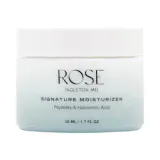
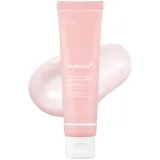
MDSolarSciencesMD Advanced Hydration CrèmeYOUR PRODUCTROSE Ingleton MDSignature MoisturizerKester BlackSkin Drench MoisturiserMedicubePDRN Pink Peptide Cream
Match—92%89%89%
Price$46.80$85.00+$38.20—$15.01−$31.79
Shared key ingredients—12 of 2212 of 2211 of 22
Key difference—Ascorbyl GlucosideSodium PolyglutamateCopper Tripeptide-1
Irritancy High Medium Medium Medium
Drying alcohol————
View product Shop Shop Shop

More alternatives: NEOGEN X SUR.MEDIC Surmedic 24K Gold Caviar Repair Vital CreamCyrène Skincare Skin Rescue Moisturiser

Cheaper alternatives? See how this stacks up against similar formulas.
We compare ingredient profiles across our catalog — pick the closest match for your budget.
Open dupe finder

Product summary

Judging from the ingredient list, "MDSolarSciences - MD Advanced Hydration Crème" works well for improving skin hydration To work well, any moisturizer needs to include a combination of water-binding and emollient ingredients. MDSolarSciences - MD Advanced Hydration Crème ticks this box. Humectants in this product (glycerin, caprylyl glycol and sorbitol) help to increase the water content in the upper layer of the skin. (These ingredients do so by "capturing" water molecules from the outside air or from within the deeper layers of the skin). Ceramide eop, palmitoyl tetrapeptide-7, palmitoyl tripeptide-1, carthamus tinctorius seed oil and isopropyl myristate in this product help decrease the water evoporation from the skin, so that it stays hydrated for longer. These ingredients also soften the skin and take away the feeling of tightness and dryness.

Ingredient callouts

  • As a plus, this moisturizer also contains Ceramides (ceramide eop 0.45% - 0.70%). Ceramides are a type of lipids that our skin produces itself. They are a building block of the skin's barrier. Ceramides used in skincare are synthetic or extracted from plants. They work well for softening the skin surface and "patch holes" in the skin's barrier.
  • We like that this moisturizer contains peptides (ferric hexapeptide-35 0.35% - 0.60%, palmitoyl tripeptide-1 0.45% - 0.70% and palmitoyl tetrapeptide-7 0.50% - 0.70%). There are many different kind of Peptides and they are naturally present in our skin. They all are a combination of aminoacids. Some of them work as natural antibiotics, promote wound-healing and production of collagen. The science is still not settled on how effective Peptides are in skincare, but it is very likely that they have a benefit. Peptides might help restore the skin barrier and fight the signs of aging. At the very least, Peptides work as humectants: they attract water to the upper layer of the skin and improve its hydration.
This product contains ingredients that could be beneficial, but their concentrations are too low in this formulation: tetrahexyldecyl ascorbate and niacinamide

Irritation risk

There are quite a few common irritants in this product, including ingredients without particular skin benefits. We would not recommend it for sensitive skin. We assess the overall irritancy of this moisturizer to be high. For a detailed overview of all potential irritants: click here

You can see the detailed formula review with the breakdown of all actives in the product and the full ingredient list with estimated concentrations in the tables below.

Price

The product retails for 76.00$ in the United States.

For a detailed price comparison: click here.

Sources cited in this review

Every concentration estimate and effectiveness label is anchored to one of these 41 studies and safety reviews.

  1. 1
  2. 2
  3. 3
  4. 4
  5. 5
  6. 6
MDSolarSciences MD Advanced Hydration Crème
MDSolarSciencesMD Advanced Hydration Crème

Affiliate links · As an Amazon Associate, WIMJ earns from qualifying purchases.

As an Amazon Associate, WIMJ earns from qualifying purchases.