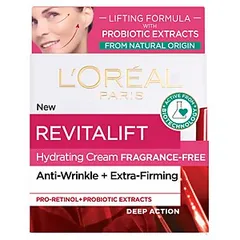
Works for:
based on ingredients and %- Moisturizing
- Exfoliation
- Evens skin tone
Doesn't work for:
based on ingredients and %- Anti-aging
Can it cause trouble?
- Irritation risk: medium
- Comedogenic risk ingredients: 4
Key actives
Product Summary
"L'Oréal Paris - Revitalift Fragrance Free Lifting Day Cream with Natural Probiotic Extracts" is effective for: Moisturizing and Exfoliation
This product could be helpful for: Evens skin tone, but its actives are not the most effective or are not well-studied.
Ingredient callouts
- this product includes a form of Retinoids (vitamin A) - retinyl palmitate 0.25% - 0.40%, but this type of vitamin A is not very effective. It could in theory help with fine lines and wrinkles, but the effect is most likely minimal.
- Ceramides (salicyloyl phytosphingosine 0.25% - 0.45%). Ceramides are a type of lipids that our skin produces itself. They are a building block of the skin's barrier. Ceramides used in skincare are synthetic or extracted from plants. They work well for softening the skin surface and "patch holes" in the skin's barrier.
- Humectants (glycerin 5.20% - 6.40% and salicyloyl phytosphingosine 0.25% - 0.45%). These ingredients help attract water to the upper layer of the skin and improve the skin hydration.
Price
The product retails from 6.49£ up to 12.99£ in the United Kingdom and for 12.99$ in the United States.
For a detailed price comparison: click here.
Exfoliation
This product can help exfoliate the skin. In other words, it helps break down the bonds between dead cells on the surface of the skin and speed up the skin turnover. Skin often appears softer and brighter after exfoliation, but overdoing it can result in disrupted skin barrier. The following ingredient is doing the exfoliating job in this product: capryloyl salicylic acid.
Three steps removed from the active form of vitamin A - retinoic acid. To have an effect in the skin, it first needs to be converted twice to become the retinoic acid. This means it is less potent than retinol, but could also be less irritating. Once converted to the retinoic acid in the skin, it helps against all signs of aging, improves skin cell turnover and helps fight blemishes and clogged pores. However, in many cosmetic formulations, it is used in a concentration that is too low to have the full effect
Moisturizing
What does the product description say?
Revitalift Fragrance Free Lifting Day Cream with Natural Probiotic Extracts
Source: From product name
This product can help improve hydration of the skin with the two types of ingredients.
The first type is called “humectants”:
these ingredients help attract water.
When humectants are on the surface of the skin, they “pull in” the moisture from the outside environment, or from
within deeper layers of the skin. The following ingredients in this product do the job:
glycerin, butylene glycol.
This product also contains ingredients called “occlusives”. They help reduce the speed with which our skin loses moisture to the outside environment. These ingredients also help soften the upper layer of the skin, so it feels less tight and nicer to the touch. The following ingredients in this product do the job: dimethicone, cetearyl alcohol.
The following ingredients in this product are especially good for supporting the skin barrier and helping with the hydration level: salicyloyl phytosphingosine
A silicone that helps to reduce water loss from the surface of the skin. Can temporarily "fill in" lines and wrinkles, absorb oil, and create a nice product finish
Helps attract water to the upper layer of the skin
One of the best moisturizing ingredients. Naturally present in skin. It attracts water to the upper layer of the skin working as a humectant
A non-living ingredient made by fermentation with the bacteria Lactobacillus. It can help attract water to the upper layer of the skin and might help reduce inflammation
Yeast extract. Helps attract water to the upper layer of the skin
Helps attract water to the upper layer of the skin. Might have anti-aging benefits but solid study data is lacking
A non-drying alcohol that works to soften the skin and stabilize product formulations helping oil and water mix together
A non-drying alcohol. Works as an emollient. Helps water and oil mix together and creates a nice product texture
A type of silicone that helps to soften the upper layer of the skin and create a nice product finish on the skin
An emollient that helps soften the skin
An emollient that helps to soften the skin and create a pleasant product texture and stabilize the formulation
An emollient that is naturally present in skin and helps soften it
A plant extract that helps attract water to the upper layer of the skin and might have some anti-oxidant properties
A silicone that forms a light film on the skin surface helping to bind water and temporarily absorb oils creating a matt and powdery feel
Non-drying alcohol that helps water and oil mix together. Also serves as an emollient
Used to create a nice product texture and help delivery of other ingredients. Might be somewhat helpful in attracting water to the upper layer of the skin
Helps preserve products and creates a nice product texture
Used to preserve products, dissolve other ingredients and create a nice product texture
Helps attract water to the upper layer of the skin and might have some anti-oxidant and skin lightening properties. It can help calm down inflammation in skin
Pure form of vitamin E. Can help moisturise and protect the skin from free radicals. Often used to help stabilise other ingredients or the formula itself
Helps oil and water mix together and works as an emollient
Evens skin tone
The following ingredient (ingredients) in this product might be helpful, but there is no evidence to confirm that it actually works: capryloyl salicylic acid.
Three steps removed from the active form of vitamin A - retinoic acid. To have an effect in the skin, it first needs to be converted twice to become the retinoic acid. This means it is less potent than retinol, but could also be less irritating. Once converted to the retinoic acid in the skin, it helps against all signs of aging, improves skin cell turnover and helps fight blemishes and clogged pores. However, in many cosmetic formulations, it is used in a concentration that is too low to have the full effect
Helps attract water to the upper layer of the skin and might have some anti-oxidant and skin lightening properties. It can help calm down inflammation in skin
Anti-aging
What does the product description say?
Fuelled by biotechnology, this advanced formula harnesses the power of dermatologist-inspired ingredients to combat the visible signs of ageing.
Source: Beauty Expert
This product does not contain ingredients that are able to reduce fine lines and wrinkles or help with skin elasticity, but it can improve the look of the skin temporarily through moisturization. Well-moisturized skin might also be able to repair the sun damage better.This ingredient - salicyloyl phytosphingosine - could be helpful for preventing or repairing signs of aging in theory, but there is no evidence that it actually works.
Helps attract water to the upper layer of the skin. Might have anti-aging benefits but solid study data is lacking
Three steps removed from the active form of vitamin A - retinoic acid. To have an effect in the skin, it first needs to be converted twice to become the retinoic acid. This means it is less potent than retinol, but could also be less irritating. Once converted to the retinoic acid in the skin, it helps against all signs of aging, improves skin cell turnover and helps fight blemishes and clogged pores. However, in many cosmetic formulations, it is used in a concentration that is too low to have the full effect
Pure form of vitamin E. Can help moisturise and protect the skin from free radicals. Often used to help stabilise other ingredients or the formula itself
How honest is this product?
| Promise | Can it deliver? |
|---|---|
| Moisturizing | |
| Anti-aging |
Total Promises Fulfilled score: 75/100.
We receive a small commission for purchases made through these links at no cost for you. Thank you for your support! Learn more
Affiliate link · supports WIMJ at no cost to you
Potential irritants
Comedogenic ingredients
User reviews (0)
Averages from community submissions.
No reviews yet for this product.
Be the first to share your experience!
Tried this product?
Help capture what the ingredient list can't—texture, finish, pilling, scent, and more. Answer what you can, skip the rest.
Takes ~30 seconds.
Reviews are shown in aggregate. No personal details.
| Product | Similarity | Price | Irritancy |
|---|---|---|---|
 L'Oréal Paris Revitalift Fragrance Free Lifting Day Cream with Natural Probiotic Extracts | Current | ≈ $8.66 | |
 Vichy Neovadiol Post-Menopause Firming Lipid-Replenishing Night Cream | 56% | ≈ $43.22 |
Key Actives
Helps attract water to the upper layer of the skin and might have some anti-oxidant and skin lightening properties. It can help calm down inflammation in skin
Three steps removed from the active form of vitamin A - retinoic acid. To have an effect in the skin, it first needs to be converted twice to become the retinoic acid. This means it is less potent than retinol, but could also be less irritating. Once converted to the retinoic acid in the skin, it helps against all signs of aging, improves skin cell turnover and helps fight blemishes and clogged pores. However, in many cosmetic formulations, it is used in a concentration that is too low to have the full effect
A silicone that helps to reduce water loss from the surface of the skin. Can temporarily "fill in" lines and wrinkles, absorb oil, and create a nice product finish
Helps attract water to the upper layer of the skin. Might have anti-aging benefits but solid study data is lacking
A silicone that forms a light film on the skin surface helping to bind water and temporarily absorb oils creating a matt and powdery feel
One of the best moisturizing ingredients. Naturally present in skin. It attracts water to the upper layer of the skin working as a humectant
Helps attract water to the upper layer of the skin
Yeast extract. Helps attract water to the upper layer of the skin
A non-living ingredient made by fermentation with the bacteria Lactobacillus. It can help attract water to the upper layer of the skin and might help reduce inflammation
Used to create a gel-like product texture, as well as to stabilize emulsions
Potential irritants
Helps oil and water mix together and can enhance the penetration of other ingredients into the skin. It can be irritating
A plant extract that helps attract water to the upper layer of the skin and might have some anti-oxidant properties
Three steps removed from the active form of vitamin A - retinoic acid. To have an effect in the skin, it first needs to be converted twice to become the retinoic acid. This means it is less potent than retinol, but could also be less irritating. Once converted to the retinoic acid in the skin, it helps against all signs of aging, improves skin cell turnover and helps fight blemishes and clogged pores. However, in many cosmetic formulations, it is used in a concentration that is too low to have the full effect
Used to thicken the product's consistency
Used to adjust pH of the product and can help improve the product's smell
Used to improve stability of the formulation
Helps preserve products and creates a nice product texture
Helps water and oil in the product mix well together and improves product texture
Helps oil and water mix together. Could be comedogenic
Used to preserve products, dissolve other ingredients and create a nice product texture
Comedogenic ingredients
Used to thicken the product's consistency
An emollient that helps soften the skin
A non-drying alcohol. Works as an emollient. Helps water and oil mix together and creates a nice product texture
Helps oil and water mix together. Could be comedogenic
All ingredients
One of the best moisturizing ingredients. Naturally present in skin. It attracts water to the upper layer of the skin working as a humectant
A type of silicone that helps to soften the upper layer of the skin and create a nice product finish on the skin
A silicone that helps to reduce water loss from the surface of the skin. Can temporarily "fill in" lines and wrinkles, absorb oil, and create a nice product finish
Used to thicken the product's consistency
An emollient that helps soften the skin
Helps oil and water mix together and can enhance the penetration of other ingredients into the skin. It can be irritating
An emollient that helps to soften the skin and create a pleasant product texture and stabilize the formulation
A non-drying alcohol that works to soften the skin and stabilize product formulations helping oil and water mix together
Non-drying alcohol that helps water and oil mix together. Also serves as an emollient
Helps attract water to the upper layer of the skin
Used to create a nice product texture and help delivery of other ingredients. Might be somewhat helpful in attracting water to the upper layer of the skin
Yeast extract. Helps attract water to the upper layer of the skin
Helps attract water to the upper layer of the skin and might have some anti-oxidant and skin lightening properties. It can help calm down inflammation in skin
A non-living ingredient made by fermentation with the bacteria Lactobacillus. It can help attract water to the upper layer of the skin and might help reduce inflammation
A plant extract that helps attract water to the upper layer of the skin and might have some anti-oxidant properties
Helps attract water to the upper layer of the skin. Might have anti-aging benefits but solid study data is lacking
Used to adjust pH of the product and can help improve the product's smell
Used to improve stability of the formulation
Three steps removed from the active form of vitamin A - retinoic acid. To have an effect in the skin, it first needs to be converted twice to become the retinoic acid. This means it is less potent than retinol, but could also be less irritating. Once converted to the retinoic acid in the skin, it helps against all signs of aging, improves skin cell turnover and helps fight blemishes and clogged pores. However, in many cosmetic formulations, it is used in a concentration that is too low to have the full effect
Helps preserve products and creates a nice product texture
A non-drying alcohol. Works as an emollient. Helps water and oil mix together and creates a nice product texture
Helps water and oil in the product mix well together and improves product texture
Used to stabilize the product formulation and can help absorb oil
Helps oil and water mix together. Could be comedogenic
An emollient that is naturally present in skin and helps soften it
Helps oil and water mix togehter and creates a nice product texture
Used to preserve products, dissolve other ingredients and create a nice product texture
Used to create a gel-like product texture, as well as to stabilize emulsions
Pure form of vitamin E. Can help moisturise and protect the skin from free radicals. Often used to help stabilise other ingredients or the formula itself
A silicone that forms a light film on the skin surface helping to bind water and temporarily absorb oils creating a matt and powdery feel
Ingredient list view
Water, Glycerin, Caprylyl methicone, Dimethicone, Zea mays starch, Isopropyl isostearate, Propylene glycol, Oxidized starch acetate, Octyldodecanol, Cetyl alcohol, Behenyl alcohol, Alpha-glucan oligosaccharide, Butylene glycol, Capryloyl salicylic acid, Faex extract, Yeast extract, Hydrolyzed yeast protein, Hydroxyacetophenone, Lactobacillus, Polymnia sonchifolia root juice, Salicyloyl phytosphingosine, Triethanolamine, Trisodium ethylenediamine disuccinate, Retinyl palmitate, Caprylyl glycol, Cetearyl alcohol, Cetearyl glucoside, Maltodextrin, Myristic acid, Palmitic acid, Peg-100 stearate, Pentylene glycol, Poloxamer 338, Sodium polyacrylate, Stearic acid, Tocopherol, Xanthan gum, Polysilicone-11, Unknown
- Glycerol and the skin: holistic approach to its origin and functions
- Dimethicone as a protective ingredient in topical medications
- Final Report on the Safety Assessment of Dimethicone Copolyol
- Surfactants and experimental irritant contact dermatitis
- Propylene Glycol
- Skin-sensitizing and irritant properties of propylene glycol
- The natural yeast extract isolated by ethanol precipitation inhibits melanin synthesis by modulating tyrosinase activity and downregulating melanosome transfer
- Evaluation of dermatological effects of cosmetic formulations containing Saccharomyces cerevisiae extract and vitamins
- Phytosphingosine Derivatives Ameliorate Skin Inflammation by Inhibiting NF-κB and JAK/STAT Signaling in Keratincoytes and Mice
- Salicyloyl-phytosphingosine: a novel agent for the repair of photoaged skin
- The fatty acid profile of the skin surface lipid layer in papulopustular rosacea
- Vitamin E in dermatology
- Vitamin E and Skin Health