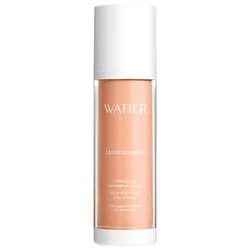
Lise Watier Luminessence Glow-Boosting Day Cream

Lise Watier Luminessence Glow-Boosting Day Cream

Efficacy100/100IrritancyHigh

Works for

Anti-aging
Niacinamide, Aloe barbadensis leaf juice + 3 more
Works well
What the product description says
“Niacinamide (Vitamin B3): Reduces the appearance of pores, fine lines, and irregularities.”
Source: Sephora CA

This product can help reduce and prevent fine lines and wrinkles, improve skin elasticity and firmness because it contains niacinamide.

Keep in mind that it typically takes at least 6 weeks to notice any results because the changes that are needed to improve fine lines and elasticity happen in the deeper layers of the skin. No topical anti-aging product can “erase” wrinkles or fully reverse signs of aging.

NiacinamideKey activeEffect: HighIs proven to be effective in reducing blemishes, evening out skin tone and helping to improve lines and wrinkles. It helps the skin to repair sun damage, calm down inflammation and keep maintain good levels of moisture. The concentration of about 2% is effective for supporting the skin barrier and evening out the skin tone. Concentration of 4-6% is better for helping with acne and balancing the sebum production~1–1.2%
Aloe barbadensis leaf juiceEffect: LowTraditionally used to treat sunburns, dermatitis and inflammation, but evidence for its effectiveness is lacking. The extract can contain humectants that help attract water into the skin~6.4–7.8%
Zinc gluconateEffect: Low, below effective doseTypically used to stabilize the product formulations. It is a salt of a polyhydroxy acid (PHA) and in larger concentrations, can help shed the dead cells from the skin surface revealing smoother skin. It can help attract water to the upper layer of the skin. Might to be helpful against acne and clogged pores. Could be helpful in neutralizing free radicals, but solid research is missing. Due to the zinc content, might help calm down inflammation in skin~0.3–0.5%
Copper gluconateEffect: Low, below effective doseTypically used to stabilize the product formulations. It is a salt of polyhydroxy acid (PHA) and in larger concentrations, can help shed the dead cells from the skin surface revealing smoother skin. It can help attract water to the upper layer of the skin. Might to be helpful against acne and clogged pores. Could be helpful in neutralizing free radicals, but solid research is missing~0.25–0.5%
TocopherolEffect: Low, below effective dosePure form of vitamin E. Can help moisturise and protect the skin from free radicals. Often used to help stabilise other ingredients or the formula itself~0.25–0.4%
Moisturizing
Side benefit the brand mentions · Niacinamide, Glycerin + 19 more
Works well
What the product description says
“day cream”
Source: Sephora CA

This product can help improve hydration of the skin with the two types of ingredients.

The first type is called “humectants”:
these ingredients help attract water. When humectants are on the surface of the skin, they “pull in” the moisture from the outside environment, or from within deeper layers of the skin. The following ingredients in this product do the job: biosaccharide gum-1, fructose.

This product also contains ingredients called “occlusives”. They help reduce the speed with which our skin loses moisture to the outside environment. These ingredients also help soften the upper layer of the skin, so it feels less tight and nicer to the touch. The following ingredients in this product do the job: caprylic/capric triglyceride, dimethicone.

The following ingredients in this product are especially good for supporting the skin barrier and helping with the hydration level: niacinamide

NiacinamideHeroEffect: HighIs proven to be effective in reducing blemishes, evening out skin tone and helping to improve lines and wrinkles. It helps the skin to repair sun damage, calm down inflammation and keep maintain good levels of moisture. The concentration of about 2% is effective for supporting the skin barrier and evening out the skin tone. Concentration of 4-6% is better for helping with acne and balancing the sebum production~1–1.2%
GlycerinKey active· HumectantEffect: HighOne of the best moisturizing ingredients. Naturally present in skin. It attracts water to the upper layer of the skin working as a humectant~4–4.9%
Caprylic/capric triglycerideKey active· Emollient, OcclusiveEffect: HighA good mix of fatty acids that forms a protective layer on the skin. Improves the shelf life of products. Derived from coconut and glycerin~3.1–3.8%
SqualaneKey active· Emollient, OcclusiveEffect: HighAn oil naturally present in skin. Works as an emollient to soften the skin and form a protective layer on its surface without a greasy feeling.~2.3–2.8%
DimethiconeKey active· Emollient, OcclusiveEffect: HighA silicone that helps to reduce water loss from the surface of the skin. Can temporarily "fill in" lines and wrinkles, absorb oil, and create a nice product finish~1.4–1.7%
Hydrolyzed hyaluronic acidKey active· HumectantEffect: HighOne of the best moisturizing ingredients. Attracts water into the upper layer of the skin. A version of it is naturally present in skin~0.45–0.65%
Magnesium aspartateKey activeEffect: MediumMight be helpful in restoring skin barrier function and calm down inflammation in skin~0.25–0.5%
Hydrolyzed jojoba estersKey activeEffect: HighHelps soften the upper layer of the skin~0.2–0.4%
Biosaccharide gum-1Key active· HumectantEffect: HighHelps attract water to the upper layer of the skin and is claimed to provide a longer-lasting hydration because of its ability to create a water-binding film on the surface of the skin~0.2–0.35%
FructoseKey active· HumectantEffect: HighHelps attract water to the upper layer of the skin~0.2–0.35%
Aloe barbadensis leaf juice· HumectantEffect: LowTraditionally used to treat sunburns, dermatitis and inflammation, but evidence for its effectiveness is lacking. The extract can contain humectants that help attract water into the skin~6.4–7.8%
C15-19 alkaneEffect: LowHelps soften the upper layer of the skin and create a nice product texture~1.8–2.1%
C12-16 alcohols· EmollientEffect: LowHelps soften the upper layer of the skin and improve the product's texture~1.4–1.8%
Pentylene glycol· EmollientEffect: LowUsed to preserve products, dissolve other ingredients and create a nice product texture~0.25–0.45%
Glyceryl caprylate· EmollientEffect: LowAn emollient that can also help water and oil mix together, as well as prevent bacteria growth in products~0.25–0.5%
Palmitic acid· EmollientEffect: LowAn emollient that is naturally present in skin and helps soften it~0.25–0.45%
Hydroxymethoxyphenyl decanoneEffect: LowAn anti-oxidant. Is also called 6-paradol. It might be able to neutralize free radicals in skin. The manufacturer claims that it is able to stimulate synthesis of hyaluronic acid in skin, but there is no evidence of effectiveness of this ingredient so far. The only evidence of efficacy for this ingredient so far come from small lab tests. This ingredient comes together with Caprylic/Capric Triglyceride as part of the complex called SymDecanox HA produced by a cosmetic ingredient supplier Symrise.~0.2–0.35%
LecithinEffect: Low, below effective doseUsed mostly for creating emulsions - helping oil and water mix together. Helps soften the upper layer of the skin~0.25–0.45%
TocopherolEffect: Low, below effective dosePure form of vitamin E. Can help moisturise and protect the skin from free radicals. Often used to help stabilise other ingredients or the formula itself~0.25–0.4%
Zinc gluconateUnder-dosedTypically used to stabilize the product formulations. It is a salt of a polyhydroxy acid (PHA) and in larger concentrations, can help shed the dead cells from the skin surface revealing smoother skin. It can help attract water to the upper layer of the skin. Might to be helpful against acne and clogged pores. Could be helpful in neutralizing free radicals, but solid research is missing. Due to the zinc content, might help calm down inflammation in skin~0.3–0.5%
Copper gluconateUnder-dosedTypically used to stabilize the product formulations. It is a salt of polyhydroxy acid (PHA) and in larger concentrations, can help shed the dead cells from the skin surface revealing smoother skin. It can help attract water to the upper layer of the skin. Might to be helpful against acne and clogged pores. Could be helpful in neutralizing free radicals, but solid research is missing~0.25–0.5%
Evens skin tone
Side benefit the brand mentions · Niacinamide, Zinc gluconate + 1 more
Works well
What the product description says
“brightens, smooths, and evens the look of skin”
Source: Sephora CA

This product can help reduce hypepigmentation and even out the skin tone because it contains the following effective ingredients: niacinamide

Keep in mind that you would need to apply any topical skincare targetted at hypigmentation consistently for a couple of months to get a result. No topical skincare product can help get rid of hyperpigmentation (including post-acne marks and age spots) instantly.

NiacinamideKey activeEffect: HighIs proven to be effective in reducing blemishes, evening out skin tone and helping to improve lines and wrinkles. It helps the skin to repair sun damage, calm down inflammation and keep maintain good levels of moisture. The concentration of about 2% is effective for supporting the skin barrier and evening out the skin tone. Concentration of 4-6% is better for helping with acne and balancing the sebum production~1–1.2%
Zinc gluconateEffect: Low, below effective doseTypically used to stabilize the product formulations. It is a salt of a polyhydroxy acid (PHA) and in larger concentrations, can help shed the dead cells from the skin surface revealing smoother skin. It can help attract water to the upper layer of the skin. Might to be helpful against acne and clogged pores. Could be helpful in neutralizing free radicals, but solid research is missing. Due to the zinc content, might help calm down inflammation in skin~0.3–0.5%
Copper gluconateEffect: Low, below effective doseTypically used to stabilize the product formulations. It is a salt of polyhydroxy acid (PHA) and in larger concentrations, can help shed the dead cells from the skin surface revealing smoother skin. It can help attract water to the upper layer of the skin. Might to be helpful against acne and clogged pores. Could be helpful in neutralizing free radicals, but solid research is missing~0.25–0.5%
Anti-blemish
Side benefit · Niacinamide, Aloe barbadensis leaf juice + 2 more
Works well

This product can help reduce breakouts and clogged pores because it contains the following ingredient: niacinamide. This ingredient is used for treating acne and can have a noticeable effect.

NiacinamideHeroEffect: HighIs proven to be effective in reducing blemishes, evening out skin tone and helping to improve lines and wrinkles. It helps the skin to repair sun damage, calm down inflammation and keep maintain good levels of moisture. The concentration of about 2% is effective for supporting the skin barrier and evening out the skin tone. Concentration of 4-6% is better for helping with acne and balancing the sebum production~1–1.2%
Aloe barbadensis leaf juiceEffect: LowTraditionally used to treat sunburns, dermatitis and inflammation, but evidence for its effectiveness is lacking. The extract can contain humectants that help attract water into the skin~6.4–7.8%
Zinc gluconateEffect: Low, below effective doseTypically used to stabilize the product formulations. It is a salt of a polyhydroxy acid (PHA) and in larger concentrations, can help shed the dead cells from the skin surface revealing smoother skin. It can help attract water to the upper layer of the skin. Might to be helpful against acne and clogged pores. Could be helpful in neutralizing free radicals, but solid research is missing. Due to the zinc content, might help calm down inflammation in skin~0.3–0.5%
Copper gluconateEffect: Low, below effective doseTypically used to stabilize the product formulations. It is a salt of polyhydroxy acid (PHA) and in larger concentrations, can help shed the dead cells from the skin surface revealing smoother skin. It can help attract water to the upper layer of the skin. Might to be helpful against acne and clogged pores. Could be helpful in neutralizing free radicals, but solid research is missing~0.25–0.5%
Anti-oxidation
Side benefit · Haematococcus pluvialis extract, Hydroxymethoxyphenyl decanone + 4 more
May help

This product contains antioxidants (haematococcus pluvialis extract) that can help neutralize free radicals in skin to lessen the damage it gets from the UV light (sun). There is some human evidence for this effect in skin, though it is smaller or less consistent than the evidence for the best antioxidants.

Haematococcus pluvialis extractKey activeEffect: MediumGreen algae extract that might contain antioxidant astaxanthin~0.5–0.75%
Hydroxymethoxyphenyl decanoneEffect: LowAn anti-oxidant. Is also called 6-paradol. It might be able to neutralize free radicals in skin. The manufacturer claims that it is able to stimulate synthesis of hyaluronic acid in skin, but there is no evidence of effectiveness of this ingredient so far. The only evidence of efficacy for this ingredient so far come from small lab tests. This ingredient comes together with Caprylic/Capric Triglyceride as part of the complex called SymDecanox HA produced by a cosmetic ingredient supplier Symrise.~0.2–0.35%
Zinc gluconateEffect: Low, below effective doseTypically used to stabilize the product formulations. It is a salt of a polyhydroxy acid (PHA) and in larger concentrations, can help shed the dead cells from the skin surface revealing smoother skin. It can help attract water to the upper layer of the skin. Might to be helpful against acne and clogged pores. Could be helpful in neutralizing free radicals, but solid research is missing. Due to the zinc content, might help calm down inflammation in skin~0.3–0.5%
Copper gluconateEffect: Low, below effective doseTypically used to stabilize the product formulations. It is a salt of polyhydroxy acid (PHA) and in larger concentrations, can help shed the dead cells from the skin surface revealing smoother skin. It can help attract water to the upper layer of the skin. Might to be helpful against acne and clogged pores. Could be helpful in neutralizing free radicals, but solid research is missing~0.25–0.5%
Tocopheryl acetateEffect: Low, below effective doseA more stable but less bio-available form of vitamin E compared to Tocopherol. Might help moisturize and protect the skin from free radicals, but mostly used in low concentrations to stabilize other ingredients.~0.2–0.4%
TocopherolUnder-dosedPure form of vitamin E. Can help moisturise and protect the skin from free radicals. Often used to help stabilise other ingredients or the formula itself~0.25–0.4%

Can it cause trouble?

Irritancy
10 strong irritants: Microcitrus australasica fruit extract, Withania somnifera root extract + 8 more — patch-test recommended
High risk
We flagged 28 ingredients with irritancy potential. Severity depends on your sensitivity threshold; the table lists the worst offenders first.
IngredientFunctionIrritationEst. amount
Microcitrus australasica fruit extractMost likely used for its fragrance. Can be irritating and lead to photosensitivityHigh~0.3–0.6%est.
Withania somnifera root extract—High~0.3–0.55%est.
Sodium anisateUsed as a fragranceHigh~0.2–0.4%est.
Benzyl alcoholA preservative. Can be used to mask unpleasant smell. Can be irritatingHigh~0.15–0.3%est.
ParfumAn aromatic blend of unspecified and possibly irritating ingredientsHigh~0.15–0.3%est.
Benzyl salicylateA fragrance. Is a likely irritantHigh~0.15–0.25%est.
CitronellolA fragrance. Can be irritatingHigh~0.1–0.2%est.
GeraniolA fragrance. Can be irritatingHigh~0.15–0.25%est.
HydroxycitronellalA fragrance. A likely allergen and can be irritatingHigh~0.1–0.2%est.
LinaloolA fragrance. Can be irritatingHigh~0.05–0.15%est.
LimoneneA common frangrance that can easily irritate skin, especially if exposed to air, light or heatHigh~0.05–0.1%est.
Aloe barbadensis leaf juiceTraditionally used to treat sunburns, dermatitis and inflammation, but evidence for its effectiveness is lacking. The extract can contain humectants that help attract water into the skinMedium~6.4–7.8%est.
Caprylic/capric triglycerideA good mix of fatty acids that forms a protective layer on the skin. Improves the shelf life of products. Derived from coconut and glycerinMedium~3.1–3.8%est.
C12-16 alcoholsHelps soften the upper layer of the skin and improve the product's textureMedium~1.4–1.8%est.
Haematococcus pluvialis extractGreen algae extract that might contain antioxidant astaxanthinMedium~0.5–0.75%est.
Zinc gluconateTypically used to stabilize the product formulations. It is a salt of a polyhydroxy acid (PHA) and in larger concentrations, can help shed the dead cells from the skin surface revealing smoother skin. It can help attract water to the upper layer of the skin. Might to be helpful against acne and clogged pores. Could be helpful in neutralizing free radicals, but solid research is missing. Due to the zinc content, might help calm down inflammation in skinMedium~0.3–0.5%est.
Copper gluconateTypically used to stabilize the product formulations. It is a salt of polyhydroxy acid (PHA) and in larger concentrations, can help shed the dead cells from the skin surface revealing smoother skin. It can help attract water to the upper layer of the skin. Might to be helpful against acne and clogged pores. Could be helpful in neutralizing free radicals, but solid research is missingMedium~0.25–0.5%est.
Tocopheryl acetateA more stable but less bio-available form of vitamin E compared to Tocopherol. Might help moisturize and protect the skin from free radicals, but mostly used in low concentrations to stabilize other ingredients.Medium~0.2–0.4%est.
HydroxyacetophenoneUsed to increase effectiveness of preservativesMedium~0.2–0.4%est.
Sodium stearoyl glutamateHelps oil and water mix togetherMedium~0.25–0.45%est.
EthylhexylglycerinA preservativeMedium~0.2–0.35%est.
PhosphatidylcholineUsed to enhance the delivery of other ingredientsMedium~0.2–0.4%est.
Phytic acidAn alpha-hydroxy acid (AHA), but is mostly used to stabilize product formulations in cosmeticsMedium~0.2–0.4%est.
Sodium acrylates copolymerUsed to create a thicker product consistencyMedium~0.15–0.3%est.
Pentylene glycolUsed to preserve products, dissolve other ingredients and create a nice product textureMedium~0.25–0.45%est.
Sodium levulinateA preservativeMedium~0.2–0.35%est.
Citric acidCan work as an exfoliant but is typically used to adjust the product pHMedium~0.2–0.4%est.
Potassium sorbateA preservativeMedium~0.25–0.4%est.
Comedogenic
Clean of flagged comedogenic ingredients
None flagged

User reviews

Would you recommend?
No community reviews yet.

Be the first — your take helps the next person decide.

Ingredients

Filter by role to see what each ingredient is doing.

Water~45–55%
Formula
Irritation risk
Low

Plain old water

More about Water
Aloe barbadensis leaf juice~6.4–7.8%
Irritant · medium
Irritation risk
Medium
Works for
MoisturizingAntibacterialAnti-inflammatoryReduces irritationReduces rednessAnti-blemishAnti-aging

Traditionally used to treat sunburns, dermatitis and inflammation, but evidence for its effectiveness is lacking. The extract can contain humectants that help attract water into the skin

More about Aloe barbadensis leaf juice
Glycerin~4–4.9%
Key active
Irritation risk
Low
Works for
Moisturizing

One of the best moisturizing ingredients. Naturally present in skin. It attracts water to the upper layer of the skin working as a humectant

More about Glycerin
Caprylic/capric triglyceride~3.1–3.8%
Key activeIrritant · medium
Irritation risk
Medium
Works for
Moisturizing

A good mix of fatty acids that forms a protective layer on the skin. Improves the shelf life of products. Derived from coconut and glycerin

More about Caprylic/capric triglyceride
Squalane~2.3–2.8%
Key active
Irritation risk
Low
Works for
Moisturizing

An oil naturally present in skin. Works as an emollient to soften the skin and form a protective layer on its surface without a greasy feeling.

More about Squalane
C15-19 alkane~1.8–2.1%
Formula
Irritation risk
Low
Works for
Moisturizing

Helps soften the upper layer of the skin and create a nice product texture

More about C15-19 alkane
C12-16 alcohols~1.4–1.8%
Irritant · medium
Irritation risk
Medium
Works for
Moisturizing

Helps soften the upper layer of the skin and improve the product's texture

More about C12-16 alcohols
Dimethicone~1.4–1.7%
Key active
Irritation risk
Low
Works for
MoisturizingMattifying

A silicone that helps to reduce water loss from the surface of the skin. Can temporarily "fill in" lines and wrinkles, absorb oil, and create a nice product finish

More about Dimethicone
Niacinamide~1–1.2%
Hero · Moisturizing, Anti-blemish
Irritation risk
Low
Works for
Evens skin toneMoisturizingAnti-blemishAnti-agingReduces irritationAnti-inflammatoryReduces rednessAntibacterial

Is proven to be effective in reducing blemishes, evening out skin tone and helping to improve lines and wrinkles. It helps the skin to repair sun damage, calm down inflammation and keep maintain good levels of moisture. The concentration of about 2% is effective for supporting the skin barrier and evening out the skin tone. Concentration of 4-6% is better for helping with acne and balancing the sebum production

More about Niacinamide
Panax quinquefolius root extract~0.7–1%
Formula
Haematococcus pluvialis extract~0.5–0.75%
Key activeIrritant · medium
Irritation risk
Medium
Works for
Anti-oxidation

Green algae extract that might contain antioxidant astaxanthin

More about Haematococcus pluvialis extract
Hydrolyzed hyaluronic acid~0.45–0.65%
Key active
Irritation risk
Low
Works for
Moisturizing

One of the best moisturizing ingredients. Attracts water into the upper layer of the skin. A version of it is naturally present in skin

More about Hydrolyzed hyaluronic acid
Microcitrus australasica fruit extract~0.3–0.6%
Irritant · high
Irritation risk
High

Most likely used for its fragrance. Can be irritating and lead to photosensitivity

More about Microcitrus australasica fruit extract
Withania somnifera root extract~0.3–0.55%
Irritant · high
Magnesium aspartate~0.25–0.5%
Key active
Irritation risk
Low
Works for
MoisturizingAnti-inflammatory

Might be helpful in restoring skin barrier function and calm down inflammation in skin

More about Magnesium aspartate
Zinc gluconate~0.3–0.5%
Under-dosedIrritant · medium
Irritation risk
Medium
Works for
MoisturizingAnti-inflammatoryExfoliationEvens skin toneAnti-oxidationAnti-blemishAnti-aging

Typically used to stabilize the product formulations. It is a salt of a polyhydroxy acid (PHA) and in larger concentrations, can help shed the dead cells from the skin surface revealing smoother skin. It can help attract water to the upper layer of the skin. Might to be helpful against acne and clogged pores. Could be helpful in neutralizing free radicals, but solid research is missing. Due to the zinc content, might help calm down inflammation in skin

More about Zinc gluconate
Copper gluconate~0.25–0.5%
Under-dosedIrritant · medium
Irritation risk
Medium
Works for
MoisturizingExfoliationAnti-agingAnti-oxidationAnti-blemishEvens skin tone

Typically used to stabilize the product formulations. It is a salt of polyhydroxy acid (PHA) and in larger concentrations, can help shed the dead cells from the skin surface revealing smoother skin. It can help attract water to the upper layer of the skin. Might to be helpful against acne and clogged pores. Could be helpful in neutralizing free radicals, but solid research is missing

More about Copper gluconate
Xanthan gum~0.25–0.5%
Formula
Irritation risk
Low
Works for
Cleansing

Used to create a thicker product consistency

More about Xanthan gum
Tocopherol~0.25–0.4%
Under-dosed
Irritation risk
Low
Works for
Anti-oxidationAnti-inflammatoryAnti-agingMoisturizing

Pure form of vitamin E. Can help moisturise and protect the skin from free radicals. Often used to help stabilise other ingredients or the formula itself

More about Tocopherol
Tocopheryl acetate~0.2–0.4%
Irritant · medium
Irritation risk
Medium
Works for
Anti-oxidation

A more stable but less bio-available form of vitamin E compared to Tocopherol. Might help moisturize and protect the skin from free radicals, but mostly used in low concentrations to stabilize other ingredients.

More about Tocopheryl acetate
Hydrogenated lecithin~0.25–0.4%
Formula
Irritation risk
Low
Works for
Cleansing

Helps to retain moisture by creating a protective barrier on the skin. Rich in fatty acids. Improves product texture and helps with the penetration of other ingredients.

More about Hydrogenated lecithin
Hydroxyacetophenone~0.2–0.4%
Irritant · medium
Irritation risk
Medium

Used to increase effectiveness of preservatives

More about Hydroxyacetophenone
Hydrolyzed jojoba esters~0.2–0.4%
Key active
Irritation risk
Low
Works for
Moisturizing

Helps soften the upper layer of the skin

More about Hydrolyzed jojoba esters
Sodium stearoyl glutamate~0.25–0.45%
Irritant · medium
Irritation risk
Medium
Works for
Cleansing

Helps oil and water mix together

More about Sodium stearoyl glutamate
Synthetic fluorphlogopite~0.2–0.4%
Formula
Irritation risk
Low

A mineral that is used as an optical filter (makes the skin looks nicer through light reflection) and to improve the texture of cosmetic products

More about Synthetic fluorphlogopite
Lecithin~0.25–0.45%
Formula
Irritation risk
Low
Works for
CleansingMoisturizing

Used mostly for creating emulsions - helping oil and water mix together. Helps soften the upper layer of the skin

More about Lecithin
Ethylhexylglycerin~0.2–0.35%
Irritant · medium
Irritation risk
Medium

A preservative

More about Ethylhexylglycerin
Phosphatidylcholine~0.2–0.4%
Irritant · medium
Irritation risk
Medium
Works for
Cleansing

Used to enhance the delivery of other ingredients

More about Phosphatidylcholine
Phytic acid~0.2–0.4%
Irritant · medium
Irritation risk
Medium

An alpha-hydroxy acid (AHA), but is mostly used to stabilize product formulations in cosmetics

More about Phytic acid
Fructose~0.2–0.35%
Key active
Irritation risk
Low
Works for
Moisturizing

Helps attract water to the upper layer of the skin

More about Fructose
Sodium acrylates copolymer~0.15–0.3%
Irritant · medium
Irritation risk
Medium

Used to create a thicker product consistency

More about Sodium acrylates copolymer
Hydroxymethoxyphenyl decanone~0.2–0.35%
Formula
Irritation risk
Low
Works for
MoisturizingAnti-oxidation

An anti-oxidant. Is also called 6-paradol. It might be able to neutralize free radicals in skin. The manufacturer claims that it is able to stimulate synthesis of hyaluronic acid in skin, but there is no evidence of effectiveness of this ingredient so far. The only evidence of efficacy for this ingredient so far come from small lab tests. This ingredient comes together with Caprylic/Capric Triglyceride as part of the complex called SymDecanox HA produced by a cosmetic ingredient supplier Symrise.

More about Hydroxymethoxyphenyl decanone
Pentylene glycol~0.25–0.45%
Irritant · medium
Irritation risk
Medium
Works for
Moisturizing

Used to preserve products, dissolve other ingredients and create a nice product texture

More about Pentylene glycol
Biosaccharide gum-1~0.2–0.35%
Key active
Irritation risk
Low
Works for
Moisturizing

Helps attract water to the upper layer of the skin and is claimed to provide a longer-lasting hydration because of its ability to create a water-binding film on the surface of the skin

More about Biosaccharide gum-1
Sodium levulinate~0.2–0.35%
Irritant · medium
Irritation risk
Medium

A preservative

More about Sodium levulinate
Glyceryl caprylate~0.25–0.5%
Formula
Irritation risk
Low
Works for
CleansingMoisturizing

An emollient that can also help water and oil mix together, as well as prevent bacteria growth in products

More about Glyceryl caprylate
Citric acid~0.2–0.4%
Irritant · medium
Irritation risk
Medium

Can work as an exfoliant but is typically used to adjust the product pH

More about Citric acid
Potassium sorbate~0.25–0.4%
Irritant · medium
Irritation risk
Medium

A preservative

More about Potassium sorbate
Sodium anisate~0.2–0.4%
Irritant · high
Irritation risk
High

Used as a fragrance

More about Sodium anisate
Sodium benzoate~0.2–0.4%
Formula
Irritation risk
Low

A preservative

More about Sodium benzoate
Benzyl alcohol~0.15–0.3%
Irritant · high
Irritation risk
High

A preservative. Can be used to mask unpleasant smell. Can be irritating

More about Benzyl alcohol
Palmitic acid~0.25–0.45%
Formula
Irritation risk
Low
Works for
CleansingMoisturizing

An emollient that is naturally present in skin and helps soften it

More about Palmitic acid
Parfum~0.15–0.3%
Irritant · high
Irritation risk
High

An aromatic blend of unspecified and possibly irritating ingredients

More about Parfum
Benzyl salicylate~0.15–0.25%
Irritant · high
Irritation risk
High

A fragrance. Is a likely irritant

More about Benzyl salicylate
Citronellol~0.1–0.2%
Irritant · high
Irritation risk
High

A fragrance. Can be irritating

More about Citronellol
Geraniol~0.15–0.25%
Irritant · high
Irritation risk
High

A fragrance. Can be irritating

More about Geraniol
Hydroxycitronellal~0.1–0.2%
Irritant · high
Irritation risk
High

A fragrance. A likely allergen and can be irritating

More about Hydroxycitronellal
Linalool~0.05–0.15%
Irritant · high
Irritation risk
High

A fragrance. Can be irritating

More about Linalool
Limonene~0.05–0.1%
Irritant · high
Irritation risk
High

A common frangrance that can easily irritate skin, especially if exposed to air, light or heat

More about Limonene
Ingredient list view

Water, Aloe barbadensis leaf juice, Glycerin, Caprylic/capric triglyceride, Squalane, C15-19 alkane, C12-16 alcohols, Dimethicone, Niacinamide, Panax quinquefolius root extract, Haematococcus pluvialis extract, Hydrolyzed hyaluronic acid, Microcitrus australasica fruit extract, Withania somnifera root extract, Magnesium aspartate, Zinc gluconate, Copper gluconate, Xanthan gum, Tocopherol, Tocopheryl acetate, Hydrogenated lecithin, Hydroxyacetophenone, Hydrolyzed jojoba esters, Sodium stearoyl glutamate, Synthetic fluorphlogopite, Lecithin, Ethylhexylglycerin, Phosphatidylcholine, Phytic acid, Fructose, Sodium acrylates copolymer, Hydroxymethoxyphenyl decanone, Pentylene glycol, Biosaccharide gum-1, Sodium levulinate, Glyceryl caprylate, Citric acid, Potassium sorbate, Sodium anisate, Sodium benzoate, Benzyl alcohol, Palmitic acid, Parfum, Benzyl salicylate, Citronellol, Geraniol, Hydroxycitronellal, Linalool, Limonene

Worth comparing, line by line.

Match % combines shared ingredients, the first five ingredients, shared actives and hero ingredients, irritancy (lower counts in the alternative's favour), texture and body area. Only products in the same routine step are compared.

Side-by-side comparison of this product against its closest alternatives
Lise WatierLuminessence Glow-Boosting Day CreamYOUR PRODUCTSCINICPinktamin Tone-Up CreamLa MuseDaily Essentials Regenerating CreamQirinessCaresse Éclat Parfait Global Antioxidant & Unifying Anti-Marks Cream
Match—90%90%90%
Price—$17.70$27.60$67.85
Shared key ingredients—6 of 146 of 146 of 14
Key difference—MadecassosideAdenosineSea Daffodil Plant Extract
Irritancy High Medium Medium Medium
Drying alcohol—— Contains drying alcohol —
View product Shop Shop Shop

More alternatives: Remedy Barrier Repairing Rich CreamEvereden Kids Multi-Vitamin Face Cream

Cheaper alternatives? See how this stacks up against similar formulas.
We compare ingredient profiles across our catalog — pick the closest match for your budget.
Open dupe finder

Sources cited in this review

Every concentration estimate and effectiveness label is anchored to one of these 25 studies and safety reviews.

  1. 1
  2. 2
  3. 3
  4. 4
  5. 5
  6. 6
Lise Watier Luminessence Glow-Boosting Day Cream
Lise WatierLuminessence Glow-Boosting Day Cream