Works for
1 of 1 advertised claim delivered
Moisturizing32 ingredients credited for this claimStrong support
“Yoghurt night cream”
This product can help improve hydration of the skin with the two types of ingredients.
The first type is called “humectants”:
these ingredients help attract water.
When humectants are on the surface of the skin, they “pull in” the moisture from the outside environment, or from
within deeper layers of the skin. The following ingredients in this product do the job:
galactoarabinan, glycerin.
This product also contains ingredients called “occlusives”. They help reduce the speed with which our skin loses moisture to the outside environment. These ingredients also help soften the upper layer of the skin, so it feels less tight and nicer to the touch. The following ingredients in this product do the job: glycine soja oil, glycine soja sterols.
The following ingredients in this product are especially good for supporting the skin barrier and helping with the hydration level: panthenol, urea
Anti-agingNot advertised by the brand · 5 ingredients credited for this claimModerate support
This product contains serine. This ingredient might be able to help reduce and prevent fine lines and wrinkles, improve skin elasticity and firmness, but there is not enough evidence that it actually works.
Can it cause trouble?
Irritancy4 strong irritants: Menthyl lactate, Parfum + 2 more — patch-test recommendedHigh risk
Comedogenic4 ingredients rated 2 or more on the 0–5 pore-clogging scale4 flagged


User reviews
Be the first — your take helps the next person decide.
Ingredients
Filter by role to see what each ingredient is doing.
Water~45–55%
Glycerin~5.6–6.9%
- Irritation risk
- Low
One of the best moisturizing ingredients. Naturally present in skin. It attracts water to the upper layer of the skin working as a humectant
More about GlycerinGlyceryl stearate citrate~3.9–4.8%
- Irritation risk
- Low
Helps oil and water mix together while softening the upper layer of the skin
More about Glyceryl stearate citrateHexyldecyl stearate~3.3–4.1%
- Irritation risk
- Medium
Helps create a nice product feeling on the skin and help soften its upper layer
More about Hexyldecyl stearateTriheptanoin~2.4–2.9%
- Irritation risk
- Low
A synthetic triglyceride. Helps soften the upper layer of the skin
More about TriheptanoinBehenyl alcohol~2.1–2.5%
- Irritation risk
- Low
Non-drying alcohol that helps water and oil mix together. Also serves as an emollient
More about Behenyl alcoholGlyceryl stearate~1.7–2.1%
- Irritation risk
- Low
An emollient that softens the skin and forms a protective layer on its surface. Helps water and oil mix together
More about Glyceryl stearateIsodecyl neopentanoate~1.6–1.9%
- Irritation risk
- Low
An emollient that helps soften the skin. It also forms a protective on its surface to reduce water loss.
More about Isodecyl neopentanoateHydrogenated palm kernel glycerides~1.3–1.6%
- Irritation risk
- Low
Help soften the upper layer of the skin
More about Hydrogenated palm kernel glyceridesAcacia decurrens/jojoba/sunflower seed cera/polyglyceryl-3 esters~1–1.2%
- Irritation risk
- Low
Lecithin~0.75–1.1%
- Irritation risk
- Low
Used mostly for creating emulsions - helping oil and water mix together. Helps soften the upper layer of the skin
More about LecithinSimmondsia chinensis seed oil~0.65–0.95%
- Irritation risk
- Medium
Softens the upper layer of skin and helps restore the healthy skin barrier. Has shown to help calm down inflammation in skin. It is a stable oil, meaning that it retains its properties even when exposed to air.
More about Simmondsia chinensis seed oilAloe barbadensis leaf juice powder~0.5–0.75%
- Irritation risk
- Medium
Traditionally used to treat sunburns, dermatitis and inflammation, but evidence for its effectiveness is lacking. The extract can contain humectants that help attract water into the skin
More about Aloe barbadensis leaf juice powderAcrylates/c10-30 alkyl acrylate crosspolymer~0.5–0.75%
- Irritation risk
- Medium
Maintains the texture of skincare products. Allows the product to spread evenly. Helps oil and water mix together
More about Acrylates/c10-30 alkyl acrylate crosspolymerAlgin~0.45–0.65%
- Irritation risk
- Low
- Comedogenicity
- 3/5
Used to thicken product formulation. Can help attract water to the upper layer of the skin
More about AlginAlpha-glucan oligosaccharide~0.5–0.75%
- Irritation risk
- Low
Helps attract water to the upper layer of the skin
More about Alpha-glucan oligosaccharideAscorbic acid~0.4–0.6%
- Irritation risk
- High
The most well-researched antioxidant that works in skin. Helps neutralize free radicals supporting collagen production, helping to even out the skin tone and preventing early signs of aging
More about Ascorbic acidAscorbyl tetraisopalmitate~0.4–0.6%
- Irritation risk
- Medium
A vitamin C derivative. Studies show that is might be effective in reducing hyperpigmentation, but there are no studies confirming that it is effectively converted into the bioavailable form of Vitamin C in skin. It is not clear how this derivative compares in effectiveness to the topical application of bioavailable form of vitamin C (L-ascorbic acid)
More about Ascorbyl tetraisopalmitateBisabolol~0.3–0.5%
- Irritation risk
- Low
An active component of chamomile plant that historically has been used to calm down irritated skin. A recent study shows that bisabolol indeed can have some anti-inflammatory effect on skin, even though conclusive data is lacking. Bisabolol has a sweet floral scent and can be added to products for its aromatic properties
More about BisabololCaprylyl glycol~0.3–0.6%
- Irritation risk
- Medium
Helps preserve products and creates a nice product texture
More about Caprylyl glycolCetearyl alcohol~0.3–0.6%
- Irritation risk
- Low
- Comedogenicity
- 2/5
A non-drying alcohol. Works as an emollient. Helps water and oil mix together and creates a nice product texture
More about Cetearyl alcoholDisodium phosphate~0.25–0.5%
- Irritation risk
- Low
Helps adjust the product pH and stabilize the formulation
More about Disodium phosphateDistarch phosphate~0.25–0.5%
- Irritation risk
- Low
Galactoarabinan~0.25–0.5%
- Irritation risk
- Medium
Helps attract water to the upper layer of the skin
More about GalactoarabinanGlyceryl polyacrylate~0.3–0.5%
- Irritation risk
- Low
Helps to create a nice product texture and spread the product more easily on the skin
More about Glyceryl polyacrylateGlycine soja oil~0.25–0.5%
- Irritation risk
- Medium
- Comedogenicity
- 2/5
A good emollient that helps soften the skin and helps repair its barrier function. It can clog pores if used in high concentrations.
More about Glycine soja oilGlycine soja sterols~0.3–0.55%
- Irritation risk
- Low
An emollient that helps soften the skin
More about Glycine soja sterolsHydrogenated palm glycerides~0.3–0.55%
- Irritation risk
- Low
An emollient that softens the skin
More about Hydrogenated palm glyceridesHydrolyzed sodium hyaluronate~0.25–0.45%
- Irritation risk
- Low
Attracts water into the upper layer of the skin
More about Hydrolyzed sodium hyaluronateHydroxyethyl acrylate/sodium acryloyldimethyl taurate copolymer~0.25–0.5%
- Irritation risk
- Medium
A gelling agent that thickens the product consistency and leaves the skin with a velvety finish
More about Hydroxyethyl acrylate/sodium acryloyldimethyl taurate copolymerLactic acid~0.25–0.45%
- Irritation risk
- Medium
An exfoliating and moisturizing alpha-hydroxy acid (AHA). Typically causes less irritation than other AHAs, for example, glycolic acid. At high concentrations (about 15%), lactic acid can help reduce lines and wrinkles. Recent studies show that lactic acid can support the "good" bacteria living on skin's surface (healthy skin microbiome)
More about Lactic acidLactobacillus~0.25–0.45%
- Irritation risk
- Low
A non-living ingredient made by fermentation with the bacteria Lactobacillus. It can help attract water to the upper layer of the skin and might help reduce inflammation
More about LactobacillusLonicera caprifolium flower extract~0.2–0.4%
- Irritation risk
- High
A plant extract that might help neutralize free radicals in skin. Can contain volalite oils and be irritating
More about Lonicera caprifolium flower extractLonicera japonica flower extract~0.25–0.45%
- Irritation risk
- High
A plant extract that might help neutralize free radicals in skin. Can contain volalite oils and be irritating
More about Lonicera japonica flower extractMaltodextrin~0.25–0.5%
- Irritation risk
- Low
Used to stabilize the product formulation and can help absorb oil
More about MaltodextrinMenthyl lactate~0.25–0.5%
Panthenol~0.25–0.45%
- Irritation risk
- Low
Helps attract water to the upper layer of the skin and can help improve skin barrier function
More about PanthenolParfum~0.25–0.45%
- Irritation risk
- High
An aromatic blend of unspecified and possibly irritating ingredients
More about ParfumPentylene glycol~0.3–0.55%
- Irritation risk
- Medium
Used to preserve products, dissolve other ingredients and create a nice product texture
More about Pentylene glycolPolyglyceryl-3 diisostearate~0.3–0.5%
- Irritation risk
- Medium
- Comedogenicity
- 3/5
Helps oil and water mix together
More about Polyglyceryl-3 diisostearatePolymnia sonchifolia root juice~0.25–0.45%
- Irritation risk
- High
A plant extract that helps attract water to the upper layer of the skin and might have some anti-oxidant properties
More about Polymnia sonchifolia root juicePotassium phosphate~0.25–0.5%
Pullulan~0.25–0.5%
- Irritation risk
- High
Creates a thin drying film on the skin resulting in a short-term tightening effect
More about PullulanRosmarinus officinalis leaf extract~0.25–0.45%
- Irritation risk
- High
Can be helpful in reducing inflammation in skin, including inflamed acne. It can be irritating
More about Rosmarinus officinalis leaf extractSalicylic acid~0.25–0.45%
- Irritation risk
- High
Used for skin exfoliation. It has an anti-inflammatory and anti-bacterial effect, helps to unclog pores, prevent blemishes and speed up healing of the existing ones. Sometimes referred to as a BHA (beta-hydroxy acid)
More about Salicylic acidSalvia hispanica seed oil~0.25–0.45%
- Irritation risk
- Low
Chia seed oil. Helps to soften the upper layer of the skin and might be helpful in repairing skin barrier
More about Salvia hispanica seed oilSerine~0.25–0.45%
- Irritation risk
- Low
An amino-acid that helps to attract water to the upper layer of the skin. In combination with other amino-acids, might help to reduce fine lines and wrinkles
More about SerineSodium carboxymethyl beta-glucan~0.65–1%
- Irritation risk
- Low
Helps thicken the product formulation and create a gel-like texture
More about Sodium carboxymethyl beta-glucanSodium hyaluronate~0.25–0.45%
- Irritation risk
- Low
One of the best moisturizing ingredients. Attracts water into the upper layer of the skin
More about Sodium hyaluronateSodium hydroxide~0.25–0.45%
Tetrasodium glutamate diacetate~0.25–0.45%
- Irritation risk
- Low
Helps stabilize the product formulation
More about Tetrasodium glutamate diacetateTocopherol~0.25–0.45%
- Irritation risk
- Low
Pure form of vitamin E. Can help moisturise and protect the skin from free radicals. Often used to help stabilise other ingredients or the formula itself
More about TocopherolTocopheryl acetate~0.25–0.45%
- Irritation risk
- Medium
A more stable but less bio-available form of vitamin E compared to Tocopherol. Might help moisturize and protect the skin from free radicals, but mostly used in low concentrations to stabilize other ingredients.
More about Tocopheryl acetateTrehalose~0.25–0.45%
- Irritation risk
- Low
A sugar that attracts water to the upper layer of the skin
More about TrehaloseUrea~0.2–0.4%
- Irritation risk
- Low
Naturally present in skin (urea makes up about 7% of natural moisturizing factors in skin). Attracts water to the upper layer of the skin. Also has a positive effect on the skin barrier beyond the humectant action. Can enhance penetration of other ingredients. Is an exfoliating ingredient when used in high concentrations
More about UreaXanthan gum~0.2–0.35%
- Irritation risk
- Low
Used to create a thicker product consistency
More about Xanthan gumYogurt powder~0.2–0.35%
- Irritation risk
- Low
Zingiber officinale root extract~0.15–0.25%
- Irritation risk
- High
A plant extract that can contain an irritating essential oil. Might have some anti-oxidant effect, but evidence is lacking
More about Zingiber officinale root extractBenzyl alcohol~0.15–0.3%
- Irritation risk
- High
A preservative. Can be used to mask unpleasant smell. Can be irritating
More about Benzyl alcoholPhenoxyethanol~0.15–0.3%
- Irritation risk
- Low
A preservative. It helps prevent bacterial growth in cosmetic products
More about PhenoxyethanolSorbic acid~0.15–0.25%
Ingredient list view
Water, Glycerin, Glyceryl stearate citrate, Hexyldecyl stearate, Triheptanoin, Behenyl alcohol, Glyceryl stearate, Isodecyl neopentanoate, Hydrogenated palm kernel glycerides, Acacia decurrens/jojoba/sunflower seed cera/polyglyceryl-3 esters, Lecithin, Simmondsia chinensis seed oil, Aloe barbadensis leaf juice powder, Acrylates/c10-30 alkyl acrylate crosspolymer, Algin, Alpha-glucan oligosaccharide, Ascorbic acid, Ascorbyl tetraisopalmitate, Bisabolol, Caprylyl glycol, Cetearyl alcohol, Disodium phosphate, Distarch phosphate, Galactoarabinan, Glyceryl polyacrylate, Glycine soja oil, Glycine soja sterols, Hydrogenated palm glycerides, Hydrolyzed sodium hyaluronate, Hydroxyethyl acrylate/sodium acryloyldimethyl taurate copolymer, Lactic acid, Lactobacillus, Lonicera caprifolium flower extract, Lonicera japonica flower extract, Maltodextrin, Menthyl lactate, Panthenol, Parfum, Pentylene glycol, Polyglyceryl-3 diisostearate, Polymnia sonchifolia root juice, Potassium phosphate, Pullulan, Rosmarinus officinalis leaf extract, Salicylic acid, Salvia hispanica seed oil, Serine, Sodium carboxymethyl beta-glucan, Sodium hyaluronate, Sodium hydroxide, Tetrasodium glutamate diacetate, Tocopherol, Tocopheryl acetate, Trehalose, Urea, Xanthan gum, Yogurt powder, Zingiber officinale root extract, Benzyl alcohol, Phenoxyethanol, Sorbic acid
Compare prices
Retailers ranked by price — lowest first.
Affiliate links · prices updated regularly · As an Amazon Associate, WIMJ earns from qualifying purchases.
Worth comparing, line by line.
Match % combines shared ingredients, the first five ingredients, shared actives and hero ingredients, irritancy (lower counts in the alternative's favour), texture and body area. Only products in the same routine step are compared.
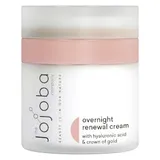
| KORRESYoghurt night creamYOUR PRODUCT | Medipharma CosmeticsHaut in Balance Pigment/Age Spot Reducing Treatment Cream | CeraVePsoriasis Moisturizing Cream | The Jojoba CompanyOvernight Renewal Cream | |
|---|---|---|---|---|
| Match | — | 74% | 71% | 70% |
| Price | $26.44 | $27.50+$1.06 | $21.82−$4.62 | $52.87+$26.43 |
| Shared key ingredients | — | 6 of 21 | 4 of 21 | 6 of 21 |
| Key difference | — | Sunflower Seed Oil | Niacinamide | Beta-Glucan |
| Irritancy | High | Medium | Low | High |
| Drying alcohol | — | Contains drying alcohol | — | — |
| View product | Shop | Shop | Shop |


Sources cited in this review
Every concentration estimate and effectiveness label is anchored to one of these 27 studies and safety reviews.
- 1
- 2Safety Assessment of Alkyl Esters as Used in Cosmeticsjournals.sagepub.com
- 3
- 4
- 5
- 6

Affiliate links · As an Amazon Associate, WIMJ earns from qualifying purchases.