Works for:
based on ingredients and %- Anti-aging
- Anti-oxidation
- Moisturizing
- Evens skin tone
Can it cause trouble?
- Irritation risk: high
- Comedogenic risk ingredients: 1
Key actives


Anti-aging
What does the product description say?
Anti-aging peptides, collagen, niacin, vitamins and extracts work to visibly diffuse and minimize large pores, fine lines, and wrinkles while aiding in the protection of your skin from environmental factors that cause premature aging
Source: Ulta
This product can help reduce and prevent fine lines and wrinkles, improve skin elasticity and firmness because it contains adenosine.
These ingredients in the product can also be helpful, even though there is less evidence for their effectiveness: folic acid, palmitoyl oligopeptide, palmitoyl tetrapeptide-7.
Keep in mind that it typically takes at least 6 weeks to notice any results because the changes that are needed to improve fine lines and elasticity happen in the deeper layers of the skin. No topical anti-aging product can “erase” wrinkles or fully reverse signs of aging.
Might help improve cell turnover and reduce inflammation in skin. One study shows that the ingredients might be able to help reduce dynamic wrinkles (for example, in the corners of the eyes or on the forehead)
A type of peptide. Peptides are excellent moisturizers and might be able support collagen production reducing fine lines and wrinkles
A type of peptide. Peptides are excellent moisturizers and might be able support collagen production reducing fine lines and wrinkles
Can help stimulate collagen production in skin. While available studies are promising, more research is needed to confirm the efficacy in skin
Might be helpful in reducing fine lines and wrinkles, as well as lightening the skin, but solid evidence is missing. Could somewhat help in reducing the darkness of the under-eye area. Helps to neutralise free radicals in skin
Coenzyme Q10. It helps neutralize free radicals in skin, improves skin hydration and might be helpful agains fine lines and wrinkles. It can be an allergen
Plant extract that helps the skin to attract water and make it more smooth for touch. Also shows promise of anti-aging properties, but research is not extensive yet
Is proven to be effective in reducing blemishes, evening out skin tone and helping to improve lines and wrinkles. It helps the skin to repair sun damage, calm down inflammation and keep maintain good levels of moisture. The concentration of about 2% is effective for supporting the skin barrier and evening out the skin tone. Concentration of 4-6% is better for helping with acne and balancing the sebum production
The most well-researched antioxidant that works in skin. Helps neutralize free radicals supporting collagen production, helping to even out the skin tone and preventing early signs of aging
A form of vitamin B3. It is similar in action to niacinamide, but is more likely to cause red flashes in skin as the side effect
Three steps removed from the active form of vitamin A - retinoic acid. To have an effect in the skin, it first needs to be converted twice to become the retinoic acid. This means it is less potent than retinol, but could also be less irritating. Once converted to the retinoic acid in the skin, it helps against all signs of aging, improves skin cell turnover and helps fight blemishes and clogged pores. However, in many cosmetic formulations, it is used in a concentration that is too low to have the full effect
Can contain potent anti-oxidant compounds (abbreviated ECG, GCG, EGC, and EGCG) that might help protect the skin from free radicals. Can help calm down inflammation and has some anti-bacterial properties. Unfortunately, these antioxidants are unstable and lose their effectiveness very quickly in products. The concentration of the antioxidant compounds in the extract also tends to be low to be effective in topical formulation
Pure form of vitamin E. Can help moisturise and protect the skin from free radicals. Often used to help stabilise other ingredients or the formula itself
Anti-oxidation
This product contains antioxidants (ubiquinone) that can help neutralize free radicals in skin. By doing so, they can lessen the damage the skin gets from the UV light (sun).
The following ingredients - arbutin, chrysin also can have an antioxidant effect, but there is less evidence to confirm their effectiveness in skin.
Coenzyme Q10. It helps neutralize free radicals in skin, improves skin hydration and might be helpful agains fine lines and wrinkles. It can be an allergen
Might be helpful in reducing fine lines and wrinkles, as well as lightening the skin, but solid evidence is missing. Could somewhat help in reducing the darkness of the under-eye area. Helps to neutralise free radicals in skin
Beta-arbutin. Can help to reduce hyperpigmentation and has an anti-oxidant effect when used in high enough concentration. Is less effective compared to alpha-arbutin
Plant extract that can help neutralize free radicals in skin. Can be used as a fragrance. Can be irritating
A plant extract that might have some anti-oxidant properties, but evidence of effectiveness in skin is lacking
A plant extract that has astringent properties. In other words, it might be able to interact with keratin in the uppermost layer of the skin to reduce swelling and create a temporal tightening effect. It can be irritating
Might help improve cell turnover and reduce inflammation in skin. One study shows that the ingredients might be able to help reduce dynamic wrinkles (for example, in the corners of the eyes or on the forehead)
Might be helpful in neutralizing free radicals. Can have a dehydration effect that might somewhat decrease the look of puffy eyes
Might be helpful in neutralizing free radicals in skin
A plant extract that can be irritating. It might contain a compound anthocyanin that could be helpful in neutralizing free radicals
Helps to soften the upper layer of the skin and might have some anti-oxidant effect
A great emollient that can also have anti-oxidant properties
A plant extract that might have some anti-oxidant and anti-inflammatory properties but evidence for effectiveness in skin is missing
Pure form of vitamin E. Can help moisturise and protect the skin from free radicals. Often used to help stabilise other ingredients or the formula itself
The most well-researched antioxidant that works in skin. Helps neutralize free radicals supporting collagen production, helping to even out the skin tone and preventing early signs of aging
Can contain potent anti-oxidant compounds (abbreviated ECG, GCG, EGC, and EGCG) that might help protect the skin from free radicals. Can help calm down inflammation and has some anti-bacterial properties. Unfortunately, these antioxidants are unstable and lose their effectiveness very quickly in products. The concentration of the antioxidant compounds in the extract also tends to be low to be effective in topical formulation
Might be somewhat helpful in reducing hyperpigmentation and neutralizing free radicals but its typical concentration in a product is too low for having an effect
Helps to restore skin barrier function, soften the upper layer of the skin and calm down inflammation
An emollient that helps soften the upper layer of the skin. Might have some weak anti-oxidant properties
Moisturizing
This product can help improve hydration of the skin with the two types of ingredients.
The first type is called “humectants”:
these ingredients help attract water.
When humectants are on the surface of the skin, they “pull in” the moisture from the outside environment, or from
within deeper layers of the skin. The following ingredients in this product do the job:
algae extract, glycerin.
This product also contains ingredients called “occlusives”. They help reduce the speed with which our skin loses moisture to the outside environment. These ingredients also help soften the upper layer of the skin, so it feels less tight and nicer to the touch. The following ingredients in this product do the job: dimethicone, peg-10 dimethicone.
The following ingredients in this product are especially good for supporting the skin barrier and helping with the hydration level: palmitoyl oligopeptide, palmitoyl tetrapeptide-7
Plant extract that helps the skin to attract water and make it more smooth for touch. Also shows promise of anti-aging properties, but research is not extensive yet
Typically contains hyaluronic acid that helps attract water to the upper layer of the skin. Might contain allantoin that is helpful in calming down inflammation. There is no evidence that it can have any further benefits for the skin, especially when used in skincare products
An oil naturally present in skin. Works as an emollient to soften the skin and form a protective layer on its surface without a greasy feeling.
Coenzyme Q10. It helps neutralize free radicals in skin, improves skin hydration and might be helpful agains fine lines and wrinkles. It can be an allergen
A great emollient that can also have anti-oxidant properties
A silicone that helps to reduce water loss from the surface of the skin. Can temporarily "fill in" lines and wrinkles, absorb oil, and create a nice product finish
One of the best moisturizing ingredients. Naturally present in skin. It attracts water to the upper layer of the skin working as a humectant
A typically plant-derived compound that is supposed mimic human collagen. Cannot penetrate the skin barrier so is not particularly useful in skincare products beyond attracting water to the upper layer of the skin
One of the best moisturizing ingredients. Attracts water into the upper layer of the skin. A version of it is naturally present in skin
Helps to soften the upper layer of the skin and might have some anti-oxidant effect
A type of peptide. Peptides are excellent moisturizers and might be able support collagen production reducing fine lines and wrinkles
A type of peptide. Peptides are excellent moisturizers and might be able support collagen production reducing fine lines and wrinkles
Helps attract water to the upper layer of the skin and may help reduce inflammation in skin
A silicone that works to soften the upper layer of the skin and reduce its water loss
A silicone that improves product texture and helps dissolve other ingredients. Can form a non-greasy film on the skin to prevent moisture loss
An emollient that helps soften the skin and can decrease moisture loss. Helps create a nice product texture
Can help attract water to the upper layer of the skin
Might be helpful in decreasing sebum production making the skin less oily. Is claimed to be able to support ceramide production in skin that leads to better hydration, but evidence is lacking. Is able to attract water to the upper layer of the skin
A silicone that helps improve the product texture and spreadability. Can absorb oil creating a short-term mattifying effect on the skin
Helps soften the upper layer of the skin
Might help improve cell turnover and reduce inflammation in skin. One study shows that the ingredients might be able to help reduce dynamic wrinkles (for example, in the corners of the eyes or on the forehead)
Used to create a nice product texture and help delivery of other ingredients. Might be somewhat helpful in attracting water to the upper layer of the skin
Helps preserve products and creates a nice product texture
A type of silicone that helps to soften the upper layer of the skin and create a nice product finish on the skin
A type of silicone that helps water and oil mix together. Can help to soften upper layer of the skin
A silicone that serves as an emollient. Helps create a nice non-greasy feels
Helps soften the upper layer of the skin and create a nice product consistency
A silicone that forms a light film on the skin surface helping to bind water and temporarily absorb oils creating a matt and powdery feel
Helps oil and water mix together and can enhance the penetration of other ingredients into the skin. It can be irritating
A fruit extract that might help to attract water to the upper layer of the skin, but there is no evidence for any other benefits to the skin
Might have some moisturising properties. Is not effective when applied topically beyond some moisturizing effect
An emollient that helps soften the upper layer of the skin. Might have some weak anti-oxidant properties
A form of vitamin B3. It is similar in action to niacinamide, but is more likely to cause red flashes in skin as the side effect
Softens the upper layer of skin and helps restore the healthy skin barrier. Has shown to help calm down inflammation in skin. It is a stable oil, meaning that it retains its properties even when exposed to air.
An emollient that helps soften the skin and could be helpful in repairing its barrier function
Helps to restore skin barrier function, soften the upper layer of the skin and calm down inflammation
Is proven to be effective in reducing blemishes, evening out skin tone and helping to improve lines and wrinkles. It helps the skin to repair sun damage, calm down inflammation and keep maintain good levels of moisture. The concentration of about 2% is effective for supporting the skin barrier and evening out the skin tone. Concentration of 4-6% is better for helping with acne and balancing the sebum production
One of the most effective and the most studied occlusive ingredients that creates a protective layer on top of the skin preventing moisture loss
A plant oil that can help soften the upper layer of the skin. Might be helpful in calming down inflammation in skin
A plant extract that can help strengthen the skin barrier function and improve skin moisture levels
Might be somewhat helpful in reducing hyperpigmentation and neutralizing free radicals but its typical concentration in a product is too low for having an effect
Pure form of vitamin E. Can help moisturise and protect the skin from free radicals. Often used to help stabilise other ingredients or the formula itself
Traditionally used to treat sunburns, dermatitis and inflammation, but evidence for its effectiveness is lacking. The extract can contain humectants that help attract water into the skin
Can contain potent anti-oxidant compounds (abbreviated ECG, GCG, EGC, and EGCG) that might help protect the skin from free radicals. Can help calm down inflammation and has some anti-bacterial properties. Unfortunately, these antioxidants are unstable and lose their effectiveness very quickly in products. The concentration of the antioxidant compounds in the extract also tends to be low to be effective in topical formulation
Evens skin tone
The following ingredient (ingredients) in this product might be helpful, but there is no evidence to confirm that it actually works: arbutin, chrysin.
Beta-arbutin. Can help to reduce hyperpigmentation and has an anti-oxidant effect when used in high enough concentration. Is less effective compared to alpha-arbutin
Might be helpful in reducing fine lines and wrinkles, as well as lightening the skin, but solid evidence is missing. Could somewhat help in reducing the darkness of the under-eye area. Helps to neutralise free radicals in skin
Is claimed to be able to brighten skin tone by removing some blood-related pigmented compounds in skin (hemoglobin and related elements) but solid research is missing. Can be irritating
The most well-researched antioxidant that works in skin. Helps neutralize free radicals supporting collagen production, helping to even out the skin tone and preventing early signs of aging
Is proven to be effective in reducing blemishes, evening out skin tone and helping to improve lines and wrinkles. It helps the skin to repair sun damage, calm down inflammation and keep maintain good levels of moisture. The concentration of about 2% is effective for supporting the skin barrier and evening out the skin tone. Concentration of 4-6% is better for helping with acne and balancing the sebum production
A form of vitamin B3. It is similar in action to niacinamide, but is more likely to cause red flashes in skin as the side effect
Three steps removed from the active form of vitamin A - retinoic acid. To have an effect in the skin, it first needs to be converted twice to become the retinoic acid. This means it is less potent than retinol, but could also be less irritating. Once converted to the retinoic acid in the skin, it helps against all signs of aging, improves skin cell turnover and helps fight blemishes and clogged pores. However, in many cosmetic formulations, it is used in a concentration that is too low to have the full effect
Can contain potent anti-oxidant compounds (abbreviated ECG, GCG, EGC, and EGCG) that might help protect the skin from free radicals. Can help calm down inflammation and has some anti-bacterial properties. Unfortunately, these antioxidants are unstable and lose their effectiveness very quickly in products. The concentration of the antioxidant compounds in the extract also tends to be low to be effective in topical formulation
How honest is this product?
| Promise | Can it deliver? |
|---|---|
| Anti-aging |
Total Promises Fulfilled score: 100/100.
Potential irritants
Comedogenic ingredients
User reviews (1)
Averages from community submissions.
Tried this product?
Help capture what the ingredient list can't—texture, finish, pilling, scent, and more. Answer what you can, skip the rest.
Takes ~30 seconds.
Reviews are shown in aggregate. No personal details.
| Product | Similarity | Price | Irritancy |
|---|---|---|---|
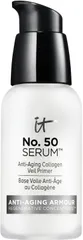
 It Cosmetics No. 50 Serum Collagen Veil Anti-Aging Face Primer | Current | - | |
Peter Thomas Roth Skin To Die For Redness-Reducing Treatment Primer | 67% | - | |
VDL Lumilayer Primer Fresh | 66% | ≈ $42.58 | |
 Elizavecca Skin Liar Primer | 65% | ≈ $7.74 | |
 Dear Dahlia Skin Paradise Pore Perfecting Primer | 64% | ≈ $34.28 | |
 mirenesse Tone Correcting Primer Cushion | 61% | ≈ $14.24 |
Key Actives
Is proven to be effective in reducing blemishes, evening out skin tone and helping to improve lines and wrinkles. It helps the skin to repair sun damage, calm down inflammation and keep maintain good levels of moisture. The concentration of about 2% is effective for supporting the skin barrier and evening out the skin tone. Concentration of 4-6% is better for helping with acne and balancing the sebum production
Can contain potent anti-oxidant compounds (abbreviated ECG, GCG, EGC, and EGCG) that might help protect the skin from free radicals. Can help calm down inflammation and has some anti-bacterial properties. Unfortunately, these antioxidants are unstable and lose their effectiveness very quickly in products. The concentration of the antioxidant compounds in the extract also tends to be low to be effective in topical formulation
Helps to restore skin barrier function, soften the upper layer of the skin and calm down inflammation
Pure form of vitamin E. Can help moisturise and protect the skin from free radicals. Often used to help stabilise other ingredients or the formula itself
Three steps removed from the active form of vitamin A - retinoic acid. To have an effect in the skin, it first needs to be converted twice to become the retinoic acid. This means it is less potent than retinol, but could also be less irritating. Once converted to the retinoic acid in the skin, it helps against all signs of aging, improves skin cell turnover and helps fight blemishes and clogged pores. However, in many cosmetic formulations, it is used in a concentration that is too low to have the full effect
Helps attract water to the upper layer of the skin and may help reduce inflammation in skin
A form of vitamin B3. It is similar in action to niacinamide, but is more likely to cause red flashes in skin as the side effect
Coenzyme Q10. It helps neutralize free radicals in skin, improves skin hydration and might be helpful agains fine lines and wrinkles. It can be an allergen
Might help improve cell turnover and reduce inflammation in skin. One study shows that the ingredients might be able to help reduce dynamic wrinkles (for example, in the corners of the eyes or on the forehead)
A type of peptide. Peptides are excellent moisturizers and might be able support collagen production reducing fine lines and wrinkles
Might be helpful in reducing fine lines and wrinkles, as well as lightening the skin, but solid evidence is missing. Could somewhat help in reducing the darkness of the under-eye area. Helps to neutralise free radicals in skin
Might be helpful in decreasing sebum production making the skin less oily. Is claimed to be able to support ceramide production in skin that leads to better hydration, but evidence is lacking. Is able to attract water to the upper layer of the skin
A silicone that helps improve the product texture and spreadability. Can absorb oil creating a short-term mattifying effect on the skin
A silicone that helps to reduce water loss from the surface of the skin. Can temporarily "fill in" lines and wrinkles, absorb oil, and create a nice product finish
A silicone that forms a light film on the skin surface helping to bind water and temporarily absorb oils creating a matt and powdery feel
A great emollient that can also have anti-oxidant properties
A plant oil that can help soften the upper layer of the skin. Might be helpful in calming down inflammation in skin
Helps to soften the upper layer of the skin and might have some anti-oxidant effect
Might be helpful in neutralizing free radicals. Can have a dehydration effect that might somewhat decrease the look of puffy eyes
An emollient that helps soften the upper layer of the skin. Might have some weak anti-oxidant properties
Beta-arbutin. Can help to reduce hyperpigmentation and has an anti-oxidant effect when used in high enough concentration. Is less effective compared to alpha-arbutin
Typically contains hyaluronic acid that helps attract water to the upper layer of the skin. Might contain allantoin that is helpful in calming down inflammation. There is no evidence that it can have any further benefits for the skin, especially when used in skincare products
Plant extract that helps the skin to attract water and make it more smooth for touch. Also shows promise of anti-aging properties, but research is not extensive yet
A type of peptide. Peptides are excellent moisturizers and might be able support collagen production reducing fine lines and wrinkles
One of the best moisturizing ingredients. Naturally present in skin. It attracts water to the upper layer of the skin working as a humectant
A silicone that works to soften the upper layer of the skin and reduce its water loss
One of the most effective and the most studied occlusive ingredients that creates a protective layer on top of the skin preventing moisture loss
A silicone that improves product texture and helps dissolve other ingredients. Can form a non-greasy film on the skin to prevent moisture loss
An oil naturally present in skin. Works as an emollient to soften the skin and form a protective layer on its surface without a greasy feeling.
Softens the upper layer of skin and helps restore the healthy skin barrier. Has shown to help calm down inflammation in skin. It is a stable oil, meaning that it retains its properties even when exposed to air.
An emollient that helps soften the skin and could be helpful in repairing its barrier function
One of the best moisturizing ingredients. Attracts water into the upper layer of the skin. A version of it is naturally present in skin
A typically plant-derived compound that is supposed mimic human collagen. Cannot penetrate the skin barrier so is not particularly useful in skincare products beyond attracting water to the upper layer of the skin
Can help stimulate collagen production in skin. While available studies are promising, more research is needed to confirm the efficacy in skin
Potential irritants
Helps oil and water mix together and can enhance the penetration of other ingredients into the skin. It can be irritating
Used as a fragrance. It can be irritating and cause photosensitivity
A plant oil with high content of volatile compounds that, especially when exposed to air, can cause allergic reactions and irritate the skin
A plant extract that can be irritating. It might contain a compound anthocyanin that could be helpful in neutralizing free radicals
Can be drying and contribute to skin irritation. Used in formulars to dissolve other ingredients, create a thinner product consistency or for its antibacterial properties
A plant extract that can be irritating. It can have some anti-bacterial properties, but there are no evidence of a beneficial effect for skin
A plant extract that has astringent properties. In other words, it might be able to interact with keratin in the uppermost layer of the skin to reduce swelling and create a temporal tightening effect. It can be irritating
A plant extract that might have some anti-oxidant properties, but evidence of effectiveness in skin is lacking
A plant extract that can contain an active compound curcumin, that may have some anti-inflammatory properties when applied to the skin, but solid research is lacking and the typical concentration used in skincare products is too low. Can be an irritant
Plant extract that can help neutralize free radicals in skin. Can be used as a fragrance. Can be irritating
A plant extract that is added for its fragrance. Can be irritating
Is claimed to be able to brighten skin tone by removing some blood-related pigmented compounds in skin (hemoglobin and related elements) but solid research is missing. Can be irritating
Three steps removed from the active form of vitamin A - retinoic acid. To have an effect in the skin, it first needs to be converted twice to become the retinoic acid. This means it is less potent than retinol, but could also be less irritating. Once converted to the retinoic acid in the skin, it helps against all signs of aging, improves skin cell turnover and helps fight blemishes and clogged pores. However, in many cosmetic formulations, it is used in a concentration that is too low to have the full effect
A form of vitamin B3. It is similar in action to niacinamide, but is more likely to cause red flashes in skin as the side effect
The most well-researched antioxidant that works in skin. Helps neutralize free radicals supporting collagen production, helping to even out the skin tone and preventing early signs of aging
Helps soften the upper layer of the skin and create a nice product consistency
Helps preserve products and creates a nice product texture
A great emollient that can also have anti-oxidant properties
Softens the upper layer of skin and helps restore the healthy skin barrier. Has shown to help calm down inflammation in skin. It is a stable oil, meaning that it retains its properties even when exposed to air.
An emollient that helps soften the skin and could be helpful in repairing its barrier function
Might be helpful in neutralizing free radicals. Can have a dehydration effect that might somewhat decrease the look of puffy eyes
An emollient that helps soften the upper layer of the skin. Might have some weak anti-oxidant properties
Beta-arbutin. Can help to reduce hyperpigmentation and has an anti-oxidant effect when used in high enough concentration. Is less effective compared to alpha-arbutin
Used in products to help dissolve oxygen and enhance oxygen molecule penetration into the skin. There is no evidence for benefits of the oxygen emulsion in topical creams, lotions or serums. There is a study available confirming a positive impact of oxygen therapy for skin wound healing, but it used an oxygen emulsion stored under high pressure using special equipment
Typically contains hyaluronic acid that helps attract water to the upper layer of the skin. Might contain allantoin that is helpful in calming down inflammation. There is no evidence that it can have any further benefits for the skin, especially when used in skincare products
A plant extract that might have some anti-oxidant and anti-inflammatory properties but evidence for effectiveness in skin is missing
Might be somewhat helpful in reducing hyperpigmentation and neutralizing free radicals but its typical concentration in a product is too low for having an effect
A fruit extract that might help to attract water to the upper layer of the skin, but there is no evidence for any other benefits to the skin
A plant extract that can help strengthen the skin barrier function and improve skin moisture levels
Can work as an exfoliant but is typically used to adjust the product pH
Traditionally used to treat sunburns, dermatitis and inflammation, but evidence for its effectiveness is lacking. The extract can contain humectants that help attract water into the skin
Can help attract water to the upper layer of the skin. Is studied as a mosquito repellent
Might be helpful in reducing fine lines and wrinkles, as well as lightening the skin, but solid evidence is missing. Could somewhat help in reducing the darkness of the under-eye area. Helps to neutralise free radicals in skin
Comedogenic ingredients
Plant extract that helps the skin to attract water and make it more smooth for touch. Also shows promise of anti-aging properties, but research is not extensive yet
All ingredients
A silicone that helps improve the product texture and spreadability. Can absorb oil creating a short-term mattifying effect on the skin
A silicone that helps to reduce water loss from the surface of the skin. Can temporarily "fill in" lines and wrinkles, absorb oil, and create a nice product finish
An emollient that helps soften the skin and can decrease moisture loss. Helps create a nice product texture
A type of silicone that create a smooth product finish and can create an optical soft-focus effect on the skin. Helps to thicken the product consistency
One of the best moisturizing ingredients. Naturally present in skin. It attracts water to the upper layer of the skin working as a humectant
Used to stabilize product formulations and create a nice product texture
Helps soften the upper layer of the skin and create a nice product consistency
A silicone that serves as an emollient. Helps create a nice non-greasy feels
A silicone that works to soften the upper layer of the skin and reduce its water loss
One of the most effective and the most studied occlusive ingredients that creates a protective layer on top of the skin preventing moisture loss
Used to stabilize mixtures of oil and water, and create thicker, gel-like product textures
A type of silicone that helps to soften the upper layer of the skin and create a nice product finish on the skin
A type of silicone that helps water and oil mix together. Can help to soften upper layer of the skin
A silicone that improves product texture and helps dissolve other ingredients. Can form a non-greasy film on the skin to prevent moisture loss
A silicone that forms a light film on the skin surface helping to bind water and temporarily absorb oils creating a matt and powdery feel
Helps preserve products and creates a nice product texture
Used to create a nice product texture and help delivery of other ingredients. Might be somewhat helpful in attracting water to the upper layer of the skin
Helps oil and water mix together and can enhance the penetration of other ingredients into the skin. It can be irritating
A great emollient that can also have anti-oxidant properties
Coenzyme Q10. It helps neutralize free radicals in skin, improves skin hydration and might be helpful agains fine lines and wrinkles. It can be an allergen
An oil naturally present in skin. Works as an emollient to soften the skin and form a protective layer on its surface without a greasy feeling.
Softens the upper layer of skin and helps restore the healthy skin barrier. Has shown to help calm down inflammation in skin. It is a stable oil, meaning that it retains its properties even when exposed to air.
An emollient that helps soften the skin and could be helpful in repairing its barrier function
A plant oil that can help soften the upper layer of the skin. Might be helpful in calming down inflammation in skin
Is proven to be effective in reducing blemishes, evening out skin tone and helping to improve lines and wrinkles. It helps the skin to repair sun damage, calm down inflammation and keep maintain good levels of moisture. The concentration of about 2% is effective for supporting the skin barrier and evening out the skin tone. Concentration of 4-6% is better for helping with acne and balancing the sebum production
Helps to soften the upper layer of the skin and might have some anti-oxidant effect
Might be helpful in neutralizing free radicals in skin
Used as a fragrance. It can be irritating and cause photosensitivity
A plant oil with high content of volatile compounds that, especially when exposed to air, can cause allergic reactions and irritate the skin
Might be helpful in neutralizing free radicals. Can have a dehydration effect that might somewhat decrease the look of puffy eyes
An emollient that helps soften the upper layer of the skin. Might have some weak anti-oxidant properties
Beta-arbutin. Can help to reduce hyperpigmentation and has an anti-oxidant effect when used in high enough concentration. Is less effective compared to alpha-arbutin
Might help improve cell turnover and reduce inflammation in skin. One study shows that the ingredients might be able to help reduce dynamic wrinkles (for example, in the corners of the eyes or on the forehead)
Used in products to help dissolve oxygen and enhance oxygen molecule penetration into the skin. There is no evidence for benefits of the oxygen emulsion in topical creams, lotions or serums. There is a study available confirming a positive impact of oxygen therapy for skin wound healing, but it used an oxygen emulsion stored under high pressure using special equipment
A plant extract that can be irritating. It might contain a compound anthocyanin that could be helpful in neutralizing free radicals
Typically contains hyaluronic acid that helps attract water to the upper layer of the skin. Might contain allantoin that is helpful in calming down inflammation. There is no evidence that it can have any further benefits for the skin, especially when used in skincare products
A plant extract that might have some anti-oxidant and anti-inflammatory properties but evidence for effectiveness in skin is missing
Might be somewhat helpful in reducing hyperpigmentation and neutralizing free radicals but its typical concentration in a product is too low for having an effect
Can contain potent anti-oxidant compounds (abbreviated ECG, GCG, EGC, and EGCG) that might help protect the skin from free radicals. Can help calm down inflammation and has some anti-bacterial properties. Unfortunately, these antioxidants are unstable and lose their effectiveness very quickly in products. The concentration of the antioxidant compounds in the extract also tends to be low to be effective in topical formulation
Can be drying and contribute to skin irritation. Used in formulars to dissolve other ingredients, create a thinner product consistency or for its antibacterial properties
A plant extract that can be irritating. It can have some anti-bacterial properties, but there are no evidence of a beneficial effect for skin
A plant extract that has astringent properties. In other words, it might be able to interact with keratin in the uppermost layer of the skin to reduce swelling and create a temporal tightening effect. It can be irritating
A fruit extract that might help to attract water to the upper layer of the skin, but there is no evidence for any other benefits to the skin
A plant extract that might have some anti-oxidant properties, but evidence of effectiveness in skin is lacking
A plant extract that can contain an active compound curcumin, that may have some anti-inflammatory properties when applied to the skin, but solid research is lacking and the typical concentration used in skincare products is too low. Can be an irritant
Plant extract that can help neutralize free radicals in skin. Can be used as a fragrance. Can be irritating
A preservative. It helps prevent bacterial growth in cosmetic products
A plant extract that can help strengthen the skin barrier function and improve skin moisture levels
Helps to retain moisture by creating a protective barrier on the skin. Rich in fatty acids. Improves product texture and helps with the penetration of other ingredients.
A plant extract that is added for its fragrance. Can be irritating
One of the best moisturizing ingredients. Attracts water into the upper layer of the skin. A version of it is naturally present in skin
Helps to restore skin barrier function, soften the upper layer of the skin and calm down inflammation
Can work as an exfoliant but is typically used to adjust the product pH
Plant extract that helps the skin to attract water and make it more smooth for touch. Also shows promise of anti-aging properties, but research is not extensive yet
Traditionally used to treat sunburns, dermatitis and inflammation, but evidence for its effectiveness is lacking. The extract can contain humectants that help attract water into the skin
Is claimed to be able to brighten skin tone by removing some blood-related pigmented compounds in skin (hemoglobin and related elements) but solid research is missing. Can be irritating
A typically plant-derived compound that is supposed mimic human collagen. Cannot penetrate the skin barrier so is not particularly useful in skincare products beyond attracting water to the upper layer of the skin
Pure form of vitamin E. Can help moisturise and protect the skin from free radicals. Often used to help stabilise other ingredients or the formula itself
Can help attract water to the upper layer of the skin. Is studied as a mosquito repellent
Three steps removed from the active form of vitamin A - retinoic acid. To have an effect in the skin, it first needs to be converted twice to become the retinoic acid. This means it is less potent than retinol, but could also be less irritating. Once converted to the retinoic acid in the skin, it helps against all signs of aging, improves skin cell turnover and helps fight blemishes and clogged pores. However, in many cosmetic formulations, it is used in a concentration that is too low to have the full effect
Helps attract water to the upper layer of the skin and may help reduce inflammation in skin
A type of peptide. Peptides are excellent moisturizers and might be able support collagen production reducing fine lines and wrinkles
A form of vitamin B3. It is similar in action to niacinamide, but is more likely to cause red flashes in skin as the side effect
Can help stimulate collagen production in skin. While available studies are promising, more research is needed to confirm the efficacy in skin
Might be helpful in reducing fine lines and wrinkles, as well as lightening the skin, but solid evidence is missing. Could somewhat help in reducing the darkness of the under-eye area. Helps to neutralise free radicals in skin
Might be helpful in decreasing sebum production making the skin less oily. Is claimed to be able to support ceramide production in skin that leads to better hydration, but evidence is lacking. Is able to attract water to the upper layer of the skin
Might have some moisturising properties. Is not effective when applied topically beyond some moisturizing effect
The most well-researched antioxidant that works in skin. Helps neutralize free radicals supporting collagen production, helping to even out the skin tone and preventing early signs of aging
A type of peptide. Peptides are excellent moisturizers and might be able support collagen production reducing fine lines and wrinkles
Works as a UV filter when used in high concentrations. It is photostable and is effective mostly against the UVB light, with some protection in the UVA range. In small concentrations, used for its ability to improve the color of cosmetic products. Is usually well tolerated by the skin
Creates an illusion of smoother and more radiant skin tone. Adds shimmer to the skin by reflecting light
Ingredient list view
Water, Cyclopentasiloxane, Cyclotetrasiloxane, Dimethicone, Isododecane, Vinyl dimethicone/methicone silsesquioxane crosspolymer, Glycerin, Dimethicone/vinyl dimethicone crosspolymer, Hexyl laurate, Cyclohexasiloxane, Ozokerite, Peg-10 dimethicone, Petrolatum, Sodium chloride, Caprylyl methicone, Cetyl peg/ppg-10/1 dimethicone, Polyglyceryl-4 isostearate, Polymethylsilsesquioxane, Polysilicone-11, Caprylyl glycol, Ethylhexylglycerin, Sorbitan olivate, 1,2-hexanediol, Butylene glycol, Disodium edta, Propylene glycol, Vitis vinifera seed oil, Ubiquinone, Squalane, Simmondsia chinensis seed oil, Maris aqua, Punica granatum seed oil, Persea gratissima oil, Orbignya oleifera seed oil, Niacinamide, Mangifera indica seed butter, Coffea arabica seed extract, Citrus aurantium dulcis oil, Citrus grandis peel oil, Caffeine, Argania spinosa kernel oil, Arbutin, Adenosine, Anthemis nobilis flower water, Lactobacillus/honeysuckle flower/licorice root/morus alba root/pueraria lobata root/schisandra chinensis fruit/scutellaria baicalensis root/sophora japonica flower extract ferment filtrate, Illite, Betula platyphylla japonica juice, Perfluorohexane, Hibiscus sabdariffa flower extract, Caviar extract, Snail secretion filtrate, Olea europaea leaf extract, Cucumis sativus fruit extract, Camellia sinensis leaf extract, Chrysanthemum indicum flower extract, Cholesteryl chloride, Cholesteryl isostearate, Cholesteryl nonanoate, Alcohol, Arnica montana flower extract, Alchemilla vulgaris extract, Ananas sativus fruit extract, Actinidia chinensis fruit extract, Pueraria lobata root extract, Perfluorodecalin, Morus alba fruit extract, Magnolia kobus bark extract, Glycine soja sprout extract, Diospyros kaki leaf extract, Cinnamomum cassia bark extract, Artemisia princeps leaf extract, Pentafluoropropane, Curcuma longa root extract, Achillea millefolium extract, Steareth-20, Marrubium vulgare extract, Phenoxyethanol, Gentiana lutea root extract, Artemisia absinthium extract, Hydrogenated lecithin, Veronica officinalis extract, Primula veris extract, Mentha piperita leaf extract, Melissa officinalis leaf extract, Malva sylvestris extract, Hydrolyzed hyaluronic acid, Colloidal oatmeal, Hydrolyzed silk, Citric acid, Potassium sorbate, Sodium benzoate, Algae extract, Aloe barbadensis leaf extract, N-hydroxysuccinimide, Hydrolyzed collagen, Caprylhydroxamic acid, Tocopherol, Thiamine hcl, Riboflavin, Retinyl palmitate, Pantothenic acid, Palmitoyl oligopeptide, Niacin, Folic acid, Chrysin, Carnitine hcl, Biotin, Ascorbic acid, Palmitoyl tetrapeptide-7, Chlorhexidine digluconate, Titanium dioxide, Mica
- Dimethicone as a protective ingredient in topical medications
- Final Report on the Safety Assessment of Dimethicone Copolyol
- Glycerol and the skin: holistic approach to its origin and functions
- The influence of alkane chain length on the skin irritation potential of 1,2-alkanediols
- Surfactants and experimental irritant contact dermatitis
- Propylene Glycol
- Skin-sensitizing and irritant properties of propylene glycol
- Anti-Inflammatory Activity of Babassu Oil and Development of a Microemulsion System for Topical Delivery
- Niacinamide - mechanisms of action and its topical use in dermatology
- Gehring, W. (2004). Nicotinic acid/niacinamide and the skin. Journal of Cosmetic Dermatology, 3(2), 88–93. doi:10.1111/j.1473-2130.2004.00115.x
- Extraction and Characteristics of Seed Kernel Oil from Mango
- Promising features of mango (Mangifera indica L.) kernel oil: a review
- Evaluation of the fatty acid composition of the seeds of Mangifera indica L. and their application
- Effect of green Coffea arabica L. seed oil on extracellular matrix components and water-channel expression in in vitro and ex vivo human skin models
- Safety Assessment of Citrus-Derived Peel Oils as Used in Cosmetics
- Oxidized citrus oil (R-limonene): A frequent skin sensitizer in Europe
- Air oxidation increases skin irritation from fragrance terpenes
- Natural vegetable fats in the prevention of irritant contact dermatitis
- Arbutin - Commentaty
- TOPICAL TREATMENT OF MELASMA
- Evaluation of anti-wrinkle efficacy of adenosine-containing products using the FOITS technique
- Topical Oxygen Emulsion A Novel Wound Therapy
- Anthocyanin-rich extract from Hibiscus sabdariffa calyx counteracts UVC-caused impairments in rats
- Hibiscus sabdariffa L. – A phytochemical and pharmacological review
- Liposome-containing Hibiscus sabdariffa calyx extract formulations with increased antioxidant activity, improved dermal penetration and reduced dermal toxicity
- The Effects of Filtrate of the Secretion of the Cryptomphalus Aspersa on Photoaged Skin
- The Effects of Snail Secretion Filtrate on the damaged skin barrier's recovery of the Atopic dermatitis
- Wound Repair Potential of Olea europaea L. Leaf Extracts Revealed by In Vivo Experimental Models and Comparative Evaluation of the Extracts' Antioxidant Activity
- Effects of Topical Arnica Gel on Post-Laser Treatment Bruises
- Effects of microcurrent application alone or in combination with topical Hypericum perforatum L. and Arnica montana L. on surgically induced wound healing in Wistar rats
- The seamy side of natural medicines: contact sensitization to arnica (Arnica montana L.) and marigold (Calendula officinalis L.)
- Accelerated resolution of laser‐induced bruising with topical 20% arnica: a rater‐blinded randomized controlled trial
- Effect of herbal mixture composed of Alchemilla vulgaris and Mimosa on wound healing process.
- Vaughn, A. R., Branum, A., & Sivamani, R. K. (2016). Effects of Turmeric (Curcuma longa) on Skin Health: A Systematic Review of the Clinical Evidence. Phytotherapy Research, 30(8), 1243–1264. doi:10.1002/ptr.5640
- Contact dermatitis as an adverse reaction to some topically used European herbal medicinal products – part 1: Achillea millefolium–Curcuma longa
- The Herbal Bitter Drug Gentiana lutea Modulates Lipid Synthesis in Human Keratinocytes In Vitro and In Vivo
- Efficacy of a New Topical Nano-hyaluronic Acid in Humans
- Physiochemical properties and application of hyaluronic acid: a systematic review
- Mechanism of action and clinical benefits of colloidal oatmeal for dermatologic practice
- Moisturizing efficiency of silk protein hydrolysate: Silk fibroin
- Vitamin E in dermatology
- Vitamin E and Skin Health
- Folic acid and creatine improve the firmness of human skin in vivo
- Anti-photoageing and anti-melanogenesis activities of chrysin
- Chrysin Protects Epidermal Keratinocytes from UVA- and UVB-Induced Damage
- Inhibition of melanogenesis by 5,7-dihydroxyflavone (chrysin) via blocking adenylyl cyclase activity
- Topically applied L-carnitine effectively reduces sebum secretion in human skin