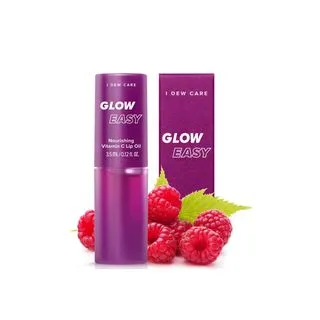
I Dew Care Glow Easy Nourishing Vitamin C Lip Oil
Works for
MoisturizingPalmitoyl tripeptide-1, Helianthus annuus seed oil + 16 moreWorks well
“It also contains Vitamins C and E to replenish moisture and relieve dryness of lips.”
This product can help soften the skin and reduce its moisture loss with emollients and occlusives: caprylic/capric triglyceride, helianthus annuus seed oil.
Keep in mind that this product does not contain effective ingredients to attract water to the upper layer of the skin. This is why an additional product with humectants like glycerin or hyaluronic acid can be helpful (apply it before this product for the best results).
The following ingredients in this product are especially good for supporting the skin barrier and helping with the hydration level: palmitoyl tripeptide-1
Anti-agingSide benefit · Palmitoyl tripeptide-1, Camellia sinensis seed oil + 2 moreMay help
This product contains palmitoyl tripeptide-1. There is some human evidence that this ingredient helps reduce and prevent fine lines and wrinkles and improve skin elasticity and firmness, though it is smaller or less consistent than the evidence for the best anti-aging ingredients.
Anti-oxidationSide benefit · Rubus idaeus seed oil, Tocopheryl acetate + 5 moreMay help
This product contains antioxidants (rubus idaeus seed oil) that can help neutralize free radicals in skin to lessen the damage it gets from the UV light (sun). There is some human evidence for this effect in skin, though it is smaller or less consistent than the evidence for the best antioxidants.
Can it cause trouble?
Irritancy4 strong irritants: Parfum, Methyl nicotinate + 2 more — patch-test recommendedHigh risk
Comedogenic2 ingredients rated 2 or more on the 0–5 pore-clogging scale2 flagged

User reviews
Be the first — your take helps the next person decide.
Ingredients
Filter by role to see what each ingredient is doing.
Polyglyceryl-2 isostearate/dimer dilinoleate copolymer~22–33%
- Irritation risk
- Low
Helianthus annuus seed oil~5.1–7.6%
- Irritation risk
- Low
A great emollient due to its high linoleic acid content. One of the most effective plant oils in helping skin hydration and repairing skin barrier function
More about Helianthus annuus seed oilDiisostearyl malate~4.6–7%
- Irritation risk
- Medium
Helps to soften the upper layer of the skin
More about Diisostearyl malateSimmondsia chinensis seed oil~3.6–5.4%
- Irritation risk
- Medium
Softens the upper layer of skin and helps restore the healthy skin barrier. Has shown to help calm down inflammation in skin. It is a stable oil, meaning that it retains its properties even when exposed to air.
More about Simmondsia chinensis seed oilDilinoleic acid/butanediol copolymer~2.7–4%
- Irritation risk
- Low
Silica dimethyl silylate~2–3.1%
Parfum~1.4–2.1%
- Irritation risk
- High
An aromatic blend of unspecified and possibly irritating ingredients
More about ParfumHydrogenated polyisobutene~1.5–2.2%
- Irritation risk
- Low
Used to improve the product consistency and soften the upper layer of the skin
More about Hydrogenated polyisobuteneOlea europaea fruit oil~1.1–1.6%
- Irritation risk
- Medium
An emollient that helps soften the skin but is not effective for restoring its barrier function. Might be helpful to calm down inflammation
More about Olea europaea fruit oilBenzotriazolyl dodecyl p-cresol~0.95–1.4%
- Irritation risk
- Medium
Used to stabilize the product formulation protecting it from sun light
More about Benzotriazolyl dodecyl p-cresolPrunus amygdalus dulcis seed~0.5–1.15%
- Irritation risk
- Low
Helps soften the upper layer of the skin
More about Prunus amygdalus dulcis seedTocopheryl acetate~0.45–1%
- Irritation risk
- Medium
A more stable but less bio-available form of vitamin E compared to Tocopherol. Might help moisturize and protect the skin from free radicals, but mostly used in low concentrations to stabilize other ingredients.
More about Tocopheryl acetateCaprylic/capric triglyceride~0.45–1.05%
- Irritation risk
- Medium
A good mix of fatty acids that forms a protective layer on the skin. Improves the shelf life of products. Derived from coconut and glycerin
More about Caprylic/capric triglycerideEthylhexyl palmitate~0.4–0.95%
- Irritation risk
- Low
- Comedogenicity
- 3/5
An emollient that helps soften the skin and create a nice product texture
More about Ethylhexyl palmitateDehydroacetic acid~0.3–0.6%
Pentaerythrityl tetra-di-t-butyl hydroxyhydrocinnamate~0.35–0.8%
- Irritation risk
- Low
Used to increase stability of product formulations
More about Pentaerythrityl tetra-di-t-butyl hydroxyhydrocinnamateCi 15850~0.3–0.75%
Tribehenin~0.35–0.8%
- Irritation risk
- Low
Used to create a thicker product consistency and soften the upper layer of the skin
More about TribeheninRubus idaeus seed oil~0.3–0.75%
- Irritation risk
- Medium
A plant oil that might be able to help neutralize free radicals in skin
More about Rubus idaeus seed oilAscorbyl glucoside~0.15–0.65%
- Irritation risk
- Medium
A vitamin C derivative that is more stable but less potent than pure form of vitamin C. Has a potential to boost collagen production, nutralise free radicals and reduce hyperpigmentation, but the required concentration is likely to be much higher than for the pure form of vitamin C, limiting the ingredient's effectiveness in products
More about Ascorbyl glucosideCamellia sinensis seed oil~0.2–0.75%
- Irritation risk
- Low
A plant oil that helps to soften the upper layer of the skin and can help restore the skin barrier. Might have some anti-oxidant effect
More about Camellia sinensis seed oilCamellia japonica seed oil~0.2–0.8%
- Irritation risk
- Low
A plant oil that helps to soften the upper layer of the skin and can help restore skin's barrier function. Might have an anti-oxidant effect
More about Camellia japonica seed oilArgania spinosa kernel oil~0.2–0.75%
- Irritation risk
- Medium
An emollient that helps soften the upper layer of the skin. Might have some weak anti-oxidant properties
More about Argania spinosa kernel oilMacadamia integrifolia seed oil~0.2–0.8%
- Irritation risk
- Low
A plant oil that helps soften the upper layer of the skin
More about Macadamia integrifolia seed oilPyrus malus seed oil~0.2–0.75%
- Irritation risk
- High
Can contain essential oil that can be irritating. Can help to soften the upper layer of the skin. Might be helpful in neutralizing free radicals
More about Pyrus malus seed oilSorbitan isostearate~0.15–0.65%
- Irritation risk
- Low
Helps oil and water mix together
More about Sorbitan isostearateMethyl nicotinate~0.15–0.6%
- Irritation risk
- High
Causes redness and irritation in skin. Is often added to lip roducts to create a temporary plumping effect. Is likely to have a negative effect on skin's barrier function
More about Methyl nicotinateCi 42090~0.15–0.55%
Glycine soja oil~0.15–0.7%
- Irritation risk
- Medium
- Comedogenicity
- 2/5
A good emollient that helps soften the skin and helps repair its barrier function. It can clog pores if used in high concentrations.
More about Glycine soja oilMonascus extract~0.15–0.55%
- Irritation risk
- Low
A yeast extract that might help to attract water to the upper layer of the skin
More about Monascus extractLactic acid~0.15–0.55%
- Irritation risk
- Medium
An exfoliating and moisturizing alpha-hydroxy acid (AHA). Typically causes less irritation than other AHAs, for example, glycolic acid. At high concentrations (about 15%), lactic acid can help reduce lines and wrinkles. Recent studies show that lactic acid can support the "good" bacteria living on skin's surface (healthy skin microbiome)
More about Lactic acidWater~0.1–0.45%
Butylene glycol~0.1–0.35%
- Irritation risk
- Low
Used to create a nice product texture and help delivery of other ingredients. Might be somewhat helpful in attracting water to the upper layer of the skin
More about Butylene glycolPalmitoyl tripeptide-1~0.15–0.55%
- Irritation risk
- Low
A type of peptide. Peptides are excellent moisturizers and might be able support collagen production reducing fine lines and wrinkles
More about Palmitoyl tripeptide-1Zingiber officinale root oil~0.05–0.25%
- Irritation risk
- High
An essential oil that is likely to be irritating and can cause photosensitivity
More about Zingiber officinale root oilCapsicum frutescens fruit extract~0.05–0.25%
- Irritation risk
- High
Chilli pepper extract that is very likely to be irritating. Might be added to lip product to create a temporary burst of color. Is likely to have a negative effect on the skin and dry it out
More about Capsicum frutescens fruit extractPyrus malus fruit extract~0.05–0.25%
- Irritation risk
- Medium
Can have some moisturizing properties due to its sugar content
More about Pyrus malus fruit extractIngredient list view
Polyglyceryl-2 isostearate/dimer dilinoleate copolymer, Helianthus annuus seed oil, Diisostearyl malate, Simmondsia chinensis seed oil, Dilinoleic acid/butanediol copolymer, Silica dimethyl silylate, Parfum, Hydrogenated polyisobutene, Olea europaea fruit oil, Benzotriazolyl dodecyl p-cresol, Prunus amygdalus dulcis seed, Tocopheryl acetate, Caprylic/capric triglyceride, Unknown, Ethylhexyl palmitate, Dehydroacetic acid, Pentaerythrityl tetra-di-t-butyl hydroxyhydrocinnamate, Ci 15850, Tribehenin, Rubus idaeus seed oil, Ascorbyl glucoside, Camellia sinensis seed oil, Camellia japonica seed oil, Argania spinosa kernel oil, Macadamia integrifolia seed oil, Pyrus malus seed oil, Sorbitan isostearate, Methyl nicotinate, Ci 42090, Glycine soja oil, Monascus extract, Lactic acid, Water, Butylene glycol, Palmitoyl tripeptide-1, Zingiber officinale root oil, Capsicum frutescens fruit extract, Pyrus malus fruit extract
Compare prices
Retailers ranked by price — lowest first.
Affiliate links · As an Amazon Associate, WIMJ earns from qualifying purchases.
Worth comparing, line by line.
Match % combines shared ingredients, the first five ingredients, shared actives and hero ingredients, irritancy (lower counts in the alternative's favour), texture and body area. Only products in the same routine step are compared.
| I Dew CareGlow Easy Nourishing Vitamin C Lip OilYOUR PRODUCT | MemeboxNooni Appleberry Lip Oil | Perricone MDCold Plasma Plus+ Lip Therapy | Beauty PieWondercolour Glossy Peptide Lip Butter - Ripple | BEAUTY PIE | |
|---|---|---|---|---|
| Match | — | 63% | 55% | 55% |
| Price | — | $11.87 | $28.55 | $28.80 |
| Shared key ingredients | — | 7 of 10 | 5 of 10 | 3 of 10 |
| Key difference | — | — | Astrocaryum Murumuru Seed Butter | Copper Tripeptide-1 |
| Irritancy | High | High | Medium | Medium |
| Drying alcohol | — | — | — | — |
| View product | Shop | Shop | Shop |

More alternatives: trStiQue Mini Plumping Lip BalmKrave Beauty Plumptuous Lip Jelly
Product summary
"I Dew Care - Glow Easy Nourishing Vitamin C Lip Oil" is effective for: Moisturizing
This lip sunscreen could be helpful for: Anti-aging, but its actives are not the most effective or are not well-studied.
Ingredient callouts
- This moisturizer also contains Peptides (palmitoyl tripeptide-1 0.15% - 0.55%). Peptides are a very big group of ingredients. They all consist of a different combination of aminoacids. Our skin produces Peptides naturally. Some of them work as natural antibiotics, promote wound-healing and production of collagen. The scientists are still studying how effective the topical application of Peptides is, but it is very likely that they are helpful. Peptides might be able to support skin barrier restoration and even have an anti-aging benefit. At the very least, they certainly help attract water to the skin and support the hydration in this way.
Price
The product retails for 11.20$ in the United States.
For a detailed price comparison: click here.
Sources cited in this review
Every concentration estimate and effectiveness label is anchored to one of these 18 studies and safety reviews.
- 1
- 2
- 3Effect of topically applied lipids on surfactant-irritated skinonlinelibrary.wiley.com
- 4
- 5
- 6Use of “natural” oils for moisturization: Review of olive, coconut, and sunflower seed oilonlinelibrary.wiley.com

Affiliate links · As an Amazon Associate, WIMJ earns from qualifying purchases.