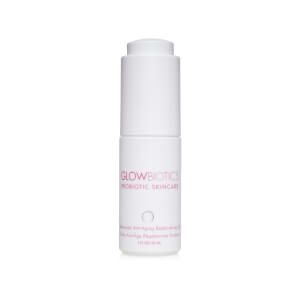
Glowbiotics MD Advanced Anti-Ageing Replenishing Oil

Glowbiotics MD Advanced Anti-Ageing Replenishing Oil

Efficacy100/100IrritancyHigh
Edit

Works for

2 of 2 advertised claims delivered

Moisturizing
25 ingredients credited for this claim
Strong support
What the product description says
“Advanced Anti-Ageing Replenishing Oil”
From product name

This product can help soften the skin and reduce its moisture loss with emollients and occlusives: caprylic/capric triglyceride, helianthus annuus seed oil.

Keep in mind that this product does not contain effective ingredients to attract water to the upper layer of the skin. This is why an additional product with humectants like glycerin or hyaluronic acid can be helpful (apply it before this product for the best results).

The following ingredients in this product are especially good for supporting the skin barrier and helping with the hydration level: palmitoyl tripeptide-38

SqualaneKey active· Emollient, OcclusiveEffect: HighAn oil naturally present in skin. Works as an emollient to soften the skin and form a protective layer on its surface without a greasy feeling.~0.65–1%
Helianthus annuus seed oilKey active· Emollient, OcclusiveEffect: HighA great emollient due to its high linoleic acid content. One of the most effective plant oils in helping skin hydration and repairing skin barrier function~0.6–0.9%
Hippophae rhamnoides oilKey active· EmollientEffect: HighA good emollient. Contains various ingredients including vitamins and fatty acids that could work in the skin to neutralize free radicals and minimize moisture loss - if enough of these compounds is able to penetrate the skin in an active form.~0.8–1.15%
Oenothera biennis oilKey active· EmollientEffect: HighHelps soften the upper layer of the skin and can support skin barrier function~1.9–2.3%
Palmitoyl tripeptide-38HeroEffect: HighA type of peptide. Peptides are excellent moisturizers and might be able support collagen production reducing fine lines and wrinkles~0.6–0.85%
Passiflora edulis seed oilKey active· EmollientEffect: HighA good emollient helping to soften the skin. Might have some anti-oxidant properties. Adds a fragrance to the product~0.8–1.2%
Plukenetia volubilis seed oilKey active· Emollient, OcclusiveEffect: HighA plant oil that works as a good moisturizer by softening the upper layer of the skin. Might be helpful in reducing inflammation in skin and reducing blemishes due to the large content of linoleic acid~0.65–0.95%
Salvia hispanica seed oilKey active· EmollientEffect: HighChia seed oil. Helps to soften the upper layer of the skin and might be helpful in repairing skin barrier~1.6–1.9%
Bacillus fermentKey activeEffect: HighA product of bacterial fermentation. Can help attract water to the upper layer of the skin~0.6–0.9%
UbiquinoneKey activeEffect: HighCoenzyme Q10. It helps neutralize free radicals in skin, improves skin hydration and might be helpful agains fine lines and wrinkles. It can be an allergen~0.6–0.85%
Vaccinium macrocarpon seed oilKey active· EmollientEffect: HighA plant oil that can help neutralize free radicals, soften the upper layer of the skin, and support skin's barrier function~0.7–1.1%
Solanum lycopersicum seed oilKey active· EmollientEffect: HighA good emollient that helps soften the upper layer of the skin and, due to the high linoleic acid content, can support the skin's barrier function~0.75–1.15%
Borago officinalis seed oilKey active· EmollientEffect: HighA plant oil that is effective in reducing irritation in skin, restore the barrier function and support its hydration~1–1.2%
Cannabis sativa seed oilKey active· EmollientEffect: HighA plant oil that due to its high linoleic acid content can help strengthen skin's barrier function and soften its upper layer~4.6–5.7%
Caprylic/capric triglycerideKey active· Emollient, OcclusiveEffect: HighA good mix of fatty acids that forms a protective layer on the skin. Improves the shelf life of products. Derived from coconut and glycerin~5.9–7.3%
Cetylhydroxyproline palmitamideKey active· EmollientEffect: HighA type of lipid similar to ceramides naturally present in skin. Helps to soften the upper layer of the skin and supports the skin barrier function to keep it hydrated. Can help to prevent inflammation in skin~0.6–0.95%
Helianthus annuus extractKey active· EmollientEffect: HighHelps soften the upper layer of the skin~0.6–0.9%
Brassica campestris sterolsKey active· EmollientEffect: MediumHelp soften the upper layer of the skin~0.65–0.95%
Coco-caprylateKey active· EmollientEffect: MediumAn emollient that softens skin and creates a nice product texture~25–31%
HexyldecanolKey active· EmollientEffect: MediumHelps soften the upper layer of the skin~0.6–0.85%
Crambe abyssinica seed oilKey activeEffect: MediumHelps soften the upper layer of the skin~3.4–4.1%
Portulaca pilosa extractEffect: Low~0.55–0.8%
Cetearyl ethylhexanoate· EmollientEffect: LowAn emollient that helps soften the skin~0.55–0.8%
Stearic acidEffect: Low, below effective doseHelps oil and water mix together and works as an emollient~0.45–0.65%
TocopherolEffect: Low, below effective dosePure form of vitamin E. Can help moisturise and protect the skin from free radicals. Often used to help stabilise other ingredients or the formula itself~0.55–0.85%
Anti-aging
6 ingredients credited for this claim
Strong support
What the product description says
“Advanced Anti-Ageing Replenishing Oil”
From product name

This product can help reduce and prevent fine lines and wrinkles, improve skin elasticity and firmness because it contains bakuchiol, tetrahexyldecyl ascorbate.

These ingredients in the product can also be helpful, even though there is less evidence for their effectiveness: palmitoyl tripeptide-38.

Keep in mind that it typically takes at least 6 weeks to notice any results because the changes that are needed to improve fine lines and elasticity happen in the deeper layers of the skin. No topical anti-aging product can “erase” wrinkles or fully reverse signs of aging.

Tetrahexyldecyl ascorbateKey activeEffect: HighBeing a lipid soluble form of vitamin C, it is more stable than ascorbic acid, but still degrades quickly and needs to be stabilized in a formulation with another ingredient. It is claimed to penetrate skin better than pure vitamin C and have the the similar benefits, but solid studies of its effectiveness are lacking. Is likely to require a higher concentration in a product than pure vitamin C to be effective. It might be able to help reduce pore clogging.~8.3–10.1%
BakuchiolKey activeEffect: HighA plant extract that is, though different in chemical structure, acts similar to retinoids. First studies show that it can help reduce fine lines and wrinkles, improve skin tone, reduce clogged pores and blemishes, and reduce inflammation. There is no conclusive evidence that bakuchiol is as effective as retinol however. The study that directly compared retinol with bakuchiol used bakuchiol applied twice daily compared to once per day for the retinol. According to this study, bakuchiol is less irritating than retinol. Bakuchiol is extracted from seeds of Babchi plant. Other parts of the plant contain coumarins that could cause allergic and irritant reactions. These compounds should be removed in the extraction process when bakuchiol is produced, but it is a good idea to be cautious and stay away from products that include the Babchi plant extracts other than purified bakuchiol to avoid irritation~2.2–2.7%
Palmitoyl tripeptide-38Key activeEffect: MediumA type of peptide. Peptides are excellent moisturizers and might be able support collagen production reducing fine lines and wrinkles~0.6–0.85%
UbiquinoneEffect: LowCoenzyme Q10. It helps neutralize free radicals in skin, improves skin hydration and might be helpful agains fine lines and wrinkles. It can be an allergen~0.6–0.85%
TocopherolEffect: Low, below effective dosePure form of vitamin E. Can help moisturise and protect the skin from free radicals. Often used to help stabilise other ingredients or the formula itself~0.55–0.85%
Ascorbyl palmitateEffect: Low, below effective doseBeing a lipid soluble form of vitamin C, it is more stable and can penetrate the skin better than L-Ascorbic acid. It is effective in protecting the skin from free radicals, as well as evening the skin tone, but is less effective in stimulating collagen production compared to L-Ascorbic acid.~0.5–0.75%
Evens skin tone
Not advertised by the brand · 3 ingredients credited for this claim
Strong support

This product can help reduce hypepigmentation and even out the skin tone because it contains the following effective ingredients: bakuchiol, tetrahexyldecyl ascorbate

The following ingredient (ingredients) in this product might be helpful, but there is no evidence to confirm that it actually can help even out the skin tone: dimethylmethoxy chromanyl palmitate.

Keep in mind that you would need to apply any topical skincare targetted at hypigmentation consistently for a couple of months to get a result. No topical skincare product can help get rid of hyperpigmentation (including post-acne marks and age spots) instantly.

Tetrahexyldecyl ascorbateKey activeEffect: HighBeing a lipid soluble form of vitamin C, it is more stable than ascorbic acid, but still degrades quickly and needs to be stabilized in a formulation with another ingredient. It is claimed to penetrate skin better than pure vitamin C and have the the similar benefits, but solid studies of its effectiveness are lacking. Is likely to require a higher concentration in a product than pure vitamin C to be effective. It might be able to help reduce pore clogging.~8.3–10.1%
BakuchiolKey activeEffect: HighA plant extract that is, though different in chemical structure, acts similar to retinoids. First studies show that it can help reduce fine lines and wrinkles, improve skin tone, reduce clogged pores and blemishes, and reduce inflammation. There is no conclusive evidence that bakuchiol is as effective as retinol however. The study that directly compared retinol with bakuchiol used bakuchiol applied twice daily compared to once per day for the retinol. According to this study, bakuchiol is less irritating than retinol. Bakuchiol is extracted from seeds of Babchi plant. Other parts of the plant contain coumarins that could cause allergic and irritant reactions. These compounds should be removed in the extraction process when bakuchiol is produced, but it is a good idea to be cautious and stay away from products that include the Babchi plant extracts other than purified bakuchiol to avoid irritation~2.2–2.7%
Dimethylmethoxy chromanyl palmitateKey activeEffect: MediumAn oil-soluble compound that has been shown in laboratory studies (in a petri dish, not on human volunteers) to inhibit melanin production in skin and help even out the skin tone. More research is needed to understand if it works in real life~0.6–0.95%
Anti-oxidation
Not advertised by the brand · 14 ingredients credited for this claim
Strong support

This product contains antioxidants (bakuchiol, lycopene, tetrahexyldecyl ascorbate, ubiquinone) that can help neutralize free radicals in skin. By doing so, they can lessen the damage the skin gets from the UV light (sun).

The following ingredients - vaccinium macrocarpon seed oil also can have an antioxidant effect, but there is less evidence to confirm their effectiveness in skin.

UbiquinoneKey activeEffect: HighCoenzyme Q10. It helps neutralize free radicals in skin, improves skin hydration and might be helpful agains fine lines and wrinkles. It can be an allergen~0.6–0.85%
Tetrahexyldecyl ascorbateKey activeEffect: HighBeing a lipid soluble form of vitamin C, it is more stable than ascorbic acid, but still degrades quickly and needs to be stabilized in a formulation with another ingredient. It is claimed to penetrate skin better than pure vitamin C and have the the similar benefits, but solid studies of its effectiveness are lacking. Is likely to require a higher concentration in a product than pure vitamin C to be effective. It might be able to help reduce pore clogging.~8.3–10.1%
LycopeneKey activeEffect: HighHelps neutralize free radicals in skin combating sun damage. Adds a red color to the product~0.6–0.85%
BakuchiolKey activeEffect: HighA plant extract that is, though different in chemical structure, acts similar to retinoids. First studies show that it can help reduce fine lines and wrinkles, improve skin tone, reduce clogged pores and blemishes, and reduce inflammation. There is no conclusive evidence that bakuchiol is as effective as retinol however. The study that directly compared retinol with bakuchiol used bakuchiol applied twice daily compared to once per day for the retinol. According to this study, bakuchiol is less irritating than retinol. Bakuchiol is extracted from seeds of Babchi plant. Other parts of the plant contain coumarins that could cause allergic and irritant reactions. These compounds should be removed in the extraction process when bakuchiol is produced, but it is a good idea to be cautious and stay away from products that include the Babchi plant extracts other than purified bakuchiol to avoid irritation~2.2–2.7%
Vaccinium macrocarpon seed oilKey activeEffect: MediumA plant oil that can help neutralize free radicals, soften the upper layer of the skin, and support skin's barrier function~0.7–1.1%
Portulaca pilosa extractEffect: Low~0.55–0.8%
Oenothera biennis oilEffect: LowHelps soften the upper layer of the skin and can support skin barrier function~1.9–2.3%
Borago officinalis seed oilEffect: LowA plant oil that is effective in reducing irritation in skin, restore the barrier function and support its hydration~1–1.2%
Hippophae rhamnoides oilEffect: LowA good emollient. Contains various ingredients including vitamins and fatty acids that could work in the skin to neutralize free radicals and minimize moisture loss - if enough of these compounds is able to penetrate the skin in an active form.~0.8–1.15%
TocopherolUnder-dosedEffect: HighPure form of vitamin E. Can help moisturise and protect the skin from free radicals. Often used to help stabilise other ingredients or the formula itself~0.55–0.85%
Rosmarinus officinalis leaf extractEffect: Low, below effective doseCan be helpful in reducing inflammation in skin, including inflamed acne. It can be irritating~0.5–0.8%
BisabololEffect: Low, below effective doseAn active component of chamomile plant that historically has been used to calm down irritated skin. A recent study shows that bisabolol indeed can have some anti-inflammatory effect on skin, even though conclusive data is lacking. Bisabolol has a sweet floral scent and can be added to products for its aromatic properties~0.5–0.75%
Tocopheryl acetateEffect: Low, below effective doseA more stable but less bio-available form of vitamin E compared to Tocopherol. Might help moisturize and protect the skin from free radicals, but mostly used in low concentrations to stabilize other ingredients.~0.6–0.85%
Ascorbyl palmitateEffect: Low, below effective doseBeing a lipid soluble form of vitamin C, it is more stable and can penetrate the skin better than L-Ascorbic acid. It is effective in protecting the skin from free radicals, as well as evening the skin tone, but is less effective in stimulating collagen production compared to L-Ascorbic acid.~0.5–0.75%
Anti-blemish
Not advertised by the brand · 3 ingredients credited for this claim
Good support

This product might be able to help reduce blemishes and clogged pores because it contains bakuchiol.

BakuchiolKey activeEffect: HighA plant extract that is, though different in chemical structure, acts similar to retinoids. First studies show that it can help reduce fine lines and wrinkles, improve skin tone, reduce clogged pores and blemishes, and reduce inflammation. There is no conclusive evidence that bakuchiol is as effective as retinol however. The study that directly compared retinol with bakuchiol used bakuchiol applied twice daily compared to once per day for the retinol. According to this study, bakuchiol is less irritating than retinol. Bakuchiol is extracted from seeds of Babchi plant. Other parts of the plant contain coumarins that could cause allergic and irritant reactions. These compounds should be removed in the extraction process when bakuchiol is produced, but it is a good idea to be cautious and stay away from products that include the Babchi plant extracts other than purified bakuchiol to avoid irritation~2.2–2.7%
Oenothera biennis oilEffect: LowHelps soften the upper layer of the skin and can support skin barrier function~1.9–2.3%
Rosmarinus officinalis leaf extractUnder-dosedEffect: MediumCan be helpful in reducing inflammation in skin, including inflamed acne. It can be irritating~0.5–0.8%

Can it cause trouble?

Irritancy
5 strong irritants: Parfum, Rosmarinus officinalis leaf extract + 3 more — patch-test recommended
High risk
We flagged 20 ingredients with irritancy potential. Severity depends on your sensitivity threshold; the table lists the worst offenders first.
IngredientFunctionIrritationEst. amount
ParfumAn aromatic blend of unspecified and possibly irritating ingredientsHigh~1.2–1.5%est.
Passiflora edulis seed oilA good emollient helping to soften the skin. Might have some anti-oxidant properties. Adds a fragrance to the productHigh~0.8–1.2%est.
Hippophae rhamnoides oilA good emollient. Contains various ingredients including vitamins and fatty acids that could work in the skin to neutralize free radicals and minimize moisture loss - if enough of these compounds is able to penetrate the skin in an active form.High~0.8–1.15%est.
Rosmarinus officinalis leaf extractCan be helpful in reducing inflammation in skin, including inflamed acne. It can be irritatingHigh~0.5–0.8%est.
LimoneneA common frangrance that can easily irritate skin, especially if exposed to air, light or heatHigh~0.2–0.35%est.
Benzyl benzoateFragrance with sweet balsamic smell. Help to preserve products and dissolve other ingredients. Could trigger allergic reactions and be irritatingHigh~0.15–0.3%est.
CitralA fragrance with a lemon scent. A likely irritantHigh~0.15–0.3%est.
Coco-caprylateAn emollient that softens skin and creates a nice product textureMedium~25–31%est.
Tetrahexyldecyl ascorbateBeing a lipid soluble form of vitamin C, it is more stable than ascorbic acid, but still degrades quickly and needs to be stabilized in a formulation with another ingredient. It is claimed to penetrate skin better than pure vitamin C and have the the similar benefits, but solid studies of its effectiveness are lacking. Is likely to require a higher concentration in a product than pure vitamin C to be effective. It might be able to help reduce pore clogging.Medium~8.3–10.1%est.
Caprylic/capric triglycerideA good mix of fatty acids that forms a protective layer on the skin. Improves the shelf life of products. Derived from coconut and glycerinMedium~5.9–7.3%est.
Cannabis sativa seed oilA plant oil that due to its high linoleic acid content can help strengthen skin's barrier function and soften its upper layerMedium~4.6–5.7%est.
Crambe abyssinica seed oilHelps soften the upper layer of the skinMedium~3.4–4.1%est.
BakuchiolA plant extract that is, though different in chemical structure, acts similar to retinoids. First studies show that it can help reduce fine lines and wrinkles, improve skin tone, reduce clogged pores and blemishes, and reduce inflammation. There is no conclusive evidence that bakuchiol is as effective as retinol however. The study that directly compared retinol with bakuchiol used bakuchiol applied twice daily compared to once per day for the retinol. According to this study, bakuchiol is less irritating than retinol. Bakuchiol is extracted from seeds of Babchi plant. Other parts of the plant contain coumarins that could cause allergic and irritant reactions. These compounds should be removed in the extraction process when bakuchiol is produced, but it is a good idea to be cautious and stay away from products that include the Babchi plant extracts other than purified bakuchiol to avoid irritationMedium~2.2–2.7%est.
Oenothera biennis oilHelps soften the upper layer of the skin and can support skin barrier functionMedium~1.9–2.3%est.
Vaccinium macrocarpon seed oilA plant oil that can help neutralize free radicals, soften the upper layer of the skin, and support skin's barrier functionMedium~0.7–1.1%est.
Dimethylmethoxy chromanyl palmitateAn oil-soluble compound that has been shown in laboratory studies (in a petri dish, not on human volunteers) to inhibit melanin production in skin and help even out the skin tone. More research is needed to understand if it works in real lifeMedium~0.6–0.95%est.
LycopeneHelps neutralize free radicals in skin combating sun damage. Adds a red color to the productMedium~0.6–0.85%est.
Tocopheryl acetateA more stable but less bio-available form of vitamin E compared to Tocopherol. Might help moisturize and protect the skin from free radicals, but mostly used in low concentrations to stabilize other ingredients.Medium~0.6–0.85%est.
Portulaca pilosa extract—Medium~0.55–0.8%est.
Ascorbyl palmitateBeing a lipid soluble form of vitamin C, it is more stable and can penetrate the skin better than L-Ascorbic acid. It is effective in protecting the skin from free radicals, as well as evening the skin tone, but is less effective in stimulating collagen production compared to L-Ascorbic acid.Medium~0.5–0.75%est.
Comedogenic
Clean of flagged comedogenic ingredients
None flagged
Edit

User reviews

Would you recommend?
No community reviews yet.

Be the first — your take helps the next person decide.

Write a review · ~30s

Ingredients

Filter by role to see what each ingredient is doing.

Coco-caprylate~25–31%
Key activeIrritant · medium
Irritation risk
Medium
Works for
Moisturizing

An emollient that softens skin and creates a nice product texture

More about Coco-caprylate
Tetrahexyldecyl ascorbate~8.3–10.1%
Key activeIrritant · medium
Irritation risk
Medium
Works for
Evens skin toneAnti-oxidationAnti-aging

Being a lipid soluble form of vitamin C, it is more stable than ascorbic acid, but still degrades quickly and needs to be stabilized in a formulation with another ingredient. It is claimed to penetrate skin better than pure vitamin C and have the the similar benefits, but solid studies of its effectiveness are lacking. Is likely to require a higher concentration in a product than pure vitamin C to be effective. It might be able to help reduce pore clogging.

More about Tetrahexyldecyl ascorbate
Caprylic/capric triglyceride~5.9–7.3%
Key activeIrritant · medium
Irritation risk
Medium
Works for
Moisturizing

A good mix of fatty acids that forms a protective layer on the skin. Improves the shelf life of products. Derived from coconut and glycerin

More about Caprylic/capric triglyceride
Cannabis sativa seed oil~4.6–5.7%
Key activeIrritant · medium
Irritation risk
Medium
Works for
Moisturizing

A plant oil that due to its high linoleic acid content can help strengthen skin's barrier function and soften its upper layer

More about Cannabis sativa seed oil
Crambe abyssinica seed oil~3.4–4.1%
Key activeIrritant · medium
Irritation risk
Medium
Works for
Moisturizing

Helps soften the upper layer of the skin

More about Crambe abyssinica seed oil
Oryza sativa bran extract~2.6–3.2%
Formula
Irritation risk
Low

Used to thicken the product consistency

More about Oryza sativa bran extract
Bakuchiol~2.2–2.7%
Key activeIrritant · medium
Irritation risk
Medium
Works for
Anti-agingAnti-inflammatoryAnti-blemishEvens skin toneAnti-oxidation

A plant extract that is, though different in chemical structure, acts similar to retinoids. First studies show that it can help reduce fine lines and wrinkles, improve skin tone, reduce clogged pores and blemishes, and reduce inflammation. There is no conclusive evidence that bakuchiol is as effective as retinol however. The study that directly compared retinol with bakuchiol used bakuchiol applied twice daily compared to once per day for the retinol. According to this study, bakuchiol is less irritating than retinol. Bakuchiol is extracted from seeds of Babchi plant. Other parts of the plant contain coumarins that could cause allergic and irritant reactions. These compounds should be removed in the extraction process when bakuchiol is produced, but it is a good idea to be cautious and stay away from products that include the Babchi plant extracts other than purified bakuchiol to avoid irritation

More about Bakuchiol
Oenothera biennis oil~1.9–2.3%
Key activeIrritant · medium
Irritation risk
Medium
Works for
MoisturizingAnti-blemishAnti-inflammatoryAnti-oxidation

Helps soften the upper layer of the skin and can support skin barrier function

More about Oenothera biennis oil
Salvia hispanica seed oil~1.6–1.9%
Key active
Irritation risk
Low
Works for
Moisturizing

Chia seed oil. Helps to soften the upper layer of the skin and might be helpful in repairing skin barrier

More about Salvia hispanica seed oil
Parfum~1.2–1.5%
Irritant · high
Irritation risk
High

An aromatic blend of unspecified and possibly irritating ingredients

More about Parfum
Calophyllum inophyllum seed oil~1.2–1.5%
Formula
Borago officinalis seed oil~1–1.2%
Key active
Irritation risk
Low
Works for
Anti-inflammatoryReduces irritationMoisturizingAnti-oxidation

A plant oil that is effective in reducing irritation in skin, restore the barrier function and support its hydration

More about Borago officinalis seed oil
Rubus fruticosus seed oil~0.95–1.15%
Formula
Citrullus lanatus seed oil~0.9–1.1%
Formula
Passiflora edulis seed oil~0.8–1.2%
Key activeIrritant · high
Irritation risk
High
Works for
Moisturizing

A good emollient helping to soften the skin. Might have some anti-oxidant properties. Adds a fragrance to the product

More about Passiflora edulis seed oil
Hippophae rhamnoides oil~0.8–1.15%
Key activeIrritant · high
Irritation risk
High
Works for
MoisturizingAnti-oxidation

A good emollient. Contains various ingredients including vitamins and fatty acids that could work in the skin to neutralize free radicals and minimize moisture loss - if enough of these compounds is able to penetrate the skin in an active form.

More about Hippophae rhamnoides oil
Solanum lycopersicum seed oil~0.75–1.15%
Key active
Irritation risk
Low
Works for
Moisturizing

A good emollient that helps soften the upper layer of the skin and, due to the high linoleic acid content, can support the skin's barrier function

More about Solanum lycopersicum seed oil
Vaccinium macrocarpon seed oil~0.7–1.1%
Key activeIrritant · medium
Irritation risk
Medium
Works for
MoisturizingAnti-oxidationAnti-inflammatory

A plant oil that can help neutralize free radicals, soften the upper layer of the skin, and support skin's barrier function

More about Vaccinium macrocarpon seed oil
Dimethylmethoxy chromanyl palmitate~0.6–0.95%
Key activeIrritant · medium
Irritation risk
Medium
Works for
Evens skin tone

An oil-soluble compound that has been shown in laboratory studies (in a petri dish, not on human volunteers) to inhibit melanin production in skin and help even out the skin tone. More research is needed to understand if it works in real life

More about Dimethylmethoxy chromanyl palmitate
Bacillus ferment~0.6–0.9%
Key active
Irritation risk
Low
Works for
Moisturizing

A product of bacterial fermentation. Can help attract water to the upper layer of the skin

More about Bacillus ferment
Palmitoyl tripeptide-38~0.6–0.85%
Hero · Moisturizing
Irritation risk
Low
Works for
MoisturizingAnti-aging

A type of peptide. Peptides are excellent moisturizers and might be able support collagen production reducing fine lines and wrinkles

More about Palmitoyl tripeptide-38
Lycopene~0.6–0.85%
Key activeIrritant · medium
Irritation risk
Medium
Works for
Anti-oxidation

Helps neutralize free radicals in skin combating sun damage. Adds a red color to the product

More about Lycopene
Ubiquinone~0.6–0.85%
Key active
Irritation risk
Low
Works for
Anti-oxidationMoisturizingAnti-aging

Coenzyme Q10. It helps neutralize free radicals in skin, improves skin hydration and might be helpful agains fine lines and wrinkles. It can be an allergen

More about Ubiquinone
Plukenetia volubilis seed oil~0.65–0.95%
Key active
Irritation risk
Low
Works for
Moisturizing

A plant oil that works as a good moisturizer by softening the upper layer of the skin. Might be helpful in reducing inflammation in skin and reducing blemishes due to the large content of linoleic acid

More about Plukenetia volubilis seed oil
Rosmarinus officinalis leaf extract~0.5–0.8%
Under-dosedIrritant · high
Irritation risk
High
Works for
Anti-blemishAntibacterialAnti-oxidation

Can be helpful in reducing inflammation in skin, including inflamed acne. It can be irritating

More about Rosmarinus officinalis leaf extract
Brassica campestris sterols~0.65–0.95%
Key active
Irritation risk
Low
Works for
Moisturizing

Help soften the upper layer of the skin

More about Brassica campestris sterols
Squalane~0.65–1%
Key active
Irritation risk
Low
Works for
Moisturizing

An oil naturally present in skin. Works as an emollient to soften the skin and form a protective layer on its surface without a greasy feeling.

More about Squalane
Tocopherol~0.55–0.85%
Under-dosed
Irritation risk
Low
Works for
Anti-oxidationMoisturizingAnti-inflammatoryAnti-aging

Pure form of vitamin E. Can help moisturise and protect the skin from free radicals. Often used to help stabilise other ingredients or the formula itself

More about Tocopherol
Tocopheryl acetate~0.6–0.85%
Irritant · medium
Irritation risk
Medium
Works for
Anti-oxidation

A more stable but less bio-available form of vitamin E compared to Tocopherol. Might help moisturize and protect the skin from free radicals, but mostly used in low concentrations to stabilize other ingredients.

More about Tocopheryl acetate
Bisabolol~0.5–0.75%
Formula
Irritation risk
Low
Works for
Reduces irritationAnti-inflammatoryAnti-oxidation

An active component of chamomile plant that historically has been used to calm down irritated skin. A recent study shows that bisabolol indeed can have some anti-inflammatory effect on skin, even though conclusive data is lacking. Bisabolol has a sweet floral scent and can be added to products for its aromatic properties

More about Bisabolol
Cetylhydroxyproline palmitamide~0.6–0.95%
Key active
Irritation risk
Low
Works for
MoisturizingAnti-inflammatoryReduces irritation

A type of lipid similar to ceramides naturally present in skin. Helps to soften the upper layer of the skin and supports the skin barrier function to keep it hydrated. Can help to prevent inflammation in skin

More about Cetylhydroxyproline palmitamide
Portulaca pilosa extract~0.55–0.8%
Irritant · medium
Irritation risk
Medium
Works for
MoisturizingAnti-oxidation
More about Portulaca pilosa extract
Helianthus annuus seed oil~0.6–0.9%
Key active
Irritation risk
Low
Works for
Moisturizing

A great emollient due to its high linoleic acid content. One of the most effective plant oils in helping skin hydration and repairing skin barrier function

More about Helianthus annuus seed oil
Helianthus annuus extract~0.6–0.9%
Key active
Irritation risk
Low
Works for
Moisturizing

Helps soften the upper layer of the skin

More about Helianthus annuus extract
Sucrose cocoate~0.55–0.8%
Formula
Irritation risk
Low
Works for
Cleansing
More about Sucrose cocoate
Ascorbyl palmitate~0.5–0.75%
Irritant · medium
Irritation risk
Medium
Works for
Anti-oxidationAnti-aging

Being a lipid soluble form of vitamin C, it is more stable and can penetrate the skin better than L-Ascorbic acid. It is effective in protecting the skin from free radicals, as well as evening the skin tone, but is less effective in stimulating collagen production compared to L-Ascorbic acid.

More about Ascorbyl palmitate
Hexyldecanol~0.6–0.85%
Key active
Irritation risk
Low
Works for
Moisturizing

Helps soften the upper layer of the skin

More about Hexyldecanol
Cetearyl ethylhexanoate~0.55–0.8%
Formula
Irritation risk
Low
Works for
Moisturizing

An emollient that helps soften the skin

More about Cetearyl ethylhexanoate
Sorbitan isostearate~0.3–0.55%
Formula
Irritation risk
Low
Works for
Cleansing

Helps oil and water mix together

More about Sorbitan isostearate
Stearic acid~0.45–0.65%
Formula
Irritation risk
Low
Works for
CleansingMoisturizing

Helps oil and water mix together and works as an emollient

More about Stearic acid
Teprenone~0.25–0.45%
Formula
Irritation risk
Low
More about Teprenone
Limonene~0.2–0.35%
Irritant · high
Irritation risk
High

A common frangrance that can easily irritate skin, especially if exposed to air, light or heat

More about Limonene
Benzyl benzoate~0.15–0.3%
Irritant · high
Irritation risk
High

Fragrance with sweet balsamic smell. Help to preserve products and dissolve other ingredients. Could trigger allergic reactions and be irritating

More about Benzyl benzoate
Citral~0.15–0.3%
Irritant · high
Irritation risk
High

A fragrance with a lemon scent. A likely irritant

More about Citral
Ingredient list view

Coco-caprylate, Tetrahexyldecyl ascorbate, Caprylic/capric triglyceride, Cannabis sativa seed oil, Crambe abyssinica seed oil, Oryza sativa bran extract, Bakuchiol, Oenothera biennis oil, Salvia hispanica seed oil, Parfum, Calophyllum inophyllum seed oil, Borago officinalis seed oil, Rubus fruticosus seed oil, Citrullus lanatus seed oil, Passiflora edulis seed oil, Hippophae rhamnoides oil, Solanum lycopersicum seed oil, Vaccinium macrocarpon seed oil, Dimethylmethoxy chromanyl palmitate, Bacillus ferment, Palmitoyl tripeptide-38, Lycopene, Ubiquinone, Plukenetia volubilis seed oil, Rosmarinus officinalis leaf extract, Brassica campestris sterols, Squalane, Tocopherol, Tocopheryl acetate, Bisabolol, Cetylhydroxyproline palmitamide, Portulaca pilosa extract, Helianthus annuus seed oil, Helianthus annuus extract, Sucrose cocoate, Ascorbyl palmitate, Hexyldecanol, Cetearyl ethylhexanoate, Sorbitan isostearate, Stearic acid, Teprenone, Limonene, Benzyl benzoate, Citral

Compare prices

Retailers ranked by price — lowest first.

Lookfantastic CA
≈ $75.07
Buy

Affiliate links · prices updated regularly

Worth comparing, line by line.

Match % combines shared ingredients, the first five ingredients, shared actives and hero ingredients, irritancy (lower counts in the alternative's favour), texture and body area. Only products in the same routine step are compared.

Side-by-side comparison of this product against its closest alternatives
Glowbiotics MDAdvanced Anti-Ageing Replenishing OilYOUR PRODUCTNoble PanaceaThe Brilliant Radiant Resilience MoisturizerNaturopathicaArgan & Retinol Wrinkle Repair Night CreamNaturiumRetinol Complex Cream
Match—67%65%63%
Price$141.19$202.00+$60.81$134.00−$7.19$15.99−$125.20
Shared key ingredients—8 of 246 of 245 of 24
Key difference—NiacinamideRetinolRetinol
Irritancy High High High Medium
Drying alcohol—— Contains drying alcohol —
View product Shop Shop Shop
Cheaper alternatives? See how this stacks up against similar formulas.
We compare ingredient profiles across our catalog — pick the closest match for your budget.
Open dupe finder

Product summary

Based on the ingredient list, "Glowbiotics MD - Advanced Anti-Ageing Replenishing Oil" can work well for skin moisturization.

Ingredient callouts

  • We like that this moisturizer contains peptides (palmitoyl tripeptide-38 0.60% - 0.85%). There are many different kind of peptides and they are naturally present in our skin. They all are a combination of amino-acids. Some of them work as natural anti-biotics, promote wound-healing and production of collagen. The science is still not settled on how effective peptides in skincare are, but it is very likely that they have a benefit. Peptides might help restore the skin barrier and fight the signs of aging. At the very least, peptides work as humectants: they attract water to the upper layer of the skin and improve its hydration.
  • Bakuchiol in this moisturizer (the concentration is about 2.20% - 2.70%). Helps fight photodamage (wrinkles, elasticity loss and pigmentation) and can reduce clogged pores and blemishes. Bakuchiol is a compound extracted from a plant Babchi. It acts similar to retinoids, but with less irritation risk.

Irritation risk

We assess the overall irritancy of this moisturizer to be high. For a detailed overview of all potential irritants: click here

You can see the detailed formula review with the breakdown of all actives in the product and the full ingredient list with estimated concentrations in the tables below.

Price

The product retails for 106.80CA$ in Canada.

For a detailed price comparison: click here.

Sources cited in this review

Every concentration estimate and effectiveness label is anchored to one of these 27 studies and safety reviews.

  1. 1
  2. 2
  3. 3
  4. 4
  5. 5
  6. 6
Glowbiotics MD Advanced Anti-Ageing Replenishing Oil
Glowbiotics MDAdvanced Anti-Ageing Replenishing Oil

Affiliate links · As an Amazon Associate, WIMJ earns from qualifying purchases.

As an Amazon Associate, WIMJ earns from qualifying purchases.