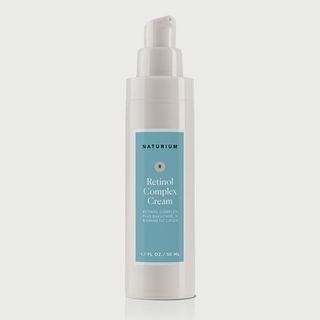
Naturium Retinol Complex Cream

Naturium Retinol Complex Cream

Efficacy91/100IrritancyMedium
Edit

Works for

3 of 3 advertised claims delivered

Evens skin tone
2 ingredients credited for this claim
Strong support
What the product description says
“An optimal concentration of retinol works together with Bakuchiol, a plant-derived retinol alternative that nourishes skin while diminishing the look of fine lines, wrinkles, hyperpigmentation and uneven texture. p H 5.0 ~ 5.75.”
Source: Soko Glam

This product can help reduce hypepigmentation and even out the skin tone because it contains the following effective ingredients: retinol.

In addition, this product contains bakuchiol. This ingredient (ingredients) might help reduce hyperpigmentation, but the effect, if any, is likely to be small.

Keep in mind that you would need to apply any topical skincare targetted at hypigmentation consistently for a couple of months to get a result. No topical skincare product can help get rid of hyperpigmentation (including post-acne marks and age spots) instantly.

RetinolHeroEffect: HighTwo steps removed from the active form of vitamin A - retinoic acid. Once converted to the retinoic acid in the skin, retinol is proven to be effective against all signs of aging. It improves skin cell turnover, helps fight blemishes and clogged pores, can regulate excess oil production and even skin tone. It can, however, be quite irritating~1.6–1.9%
BakuchiolKey activeEffect: HighA plant extract that is, though different in chemical structure, acts similar to retinoids. First studies show that it can help reduce fine lines and wrinkles, improve skin tone, reduce clogged pores and blemishes, and reduce inflammation. There is no conclusive evidence that bakuchiol is as effective as retinol however. The study that directly compared retinol with bakuchiol used bakuchiol applied twice daily compared to once per day for the retinol. According to this study, bakuchiol is less irritating than retinol. Bakuchiol is extracted from seeds of Babchi plant. Other parts of the plant contain coumarins that could cause allergic and irritant reactions. These compounds should be removed in the extraction process when bakuchiol is produced, but it is a good idea to be cautious and stay away from products that include the Babchi plant extracts other than purified bakuchiol to avoid irritation~0.95–1.2%
Anti-aging
4 ingredients credited for this claim
Strong support
What the product description says
“An optimal concentration of retinol works together with Bakuchiol, a plant-derived retinol alternative that nourishes skin while diminishing the look of fine lines, wrinkles, hyperpigmentation and uneven texture. p H 5.0 ~ 5.75.”
Source: Soko Glam

This product can help reduce and prevent fine lines and wrinkles, improve skin elasticity and firmness because it contains retinol, bakuchiol.

Keep in mind that it typically takes at least 6 weeks to notice any results because the changes that are needed to improve fine lines and elasticity happen in the deeper layers of the skin. No topical anti-aging product can “erase” wrinkles or fully reverse signs of aging.

RetinolHeroEffect: HighTwo steps removed from the active form of vitamin A - retinoic acid. Once converted to the retinoic acid in the skin, retinol is proven to be effective against all signs of aging. It improves skin cell turnover, helps fight blemishes and clogged pores, can regulate excess oil production and even skin tone. It can, however, be quite irritating~1.6–1.9%
BakuchiolKey activeEffect: HighA plant extract that is, though different in chemical structure, acts similar to retinoids. First studies show that it can help reduce fine lines and wrinkles, improve skin tone, reduce clogged pores and blemishes, and reduce inflammation. There is no conclusive evidence that bakuchiol is as effective as retinol however. The study that directly compared retinol with bakuchiol used bakuchiol applied twice daily compared to once per day for the retinol. According to this study, bakuchiol is less irritating than retinol. Bakuchiol is extracted from seeds of Babchi plant. Other parts of the plant contain coumarins that could cause allergic and irritant reactions. These compounds should be removed in the extraction process when bakuchiol is produced, but it is a good idea to be cautious and stay away from products that include the Babchi plant extracts other than purified bakuchiol to avoid irritation~0.95–1.2%
Butyrospermum parkii butterEffect: LowA great moisturising ingredient that softens the skin and reduces water loss from its upper layer. It also can be helpful in protecting skin from free radicals~4.1–5%
TocopherolEffect: Low, below effective dosePure form of vitamin E. Can help moisturise and protect the skin from free radicals. Often used to help stabilise other ingredients or the formula itself~0.2–0.35%
Moisturizing
22 ingredients credited for this claim
Good support
What the product description says
“Retinol Complex Cream”
From product name

This product can help improve hydration of the skin with the two types of ingredients.

The first type is called “humectants”:
these ingredients help attract water. When humectants are on the surface of the skin, they “pull in” the moisture from the outside environment, or from within deeper layers of the skin. The following ingredients in this product do the job: glycerin, sodium hyaluronate.

This product also contains ingredients called “occlusives”. They help reduce the speed with which our skin loses moisture to the outside environment. These ingredients also help soften the upper layer of the skin, so it feels less tight and nicer to the touch. The following ingredients in this product do the job: butyrospermum parkii butter, caprylic/capric triglyceride.

Copernicia cerifera waxKey active· Emollient, OcclusiveEffect: HighHelps to soften the upper layer of the skin and create a nice product consistency~0.3–0.55%
Astrocaryum murumuru seed butterKey active· EmollientEffect: HighHelps soften the upper layer of the skin. Could be comedogenic due to the myrisic acid content~1.9–2.3%
Sodium hyaluronateKey active· HumectantEffect: HighOne of the best moisturizing ingredients. Attracts water into the upper layer of the skin~0.3–0.55%
SqualaneKey active· Emollient, OcclusiveEffect: HighAn oil naturally present in skin. Works as an emollient to soften the skin and form a protective layer on its surface without a greasy feeling.~1.5–1.8%
DimethiconeKey active· Emollient, OcclusiveEffect: HighA silicone that helps to reduce water loss from the surface of the skin. Can temporarily "fill in" lines and wrinkles, absorb oil, and create a nice product finish~3.1–3.8%
Ethylhexyl olivateKey activeEffect: HighHelps soften the upper layer of the skin~0.65–0.95%
GlycerinKey active· HumectantEffect: HighOne of the best moisturizing ingredients. Naturally present in skin. It attracts water to the upper layer of the skin working as a humectant~4.6–5.6%
Phytosteryl/octyldodecyl lauroyl glutamateKey active· EmollientEffect: HighA mix of amino acids and plant-based lipids. Helps to soften the upper layer of the skin and reduce water loss over time~0.6–0.9%
Helianthus annuus seed oilKey active· Emollient, OcclusiveEffect: HighA great emollient due to its high linoleic acid content. One of the most effective plant oils in helping skin hydration and repairing skin barrier function~0.2–0.4%
Butyrospermum parkii butterKey active· Emollient, OcclusiveEffect: HighA great moisturising ingredient that softens the skin and reduces water loss from its upper layer. It also can be helpful in protecting skin from free radicals~4.1–5%
TrioleinKey activeEffect: HighHelps soften the upper layer of the skin~0.15–0.3%
Caprylic/capric triglycerideKey active· Emollient, OcclusiveEffect: HighA good mix of fatty acids that forms a protective layer on the skin. Improves the shelf life of products. Derived from coconut and glycerin~2.4–2.9%
Gossypium herbaceum seed oilKey activeEffect: MediumCottonseed oil. It is used as an emollient and occlusive in products. It is rich palmitic, oleic acid, and linoleic fatty acids.~1.1–1.4%
Phytosteryl canola glyceridesKey activeEffect: MediumHelps soften the upper layer of the skin~0.2–0.35%
Palmitic acid· EmollientEffect: LowAn emollient that is naturally present in skin and helps soften it~0.25–0.45%
Caprylyl glycol· Humectant, EmollientEffect: LowHelps preserve products and creates a nice product texture~0.2–0.4%
Linum usitatissimum seed oilEffect: Low~0.2–0.35%
Oleic acid· EmollientEffect: LowHelps soften the upper layer of the skin. At the same time, it can weaken the skin's barrier enhancing penetration of other ingredients and increasing the risk of skin dryness~0.25–0.45%
Linoleic acidUnder-dosedEffect: HighAn excellent emollient. Helps soften the skin, restore its barrier function, and can help to calm down inflammation. It can be helpful to prevent blemishes and clogged pores~0.3–0.55%
Stearic acidEffect: Low, below effective doseHelps oil and water mix together and works as an emollient~0.3–0.55%
TocopherolEffect: Low, below effective dosePure form of vitamin E. Can help moisturise and protect the skin from free radicals. Often used to help stabilise other ingredients or the formula itself~0.2–0.35%
LecithinEffect: Low, below effective doseUsed mostly for creating emulsions - helping oil and water mix together. Helps soften the upper layer of the skin~0.3–0.6%
Anti-oxidation
Not advertised by the brand · 6 ingredients credited for this claim
Strong support

This product contains antioxidants (bakuchiol, retinol) that can help neutralize free radicals in skin. By doing so, they can lessen the damage the skin gets from the UV light (sun).

BakuchiolKey activeEffect: HighA plant extract that is, though different in chemical structure, acts similar to retinoids. First studies show that it can help reduce fine lines and wrinkles, improve skin tone, reduce clogged pores and blemishes, and reduce inflammation. There is no conclusive evidence that bakuchiol is as effective as retinol however. The study that directly compared retinol with bakuchiol used bakuchiol applied twice daily compared to once per day for the retinol. According to this study, bakuchiol is less irritating than retinol. Bakuchiol is extracted from seeds of Babchi plant. Other parts of the plant contain coumarins that could cause allergic and irritant reactions. These compounds should be removed in the extraction process when bakuchiol is produced, but it is a good idea to be cautious and stay away from products that include the Babchi plant extracts other than purified bakuchiol to avoid irritation~0.95–1.2%
RetinolKey activeEffect: HighTwo steps removed from the active form of vitamin A - retinoic acid. Once converted to the retinoic acid in the skin, retinol is proven to be effective against all signs of aging. It improves skin cell turnover, helps fight blemishes and clogged pores, can regulate excess oil production and even skin tone. It can, however, be quite irritating~1.6–1.9%
Butyrospermum parkii butterEffect: LowA great moisturising ingredient that softens the skin and reduces water loss from its upper layer. It also can be helpful in protecting skin from free radicals~4.1–5%
Phytosteryl/octyldodecyl lauroyl glutamateEffect: LowA mix of amino acids and plant-based lipids. Helps to soften the upper layer of the skin and reduce water loss over time~0.6–0.9%
TocopherolUnder-dosedEffect: HighPure form of vitamin E. Can help moisturise and protect the skin from free radicals. Often used to help stabilise other ingredients or the formula itself~0.2–0.35%
Tocopheryl acetateEffect: Low, below effective doseA more stable but less bio-available form of vitamin E compared to Tocopherol. Might help moisturize and protect the skin from free radicals, but mostly used in low concentrations to stabilize other ingredients.~0.2–0.35%
Exfoliation
Not advertised by the brand · 1 ingredient credited for this claim
Strong support

This product can help exfoliate the skin. In other words, it helps break down the bonds between dead cells on the surface of the skin and speed up the skin turnover. Skin often appears softer and brighter after exfoliation, but overdoing it can result in disrupted skin barrier. The following ingredient is doing the exfoliating job in this product: retinol.

RetinolKey activeEffect: HighTwo steps removed from the active form of vitamin A - retinoic acid. Once converted to the retinoic acid in the skin, retinol is proven to be effective against all signs of aging. It improves skin cell turnover, helps fight blemishes and clogged pores, can regulate excess oil production and even skin tone. It can, however, be quite irritating~1.6–1.9%
Anti-blemish
Not advertised by the brand · 3 ingredients credited for this claim
Strong support

This product can help reduce breakouts and clogged pores because it contains the following ingredient: retinol. This ingredient is used for treating acne and can have a noticeable effect.

In addition, this product contains bakuchiol. It can help in reducing blemishes, even though it is less effective.

RetinolHeroEffect: HighTwo steps removed from the active form of vitamin A - retinoic acid. Once converted to the retinoic acid in the skin, retinol is proven to be effective against all signs of aging. It improves skin cell turnover, helps fight blemishes and clogged pores, can regulate excess oil production and even skin tone. It can, however, be quite irritating~1.6–1.9%
BakuchiolKey activeEffect: HighA plant extract that is, though different in chemical structure, acts similar to retinoids. First studies show that it can help reduce fine lines and wrinkles, improve skin tone, reduce clogged pores and blemishes, and reduce inflammation. There is no conclusive evidence that bakuchiol is as effective as retinol however. The study that directly compared retinol with bakuchiol used bakuchiol applied twice daily compared to once per day for the retinol. According to this study, bakuchiol is less irritating than retinol. Bakuchiol is extracted from seeds of Babchi plant. Other parts of the plant contain coumarins that could cause allergic and irritant reactions. These compounds should be removed in the extraction process when bakuchiol is produced, but it is a good idea to be cautious and stay away from products that include the Babchi plant extracts other than purified bakuchiol to avoid irritation~0.95–1.2%
Linoleic acidUnder-dosedEffect: MediumAn excellent emollient. Helps soften the skin, restore its barrier function, and can help to calm down inflammation. It can be helpful to prevent blemishes and clogged pores~0.3–0.55%

Can it cause trouble?

Irritancy
2 strong irritants: Retinol, Humulus lupulus extract
Medium risk
We flagged 15 ingredients with irritancy potential. Severity depends on your sensitivity threshold; the table lists the worst offenders first.
IngredientFunctionIrritationEst. amount
RetinolTwo steps removed from the active form of vitamin A - retinoic acid. Once converted to the retinoic acid in the skin, retinol is proven to be effective against all signs of aging. It improves skin cell turnover, helps fight blemishes and clogged pores, can regulate excess oil production and even skin tone. It can, however, be quite irritatingHigh~1.6–1.9%est.
Humulus lupulus extractHops extract. Can contain common irritants and allergens geraniol, limonene, linaloolHigh~0.35–0.6%est.
Caprylic/capric triglycerideA good mix of fatty acids that forms a protective layer on the skin. Improves the shelf life of products. Derived from coconut and glycerinMedium~2.4–2.9%est.
Astrocaryum murumuru seed butterHelps soften the upper layer of the skin. Could be comedogenic due to the myrisic acid contentMedium~1.9–2.3%est.
BakuchiolA plant extract that is, though different in chemical structure, acts similar to retinoids. First studies show that it can help reduce fine lines and wrinkles, improve skin tone, reduce clogged pores and blemishes, and reduce inflammation. There is no conclusive evidence that bakuchiol is as effective as retinol however. The study that directly compared retinol with bakuchiol used bakuchiol applied twice daily compared to once per day for the retinol. According to this study, bakuchiol is less irritating than retinol. Bakuchiol is extracted from seeds of Babchi plant. Other parts of the plant contain coumarins that could cause allergic and irritant reactions. These compounds should be removed in the extraction process when bakuchiol is produced, but it is a good idea to be cautious and stay away from products that include the Babchi plant extracts other than purified bakuchiol to avoid irritationMedium~0.95–1.2%est.
Sodium acrylates copolymerUsed to create a thicker product consistencyMedium~0.5–0.75%est.
HydroxyacetophenoneUsed to increase effectiveness of preservativesMedium~0.45–0.65%est.
Glyceryl behenateUsed to create a thicker product consistency and help soften the upper layer of the skinMedium~0.25–0.5%est.
Potassium sorbateA preservativeMedium~0.2–0.4%est.
Caprylyl glycolHelps preserve products and creates a nice product textureMedium~0.2–0.4%est.
Hexylene glycolHelps create a more spreadable product textureMedium~0.2–0.4%est.
Oleic acidHelps soften the upper layer of the skin. At the same time, it can weaken the skin's barrier enhancing penetration of other ingredients and increasing the risk of skin drynessMedium~0.25–0.45%est.
Tocopheryl acetateA more stable but less bio-available form of vitamin E compared to Tocopherol. Might help moisturize and protect the skin from free radicals, but mostly used in low concentrations to stabilize other ingredients.Medium~0.2–0.35%est.
1,2-hexanediolA preservativeMedium~0.1–0.25%est.
Disodium cocoamphodiacetateHelps oil and water mix together and works as a cleansing agentMedium~0.2–0.4%est.
Comedogenic
2 ingredients rated 2 or more on the 0–5 pore-clogging scale
2 flagged
These ingredients have a comedogenic rating of 2 or more on a 0–5 scale; the table shows each one's rating. In leave-on products they can clog pores in acne-prone skin.
IngredientFunctionRatingEst. amount
Butyrospermum parkii butterA great moisturising ingredient that softens the skin and reduces water loss from its upper layer. It also can be helpful in protecting skin from free radicals3/5~4.1–5%est.
Gossypium herbaceum seed oilCottonseed oil. It is used as an emollient and occlusive in products. It is rich palmitic, oleic acid, and linoleic fatty acids.3/5~1.1–1.4%est.
Edit

User reviews

Would you recommend?
No community reviews yet.

Be the first — your take helps the next person decide.

Write a review · ~30s

Ingredients

Filter by role to see what each ingredient is doing.

Water~45–55%
Formula
Irritation risk
Low

Plain old water

More about Water
Glycerin~4.6–5.6%
Key active
Irritation risk
Low
Works for
Moisturizing

One of the best moisturizing ingredients. Naturally present in skin. It attracts water to the upper layer of the skin working as a humectant

More about Glycerin
Butyrospermum parkii butter~4.1–5%
Key activeComedogenic 3/5
Irritation risk
Low
Comedogenicity
3/5
Works for
MoisturizingAnti-oxidationAnti-aging

A great moisturising ingredient that softens the skin and reduces water loss from its upper layer. It also can be helpful in protecting skin from free radicals

More about Butyrospermum parkii butter
Dimethicone~3.1–3.8%
Key active
Irritation risk
Low
Works for
MoisturizingMattifying

A silicone that helps to reduce water loss from the surface of the skin. Can temporarily "fill in" lines and wrinkles, absorb oil, and create a nice product finish

More about Dimethicone
Caprylic/capric triglyceride~2.4–2.9%
Key activeIrritant · medium
Irritation risk
Medium
Works for
Moisturizing

A good mix of fatty acids that forms a protective layer on the skin. Improves the shelf life of products. Derived from coconut and glycerin

More about Caprylic/capric triglyceride
Astrocaryum murumuru seed butter~1.9–2.3%
Key activeIrritant · medium
Irritation risk
Medium
Works for
Moisturizing

Helps soften the upper layer of the skin. Could be comedogenic due to the myrisic acid content

More about Astrocaryum murumuru seed butter
Retinol~1.6–1.9%
Hero · Anti-aging, Evens skin tone, Anti-blemishIrritant · high
Irritation risk
High
Works for
Evens skin toneAnti-agingAnti-oxidationExfoliationMattifyingAnti-blemish

Two steps removed from the active form of vitamin A - retinoic acid. Once converted to the retinoic acid in the skin, retinol is proven to be effective against all signs of aging. It improves skin cell turnover, helps fight blemishes and clogged pores, can regulate excess oil production and even skin tone. It can, however, be quite irritating

More about Retinol
Squalane~1.5–1.8%
Key active
Irritation risk
Low
Works for
Moisturizing

An oil naturally present in skin. Works as an emollient to soften the skin and form a protective layer on its surface without a greasy feeling.

More about Squalane
Gossypium herbaceum seed oil~1.1–1.4%
Key activeComedogenic 3/5
Irritation risk
Low
Comedogenicity
3/5
Works for
Moisturizing

Cottonseed oil. It is used as an emollient and occlusive in products. It is rich palmitic, oleic acid, and linoleic fatty acids.

More about Gossypium herbaceum seed oil
Bakuchiol~0.95–1.2%
Key activeIrritant · medium
Irritation risk
Medium
Works for
Anti-inflammatoryAnti-agingAnti-oxidationEvens skin toneAnti-blemish

A plant extract that is, though different in chemical structure, acts similar to retinoids. First studies show that it can help reduce fine lines and wrinkles, improve skin tone, reduce clogged pores and blemishes, and reduce inflammation. There is no conclusive evidence that bakuchiol is as effective as retinol however. The study that directly compared retinol with bakuchiol used bakuchiol applied twice daily compared to once per day for the retinol. According to this study, bakuchiol is less irritating than retinol. Bakuchiol is extracted from seeds of Babchi plant. Other parts of the plant contain coumarins that could cause allergic and irritant reactions. These compounds should be removed in the extraction process when bakuchiol is produced, but it is a good idea to be cautious and stay away from products that include the Babchi plant extracts other than purified bakuchiol to avoid irritation

More about Bakuchiol
Ethylhexyl olivate~0.65–0.95%
Key active
Irritation risk
Low
Works for
Moisturizing

Helps soften the upper layer of the skin

More about Ethylhexyl olivate
Phytosteryl/octyldodecyl lauroyl glutamate~0.6–0.9%
Key active
Irritation risk
Low
Works for
MoisturizingAnti-oxidation

A mix of amino acids and plant-based lipids. Helps to soften the upper layer of the skin and reduce water loss over time

More about Phytosteryl/octyldodecyl lauroyl glutamate
Sodium acrylates copolymer~0.5–0.75%
Irritant · medium
Irritation risk
Medium

Used to create a thicker product consistency

More about Sodium acrylates copolymer
Hydroxyacetophenone~0.45–0.65%
Irritant · medium
Irritation risk
Medium

Used to increase effectiveness of preservatives

More about Hydroxyacetophenone
Polyacrylate crosspolymer-6~0.4–0.65%
Formula
Bidens pilosa extract~0.35–0.65%
Formula
Humulus lupulus extract~0.35–0.6%
Irritant · high
Irritation risk
High

Hops extract. Can contain common irritants and allergens geraniol, limonene, linalool

More about Humulus lupulus extract
Sodium hyaluronate~0.3–0.55%
Key active
Irritation risk
Low
Works for
Moisturizing

One of the best moisturizing ingredients. Attracts water into the upper layer of the skin

More about Sodium hyaluronate
Lecithin~0.3–0.6%
Formula
Irritation risk
Low
Works for
CleansingMoisturizing

Used mostly for creating emulsions - helping oil and water mix together. Helps soften the upper layer of the skin

More about Lecithin
Glyceryl polyacrylate~0.25–0.5%
Formula
Irritation risk
Low

Helps to create a nice product texture and spread the product more easily on the skin

More about Glyceryl polyacrylate
Linum usitatissimum seed oil~0.2–0.35%
Formula
Irritation risk
Low
Works for
Moisturizing
More about Linum usitatissimum seed oil
Glyceryl behenate~0.25–0.5%
Irritant · medium
Irritation risk
Medium
Works for
Cleansing

Used to create a thicker product consistency and help soften the upper layer of the skin

More about Glyceryl behenate
Linoleic acid~0.3–0.55%
Under-dosed
Irritation risk
Low
Works for
MoisturizingCleansingAnti-blemish

An excellent emollient. Helps soften the skin, restore its barrier function, and can help to calm down inflammation. It can be helpful to prevent blemishes and clogged pores

More about Linoleic acid
Potassium sorbate~0.2–0.4%
Irritant · medium
Irritation risk
Medium

A preservative

More about Potassium sorbate
Phytosteryl canola glycerides~0.2–0.35%
Key active
Irritation risk
Low
Works for
Moisturizing

Helps soften the upper layer of the skin

More about Phytosteryl canola glycerides
Caprylyl glycol~0.2–0.4%
Irritant · medium
Irritation risk
Medium
Works for
Moisturizing

Helps preserve products and creates a nice product texture

More about Caprylyl glycol
Phenoxyethanol~0.2–0.4%
Formula
Irritation risk
Low

A preservative. It helps prevent bacterial growth in cosmetic products

More about Phenoxyethanol
Copernicia cerifera wax~0.3–0.55%
Key active
Irritation risk
Low
Works for
Moisturizing

Helps to soften the upper layer of the skin and create a nice product consistency

More about Copernicia cerifera wax
Hexylene glycol~0.2–0.4%
Irritant · medium
Irritation risk
Medium
Works for
Cleansing

Helps create a more spreadable product texture

More about Hexylene glycol
Oleic acid~0.25–0.45%
Irritant · medium
Irritation risk
Medium
Works for
CleansingAnti-inflammatoryMoisturizing

Helps soften the upper layer of the skin. At the same time, it can weaken the skin's barrier enhancing penetration of other ingredients and increasing the risk of skin dryness

More about Oleic acid
Palmitic acid~0.25–0.45%
Formula
Irritation risk
Low
Works for
CleansingMoisturizing

An emollient that is naturally present in skin and helps soften it

More about Palmitic acid
Helianthus annuus seed oil~0.2–0.4%
Key active
Irritation risk
Low
Works for
Moisturizing

A great emollient due to its high linoleic acid content. One of the most effective plant oils in helping skin hydration and repairing skin barrier function

More about Helianthus annuus seed oil
Polysorbate 20~0.2–0.4%
Formula
Irritation risk
Low
Works for
Cleansing

Helps oil and water mix together

More about Polysorbate 20
Propanediol~0.2–0.4%
Formula
Irritation risk
Low

Acts as a solvent for other ingredients. Speeds up the absorption of other ingredients into the skin

More about Propanediol
Tocopherol~0.2–0.35%
Under-dosed
Irritation risk
Low
Works for
Anti-oxidationAnti-inflammatoryAnti-agingMoisturizing

Pure form of vitamin E. Can help moisturise and protect the skin from free radicals. Often used to help stabilise other ingredients or the formula itself

More about Tocopherol
Stearic acid~0.3–0.55%
Formula
Irritation risk
Low
Works for
CleansingMoisturizing

Helps oil and water mix together and works as an emollient

More about Stearic acid
Tocopheryl acetate~0.2–0.35%
Irritant · medium
Irritation risk
Medium
Works for
Anti-oxidation

A more stable but less bio-available form of vitamin E compared to Tocopherol. Might help moisturize and protect the skin from free radicals, but mostly used in low concentrations to stabilize other ingredients.

More about Tocopheryl acetate
Triolein~0.15–0.3%
Key active
Irritation risk
Low
Works for
Moisturizing

Helps soften the upper layer of the skin

More about Triolein
1,2-hexanediol~0.1–0.25%
Irritant · medium
Irritation risk
Medium

A preservative

More about 1,2-hexanediol
Disodium cocoamphodiacetate~0.2–0.4%
Irritant · medium
Irritation risk
Medium
Works for
Cleansing

Helps oil and water mix together and works as a cleansing agent

More about Disodium cocoamphodiacetate
Xanthan gum~0.1–0.2%
Formula
Irritation risk
Low
Works for
Cleansing

Used to create a thicker product consistency

More about Xanthan gum
Ethyl ferulate~0.1–0.15%
Formula
Irritation risk
Low
More about Ethyl ferulate
Ingredient list view

Water, Glycerin, Butyrospermum parkii butter, Dimethicone, Caprylic/capric triglyceride, Astrocaryum murumuru seed butter, Retinol, Squalane, Gossypium herbaceum seed oil, Bakuchiol, Ethylhexyl olivate, Phytosteryl/octyldodecyl lauroyl glutamate, Sodium acrylates copolymer, Hydroxyacetophenone, Polyacrylate crosspolymer-6, Bidens pilosa extract, Humulus lupulus extract, Sodium hyaluronate, Lecithin, Glyceryl polyacrylate, Linum usitatissimum seed oil, Glyceryl behenate, Linoleic acid, Potassium sorbate, Phytosteryl canola glycerides, Caprylyl glycol, Phenoxyethanol, Copernicia cerifera wax, Hexylene glycol, Oleic acid, Palmitic acid, Helianthus annuus seed oil, Polysorbate 20, Propanediol, Tocopherol, Stearic acid, Tocopheryl acetate, Triolein, 1,2-hexanediol, Disodium cocoamphodiacetate, Xanthan gum, Ethyl ferulate

Compare prices

Retailers ranked by price — lowest first.

Amazon USPrice as of 10/12/2026 12:37 GMT
$15.99
Buy
Naturium
$20.00
Buy
Soko Glam
$20.00
Buy

Affiliate links · prices updated regularly · As an Amazon Associate, WIMJ earns from qualifying purchases.

Worth comparing, line by line.

Match % combines shared ingredients, the first five ingredients, shared actives and hero ingredients, irritancy (lower counts in the alternative's favour), texture and body area. Only products in the same routine step are compared.

Side-by-side comparison of this product against its closest alternatives
NaturiumRetinol Complex CreamYOUR PRODUCTMoshPM MoisturiserGood MoleculesGentle Retinol CreamOrion PharmaBella A-vitamin night cream unscented
Match—76%73%73%
Price$15.99$54.08+$38.09$7.97−$8.02—
Shared key ingredients—6 of 166 of 164 of 16
Key difference—Ceramide ApAllantoinDimethiconol
Irritancy Medium Medium Medium Medium
Drying alcohol————
View product Shop Shop Shop
Cheaper alternatives? See how this stacks up against similar formulas.
We compare ingredient profiles across our catalog — pick the closest match for your budget.
Open dupe finder

Sources cited in this review

Every concentration estimate and effectiveness label is anchored to one of these 24 studies and safety reviews.

  1. 1
  2. 2
  3. 3
  4. 4
  5. 5
  6. 6
Naturium Retinol Complex Cream
NaturiumRetinol Complex Cream

Affiliate links · As an Amazon Associate, WIMJ earns from qualifying purchases.

As an Amazon Associate, WIMJ earns from qualifying purchases.