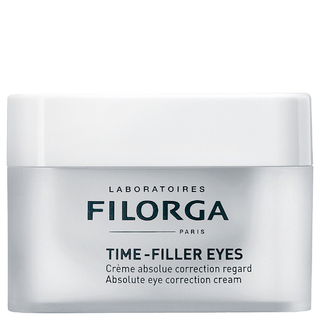
Works for
2 of 2 advertised claims delivered
Evens skin tone7 ingredients credited for this claimStrong support
“Fortified with unique plumping spheres, the lightweight, quick-absorbing formula helps to minimize the appearance of expression lines, wrinkles and under-eye hollows, whilst fading dark circles and combating uneven skin tone to restore youthful luminosity.”
This product can help reduce hypepigmentation and even out the skin tone because it contains the following effective ingredients: glutathione
The following ingredient (ingredients) in this product might be helpful, but there is no evidence to confirm that it actually can help even out the skin tone: alanine, albizia julibrissin bark extract.
Keep in mind that you would need to apply any topical skincare targetted at hypigmentation consistently for a couple of months to get a result. No topical skincare product can help get rid of hyperpigmentation (including post-acne marks and age spots) instantly.
Anti-aging15 ingredients credited for this claimStrong support
“It offers three complementary anti-aging actions On the wrinkles a trio of actives (hyaluronic acid, tripeptide, gentle peeling effect active) to clear lines and smooth out wrinkles around the eye,on the eyelids and eyelashes a lifting complex to fight against release of upper eyelids and a stimulating matrikine to densify the eyelashes,on the dark circles filling spheres and stimulant complex to reduce all types of dark circles hollow and colored.Day after day, wrinkles are smoothed, the lid is tightened, dark circles fade. The eye opens.”
This product can help reduce and prevent fine lines and wrinkles, improve skin elasticity and firmness because it contains adenosine.
These ingredients in the product can also be helpful, even though there is less evidence for their effectiveness: aspartic acid, biotinoyl tripeptide-1, dipeptide diaminobutyroyl benzylamide diacetate, folic acid, palmitoyl tripeptide-38, retinyl acetate, serine, threonine.
Keep in mind that it typically takes at least 6 weeks to notice any results because the changes that are needed to improve fine lines and elasticity happen in the deeper layers of the skin. No topical anti-aging product can “erase” wrinkles or fully reverse signs of aging.
MoisturizingNot advertised by the brand · 45 ingredients credited for this claimStrong support
This product can help improve hydration of the skin with the two types of ingredients.
The first type is called “humectants”:
these ingredients help attract water.
When humectants are on the surface of the skin, they “pull in” the moisture from the outside environment, or from
within deeper layers of the skin. The following ingredients in this product do the job:
alanine, aminobutyric acid.
This product also contains ingredients called “occlusives”. They help reduce the speed with which our skin loses moisture to the outside environment. These ingredients also help soften the upper layer of the skin, so it feels less tight and nicer to the touch. The following ingredients in this product do the job: arginine, caprylic/capric triglyceride.
The following ingredients in this product are especially good for supporting the skin barrier and helping with the hydration level: biotinoyl tripeptide-1, dipeptide diaminobutyroyl benzylamide diacetate, palmitoyl tripeptide-38
Anti-oxidationNot advertised by the brand · 8 ingredients credited for this claimStrong support
This product contains antioxidants (glutathione) that can help neutralize free radicals in skin. By doing so, they can lessen the damage the skin gets from the UV light (sun).
Can it cause trouble?
Irritancy2 strong irritants: Parfum, Retinyl acetate — patch-test recommendedHigh risk
Comedogenic3 ingredients rated 2 or more on the 0–5 pore-clogging scale3 flagged


User reviews
Be the first — your take helps the next person decide.
Ingredients
Filter by role to see what each ingredient is doing.
Water~45–55%
Glycerin~4.9–5.9%
- Irritation risk
- Low
One of the best moisturizing ingredients. Naturally present in skin. It attracts water to the upper layer of the skin working as a humectant
More about GlycerinPropanediol~3.8–4.6%
- Irritation risk
- Low
Acts as a solvent for other ingredients. Speeds up the absorption of other ingredients into the skin
More about PropanediolCaprylic/capric triglyceride~3.1–3.8%
- Irritation risk
- Medium
A good mix of fatty acids that forms a protective layer on the skin. Improves the shelf life of products. Derived from coconut and glycerin
More about Caprylic/capric triglycerideC12-16 alcohols~2.3–2.8%
- Irritation risk
- Medium
Helps soften the upper layer of the skin and improve the product's texture
More about C12-16 alcoholsSqualane~1.9–2.3%
- Irritation risk
- Low
An oil naturally present in skin. Works as an emollient to soften the skin and form a protective layer on its surface without a greasy feeling.
More about SqualaneEthylhexyl palmitate~1.6–1.9%
- Irritation risk
- Low
- Comedogenicity
- 3/5
An emollient that helps soften the skin and create a nice product texture
More about Ethylhexyl palmitateAlbizia julibrissin bark extract~1.3–1.6%
- Irritation risk
- High
A plant extract that might help to neutralize free radicals in skin. Is claimed to help reduce hyperpigmentation but evidence is missing
More about Albizia julibrissin bark extractBenzyl alcohol~0.65–0.95%
- Irritation risk
- High
A preservative. Can be used to mask unpleasant smell. Can be irritating
More about Benzyl alcoholIsododecane~0.95–1.15%
- Irritation risk
- Low
An emollient that helps soften the skin and can decrease moisture loss. Helps create a nice product texture
More about IsododecaneHydrogenated lecithin~0.65–0.95%
- Irritation risk
- Low
Helps to retain moisture by creating a protective barrier on the skin. Rich in fatty acids. Improves product texture and helps with the penetration of other ingredients.
More about Hydrogenated lecithinPalmitic acid~0.55–0.85%
- Irritation risk
- Low
An emollient that is naturally present in skin and helps soften it
More about Palmitic acidSodium polyacrylate starch~0.5–0.7%
- Irritation risk
- Low
Used to create a thicker product consistency
More about Sodium polyacrylate starchGlyceryl stearate~0.45–0.7%
- Irritation risk
- Low
An emollient that softens the skin and forms a protective layer on its surface. Helps water and oil mix together
More about Glyceryl stearatePeg-100 stearate~0.45–0.7%
- Irritation risk
- Low
Helps oil and water mix togehter and creates a nice product texture
More about Peg-100 stearateSucrose palmitate~0.4–0.6%
Polyacrylate-13~0.35–0.65%
- Irritation risk
- Low
Used to create a thicker product consistency and stabilize the product formulation
More about Polyacrylate-13Behenyl beeswax~0.3–0.5%
- Irritation risk
- Low
Hydrogenated polydecene~0.25–0.5%
- Irritation risk
- Low
Helps to soften the upper layer of the skin and create a nice product texture
More about Hydrogenated polydeceneStearyl beeswax~0.25–0.5%
- Irritation risk
- Low
Chlorphenesin~0.16–0.32%
Disodium edta~0.2–0.4%
Parfum~0.15–0.3%
- Irritation risk
- High
An aromatic blend of unspecified and possibly irritating ingredients
More about ParfumPolyisobutene~0.2–0.4%
Glyceryl linoleate~0.25–0.45%
- Irritation risk
- Medium
Helps oil and water mix together
More about Glyceryl linoleatePrunus amygdalus dulcis seed~0.15–0.3%
- Irritation risk
- Low
Helps soften the upper layer of the skin
More about Prunus amygdalus dulcis seedSodium chloride~0.2–0.4%
- Irritation risk
- Low
Used to stabilize mixtures of oil and water, and create thicker, gel-like product textures
More about Sodium chlorideCi 77891~0.15–0.3%
- Irritation risk
- Low
Titanium dioxide~0.25–0.5%
- Irritation risk
- Low
Works as a UV filter when used in high concentrations. It is photostable and is effective mostly against the UVB light, with some protection in the UVA range. In small concentrations, used for its ability to improve the color of cosmetic products. Is usually well tolerated by the skin
More about Titanium dioxideHydrogenated vegetable oil~0.2–0.35%
- Irritation risk
- Low
- Comedogenicity
- 2/5
An oil from a mixture of different vegetables. Helps soften the upper layer of the skin
More about Hydrogenated vegetable oilSodium hydroxide~0.2–0.35%
Mica~0.2–0.4%
- Irritation risk
- Low
Creates an illusion of smoother and more radiant skin tone. Adds shimmer to the skin by reflecting light
More about MicaTrihydroxystearin~0.15–0.3%
- Irritation risk
- Low
Helps soften the upper layer of the skin and improve the product texture
More about TrihydroxystearinPolysorbate 20~0.2–0.4%
Hydroxypropyl cyclodextrin~0.2–0.4%
- Irritation risk
- Medium
Used to stabilize product formulations and help soften the upper layer of the skin
More about Hydroxypropyl cyclodextrinSorbitan isostearate~0.2–0.35%
- Irritation risk
- Low
Helps oil and water mix together
More about Sorbitan isostearateSilica~0.3–0.55%
Sodium hyaluronate~0.2–0.35%
- Irritation risk
- Low
One of the best moisturizing ingredients. Attracts water into the upper layer of the skin
More about Sodium hyaluronateDipeptide diaminobutyroyl benzylamide diacetate~0.15–0.3%
- Irritation risk
- Low
A type of peptide. Peptides are excellent moisturizers and might be able support collagen production reducing fine lines and wrinkles
More about Dipeptide diaminobutyroyl benzylamide diacetatePanthenol~0.2–0.35%
- Irritation risk
- Low
Helps attract water to the upper layer of the skin and can help improve skin barrier function
More about PanthenolCrithmum maritimum extract~0.15–0.3%
- Irritation risk
- Low
- Comedogenicity
- 3/5
An algae extract that might have anti-oxidant properties
More about Crithmum maritimum extractGlucose~0.2–0.35%
- Irritation risk
- Low
Helps attract water to the upper layer of the skin. Could be helpful in restoring the skin barrier function
More about GlucosePhenoxyethanol~0.2–0.35%
- Irritation risk
- Low
A preservative. It helps prevent bacterial growth in cosmetic products
More about PhenoxyethanolBiotinoyl tripeptide-1~0.2–0.35%
- Irritation risk
- Low
A type of peptide. Peptides are excellent moisturizers and might be able support collagen production reducing fine lines and wrinkles
More about Biotinoyl tripeptide-1Citric acid~0.2–0.35%
- Irritation risk
- Medium
Can work as an exfoliant but is typically used to adjust the product pH
More about Citric acidSodium benzoate~0.2–0.35%
Potassium chloride~0.2–0.35%
- Irritation risk
- Low
Potassium sorbate~0.2–0.35%
Calcium chloride~0.2–0.35%
- Irritation risk
- Medium
Helps create a thicker product consistency. Might be irritating
More about Calcium chlorideDarutoside~0.15–0.3%
- Irritation risk
- Low
Magnesium sulfate~0.2–0.4%
Glutamine~0.15–0.3%
- Irritation risk
- Low
Sodium phosphate~0.2–0.35%
Palmitoyl tripeptide-38~0.15–0.3%
- Irritation risk
- Low
A type of peptide. Peptides are excellent moisturizers and might be able support collagen production reducing fine lines and wrinkles
More about Palmitoyl tripeptide-38Ascorbic acid~0.2–0.35%
- Irritation risk
- High
The most well-researched antioxidant that works in skin. Helps neutralize free radicals supporting collagen production, helping to even out the skin tone and preventing early signs of aging
More about Ascorbic acidSodium acetate~0.2–0.35%
- Irritation risk
- Low
Tocopherol~0.2–0.35%
- Irritation risk
- Low
Pure form of vitamin E. Can help moisturise and protect the skin from free radicals. Often used to help stabilise other ingredients or the formula itself
More about TocopherolLysine hcl~0.15–0.3%
Arginine~0.15–0.3%
- Irritation risk
- Low
An amino acid that is naturally present in skin and helps keep it hydrated. When used together with AHAs, it can reduce their irritating effect on the skin
More about ArginineAlanine~0.15–0.3%
- Irritation risk
- Low
An amino-acid that helps to attract water to the upper layer of the skin and might help to lighten the skin, but solid evidence is lacking
More about AlanineHistidine~0.15–0.3%
Valine~0.15–0.3%
- Irritation risk
- Low
Leucine~0.2–0.4%
- Irritation risk
- Low
Threonine~0.2–0.4%
- Irritation risk
- Low
An amino-acid that helps to attract water to the upper layer of the skin. In combination with other amino-acids, might help to reduce fine lines and wrinkles
More about ThreonineIsoleucine~0.2–0.4%
- Irritation risk
- Low
An amino acid that can help attract water to the upper layer of the skin and support skin's barrier function
More about IsoleucineTryptophan~0.2–0.4%
- Irritation risk
- Low
Phenylalanine~0.2–0.4%
- Irritation risk
- Low
Tyrosine~0.2–0.35%
Glycine~0.2–0.35%
- Irritation risk
- Low
Helps to attract water to the upper layer of the skin and can help restore the skin barrier function
More about GlycinePolysorbate 80~0.25–0.45%
Amorphophallus konjac root extract~0.25–0.45%
- Irritation risk
- Low
Serine~0.2–0.35%
- Irritation risk
- Low
An amino-acid that helps to attract water to the upper layer of the skin. In combination with other amino-acids, might help to reduce fine lines and wrinkles
More about SerineAdenosine~0.2–0.4%
- Irritation risk
- Low
Might help improve cell turnover and reduce inflammation in skin. One study shows that the ingredients might be able to help reduce dynamic wrinkles (for example, in the corners of the eyes or on the forehead)
More about AdenosineCystine~0.2–0.4%
- Irritation risk
- Low
Glutathione~0.2–0.4%
- Irritation risk
- Medium
A peptide that can help neutralize free radicals in skin and reduce melanin production resulting in skin lightening effect and reduction in hyperpigmentation. It can also help attract moisture to the upper layer of the skin
More about GlutathioneCyanocobalamin~0.2–0.4%
- Irritation risk
- Low
Can support skin barrier function and reduce inflammation in skin
More about CyanocobalaminDeoxycytidine~0.2–0.4%
- Irritation risk
- Low
Deoxyguanosine~0.2–0.4%
- Irritation risk
- Low
Thymidine~0.2–0.35%
- Irritation risk
- Low
Asparagine~0.2–0.4%
- Irritation risk
- Low
Aspartic acid~0.2–0.35%
- Irritation risk
- Low
An amino-acid that helps increase skin hydration and might help to slightly improve skin firmness, potentially reducing lines and wrinkles
More about Aspartic acidOrnithine~0.2–0.4%
- Irritation risk
- Low
An amino-acid. Helps attract water to the upper layer of the skin
More about OrnithineGlutamic acid~0.2–0.4%
- Irritation risk
- Low
An amino-acid that helps attract water to the upper layer of the skin
More about Glutamic acidNicotinamide adenine dinucleotide~0.2–0.4%
- Irritation risk
- Low
Proline~0.2–0.4%
Aminobutyric acid~0.2–0.4%
- Irritation risk
- Low
Has been shown to support wound healing and skin barrier function when used topically in rats. Is likely to be effective in supporting skin's hydration and barrier function, but research for human skin is missing. Might have some anti-aging properties but the research is missing
More about Aminobutyric acidMethionine~0.2–0.4%
- Irritation risk
- Low
Taurine~0.2–0.4%
- Irritation risk
- Medium
Could be helpful in reducing inflammation in skin, evening out the skin tone and neutralizing free radicals, but more research is needed to confirm its effectiveness
More about TaurineHydroxyproline~0.2–0.4%
- Irritation risk
- Low
Is helpful in restoring skin barrier function supporting its moisture levels. Is claimed to stimulte collagen production in skin but evidence is lacking
More about HydroxyprolineGlucosamine~0.2–0.4%
- Irritation risk
- Low
Coenzyme a~0.2–0.4%
- Irritation risk
- Low
Helps soften the upper layer of the skin and dissolve other ingredients in a product
More about Coenzyme aGlucuronolactone~0.2–0.4%
- Irritation risk
- Low
Sodium glucuronate~0.2–0.35%
- Irritation risk
- Low
Uridine~0.2–0.35%
- Irritation risk
- Low
Thiamine diphosphate~0.2–0.35%
- Irritation risk
- Low
Disodium flavine adenine dinucleotide~0.2–0.4%
- Irritation risk
- Low
Retinyl acetate~0.2–0.35%
Inositol~0.2–0.35%
Deoxycytidine~0.2–0.35%
- Irritation risk
- Low
Niacin~0.2–0.35%
- Irritation risk
- High
A form of vitamin B3. It is similar in action to niacinamide, but is more likely to cause red flashes in skin as the side effect
More about NiacinNiacinamide~0.15–0.3%
- Irritation risk
- Low
Is proven to be effective in reducing blemishes, evening out skin tone and helping to improve lines and wrinkles. It helps the skin to repair sun damage, calm down inflammation and keep maintain good levels of moisture. The concentration of about 2% is effective for supporting the skin barrier and evening out the skin tone. Concentration of 4-6% is better for helping with acne and balancing the sebum production
More about NiacinamidePyridoxal 5-phosphate~0.15–0.3%
- Irritation risk
- Low
Pyridoxine hcl~0.15–0.3%
- Irritation risk
- Medium
Might help neutralize free radicals in skin
More about Pyridoxine hclBiotin~0.15–0.25%
- Irritation risk
- Low
Might have some moisturising properties. Is not effective when applied topically beyond some moisturizing effect
More about BiotinCalcium pantothenate~0.15–0.25%
- Irritation risk
- Low
Helps support skin barrier function improving skin hydration and reducing sensitivity
More about Calcium pantothenateFolic acid~0.15–0.25%
- Irritation risk
- Low
Can help stimulate collagen production in skin. While available studies are promising, more research is needed to confirm the efficacy in skin
More about Folic acidRiboflavin~0.1–0.15%
- Irritation risk
- Low
Tocopheryl phosphate~0.2–0.35%
Ingredient list view
Water, Glycerin, Propanediol, Caprylic/capric triglyceride, C12-16 alcohols, Squalane, Ethylhexyl palmitate, Albizia julibrissin bark extract, Benzyl alcohol, Isododecane, Hydrogenated lecithin, Palmitic acid, Sodium polyacrylate starch, Glyceryl stearate, Peg-100 stearate, Sucrose palmitate, Polyacrylate-13, Behenyl beeswax, Hydrogenated polydecene, Stearyl beeswax, Chlorphenesin, Disodium edta, Parfum, Polyisobutene, Glyceryl linoleate, Prunus amygdalus dulcis seed, Sodium chloride, Ci 77891, Titanium dioxide, Hydrogenated vegetable oil, Sodium hydroxide, Mica, Trihydroxystearin, Polysorbate 20, Hydroxypropyl cyclodextrin, Sorbitan isostearate, Silica, Sodium hyaluronate, Dipeptide diaminobutyroyl benzylamide diacetate, Panthenol, Crithmum maritimum extract, Glucose, Phenoxyethanol, Biotinoyl tripeptide-1, Citric acid, Sodium benzoate, Potassium chloride, Potassium sorbate, Calcium chloride, Darutoside, Magnesium sulfate, Glutamine, Sodium phosphate, Palmitoyl tripeptide-38, Ascorbic acid, Sodium acetate, Tocopherol, Lysine hcl, Arginine, Alanine, Histidine, Valine, Leucine, Threonine, Isoleucine, Tryptophan, Phenylalanine, Tyrosine, Glycine, Polysorbate 80, Amorphophallus konjac root extract, Serine, Adenosine, Cystine, Glutathione, Cyanocobalamin, Deoxycytidine, Deoxyguanosine, Thymidine, Asparagine, Aspartic acid, Ornithine, Glutamic acid, Nicotinamide adenine dinucleotide, Proline, Aminobutyric acid, Methionine, Taurine, Hydroxyproline, Glucosamine, Coenzyme a, Glucuronolactone, Sodium glucuronate, Unknown, Uridine, Unknown, Thiamine diphosphate, Disodium flavine adenine dinucleotide, Retinyl acetate, Inositol, Unknown, Deoxycytidine, Niacin, Niacinamide, Pyridoxal 5-phosphate, Pyridoxine hcl, Biotin, Calcium pantothenate, Folic acid, Riboflavin, Tocopheryl phosphate
Compare prices
Retailers ranked by price — lowest first.
Affiliate links · prices updated regularly · As an Amazon Associate, WIMJ earns from qualifying purchases.
Worth comparing, line by line.
Match % combines shared ingredients, the first five ingredients, shared actives and hero ingredients, irritancy (lower counts in the alternative's favour), texture and body area. Only products in the same routine step are compared.
| FilorgaTime-Filler EyesYOUR PRODUCT | BentonSnail Bee Ultimate Eye Cream | SKIN627CERAMIDE with PANTHENOL Intense Eye Cream | numbuzinNo.9 NAD+ Retinol Volumetox Eye Cream 1ml (Mini Trial Size) | |
|---|---|---|---|---|
| Match | — | 76% | 75% | 73% |
| Price | $43.93 | $14.58−$29.35 | — | $6.54−$37.39 |
| Shared key ingredients | — | 17 of 33 | 15 of 33 | 8 of 33 |
| Key difference | — | Copper Tripeptide-1 | Petrolatum | Acetyl Dipeptide-1 Cetyl Ester |
| Irritancy | High | Medium | Medium | High |
| Drying alcohol | — | — | — | — |
| View product | Shop | Shop | Shop |

Product summary
Judging from the ingredient list, "Filorga - Time-Filler Eyes" works well for improving skin hydration The formulation is based on a combination of good humectants and emollients. Both are needed to increase the skin hydration level. Humectants in this product (alanine, aminobutyric acid, arginine, aspartic acid and glutamic acid) help to increase the water content in the upper layer of the skin. (These ingredients do so by "capturing" water molecules from the outside air or from within the deeper layers of the skin). Emollients in this formulation (arginine, caprylic/capric triglyceride, squalane, ethylhexyl palmitate and hydrogenated vegetable oil) help to reduce the moisture loss from the skin. They also soften the skin surface and relieve the feeling of dryness and tightness.
Ingredient callouts
- This product also contains Vitamin C (Ascorbic Acid). It can be an effective active for anti-aging and evening out the skin tone, but in this moisturizer it is used for stabilizing other ingredients in the formulation. In this concentration (0.20% - 0.35%) it cannot have a noticeable benefit for the skin.
- This moisturizer includes a form of Retinoids (vitamin A) - retinyl acetate 0.20% - 0.35%, but this type of vitamin A is not very effective. It could in theory help with fine lines and wrinkles, but the effect is most likely minimal.
- We like that this moisturizer contains peptides (palmitoyl tripeptide-38 0.15% - 0.30%, biotinoyl tripeptide-1 0.20% - 0.35% and dipeptide diaminobutyroyl benzylamide diacetate 0.15% - 0.30%). There are many different kind of Peptides and they are naturally present in our skin. They all are a combination of aminoacids. Some of them work as natural antibiotics, promote wound-healing and production of collagen. The science is still not settled on how effective Peptides are in skincare, but it is very likely that they have a benefit. Peptides might help restore the skin barrier and fight the signs of aging. At the very least, Peptides work as humectants: they attract water to the upper layer of the skin and improve its hydration.
- Adenosine 0.20% - 0.40%. It is a chemical present inside our skin cells. A clinical trial confirmed that topical application of Adenosine in a low concentration can reduce dynamic wrinkles (these are the wrinkles that appear with age in a places where our mimic is the most active, for example, in the corners of the eyes or on the forehead).
Irritation risk
This moisturizer contains some common irritants, including those without a benefit for the skin. We assess the overall irritancy of this moisturizer to be high. For a detailed overview of all potential irritants: click here
You can see the detailed formula review with the breakdown of all actives in the product and the full ingredient list with estimated concentrations in the tables below.
Price
The product retails for 73.76A$ in Australia, for 30.00£ in the United Kingdom and from 47.20$ up to 59.00$ in the United States.
For a detailed price comparison: click here.
Sources cited in this review
Every concentration estimate and effectiveness label is anchored to one of these 39 studies and safety reviews.
- 1
- 2Phytopharmacological properties of Albizia species: A reviewresearchgate.net
- 3Safety Assessment of Polyene Group as Used in Cosmeticscir-safety.org
- 4
- 5Hyaluronic acid: A key molecule in skin agingncbi.nlm.nih.gov
- 6

Affiliate links · As an Amazon Associate, WIMJ earns from qualifying purchases.