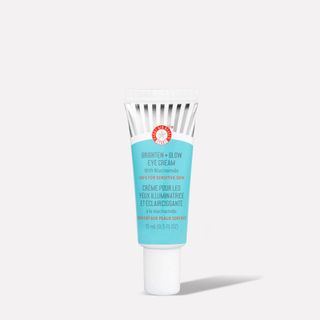
fab Brighten + Glow Eye Cream with Niacinamide
Works for
1 of 1 advertised claim delivered
Moisturizing26 ingredients credited for this claimStrong support
“Peach Micro-Pearls help the eye area appear instantly dewy and revitalized , while Niacinamide hydrates to smooth and brighten skin.”
This product can help improve hydration of the skin with the two types of ingredients.
The first type is called “humectants”:
these ingredients help attract water.
When humectants are on the surface of the skin, they “pull in” the moisture from the outside environment, or from
within deeper layers of the skin. The following ingredients in this product do the job:
glycerin, sodium hyaluronate.
This product also contains ingredients called “occlusives”. They help reduce the speed with which our skin loses moisture to the outside environment. These ingredients also help soften the upper layer of the skin, so it feels less tight and nicer to the touch. The following ingredients in this product do the job: dimethicone, squalane.
The following ingredients in this product are especially good for supporting the skin barrier and helping with the hydration level: lanolin, paraffinum liquidum, petrolatum
Evens skin toneNot advertised by the brand · 4 ingredients credited for this claimStrong support
This product can help reduce hypepigmentation and even out the skin tone because it contains the following effective ingredients: hydroquinone.
The following ingredient (ingredients) in this product might be helpful, but there is no evidence to confirm that it actually can help even out the skin tone: glycyrrhiza glabra root extract.
Keep in mind that you would need to apply any topical skincare targetted at hypigmentation consistently for a couple of months to get a result. No topical skincare product can help get rid of hyperpigmentation (including post-acne marks and age spots) instantly.
Can it cause trouble?
Irritancy5 strong irritants: Alcohol, Parfum + 3 more — patch-test recommendedHigh risk
Comedogenic2 ingredients rated 2 or more on the 0–5 pore-clogging scale2 flagged

User reviews
Be the first — your take helps the next person decide.
Ingredients
Filter by role to see what each ingredient is doing.
Alcohol~24–35%
- Irritation risk
- High
Can be drying and contribute to skin irritation. Used in formulars to dissolve other ingredients, create a thinner product consistency or for its antibacterial properties
More about AlcoholParfum~3.6–5.4%
- Irritation risk
- High
An aromatic blend of unspecified and possibly irritating ingredients
More about ParfumLanolin~3.3–5%
- Irritation risk
- Low
Sebum of wool-bearing animals (most commonly sheep). Helps soften the upper layer of the skin and reduce the skin water loss. In rare cases could be an allergen. Not suitable for vegans
More about LanolinParaffinum liquidum~3.7–5.5%
- Irritation risk
- Low
Mineral oil. One of the most effective and well studied occlusive and emollient moisturizing ingredients. Helps reduce moisture loss in skin and repair skin barrier function
More about Paraffinum liquidumPetrolatum~2.9–4.3%
- Irritation risk
- Low
One of the most effective and the most studied occlusive ingredients that creates a protective layer on top of the skin preventing moisture loss
More about PetrolatumPropylene glycol~1.8–2.6%
- Irritation risk
- High
Helps oil and water mix together and can enhance the penetration of other ingredients into the skin. It can be irritating
More about Propylene glycolTalc~1.5–2.3%
Formaldehyde~0.5–1.2%
- Irritation risk
- Low
Benzophenone-3~1.3–1.9%
- Irritation risk
- High
Same as oxybenzone. Protects in the UVB and short UVA range. In small concentrations, used to stabilize product formulation. Can be irritating. Is shown to be harmful to coral reefs - consider avoiding bathing in coral reef areas when wearing a product with this ingredient. It can penetrate the skin and get absorbed into bloodstream faster than other popular filters available in the US. The study that produced this finding did not address any potential health effects of the absorption
More about Benzophenone-3Coal tar~0.8–1.25%
- Irritation risk
- Low
- Comedogenicity
- 3/5
Hydroquinone~0.5–1.15%
- Irritation risk
- High
A potent anti-pigmentation active. It can have serious side-effects though and ideally is used under supervision of a doctor. It should not be used over a long period of time (over a year).
More about HydroquinoneCarbon~0.4–1%
- Irritation risk
- Low
Alcohol~0.4–0.9%
- Irritation risk
- High
Can be drying and contribute to skin irritation. Used in formulars to dissolve other ingredients, create a thinner product consistency or for its antibacterial properties
More about AlcoholNiacinamide~0.35–0.85%
- Irritation risk
- Low
Is proven to be effective in reducing blemishes, evening out skin tone and helping to improve lines and wrinkles. It helps the skin to repair sun damage, calm down inflammation and keep maintain good levels of moisture. The concentration of about 2% is effective for supporting the skin barrier and evening out the skin tone. Concentration of 4-6% is better for helping with acne and balancing the sebum production
More about NiacinamideCucurbita pepo seed extract~0.35–0.8%
- Irritation risk
- Low
Caffeine~0.4–0.9%
- Irritation risk
- Medium
Might be helpful in neutralizing free radicals. Can have a dehydration effect that might somewhat decrease the look of puffy eyes
More about CaffeineWater~0.3–0.75%
Dimethicone~0.35–0.85%
- Irritation risk
- Low
A silicone that helps to reduce water loss from the surface of the skin. Can temporarily "fill in" lines and wrinkles, absorb oil, and create a nice product finish
More about DimethiconeGlycerin~0.3–0.7%
- Irritation risk
- Low
One of the best moisturizing ingredients. Naturally present in skin. It attracts water to the upper layer of the skin working as a humectant
More about GlycerinMaris aqua~0.15–0.7%
Sea water~0.15–0.65%
- Irritation risk
- Low
Dissolves other ingredients. It does not have additional skin benefits compared to plain water
More about Sea waterButylene glycol~0.15–0.6%
- Irritation risk
- Low
Used to create a nice product texture and help delivery of other ingredients. Might be somewhat helpful in attracting water to the upper layer of the skin
More about Butylene glycolNiacinamide~0.15–0.6%
- Irritation risk
- Low
Is proven to be effective in reducing blemishes, evening out skin tone and helping to improve lines and wrinkles. It helps the skin to repair sun damage, calm down inflammation and keep maintain good levels of moisture. The concentration of about 2% is effective for supporting the skin barrier and evening out the skin tone. Concentration of 4-6% is better for helping with acne and balancing the sebum production
More about NiacinamidePolysilicone-11~0.3–0.7%
- Irritation risk
- Low
A silicone that forms a light film on the skin surface helping to bind water and temporarily absorb oils creating a matt and powdery feel
More about Polysilicone-11Caprylic/capric triglyceride~0.3–0.7%
- Irritation risk
- Medium
A good mix of fatty acids that forms a protective layer on the skin. Improves the shelf life of products. Derived from coconut and glycerin
More about Caprylic/capric triglycerideMica~0.2–0.75%
- Irritation risk
- Low
Creates an illusion of smoother and more radiant skin tone. Adds shimmer to the skin by reflecting light
More about MicaPanthenol~0.15–0.6%
- Irritation risk
- Low
Helps attract water to the upper layer of the skin and can help improve skin barrier function
More about PanthenolSodium stearoyl glutamate~0.2–0.75%
- Irritation risk
- Medium
Helps oil and water mix together
More about Sodium stearoyl glutamateCaffeine~0.2–0.75%
- Irritation risk
- Medium
Might be helpful in neutralizing free radicals. Can have a dehydration effect that might somewhat decrease the look of puffy eyes
More about CaffeineCamellia sinensis leaf extract~0.3–0.7%
- Irritation risk
- Low
Can contain potent anti-oxidant compounds (abbreviated ECG, GCG, EGC, and EGCG) that might help protect the skin from free radicals. Can help calm down inflammation and has some anti-bacterial properties. Unfortunately, these antioxidants are unstable and lose their effectiveness very quickly in products. The concentration of the antioxidant compounds in the extract also tends to be low to be effective in topical formulation
More about Camellia sinensis leaf extractCaprylyl glycol~0.2–0.7%
- Irritation risk
- Medium
Helps preserve products and creates a nice product texture
More about Caprylyl glycolChrysanthemum parthenium extract~0.15–0.55%
- Irritation risk
- High
Could have anti-inflammatory effect on skin, but can be irritating as well. Can be added to products for its smell
More about Chrysanthemum parthenium extractCitric acid~0.15–0.6%
- Irritation risk
- Medium
Can work as an exfoliant but is typically used to adjust the product pH
More about Citric acidCoffea arabica seed extract~0.15–0.6%
- Irritation risk
- Low
Might be helpful in neutralizing free radicals in skin
More about Coffea arabica seed extractCorallina officinalis extract~0.15–0.6%
- Irritation risk
- Low
- Comedogenicity
- 3/5
Red algae extract that helps attract water to the upper layer of the skin and might contain antioxidants
More about Corallina officinalis extractCucurbita pepo seed extract~0.15–0.6%
- Irritation risk
- Low
Gigartina stellata/kappaphycus alvarezii extract~0.15–0.6%
- Irritation risk
- Low
Glyceryl polyacrylate~0.2–0.8%
- Irritation risk
- Low
Helps to create a nice product texture and spread the product more easily on the skin
More about Glyceryl polyacrylateGlycyrrhiza glabra root extract~0.15–0.65%
- Irritation risk
- Medium
A plant extract that can help lighten the skin and calm down inflammation. Might be helpful in neutralizing free radicals
More about Glycyrrhiza glabra root extractHexylene glycol~0.15–0.6%
- Irritation risk
- Medium
Helps create a more spreadable product texture
More about Hexylene glycolHydrogenated polydecene~0.15–0.7%
- Irritation risk
- Low
Helps to soften the upper layer of the skin and create a nice product texture
More about Hydrogenated polydeceneHydrogenated polydicyclopentadiene~0.2–0.75%
- Irritation risk
- Low
Hydroxyacetophenone~0.15–0.6%
Hydroxyethyl acrylate/sodium acryloyldimethyl taurate copolymer~0.15–0.6%
- Irritation risk
- Medium
A gelling agent that thickens the product consistency and leaves the skin with a velvety finish
More about Hydroxyethyl acrylate/sodium acryloyldimethyl taurate copolymerLaureth-8~0.15–0.65%
Lecithin~0.2–0.75%
- Irritation risk
- Low
Used mostly for creating emulsions - helping oil and water mix together. Helps soften the upper layer of the skin
More about LecithinLinoleic acid~0.35–0.75%
- Irritation risk
- Low
An excellent emollient. Helps soften the skin, restore its barrier function, and can help to calm down inflammation. It can be helpful to prevent blemishes and clogged pores
More about Linoleic acidOleic acid~0.2–0.8%
- Irritation risk
- Medium
Helps soften the upper layer of the skin. At the same time, it can weaken the skin's barrier enhancing penetration of other ingredients and increasing the risk of skin dryness
More about Oleic acidPalmitic acid~0.2–0.8%
- Irritation risk
- Low
An emollient that is naturally present in skin and helps soften it
More about Palmitic acidPhytosteryl canola glycerides~0.15–0.6%
- Irritation risk
- Low
Helps soften the upper layer of the skin
More about Phytosteryl canola glyceridesPhytosteryl/octyldodecyl lauroyl glutamate~0.2–0.75%
- Irritation risk
- Low
A mix of amino acids and plant-based lipids. Helps to soften the upper layer of the skin and reduce water loss over time
More about Phytosteryl/octyldodecyl lauroyl glutamatePolysorbate 60~0.15–0.65%
Silica~0.3–0.75%
Sodium acrylate/sodium acryloyldimethyl taurate copolymer~0.3–0.7%
- Irritation risk
- Low
Used to create a thicker product consistency
More about Sodium acrylate/sodium acryloyldimethyl taurate copolymerSodium ascorbyl phosphate~0.2–0.75%
- Irritation risk
- Medium
A stable derivative of vitamin C. It is oil-soluble which means it is more likely to penetrate the skin compared to the pure form of vitamin C (which is water-soluble), but it is less bio-available and is way less effective in stimulating collagen and reducing wrinkles compared to the pure form of vitamin C (L-ascorbic acid) and its other derivatives (for example, magnesium ascorbyl phosphate). At the same time, this vitamin C derivative has been shown in studies to be effective in reducing acne, blemishes and clogged pores. It is less irritating then the pure form of vitamin C
More about Sodium ascorbyl phosphateSodium hyaluronate~0.15–0.7%
- Irritation risk
- Low
One of the best moisturizing ingredients. Attracts water into the upper layer of the skin
More about Sodium hyaluronateSorbitan isostearate~0.2–0.7%
- Irritation risk
- Low
Helps oil and water mix together
More about Sorbitan isostearateSqualane~0.35–0.75%
- Irritation risk
- Low
An oil naturally present in skin. Works as an emollient to soften the skin and form a protective layer on its surface without a greasy feeling.
More about SqualaneStearic acid~0.35–0.85%
- Irritation risk
- Low
Helps oil and water mix together and works as an emollient
More about Stearic acidTocopherol~0.15–0.6%
- Irritation risk
- Low
Pure form of vitamin E. Can help moisturise and protect the skin from free radicals. Often used to help stabilise other ingredients or the formula itself
More about TocopherolTriolein~0.15–0.6%
Xanthan gum~0.1–0.5%
- Irritation risk
- Low
Used to create a thicker product consistency
More about Xanthan gumPhenoxyethanol~0.1–0.4%
- Irritation risk
- Low
A preservative. It helps prevent bacterial growth in cosmetic products
More about PhenoxyethanolPotassium sorbate~0.1–0.45%
Sodium benzoate~0.1–0.4%
Ci 77491~0.1–0.35%
- Irritation risk
- Low
A red colorant made of iron oxide. Typically is not irritating
More about Ci 77491Ci 77891~0.1–0.3%
- Irritation risk
- Low
Ingredient list view
Alcohol, Parfum, Lanolin, Paraffinum liquidum, Petrolatum, Propylene glycol, Talc, Formaldehyde, Benzophenone-3, Coal tar, Hydroquinone, Carbon, Alcohol, Niacinamide, Cucurbita pepo seed extract, Caffeine, Water, Dimethicone, Glycerin, Maris aqua, Sea water, Butylene glycol, Niacinamide, Polysilicone-11, Caprylic/capric triglyceride, Mica, Panthenol, Sodium stearoyl glutamate, Caffeine, Camellia sinensis leaf extract, Caprylyl glycol, Chrysanthemum parthenium extract, Citric acid, Coffea arabica seed extract, Corallina officinalis extract, Cucurbita pepo seed extract, Gigartina stellata/kappaphycus alvarezii extract, Glyceryl polyacrylate, Glycyrrhiza glabra root extract, Hexylene glycol, Hydrogenated polydecene, Hydrogenated polydicyclopentadiene, Hydroxyacetophenone, Hydroxyethyl acrylate/sodium acryloyldimethyl taurate copolymer, Laureth-8, Lecithin, Linoleic acid, Oleic acid, Palmitic acid, Phytosteryl canola glycerides, Phytosteryl/octyldodecyl lauroyl glutamate, Polysorbate 60, Silica, Sodium acrylate/sodium acryloyldimethyl taurate copolymer, Sodium ascorbyl phosphate, Sodium hyaluronate, Sorbitan isostearate, Squalane, Stearic acid, Tocopherol, Triolein, Xanthan gum, Phenoxyethanol, Potassium sorbate, Sodium benzoate, Ci 77491, Ci 77891
Compare prices
Retailers ranked by price — lowest first.

Affiliate links · prices updated regularly
Worth comparing, line by line.
Match % combines shared ingredients, the first five ingredients, shared actives and hero ingredients, irritancy (lower counts in the alternative's favour), texture and body area. Only products in the same routine step are compared.
| fabBrighten + Glow Eye Cream with NiacinamideYOUR PRODUCT | OlayTotal Effects Moisturiser Transforming Eye Cream | LINDSAYVitamin Moisture Eye Cream | Farm StayCollagen Water Full Moist Eye Cream | |
|---|---|---|---|---|
| Match | — | 73% | 69% | 69% |
| Price | $36.00 | $19.82−$16.18 | $20.80−$15.20 | $11.10−$24.90 |
| Shared key ingredients | — | 6 of 19 | 6 of 19 | 6 of 19 |
| Key difference | — | Dimethiconol | Butyrospermum Parkii Butter | Adenosine |
| Irritancy | High | Medium | Medium | Medium |
| Drying alcohol | Contains drying alcohol | — | — | — |
| View product | Shop | Shop | Shop |


Product summary
"fab - Brighten + Glow Eye Cream with Niacinamide" is a well-rounded moisturizing product. As we expect from a proper moisturizer, the formula includes a combo of effective humectants and emollients. These are the two different types of ingredients that are essential for improving the skin hydration and supporting a healthy skin barrier. Glycerin, sodium hyaluronate, butylene glycol, caprylyl glycol and propylene glycol in this product (humectants) attract water molecules to the upper layer of the skin (the water comes from the outside air or from the deeper layers of the skin if the air is dry). Emollients in this formulation (lanolin, paraffinum liquidum, petrolatum, phytosteryl/octyldodecyl lauroyl glutamate and dimethicone) help to reduce the moisture loss from the skin. They also soften the skin surface and relieve the feeling of dryness and tightness.
This product contains ingredients that could be beneficial, but their concentrations are too low in this formulation: vitamin e, stearic acid, sodium ascorbyl phosphate, lecithin, caprylic/capric triglyceride, niacinamide and niacinamideIrritation risk
This moisturizer contains a bunch of common irritants, including ingredients that do not provide any known benefit for the skin. It might not be the best choice if your skin is sensitive. We assess the overall irritancy of this moisturizer to be high. For a detailed overview of all potential irritants: click here
You can see the detailed formula review with the breakdown of all actives in the product and the full ingredient list with estimated concentrations in the tables below.
Price
The product retails for 36.00$ in the United States.
For a detailed price comparison: click here.
Sources cited in this review
Every concentration estimate and effectiveness label is anchored to one of these 32 studies and safety reviews.
- 1
- 2A review on the extensive skin benefits of mineral oilncbi.nlm.nih.gov
- 3Surfactants and experimental irritant contact dermatitisncbi.nlm.nih.gov
- 4Propylene Glycolpubmed.ncbi.nlm.nih.gov
- 5Skin-sensitizing and irritant properties of propylene glycolonlinelibrary.wiley.com
- 6

Affiliate links · As an Amazon Associate, WIMJ earns from qualifying purchases.