Works for:
based on ingredients and %- Moisturizing
Doesn't work for:
based on ingredients and %- Anti-aging
- Evens skin tone
- Exfoliation
- Anti-blemish
Can it cause trouble?
- Irritation risk: medium
- Comedogenic risk ingredients: 1
Key actives


Product Summary
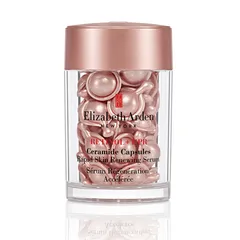
"Elizabeth Arden - Retinol + HPR Ceramide Capsules Rapid Skin Renewing Serum" is effective for: Anti-aging, Exfoliation, Moisturizing, Evens skin tone and Anti-blemish
Ingredient callouts
- this product contains an effective form of Retinoids (vitamin A): retinol 0.10% - 0.35% and hydroxypinacolone retinoate 0.40% - 0.95%. Retinoids are potent multitasking actives. They work to improve and prevent early signs of aging, reduce hyperpigmentation (age spots and post-acne marks), and prevent inflamed blemishes and clogged pores. The downside of Retinoids is that they can be irritating. If you are not already using a Retinoid in your routine, it is best to start slowly and apply the Retinoid product only a few times per week. If your skin tolerates it well, you can gradually increase the frequency to daily.
- Ceramides (phytosphingosine 0.15% - 0.70% and ceramide np 0.60% - 1.35%). Ceramides are a type of lipids that our skin produces itself. They are a building block of the skin's barrier. Ceramides used in skincare are synthetic or extracted from plants. They work well for softening the skin surface and "patch holes" in the skin's barrier.
- Peptides (palmitoyl tripeptide-1 0.20% - 0.70% and palmitoyl tetrapeptide-7 0.30% - 0.75%). There are many different kind of Peptides and they are naturally present in our skin. They all are a combination of aminoacids. Some of them work as natural antibiotics, promote wound-healing and production of collagen. The science is still not settled on how effective Peptides are in skincare, but it is very likely that they have a benefit. They might help restore the skin barrier and fight the signs of aging. At the very least, Peptides work as humectants: they attract water to the upper layer of the skin and improve its hydration.
Works for
Does not work for
Moisturizing
What does the product description say?
moisture barrier-strengthening ceramides
Source: Elizabeth Arden UK
This product can help improve hydration of the skin with the two types of ingredients.
The first type is called “humectants”:
these ingredients help attract water.
When humectants are on the surface of the skin, they “pull in” the moisture from the outside environment, or from
within deeper layers of the skin. The following ingredients in this product do the job:
glycerin, saccharide isomerate.
This product also contains ingredients called “occlusives”. They help reduce the speed with which our skin loses moisture to the outside environment. These ingredients also help soften the upper layer of the skin, so it feels less tight and nicer to the touch. The following ingredients in this product do the job: caprylic/capric triglyceride, dimethicone.
The following ingredients in this product are especially good for supporting the skin barrier and helping with the hydration level: ceramide 1, ceramide 3, ceramide 6 ii, phytosphingosine
A good mix of fatty acids that forms a protective layer on the skin. Improves the shelf life of products. Derived from coconut and glycerin
A type of lipid similar to ceramides naturally present in skin. Helps to soften the upper layer of the skin and supports the skin barrier function to keep it hydrated. Can help to prevent inflammation in skin
One of the best moisturizing ingredients. Naturally present in skin. It attracts water to the upper layer of the skin working as a humectant
A non-living ingredient made by fermentation with the bacteria Lactobacillus. It can help attract water to the upper layer of the skin and might help reduce inflammation
An emollient that is naturally found in skin
A type of lipid that is naturally present in skin. It might help in repairing skin barrier function and has anti-bacterial effect
A type of lipid similar to ceramides naturally present in skin. Helps to soften the upper layer of the skin and supports the skin barrier function to keep it hydrated. Can help to prevent inflammation in skin
Helps attract water to the upper layer of the skin
A silicone that helps to reduce water loss from the surface of the skin. Can temporarily "fill in" lines and wrinkles, absorb oil, and create a nice product finish
Helps attract water to the upper layer of the skin
A type of lipid similar to ceramides naturally present in skin. Helps to soften the upper layer of the skin and supports the skin barrier function to keep it hydrated. Can help to prevent inflammation in skin
An algae extract that might have anti-oxidant properties
A silicone that helps improve the product texture and spreadability. Can absorb oil creating a short-term mattifying effect on the skin
Helps preserve products and creates a nice product texture
Used to create a nice product texture and help delivery of other ingredients. Might be somewhat helpful in attracting water to the upper layer of the skin
A plant extract that helps attract water to the upper layer of the skin and might have some anti-oxidant properties
Used to preserve products, dissolve other ingredients and create a nice product texture
Anti-aging
What does the product description say?
In one week, wrinkles and pores are visibly reduced
Source: Elizabeth Arden UK
This product does not contain ingredients that are able to reduce fine lines and wrinkles or help with skin elasticity, but it can improve the look of the skin temporarily through moisturization. Well-moisturized skin might also be able to repair the sun damage better.
Anti-blemish
Effective ingredients missing or their concentration is too low.
A type of lipid that is naturally present in skin. It might help in repairing skin barrier function and has anti-bacterial effect
Anti-oxidation
Effective ingredients missing or their concentration is too low.
An algae extract that might have anti-oxidant properties
Evens skin tone
Effective ingredients missing or their concentration is too low
Exfoliation
This product does not contain effective exfoliating ingredients. It might be able to deliver physical exfoliation, that is scrub off some of the dead cells on the surface of the skin. We do not recommend physical exfoliation, because it is not uniform (some bits of skin can get exfoliated too much while others not at all). It can also traumatize the skin and aggrevate acne and other skin conditions.
How honest is this product?
| Promise | Can it deliver? |
|---|---|
| Moisturizing | |
| Anti-aging | |
| Exfoliation | |
| Evens skin tone | |
| Anti-blemish |
Total Promises Fulfilled score: 30/100.
We receive a small commission for purchases made through these links at no cost for you. Thank you for your support! Learn more
Potential irritants
Comedogenic ingredients
User reviews (0)
Averages from community submissions.
No reviews yet for this product.
Be the first to share your experience!
Tried this product?
Help capture what the ingredient list can't—texture, finish, pilling, scent, and more. Answer what you can, skip the rest.
Takes ~30 seconds.
Reviews are shown in aggregate. No personal details.
| Product | Similarity | Price | Irritancy |
|---|---|---|---|
 Elizabeth Arden Retinol + HPR Ceramide Capsules Rapid Skin Renewing Serum | Current | $56.00 | |
No7 Restore & Renew Multi Action Face & Neck Serum | 56% | ≈ $19.62 | |
 Skin first Hyaluronic acid + ceramide booster | 55% | - | |
 House of Rose Power Surge Gel DX | 53% | $57.87 | |
AMPLEUR BRIGHTENING BAR | 50% | $37.20 |
Key Actives
A type of lipid similar to ceramides naturally present in skin. Helps to soften the upper layer of the skin and supports the skin barrier function to keep it hydrated. Can help to prevent inflammation in skin
A type of lipid similar to ceramides naturally present in skin. Helps to soften the upper layer of the skin and supports the skin barrier function to keep it hydrated. Can help to prevent inflammation in skin
A type of lipid that is naturally present in skin. It might help in repairing skin barrier function and has anti-bacterial effect
A silicone that helps improve the product texture and spreadability. Can absorb oil creating a short-term mattifying effect on the skin
A silicone that helps to reduce water loss from the surface of the skin. Can temporarily "fill in" lines and wrinkles, absorb oil, and create a nice product finish
A type of lipid similar to ceramides naturally present in skin. Helps to soften the upper layer of the skin and supports the skin barrier function to keep it hydrated. Can help to prevent inflammation in skin
An emollient that is naturally found in skin
One of the best moisturizing ingredients. Naturally present in skin. It attracts water to the upper layer of the skin working as a humectant
A good mix of fatty acids that forms a protective layer on the skin. Improves the shelf life of products. Derived from coconut and glycerin
Helps attract water to the upper layer of the skin
A non-living ingredient made by fermentation with the bacteria Lactobacillus. It can help attract water to the upper layer of the skin and might help reduce inflammation
Helps attract water to the upper layer of the skin
Potential irritants
An aromatic blend of unspecified and possibly irritating ingredients
A plant extract that helps attract water to the upper layer of the skin and might have some anti-oxidant properties
Used to preserve products, dissolve other ingredients and create a nice product texture
A good mix of fatty acids that forms a protective layer on the skin. Improves the shelf life of products. Derived from coconut and glycerin
Comedogenic ingredients
An algae extract that might have anti-oxidant properties
All ingredients
One of the best moisturizing ingredients. Naturally present in skin. It attracts water to the upper layer of the skin working as a humectant
Used to preserve products, dissolve other ingredients and create a nice product texture
Used to create a nice product texture and help delivery of other ingredients. Might be somewhat helpful in attracting water to the upper layer of the skin
A good mix of fatty acids that forms a protective layer on the skin. Improves the shelf life of products. Derived from coconut and glycerin
A silicone that helps improve the product texture and spreadability. Can absorb oil creating a short-term mattifying effect on the skin
A silicone that helps to reduce water loss from the surface of the skin. Can temporarily "fill in" lines and wrinkles, absorb oil, and create a nice product finish
Helps attract water to the upper layer of the skin
Increases thickness of a product. Texture enhancer for oil-in-water emulsions
Helps create a thicker or gel-like product texture. It is not a surfactant but can be used in gentle cleansing formulations
A type of lipid similar to ceramides naturally present in skin. Helps to soften the upper layer of the skin and supports the skin barrier function to keep it hydrated. Can help to prevent inflammation in skin
A type of lipid similar to ceramides naturally present in skin. Helps to soften the upper layer of the skin and supports the skin barrier function to keep it hydrated. Can help to prevent inflammation in skin
A type of lipid similar to ceramides naturally present in skin. Helps to soften the upper layer of the skin and supports the skin barrier function to keep it hydrated. Can help to prevent inflammation in skin
An algae extract that might have anti-oxidant properties
Used to stabilize product formulations and create a nice product texture
A non-living ingredient made by fermentation with the bacteria Lactobacillus. It can help attract water to the upper layer of the skin and might help reduce inflammation
Used to stabilize the product formulation and can help absorb oil
An aromatic blend of unspecified and possibly irritating ingredients
A type of lipid that is naturally present in skin. It might help in repairing skin barrier function and has anti-bacterial effect
A plant extract that helps attract water to the upper layer of the skin and might have some anti-oxidant properties
A preservative. It helps prevent bacterial growth in cosmetic products
Ingredient list view
Water, Glycerin, Pentylene glycol, Butylene glycol, Caprylic/capric triglyceride, Cyclopentasiloxane, Dimethicone, Peg-11 methyl ether dimethicone, Alpha-glucan oligosaccharide, Ammonium acryloyldimethyltaurate/vp copolymer, Amodimethicone, Caprylyl glycol, Carbomer, Ceramide 1, Ceramide 3, Ceramide 6 ii, Cholesterol, Crithmum maritimum extract, Dimethicone/vinyl dimethicone crosspolymer, Disodium edta, Ethylhexylglycerin, Kefiran, Lactobacillus, Linum usitatissimum seed extract, Maltodextrin, Parfum, Phytosphingosine, Polymnia sonchifolia root juice, Saccharide isomerate, Salicornia herbacea extract, Sodium hydroxide, Sodium lauroyl lactylate, Sodium polyacrylate starch, Xanthan gum, Chlorphenesin, Phenoxyethanol, Sodium benzoate