Works for:
based on ingredients and %- Moisturizing
- Anti-aging
- Evens skin tone
- Anti-blemish
Can it cause trouble?
- Irritation risk: high
- Comedogenic risk ingredients: 3
Key actives


Product Summary
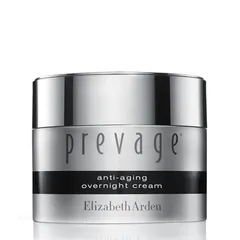
Based on the ingredients included, "Elizabeth Arden - Prevage Anti-Aging Night Cream" works well for moisturizing the skin. As we expect from a proper moisturizer, the formula includes a combo of effective humectants and emollients. These are the two different types of ingredients that are essential for improving the skin hydration and supporting a healthy skin barrier. Urea, glycerin, sodium hyaluronate, sodium pca and sucrose in this product (humectants) attract water molecules to the upper layer of the skin (the water comes from the outside air or from the deeper layers of the skin if the air is dry). Emollients in this formulation (phytosteryl macadamiate, theobroma cacao seed butter, butyrospermum parkii butter, dimethicone and dimethiconol) help to reduce the moisture loss from the skin. They also soften the skin surface and relieve the feeling of dryness and tightness.
Ingredient callouts
- this moisturizer contains an effective form of retinoids (vitamin A): hydroxypinacolone retinoate 0.01% - 0.05%. Retinoids are potent multitasking actives. They work to improve and prevent early signs of aging, reduce hyperpigmentation (age spots and post-acne marks), and prevent inflamed blemishes and clogged pores. The downside of retinoids is that they can be irritating. If you are not already using a retinoid in your routine, it is best to start slowly and apply the retinoid product only a few times per week. If your skin tolerates it well, you can gradually increase the frequency to daily. Because of the irritation risk of retinoids, we recommend to have another, retinoid-free moisturizer in your routine to use on the alternative days or when your skin feels dry.
Irritation risk
There are quite a few common irritants in this product, including ingredients without particular skin benefits. We would not recommend it for sensitive skin. We assess the overall irritancy of this moisturizer to be high. For a detailed overview of all potential irritants: click here
You can see the detailed formula review with the breakdown of all actives in the product and the full ingredient list with estimated concentrations in the tables below.
Price
The product retails for 156.18€ in Germany.
For a detailed price comparison: click here.
Anti-aging
What does the product description say?
Prevage Anti-Aging Night Cream
Source: From product name
This product can help reduce and prevent fine lines and wrinkles, improve skin elasticity and firmness because it contains hydroxypinacolone retinoate.
These ingredients in the product can also be helpful, even though there is less evidence for their effectiveness: hydroxydecyl ubiquinoyl dipalmitoyl glycerate.
Keep in mind that it typically takes at least 6 weeks to notice any results because the changes that are needed to improve fine lines and elasticity happen in the deeper layers of the skin. No topical anti-aging product can “erase” wrinkles or fully reverse signs of aging.
A derivative of the most potent form of vitamin A, retinoic acid. The ingredient can be sold under name Granactive Retinoid. Note that if a skincare brand discloses the concentration of Granactive Retinoid in a product, the concentration refers to a diluted form of Hydroxypinacolone Retinoate: 1% of Granactive Retinoid corresponds to 0.1% of Hydroxypinacolone Retinoate. Hydroxypinacolone Retinoate (HPR) is a unique derivative of retinoic acid because it can directly work in the skin and does not require additional conversion steps. According to studies done by the manufacturer on models of human skin (not real people), this derivative is more effective than other cosmetic versions of retinoids (such as retinol, retinaldehyde, and retinyl palmitate), and, at the same time, causes less irritation. It has been also demonstrated to be more stable than retinol which makes formulating with easier and increases the chances that a product with it will maintain its effectiveness after opening. The packaging should still ideally be air-tight. HPR is available over the counter in the EU, UK, Asia, Australia and New Zealand, but is only with a prescription in Canada.
Idebenone complex. Helps neutralize free radicals in skin
A great moisturising ingredient that softens the skin and reduces water loss from its upper layer. It also can be helpful in protecting skin from free radicals
Anti-blemish
This product can help reduce breakouts and clogged pores because it contains the following ingredient: hydroxypinacolone retinoate. This ingredient is used for treating acne and can have a noticeable effect.
A derivative of the most potent form of vitamin A, retinoic acid. The ingredient can be sold under name Granactive Retinoid. Note that if a skincare brand discloses the concentration of Granactive Retinoid in a product, the concentration refers to a diluted form of Hydroxypinacolone Retinoate: 1% of Granactive Retinoid corresponds to 0.1% of Hydroxypinacolone Retinoate. Hydroxypinacolone Retinoate (HPR) is a unique derivative of retinoic acid because it can directly work in the skin and does not require additional conversion steps. According to studies done by the manufacturer on models of human skin (not real people), this derivative is more effective than other cosmetic versions of retinoids (such as retinol, retinaldehyde, and retinyl palmitate), and, at the same time, causes less irritation. It has been also demonstrated to be more stable than retinol which makes formulating with easier and increases the chances that a product with it will maintain its effectiveness after opening. The packaging should still ideally be air-tight. HPR is available over the counter in the EU, UK, Asia, Australia and New Zealand, but is only with a prescription in Canada.
Evens skin tone
This product can help reduce hypepigmentation and even out the skin tone because it contains the following effective ingredients: hydroxypinacolone retinoate.
Keep in mind that you would need to apply any topical skincare targetted at hypigmentation consistently for a couple of months to get a result. No topical skincare product can help get rid of hyperpigmentation (including post-acne marks and age spots) instantly.
A derivative of the most potent form of vitamin A, retinoic acid. The ingredient can be sold under name Granactive Retinoid. Note that if a skincare brand discloses the concentration of Granactive Retinoid in a product, the concentration refers to a diluted form of Hydroxypinacolone Retinoate: 1% of Granactive Retinoid corresponds to 0.1% of Hydroxypinacolone Retinoate. Hydroxypinacolone Retinoate (HPR) is a unique derivative of retinoic acid because it can directly work in the skin and does not require additional conversion steps. According to studies done by the manufacturer on models of human skin (not real people), this derivative is more effective than other cosmetic versions of retinoids (such as retinol, retinaldehyde, and retinyl palmitate), and, at the same time, causes less irritation. It has been also demonstrated to be more stable than retinol which makes formulating with easier and increases the chances that a product with it will maintain its effectiveness after opening. The packaging should still ideally be air-tight. HPR is available over the counter in the EU, UK, Asia, Australia and New Zealand, but is only with a prescription in Canada.
Moisturizing
What does the product description say?
Prevage Anti-Aging Night Cream
Source: From product name
This product can help improve hydration of the skin with the two types of ingredients.
The first type is called “humectants”:
these ingredients help attract water.
When humectants are on the surface of the skin, they “pull in” the moisture from the outside environment, or from
within deeper layers of the skin. The following ingredients in this product do the job:
glycerin, sodium hyaluronate.
This product also contains ingredients called “occlusives”. They help reduce the speed with which our skin loses moisture to the outside environment. These ingredients also help soften the upper layer of the skin, so it feels less tight and nicer to the touch. The following ingredients in this product do the job: butyrospermum parkii butter, dimethicone.
The following ingredients in this product are especially good for supporting the skin barrier and helping with the hydration level: urea
A silicone that helps to reduce water loss from the surface of the skin. Can temporarily "fill in" lines and wrinkles, absorb oil, and create a nice product finish
Helps soften the upper layer of the skin
One of the best moisturizing ingredients. Attracts water into the upper layer of the skin
A silicone that makes products more spreadable and keeps skin smooth. Helps to add gloss to skin and may visually fill in fine lines/wrinkles for short time
A great moisturising ingredient that softens the skin and reduces water loss from its upper layer. It also can be helpful in protecting skin from free radicals
One of the best moisturizing ingredients. Naturally present in skin. It attracts water to the upper layer of the skin working as a humectant
Naturally present in skin (urea makes up about 7% of natural moisturizing factors in skin). Attracts water to the upper layer of the skin. Also has a positive effect on the skin barrier beyond the humectant action. Can enhance penetration of other ingredients. Is an exfoliating ingredient when used in high concentrations
A sugar that attracts water to the upper layer of the skin
Helps soften the upper layer of the skin and can be helpful in restoring the skin barrier function. Might have some anti-oxidant effect
Can help attract water to the upper layer of the skin. In crystal form, it can work as a gentle exfoliant, gentler than the salt scrub. Helps stabilize the emulsion
Naturally present in skin and helps to attract water to its upper layer
A type of silicone that can decrease loss of moisture from the skin surface. It helps create a nice product texture
A silicone that helps improve the product texture and spreadability. Can absorb oil creating a short-term mattifying effect on the skin
Used to create a thicker product texture. Helps soften the upper layer of the skin and might be able to prevent moisture loss from its surface
Emollients that are naturaly present in skin. In addition, they help water and oil mix together in the product
Enhances the product texture and makes it more spreadable. Helps reduce water loss from the outer layer of skin. Extands the shelf life by preventing bacteria growth
A non-drying alcohol. Works as an emollient. Helps water and oil mix together and creates a nice product texture
A type of silicone that can help create nice product texture and soften the upper layer of the skin
Improves the texture of the product and helps soften the skin. Helps oil and water mix together and can be used as a cleansing agent
Helps to soften the upper layer of the skin and create a nice product texture
Used to create a thicker product consistency and soften the upper layer of the skin
Used to create a thicker product consistency and soften the upper layer of the skin
An emollient that softens the skin and forms a protective layer on its surface. Helps water and oil mix together
Used to create a nice product texture and help delivery of other ingredients. Might be somewhat helpful in attracting water to the upper layer of the skin
An emollient that helps create a nice silky finish on the skin
Used to create a nice product consistency
Helps preserve products and creates a nice product texture
A type of silicone that helps to soften the upper layer of the skin and create a nice product finish on the skin
A silicone that serves as an emollient. Helps create a nice non-greasy feels
Anti-oxidation
This product contains antioxidants (hydroxydecyl ubiquinoyl dipalmitoyl glycerate) that might be able to help neutralize free radicals in skin to lessen the damage it gets from the UV light (sun). There is not enough evidence to confirm their effectiveness in skin though.
Idebenone complex. Helps neutralize free radicals in skin
Helps soften the upper layer of the skin and can be helpful in restoring the skin barrier function. Might have some anti-oxidant effect
A great moisturising ingredient that softens the skin and reduces water loss from its upper layer. It also can be helpful in protecting skin from free radicals
A more stable but less bio-available form of vitamin E compared to Tocopherol. Might help moisturize and protect the skin from free radicals, but mostly used in low concentrations to stabilize other ingredients.
How honest is this product?
| Promise | Can it deliver? |
|---|---|
| Anti-aging | |
| Moisturizing |
Total Promises Fulfilled score: 100/100.
We receive a small commission for purchases made through these links at no cost for you. Thank you for your support! Learn more
Potential irritants
Comedogenic ingredients
User reviews (0)
Averages from community submissions.
No reviews yet for this product.
Be the first to share your experience!
Tried this product?
Help capture what the ingredient list can't—texture, finish, pilling, scent, and more. Answer what you can, skip the rest.
Takes ~30 seconds.
Reviews are shown in aggregate. No personal details.
| Product | Similarity | Price | Irritancy |
|---|---|---|---|
 Elizabeth Arden Prevage Anti-Aging Night Cream | Current | ≈ $85.09 | |
 Hickap Bedtime Magic Repairing Night Cream | 77% | - | |
 Endocare Cellage Anti-Wrinkles Gel Cream For Combination Skin | 75% | - | |
Peter Thomas Roth 24K Gold Pure Luxury Lift Firm Prism Cream | 75% | $44.00 | |
 Biopelle Emepelle Night Cream | 73% | - | |
ROUND LAB Camellia Deep Collagen Cream 50ml | 73% | ≈ $17.29 |
Key Actives
A derivative of the most potent form of vitamin A, retinoic acid. The ingredient can be sold under name Granactive Retinoid. Note that if a skincare brand discloses the concentration of Granactive Retinoid in a product, the concentration refers to a diluted form of Hydroxypinacolone Retinoate: 1% of Granactive Retinoid corresponds to 0.1% of Hydroxypinacolone Retinoate. Hydroxypinacolone Retinoate (HPR) is a unique derivative of retinoic acid because it can directly work in the skin and does not require additional conversion steps. According to studies done by the manufacturer on models of human skin (not real people), this derivative is more effective than other cosmetic versions of retinoids (such as retinol, retinaldehyde, and retinyl palmitate), and, at the same time, causes less irritation. It has been also demonstrated to be more stable than retinol which makes formulating with easier and increases the chances that a product with it will maintain its effectiveness after opening. The packaging should still ideally be air-tight. HPR is available over the counter in the EU, UK, Asia, Australia and New Zealand, but is only with a prescription in Canada.
A great moisturising ingredient that softens the skin and reduces water loss from its upper layer. It also can be helpful in protecting skin from free radicals
Helps soften the upper layer of the skin and can be helpful in restoring the skin barrier function. Might have some anti-oxidant effect
A silicone that helps improve the product texture and spreadability. Can absorb oil creating a short-term mattifying effect on the skin
A silicone that helps to reduce water loss from the surface of the skin. Can temporarily "fill in" lines and wrinkles, absorb oil, and create a nice product finish
Idebenone complex. Helps neutralize free radicals in skin
Naturally present in skin (urea makes up about 7% of natural moisturizing factors in skin). Attracts water to the upper layer of the skin. Also has a positive effect on the skin barrier beyond the humectant action. Can enhance penetration of other ingredients. Is an exfoliating ingredient when used in high concentrations
One of the best moisturizing ingredients. Naturally present in skin. It attracts water to the upper layer of the skin working as a humectant
Helps soften the upper layer of the skin
A silicone that makes products more spreadable and keeps skin smooth. Helps to add gloss to skin and may visually fill in fine lines/wrinkles for short time
A type of silicone that can decrease loss of moisture from the skin surface. It helps create a nice product texture
One of the best moisturizing ingredients. Attracts water into the upper layer of the skin
Naturally present in skin and helps to attract water to its upper layer
Can help attract water to the upper layer of the skin. In crystal form, it can work as a gentle exfoliant, gentler than the salt scrub. Helps stabilize the emulsion
A sugar that attracts water to the upper layer of the skin
Works as a UV filter when used in high concentrations. It is photostable and is effective mostly against the UVB light, with some protection in the UVA range. In small concentrations, used for its ability to improve the color of cosmetic products. Is usually well tolerated by the skin
Potential irritants
A derivative of the most potent form of vitamin A, retinoic acid. The ingredient can be sold under name Granactive Retinoid. Note that if a skincare brand discloses the concentration of Granactive Retinoid in a product, the concentration refers to a diluted form of Hydroxypinacolone Retinoate: 1% of Granactive Retinoid corresponds to 0.1% of Hydroxypinacolone Retinoate. Hydroxypinacolone Retinoate (HPR) is a unique derivative of retinoic acid because it can directly work in the skin and does not require additional conversion steps. According to studies done by the manufacturer on models of human skin (not real people), this derivative is more effective than other cosmetic versions of retinoids (such as retinol, retinaldehyde, and retinyl palmitate), and, at the same time, causes less irritation. It has been also demonstrated to be more stable than retinol which makes formulating with easier and increases the chances that a product with it will maintain its effectiveness after opening. The packaging should still ideally be air-tight. HPR is available over the counter in the EU, UK, Asia, Australia and New Zealand, but is only with a prescription in Canada.
An aromatic blend of unspecified and possibly irritating ingredients
Helps oil and water mix together and can enhance the penetration of other ingredients into the skin. It can be irritating
A fragrance. Potential allergen and can be irritating
Used to create a thicker product consistency and soften the upper layer of the skin
Helps preserve products and creates a nice product texture
Helps water and oil in the product mix well together and improves product texture
A gelling agent that thickens the product consistency and leaves the skin with a velvety finish
A preservative that comes from radishes fermented by a bacteria. New research suggests that the preservation properties in the ingredient come from an ammonium salt that is not present naturally in radish root but used in its cultivation. Is problematic because the exact amount of the preservative agents is difficult to determine
A more stable but less bio-available form of vitamin E compared to Tocopherol. Might help moisturize and protect the skin from free radicals, but mostly used in low concentrations to stabilize other ingredients.
Used to create a thicker product consistency and soften the upper layer of the skin
Comedogenic ingredients
A great moisturising ingredient that softens the skin and reduces water loss from its upper layer. It also can be helpful in protecting skin from free radicals
A non-drying alcohol. Works as an emollient. Helps water and oil mix together and creates a nice product texture
Helps soften the upper layer of the skin and can be helpful in restoring the skin barrier function. Might have some anti-oxidant effect
All ingredients
A great moisturising ingredient that softens the skin and reduces water loss from its upper layer. It also can be helpful in protecting skin from free radicals
A silicone that helps improve the product texture and spreadability. Can absorb oil creating a short-term mattifying effect on the skin
One of the best moisturizing ingredients. Naturally present in skin. It attracts water to the upper layer of the skin working as a humectant
A silicone that helps to reduce water loss from the surface of the skin. Can temporarily "fill in" lines and wrinkles, absorb oil, and create a nice product finish
A type of silicone that can help create nice product texture and soften the upper layer of the skin
Used to create a nice product texture and help delivery of other ingredients. Might be somewhat helpful in attracting water to the upper layer of the skin
A non-drying alcohol. Works as an emollient. Helps water and oil mix together and creates a nice product texture
Helps soften the upper layer of the skin and can be helpful in restoring the skin barrier function. Might have some anti-oxidant effect
Used to create a thicker product consistency and soften the upper layer of the skin
Enhances the product texture and makes it more spreadable. Helps reduce water loss from the outer layer of skin. Extands the shelf life by preventing bacteria growth
Helps preserve products and creates a nice product texture
A type of silicone that helps to soften the upper layer of the skin and create a nice product finish on the skin
Helps create a thicker or gel-like product texture. It is not a surfactant but can be used in gentle cleansing formulations
Helps water and oil in the product mix well together and improves product texture
A silicone that serves as an emollient. Helps create a nice non-greasy feels
Used to create a thicker product texture. Helps soften the upper layer of the skin and might be able to prevent moisture loss from its surface
A silicone that makes products more spreadable and keeps skin smooth. Helps to add gloss to skin and may visually fill in fine lines/wrinkles for short time
Used to dissolve other ingredients in a product and can enhance their ability to penetrate the skin
An emollient that softens the skin and forms a protective layer on its surface. Helps water and oil mix together
Helps to retain moisture by creating a protective barrier on the skin. Rich in fatty acids. Improves product texture and helps with the penetration of other ingredients.
Helps to soften the upper layer of the skin and create a nice product texture
Idebenone complex. Helps neutralize free radicals in skin
A gelling agent that thickens the product consistency and leaves the skin with a velvety finish
A derivative of the most potent form of vitamin A, retinoic acid. The ingredient can be sold under name Granactive Retinoid. Note that if a skincare brand discloses the concentration of Granactive Retinoid in a product, the concentration refers to a diluted form of Hydroxypinacolone Retinoate: 1% of Granactive Retinoid corresponds to 0.1% of Hydroxypinacolone Retinoate. Hydroxypinacolone Retinoate (HPR) is a unique derivative of retinoic acid because it can directly work in the skin and does not require additional conversion steps. According to studies done by the manufacturer on models of human skin (not real people), this derivative is more effective than other cosmetic versions of retinoids (such as retinol, retinaldehyde, and retinyl palmitate), and, at the same time, causes less irritation. It has been also demonstrated to be more stable than retinol which makes formulating with easier and increases the chances that a product with it will maintain its effectiveness after opening. The packaging should still ideally be air-tight. HPR is available over the counter in the EU, UK, Asia, Australia and New Zealand, but is only with a prescription in Canada.
Improves the texture of the product and helps soften the skin. Helps oil and water mix together and can be used as a cleansing agent
A preservative that comes from radishes fermented by a bacteria. New research suggests that the preservation properties in the ingredient come from an ammonium salt that is not present naturally in radish root but used in its cultivation. Is problematic because the exact amount of the preservative agents is difficult to determine
Creates an illusion of smoother and more radiant skin tone. Adds shimmer to the skin by reflecting light
An aromatic blend of unspecified and possibly irritating ingredients
Helps oil and water mix togehter and creates a nice product texture
A type of silicone that can decrease loss of moisture from the skin surface. It helps create a nice product texture
Emollients that are naturaly present in skin. In addition, they help water and oil mix together in the product
An emollient that helps create a nice silky finish on the skin
Helps oil and water mix together and can enhance the penetration of other ingredients into the skin. It can be irritating
One of the best moisturizing ingredients. Attracts water into the upper layer of the skin
Naturally present in skin and helps to attract water to its upper layer
Can help attract water to the upper layer of the skin. In crystal form, it can work as a gentle exfoliant, gentler than the salt scrub. Helps stabilize the emulsion
A more stable but less bio-available form of vitamin E compared to Tocopherol. Might help moisturize and protect the skin from free radicals, but mostly used in low concentrations to stabilize other ingredients.
Used to create a thicker product consistency and soften the upper layer of the skin
Naturally present in skin (urea makes up about 7% of natural moisturizing factors in skin). Attracts water to the upper layer of the skin. Also has a positive effect on the skin barrier beyond the humectant action. Can enhance penetration of other ingredients. Is an exfoliating ingredient when used in high concentrations
A fragrance. Potential allergen and can be irritating
A preservative. It helps prevent bacterial growth in cosmetic products
An umbrella term for the following three colorants: CI 77491, CI 77492, CI 77499. They might be able to offer some protection against visible light, but the degree of the protection is not clear
Works as a UV filter when used in high concentrations. It is photostable and is effective mostly against the UVB light, with some protection in the UVA range. In small concentrations, used for its ability to improve the color of cosmetic products. Is usually well tolerated by the skin
Ingredient list view
Water, Butyrospermum parkii butter, Cyclopentasiloxane, Glycerin, Dimethicone, Peg-8 dimethicone, Butylene glycol, Cetearyl alcohol, Theobroma cacao seed butter, Phytosteryl macadamiate, Ppg-2 isoceteth-20 acetate, Dipentaerythrityl hexacaprylate/hexacaprate, Tridecyl trimellitate, C12-15 alkyl benzoate, Caprylyl glycol, Caprylyl methicone, Carbomer, Cetearyl glucoside, Cyclohexasiloxane, Dimethicone crosspolymer, Dimethiconol, Dimethyl isosorbide, Disodium edta, Glyceryl stearate, Hexylene glycol, Hydrogenated lecithin, Hydrogenated phosphatidylcholine, Hydrogenated polydecene, Hydroxydecyl ubiquinoyl dipalmitoyl glycerate, Hydroxyethyl acrylate/sodium acryloyldimethyl taurate copolymer, Hydroxypinacolone retinoate, Isohexadecane, Lactobacillus/lemon peel ferment extract, Leuconostoc/radish root ferment filtrate, Mica, Neopentyl glycol dicaprylate/dicaprate, Parfum, Peg-100 stearate, Peg-8, Phenyl trimethicone, Phospholipids, Polyphosphorylcholine glycol acrylate, Polyquaternium-51, Polysorbate 60, Propylene glycol, Sodium hyaluronate, Sodium hydroxide, Sodium pca, Solanum lycopersicum fruit extract, Stearoxymethicone/dimethicone copolymer, Sucrose, Tocopheryl acetate, Trehalose, Tridecyl stearate, Urea, Xanthan gum, Alpha-isomethyl ionone, Linalool, Benzoic acid, Chlorphenesin, Methylparaben, Phenoxyethanol, Iron oxides, Ci 77492, Ci 14700, Titanium dioxide, Ci 77891, Ci 19140
- Glycerol and the skin: holistic approach to its origin and functions
- Dimethicone as a protective ingredient in topical medications
- Final Report on the Safety Assessment of Dimethicone Copolyol
- Cocoa polyphenols and their influence on parameters involved in ex vivo skin restructuring
- Safety Assessment of Phytosterols as Used in Cosmetics
- Activity enhancement of ferulic acid with dimethyl isosorbride in cosmetic compositions
- Safety Assessment of Polyene Group as Used in Cosmetics
- Hydroxydecyl ubiquinoyl dipalmitoyl glycerate (idebenone complex): A new and effective topical antioxidant for the treatment of premature skin aging associated with cellular oxidative stress. (2011). Journal of the American Academy of Dermatology, 64(2), AB21.
- Antiaging effects of retinoid hydroxypinacolone retinoate on skin models. (2018). Journal of the American Academy of Dermatology, 79(3), AB44. doi:10.1016/j.jaad.2018.05.215
- Treatment of mild to moderate acne with a fixed combination of hydroxypinacolone retinoate, retinol glycospheres and papain glycospheres
- Surfactants and experimental irritant contact dermatitis
- Propylene Glycol
- Skin-sensitizing and irritant properties of propylene glycol
- Hyaluronic acid: A key molecule in skin aging
- Hyaluronan (Hyaluronic Acid): a natural moisturizer for skin care
- Amended Safety Assessment of Alkyl Esters as Used in Cosmetics
- Topical urea in skincare: A review
- Analysis of Dyes in Cosmetics: Challenges and Recent Developments