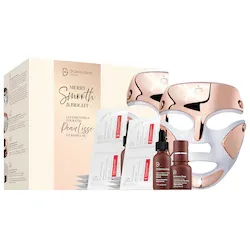
Dr Dennis Gross Merry, Smooth & Bright
Works for
Anti-agingRetinol, Glycolic acid + 11 moreWorks well
“A derivative of vitamin A that supports collagen production, visibly reverses photo-aging, improves the look of fine lines and wrinkles, and addresses UV-induced free-radical damage while targeting overproduction of blemish-causing sebum and fading the look of dark spots.”
This product can help reduce and prevent fine lines and wrinkles, improve skin elasticity and firmness because it contains retinol, adenosine, bakuchiol, glycolic acid.
These ingredients in the product can also be helpful, even though there is less evidence for their effectiveness: ferulic acid, resveratrol, tetrapeptide-21.
Keep in mind that it typically takes at least 6 weeks to notice any results because the changes that are needed to improve fine lines and elasticity happen in the deeper layers of the skin. No topical anti-aging product can “erase” wrinkles or fully reverse signs of aging.
Evens skin toneRetinol, Glycolic acid + 12 moreWorks well
“A derivative of vitamin A that supports collagen production, visibly reverses photo-aging, improves the look of fine lines and wrinkles, and addresses UV-induced free-radical damage while targeting overproduction of blemish-causing sebum and fading the look of dark spots.”
This product can help reduce hypepigmentation and even out the skin tone because it contains the following effective ingredients: retinol.
In addition, this product contains bakuchiol, glycolic acid, mandelic acid, salicylic acid. This ingredient (ingredients) might help reduce hyperpigmentation, but the effect, if any, is likely to be small.
The following ingredient (ingredients) in this product might be helpful, but there is no evidence to confirm that it actually can help even out the skin tone: ferulic acid, glycyrrhiza glabra root extract, hexylresorcinol, morus alba bark extract, resveratrol.
Keep in mind that you would need to apply any topical skincare targetted at hypigmentation consistently for a couple of months to get a result. No topical skincare product can help get rid of hyperpigmentation (including post-acne marks and age spots) instantly.
ExfoliationGlycolic acid, Mandelic acid + 4 moreWorks well
“-Glycolic Acid (AHA).”
This product can help exfoliate the skin. In other words, it helps break down the bonds between dead cells on the surface of the skin and speed up the skin turnover. Skin often appears softer and brighter after exfoliation, but overdoing it can result in disrupted skin barrier. The following ingredient is doing the exfoliating job in this product: glycolic acid, mandelic acid, retinol, salicylic acid.
MoisturizingSide benefit · Tetrapeptide-21, Squalane + 18 moreWorks well
This product can help improve hydration of the skin with the two types of ingredients.
The first type is called “humectants”:
these ingredients help attract water.
When humectants are on the surface of the skin, they “pull in” the moisture from the outside environment, or from
within deeper layers of the skin. The following ingredients in this product do the job:
copper pca, glycerin.
This product also contains ingredients called “occlusives”. They help reduce the speed with which our skin loses moisture to the outside environment. These ingredients also help soften the upper layer of the skin, so it feels less tight and nicer to the touch. The following ingredients in this product do the job: squalane.
The following ingredients in this product are especially good for supporting the skin barrier and helping with the hydration level: tetrapeptide-21
Anti-oxidationSide benefit · Ubiquinone, Hexylresorcinol + 16 moreWorks well
This product contains antioxidants (bakuchiol, ferulic acid, resveratrol, retinol, ubiquinone) that can help neutralize free radicals in skin. By doing so, they can lessen the damage the skin gets from the UV light (sun).
The following ingredients - hexylresorcinol, quercetin also can have an antioxidant effect, but there is less evidence to confirm their effectiveness in skin.
Anti-blemishSide benefit · Salicylic acid, Retinol + 9 moreWorks well
This product can help reduce breakouts and clogged pores because it contains the following ingredient: retinol, salicylic acid. These ingredients is used for treating acne and can have a noticeable effect.
In addition, this product contains bakuchiol. It can help in reducing blemishes, even though it is less effective.
The following ingredient (ingredients) in this product might be helpful, but there is no evidence to confirm that it actually works: glycolic acid, mandelic acid, zinc pca
Can it cause trouble?
Irritancy5 strong irritants: Hamamelis virginiana water, Achillea millefolium extract + 3 more — patch-test recommendedHigh risk
ComedogenicClean of flagged comedogenic ingredientsNone flagged

User reviews
Be the first — your take helps the next person decide.
Ingredients
Filter by role to see what each ingredient is doing.
Water~45–55%
Alcohol denat. sd alcohol 40-b~7.5–9.1%
- Irritation risk
- Low
Glycolic acid~4.3–5.3%
- Irritation risk
- High
An alpha-hydroxy acid (AHA) that helps to remove the dead skin cells on the surface of the skin reveling a more even, smoother complexation. It is also able to stimulate collagen production with long-term use. Could help to reduce pore congestion. It can be irritating to the skin. Apply sunscreen daily if using products with glycolic acid
More about Glycolic acidPotassium hydroxide~3–3.7%
Hamamelis virginiana water~2.1–2.6%
- Irritation risk
- High
A plant extract that can help calm down inflammation in skin. Can, however, itself be irritating
More about Hamamelis virginiana waterSalicylic acid~1.5–1.8%
- Irritation risk
- High
Used for skin exfoliation. It has an anti-inflammatory and anti-bacterial effect, helps to unclog pores, prevent blemishes and speed up healing of the existing ones. Sometimes referred to as a BHA (beta-hydroxy acid)
More about Salicylic acidPolysorbate 20~1.5–1.9%
Lactic acid~1.3–1.5%
- Irritation risk
- Medium
An exfoliating and moisturizing alpha-hydroxy acid (AHA). Typically causes less irritation than other AHAs, for example, glycolic acid. At high concentrations (about 15%), lactic acid can help reduce lines and wrinkles. Recent studies show that lactic acid can support the "good" bacteria living on skin's surface (healthy skin microbiome)
More about Lactic acidMandelic acid~1–1.2%
- Irritation risk
- High
Helps shed the upper layer of dead cells from the surface of the skin revealing smoother, brighter skin. It can help to reduce hyperpigmentation. It has anti-bacterial properties, and might help to reduce blemishes, as well as fine lines and wrinkles. It is considered to be gentler than glycolic acid
More about Mandelic acidMalic acid~0.7–1.05%
Citric acid~0.55–0.8%
- Irritation risk
- Medium
Can work as an exfoliant but is typically used to adjust the product pH
More about Citric acidSalix alba bark extract~0.25–0.5%
- Irritation risk
- High
A plant extract that can help neutralize free radicals in skin. It contains a compound salicin that can theoretically be converted into salicylic acid that, in turn, helps reduce inflammation in skin, but the evidence of effectiveness in skin is lacking and the extract is usually not used in a concentration that would enable an exfoliating effect
More about Salix alba bark extractCamellia sinensis leaf extract~0.45–0.65%
- Irritation risk
- Low
Can contain potent anti-oxidant compounds (abbreviated ECG, GCG, EGC, and EGCG) that might help protect the skin from free radicals. Can help calm down inflammation and has some anti-bacterial properties. Unfortunately, these antioxidants are unstable and lose their effectiveness very quickly in products. The concentration of the antioxidant compounds in the extract also tends to be low to be effective in topical formulation
More about Camellia sinensis leaf extractAchillea millefolium extract~0.4–0.6%
- Irritation risk
- High
Plant extract that can help neutralize free radicals in skin. Can be used as a fragrance. Can be irritating
More about Achillea millefolium extractChamomilla recutita flower extract~0.3–0.55%
- Irritation risk
- High
Plant extract that can have healing and anti-inflammatory properties. It is a potential allergen and can be irritating
More about Chamomilla recutita flower extractSoy isoflavones~0.3–0.5%
- Irritation risk
- Low
Anthemis nobilis flower extract~0.25–0.45%
- Irritation risk
- High
A plant extract that one one hand, can contain compounds that can help calm down skin irritation, but, on the other hand, its other compounds (especially fragrant ones) can themselves be irritating
More about Anthemis nobilis flower extractGlycerin~0.3–0.55%
- Irritation risk
- Low
One of the best moisturizing ingredients. Naturally present in skin. It attracts water to the upper layer of the skin working as a humectant
More about GlycerinCopper pca~0.2–0.4%
- Irritation risk
- Low
Helps attract water to the upper layer of the skin
More about Copper pcaZinc pca~0.25–0.45%
- Irritation risk
- Low
A compound that combines zinc with a hydrating ingredient PCA. Might to be helpful against acne and clogged pores. Can help calm down inflammation in skin. Could be helpful in reducing the formation of free radicals in skin. Might help to reduce fine lines in wrinkles, but solid evidence is missing
More about Zinc pcaLecithin~0.25–0.4%
- Irritation risk
- Low
Used mostly for creating emulsions - helping oil and water mix together. Helps soften the upper layer of the skin
More about LecithinAlcohol~0.2–0.35%
- Irritation risk
- High
Can be drying and contribute to skin irritation. Used in formulars to dissolve other ingredients, create a thinner product consistency or for its antibacterial properties
More about AlcoholPolysorbate 80~0.2–0.35%
Disodium edta~0.15–0.3%
Menthone glycerin acetal~0.15–0.3%
- Irritation risk
- Low
Parfum~0.15–0.25%
- Irritation risk
- High
An aromatic blend of unspecified and possibly irritating ingredients
More about ParfumPhenoxyethanol~0.2–0.35%
- Irritation risk
- Low
A preservative. It helps prevent bacterial growth in cosmetic products
More about PhenoxyethanolBenzoic acid~0.2–0.35%
Sodium benzoate~0.15–0.3%
Potassium sorbate~0.15–0.3%
Water~0.15–0.3%
Sodium bicarbonate~0.25–0.45%
Resveratrol~0.2–0.35%
- Irritation risk
- Medium
Helps neutralize free radicals in skin and might help reduce fine lines and wrinkles, as well as even out the skin tone
More about ResveratrolRetinol~0.15–0.25%
- Irritation risk
- High
Two steps removed from the active form of vitamin A - retinoic acid. Once converted to the retinoic acid in the skin, retinol is proven to be effective against all signs of aging. It improves skin cell turnover, helps fight blemishes and clogged pores, can regulate excess oil production and even skin tone. It can, however, be quite irritating
More about RetinolAscorbic acid~0.15–0.3%
- Irritation risk
- High
The most well-researched antioxidant that works in skin. Helps neutralize free radicals supporting collagen production, helping to even out the skin tone and preventing early signs of aging
More about Ascorbic acidUbiquinone~0.15–0.3%
- Irritation risk
- Low
Coenzyme Q10. It helps neutralize free radicals in skin, improves skin hydration and might be helpful agains fine lines and wrinkles. It can be an allergen
More about UbiquinonePhospholipids~0.15–0.3%
- Irritation risk
- Low
Emollients that are naturaly present in skin. In addition, they help water and oil mix together in the product
More about PhospholipidsAdenosine~0.15–0.3%
- Irritation risk
- Low
Might help improve cell turnover and reduce inflammation in skin. One study shows that the ingredients might be able to help reduce dynamic wrinkles (for example, in the corners of the eyes or on the forehead)
More about AdenosineTocopheryl acetate~0.2–0.35%
- Irritation risk
- Medium
A more stable but less bio-available form of vitamin E compared to Tocopherol. Might help moisturize and protect the skin from free radicals, but mostly used in low concentrations to stabilize other ingredients.
More about Tocopheryl acetateSoy isoflavones~0.15–0.3%
- Irritation risk
- Low
Achillea millefolium extract~0.2–0.35%
- Irritation risk
- High
Plant extract that can help neutralize free radicals in skin. Can be used as a fragrance. Can be irritating
More about Achillea millefolium extractCamellia sinensis leaf extract~0.2–0.35%
- Irritation risk
- Low
Can contain potent anti-oxidant compounds (abbreviated ECG, GCG, EGC, and EGCG) that might help protect the skin from free radicals. Can help calm down inflammation and has some anti-bacterial properties. Unfortunately, these antioxidants are unstable and lose their effectiveness very quickly in products. The concentration of the antioxidant compounds in the extract also tends to be low to be effective in topical formulation
More about Camellia sinensis leaf extractLeuconostoc/radish root ferment filtrate~0.15–0.3%
- Irritation risk
- Medium
A preservative that comes from radishes fermented by a bacteria. New research suggests that the preservation properties in the ingredient come from an ammonium salt that is not present naturally in radish root but used in its cultivation. Is problematic because the exact amount of the preservative agents is difficult to determine
More about Leuconostoc/radish root ferment filtrateCopper pca~0.15–0.3%
- Irritation risk
- Low
Helps attract water to the upper layer of the skin
More about Copper pcaSodium pca~0.15–0.3%
- Irritation risk
- Low
Naturally present in skin and helps to attract water to its upper layer
More about Sodium pcaZinc pca~0.15–0.25%
- Irritation risk
- Low
A compound that combines zinc with a hydrating ingredient PCA. Might to be helpful against acne and clogged pores. Can help calm down inflammation in skin. Could be helpful in reducing the formation of free radicals in skin. Might help to reduce fine lines in wrinkles, but solid evidence is missing
More about Zinc pcaGlycerin~0.2–0.35%
- Irritation risk
- Low
One of the best moisturizing ingredients. Naturally present in skin. It attracts water to the upper layer of the skin working as a humectant
More about GlycerinPolysorbate 20~0.2–0.35%
Octoxynol-9~0.2–0.35%
Tetrasodium edta~0.15–0.3%
Phenoxyethanol~0.2–0.35%
- Irritation risk
- Low
A preservative. It helps prevent bacterial growth in cosmetic products
More about PhenoxyethanolSodium benzoate~0.15–0.3%
Potassium sorbate~0.15–0.3%
Water~0.15–0.3%
Propylene glycol~0.15–0.3%
- Irritation risk
- High
Helps oil and water mix together and can enhance the penetration of other ingredients into the skin. It can be irritating
More about Propylene glycolEthoxydiglycol~0.15–0.25%
Bakuchiol~0.2–0.35%
- Irritation risk
- Medium
A plant extract that is, though different in chemical structure, acts similar to retinoids. First studies show that it can help reduce fine lines and wrinkles, improve skin tone, reduce clogged pores and blemishes, and reduce inflammation. There is no conclusive evidence that bakuchiol is as effective as retinol however. The study that directly compared retinol with bakuchiol used bakuchiol applied twice daily compared to once per day for the retinol. According to this study, bakuchiol is less irritating than retinol. Bakuchiol is extracted from seeds of Babchi plant. Other parts of the plant contain coumarins that could cause allergic and irritant reactions. These compounds should be removed in the extraction process when bakuchiol is produced, but it is a good idea to be cautious and stay away from products that include the Babchi plant extracts other than purified bakuchiol to avoid irritation
More about BakuchiolRetinol~0.15–0.25%
- Irritation risk
- High
Two steps removed from the active form of vitamin A - retinoic acid. Once converted to the retinoic acid in the skin, retinol is proven to be effective against all signs of aging. It improves skin cell turnover, helps fight blemishes and clogged pores, can regulate excess oil production and even skin tone. It can, however, be quite irritating
More about RetinolNephelium lappaceum leaf extract~0.15–0.25%
- Irritation risk
- Low
Ferulic acid~0.15–0.3%
- Irritation risk
- Low
A potent anti-oxidant that has been shown to be effective in neutralizing free radicals in skin. There seem to have a synergetic effect of ferulic acid, vitamin E and C, meaning that when the ingredients are used together, they enhance each other's ability protect the skin against free radicals. Ferulic acid also helps to stabilize other ingredients - including vitamins C and E. It can help to even out the skin tone. Ferulic acid is approved for use as a sunscreen ingredient in Japan in concentrations up to 10%
More about Ferulic acidUbiquinone~0.15–0.3%
- Irritation risk
- Low
Coenzyme Q10. It helps neutralize free radicals in skin, improves skin hydration and might be helpful agains fine lines and wrinkles. It can be an allergen
More about UbiquinoneQuercetin~0.15–0.3%
- Irritation risk
- Low
Might be able to help neutralize free radicals in skin
More about QuercetinCamellia sinensis leaf extract~0.2–0.35%
- Irritation risk
- Low
Can contain potent anti-oxidant compounds (abbreviated ECG, GCG, EGC, and EGCG) that might help protect the skin from free radicals. Can help calm down inflammation and has some anti-bacterial properties. Unfortunately, these antioxidants are unstable and lose their effectiveness very quickly in products. The concentration of the antioxidant compounds in the extract also tends to be low to be effective in topical formulation
More about Camellia sinensis leaf extractSodium hyaluronate~0.15–0.3%
- Irritation risk
- Low
One of the best moisturizing ingredients. Attracts water into the upper layer of the skin
More about Sodium hyaluronateSaccharide isomerate~0.15–0.3%
- Irritation risk
- Low
Helps attract water to the upper layer of the skin
More about Saccharide isomeratePhospholipids~0.15–0.3%
- Irritation risk
- Low
Emollients that are naturaly present in skin. In addition, they help water and oil mix together in the product
More about PhospholipidsCentella asiatica extract~0.2–0.4%
- Irritation risk
- Medium
A plant extract that has been shown to be able to reduce inflammation in skin, support restoration of skin barrier function, as well as support collagen production. Contains active compounds called centelloids: asiaticoside, madecasosside, asiatic acid and madecassic acid. Might be helpful in preventing stretch marks. It can be itself be irritating though.
More about Centella asiatica extractCaffeine~0.15–0.3%
- Irritation risk
- Medium
Might be helpful in neutralizing free radicals. Can have a dehydration effect that might somewhat decrease the look of puffy eyes
More about CaffeineSalix alba bark extract~0.15–0.25%
- Irritation risk
- High
A plant extract that can help neutralize free radicals in skin. It contains a compound salicin that can theoretically be converted into salicylic acid that, in turn, helps reduce inflammation in skin, but the evidence of effectiveness in skin is lacking and the extract is usually not used in a concentration that would enable an exfoliating effect
More about Salix alba bark extractSalicylic acid~0.15–0.3%
- Irritation risk
- High
Used for skin exfoliation. It has an anti-inflammatory and anti-bacterial effect, helps to unclog pores, prevent blemishes and speed up healing of the existing ones. Sometimes referred to as a BHA (beta-hydroxy acid)
More about Salicylic acidArctostaphylos uva ursi leaf extract~0.15–0.3%
- Irritation risk
- Low
Morus alba bark extract~0.15–0.3%
- Irritation risk
- High
A plant extract that might have anti-oxidant properties and help even out skin tone, but solid evidence is lacking
More about Morus alba bark extractGlycyrrhiza glabra root extract~0.15–0.25%
- Irritation risk
- Medium
A plant extract that can help lighten the skin and calm down inflammation. Might be helpful in neutralizing free radicals
More about Glycyrrhiza glabra root extractPotassium azeloyl diglycinate~0.15–0.3%
- Irritation risk
- Low
A derivative of azelaic acid. It is obtained by reacting the chloride of azelaic acid with two molecules of glycine (an amino acid) and potassium hydroxide. It is less studied than azelaic acid, but the available research suggests that it also can be effective in reducing skin redness, hyperpigmentation and blemishes. There are claims that it is more bio-available and more effective than azelaic acid, but no comparison study is available. Potassium azeloyl diglycinate is better soluble in water compared with azelaic acid. Because of this property, products with potassium azeloyl digclycinate can have a nicer texture
More about Potassium azeloyl diglycinateGlycolic acid~0.15–0.3%
- Irritation risk
- High
An alpha-hydroxy acid (AHA) that helps to remove the dead skin cells on the surface of the skin reveling a more even, smoother complexation. It is also able to stimulate collagen production with long-term use. Could help to reduce pore congestion. It can be irritating to the skin. Apply sunscreen daily if using products with glycolic acid
More about Glycolic acidPanthenol~0.15–0.3%
- Irritation risk
- Low
Helps attract water to the upper layer of the skin and can help improve skin barrier function
More about PanthenolButylene glycol~0.15–0.3%
- Irritation risk
- Low
Used to create a nice product texture and help delivery of other ingredients. Might be somewhat helpful in attracting water to the upper layer of the skin
More about Butylene glycolTetrapeptide-21~0.15–0.3%
- Irritation risk
- Low
A type of peptide. Peptides are excellent moisturizers and might be able support collagen production reducing fine lines and wrinkles
More about Tetrapeptide-21Caprylic/capric triglyceride~0.2–0.4%
- Irritation risk
- Medium
A good mix of fatty acids that forms a protective layer on the skin. Improves the shelf life of products. Derived from coconut and glycerin
More about Caprylic/capric triglycerideGlycerin~0.2–0.35%
- Irritation risk
- Low
One of the best moisturizing ingredients. Naturally present in skin. It attracts water to the upper layer of the skin working as a humectant
More about GlycerinLeuconostoc/radish root ferment filtrate~0.15–0.3%
- Irritation risk
- Medium
A preservative that comes from radishes fermented by a bacteria. New research suggests that the preservation properties in the ingredient come from an ammonium salt that is not present naturally in radish root but used in its cultivation. Is problematic because the exact amount of the preservative agents is difficult to determine
More about Leuconostoc/radish root ferment filtrateMandelic acid~0.15–0.3%
- Irritation risk
- High
Helps shed the upper layer of dead cells from the surface of the skin revealing smoother, brighter skin. It can help to reduce hyperpigmentation. It has anti-bacterial properties, and might help to reduce blemishes, as well as fine lines and wrinkles. It is considered to be gentler than glycolic acid
More about Mandelic acidPotassium hydroxide~0.2–0.35%
Maltodextrin~0.2–0.35%
- Irritation risk
- Low
Used to stabilize the product formulation and can help absorb oil
More about MaltodextrinPvm/ma decadiene crosspolymer~0.2–0.35%
- Irritation risk
- Low
Polysorbate 20~0.2–0.35%
Citric acid~0.15–0.3%
- Irritation risk
- Medium
Can work as an exfoliant but is typically used to adjust the product pH
More about Citric acidSodium citrate~0.15–0.3%
- Irritation risk
- Medium
Helps to control the skin's pH level. Maintains the skin's natural film of amino-lactic acids and oils. Helps to preserve products
More about Sodium citratePhenoxyethanol~0.2–0.35%
- Irritation risk
- Low
A preservative. It helps prevent bacterial growth in cosmetic products
More about PhenoxyethanolSodium benzoate~0.15–0.3%
Potassium sorbate~0.15–0.3%
Iron oxides~0.15–0.3%
- Irritation risk
- Low
An umbrella term for the following three colorants: CI 77491, CI 77492, CI 77499. They might be able to offer some protection against visible light, but the degree of the protection is not clear
More about Iron oxidesCi 77491~0.2–0.35%
- Irritation risk
- Low
A red colorant made of iron oxide. Typically is not irritating
More about Ci 77491Ci 77492~0.2–0.35%
Water~0.2–0.35%
Propylene glycol~0.15–0.3%
- Irritation risk
- High
Helps oil and water mix together and can enhance the penetration of other ingredients into the skin. It can be irritating
More about Propylene glycolDimethyl isosorbide~0.2–0.35%
- Irritation risk
- Low
Used to dissolve other ingredients in a product and can enhance their ability to penetrate the skin
More about Dimethyl isosorbidePolyglyceryl-10 laurate~0.2–0.35%
- Irritation risk
- Medium
Helps water and oil mix together
More about Polyglyceryl-10 laurateGlycerin~0.2–0.4%
- Irritation risk
- Low
One of the best moisturizing ingredients. Naturally present in skin. It attracts water to the upper layer of the skin working as a humectant
More about GlycerinEthoxydiglycol~0.15–0.3%
Lactic acid~0.15–0.3%
- Irritation risk
- Medium
An exfoliating and moisturizing alpha-hydroxy acid (AHA). Typically causes less irritation than other AHAs, for example, glycolic acid. At high concentrations (about 15%), lactic acid can help reduce lines and wrinkles. Recent studies show that lactic acid can support the "good" bacteria living on skin's surface (healthy skin microbiome)
More about Lactic acidHydroxypropyl starch phosphate~0.25–0.45%
- Irritation risk
- Medium
Helps oil and water mix together and used to stabilize product formulations
More about Hydroxypropyl starch phosphateMandelic acid~0.2–0.35%
- Irritation risk
- High
Helps shed the upper layer of dead cells from the surface of the skin revealing smoother, brighter skin. It can help to reduce hyperpigmentation. It has anti-bacterial properties, and might help to reduce blemishes, as well as fine lines and wrinkles. It is considered to be gentler than glycolic acid
More about Mandelic acidRetinol~0.15–0.3%
- Irritation risk
- High
Two steps removed from the active form of vitamin A - retinoic acid. Once converted to the retinoic acid in the skin, retinol is proven to be effective against all signs of aging. It improves skin cell turnover, helps fight blemishes and clogged pores, can regulate excess oil production and even skin tone. It can, however, be quite irritating
More about RetinolBakuchiol~0.2–0.4%
- Irritation risk
- Medium
A plant extract that is, though different in chemical structure, acts similar to retinoids. First studies show that it can help reduce fine lines and wrinkles, improve skin tone, reduce clogged pores and blemishes, and reduce inflammation. There is no conclusive evidence that bakuchiol is as effective as retinol however. The study that directly compared retinol with bakuchiol used bakuchiol applied twice daily compared to once per day for the retinol. According to this study, bakuchiol is less irritating than retinol. Bakuchiol is extracted from seeds of Babchi plant. Other parts of the plant contain coumarins that could cause allergic and irritant reactions. These compounds should be removed in the extraction process when bakuchiol is produced, but it is a good idea to be cautious and stay away from products that include the Babchi plant extracts other than purified bakuchiol to avoid irritation
More about BakuchiolNephelium lappaceum leaf extract~0.15–0.3%
- Irritation risk
- Low
Ferulic acid~0.2–0.4%
- Irritation risk
- Low
A potent anti-oxidant that has been shown to be effective in neutralizing free radicals in skin. There seem to have a synergetic effect of ferulic acid, vitamin E and C, meaning that when the ingredients are used together, they enhance each other's ability protect the skin against free radicals. Ferulic acid also helps to stabilize other ingredients - including vitamins C and E. It can help to even out the skin tone. Ferulic acid is approved for use as a sunscreen ingredient in Japan in concentrations up to 10%
More about Ferulic acidSqualane~0.25–0.5%
- Irritation risk
- Low
An oil naturally present in skin. Works as an emollient to soften the skin and form a protective layer on its surface without a greasy feeling.
More about SqualaneLinoleic acid~0.35–0.6%
- Irritation risk
- Low
An excellent emollient. Helps soften the skin, restore its barrier function, and can help to calm down inflammation. It can be helpful to prevent blemishes and clogged pores
More about Linoleic acidSalicylic acid~0.2–0.4%
- Irritation risk
- High
Used for skin exfoliation. It has an anti-inflammatory and anti-bacterial effect, helps to unclog pores, prevent blemishes and speed up healing of the existing ones. Sometimes referred to as a BHA (beta-hydroxy acid)
More about Salicylic acidSalix alba bark extract~0.2–0.4%
- Irritation risk
- High
A plant extract that can help neutralize free radicals in skin. It contains a compound salicin that can theoretically be converted into salicylic acid that, in turn, helps reduce inflammation in skin, but the evidence of effectiveness in skin is lacking and the extract is usually not used in a concentration that would enable an exfoliating effect
More about Salix alba bark extractPhospholipids~0.25–0.4%
- Irritation risk
- Low
Emollients that are naturaly present in skin. In addition, they help water and oil mix together in the product
More about PhospholipidsSoy isoflavones~0.2–0.4%
- Irritation risk
- Low
Sodium hyaluronate~0.2–0.4%
- Irritation risk
- Low
One of the best moisturizing ingredients. Attracts water into the upper layer of the skin
More about Sodium hyaluronateSaccharide isomerate~0.2–0.4%
- Irritation risk
- Low
Helps attract water to the upper layer of the skin
More about Saccharide isomerateUbiquinone~0.25–0.45%
- Irritation risk
- Low
Coenzyme Q10. It helps neutralize free radicals in skin, improves skin hydration and might be helpful agains fine lines and wrinkles. It can be an allergen
More about UbiquinoneSodium pca~0.2–0.4%
- Irritation risk
- Low
Naturally present in skin and helps to attract water to its upper layer
More about Sodium pcaHexylresorcinol~0.25–0.4%
- Irritation risk
- Medium
Might be helpful in reducing hyperpigmentation and neutralizing free radicals in skin
More about HexylresorcinolQuercetin~0.2–0.4%
- Irritation risk
- Low
Might be able to help neutralize free radicals in skin
More about QuercetinAdenosine~0.2–0.4%
- Irritation risk
- Low
Might help improve cell turnover and reduce inflammation in skin. One study shows that the ingredients might be able to help reduce dynamic wrinkles (for example, in the corners of the eyes or on the forehead)
More about AdenosineMorus alba bark extract~0.2–0.4%
- Irritation risk
- High
A plant extract that might have anti-oxidant properties and help even out skin tone, but solid evidence is lacking
More about Morus alba bark extractPanthenol~0.25–0.45%
- Irritation risk
- Low
Helps attract water to the upper layer of the skin and can help improve skin barrier function
More about PanthenolGlycolic acid~0.25–0.4%
- Irritation risk
- High
An alpha-hydroxy acid (AHA) that helps to remove the dead skin cells on the surface of the skin reveling a more even, smoother complexation. It is also able to stimulate collagen production with long-term use. Could help to reduce pore congestion. It can be irritating to the skin. Apply sunscreen daily if using products with glycolic acid
More about Glycolic acidMaltodextrin~0.25–0.45%
- Irritation risk
- Low
Used to stabilize the product formulation and can help absorb oil
More about MaltodextrinXanthan gum~0.25–0.45%
- Irritation risk
- Low
Used to create a thicker product consistency
More about Xanthan gumLeuconostoc/radish root ferment filtrate~0.2–0.4%
- Irritation risk
- Medium
A preservative that comes from radishes fermented by a bacteria. New research suggests that the preservation properties in the ingredient come from an ammonium salt that is not present naturally in radish root but used in its cultivation. Is problematic because the exact amount of the preservative agents is difficult to determine
More about Leuconostoc/radish root ferment filtrateCaprylic/capric triglyceride~0.3–0.5%
- Irritation risk
- Medium
A good mix of fatty acids that forms a protective layer on the skin. Improves the shelf life of products. Derived from coconut and glycerin
More about Caprylic/capric triglyceridePotassium hydroxide~0.2–0.4%
Polysorbate 20~0.25–0.4%
Sodium phytate~0.15–0.3%
Citric acid~0.15–0.25%
- Irritation risk
- Medium
Can work as an exfoliant but is typically used to adjust the product pH
More about Citric acidSodium citrate~0.15–0.3%
- Irritation risk
- Medium
Helps to control the skin's pH level. Maintains the skin's natural film of amino-lactic acids and oils. Helps to preserve products
More about Sodium citratePhenoxyethanol~0.15–0.3%
- Irritation risk
- Low
A preservative. It helps prevent bacterial growth in cosmetic products
More about PhenoxyethanolSodium benzoate~0.15–0.25%
Potassium sorbate~0.15–0.25%
Ingredient list view
Water, Alcohol denat. sd alcohol 40-b, Glycolic acid, Potassium hydroxide, Hamamelis virginiana water, Salicylic acid, Polysorbate 20, Lactic acid, Mandelic acid, Malic acid, Citric acid, Salix alba bark extract, Camellia sinensis leaf extract, Achillea millefolium extract, Chamomilla recutita flower extract, Soy isoflavones, Anthemis nobilis flower extract, Glycerin, Copper pca, Zinc pca, Lecithin, Alcohol, Polysorbate 80, Disodium edta, Menthone glycerin acetal, Parfum, Phenoxyethanol, Benzoic acid, Sodium benzoate, Potassium sorbate, Water, Sodium bicarbonate, Resveratrol, Retinol, Ascorbic acid, Ubiquinone, Phospholipids, Adenosine, Tocopheryl acetate, Soy isoflavones, Achillea millefolium extract, Camellia sinensis leaf extract, Leuconostoc/radish root ferment filtrate, Copper pca, Sodium pca, Zinc pca, Glycerin, Polysorbate 20, Octoxynol-9, Tetrasodium edta, Phenoxyethanol, Sodium benzoate, Potassium sorbate, Water, Propylene glycol, Ethoxydiglycol, Bakuchiol, Retinol, Nephelium lappaceum leaf extract, Ferulic acid, Ubiquinone, Quercetin, Camellia sinensis leaf extract, Sodium hyaluronate, Saccharide isomerate, Phospholipids, Centella asiatica extract, Caffeine, Salix alba bark extract, Salicylic acid, Arctostaphylos uva ursi leaf extract, Morus alba bark extract, Glycyrrhiza glabra root extract, Potassium azeloyl diglycinate, Glycolic acid, Panthenol, Butylene glycol, Tetrapeptide-21, Caprylic/capric triglyceride, Glycerin, Leuconostoc/radish root ferment filtrate, Mandelic acid, Potassium hydroxide, Maltodextrin, Pvm/ma decadiene crosspolymer, Polysorbate 20, Citric acid, Sodium citrate, Phenoxyethanol, Sodium benzoate, Potassium sorbate, Iron oxides, Ci 77491, Ci 77492, Water, Propylene glycol, Dimethyl isosorbide, Polyglyceryl-10 laurate, Glycerin, Ethoxydiglycol, Lactic acid, Hydroxypropyl starch phosphate, Mandelic acid, Retinol, Bakuchiol, Nephelium lappaceum leaf extract, Ferulic acid, Squalane, Linoleic acid, Salicylic acid, Salix alba bark extract, Phospholipids, Soy isoflavones, Sodium hyaluronate, Saccharide isomerate, Ubiquinone, Sodium pca, Hexylresorcinol, Quercetin, Adenosine, Morus alba bark extract, Panthenol, Glycolic acid, Maltodextrin, Xanthan gum, Leuconostoc/radish root ferment filtrate, Caprylic/capric triglyceride, Potassium hydroxide, Polysorbate 20, Sodium phytate, Citric acid, Sodium citrate, Phenoxyethanol, Sodium benzoate, Potassium sorbate
Compare prices
Retailers ranked by price — lowest first.
Worth comparing, line by line.
Match % combines shared ingredients, the first five ingredients, shared actives and hero ingredients, irritancy (lower counts in the alternative's favour), texture and body area. Only products in the same routine step are compared.
| Dr Dennis GrossMerry, Smooth & BrightYOUR PRODUCT | pureclinicaTriple Strength Vitamin C, E & Ferulic Acid Serum | PCA SKINIntensive Clarity Treatment 0.5 Percent Pure Retinol | Dr Dennis GrossAdvanced Retinol + Ferulic Overnight Texture Renewal Peel | |
|---|---|---|---|---|
| Match | — | 68% | 55% | 53% |
| Price | — | $27.77 | $120.00 | — |
| Shared key ingredients | — | 14 of 27 | 6 of 27 | 14 of 27 |
| Key difference | — | Vitamin C | Niacinamide | Niacinamide |
| Irritancy | High | Medium | Medium | High |
| Drying alcohol | Contains drying alcohol | — | — | — |
| View product | Shop | Shop | Shop |


More alternatives: skinmade Azelaic Acid + Salicylic Acid serumAllies of Skin Mandelic Pigmentation Corrector Night Serum
Sources cited in this review
Every concentration estimate and effectiveness label is anchored to one of these 57 studies and safety reviews.
- 1
- 2Glycolic acid peel therapy – a current reviewncbi.nlm.nih.gov
- 3
- 4Salicylic acid as a peeling agent: a comprehensive reviewncbi.nlm.nih.gov
- 5Beta Hydroxy Acidsfda.gov
- 6A review of toxicity from topical salicylic acid preparationssciencedirect.com

Affiliate links · As an Amazon Associate, WIMJ earns from qualifying purchases.