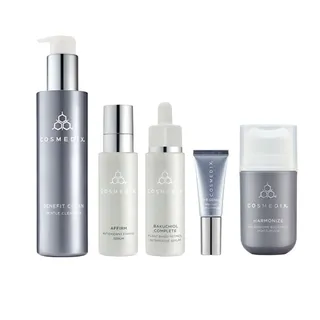
CosMedix Cleanse, Firm, Hydrate, Harmonize & Revive
Works for
CleansingSodium hydroxypropylsulfonate laurylglucoside crosspolymer, Sodium coco-glucoside tartrate + 16 moreCleanses gently
“• Benefit Clean is a bestselling, ultra-gentle facial cleanser that lifts away dirt, oil, impurities and stubborn makeup while also soothing and hydrating the complexion.”
This product works by removing dirt and oil from the surface of the skin. It uses a combination of mild cleansing agents (cetearyl alcohol, cetyl alcohol, cocamidopropyl hydroxysultaine, glyceryl stearate, glycine soja protein, lauryl glucoside, polysorbate 60, sodium coco-glucoside tartrate, sodium cocoamphoacetate, sodium cocoyl glutamate, sodium hydroxypropylsulfonate decylglucoside crosspolymer, sodium hydroxypropylsulfonate laurylglucoside crosspolymer, sodium lauryl glucose carboxylate, sodium methyl cocoyl taurate, sodium stearoyl lactylate, steareth-20, xanthan gum) and should be able to cleanse the skin gently. Still keep in mind that any cleansing can disrupt the skin barrier, and most people do not need to cleanse their skin more than once per day.
Even though this formulation is mild, the following cleansing agents could trigger an irritation or allergy for some people: sodium methyl cocoyl taurate
Anti-blemishNot advertised by the brand · Bakuchiol, Epigallocatechin gallate + 3 moreMay help
This product might be able to help reduce blemishes and clogged pores because it contains bakuchiol.
The following ingredient (ingredients) in this product might be helpful, but there is no evidence to confirm that it actually works: epigallocatechin gallate, retinyl palmitate
Can it cause trouble?
Irritancy14 strong irritants: Citrus paradisi peel oil, Santalum album oil + 12 more — patch-test recommendedHigh risk
Comedogenic5 ingredients rated 2 or more on the 0–5 pore-clogging scale5 flagged
User reviews
Be the first — your take helps the next person decide.
Ingredients
Filter by role to see what each ingredient is doing.
Water~40–60%
Glycerin~3.9–5.8%
- Irritation risk
- Low
One of the best moisturizing ingredients. Naturally present in skin. It attracts water to the upper layer of the skin working as a humectant
More about GlycerinSodium hydroxypropylsulfonate laurylglucoside crosspolymer~4–6.1%
- Irritation risk
- Low
Sodium coco-glucoside tartrate~2.9–4.3%
Cocamidopropyl hydroxysultaine~2.6–3.9%
- Irritation risk
- Medium
Used as a cleansing agent. Helps water and oil mix together
More about Cocamidopropyl hydroxysultaineSodium cocoamphoacetate~1.7–2.6%
- Irritation risk
- Medium
Helps oil and water mix together and works as a cleansing agent. Creates foam
More about Sodium cocoamphoacetateSodium cocoyl hydrolyzed amaranth protein~1.4–2.1%
- Irritation risk
- Low
Lauryl glucoside~1.3–2%
Sodium methyl cocoyl taurate~1.3–1.9%
- Irritation risk
- High
Helps oil and water mix together. Can be used as cleansing agent
More about Sodium methyl cocoyl taurateSodium cocoyl glutamate~0.9–1.3%
- Irritation risk
- Medium
Helps oil and water mix together
More about Sodium cocoyl glutamateSodium lauryl glucose carboxylate~0.55–1.3%
- Irritation risk
- Medium
Helps water and oil mix together and works as a cleansing agent
More about Sodium lauryl glucose carboxylateSodium hydroxypropylsulfonate decylglucoside crosspolymer~0.5–1.15%
- Irritation risk
- Low
Glucuronolactone~0.35–0.85%
- Irritation risk
- Low
Citrus paradisi peel oil~0.35–0.75%
Santalum album oil~0.3–0.75%
Gluconolactone~0.3–0.7%
- Irritation risk
- Medium
A polyhydroxy acid (PHA) that helps shed the dead cells from the skin surface revealing smoother skin. Is believed to be genter than AHAs. It helps attract water to the upper layer of the skin and can stimulate production of skin's own hyaluronic acid resulting in improved hydration levels. It has been shown to be helpful against acne and clogged pores if used consistently (e.g over a period of 12 weeks) in high enough concentration. It can help reduce fine lines and wrinkles and improve skin tone with long-term application. Can help neutralize free radicals
More about GluconolactoneSodium benzoate~0.25–0.5%
Hamamelis virginiana water~0.2–0.7%
- Irritation risk
- High
A plant extract that can help calm down inflammation in skin. Can, however, itself be irritating
More about Hamamelis virginiana waterWater~0.2–0.7%
Glycerin~0.2–0.75%
- Irritation risk
- Low
One of the best moisturizing ingredients. Naturally present in skin. It attracts water to the upper layer of the skin working as a humectant
More about GlycerinAlcohol~0.15–0.65%
- Irritation risk
- High
Can be drying and contribute to skin irritation. Used in formulars to dissolve other ingredients, create a thinner product consistency or for its antibacterial properties
More about AlcoholGlycine soja protein~0.2–0.7%
- Irritation risk
- Low
A plant extract that helps to attract water to the upper layer of the skin and soften it. It might be helpful in neutralizing free radicals. It might be somewhat helpful for evening out the skin tone. It might be able to support elastin production but solid research is lacking
More about Glycine soja proteinDimethicone~0.2–0.75%
- Irritation risk
- Low
A silicone that helps to reduce water loss from the surface of the skin. Can temporarily "fill in" lines and wrinkles, absorb oil, and create a nice product finish
More about DimethiconePisum sativum protein~0.15–0.6%
- Irritation risk
- Low
Peumus boldus leaf extract~0.15–0.65%
- Irritation risk
- Low
Cassia angustifolia seed polysaccharide~0.15–0.6%
- Irritation risk
- Medium
Helps attract water to the upper layer of the skin. Is sometimes referred to as "natural" hyaluronic acid (even though hyaluronic acid is not unnatural and is present in human skin)
More about Cassia angustifolia seed polysaccharideEpigallocatechin gallate~0.15–0.6%
- Irritation risk
- Low
A polyphenol found in tea. This particular compound abbreviated EGCG is the most powerful antioxidant among those extracted from tea (usually green tea). Unfortunately, EGCG is unstable, requires a low pH (below 4) to prevent quick degradation, and does not penetrate the skin very well. This is why the full anti-oxidant effect of EGCG is typically not realized when it is added to topical skincare
More about Epigallocatechin gallateVitis vinifera seed extract~0.15–0.65%
- Irritation risk
- Low
A plant extract that contains resveratrol and other anti-oxidant compounds that can help neutralize free radicals, reduce inflammation in skin and even out its tone. Can be also used to stabilize the product formulation
More about Vitis vinifera seed extractPolygonum cuspidatum extract~0.15–0.6%
- Irritation risk
- Low
Phenyl t-butylnitrone~0.15–0.65%
- Irritation risk
- Low
Superoxide dismutase~0.15–0.6%
- Irritation risk
- Low
An antioxidant enzyme that is naturally present in skin. It can help support skin barrier function and reduce inflammation in skin. It is used in topical medications for inflammatory skin conditions including atopic dermatitis (eczema) and psoriasis. There are three types of natural Superoxide Dismutase in human skin. The compound used in topical treatments and cosmetics are mimics of typically one of these natural variants
More about Superoxide dismutaseTocopherol~0.15–0.65%
- Irritation risk
- Low
Pure form of vitamin E. Can help moisturise and protect the skin from free radicals. Often used to help stabilise other ingredients or the formula itself
More about TocopherolHelianthus annuus seed oil~0.15–0.65%
- Irritation risk
- Low
A great emollient due to its high linoleic acid content. One of the most effective plant oils in helping skin hydration and repairing skin barrier function
More about Helianthus annuus seed oilVaccinium angustifolium fruit extract~0.15–0.55%
- Irritation risk
- Medium
A plant extract tha can have anti-oxidant properties, but evidence of effectiveness in skin is lacking
More about Vaccinium angustifolium fruit extractCitrus paradisi peel oil~0.15–0.55%
Santalum album oil~0.15–0.6%
Carnosine~0.15–0.6%
- Irritation risk
- Low
A type of peptide. It attracts water to the upper layer of the skin. It can help neutralize free radicals in skin combatting the sun damage
More about CarnosineAminoguanidine hcl~0.15–0.55%
- Irritation risk
- Low
Glucosamine hcl~0.15–0.6%
- Irritation risk
- Low
Might be able to stimulate production of skin's natural moisturizing compounds such as hyaluronic acid. Could be helpful for evening the skin tone.
More about Glucosamine hclGlutathione~0.15–0.6%
- Irritation risk
- Medium
A peptide that can help neutralize free radicals in skin and reduce melanin production resulting in skin lightening effect and reduction in hyperpigmentation. It can also help attract moisture to the upper layer of the skin
More about GlutathioneXanthan gum~0.15–0.65%
- Irritation risk
- Low
Used to create a thicker product consistency
More about Xanthan gumBenzyl alcohol~0.15–0.55%
- Irritation risk
- High
A preservative. Can be used to mask unpleasant smell. Can be irritating
More about Benzyl alcoholHelianthus annuus seed oil~0.15–0.65%
- Irritation risk
- Low
A great emollient due to its high linoleic acid content. One of the most effective plant oils in helping skin hydration and repairing skin barrier function
More about Helianthus annuus seed oilCoco-caprylate/caprate~0.15–0.65%
- Irritation risk
- Low
Helps to soften the upper layer of the skin without creating a greasy texture
More about Coco-caprylate/caprateSimmondsia chinensis seed oil~0.2–0.75%
- Irritation risk
- Medium
Softens the upper layer of skin and helps restore the healthy skin barrier. Has shown to help calm down inflammation in skin. It is a stable oil, meaning that it retains its properties even when exposed to air.
More about Simmondsia chinensis seed oilSqualane~0.2–0.75%
- Irritation risk
- Low
An oil naturally present in skin. Works as an emollient to soften the skin and form a protective layer on its surface without a greasy feeling.
More about SqualaneBakuchiol~0.15–0.65%
- Irritation risk
- Medium
A plant extract that is, though different in chemical structure, acts similar to retinoids. First studies show that it can help reduce fine lines and wrinkles, improve skin tone, reduce clogged pores and blemishes, and reduce inflammation. There is no conclusive evidence that bakuchiol is as effective as retinol however. The study that directly compared retinol with bakuchiol used bakuchiol applied twice daily compared to once per day for the retinol. According to this study, bakuchiol is less irritating than retinol. Bakuchiol is extracted from seeds of Babchi plant. Other parts of the plant contain coumarins that could cause allergic and irritant reactions. These compounds should be removed in the extraction process when bakuchiol is produced, but it is a good idea to be cautious and stay away from products that include the Babchi plant extracts other than purified bakuchiol to avoid irritation
More about BakuchiolTocopheryl acetate~0.15–0.65%
- Irritation risk
- Medium
A more stable but less bio-available form of vitamin E compared to Tocopherol. Might help moisturize and protect the skin from free radicals, but mostly used in low concentrations to stabilize other ingredients.
More about Tocopheryl acetateEclipta prostrata extract~0.15–0.6%
- Irritation risk
- High
A plant extract that might help neutralize free radicals in skin. It can be irritating
More about Eclipta prostrata extractMelia azadirachta leaf extract~0.15–0.6%
- Irritation risk
- High
A plant extract that has anti-bacterial properties. Can be used to preserve the product. Can be irritating
More about Melia azadirachta leaf extractMelia azadirachta flower extract~0.15–0.6%
- Irritation risk
- Medium
A plant extract that might be helpful to neutralize free radicals in skin
More about Melia azadirachta flower extractCorallina officinalis extract~0.15–0.6%
- Irritation risk
- Low
- Comedogenicity
- 3/5
Red algae extract that helps attract water to the upper layer of the skin and might contain antioxidants
More about Corallina officinalis extractCoccinia indica fruit extract~0.15–0.6%
- Irritation risk
- Medium
A plant extract that might have some anti-oxidant effect helping neutralize free radicals in skin
More about Coccinia indica fruit extractMoringa oleifera seed oil~0.15–0.65%
- Irritation risk
- Medium
A plant oil that helps soften the upper layer of the skin. Is unlikely to be helpful in restoring skin barrier function due to the low content of linoleic acid
More about Moringa oleifera seed oilSolanum melongena fruit extract~0.15–0.6%
- Irritation risk
- Medium
Eggplant fruit extract. Might have some anti-oxidant effect
More about Solanum melongena fruit extractAloe barbadensis flower extract~0.15–0.65%
- Irritation risk
- High
A plant extract that might have some anti-oxidant effect
More about Aloe barbadensis flower extractCurcuma longa root extract~0.15–0.55%
- Irritation risk
- High
A plant extract that can contain an active compound curcumin, that may have some anti-inflammatory properties when applied to the skin, but solid research is lacking and the typical concentration used in skincare products is too low. Can be an irritant
More about Curcuma longa root extractOcimum basilicum flower/leaf extract~0.15–0.6%
- Irritation risk
- High
Used as a fragrance. Canbe irritating
More about Ocimum basilicum flower/leaf extractOcimum sanctum leaf extract~0.15–0.6%
- Irritation risk
- High
A plant extract that is rich in a fragrance compound eugenol that is a frequent allergen and can be irritating. It might also contain anti-oxidants to help neutralize free radicals
More about Ocimum sanctum leaf extractWater~0.15–0.6%
Caprylic/capric triglyceride~0.2–0.75%
- Irritation risk
- Medium
A good mix of fatty acids that forms a protective layer on the skin. Improves the shelf life of products. Derived from coconut and glycerin
More about Caprylic/capric triglycerideGlycerin~0.15–0.7%
- Irritation risk
- Low
One of the best moisturizing ingredients. Naturally present in skin. It attracts water to the upper layer of the skin working as a humectant
More about GlycerinPentylene glycol~0.2–0.7%
- Irritation risk
- Medium
Used to preserve products, dissolve other ingredients and create a nice product texture
More about Pentylene glycolGlyceryl stearate~0.2–0.7%
- Irritation risk
- Low
An emollient that softens the skin and forms a protective layer on its surface. Helps water and oil mix together
More about Glyceryl stearateLactobacillus ferment lysate filtrate~0.15–0.6%
- Irritation risk
- Low
Hydrogenated ethylhexyl olivate~0.15–0.65%
- Irritation risk
- Low
Helps soften the upper layer of the skin
More about Hydrogenated ethylhexyl olivateSqualane~0.2–0.75%
- Irritation risk
- Low
An oil naturally present in skin. Works as an emollient to soften the skin and form a protective layer on its surface without a greasy feeling.
More about SqualaneMangifera indica seed butter~0.15–0.6%
- Irritation risk
- Low
Helps to soften the upper layer of the skin and might have some anti-oxidant effect
More about Mangifera indica seed butterVitis vinifera fruit extract~0.15–0.6%
- Irritation risk
- Medium
A plant extract that helps attract water to the upper layer of the skin. It might be helpful in neutralizing free radicals in skin, but is less potent than the extract from the seeds
More about Vitis vinifera fruit extractZingiber officinale root extract~0.1–0.5%
- Irritation risk
- High
A plant extract that can contain an irritating essential oil. Might have some anti-oxidant effect, but evidence is lacking
More about Zingiber officinale root extractBoswellia serrata extract~0.15–0.6%
- Irritation risk
- Low
Chlorella vulgaris extract~0.15–0.6%
- Irritation risk
- Medium
- Comedogenicity
- 3/5
A plant extract that can help to attract water to the upper layer of the skin and might have some anti-oxidant and anti-inflammatory properties
More about Chlorella vulgaris extractRhodiola rosea root extract~0.15–0.7%
- Irritation risk
- Low
Inonotus obliquus extract~0.15–0.6%
- Irritation risk
- Low
Ganoderma lucidum extract~0.15–0.6%
- Irritation risk
- Medium
Helps attract water to the upper layer of the skin
More about Ganoderma lucidum extractWithania somnifera root extract~0.15–0.6%
- Irritation risk
- High
Leuconostoc/radish root ferment filtrate~0.15–0.6%
- Irritation risk
- Medium
A preservative that comes from radishes fermented by a bacteria. New research suggests that the preservation properties in the ingredient come from an ammonium salt that is not present naturally in radish root but used in its cultivation. Is problematic because the exact amount of the preservative agents is difficult to determine
More about Leuconostoc/radish root ferment filtratePopulus tremuloides bark extract~0.15–0.6%
- Irritation risk
- Low
Tremella fuciformis sporocarp extract~0.15–0.6%
- Irritation risk
- Low
Mushroom extract that helps attract water to the upper layer of the skin
More about Tremella fuciformis sporocarp extractPanthenol~0.15–0.6%
- Irritation risk
- Low
Helps attract water to the upper layer of the skin and can help improve skin barrier function
More about PanthenolBisabolol~0.15–0.55%
- Irritation risk
- Low
An active component of chamomile plant that historically has been used to calm down irritated skin. A recent study shows that bisabolol indeed can have some anti-inflammatory effect on skin, even though conclusive data is lacking. Bisabolol has a sweet floral scent and can be added to products for its aromatic properties
More about BisabololCetearyl alcohol~0.2–0.7%
- Irritation risk
- Low
- Comedogenicity
- 2/5
A non-drying alcohol. Works as an emollient. Helps water and oil mix together and creates a nice product texture
More about Cetearyl alcoholXanthan gum~0.15–0.65%
- Irritation risk
- Low
Used to create a thicker product consistency
More about Xanthan gumHydroxyacetophenone~0.15–0.6%
Ammonium acryloyldimethyltaurate/vp copolymer~0.15–0.6%
- Irritation risk
- Low
Increases thickness of a product. Texture enhancer for oil-in-water emulsions
More about Ammonium acryloyldimethyltaurate/vp copolymerSodium stearoyl lactylate~0.15–0.65%
- Irritation risk
- Medium
Helps oil and water mix together
More about Sodium stearoyl lactylate1,2-hexanediol~0.15–0.6%
Caprylyl glycol~0.15–0.65%
- Irritation risk
- Medium
Helps preserve products and creates a nice product texture
More about Caprylyl glycolSodium hydroxide~0.15–0.6%
Hydrogenated olive oil unsaponifiables~0.15–0.65%
- Irritation risk
- Low
Help soften the upper layer of the skin
More about Hydrogenated olive oil unsaponifiablesPropanediol~0.15–0.65%
- Irritation risk
- Low
Acts as a solvent for other ingredients. Speeds up the absorption of other ingredients into the skin
More about PropanediolLavandula angustifolia flower/leaf/stem extract~0.15–0.6%
Sodium phytate~0.15–0.6%
Citric acid~0.15–0.6%
- Irritation risk
- Medium
Can work as an exfoliant but is typically used to adjust the product pH
More about Citric acidLactic acid~0.15–0.6%
- Irritation risk
- Medium
An exfoliating and moisturizing alpha-hydroxy acid (AHA). Typically causes less irritation than other AHAs, for example, glycolic acid. At high concentrations (about 15%), lactic acid can help reduce lines and wrinkles. Recent studies show that lactic acid can support the "good" bacteria living on skin's surface (healthy skin microbiome)
More about Lactic acidSodium benzoate~0.25–0.5%
Water~0.15–0.6%
Glycerin~0.15–0.7%
- Irritation risk
- Low
One of the best moisturizing ingredients. Naturally present in skin. It attracts water to the upper layer of the skin working as a humectant
More about GlycerinCaprylic/capric triglyceride~0.2–0.75%
- Irritation risk
- Medium
A good mix of fatty acids that forms a protective layer on the skin. Improves the shelf life of products. Derived from coconut and glycerin
More about Caprylic/capric triglycerideStearic acid~0.3–0.75%
- Irritation risk
- Low
Helps oil and water mix together and works as an emollient
More about Stearic acidGlyceryl stearate~0.2–0.7%
- Irritation risk
- Low
An emollient that softens the skin and forms a protective layer on its surface. Helps water and oil mix together
More about Glyceryl stearateMica~0.15–0.65%
- Irritation risk
- Low
Creates an illusion of smoother and more radiant skin tone. Adds shimmer to the skin by reflecting light
More about MicaCetearyl alcohol~0.2–0.7%
- Irritation risk
- Low
- Comedogenicity
- 2/5
A non-drying alcohol. Works as an emollient. Helps water and oil mix together and creates a nice product texture
More about Cetearyl alcoholSqualane~0.2–0.75%
- Irritation risk
- Low
An oil naturally present in skin. Works as an emollient to soften the skin and form a protective layer on its surface without a greasy feeling.
More about SqualanePolysorbate 60~0.15–0.65%
Cetyl alcohol~0.2–0.7%
- Irritation risk
- Low
A non-drying alcohol that works to soften the skin and stabilize product formulations helping oil and water mix together
More about Cetyl alcoholSodium hyaluronate~0.15–0.6%
- Irritation risk
- Low
One of the best moisturizing ingredients. Attracts water into the upper layer of the skin
More about Sodium hyaluronateBorago officinalis seed oil~0.15–0.65%
- Irritation risk
- Low
A plant oil that is effective in reducing irritation in skin, restore the barrier function and support its hydration
More about Borago officinalis seed oilOlea europaea fruit oil~0.15–0.65%
- Irritation risk
- Medium
An emollient that helps soften the skin but is not effective for restoring its barrier function. Might be helpful to calm down inflammation
More about Olea europaea fruit oilPhenethyl alcohol~0.15–0.65%
Caprylyl glycol~0.15–0.65%
- Irritation risk
- Medium
Helps preserve products and creates a nice product texture
More about Caprylyl glycolXanthan gum~0.15–0.65%
- Irritation risk
- Low
Used to create a thicker product consistency
More about Xanthan gumPrunus amygdalus dulcis oil~0.15–0.7%
- Irritation risk
- Low
An emollient that softens the skin
More about Prunus amygdalus dulcis oilLavandula angustifolia oil~0.15–0.6%
- Irritation risk
- High
An essential oil. Potential allergen and can be irritating. It has some anti-bacterial properties
More about Lavandula angustifolia oilRosmarinus officinalis leaf oil~0.15–0.6%
- Irritation risk
- High
A plant oil with high content of volatile compounds that can irritate the skin. Can be used as a fragrance. Has anti-bacterial properties and might help neutralize free radicals on the surface of the skin
More about Rosmarinus officinalis leaf oilHesperidin methyl chalcone~0.15–0.6%
- Irritation risk
- High
Might help neutralize free radicals in skin. Is claimed to be able to improve the appearance of undereye darkness but evidence is missing. Can be an allergen and cause irritation
More about Hesperidin methyl chalconeTocotrienols~0.15–0.6%
- Irritation risk
- Low
A type of vitamin E that is more powerful in neutralizing free radicals compared to its other forms
More about TocotrienolsRetinyl palmitate~0.15–0.55%
- Irritation risk
- High
Three steps removed from the active form of vitamin A - retinoic acid. To have an effect in the skin, it first needs to be converted twice to become the retinoic acid. This means it is less potent than retinol, but could also be less irritating. Once converted to the retinoic acid in the skin, it helps against all signs of aging, improves skin cell turnover and helps fight blemishes and clogged pores. However, in many cosmetic formulations, it is used in a concentration that is too low to have the full effect
More about Retinyl palmitateElaeis guineensis oil~0.15–0.7%
- Irritation risk
- Low
Helps soften the upper layer of the skin
More about Elaeis guineensis oilSteareth-20~0.2–0.8%
Caprooyl tetrapeptide-3~0.15–0.7%
- Irritation risk
- Low
A type of peptide. Peptides are excellent moisturizers and might be able support collagen production reducing fine lines and wrinkles
More about Caprooyl tetrapeptide-3Dextran~0.15–0.6%
- Irritation risk
- Low
Helps attract water to the most upper layer of the skin. Derived from sugar
More about DextranJasminum officinale oil~0.1–0.5%
- Irritation risk
- Low
Aloe barbadensis leaf juice powder~0.15–0.6%
- Irritation risk
- Medium
Traditionally used to treat sunburns, dermatitis and inflammation, but evidence for its effectiveness is lacking. The extract can contain humectants that help attract water into the skin
More about Aloe barbadensis leaf juice powderHelianthus annuus seed oil~0.15–0.65%
- Irritation risk
- Low
A great emollient due to its high linoleic acid content. One of the most effective plant oils in helping skin hydration and repairing skin barrier function
More about Helianthus annuus seed oilCitric acid~0.15–0.6%
- Irritation risk
- Medium
Can work as an exfoliant but is typically used to adjust the product pH
More about Citric acidTocopherol~0.15–0.65%
- Irritation risk
- Low
Pure form of vitamin E. Can help moisturise and protect the skin from free radicals. Often used to help stabilise other ingredients or the formula itself
More about TocopherolSqualene~0.15–0.7%
- Irritation risk
- Low
- Comedogenicity
- 2/5
An oil that is naturally part of skin sebum that helps to soften its upper layer, reduce water loss and neutralize free radicals. It might be comedogenic. Avoid applying large concentrations (or pure oil) before sun exposure as oxidized squalene can clog pores and lead to skin irritation. Today squalene is mostly derived from vegetable oils or synthetized by yeast
More about SqualeneTrisodium ethylenediamine disuccinate~0.15–0.55%
- Irritation risk
- Medium
Used to improve stability of the formulation
More about Trisodium ethylenediamine disuccinateSodium hydroxide~0.15–0.55%
Hydroxypropyl cyclodextrin~0.15–0.6%
- Irritation risk
- Medium
Used to stabilize product formulations and help soften the upper layer of the skin
More about Hydroxypropyl cyclodextrinBeta-sitosterol~0.15–0.6%
- Irritation risk
- Low
A phytosterol that can support skin's barrier function and help the skin stay hydrated
More about Beta-sitosterolDipeptide-2~0.1–0.5%
- Irritation risk
- Low
A type of peptide. Peptides are excellent moisturizers and might be able support collagen production reducing fine lines and wrinkles
More about Dipeptide-2Acetyl octapeptide-3~0.1–0.45%
- Irritation risk
- Low
A type of peptide. Peptides are excellent moisturizers and might be able support collagen production reducing fine lines and wrinkles
More about Acetyl octapeptide-3Palmitoyl tetrapeptide-7~0.1–0.5%
- Irritation risk
- Low
A type of peptide. Peptides are excellent moisturizers and might be able support collagen production reducing fine lines and wrinkles
More about Palmitoyl tetrapeptide-7Palmitoyl tripeptide-38~0.1–0.3%
- Irritation risk
- Low
A type of peptide. Peptides are excellent moisturizers and might be able support collagen production reducing fine lines and wrinkles
More about Palmitoyl tripeptide-38Potassium sorbate~0.1–0.35%
Linalool~0.05–0.3%
Limonene~0.05–0.15%
- Irritation risk
- High
A common frangrance that can easily irritate skin, especially if exposed to air, light or heat
More about LimoneneTitanium dioxide~0.05–0.25%
- Irritation risk
- Low
Works as a UV filter when used in high concentrations. It is photostable and is effective mostly against the UVB light, with some protection in the UVA range. In small concentrations, used for its ability to improve the color of cosmetic products. Is usually well tolerated by the skin
More about Titanium dioxideIngredient list view
Water, Glycerin, Sodium hydroxypropylsulfonate laurylglucoside crosspolymer, Sodium coco-glucoside tartrate, Cocamidopropyl hydroxysultaine, Sodium cocoamphoacetate, Sodium cocoyl hydrolyzed amaranth protein, Lauryl glucoside, Sodium methyl cocoyl taurate, Sodium cocoyl glutamate, Sodium lauryl glucose carboxylate, Sodium hydroxypropylsulfonate decylglucoside crosspolymer, Glucuronolactone, Citrus paradisi peel oil, Santalum album oil, Gluconolactone, Sodium benzoate, Hamamelis virginiana water, Water, Glycerin, Alcohol, Glycine soja protein, Dimethicone, Pisum sativum protein, Peumus boldus leaf extract, Cassia angustifolia seed polysaccharide, Epigallocatechin gallate, Vitis vinifera seed extract, Polygonum cuspidatum extract, Phenyl t-butylnitrone, Superoxide dismutase, Tocopherol, Helianthus annuus seed oil, Vaccinium angustifolium fruit extract, Citrus paradisi peel oil, Santalum album oil, Carnosine, Aminoguanidine hcl, Glucosamine hcl, Glutathione, Xanthan gum, Benzyl alcohol, Helianthus annuus seed oil, Coco-caprylate/caprate, Simmondsia chinensis seed oil, Squalane, Bakuchiol, Tocopheryl acetate, Eclipta prostrata extract, Melia azadirachta leaf extract, Melia azadirachta flower extract, Corallina officinalis extract, Coccinia indica fruit extract, Moringa oleifera seed oil, Solanum melongena fruit extract, Aloe barbadensis flower extract, Curcuma longa root extract, Ocimum basilicum flower/leaf extract, Ocimum sanctum leaf extract, Water, Caprylic/capric triglyceride, Glycerin, Pentylene glycol, Glyceryl stearate, Lactobacillus ferment lysate filtrate, Hydrogenated ethylhexyl olivate, Squalane, Mangifera indica seed butter, Vitis vinifera fruit extract, Zingiber officinale root extract, Boswellia serrata extract, Chlorella vulgaris extract, Rhodiola rosea root extract, Inonotus obliquus extract, Ganoderma lucidum extract, Withania somnifera root extract, Leuconostoc/radish root ferment filtrate, Populus tremuloides bark extract, Tremella fuciformis sporocarp extract, Panthenol, Bisabolol, Cetearyl alcohol, Xanthan gum, Hydroxyacetophenone, Ammonium acryloyldimethyltaurate/vp copolymer, Sodium stearoyl lactylate, 1,2-hexanediol, Caprylyl glycol, Sodium hydroxide, Hydrogenated olive oil unsaponifiables, Propanediol, Lavandula angustifolia flower/leaf/stem extract, Sodium phytate, Citric acid, Lactic acid, Sodium benzoate, Water, Glycerin, Caprylic/capric triglyceride, Stearic acid, Glyceryl stearate, Mica, Cetearyl alcohol, Squalane, Polysorbate 60, Cetyl alcohol, Sodium hyaluronate, Borago officinalis seed oil, Olea europaea fruit oil, Phenethyl alcohol, Caprylyl glycol, Xanthan gum, Prunus amygdalus dulcis oil, Lavandula angustifolia oil, Rosmarinus officinalis leaf oil, Hesperidin methyl chalcone, Tocotrienols, Retinyl palmitate, Elaeis guineensis oil, Steareth-20, Caprooyl tetrapeptide-3, Dextran, Jasminum officinale oil, Aloe barbadensis leaf juice powder, Helianthus annuus seed oil, Citric acid, Tocopherol, Squalene, Trisodium ethylenediamine disuccinate, Sodium hydroxide, Hydroxypropyl cyclodextrin, Beta-sitosterol, Dipeptide-2, Acetyl octapeptide-3, Palmitoyl tetrapeptide-7, Palmitoyl tripeptide-38, Potassium sorbate, Linalool, Limonene, Titanium dioxide
Compare prices
Retailers ranked by price — lowest first.
Worth comparing, line by line.
Match % combines shared ingredients, the first five ingredients, shared actives and hero ingredients, irritancy (lower counts in the alternative's favour), texture and body area. Only products in the same routine step are compared.
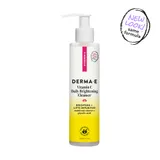
| CosMedixCleanse, Firm, Hydrate, Harmonize & ReviveYOUR PRODUCT | Derma EVitamin C Daily Brightening Cleanser | SkingredientsPreProbiotic Cleanser | Estelle and ThildEstelle Thild BioCleanse Micellar Cleansing Water | |
|---|---|---|---|---|
| Match | — | 60% | 35% | 34% |
| Price | — | $15.77 | — | $20.39 |
| Shared key ingredients | — | 5 of 52 | 7 of 52 | 1 of 52 |
| Key difference | — | Retinol | Myristyl Myristate | Cocamidopropyl Betaine |
| Irritancy | High | Medium | Low | Medium |
| Drying alcohol | Contains drying alcohol | — | — | — |
| View product | Shop | Shop | Shop |


More alternatives: SKIN 1004. Madagascar Centella Poremizing Fresh AmpouleSVR SEBIACLEAR Micellar Water
Sources cited in this review
Every concentration estimate and effectiveness label is anchored to one of these 96 studies and safety reviews.
- 1
- 2
- 3
- 4
- 5
- 6

Affiliate links · As an Amazon Associate, WIMJ earns from qualifying purchases.