
Works for:
based on ingredients and %- Anti-blemish
- Exfoliation
- Cleansing
Can it cause trouble?
- Irritation risk: high
- Comedogenic risk ingredients: 1
Key actives



Works for
Anti-blemish
What does the product description say?
Cleanse, Clear, Clarify
Source: From product name
This product can help reduce breakouts and clogged pores because it contains the following ingredient: retinol, salicylic acid, sulfur. These ingredients is used for treating acne and can have a noticeable effect.
Two steps removed from the active form of vitamin A - retinoic acid. Once converted to the retinoic acid in the skin, retinol is proven to be effective against all signs of aging. It improves skin cell turnover, helps fight blemishes and clogged pores, can regulate excess oil production and even skin tone. It can, however, be quite irritating
Used for skin exfoliation. It has an anti-inflammatory and anti-bacterial effect, helps to unclog pores, prevent blemishes and speed up healing of the existing ones. Sometimes referred to as a BHA (beta-hydroxy acid)
A plant extract that has anti-bacterial properties. Can be used to preserve the product. Can be irritating
A type of clay that consists mainly of aluminum silicate. Helps absorb oil and creates a thicker product consistency. Can be used to add a white color
Helps stabilize the product formulation
Can contain potent anti-oxidant compounds (abbreviated ECG, GCG, EGC, and EGCG) that might help protect the skin from free radicals. Can help calm down inflammation and has some anti-bacterial properties. Unfortunately, these antioxidants are unstable and lose their effectiveness very quickly in products. The concentration of the antioxidant compounds in the extract also tends to be low to be effective in topical formulation
Is proven to be effective in reducing blemishes, evening out skin tone and helping to improve lines and wrinkles. It helps the skin to repair sun damage, calm down inflammation and keep maintain good levels of moisture. The concentration of about 2% is effective for supporting the skin barrier and evening out the skin tone. Concentration of 4-6% is better for helping with acne and balancing the sebum production
Can be helpful in reducing inflammation in skin, including inflamed acne. It can be irritating
Helps calm down inflammation in skin and can help reduce itching. Helps to repair the skin barrier and keep skin hydrated
Traditionally used to treat sunburns, dermatitis and inflammation, but evidence for its effectiveness is lacking. The extract can contain humectants that help attract water into the skin
Exfoliation
What does the product description say?
Clear PM | A Deep Cleansing Mask that is formulated with Kaolin Clay, Salicylic Acid and Sulfur to gently exfoliate skin and remove excess oil and impurities.
Source: Cosmedix
This product can help exfoliate the skin. In other words, it helps break down the bonds between dead cells on the surface of the skin and speed up the skin turnover. Skin often appears softer and brighter after exfoliation, but overdoing it can result in disrupted skin barrier. The following ingredient is doing the exfoliating job in this product: retinol, salicylic acid.
Used for skin exfoliation. It has an anti-inflammatory and anti-bacterial effect, helps to unclog pores, prevent blemishes and speed up healing of the existing ones. Sometimes referred to as a BHA (beta-hydroxy acid)
Two steps removed from the active form of vitamin A - retinoic acid. Once converted to the retinoic acid in the skin, retinol is proven to be effective against all signs of aging. It improves skin cell turnover, helps fight blemishes and clogged pores, can regulate excess oil production and even skin tone. It can, however, be quite irritating
An exfoliating and moisturizing alpha-hydroxy acid (AHA). Typically causes less irritation than other AHAs, for example, glycolic acid. At high concentrations (about 15%), lactic acid can help reduce lines and wrinkles. Recent studies show that lactic acid can support the "good" bacteria living on skin's surface (healthy skin microbiome)
Helps calm down inflammation in skin and can help reduce itching. Helps to repair the skin barrier and keep skin hydrated
Cleansing
What does the product description say?
Cleanse, Clear, Clarify
Source: From product name
This product works by removing dirt and oil from the surface of the skin.
The following cleansing agents are typically mild, but still can cause an irritation or allergy for some people decyl glucoside.
Keep in mind that cleansing can disrupt the skin barrier, and most people do not need to cleanse their skin more than once per day.
A non-drying alcohol that works to soften the skin and stabilize product formulations helping oil and water mix together
Used to create a thicker product consistency
Helps create a thicker or gel-like product texture. It is not a surfactant but can be used in gentle cleansing formulations
Helps oil and water mix together
Used to create a thicker product consistency and stabilize the formulation
Is helpful in restoring skin barrier function supporting its moisture levels. Is claimed to stimulte collagen production in skin but evidence is lacking
Helps water and oil mix together
Helps oil and water mix together. Can be irritating
Helps oil and water mix together and works as an emollient
How honest is this product?
| Promise | Can it deliver? |
|---|---|
| Exfoliation | |
| Anti-blemish | |
| Cleansing |
Total Promises Fulfilled score: 91/100.
We receive a small commission for purchases made through these links at no cost for you. Thank you for your support! Learn more
Potential irritants
Comedogenic ingredients
User reviews (0)
Averages from community submissions.
No reviews yet for this product.
Be the first to share your experience!
Tried this product?
Help capture what the ingredient list can't—texture, finish, pilling, scent, and more. Answer what you can, skip the rest.
Takes ~30 seconds.
Reviews are shown in aggregate. No personal details.
| Product | Similarity | Price | Irritancy |
|---|---|---|---|
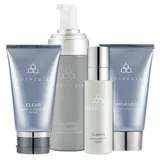 CosMedix Cleanse, Clear, Clarify | Current | $153.00 | |
Community Sixty-Six Detoxifying AHA/BHA Gel Cleanser | 59% | $15.82 | |
Cleaning Supply Retinol 24 + Peptide Face Wash, Smoothing, Sulfate-Free | 58% | - | |
 CeraVe Acne Control Cleanser | 57% | $14.24 | |
 Skinfix USA Acne+ 2% BHA Cleanser | 57% | $35.00 | |
Kate Somerville EradiKate Clarifying Blemish Gel Cleanser with Salicylic Acid, Prebiotic Complex & Niacinamide | 57% | ≈ $41.99 |
Key Actives
Is proven to be effective in reducing blemishes, evening out skin tone and helping to improve lines and wrinkles. It helps the skin to repair sun damage, calm down inflammation and keep maintain good levels of moisture. The concentration of about 2% is effective for supporting the skin barrier and evening out the skin tone. Concentration of 4-6% is better for helping with acne and balancing the sebum production
Is proven to be effective in reducing blemishes, evening out skin tone and helping to improve lines and wrinkles. It helps the skin to repair sun damage, calm down inflammation and keep maintain good levels of moisture. The concentration of about 2% is effective for supporting the skin barrier and evening out the skin tone. Concentration of 4-6% is better for helping with acne and balancing the sebum production
Can contain potent anti-oxidant compounds (abbreviated ECG, GCG, EGC, and EGCG) that might help protect the skin from free radicals. Can help calm down inflammation and has some anti-bacterial properties. Unfortunately, these antioxidants are unstable and lose their effectiveness very quickly in products. The concentration of the antioxidant compounds in the extract also tends to be low to be effective in topical formulation
Helps calm down inflammation in skin and can help reduce itching. Helps to repair the skin barrier and keep skin hydrated
Two steps removed from the active form of vitamin A - retinoic acid. Once converted to the retinoic acid in the skin, retinol is proven to be effective against all signs of aging. It improves skin cell turnover, helps fight blemishes and clogged pores, can regulate excess oil production and even skin tone. It can, however, be quite irritating
Used for skin exfoliation. It has an anti-inflammatory and anti-bacterial effect, helps to unclog pores, prevent blemishes and speed up healing of the existing ones. Sometimes referred to as a BHA (beta-hydroxy acid)
Used for skin exfoliation. It has an anti-inflammatory and anti-bacterial effect, helps to unclog pores, prevent blemishes and speed up healing of the existing ones. Sometimes referred to as a BHA (beta-hydroxy acid)
Used for skin exfoliation. It has an anti-inflammatory and anti-bacterial effect, helps to unclog pores, prevent blemishes and speed up healing of the existing ones. Sometimes referred to as a BHA (beta-hydroxy acid)
Consists of remains of dead bacteria cells. Is likely helpful in attracting water to the upper layer of the skin. Might be helpful in reducing inflammation and neutralizing free radicals in skin
An exfoliating and moisturizing alpha-hydroxy acid (AHA). Typically causes less irritation than other AHAs, for example, glycolic acid. At high concentrations (about 15%), lactic acid can help reduce lines and wrinkles. Recent studies show that lactic acid can support the "good" bacteria living on skin's surface (healthy skin microbiome)
Helps attract water to the upper layer of the skin and can help improve skin barrier function
Can be helpful in reducing inflammation in skin, including inflamed acne. It can be irritating
Is helpful in restoring skin barrier function supporting its moisture levels. Is claimed to stimulte collagen production in skin but evidence is lacking
A type of clay that consists mainly of aluminum silicate. Helps absorb oil and creates a thicker product consistency. Can be used to add a white color
Helps oil and water mix together and works as an emollient
A plant extract that has anti-bacterial properties. Can be used to preserve the product. Can be irritating
A silicone that helps to reduce water loss from the surface of the skin. Can temporarily "fill in" lines and wrinkles, absorb oil, and create a nice product finish
A non-drying alcohol that works to soften the skin and stabilize product formulations helping oil and water mix together
Helps oil and water mix together. Can be irritating
One of the best moisturizing ingredients. Naturally present in skin. It attracts water to the upper layer of the skin working as a humectant
Helps attract water to the upper layer of the skin
One of the best moisturizing ingredients. Naturally present in skin. It attracts water to the upper layer of the skin working as a humectant
A good mix of fatty acids that forms a protective layer on the skin. Improves the shelf life of products. Derived from coconut and glycerin
Works as a UV filter when used in high concentrations. It is photostable and is effective mostly against the UVB light, with some protection in the UVA range. In small concentrations, used for its ability to improve the color of cosmetic products. Is usually well tolerated by the skin
A plant extract that might contain antioxidants
A good emollient that helps soften the skin and helps repair its barrier function. It can clog pores if used in high concentrations.
Used to create a thicker product consistency
Helps create a thicker or gel-like product texture. It is not a surfactant but can be used in gentle cleansing formulations
A blue-colored ingredient that is traditionally used as a colorant. It has anti-inflammatory properties. For example, it is successfully used to treat diaper rash for new borns. It can help support the skin barrier by reducing inflammation
One of the best moisturizing ingredients. Naturally present in skin. It attracts water to the upper layer of the skin working as a humectant
Helps attract water to the upper layer of the skin
Helps attract water to the upper layer of the skin
A great emollient due to its high linoleic acid content. One of the most effective plant oils in helping skin hydration and repairing skin barrier function
A plant extract that might contain antioxidants
Used to create a thicker product consistency and stabilize the formulation
Used to create a thicker product consistency
Potential irritants
Used for skin exfoliation. It has an anti-inflammatory and anti-bacterial effect, helps to unclog pores, prevent blemishes and speed up healing of the existing ones. Sometimes referred to as a BHA (beta-hydroxy acid)
A plant extract that might have some anti-inflammatory properties, but solid evidence is lacking. It can be irritating
Used for fragrance and contains volatile compounds that can irritate the skin
Used as a fragrance for its citrus smell. Can be irritating
Can be helpful in reducing inflammation in skin, including inflamed acne. It can be irritating
A plant extract that can help calm down inflammation in skin. Can, however, itself be irritating
Produces temporary toning effect. Can help dissolve other ingredients or preserve products
A plant extract that might contain antioxidants
An essential oil that can be irritating. Has some anti-bacterial properties
An essential oil that can be very irritating. Has some anti-bacterial properties
A plant extract that has anti-bacterial properties. Can be used to preserve the product. Can be irritating
A plant extract that might have some anti-oxidant effect
Plant extract that can have healing and anti-inflammatory properties. It is a potential allergen and can be irritating
A plant extract that is rich in a fragrance compound eugenol that is a frequent allergen and can be irritating. It might also contain anti-oxidants to help neutralize free radicals
Used as a frangrance. Can be irritating. Might have some anti-bacterial properties
A plant extract that can contain an active compound curcumin, that may have some anti-inflammatory properties when applied to the skin, but solid research is lacking and the typical concentration used in skincare products is too low. Can be an irritant
A plant extract that has some anti-oxidant and anti-bacterial properties. Can be irritating
Can be drying and contribute to skin irritation. Used in formulars to dissolve other ingredients, create a thinner product consistency or for its antibacterial properties
A preservative. Can be used to mask unpleasant smell. Can be irritating
Two steps removed from the active form of vitamin A - retinoic acid. Once converted to the retinoic acid in the skin, retinol is proven to be effective against all signs of aging. It improves skin cell turnover, helps fight blemishes and clogged pores, can regulate excess oil production and even skin tone. It can, however, be quite irritating
A plant oil with high content of volatile compounds that, especially when exposed to air, can cause allergic reactions and irritate the skin
A plant oil with high content of volatile compounds that can irritate the skin. Can be used as a fragrance. Has anti-bacterial properties and might help neutralize free radicals on the surface of the skin
Traditionally used to treat sunburns, dermatitis and inflammation, but evidence for its effectiveness is lacking. The extract can contain humectants that help attract water into the skin
Can have some moisturizing properties due to its sugar content
A fruit extract that might help attract water to the upper layer of the skin and might have some antioxidant properties but evidence of effectiveness in skin is missing
Might be somewhat helpful in reducing hyperpigmentation and neutralizing free radicals but its typical concentration in a product is too low for having an effect
A fruit extract that might have some anti-oxidant properties
A fruit extract that might have some anti-oxidant properties but evidence of effectiveness in skin is lacking
Helps preserve products and creates a nice product texture
An exfoliating and moisturizing alpha-hydroxy acid (AHA). Typically causes less irritation than other AHAs, for example, glycolic acid. At high concentrations (about 15%), lactic acid can help reduce lines and wrinkles. Recent studies show that lactic acid can support the "good" bacteria living on skin's surface (healthy skin microbiome)
A good mix of fatty acids that forms a protective layer on the skin. Improves the shelf life of products. Derived from coconut and glycerin
Might have some anti-inflammatory properties but research is lacking
A plant extract that might be helpful to neutralize free radicals in skin
Eggplant fruit extract. Might have some anti-oxidant effect
A plant extract that might have some anti-oxidant effect helping neutralize free radicals in skin
A more stable but less bio-available form of vitamin E compared to Tocopherol. Might help moisturize and protect the skin from free radicals, but mostly used in low concentrations to stabilize other ingredients.
A good emollient that helps soften the skin and helps repair its barrier function. It can clog pores if used in high concentrations.
Used to create a thicker product consistency and stabilize the formulation
A plant extract that might help calm down inflammation in skin but evidence of effectiveness is lacking
Traditionally used to treat sunburns, dermatitis and inflammation, but evidence for its effectiveness is lacking. The extract can contain humectants that help attract water into the skin
Comedogenic ingredients
A good emollient that helps soften the skin and helps repair its barrier function. It can clog pores if used in high concentrations.
All ingredients
Used for skin exfoliation. It has an anti-inflammatory and anti-bacterial effect, helps to unclog pores, prevent blemishes and speed up healing of the existing ones. Sometimes referred to as a BHA (beta-hydroxy acid)
One of the best moisturizing ingredients. Naturally present in skin. It attracts water to the upper layer of the skin working as a humectant
Acts as a solvent for other ingredients. Speeds up the absorption of other ingredients into the skin
Traditionally used to treat sunburns, dermatitis and inflammation, but evidence for its effectiveness is lacking. The extract can contain humectants that help attract water into the skin
Consists of remains of dead bacteria cells. Is likely helpful in attracting water to the upper layer of the skin. Might be helpful in reducing inflammation and neutralizing free radicals in skin
Helps attract water to the upper layer of the skin and can help improve skin barrier function
Can contain potent anti-oxidant compounds (abbreviated ECG, GCG, EGC, and EGCG) that might help protect the skin from free radicals. Can help calm down inflammation and has some anti-bacterial properties. Unfortunately, these antioxidants are unstable and lose their effectiveness very quickly in products. The concentration of the antioxidant compounds in the extract also tends to be low to be effective in topical formulation
A plant extract that might have some anti-inflammatory properties, but solid evidence is lacking. It can be irritating
Can have some moisturizing properties due to its sugar content
A fruit extract that might help attract water to the upper layer of the skin and might have some antioxidant properties but evidence of effectiveness in skin is missing
Used for fragrance and contains volatile compounds that can irritate the skin
Might be somewhat helpful in reducing hyperpigmentation and neutralizing free radicals but its typical concentration in a product is too low for having an effect
A fruit extract that might have some anti-oxidant properties
Used as a fragrance for its citrus smell. Can be irritating
Can be helpful in reducing inflammation in skin, including inflamed acne. It can be irritating
A fruit extract that might have some anti-oxidant properties but evidence of effectiveness in skin is lacking
Helps preserve products and creates a nice product texture
A preservative. It helps prevent bacterial growth in cosmetic products
An exfoliating and moisturizing alpha-hydroxy acid (AHA). Typically causes less irritation than other AHAs, for example, glycolic acid. At high concentrations (about 15%), lactic acid can help reduce lines and wrinkles. Recent studies show that lactic acid can support the "good" bacteria living on skin's surface (healthy skin microbiome)
Used to stabilize mixtures of oil and water, and create thicker, gel-like product textures
One of the best moisturizing ingredients. Naturally present in skin. It attracts water to the upper layer of the skin working as a humectant
A type of clay that consists mainly of aluminum silicate. Helps absorb oil and creates a thicker product consistency. Can be used to add a white color
Is proven to be effective in reducing blemishes, evening out skin tone and helping to improve lines and wrinkles. It helps the skin to repair sun damage, calm down inflammation and keep maintain good levels of moisture. The concentration of about 2% is effective for supporting the skin barrier and evening out the skin tone. Concentration of 4-6% is better for helping with acne and balancing the sebum production
A plant extract that can help calm down inflammation in skin. Can, however, itself be irritating
A good mix of fatty acids that forms a protective layer on the skin. Improves the shelf life of products. Derived from coconut and glycerin
Produces temporary toning effect. Can help dissolve other ingredients or preserve products
Used for skin exfoliation. It has an anti-inflammatory and anti-bacterial effect, helps to unclog pores, prevent blemishes and speed up healing of the existing ones. Sometimes referred to as a BHA (beta-hydroxy acid)
Works as a UV filter when used in high concentrations. It is photostable and is effective mostly against the UVB light, with some protection in the UVA range. In small concentrations, used for its ability to improve the color of cosmetic products. Is usually well tolerated by the skin
A plant extract that might contain antioxidants
An essential oil that can be irritating. Has some anti-bacterial properties
An essential oil that can be very irritating. Has some anti-bacterial properties
Might have some anti-inflammatory properties but research is lacking
A plant extract that has anti-bacterial properties. Can be used to preserve the product. Can be irritating
A plant extract that might be helpful to neutralize free radicals in skin
Eggplant fruit extract. Might have some anti-oxidant effect
A plant extract that might have some anti-oxidant effect
A plant extract that might have some anti-oxidant effect helping neutralize free radicals in skin
Plant extract that can have healing and anti-inflammatory properties. It is a potential allergen and can be irritating
A plant extract that is rich in a fragrance compound eugenol that is a frequent allergen and can be irritating. It might also contain anti-oxidants to help neutralize free radicals
Used as a frangrance. Can be irritating. Might have some anti-bacterial properties
A plant extract that can contain an active compound curcumin, that may have some anti-inflammatory properties when applied to the skin, but solid research is lacking and the typical concentration used in skincare products is too low. Can be an irritant
A plant extract that has some anti-oxidant and anti-bacterial properties. Can be irritating
A more stable but less bio-available form of vitamin E compared to Tocopherol. Might help moisturize and protect the skin from free radicals, but mostly used in low concentrations to stabilize other ingredients.
A good emollient that helps soften the skin and helps repair its barrier function. It can clog pores if used in high concentrations.
Helps calm down inflammation in skin and can help reduce itching. Helps to repair the skin barrier and keep skin hydrated
Consists of 95% calcium carbonate that does not have any effect on the skin. The remaining 5% can include compounds that can help neutralize free radicals and support skin barrier function
A silicone that helps to reduce water loss from the surface of the skin. Can temporarily "fill in" lines and wrinkles, absorb oil, and create a nice product finish
Can be drying and contribute to skin irritation. Used in formulars to dissolve other ingredients, create a thinner product consistency or for its antibacterial properties
A non-drying alcohol that works to soften the skin and stabilize product formulations helping oil and water mix together
Helps create a thicker or gel-like product texture. It is not a surfactant but can be used in gentle cleansing formulations
A blue-colored ingredient that is traditionally used as a colorant. It has anti-inflammatory properties. For example, it is successfully used to treat diaper rash for new borns. It can help support the skin barrier by reducing inflammation
A preservative. Can be used to mask unpleasant smell. Can be irritating
A plant extract that can help calm down inflammation in skin. Can, however, itself be irritating
Produces temporary toning effect. Can help dissolve other ingredients or preserve products
Can be drying and contribute to skin irritation. Used in formulars to dissolve other ingredients, create a thinner product consistency or for its antibacterial properties
One of the best moisturizing ingredients. Naturally present in skin. It attracts water to the upper layer of the skin working as a humectant
Is proven to be effective in reducing blemishes, evening out skin tone and helping to improve lines and wrinkles. It helps the skin to repair sun damage, calm down inflammation and keep maintain good levels of moisture. The concentration of about 2% is effective for supporting the skin barrier and evening out the skin tone. Concentration of 4-6% is better for helping with acne and balancing the sebum production
Used for skin exfoliation. It has an anti-inflammatory and anti-bacterial effect, helps to unclog pores, prevent blemishes and speed up healing of the existing ones. Sometimes referred to as a BHA (beta-hydroxy acid)
Two steps removed from the active form of vitamin A - retinoic acid. Once converted to the retinoic acid in the skin, retinol is proven to be effective against all signs of aging. It improves skin cell turnover, helps fight blemishes and clogged pores, can regulate excess oil production and even skin tone. It can, however, be quite irritating
Is helpful in restoring skin barrier function supporting its moisture levels. Is claimed to stimulte collagen production in skin but evidence is lacking
A great emollient due to its high linoleic acid content. One of the most effective plant oils in helping skin hydration and repairing skin barrier function
A plant extract that might contain antioxidants
An essential oil that can be irritating. Has some anti-bacterial properties
Used to create a thicker product consistency and stabilize the formulation
A plant extract that might help calm down inflammation in skin but evidence of effectiveness is lacking
Traditionally used to treat sunburns, dermatitis and inflammation, but evidence for its effectiveness is lacking. The extract can contain humectants that help attract water into the skin
A plant oil with high content of volatile compounds that, especially when exposed to air, can cause allergic reactions and irritate the skin
An essential oil that can be very irritating. Has some anti-bacterial properties
A plant oil with high content of volatile compounds that can irritate the skin. Can be used as a fragrance. Has anti-bacterial properties and might help neutralize free radicals on the surface of the skin
Plant extract that can have healing and anti-inflammatory properties. It is a potential allergen and can be irritating
Ingredient list view
Water, Decyl glucoside, Ethoxydiglycol, Salicylic acid, Glycerin, Propanediol, Polysorbate 20, Triethyl citrate, Aloe barbadensis leaf juice, Lactococcus ferment lysate, Saccharide isomerate, Panthenol, Camellia sinensis leaf extract, Panax ginseng root extract, Elettaria cardamomum seed extract, Pyrus malus fruit extract, Jasminum officinale flower extract, Cucumis melo cantalupensis fruit extract, Rose extract, Lavandula angustifolia extract, Cucumis sativus fruit extract, Cucumis melo fruit extract, Citrus aurantium amara flower extract, Cupressus sempervirens leaf extract, Coffea arabica leaf/seed extract, Cananga odorata flower extract, Salvia officinalis leaf extract, Rosmarinus officinalis leaf extract, Rubus idaeus fruit extract, Citrus aurantium bergamia fruit extract, Santalum album wood extract, Caprylyl glycol, Caprylhydroxamic acid, Ethylhexylglycerin, Phenoxyethanol, Lactic acid, Sodium chloride, Potassium hydroxide, Sodium benzoate, Water, Glycerin, Bentonite, Kaolin, Niacinamide, Hamamelis virginiana water, Sulfur, Caprylic/capric triglyceride, Stearic acid, Alcohol denat., Glyceryl ricinoleate, Glycol distearate, Salicylic acid, Titanium dioxide, Menthyl lactate, Epilobium angustifolium flower/leaf/stem extract, Melaleuca alternifolia leaf oil, Eucalyptus globulus leaf oil, Brassica oleracea italica extract, Melia azadirachta leaf extract, Melia azadirachta flower extract, Solanum melongena fruit extract, Aloe barbadensis flower extract, Coccinia indica fruit extract, Chamomilla recutita flower extract, Ocimum sanctum leaf extract, Lawsonia inermis extract, Ocimum basilicum leaf extract, Curcuma longa root extract, Calendula officinalis flower extract, Passiflora incarnata flower extract, Tocopheryl acetate, Glycine soja oil, Amino esters-1, Allantoin, Pearl powder, Silica, Dimethicone, Alcohol, Cetyl alcohol, Xanthan gum, Carbomer, Guaiazulene, Benzyl alcohol, Hamamelis virginiana water, Alcohol denat., Water, Alcohol, Glycerin, Niacinamide, Salicylic acid, Acetylsalicylic acid, Retinol, Retinyl acetate, Galactoarabinan, Hydroxyproline, Saccharide isomerate, Helianthus annuus seed oil, Epilobium angustifolium flower/leaf/stem extract, Melaleuca alternifolia leaf oil, Hydroxypropyl methylcellulose, Collinsonia canadensis extract, Serenoa serrulata fruit extract, Ruscus aculeatus root extract, Aloe barbadensis leaf juice powder, Citrus grandis peel oil, Eucalyptus globulus leaf oil, Rosmarinus officinalis leaf oil, Chamomilla recutita flower extract, Xanthan gum, Potassium sorbate
- Ecofriendly surfactant is allergen of the year
- Salicylic acid as a peeling agent: a comprehensive review
- Beta Hydroxy Acids
- A review of toxicity from topical salicylic acid preparations
- Glycolic Acid Peels Versus Salicylic–Mandelic Acid Peels in Active Acne Vulgaris and Post‐Acne Scarring and Hyperpigmentation: A Comparative Study
- Glycerol and the skin: holistic approach to its origin and functions
- Citric Acid, Inorganic Citrate Salts and Alkyl Citrate Esters As Used in Cosmetics
- Skin moisturizing effects of panthenol-based formulations
- Safety Assessment of Panthenol, Pantothenic Acid, and Derivatives as Used in Cosmetics
- Ginseng in Dermatology: A Review
- Antiaging effects of the mixture of Panax ginseng and Crataegus pinnatifida in human dermal fibroblasts and healthy human skin
- Antioxidant and anti-inflammatory properties of a Cucumis melo LC. extract rich in superoxide dismutase activity
- ANTIOXIDANT ACTIVITY OF FRUIT EXTRACTS USED IN COSMETIC PRODUCTS
- Allergic contact dermatitis caused by Salvia officinalis extract
- Allergic contact dermatitis induced by rosemary leaf extract in a cleansing gel
- Safety Assessment of Rosmarinus officinalis (Rosemary)-Derived Ingredients as Used in Cosmetics
- Rosmarinus officinalis Extract Suppresses Propionibacterium acnes–Induced Inflammatory Responses
- Epidermal and dermal effects of topical lactic acid
- Dual Effects of Alpha-Hydroxy Acids on the Skin
- Niacinamide - mechanisms of action and its topical use in dermatology
- Gehring, W. (2004). Nicotinic acid/niacinamide and the skin. Journal of Cosmetic Dermatology, 3(2), 88–93. doi:10.1111/j.1473-2130.2004.00115.x
- Therapeutic Potential of Polyphenols from Epilobium Angustifolium (Fireweed): Polyphenols from Fireweed
- Melia azedarach
- Preliminary and Pharmacological Profile of Melia azedarach L.: An Overview
- In Vitro antioxidative and anti-inflammatory activities of the ethanol extract of eggplant (Solanum melongena) stalks in macrophage RAW 264.7 cells
- Vaughn, A. R., Branum, A., & Sivamani, R. K. (2016). Effects of Turmeric (Curcuma longa) on Skin Health: A Systematic Review of the Clinical Evidence. Phytotherapy Research, 30(8), 1243–1264. doi:10.1002/ptr.5640
- Topical application of Calendula officinalis (L.): Formulation and evaluation of hydrophilic cream with antioxidant activity
- The seamy side of natural medicines: contact sensitization to arnica (Arnica montana L.) and marigold (Calendula officinalis L.)
- Final report on the safety assessment of Calendula officinalis extract and Calendula officinalis
- Contact dermatitis as an adverse reaction to some topically used European herbal medicinal products – part 1: Achillea millefolium–Curcuma longa
- Profile of wound healing process induced by allantoin
- Mother of pearl: The power of pearl powder
- Dimethicone as a protective ingredient in topical medications
- Final Report on the Safety Assessment of Dimethicone Copolyol
- Effect of a Guaiazulene-Containing Ointment on Nipple and Areola Area Health of Women
- Guaiazulene: a new treatment option for recalcitrant diaper dermatitis in NICU patients
- Retinoids in the treatment of skin aging: an overview of clinical efficacy and safety
- Improvement of naturally aged skin with vitamin A (retinol)
- A comparative study of the effects of retinol and retinoic acid on histological, molecular, and clinical properties of human skin
- Topical effects of N-acetyl-L-hydroxyproline on ceramide synthesis and alleviation of pruritus
- Effect of Olive and Sunflower Seed Oil on the Adult Skin Barrier: Implications for Neonatal Skin Care
- Topically Applied Sunflower Seed Oil Prevents Invasive Bacterial Infections in Preterm Infants in Egypt
- Effect of topically applied lipids on surfactant-irritated skin
- Impact of topical oils on the skin barrier: possible implications for neonatal health in developing countries
- Saw palmetto extract: A dermatologist's perspective
- Assessment report on Rosmarinus officinalis L., aetheroleum and Rosmarinus officinalis L., folium
- Screening of plant extracts for antimicrobial activity against bacteria and yeasts with dermatological relevance
- Occupational contact dermatitis due to essential oils
- The in vitro antimicrobial activity and chemometric modelling of 59 commercial essential oils against pathogens of dermatological relevance
- Antimicrobial and Antioxidant Properties of Rosemary and Sage (Rosmarinus officinalis L. and Salvia officinalis L., Lamiaceae) Essential Oils
- Chemical Composition, Plant Genetic Differences, Antimicrobial and Antifungal Activity Investigation of the Essential Oil of Rosmarinus officinalis L.