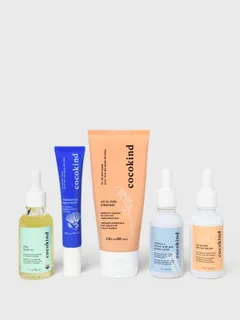
Works for
MoisturizingCeramide eop, Ceramide np + 30 moreWorks well
“a concentrated serum to help brighten the appearance of dark spots and uneven tone while boosting hydration ceramide barrier serum.”
This product can help improve hydration of the skin with the two types of ingredients.
The first type is called “humectants”:
these ingredients help attract water.
When humectants are on the surface of the skin, they “pull in” the moisture from the outside environment, or from
within deeper layers of the skin. The following ingredients in this product do the job:
arginine, glycerin.
This product also contains ingredients called “occlusives”. They help reduce the speed with which our skin loses moisture to the outside environment. These ingredients also help soften the upper layer of the skin, so it feels less tight and nicer to the touch. The following ingredients in this product do the job: arginine, helianthus annuus seed oil.
The following ingredients in this product are especially good for supporting the skin barrier and helping with the hydration level: caprooyl phytosphingosine, caprooyl sphingosine, ceramide ap, ceramide eop, ceramide eos, ceramide np, ceramide ns
Evens skin toneAlbizia julibrissin bark extract, Lactic acid + 1 moreNot delivered
“a concentrated serum to help brighten the appearance of dark spots and uneven tone while boosting hydration ceramide barrier serum.”
This product contains ingredients (albizia julibrissin bark extract) that could help reduce hyperpigmentation (for example, post-acne marks or age spots) in theory, but there is not enough evidence that they actually work.
Anti-agingBeta-glucan, Sodium ascorbyl phosphate + 5 moreNot delivered
“youthful routine”
This product does not contain ingredients that are able to reduce fine lines and wrinkles or help with skin elasticity, but it can improve the look of the skin temporarily through moisturization. Well-moisturized skin might also be able to repair the sun damage better.This ingredient - beta-glucan - could be helpful for preventing or repairing signs of aging in theory, but there is no evidence that it actually works.
Can it cause trouble?
Irritancy2 strong irritants: Pelargonium graveolens flower oil, Hibiscus sabdariffa flower extract — patch-test recommendedHigh risk
Comedogenic2 ingredients rated 2 or more on the 0–5 pore-clogging scale2 flagged

User reviews
Be the first — your take helps the next person decide.
Ingredients
Filter by role to see what each ingredient is doing.
Helianthus annuus seed oil~26–31%
- Irritation risk
- Low
A great emollient due to its high linoleic acid content. One of the most effective plant oils in helping skin hydration and repairing skin barrier function
More about Helianthus annuus seed oilGlycerin~5.4–6.6%
- Irritation risk
- Low
One of the best moisturizing ingredients. Naturally present in skin. It attracts water to the upper layer of the skin working as a humectant
More about GlycerinVitis vinifera seed oil~5.8–7.1%
- Irritation risk
- Medium
A great emollient that can also have anti-oxidant properties
More about Vitis vinifera seed oilWater~4.3–5.3%
Sucrose laurate~3.4–4.2%
- Irritation risk
- Low
Helps oil and water mix together. Can be used as a cleansing agent
More about Sucrose laurateAvena sativa kernel oil~2.4–2.9%
- Irritation risk
- Low
An effective moisturizing and skin barrier repair ingredient. Helps calm down inflammation and has some anti-oxidant properties
More about Avena sativa kernel oilAdansonia digitata seed oil~1.8–2.2%
- Irritation risk
- Medium
Helps soften the upper layer of the skin
More about Adansonia digitata seed oilSucrose stearate~1.4–1.7%
Tocopherol~1–1.2%
- Irritation risk
- Low
Pure form of vitamin E. Can help moisturise and protect the skin from free radicals. Often used to help stabilise other ingredients or the formula itself
More about TocopherolPelargonium graveolens flower oil~0.9–1.1%
- Irritation risk
- High
An essential oil. Can be irritating. Can become an allergen with oxidation
More about Pelargonium graveolens flower oilSucrose palmitate~0.9–1.1%
Anthemis nobilis flower oil~0.6–0.9%
- Irritation risk
- High
An essential oil that is used as a fragrance and can be irritating. It might have some anti-oxidant effect in skin
More about Anthemis nobilis flower oilAvena sativa kernel extract~0.65–1%
- Irritation risk
- Low
An effective moisturizing and skin barrier repair ingredient. Helps calm down inflammation and has some anti-oxidant properties
More about Avena sativa kernel extractLactobacillus ferment~0.55–0.85%
- Irritation risk
- Low
A fermentation product created by bacteria Lactobacillus. The fermented product has anti-bacterial properties and might be helpful in calming down inflammation, but studies are lacking. Helps attract water to the upper layer of the skin. Can be used as a preservative
More about Lactobacillus fermentAloe barbadensis leaf juice~0.55–0.8%
- Irritation risk
- Medium
Traditionally used to treat sunburns, dermatitis and inflammation, but evidence for its effectiveness is lacking. The extract can contain humectants that help attract water into the skin
More about Aloe barbadensis leaf juiceGlycerin~0.6–0.85%
- Irritation risk
- Low
One of the best moisturizing ingredients. Naturally present in skin. It attracts water to the upper layer of the skin working as a humectant
More about GlycerinSodium ascorbyl phosphate~0.5–0.8%
- Irritation risk
- Medium
A stable derivative of vitamin C. It is oil-soluble which means it is more likely to penetrate the skin compared to the pure form of vitamin C (which is water-soluble), but it is less bio-available and is way less effective in stimulating collagen and reducing wrinkles compared to the pure form of vitamin C (L-ascorbic acid) and its other derivatives (for example, magnesium ascorbyl phosphate). At the same time, this vitamin C derivative has been shown in studies to be effective in reducing acne, blemishes and clogged pores. It is less irritating then the pure form of vitamin C
More about Sodium ascorbyl phosphateLeuconostoc/radish root ferment filtrate~0.5–0.75%
- Irritation risk
- Medium
A preservative that comes from radishes fermented by a bacteria. New research suggests that the preservation properties in the ingredient come from an ammonium salt that is not present naturally in radish root but used in its cultivation. Is problematic because the exact amount of the preservative agents is difficult to determine
More about Leuconostoc/radish root ferment filtrateXanthan gum~0.45–0.7%
- Irritation risk
- Low
Used to create a thicker product consistency
More about Xanthan gumRosa canina fruit extract~0.4–0.6%
- Irritation risk
- Medium
A plant extract that might have some anti-oxidant properties, but evidence is lacking
More about Rosa canina fruit extractPassiflora incarnata fruit extract~0.4–0.6%
- Irritation risk
- Low
Sodium dehydroacetate~0.4–0.6%
Citric acid~0.35–0.65%
- Irritation risk
- Medium
Can work as an exfoliant but is typically used to adjust the product pH
More about Citric acidCaulerpa lentillifera extract~0.5–0.7%
- Irritation risk
- Low
Tocopherol~0.35–0.65%
- Irritation risk
- Low
Pure form of vitamin E. Can help moisturise and protect the skin from free radicals. Often used to help stabilise other ingredients or the formula itself
More about TocopherolSodium hyaluronate~0.35–0.65%
- Irritation risk
- Low
One of the best moisturizing ingredients. Attracts water into the upper layer of the skin
More about Sodium hyaluronateAloe barbadensis leaf juice~0.35–0.65%
- Irritation risk
- Medium
Traditionally used to treat sunburns, dermatitis and inflammation, but evidence for its effectiveness is lacking. The extract can contain humectants that help attract water into the skin
More about Aloe barbadensis leaf juicePropanediol~0.45–0.65%
- Irritation risk
- Low
Acts as a solvent for other ingredients. Speeds up the absorption of other ingredients into the skin
More about PropanediolSqualane~0.5–0.75%
- Irritation risk
- Low
An oil naturally present in skin. Works as an emollient to soften the skin and form a protective layer on its surface without a greasy feeling.
More about SqualaneGlycerin~0.45–0.65%
- Irritation risk
- Low
One of the best moisturizing ingredients. Naturally present in skin. It attracts water to the upper layer of the skin working as a humectant
More about GlycerinSodium citrate~0.35–0.65%
- Irritation risk
- Medium
Helps to control the skin's pH level. Maintains the skin's natural film of amino-lactic acids and oils. Helps to preserve products
More about Sodium citrateGluconolactone~0.35–0.65%
- Irritation risk
- Medium
A polyhydroxy acid (PHA) that helps shed the dead cells from the skin surface revealing smoother skin. Is believed to be genter than AHAs. It helps attract water to the upper layer of the skin and can stimulate production of skin's own hyaluronic acid resulting in improved hydration levels. It has been shown to be helpful against acne and clogged pores if used consistently (e.g over a period of 12 weeks) in high enough concentration. It can help reduce fine lines and wrinkles and improve skin tone with long-term application. Can help neutralize free radicals
More about GluconolactoneArginine~0.3–0.6%
- Irritation risk
- Low
An amino acid that is naturally present in skin and helps keep it hydrated. When used together with AHAs, it can reduce their irritating effect on the skin
More about ArginineLactic acid~0.35–0.6%
- Irritation risk
- Medium
An exfoliating and moisturizing alpha-hydroxy acid (AHA). Typically causes less irritation than other AHAs, for example, glycolic acid. At high concentrations (about 15%), lactic acid can help reduce lines and wrinkles. Recent studies show that lactic acid can support the "good" bacteria living on skin's surface (healthy skin microbiome)
More about Lactic acidMusa sapientum fruit extract~0.35–0.65%
- Irritation risk
- Low
Lysolecithin~0.4–0.6%
- Irritation risk
- Low
Lecithin derivative. It helps oil and water mix together and can enhance penetration of other ingredients. It helps soften the upper layer of the skin
More about LysolecithinSclerotium gum~0.4–0.6%
- Irritation risk
- Low
Used to create gel-like formulas and stabilize emulsions
More about Sclerotium gumSodium benzoate~0.25–0.5%
Pullulan~0.4–0.65%
- Irritation risk
- High
Creates a thin drying film on the skin resulting in a short-term tightening effect
More about PullulanXanthan gum~0.4–0.6%
- Irritation risk
- Low
Used to create a thicker product consistency
More about Xanthan gumCeteareth-25~0.45–0.7%
Beta-glucan~0.35–0.65%
- Irritation risk
- Low
Helps attract water to the upper layer of the skin, calm down inflammation and irritation, restore the barrier function and support wound healing. It can be helpful in reducing fine lines and wrinkles
More about Beta-glucanTocopherol~0.35–0.65%
- Irritation risk
- Low
Pure form of vitamin E. Can help moisturise and protect the skin from free radicals. Often used to help stabilise other ingredients or the formula itself
More about TocopherolCetyl alcohol~0.5–0.75%
- Irritation risk
- Low
A non-drying alcohol that works to soften the skin and stabilize product formulations helping oil and water mix together
More about Cetyl alcoholCaprylyl glycol~0.45–0.7%
- Irritation risk
- Medium
Helps preserve products and creates a nice product texture
More about Caprylyl glycolHelianthus annuus seed oil~0.45–0.7%
- Irritation risk
- Low
A great emollient due to its high linoleic acid content. One of the most effective plant oils in helping skin hydration and repairing skin barrier function
More about Helianthus annuus seed oilSilica~0.5–0.75%
Behenic acid~0.45–0.7%
Cholesterol~0.5–0.75%
- Irritation risk
- Low
An emollient that is naturally found in skin
More about CholesterolCeramide np~0.45–0.7%
- Irritation risk
- Low
A type of lipid similar to ceramides naturally present in skin. Helps to soften the upper layer of the skin and supports the skin barrier function to keep it hydrated. Can help to prevent inflammation in skin
More about Ceramide npCalcium gluconate~0.4–0.65%
- Irritation risk
- Low
Helps attract water to the upper layer of the skin and helps to improve appearance of the product
More about Calcium gluconateCeramide ns~0.45–0.7%
- Irritation risk
- Low
A type of lipid similar to ceramides naturally present in skin. Helps to soften the upper layer of the skin and supports the skin barrier function to keep it hydrated. Can help to prevent inflammation in skin
More about Ceramide nsCeramide ap~0.35–0.65%
- Irritation risk
- Low
A type of lipid similar to ceramides naturally present in skin. Helps to soften the upper layer of the skin and supports the skin barrier function to keep it hydrated. Can help to prevent inflammation in skin
More about Ceramide apCeramide eos~0.35–0.65%
- Irritation risk
- Low
A type of lipid similar to ceramides naturally present in skin. Helps to soften the upper layer of the skin and supports the skin barrier function to keep it hydrated. Can help to prevent inflammation in skin
More about Ceramide eosCeramide eop~0.45–0.7%
- Irritation risk
- Low
A type of lipid similar to ceramides naturally present in skin. Helps to soften the upper layer of the skin and supports the skin barrier function to keep it hydrated. Can help to prevent inflammation in skin
More about Ceramide eopCaprooyl phytosphingosine~0.45–0.7%
- Irritation risk
- Low
A component of ceramides. Helps to soften the upper layer of the skin and supports the skin barrier function to keep it hydrated. Can help to prevent inflammation in skin
More about Caprooyl phytosphingosineCaprooyl sphingosine~0.35–0.65%
- Irritation risk
- Low
A component of ceramides. Helps to soften the upper layer of the skin and supports the skin barrier function to keep it hydrated. Can help to prevent inflammation in skin
More about Caprooyl sphingosineWater~0.3–0.6%
Caprylic/capric triglyceride~0.45–0.7%
- Irritation risk
- Medium
A good mix of fatty acids that forms a protective layer on the skin. Improves the shelf life of products. Derived from coconut and glycerin
More about Caprylic/capric triglycerideGlycerin~0.4–0.6%
- Irritation risk
- Low
One of the best moisturizing ingredients. Naturally present in skin. It attracts water to the upper layer of the skin working as a humectant
More about GlycerinCetearyl alcohol~0.45–0.7%
- Irritation risk
- Low
- Comedogenicity
- 2/5
A non-drying alcohol. Works as an emollient. Helps water and oil mix together and creates a nice product texture
More about Cetearyl alcoholGlyceryl stearates~0.3–0.55%
- Irritation risk
- Low
Help soften the upper layer of the skin
More about Glyceryl stearatesCetearyl olivate~0.25–0.45%
Leuconostoc/radish root ferment filtrate~0.2–0.4%
- Irritation risk
- Medium
A preservative that comes from radishes fermented by a bacteria. New research suggests that the preservation properties in the ingredient come from an ammonium salt that is not present naturally in radish root but used in its cultivation. Is problematic because the exact amount of the preservative agents is difficult to determine
More about Leuconostoc/radish root ferment filtrateSorbitan olivate~0.2–0.4%
Potassium cetyl phosphate~0.25–0.45%
- Irritation risk
- Medium
Helps oil and water mix together
More about Potassium cetyl phosphateSclerocarya birrea seed oil~0.3–0.5%
- Irritation risk
- Medium
An emollient that helps to soften the skin. It has a high contetn of oleic acid that might weaken the skin barrier. Might have some anti-oxidant properties. It might be somewhat helpful against hyperpigmentation.
More about Sclerocarya birrea seed oilTetradecane~0.15–0.3%
Butyrospermum parkii butter~0.3–0.6%
- Irritation risk
- Low
- Comedogenicity
- 3/5
A great moisturising ingredient that softens the skin and reduces water loss from its upper layer. It also can be helpful in protecting skin from free radicals
More about Butyrospermum parkii butterAlbizia julibrissin bark extract~0.2–0.35%
- Irritation risk
- High
A plant extract that might help to neutralize free radicals in skin. Is claimed to help reduce hyperpigmentation but evidence is missing
More about Albizia julibrissin bark extractDarutoside~0.15–0.3%
- Irritation risk
- Low
Hibiscus sabdariffa flower extract~0.15–0.25%
- Irritation risk
- High
A plant extract that can be irritating. It might contain a compound anthocyanin that could be helpful in neutralizing free radicals
More about Hibiscus sabdariffa flower extractAvena sativa kernel extract~0.2–0.4%
- Irritation risk
- Low
An effective moisturizing and skin barrier repair ingredient. Helps calm down inflammation and has some anti-oxidant properties
More about Avena sativa kernel extractXanthan gum~0.1–0.15%
- Irritation risk
- Low
Used to create a thicker product consistency
More about Xanthan gumPotassium sorbate~0.1–0.2%
Sodium dehydroacetate~0.1–0.15%
Ingredient list view
Helianthus annuus seed oil, Glycerin, Vitis vinifera seed oil, Water, Sucrose laurate, Avena sativa kernel oil, Adansonia digitata seed oil, Sucrose stearate, Tocopherol, Pelargonium graveolens flower oil, Sucrose palmitate, Anthemis nobilis flower oil, Avena sativa kernel extract, Lactobacillus ferment, Aloe barbadensis leaf juice, Glycerin, Sodium ascorbyl phosphate, Leuconostoc/radish root ferment filtrate, Xanthan gum, Rosa canina fruit extract, Passiflora incarnata fruit extract, Sodium dehydroacetate, Citric acid, Caulerpa lentillifera extract, Tocopherol, Sodium hyaluronate, Aloe barbadensis leaf juice, Propanediol, Squalane, Glycerin, Sodium citrate, Gluconolactone, Arginine, Lactic acid, Musa sapientum fruit extract, Lysolecithin, Sclerotium gum, Sodium benzoate, Pullulan, Xanthan gum, Ceteareth-25, Beta-glucan, Tocopherol, Cetyl alcohol, Caprylyl glycol, Helianthus annuus seed oil, Silica, Behenic acid, Cholesterol, Ceramide np, Calcium gluconate, Ceramide ns, Ceramide ap, Ceramide eos, Ceramide eop, Caprooyl phytosphingosine, Caprooyl sphingosine, Water, Caprylic/capric triglyceride, Glycerin, Cetearyl alcohol, Glyceryl stearates, Cetearyl olivate, Leuconostoc/radish root ferment filtrate, Sorbitan olivate, Potassium cetyl phosphate, Sclerocarya birrea seed oil, Tetradecane, Butyrospermum parkii butter, Albizia julibrissin bark extract, Darutoside, Hibiscus sabdariffa flower extract, Avena sativa kernel extract, Xanthan gum, Potassium sorbate, Sodium dehydroacetate
Compare prices
Retailers ranked by price — lowest first.
Worth comparing, line by line.
Match % combines shared ingredients, the first five ingredients, shared actives and hero ingredients, irritancy (lower counts in the alternative's favour), texture and body area. Only products in the same routine step are compared.
| cocokindyouthful routineYOUR PRODUCT | Lord JonesAcid Mantle Repair Facial Moisturizer | Gold BondRadiance Renewal Lotion, for Visibly Dry Skin Light Brown | Medik8ADVANCED PRO COLLAGEN+ PEPTIDE CREAM | |
|---|---|---|---|---|
| Match | — | 51% | 49% | 49% |
| Price | — | $25.00 | $11.99 | $98.33 |
| Shared key ingredients | — | 12 of 24 | 10 of 24 | 13 of 24 |
| Key difference | — | Cannabis Sativa Seed Oil | Panthenol | Oligopeptide-1 |
| Irritancy | High | Medium | Medium | Medium |
| Drying alcohol | — | — | — | — |
| View product | Shop | Shop | Shop |


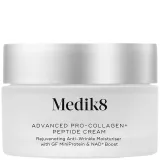
More alternatives: Skinbetter Science Hydration Boosting CreamKiehl's Skin Rescuer
Product summary
"cocokind - youthful routine" is effective for: Moisturizing
Ingredient callouts
- This product contains acids (gluconolactone 0.35% - 0.65% and lactic acid 0.35% - 0.60%). Their concentration is low, and they will not have a strong exfoliating effect. Instead, they work to support the skin natural acid mantle and to attract water (as humectants). PHAs (gluconolactone) especially are great for improving skin hydration. They might be even able to stimulate the production of skin's natural humectants and support the healthy skin microbiome.
- Ceramides (ceramide ns 0.45% - 0.70%, ceramide np 0.45% - 0.70%, ceramide eos 0.35% - 0.65%, ceramide eop 0.45% - 0.70%, ceramide ap 0.35% - 0.65%, caprooyl sphingosine 0.35% - 0.65% and caprooyl phytosphingosine 0.45% - 0.70%). Ceramides are an important part of our natural skin barrier. The Ceramides used in skincare are synthetic or come from plants. They help soften the skin and can help "fill the gaps" in the skin barrier, keeping the skin hydrated and resilient for longer.
- Humectants (sodium hyaluronate 0.35% - 0.65%, glycerin 0.45% - 0.65%, glycerin 5.40% - 6.60%, arginine 0.30% - 0.60%, lactobacillus ferment 0.55% - 0.85%, glycerin 0.40% - 0.60% and glycerin 0.60% - 0.85%). These ingredients help attract water to the upper layer of the skin and improve the skin hydration.
Sources cited in this review
Every concentration estimate and effectiveness label is anchored to one of these 56 studies and safety reviews.
- 1
- 2
- 3Effect of topically applied lipids on surfactant-irritated skinonlinelibrary.wiley.com
- 4
- 5
- 6Vitamin E in dermatologyncbi.nlm.nih.gov

Affiliate links · As an Amazon Associate, WIMJ earns from qualifying purchases.