Works for:
based on ingredients and %- Exfoliation
- Anti-aging
- Moisturizing
- Anti-oxidation
Can it cause trouble?
- Irritation risk: high
- Comedogenic risk ingredients: 2
Key actives


Anti-aging
What does the product description say?
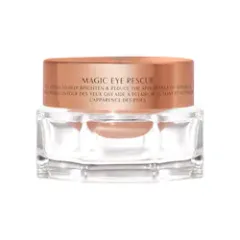
What it is: An eye cream with ingredients like retinol to protect against signs of aging, reducing the appearance of wrinkles and brightening the look of dark circles.
Source: Sephora
This product can help reduce and prevent fine lines and wrinkles, improve skin elasticity and firmness because it contains retinol.
Keep in mind that it typically takes at least 6 weeks to notice any results because the changes that are needed to improve fine lines and elasticity happen in the deeper layers of the skin. No topical anti-aging product can “erase” wrinkles or fully reverse signs of aging.
Two steps removed from the active form of vitamin A - retinoic acid. Once converted to the retinoic acid in the skin, retinol is proven to be effective against all signs of aging. It improves skin cell turnover, helps fight blemishes and clogged pores, can regulate excess oil production and even skin tone. It can, however, be quite irritating
A plant extract that helps to attract water to the upper layer of the skin and soften it. It might be helpful in neutralizing free radicals. It might be somewhat helpful for evening out the skin tone. It might be able to support elastin production but solid research is lacking
A great moisturising ingredient that softens the skin and reduces water loss from its upper layer. It also can be helpful in protecting skin from free radicals
Has been claimed to have an ability to protect collagen and stimulate its production in skin but further research is lacking so far
The most well-researched antioxidant that works in skin. Helps neutralize free radicals supporting collagen production, helping to even out the skin tone and preventing early signs of aging
Three steps removed from the active form of vitamin A - retinoic acid. To have an effect in the skin, it first needs to be converted twice to become the retinoic acid. This means it is less potent than retinol, but could also be less irritating. Once converted to the retinoic acid in the skin, it helps against all signs of aging, improves skin cell turnover and helps fight blemishes and clogged pores. However, in many cosmetic formulations, it is used in a concentration that is too low to have the full effect
A vitamin C derivative. Studies show that is might be effective in reducing hyperpigmentation, but there are no studies confirming that it is effectively converted into the bioavailable form of Vitamin C in skin. It is not clear how this derivative compares in effectiveness to the topical application of bioavailable form of vitamin C (L-ascorbic acid)
Pure form of vitamin E. Can help moisturise and protect the skin from free radicals. Often used to help stabilise other ingredients or the formula itself
Being a lipid soluble form of vitamin C, it is more stable and can penetrate the skin better than L-Ascorbic acid. It is effective in protecting the skin from free radicals, as well as evening the skin tone, but is less effective in stimulating collagen production compared to L-Ascorbic acid.
Anti-oxidation
This product contains antioxidants (retinol, superoxide dismutase) that can help neutralize free radicals in skin. By doing so, they can lessen the damage the skin gets from the UV light (sun).
Two steps removed from the active form of vitamin A - retinoic acid. Once converted to the retinoic acid in the skin, retinol is proven to be effective against all signs of aging. It improves skin cell turnover, helps fight blemishes and clogged pores, can regulate excess oil production and even skin tone. It can, however, be quite irritating
An antioxidant enzyme that is naturally present in skin. It can help support skin barrier function and reduce inflammation in skin. It is used in topical medications for inflammatory skin conditions including atopic dermatitis (eczema) and psoriasis. There are three types of natural Superoxide Dismutase in human skin. The compound used in topical treatments and cosmetics are mimics of typically one of these natural variants
A plant oil that is effective in reducing irritation in skin, restore the barrier function and support its hydration
A great moisturising ingredient that softens the skin and reduces water loss from its upper layer. It also can be helpful in protecting skin from free radicals
A plant extract that helps to attract water to the upper layer of the skin and soften it. It might be helpful in neutralizing free radicals. It might be somewhat helpful for evening out the skin tone. It might be able to support elastin production but solid research is lacking
Helps attract water to the upper layer of the skin. Might have some anti-oxidant properties
A vitamin C derivative. Studies show that is might be effective in reducing hyperpigmentation, but there are no studies confirming that it is effectively converted into the bioavailable form of Vitamin C in skin. It is not clear how this derivative compares in effectiveness to the topical application of bioavailable form of vitamin C (L-ascorbic acid)
The most well-researched antioxidant that works in skin. Helps neutralize free radicals supporting collagen production, helping to even out the skin tone and preventing early signs of aging
Pure form of vitamin E. Can help moisturise and protect the skin from free radicals. Often used to help stabilise other ingredients or the formula itself
A more stable but less bio-available form of vitamin E compared to Tocopherol. Might help moisturize and protect the skin from free radicals, but mostly used in low concentrations to stabilize other ingredients.
Being a lipid soluble form of vitamin C, it is more stable and can penetrate the skin better than L-Ascorbic acid. It is effective in protecting the skin from free radicals, as well as evening the skin tone, but is less effective in stimulating collagen production compared to L-Ascorbic acid.
Evens skin tone
This product can help reduce hypepigmentation and even out the skin tone because it contains the following effective ingredients: retinol.
The following ingredient (ingredients) in this product might be helpful, but there is no evidence to confirm that it actually can help even out the skin tone: glycine soja protein.
Keep in mind that you would need to apply any topical skincare targetted at hypigmentation consistently for a couple of months to get a result. No topical skincare product can help get rid of hyperpigmentation (including post-acne marks and age spots) instantly.
Two steps removed from the active form of vitamin A - retinoic acid. Once converted to the retinoic acid in the skin, retinol is proven to be effective against all signs of aging. It improves skin cell turnover, helps fight blemishes and clogged pores, can regulate excess oil production and even skin tone. It can, however, be quite irritating
A plant extract that helps to attract water to the upper layer of the skin and soften it. It might be helpful in neutralizing free radicals. It might be somewhat helpful for evening out the skin tone. It might be able to support elastin production but solid research is lacking
The most well-researched antioxidant that works in skin. Helps neutralize free radicals supporting collagen production, helping to even out the skin tone and preventing early signs of aging
A vitamin C derivative. Studies show that is might be effective in reducing hyperpigmentation, but there are no studies confirming that it is effectively converted into the bioavailable form of Vitamin C in skin. It is not clear how this derivative compares in effectiveness to the topical application of bioavailable form of vitamin C (L-ascorbic acid)
Three steps removed from the active form of vitamin A - retinoic acid. To have an effect in the skin, it first needs to be converted twice to become the retinoic acid. This means it is less potent than retinol, but could also be less irritating. Once converted to the retinoic acid in the skin, it helps against all signs of aging, improves skin cell turnover and helps fight blemishes and clogged pores. However, in many cosmetic formulations, it is used in a concentration that is too low to have the full effect
Exfoliation
What does the product description say?
Powered by time-released retinol molecules, the formula works to visibly refine and resurface your skin for more youthful- and radiant-looking eyes.
Source: Sephora
This product can help exfoliate the skin. In other words, it helps break down the bonds between dead cells on the surface of the skin and speed up the skin turnover. Skin often appears softer and brighter after exfoliation, but overdoing it can result in disrupted skin barrier. The following ingredient is doing the exfoliating job in this product: retinol.
Two steps removed from the active form of vitamin A - retinoic acid. Once converted to the retinoic acid in the skin, retinol is proven to be effective against all signs of aging. It improves skin cell turnover, helps fight blemishes and clogged pores, can regulate excess oil production and even skin tone. It can, however, be quite irritating
Three steps removed from the active form of vitamin A - retinoic acid. To have an effect in the skin, it first needs to be converted twice to become the retinoic acid. This means it is less potent than retinol, but could also be less irritating. Once converted to the retinoic acid in the skin, it helps against all signs of aging, improves skin cell turnover and helps fight blemishes and clogged pores. However, in many cosmetic formulations, it is used in a concentration that is too low to have the full effect
Moisturizing
What does the product description say?
Its rich texture glides on to hydrate, soothe, and reduce the look of puffiness for a rapid, visible refresh.
Source: Sephora
This product can help improve hydration of the skin with the two types of ingredients.
The first type is called “humectants”:
these ingredients help attract water.
When humectants are on the surface of the skin, they “pull in” the moisture from the outside environment, or from
within deeper layers of the skin. The following ingredients in this product do the job:
glycerin, saccharide isomerate.
This product also contains ingredients called “occlusives”. They help reduce the speed with which our skin loses moisture to the outside environment. These ingredients also help soften the upper layer of the skin, so it feels less tight and nicer to the touch. The following ingredients in this product do the job: butyrospermum parkii butter, caprylic/capric triglyceride.
Naturally present in skin and helps to attract water to its upper layer
An antioxidant enzyme that is naturally present in skin. It can help support skin barrier function and reduce inflammation in skin. It is used in topical medications for inflammatory skin conditions including atopic dermatitis (eczema) and psoriasis. There are three types of natural Superoxide Dismutase in human skin. The compound used in topical treatments and cosmetics are mimics of typically one of these natural variants
A great moisturising ingredient that softens the skin and reduces water loss from its upper layer. It also can be helpful in protecting skin from free radicals
Forms a protective barrier that holds water and keeps dry skin hydrated. Keeps an emulsion from separating into its oil and liquid components, and increases the thickness of a product. Can be an allergen
A good mix of fatty acids that forms a protective layer on the skin. Improves the shelf life of products. Derived from coconut and glycerin
One of the best moisturizing ingredients. Naturally present in skin. It attracts water to the upper layer of the skin working as a humectant
A great emollient due to its high linoleic acid content. One of the most effective plant oils in helping skin hydration and repairing skin barrier function
Helps attract water to the upper layer of the skin
An oil naturally present in skin. Works as an emollient to soften the skin and form a protective layer on its surface without a greasy feeling.
Red algae extract that helps attract water to the upper layer of the skin and create a nicer product consistency
A plant oil that is effective in reducing irritation in skin, restore the barrier function and support its hydration
A plant oil that can help soften the skin. It might be helpful in calming down inflammation, but solid research is lacking. Is often used in lip products to create the needed product consistency
Helps attract water to the upper layer of the skin. Might have some anti-oxidant properties
Has been claimed to have an ability to protect collagen and stimulate its production in skin but further research is lacking so far
A plant extract that helps to attract water to the upper layer of the skin and soften it. It might be helpful in neutralizing free radicals. It might be somewhat helpful for evening out the skin tone. It might be able to support elastin production but solid research is lacking
Helps soften the upper layer of the skin while creating a non-greasy feel on the skin. Helps to dissolve other ingredients
An emollient that softens the skin and forms a protective layer on its surface. Helps water and oil mix together
An oil from a mixture of different vegetables. Helps soften the upper layer of the skin
An emollient that is naturally present in skin and helps soften it
Used to create a nice product consistency
Helps soften the upper layer of the skin and improve the product's texture
Used to create a nice product texture and help delivery of other ingredients. Might be somewhat helpful in attracting water to the upper layer of the skin
Helps soften the upper layer of the skin
Used to stabilize product formulations and help soften the upper layer of the skin
Used mostly for creating emulsions - helping oil and water mix together. Helps soften the upper layer of the skin
A vitamin C derivative. Studies show that is might be effective in reducing hyperpigmentation, but there are no studies confirming that it is effectively converted into the bioavailable form of Vitamin C in skin. It is not clear how this derivative compares in effectiveness to the topical application of bioavailable form of vitamin C (L-ascorbic acid)
Pure form of vitamin E. Can help moisturise and protect the skin from free radicals. Often used to help stabilise other ingredients or the formula itself
How honest is this product?
| Promise | Can it deliver? |
|---|---|
| Anti-aging | |
| Exfoliation | |
| Moisturizing |
Total Promises Fulfilled score: 91/100.
We receive a small commission for purchases made through these links at no cost for you. Thank you for your support! Learn more
Potential irritants
Comedogenic ingredients
User reviews (0)
Averages from community submissions.
No reviews yet for this product.
Be the first to share your experience!
Tried this product?
Help capture what the ingredient list can't—texture, finish, pilling, scent, and more. Answer what you can, skip the rest.
Takes ~30 seconds.
Reviews are shown in aggregate. No personal details.
| Product | Similarity | Price | Irritancy |
|---|---|---|---|
 Charlotte Tilbury Refillable Magic Eye Rescue Cream with Retinol | Current | $59.00 | |
 ZO Skin Health Eye Brightening Crème | 90% | $113.14 | |
First Aid Beauty Retinol Eye Cream with Squalane + Ceramides | 90% | ≈ $21.98 | |
Noble Panacea The Absolute Restoring Eye Cream | 89% | $247.50 | |
 The INKEY List CA Retinol Eye Cream | 87% | ≈ $10.69 | |
 Replenix Brightening Eye Cream for Discoloration | 87% | $46.50 |
Key Actives
Two steps removed from the active form of vitamin A - retinoic acid. Once converted to the retinoic acid in the skin, retinol is proven to be effective against all signs of aging. It improves skin cell turnover, helps fight blemishes and clogged pores, can regulate excess oil production and even skin tone. It can, however, be quite irritating
Pure form of vitamin E. Can help moisturise and protect the skin from free radicals. Often used to help stabilise other ingredients or the formula itself
A plant oil that is effective in reducing irritation in skin, restore the barrier function and support its hydration
Three steps removed from the active form of vitamin A - retinoic acid. To have an effect in the skin, it first needs to be converted twice to become the retinoic acid. This means it is less potent than retinol, but could also be less irritating. Once converted to the retinoic acid in the skin, it helps against all signs of aging, improves skin cell turnover and helps fight blemishes and clogged pores. However, in many cosmetic formulations, it is used in a concentration that is too low to have the full effect
A great moisturising ingredient that softens the skin and reduces water loss from its upper layer. It also can be helpful in protecting skin from free radicals
An antioxidant enzyme that is naturally present in skin. It can help support skin barrier function and reduce inflammation in skin. It is used in topical medications for inflammatory skin conditions including atopic dermatitis (eczema) and psoriasis. There are three types of natural Superoxide Dismutase in human skin. The compound used in topical treatments and cosmetics are mimics of typically one of these natural variants
Forms a protective barrier that holds water and keeps dry skin hydrated. Keeps an emulsion from separating into its oil and liquid components, and increases the thickness of a product. Can be an allergen
A good mix of fatty acids that forms a protective layer on the skin. Improves the shelf life of products. Derived from coconut and glycerin
One of the best moisturizing ingredients. Naturally present in skin. It attracts water to the upper layer of the skin working as a humectant
Helps attract water to the upper layer of the skin
An oil naturally present in skin. Works as an emollient to soften the skin and form a protective layer on its surface without a greasy feeling.
Works as a UV filter when used in high concentrations. It is photostable and is effective mostly against the UVB light, with some protection in the UVA range. In small concentrations, used for its ability to improve the color of cosmetic products. Is usually well tolerated by the skin
Red algae extract that helps attract water to the upper layer of the skin and create a nicer product consistency
A great emollient due to its high linoleic acid content. One of the most effective plant oils in helping skin hydration and repairing skin barrier function
Naturally present in skin and helps to attract water to its upper layer
Potential irritants
Two steps removed from the active form of vitamin A - retinoic acid. Once converted to the retinoic acid in the skin, retinol is proven to be effective against all signs of aging. It improves skin cell turnover, helps fight blemishes and clogged pores, can regulate excess oil production and even skin tone. It can, however, be quite irritating
Used to add a nice smell to the product. Can be irritating
The most well-researched antioxidant that works in skin. Helps neutralize free radicals supporting collagen production, helping to even out the skin tone and preventing early signs of aging
Three steps removed from the active form of vitamin A - retinoic acid. To have an effect in the skin, it first needs to be converted twice to become the retinoic acid. This means it is less potent than retinol, but could also be less irritating. Once converted to the retinoic acid in the skin, it helps against all signs of aging, improves skin cell turnover and helps fight blemishes and clogged pores. However, in many cosmetic formulations, it is used in a concentration that is too low to have the full effect
A good mix of fatty acids that forms a protective layer on the skin. Improves the shelf life of products. Derived from coconut and glycerin
Helps oils and water mix together and works as a cleansing agent
A gelling agent that thickens the product consistency and leaves the skin with a velvety finish
Helps oil and water mix together and works as a cleansing agent
Helps soften the upper layer of the skin and improve the product's texture
Forms a protective barrier that holds water and keeps dry skin hydrated. Keeps an emulsion from separating into its oil and liquid components, and increases the thickness of a product. Can be an allergen
A plant oil that can help soften the skin. It might be helpful in calming down inflammation, but solid research is lacking. Is often used in lip products to create the needed product consistency
Can work as an exfoliant but is typically used to adjust the product pH
Used to stabilize product formulations and help soften the upper layer of the skin
Helps to control the skin's pH level. Maintains the skin's natural film of amino-lactic acids and oils. Helps to preserve products
Being a lipid soluble form of vitamin C, it is more stable and can penetrate the skin better than L-Ascorbic acid. It is effective in protecting the skin from free radicals, as well as evening the skin tone, but is less effective in stimulating collagen production compared to L-Ascorbic acid.
Has been claimed to have an ability to protect collagen and stimulate its production in skin but further research is lacking so far
A more stable but less bio-available form of vitamin E compared to Tocopherol. Might help moisturize and protect the skin from free radicals, but mostly used in low concentrations to stabilize other ingredients.
A vitamin C derivative. Studies show that is might be effective in reducing hyperpigmentation, but there are no studies confirming that it is effectively converted into the bioavailable form of Vitamin C in skin. It is not clear how this derivative compares in effectiveness to the topical application of bioavailable form of vitamin C (L-ascorbic acid)
Comedogenic ingredients
A great moisturising ingredient that softens the skin and reduces water loss from its upper layer. It also can be helpful in protecting skin from free radicals
Red algae extract that helps attract water to the upper layer of the skin and create a nicer product consistency
All ingredients
A good mix of fatty acids that forms a protective layer on the skin. Improves the shelf life of products. Derived from coconut and glycerin
Used to create a nice product texture and help delivery of other ingredients. Might be somewhat helpful in attracting water to the upper layer of the skin
An oil from a mixture of different vegetables. Helps soften the upper layer of the skin
Helps oils and water mix together and works as a cleansing agent
One of the best moisturizing ingredients. Naturally present in skin. It attracts water to the upper layer of the skin working as a humectant
A great moisturising ingredient that softens the skin and reduces water loss from its upper layer. It also can be helpful in protecting skin from free radicals
Helps soften the upper layer of the skin while creating a non-greasy feel on the skin. Helps to dissolve other ingredients
A gelling agent that thickens the product consistency and leaves the skin with a velvety finish
Helps oil and water mix together and works as a cleansing agent
A preservative. It helps prevent bacterial growth in cosmetic products
Helps soften the upper layer of the skin and improve the product's texture
Forms a protective barrier that holds water and keeps dry skin hydrated. Keeps an emulsion from separating into its oil and liquid components, and increases the thickness of a product. Can be an allergen
An emollient that softens the skin and forms a protective layer on its surface. Helps water and oil mix together
A plant oil that can help soften the skin. It might be helpful in calming down inflammation, but solid research is lacking. Is often used in lip products to create the needed product consistency
An oil naturally present in skin. Works as an emollient to soften the skin and form a protective layer on its surface without a greasy feeling.
Works as a UV filter when used in high concentrations. It is photostable and is effective mostly against the UVB light, with some protection in the UVA range. In small concentrations, used for its ability to improve the color of cosmetic products. Is usually well tolerated by the skin
Helps to retain moisture by creating a protective barrier on the skin. Rich in fatty acids. Improves product texture and helps with the penetration of other ingredients.
Helps attract water to the upper layer of the skin. Might have some anti-oxidant properties
An emollient that is naturally present in skin and helps soften it
Red algae extract that helps attract water to the upper layer of the skin and create a nicer product consistency
A great emollient due to its high linoleic acid content. One of the most effective plant oils in helping skin hydration and repairing skin barrier function
A plant extract that helps to attract water to the upper layer of the skin and soften it. It might be helpful in neutralizing free radicals. It might be somewhat helpful for evening out the skin tone. It might be able to support elastin production but solid research is lacking
An antioxidant enzyme that is naturally present in skin. It can help support skin barrier function and reduce inflammation in skin. It is used in topical medications for inflammatory skin conditions including atopic dermatitis (eczema) and psoriasis. There are three types of natural Superoxide Dismutase in human skin. The compound used in topical treatments and cosmetics are mimics of typically one of these natural variants
Can work as an exfoliant but is typically used to adjust the product pH
Used to stabilize product formulations and help soften the upper layer of the skin
Pure form of vitamin E. Can help moisturise and protect the skin from free radicals. Often used to help stabilise other ingredients or the formula itself
Helps to control the skin's pH level. Maintains the skin's natural film of amino-lactic acids and oils. Helps to preserve products
An umbrella term for the following three colorants: CI 77491, CI 77492, CI 77499. They might be able to offer some protection against visible light, but the degree of the protection is not clear
Naturally present in skin and helps to attract water to its upper layer
An umbrella term for the following three colorants: CI 77491, CI 77492, CI 77499. They might be able to offer some protection against visible light, but the degree of the protection is not clear
Being a lipid soluble form of vitamin C, it is more stable and can penetrate the skin better than L-Ascorbic acid. It is effective in protecting the skin from free radicals, as well as evening the skin tone, but is less effective in stimulating collagen production compared to L-Ascorbic acid.
Has been claimed to have an ability to protect collagen and stimulate its production in skin but further research is lacking so far
Is used to add opaque (non-transparent) appearance to formulations. Can be used to coat other ingredients for even dispersion. This is a different ingredient compared to the ones used in antipersperants (aluminium chloride and aluminium chlorohydrate)
Two steps removed from the active form of vitamin A - retinoic acid. Once converted to the retinoic acid in the skin, retinol is proven to be effective against all signs of aging. It improves skin cell turnover, helps fight blemishes and clogged pores, can regulate excess oil production and even skin tone. It can, however, be quite irritating
Used to add a nice smell to the product. Can be irritating
A plant oil that is effective in reducing irritation in skin, restore the barrier function and support its hydration
A more stable but less bio-available form of vitamin E compared to Tocopherol. Might help moisturize and protect the skin from free radicals, but mostly used in low concentrations to stabilize other ingredients.
The most well-researched antioxidant that works in skin. Helps neutralize free radicals supporting collagen production, helping to even out the skin tone and preventing early signs of aging
Used mostly for creating emulsions - helping oil and water mix together. Helps soften the upper layer of the skin
Three steps removed from the active form of vitamin A - retinoic acid. To have an effect in the skin, it first needs to be converted twice to become the retinoic acid. This means it is less potent than retinol, but could also be less irritating. Once converted to the retinoic acid in the skin, it helps against all signs of aging, improves skin cell turnover and helps fight blemishes and clogged pores. However, in many cosmetic formulations, it is used in a concentration that is too low to have the full effect
A vitamin C derivative. Studies show that is might be effective in reducing hyperpigmentation, but there are no studies confirming that it is effectively converted into the bioavailable form of Vitamin C in skin. It is not clear how this derivative compares in effectiveness to the topical application of bioavailable form of vitamin C (L-ascorbic acid)
Ingredient list view
Water, Caprylic/capric triglyceride, Butylene glycol, Polysorbate 60, Olus oil, Peg-7 glyceryl cocoate, Glycerin, Butyrospermum parkii butter, Peg-8, Ethylhexyl stearate, Dicaprylyl ether, Sorbitan stearate, Hydroxyethyl acrylate/sodium acryloyldimethyl taurate copolymer, Olive oil peg-7 esters, Phenoxyethanol, Saccharide isomerate, C12-16 alcohols, Cera alba, Glyceryl stearate, Hydrogenated castor oil, Squalane, Ethylhexylglycerin, Chlorphenesin, Titanium dioxide, Hydrogenated lecithin, Hydrolyzed rice protein, Palmitic acid, Xanthan gum, Chondrus crispus extract, Disodium edta, Helianthus annuus seed oil, Polysorbate 20, Sorbitan isostearate, Sodium hydroxide, Glycine soja protein, Superoxide dismutase, Citric acid, Hydroxypropyl cyclodextrin, Tocopherol, Sodium citrate, Iron oxides, Sodium benzoate, Sodium pca, Iron oxides, Ascorbyl palmitate, Daphne odora callus extract, Sodium dextran sulfate, Nicotiana sylvestris leaf cell culture, Aluminum hydroxide, Retinol, Plumeria rubra flower extract, Borago officinalis seed oil, Tocopheryl acetate, Ascorbic acid, Lecithin, Potassium sorbate, Retinyl palmitate, Ascorbyl tetraisopalmitate
- Glycerol and the skin: holistic approach to its origin and functions
- Efficacy of barrier creams in comparison to skin care products in dental laboratory technicians--a controlled trial
- Final report on the safety assessment of Ricinus Communis (Castor) Seed Oil, Hydrogenated Castor Oil, Glyceryl Ricinoleate, Glyceryl Ricinoleate SE, Ricinoleic Acid, Potassium Ricinoleate, Sodium Ricinoleate, Zinc Ricinoleate, Cetyl Ricinoleate, Ethyl Ricinoleate, Glycol Ricinoleate, Isopropyl Ricinoleate, Methyl Ricinoleate, and Octyldodecyl Ricinoleate
- Castor Oil: Properties, Uses, and Optimization of Processing Parameters in Commercial Production
- Effect of ricinoleic acid in acute and subchronic experimental models of inflammation
- Protection Against Free Radicals (UVB Irradiation) of a Water-Soluble Enzymatic Extract from Rice Bran. Study Using Human Keratinocyte Monolayer and Reconstructed Human Epidermis
- Amended final report on the safety assessment of Oryza Sativa (rice) Bran Oil, Oryza Sativa (rice) Germ Oil, Rice Bran Acid,Oryza Sativa (rice) Bran Wax, Hydrogenated Rice Bran Wax, Oryza Sativa (rice)Bran Extract, Oryza Sativa (rice) Extract, Oryza Sativa (rice) Germ Powder, Oryza Sativa (rice) Starch, Oryza Sativa (rice) Bran, Hydrolyzed Rice Bran Extract, Hydrolyzed Rice Bran Protein, Hydrolyzed Rice Extract, and Hydrolyzed Rice Protein
- Effect of Olive and Sunflower Seed Oil on the Adult Skin Barrier: Implications for Neonatal Skin Care
- Topically Applied Sunflower Seed Oil Prevents Invasive Bacterial Infections in Preterm Infants in Egypt
- Effect of topically applied lipids on surfactant-irritated skin
- Impact of topical oils on the skin barrier: possible implications for neonatal health in developing countries
- Dermatological and cosmeceutical benefits of Glycine max (soybean) and its active components
- Extracts from Glycine max (soybean) induce elastin synthesis and inhibit elastase activity
- A novel efficient and safe treatment for atopic dermatitis: Topical superoxide dismutase (SOD).
- Novel topical agent containing superoxide dismutase 100 000 IU and 4% of plant extracts as a mono-therapy for atopic dermatitis
- Copper/Zinc Superoxide Dismutase in Human Skin: Current Knowledge
- Photoprotective Effect of Topically Applied Superoxide Dismutase on Sunburn Reaction in Comparison with Sunscreen
- The role of superoxide dismutase (SOD) in skin disorders
- Topical formulations with superoxide dismutase: Influence of formulation composition on physical stability and enzymatic activity
- Skin protective effects of RM191A, a novel superoxide dismutase mimetic
- Vitamin E in dermatology
- Vitamin E and Skin Health
- Safety Assessment of Alumina and Aluminum Hydroxide as Used in Cosmetics
- Retinoids in the treatment of skin aging: an overview of clinical efficacy and safety
- Improvement of naturally aged skin with vitamin A (retinol)
- A comparative study of the effects of retinol and retinoic acid on histological, molecular, and clinical properties of human skin
- Dermatology News - Commentary: Borage Seed Oil
- Undershirts coated with borage oil alleviate the symptoms of atopic dermatitis in children
- Assessment of penetration of Ascorbyl Tetraisopalmitate into biological membranes by molecular dynamics
- Stability evaluation of tocopheryl acetate and ascorbyl tetraisopalmitate in isolation and incorporated in cosmetic formulations using thermal analysis
- A new lipophilic pro-vitamin C, tetra-isopalmitoyl ascorbic acid (VC-IP), prevents UV-induced skin pigmentation through its anti-oxidative properties
- New lipophilic pro-vitamin C, tetra-isopalmitoyl ascorbic acid (VC-IP), suppresses senile lentigo through controlling of melanocytes-keratinocytes interaction